Driving the Lexus NX, a New Compact SUV | Lexus
LEXUS NX200t | Lexus NX200t
LEXUS NX300h | Lexus NX300h
A Premium Brand That Attacks with Design and Engine
Test Drive the New Lexus Compact SUV "NX"
Inheriting the dynamic design of the concept model, LF-NX"NX" made its world debut in Beijing in April this year as Lexus's first compact SUV. With a slightly smaller size than the "RX" and a newly developed 2-liter turbo engine, it embodies a new Lexus unlike any before. Motor journalist Yasuhiko Kawamura test drove this highly anticipated model.
Text by YASUHIKO KAWAMURAPhotographs by HIDENORI HANAMURA
A Challenge to New Marketing
Lexus, Japan's only premium brand, has released its latest model, the NX". As usual, the car's name, represented by two alphabetic characters, is said to derive from the combination of "N" from the English word "nimble," meaning "fast-moving" or "agile," and "X" for "crossover."
Lexus's first compact SUV, as it introduces itself, has a body size that is 140mm shorter in length and 45mm lower in height compared to its larger sibling, the "RX". On the other hand, using the term "compact" for a width of 1,845mm might feel slightly odd, especially in the Japanese market.
In fact, this is also 40mm less than the RX. The chief engineer stated that the size of this model was "designed with the European market in mind, while also considering high adaptability in all markets other than North America."
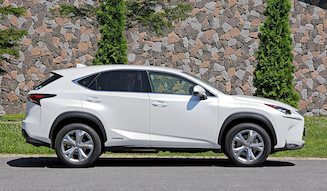
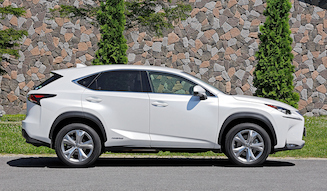
LEXUS NX300h "version L"
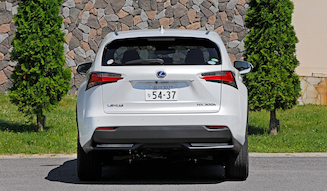
LEXUS NX300h "version L"
Wait, "other than North America"?
…Those who noticed this comment from the engineer are quite perceptive.
The Lexus brand was born in America in 1989 with the first-generation "LS" (domestic name: Celsior) and has since focused on this massive market. However, regarding the NX, the brand emphasizes that "while we certainly want it to sell well, we are thinking that 'selling reasonably well is fine' in this market," deliberately stating that North America is not the number one market.
Indeed, the NX, developed with this size in mind and therefore expected to be even more adaptable to Japan than the RX, has another "hidden ace" for this new marketing challenge: a completely newly developed 2-liter direct-injection four-cylinder engine, also introduced as "Lexus's first turbo."
LEXUS NX200t | Lexus NX200t
LEXUS NX300h | Lexus NX300h
A Premium Brand That Attacks with Design and Engine
Test Drive the New Lexus Compact SUV "NX" (2)
Numerous Innovations Beyond Catalog Specs
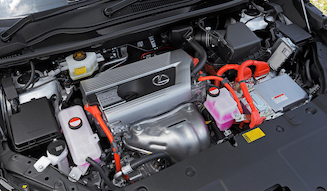
The newly developed direct-injection four-cylinder turbo engine, codenamed 8AR-FTS, produces a maximum output of 238 ps and a maximum torque of 350 Nm.
In other words, within Lexus's powertrain lineup, it is easy to imagine this as a "downsized unit" planned to eventually replace the existing 3.5-liter V6 naturally aspirated engine.
This trend has been commonplace among European manufacturers for several years now. For example, even Jaguar's flagship large sedan, the "XJ", is now equipped with a 2-liter direct-injection turbo four-cylinder engine.
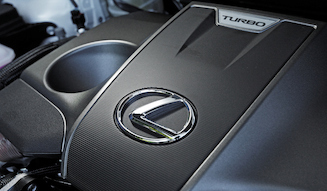
The new 2-liter direct-injection four-cylinder engine, Lexus's first turbo
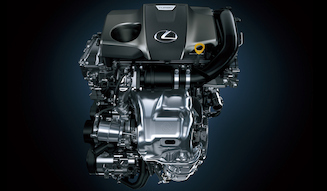
Thus, this new engine, which could be seen as a "latecomer," is boasted by its developers as having "thoroughly pursued high efficiency and low fuel consumption by incorporating technologies previously used in hybrid units."
Examples include Toyota's original "D-4S" system, which selectively uses direct injection and port injection, and the adoption of the Atkinson cycle for high expansion ratios. Other examples include block coolant control for rapid warm-up during cold starts when fuel economy deteriorates, a piston oil jet stop system, and a two-stage oil pan.
Furthermore, the "world's first" 4-to-2 exhaust manifold integrated cylinder head with twin-scroll turbo, combined with a water-cooled intercooler with a dedicated low-temperature radiator circuit and a compact intake system, are noteworthy features for resolving the unnatural acceleration G-force that downsized turbo engines tend to experience.
In any case, the numerous innovations applied even in areas not apparent from the catalog specifications demonstrate a determination to turn the handicap of being a "latecomer" into an advantage. And of course, the future roadmap undoubtedly holds further developments, including the expansion of engine variations based on the same concept and the adoption of lean burn for even higher efficiency.
This new-generation heart, which foreshadows such future expectations, is the unit first installed in the NX200t series.
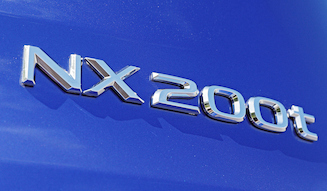
LEXUS NX200t "F SPORT"
LEXUS NX200t | Lexus NX200t
LEXUS NX300h | Lexus NX300h
A Premium Brand That Attacks with Design and Engine
Test Drive the New Lexus Compact SUV "NX" (3)
The NX's Design Reflects an Aggressive Stance
As mentioned earlier, the NX is slightly smaller than the RX. However, its presence does not seem to be inferior to its larger sibling, largely due to its boldly sculpted and deeply shadowed exterior design.
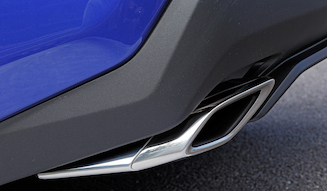
The aggressive front mask, represented by the "spindle grille," is now a characteristic feature common to all Lexus vehicles. The NX further emphasizes its unique individuality with its highly three-dimensional side contours and a "diamond-shaped body" where the B-pillars protrude outwards.
The peak of the front door's cross-section and the rear end of the lower door panel both feature an upward-sloping kick-up line. Combined with the repeated spindle motif at the rear and the strong volume of the front and rear wheel flares, the design incorporates complex elements throughout. Therefore, it is conceivable that some may find it "too busy and not to their liking."
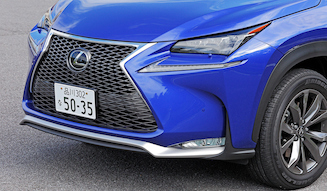
LEXUS NX200t "F SPORT"
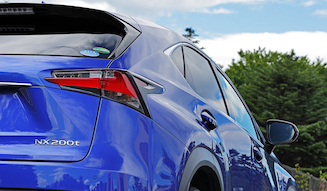
LEXUS NX200t "F SPORT"
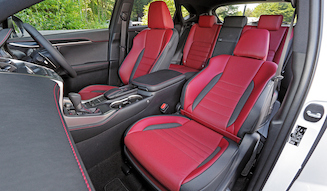
The interior is similar. In particular, the center panel, which has a strong presence as if carved from metal, seems to have elements that will divide opinions.
However, whether it's a car or jewelry, a certain degree of excess is essential for premium brand products. In that case, rather than becoming mediocre and forgettable like "Muji" by aiming for universal appeal, the NX's design undoubtedly conveys a much more aggressive stance.
LEXUS NX200t "F SPORT"
Incidentally, the high level of finish in various interior parts is truly befitting of a premium model. The wide range of interior color combinations available is also a point not to be overlooked.
The "F SPORT" grade, which features a sportier design for both the exterior and interior along with specialized mechanisms aimed at enhancing driving performance, is also available. With its distinct interior differentiation, including dedicated sports seats, a specially designed steering wheel, and aluminum sports pedals, this grade is likely to be a popular choice for the NX, targeting younger, active users.
LEXUS NX200t | Lexus NX200t
LEXUS NX300h | Lexus NX300h
A Premium Brand That Attacks with Design and Engine
Test Drive the New Lexus Compact SUV "NX" (4)
Linearity of Acceleration
First, we begin driving with the 200t base grade FWD specification, equipped with the aforementioned new engine. One might wonder if a 2-liter engine would be insufficient for a vehicle weighing over 1.7 tons! However, this concern is pleasantly dispelled from the moment you start driving.
Indeed, the acceleration feels surprisingly brisk from the moment you start. As you press the accelerator pedal further, the sound characteristic of a four-cylinder engine becomes noticeable around 3,500 rpm. Nevertheless, in city driving, there's rarely a need to rev that high, so the "Lexus-like" quietness is maintained.
LEXUS NX300h "version L"
LEXUS NX200t "F SPORT"
The strength of the new engine also lies in the high linearity of its acceleration. Among "downsized turbo" engine vehicles released so far, some have had insufficient torque at idle, leading to an unnatural surge of torque and unexpectedly strong acceleration when the accelerator is pressed further.
However, the 200t completely eliminates such awkwardness. You can achieve a natural acceleration feel, akin to a naturally aspirated engine, in a good way.
On the other hand, if you "get serious" and rev it up to the higher range, it's surprisingly powerful. The redline on the tachometer is 6,000 rpm. We confirmed that it also possesses a sporty character, revving strongly all the way to the redline.
LEXUS NX300h
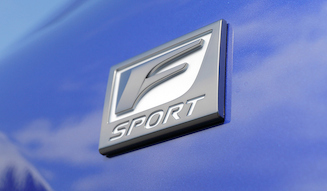
LEXUS NX200t "F SPORT"
Given its character, it pairs perfectly with the F SPORT, which has a more active image. Thus, this "late-arriving" downsized engine is quite well-executed.
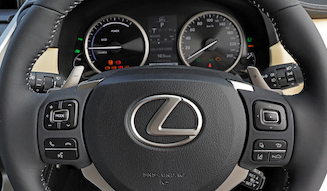
Meanwhile, switching from the 200t series to the 300h series, which inherits the hybrid unit already featured in the Harrier, the exceptionally smooth and quiet start achieved by running on electric power alone provides a distinct premium feel. Furthermore, when you press the accelerator deeply to access full power, the 2.5-liter engine's noise level increases rapidly. However, in everyday Japanese driving conditions, where gentle acceleration is the norm, reaching such levels is rare.
Perhaps the reason Japan has become one of the world's leading "hybrid-popular countries" is not only due to fuel efficiency but also to this gentle character.
LEXUS NX200t | Lexus NX200t
LEXUS NX300h | Lexus NX300h
A Premium Brand That Attacks with Design and Engine
Test Drive the New Lexus Compact SUV "NX" (5)
The Driving Character Targeted by the NX
Incidentally, the brand-new NX also boasts impressive capabilities in terms of its chassis and handling. While this model offers a variety of variations—200t and 300h, FWD and AWD, basic and F SPORT grades—a fundamental characteristic common to all specifications is a ride quality that feels substantial, with ample suspension travel that smoothly absorbs road imperfections.
Among these, the 200t basic grade and the F SPORT FWD specification left a particularly positive impression.
This is because the power performance, as mentioned earlier, exceeded expectations, and the handling was both precise and agile. It felt like the driving character that the NX model originally aimed for was most faithfully reproduced.
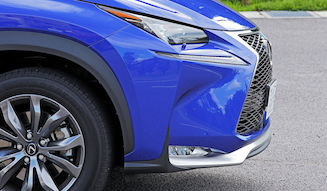
LEXUS NX200t "F SPORT"
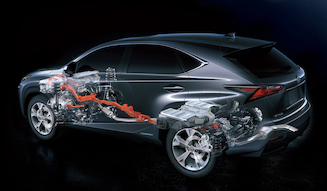
The NX300h AWD model is equipped with E-FOUR (an electric AWD system) that drives the rear wheels with a separate rear motor, enhancing starting performance and driving stability on slippery surfaces.
In particular, the F SPORT, equipped with performance dampers at the top of the front suspension towers and the rear end of the body, along with electronically controlled variable damping force dampers tuned specifically for this model, offers particularly rich suspension feel and rapid damping of body vibrations. Even in the "Sport+" mode, which uses the firmest damper setting, unnecessary body movements are suppressed as intended, with minimal increase in discomfort.
Conversely, the AWD specifications, possibly due to the addition of the rear motor in the 300h and other rear-drive components, generally exhibit slower damping of body vibrations compared to the FWD specifications. When comparing the 200t and 300h FWD specifications, the "200t feels cleaner" in terms of driving refinement, likely because the various hybrid system components, including the drive battery located under the rear seats, the motors, and the power distribution unit, contribute to vibrations when encountering road imperfections.
LEXUS NX200t | Lexus NX200t
LEXUS NX300h | Lexus NX300h
A Premium Brand That Attacks with Design and Engine
Test Drive the New Lexus Compact SUV "NX" (6)
A New Stage for the "Lexus" Brand
The NX is a model that convincingly demonstrates its commitment, featuring a body structure with high rigidity achieved through "laser screw welding," which allows for closer spot welding than conventional methods, and the use of structural adhesives. This is combined with the adoption of the aforementioned new engine.
Furthermore, the NX is a model that convincingly demonstrates its commitment, including a development approach freed from the constraints of the American market, which has historically been the "sacred ground" for Lexus vehicles.
However, it is also true that there are still "blind spots." For instance, the AT for the 200t is limited to 6 speeds, which is considered insufficient in the world of premium models where 7 or 8 speeds are now commonplace. Additionally, the driver support system functions, unfortunately, cannot be described as "leading the world."
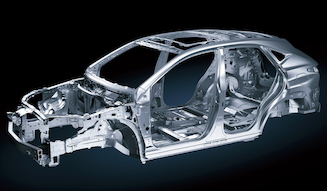
The lightweight and highly rigid body enables sporty handling.
Nevertheless, knowing its overall execution, it is undeniable that everyone will feel that the "Lexus" brand has stepped onto a new stage.
The NX is a brand-new model that inspires great anticipation for the "future of Lexus."

LEXUS NX200t | Lexus NX200t
Body Size | Overall Length 4,630 x Overall Width 1,845 x Overall Height 1,645 mm
Wheelbase | 2,660 mm
Tread Front/Rear | 1,580 / 1,580 mm (1,570 mm front and rear for F SPORT)
Minimum Ground Clearance | 170 mm
Engine | 1,998cc Inline 4-cylinder DOHC Turbo
Engine Max Output | 175 kW (238 ps) / 4,800-5,600 rpm
Max Torque | 350 Nm (35.7 kgm) / 1,650-4,000 rpm
Transmission | 6-speed Automatic
Drivetrain | FF, 4WD
Suspension Front/Rear | MacPherson Strut / Double Wishbone
Brakes Front/Rear | Ventilated Disc / Disc
Fuel Type | Premium Unleaded Gasoline
Fuel Economy (JC08 Mode) | (2WD) 12.8 km/ℓ (4WD) 12.4 km/ℓ
Seating Capacity | 5 people
Price (incl. tax) | 4.28-5.18 million yen
LEXUS NX300h | Lexus NX300h
Body Size | Overall Length 4,630 x Overall Width 1,845 x Overall Height 1,645 mm
Wheelbase | 2,660 mm
Tread Front/Rear | 1,580 / 1,580 mm (1,570 mm front and rear for F SPORT)
Minimum Ground Clearance | 170 mm
Engine | 2,493cc Inline 4-cylinder DOHC + Motor
Engine Max Output | 112 kW (152 ps) / 5,700 rpm
Front Motor Max Output | 105 kW (143 ps)
Rear Motor Max Output | (4WD only) 50 kW (68 ps)
Engine Max Torque | 206 Nm (21.0 kgm) / 4,400-4,800 rpm
Front Motor Max Torque | 270 Nm (27.5 kgm)
Rear Motor Max Torque | (4WD only) 139 Nm (14.2 kgm)
Transmission | Electronically Controlled Continuously Variable Transmission
Drivetrain | FF, 4WD
Suspension Front/Rear | MacPherson Strut / Double Wishbone
Brakes Front/Rear | Ventilated Disc / Disc
Fuel Type | Regular Unleaded Gasoline
Fuel Economy (JC08 Mode) | 19.8 km/ℓ (FF standard or I package is 21.0 km/ℓ)
Seating Capacity | 5 people
Price | 4.92-5.82 million yen
Lexus Information Desk
 0800-500-5577 (9:00-18:00, open 365 days a year)