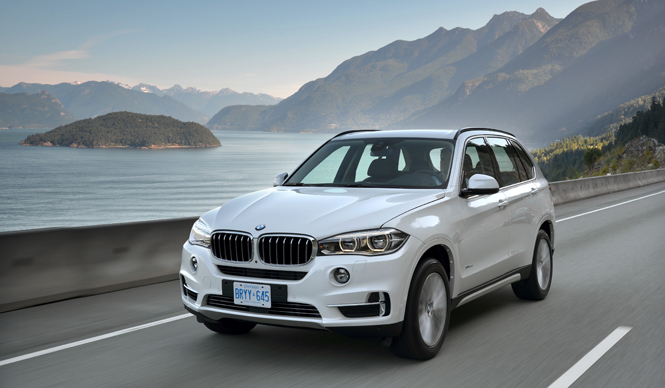
Test Drive the New BMW X5 | BMW
BMW X5 xDrive50i | BMW X5 xDrive50i
BMW X5 xDrive30d | BMW X5 xDrive30d
Evolved into the third generation with a full model change after seven years
Test Drive: The New BMW X5
Held this September,Frankfurt Motor Showmarked its debut with a full model change for the first time in seven years.X5 (F15)The third-generation model has evolved from the previous generation (E70). Yasuhiko Kawamura tests two models, the "xDrive50i" and "xDrive30d," on Canadian soil.
Text by KAWAMURA Yasuhiko
The Packaging of the New X5
BMWBMW's SAV, or "Sports Activity Vehicle," pioneered by the X5, has evolved into its third generation.
The first X5, the first model to bear the 'X' name and not fit into existing lineups, was born in 2000. Since then, its smaller sibling, theX3, the crossover-oriented derivative modelX6, and the entry-level model X1 with reduced size and price have been successively introduced. Today, it has grown into a core series so much so that 'about one-third of all BMW cars sold are 'X' models.'
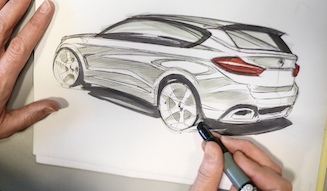

However, for many, the exterior of the new X5, which is responsible for leading this important "X series," may seem "not much different from before."
Its body size has also barely changed, except for a slight increase in length of about 20mm and a decrease in height of about 10mm. In fact, developers have said, "The X5's packaging was already an 'optimal solution' in the previous model, and we didn't feel the need to change it drastically."
When asked if there were any specific areas they wanted to refine in terms of design, the answer was, "We wanted to create a more elegant atmosphere."
BMW X5 xDrive50i | BMW X5 xDrive50i
BMW X5 xDrive30d | BMW X5 xDrive30d
Evolved into the third generation with a full model change after seven years
Test Drive: The New BMW X5 (2)
Proposing Unprecedented Customization Possibilities
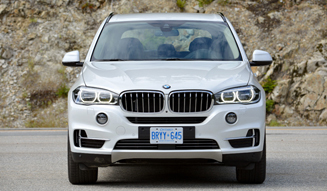
One of the new model's styling features is the adoption of a slightly reverse-slanted grille to emphasize the length of the nose and further accentuate the elongated silhouette. At the same time, the wider kidney grille and air intakes enhance the sense of width. The character line that runs from above the front fender arch, over the door outer handle, and to the rear combination lamps is an identity inherited from the previous model.
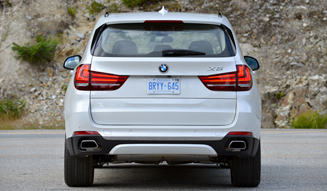
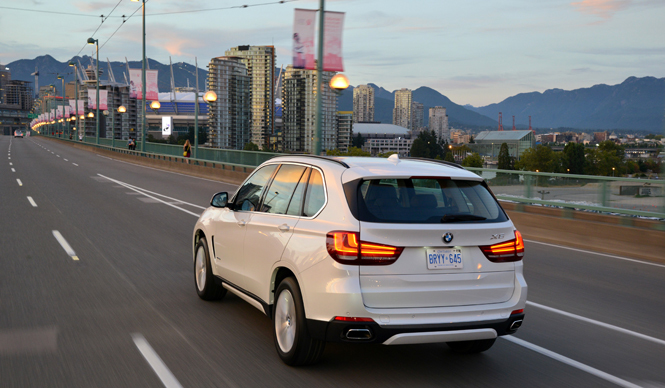
At the rear, the slightly slimmer, L-shaped taillights are a major distinguishing feature of the new model. While it does appear a bit sleeker and more streamlined, the overall exterior design of the new model can be described as strongly "keeping the concept."
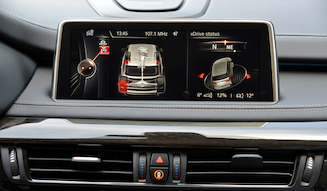
The interior, on the other hand, also has a slightly more modern feel compared to the previous model. Like the previous model, it features a "double-tapered" dashboard shape, resembling the cross-section of a rugby ball. However, the layout of the display on the upper part of the center panel, resembling a modern tablet device placed upright, is indeed a part where "newness" shines through.
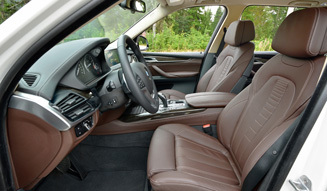
This model, aiming for enhanced sophistication, offers two design lines: "Design Pure Experience" and "Design Pure Excellence." By freely combining exterior and interior equipment, it proposes new customization possibilities that were not achievable before, which is also noteworthy news.
The optional third-row seating is available, as with the previous model. However, as mentioned earlier, the body size, including the wheelbase, is almost the same, so the "retractable third-row seats are for occupants up to 1.5m tall," emphasizing that it is fundamentally a "5+2 seater" cabin.
BMW X5 xDrive50i | BMW X5 xDrive50i
BMW X5 xDrive30d | BMW X5 xDrive30d
Evolved into the third generation with a full model change after seven years
Test Drive: The New BMW X5 (3)
Test Drive: "xDrive50i" and "xDrive30d"
At the international test drive event held in Canada, the lineup included the "xDrive50i" equipped with a 4.4-liter twin-turbo V8 gasoline engine, and the "xDrive30d" equipped with a 3-liter inline-6 turbo diesel engine, which will likely be renamed "xDrive35d" in Japan as before. Although not available at this event, the M50d, equipped with a 3-liter triple-turbo inline-6 diesel, is also part of the initial lineup.M50dThese three types, including the M50d, are the variations of the new X5 at launch.
Furthermore, it has already been announced that by the end of this year, the diesel "xDrive40d," "xDrive25d" (a 2WD version of the 25d promoting weight reduction), and the "xDrive35i" equipped with a 3-liter inline-6 turbo gasoline engine, which is also expected to be introduced in Japan along with the 50i/30d, will be added.
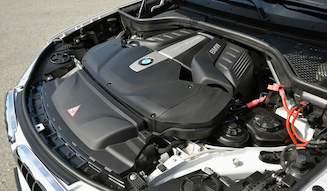
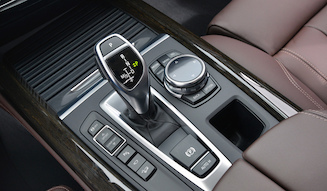
Starting with the top-grade 50i, the drive was brisk and powerful, yet it also conveyed a sense of dignified weightiness, as expected. The acceleration feel, combined with the 8-speed AT, sometimes gave the impression that the accelerator's gain (responsiveness to operation) was a bit too sharp, but it was fundamentally smooth.
Although it boasts "up to 90kg weight reduction compared to the previous model with equivalent equipment," the vehicle weight is still over 2.1 tons. However, for those pressing the accelerator pedal, this weight is not felt at all.
The transmission, while shifting crisply like a manual, has no shift shock, which is a merit of a conventional torque converter automatic transmission. In any case, the driving performance is truly "beyond reproach."
BMW X5 xDrive50i | BMW X5 xDrive50i
BMW X5 xDrive30d | BMW X5 xDrive30d
Evolved into the third generation with a full model change after seven years
Test Drive: The New BMW X5 (4)
The Undisputed Flagship of the X Series
The high level of quietness, as if engine noise and road noise were all wrapped in a "thick veil," evokes the feeling that this model is the undisputed flagship within the X series.
Despite wearing 19-inch tires of size 255/50, the suspension achieves a suppleness that doesn't betray their run-flat specification with reinforced sidewalls. This is a testament to the expertise ofBMW, a manufacturer that has been using such components for many years.
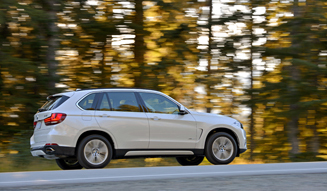
While the handling is not exactly agile, the absence of a nose-heavy feel or excessive body roll is truly characteristic of a manufacturer whose motto is "the ultimate driving machine."
In any case, the overall impression after driving the 50i is that it embodies the taste of a "thoroughly high-quality passenger car," despite its form.
BMW X5 xDrive50i | BMW X5 xDrive50i
BMW X5 xDrive30d | BMW X5 xDrive30d
Evolved into the third generation with a full model change after seven years
Test Drive: The New BMW X5 (5)
A Grade Worthy of Attention and Recommendation
On the other hand, switching to the 30d, the first impression was frankly that its "NVH performance is somewhat inferior to the 50i."
Of course, that's only in comparison to the 50i. It achieves excellent quietness in absolute terms, and the engine's characteristic of delivering strong torque from very low RPMs makes the manufacturer's desire to "make this the main sales model in Japan" fully understandable.
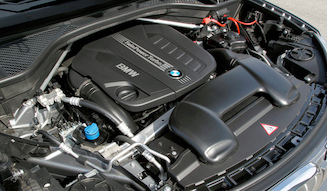
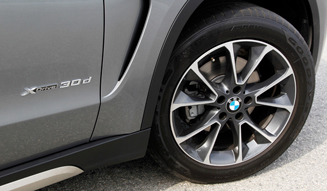
However, the slight engine vibrations, particularly at low RPMs, that sometimes transmit to the steering wheel are not fitting for the character the new X5 aims for. This is an area that should be improved promptly.
Nevertheless, considering its power in everyday driving and its fuel economy, this grade certainly seems to be the most noteworthy and recommendable within the new X5 series.
One hopes that when this model, which incorporates numerous modern driving assistance systems and telematics systems integrated with smartphones, is introduced in Japan at the "scheduled time at the end of this year," it will be priced at the same level or lower than the previous model.

BMW X5 xDrive 50i
Body size | Length 4,886 x Width 1,938 x Height 1,762 mm
Wheelbase | 2,933 mm
Tread Front/Rear | 1,640 / 1,646 mm
Weight | 2,175 kg
Engine | 4,395cc V8 direct injection DOHC twin-turbo
Max Output | 330kW (450ps) / 5,500 rpm
Max Torque | 650Nm / 2,000-4,500 rpm
Transmission | 8-speed automatic
Drivetrain | 4WD
Tires | 255/50R19
0-100km/h Acceleration | 5.0 seconds
Top Speed | 250 km/h
Fuel Consumption | 10.4 ℓ/100km
CO2 Emissions | 242 g/km
Trunk Capacity | 650-1,870 liters
BMW X5 xDrive 30d
Body size | Length 4,886 x Width 1,938 x Height 1,762 mm
Wheelbase | 2,933 mm
Tread Front/Rear | 1,644 / 1,650 mm
Weight | 2,070 kg
Engine | 2,993cc inline-6 diesel turbo
Max Output | 190kW (258ps) / 4,000 rpm
Max Torque | 560Nm / 1,500-3,000 rpm
Transmission | 8-speed automatic
Drivetrain | 4WD
Tires | 255/55R18
0-100km/h Acceleration | 6.9 seconds
Top Speed | 230 km/h
Fuel Consumption | 6.2 ℓ/100km
CO2 Emissions | 162 g/km
Trunk Capacity | 650-1,870 liters