Twiggy | Vol. 12: Product Communication, and What Lies Beyond (Part 1)
Twiggy | Twiggy
Vol. 12: What Lies Beyond Product Development (Part 1)
Miho Matsuura, a popular hairstylist who has consistently proposed cutting-edge fashion at her salon 'Twiggy,' which she has led since 1990, is always at the forefront of mode. A project she has nurtured for years finally came to fruition last year: her own line of "organic shampoos and treatments." In an era of remarkable scientific leaps in the cosmetics industry, why has a leading figure in mode continued to focus on "organic"? This series will unravel the secrets behind it.
Narration by Miho Matsuura
Compiled by Yuka Kobayashi

The entrance to Twiggy, where lush plants thrive as summer approaches. Above the building, a rooftop garden flourishes, its blooming and fruiting stages enlivening the salon's blog. This is not merely a hobby or display; it's a necessary "practice" for the products Matsuura wishes to offer. As this series approaches its first anniversary, we will once again delve into the true meaning behind Matsuura's choice of an organic lifestyle.
—The vegetables harvested from Twiggy's rooftop garden are shared among the staff. You also cultivate a garden at home, don't you?
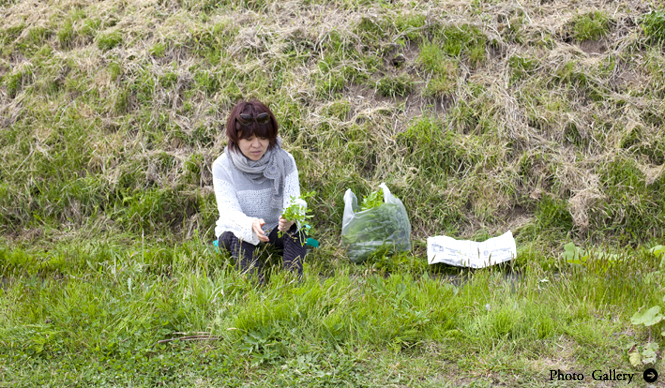
It started with growing tomatoes and herbs in my home garden. Last year, we finally began to enjoy harvests from Twiggy's rooftop garden. I used to pick many wild vegetables around the rice paddies where rice is grown, and after eating them, I thought, "Ah, I wish I could eat vegetables like these in Tokyo." Have you read the book "Miracle Apples: The Story of a Farmer Who Reversed the Impossible" by Takuji Ishikawa (published by Gentosha)? It's a true account of a farmer in Aomori who achieved pesticide-free apple cultivation, which was deemed impossible. It talks about how crops can be grown by respecting nature's processes, without using methods like pesticide spraying. When I read that book, I understood the deliciousness of the wild vegetables growing around the rice paddies. It wasn't a feeling of "Oh, really?" but more like, "Yes, of course."
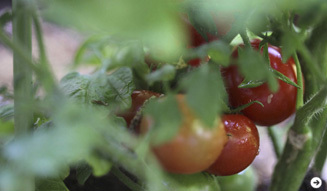
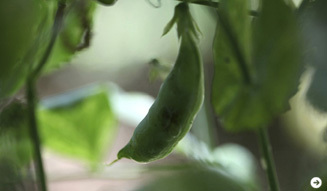
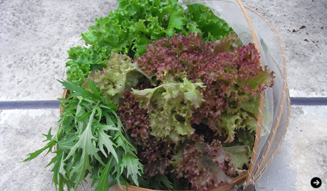
My home garden's theme is "growing vegetables I want to eat for breakfast." First thing in the morning, I drink Hitena Tenryosui (natural active hydrogen water), and 30 minutes later, I eat raw vegetables grown in my garden. What you put into your body first thing in the morning is the most important, isn't it? I believe that building a foundation for our bodies by growing and eating organic food ourselves is very important. It's crucial to "save enzymes" by introducing good bacteria and storing enzymes in our bodies. If we build strong enzymes within our bodies, we can resist environmental changes and pathogens. It's the minimum necessary to protect ourselves. Drinking water with living microbes and growing and eating our own vegetables is simple once you try it. After that, what you choose to eat is up to you.
—So, it's not about making your entire diet organic?
That's a personal choice, and if it causes stress, it's bad for your body (laughs). Also, many people who jump on the bandwagon and say they "like organic" don't have a clear reason why they choose to eat it. They might say, "It's good for my health," but then, what is health? (laughs)
What's wonderful about organic is that "you're eating bacteria." We shouldn't be sterile. That's why we're incorporating organic ingredients into Twiggy's shampoos, aiming to boost our natural healing power with the bacteria we introduce to our scalps. I believe this is the core of why we focus on water and vegetables. It's not that "eating chemical products made me sick"; rather, if you have "enzyme savings" in your body from regularly eating organic foods, you can even eat vegetables grown with pesticides (though individual allergies and sensitivities vary). Conversely, people who primarily eat sterile vegetables grown with pesticides tend to get upset stomachs when traveling. I believe that by eating organic foods and storing enzymes in our bodies, we can maintain strong bodies regardless of where we go or what the situation is in Japan.
Wouldn't you want a body that can live without needing preventative measures that supplement a weakened immune system? I believe that's what organic is for. In other words, the organic way of thinking isn't about a stoic stance. It's simply a foundational approach to maintaining health and surviving. However, the common perception of organic is the opposite. That's why when I talk to people involved in organic initiatives, they often say, "When people say organic equals eco, it feels a bit off." (laughs) It's not about rigidly adhering to a style; it's just that when they considered what they wanted to do, they arrived at organic. It's natural and self-evident. They feel it's a natural and obvious conclusion.
Twiggy | Twiggy
Vol. 12: What Lies Beyond Product Development (Part 2)
Of course, I eat meat and fish too. However, for me, my body feels different the day after eating meat compared to the day after eating only vegetables. My body feels clearer and lighter with just vegetables, and my mind feels lighter too. The day after eating meat, I feel a bit heavy, like I have to push myself to move... but my skin might be a little more moisturized? (laughs) So, I think it's good to find a balance, incorporating both types of bacteria.
Even in books by doctors, there are clear arguments for each of these two approaches. For example, the "enzyme faction," which advocates drinking good water and eating raw vegetables, is represented by "How to Live Without Getting Sick: Miracle Enzymes Determine Lifespan" (by Hiromi Shinya, published by Sunmark Publishing). On the other hand, "Dantō Sengen" (by Yutaka Araki, published by Gendaishorin) guides readers toward a diet centered on high-quality animal protein. It's interesting that these two extreme viewpoints—one advocating vegetables, the other meat—each have their supporters. I believe both are valid. From a DNA perspective, many Japanese people still fall into the former category...
—Is there a communication that stems from "organic"?
Based on this, I hope to connect with like-minded people and eventually form a commune, where we can convey a clear message and pass on that passion to the next generation. That is my ideal form. I want to express the message I want to convey in some form. By growing vegetables and strengthening our bodies, I learn various perspectives from different people and connect with them. Instead of doing something under the protection of large corporations, I want to cultivate an unshakeable strength within a small commune.
The experiences and ideas for creating my own products only come when I'm not styling hair myself. Even when discussing specialized topics, the level of the outcome is entirely different depending on whether I've personally experienced it or not. I feel the need to study. And the only way to study is to practice. If I just read a book and think, "This person is amazing" or "This product looks good," I don't think I can create good products. To convey that "hair is alive" and "your hair is made from what you eat right now," I need to practice it myself first to have any credibility. Even so, I often receive reactions like, "Hmm... so what?" to my explanations, which always disappoints me (laughs).
