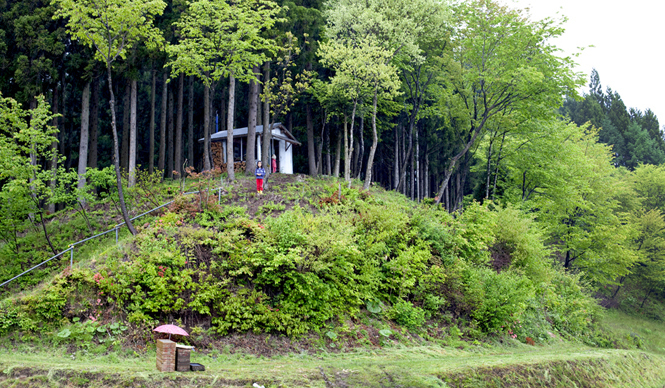
March 13, 2015
Twiggy | Vol. 5: A Hair Stylist's "Rice Cultivation"
Twiggy
Vol.5 Hair Stylist's "Rice Cultivation"
Miho Matsuura is a popular hair stylist who has been proposing cutting-edge fashion trends in numerous magazines at her salon "Twiggy," which she has led since 1990. This autumn, a project she has nurtured for several years is set to become a reality: her own line of "organic shampoos and treatments." In an era of remarkable scientific leaps in the cosmetics industry, why has a leading figure in fashion consistently focused on "organic"? This series will unravel the secrets behind it.
Compiled by Yuka KobayashiNarrated by Miho MatsuuraPhotos by Koji Sato

Matsuura recently started her long-desired vegetable garden. She grows lettuce, napa cabbage, and mizuna on the rooftop of the Twiggy salon and in her own garden. This is not just a hobby; it's a "self-cultivation" challenge that began during her time in London. "As an artist, when I think about creativity, I first considered 'self-sufficiency' as a base for what I could do. It's about understanding the fundamentals..." And even before this garden, she began cultivating rice. Rice cultivation by someone at the forefront of fashion? It may seem like an abrupt combination, but Matsuura has a firm belief behind it.
Q. Did you start growing your own vegetables and rice with health and food safety in mind?
No, although those are certainly important considerations... I think it stemmed from my time in London, where I saw people growing herbs and vegetables in small gardens, even though visual gardening was mainstream then. I also learned about the increasing self-sufficiency in Europe and gained various "wisdoms" through my travels. Then, I visited Ladakh (Northern India). This area at the foot of the Himalayas, about an hour from Delhi, retained a way of life that Japan had forgotten... They grew vegetables to eat in front of their homes and used every single tissue as a resource for starting fires, without discarding anything. In short, there was no waste. Absolutely none. They didn't even have trash cans (laughs). Everything was recycled 100 percent. Including the toilets, of course. Toilets in Ladakh homes are large rooms, almost habitable. The floor is covered with soil, with a single hole in the center. There are tools like brooms and shovels around. You might wonder, 'What do they do?'
In these toilets, excrement is buried in the soil. Due to the dry climate, it quickly turns to sand. Once a certain amount accumulates, it's put into the central hole. This is then used as a resource for fuel or compost. This soil becomes fertilizer for growing vegetables, and humans and livestock eat those vegetables... I felt, "Ah, Japan must have been like this in the past." Even if this is impossible in Tokyo today, I started thinking it might be good to at least try growing vegetables and grains with our own hands. "Food" creates "Mind." "Eating" creates cells. Eating meat leads to a rapid rise in energy and more anger, someone told me. Eating vegetables fosters a spirit of "coexistence" and brings calmness. I also felt it was a way of thinking that could contribute to creation.
Q. After returning to Japan, did you have further inspiration?
A few years prior, I overheard a conversation between Taeko Onuki, with whom I often collaborate, and Ryuichi Sakamoto, who had just returned from NY. Their conversation was very futuristic... they were talking about the importance of growing crops. Later, I was chatting with Onuki about it, and when I mentioned that my husband's family was from Akita, she said, "Then you can grow rice there!" ... When I had my experience in Ladakh, I remembered that conversation, and it was like dots connecting, and I suddenly realized it.
Onuki had already started growing rice at that time, and when I said I might try it, she strongly encouraged me, saying, "You absolutely should!!" She was the one who first taught me the term "gentan" (reduction of rice paddy acreage). I didn't even know what "gentan" meant over ten years ago (laughs). But isn't it strange that to incorporate imported rice due to foreign policy, domestic rice production must be reduced? When paddies are designated for "gentan," farmers either grow soybeans or the land itself is left fallow. Since there's no compensation for "gentan," farmers are often forced to accept it. This ultimately contributes to depopulation. In fact, when I went to Akita to look for land to grow rice, there was fallow land right next to my in-laws' house that had been taken out of production due to the "gentan" policy.
Q. So, the land you found was a chance encounter?
Yes. When I consulted my mother-in-law about this, she told me there was land near their house that had become fallow, even though the water was so clean that junsai (water shield) grew there. I immediately visited the owner and asked if I could use it. I proposed a contract where I would revive the unused paddy and pay for the rice harvested there.
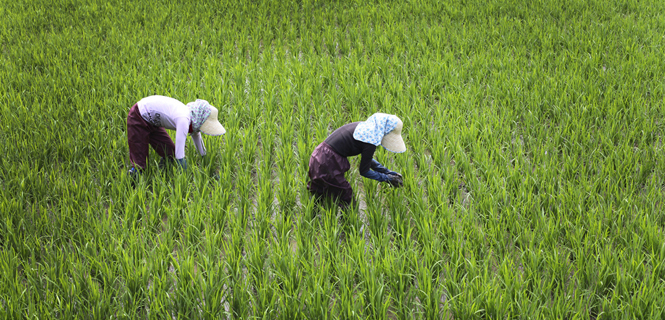
The scene of weeding. Organic farming without pesticides requires considerable effort, but this work heightens the anticipation for the harvest.
When I went there, I saw junsai fields and rice paddies lined up against a backdrop of mountains that seemed like a treasure trove of nature. The snowmelt from the mountains flowed through the junsai fields into our paddy. Water rich with nutrients from mountain vegetables in spring and mushrooms in autumn... What delicious rice we could grow! They told me that with organic rice, the soil needs to rest for three years after planting, but we promised to come for planting and harvesting, and weeding, so please proceed... Five years have passed, and we go for planting, harvesting, and weeding every year.
The self-sufficiency I saw in Ladakh, the talk of "gentan" from Onuki – without ever trying to connect them, they naturally came together. I thought, perhaps by growing even just our own rice, we could achieve a waste-free existence. At the same time, I felt I could convey "something" to the children by bringing them along. This was a good opportunity. I hope they will grow up to be people who can naturally grow rice. I have that expectation. I always try to convey things to my children through actions rather than words... though I still have much to learn.
As a side note... Farmers in Akita sell their harvested rice to the agricultural cooperative at low prices. If things continue like this, they can't produce high-quality products, no matter how much they want to. Isn't this leading to low-quality business? The number of successors is also decreasing. We have farmers grow rice with special care directly from them (in a spirit of collaboration) and purchase delicious rice at a fair price. Both the farmers and we are happy. Wouldn't it lead to greater synergy if more people could purchase rice and vegetables directly from farmers? Nowadays, fair trade with foreign countries is a trend, but wouldn't establishing genuine fair trade at home, at our feet, lead to greater self-sufficiency in Japan?
Q. So, rice cultivation was inevitable for you, Matsuura?
Of course, wanting to be healthy and valuing eco-friendliness are important, but it would be ideal if we could grow at least the ingredients for what we eat at home... However, adopting a lifestyle immersed in agriculture is not feasible for me right now. Changing my lifestyle and abandoning my individuality requires considerable toughness. But since both are important, I found a way to balance them... I believe I was able to do this because it's an action to return to a place of comfort for myself. It's now my sixth year of rice cultivation. I wanted to do what I could, which is to engage in makeshift farming while living in Tokyo, rather than moving to a rural environment. This is the best I can do right now.
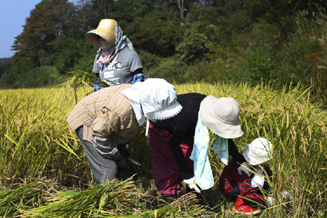
What I always think about is the concept of 'plus/minus zero.' Our generation did too much in the 80s and 90s, so we're trying to get back to zero (laughs). But more than that, running a hair salon in Tokyo inevitably pollutes the environment, so it's natural to want to return to the basics. I want to do my best little by little, within my own limits. My current product, which I've envisioned for a long time, has "self-sufficiency" at its core and ultimate goal. The foundation of beauty and wellness is nurturing the body from within through food, so to truly embrace the creativity of building beauty, I wanted to start with food production.
