June 21, 2019
Aiming for a "Perpetual Calendar" that never stops | VACHERON CONSTANTIN
VACHERON CONSTANTIN
Two "Hearts" for the User to Choose From
Development of the Groundbreaking "Twin Beat" System
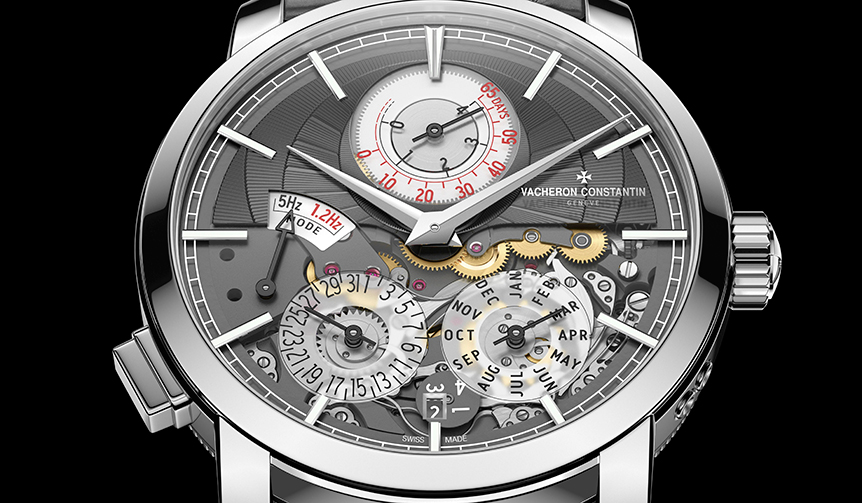
At SIHH 2019, Vacheron Constantin astonished watch journalists with this model. By incorporating two escapements (beats) with different frequencies and allowing the user to switch between them, it achieved an ultra-long power reserve of over 65 days while maintaining practicality. With such extended autonomy, even a complication item not used daily can be taken out and worn without the hassle of time setting, as the mainspring will not have fully unwound.
Text by Takashi Tsuchida
A Bold Statement: "The Aesthetics of Redundancy" Are Now Obsolete
It's an extremely rational design philosophy.
While a perpetual calendar is considered a complex watch, its intricate gear train, which counts even the leap year every four years, makes it exceptionally delicate compared to other models. Consequently, it's not suited for daily wear. A suit tailored from fine fabric is beautiful, of course, but it's susceptible to wear and tear and not meant for daily use. It's the same principle. Of course, thanks to the efforts and improvements of watchmakers in recent years, their practicality has increased immensely compared to older models. Nevertheless, in the event of a malfunction, complex watches are almost always sent back to their country of origin, inevitably incurring longer repair times and higher costs than standard models.
A perpetual calendar is inherently an item that should only be owned by those who can afford such costs. However, even so, watch enthusiasts want to own and occasionally wear a perpetual calendar. This limits its use to special occasions, like attending a high-profile party, but then you might find the watch has stopped when you need it, leading to the frustrating task of resetting the time.
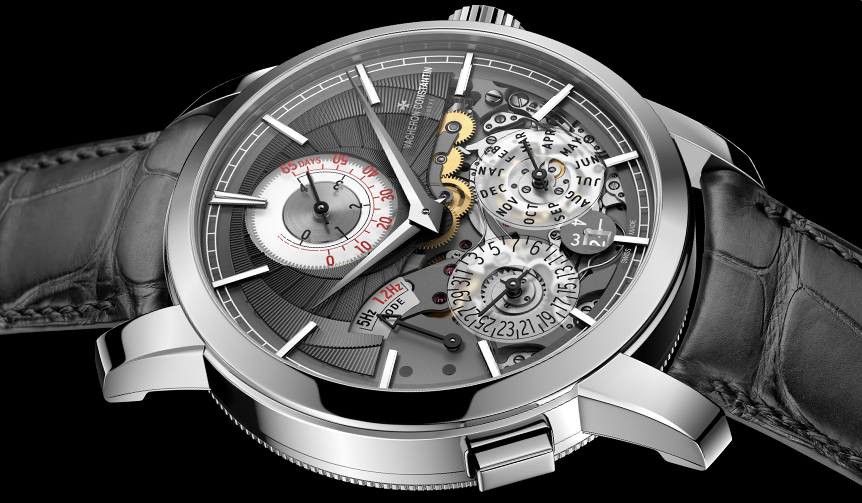
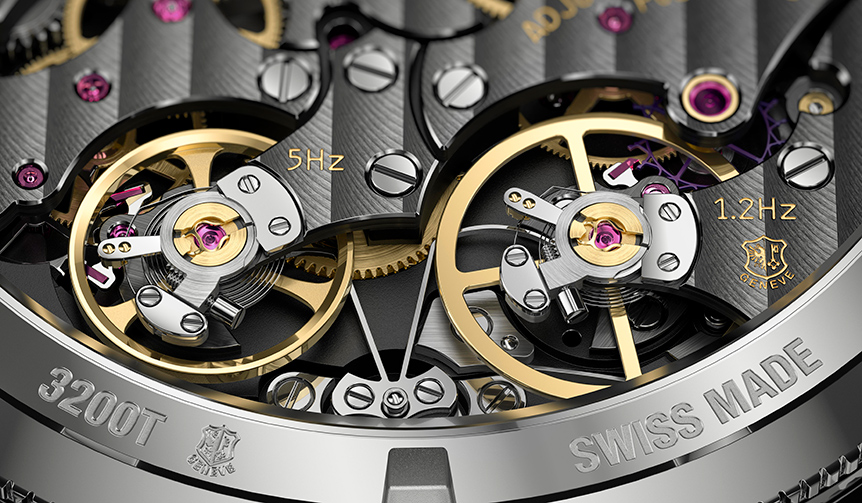
This is where the design philosophy of this model comes into play. When worn, it operates in active mode (5Hz), and when stored, it switches to standby mode (1.2Hz). With a push-piece at 8 o'clock, the user can select the desired beat. In reality, when the watch is put away, it lies flat and is not subjected to shocks, so a slower beat is sufficient. A slower beat consumes less of the mainspring's power, resulting in an incredible ultra-long power reserve of approximately two months, even when left untouched. Conversely, when worn, the balance wheel rotates at high speed to maintain accuracy. Even in this mode, it has a four-day power reserve, ensuring ample energy.
This year, Vacheron Constantin has unveiled numerous new creations, showcasing the brand's momentum and setting it apart from its competitors. Among these, the release of an extreme model that pushes the boundaries of mechanical watchmaking is particularly commendable. The price is subject to change and is quite substantial (preliminary ex-tax price as of June 2019 was 29 million yen). Naturally, it's clear that not everyone can afford it. However, if I were seriously considering a watch for a lifetime, I would pay close attention to brands with such momentum. This is because purchasing a watch is, in essence, buying into the brand's future.
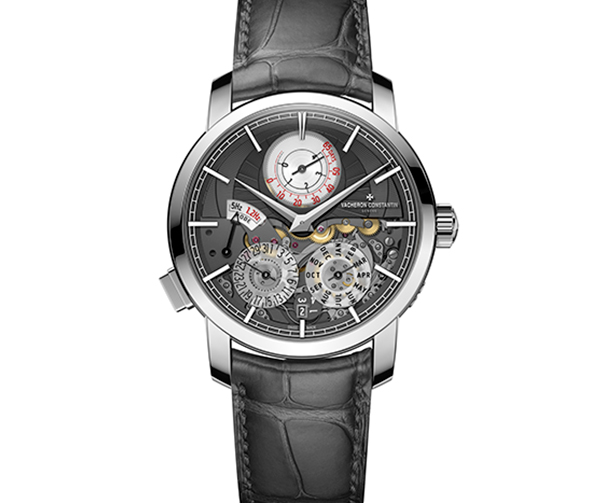
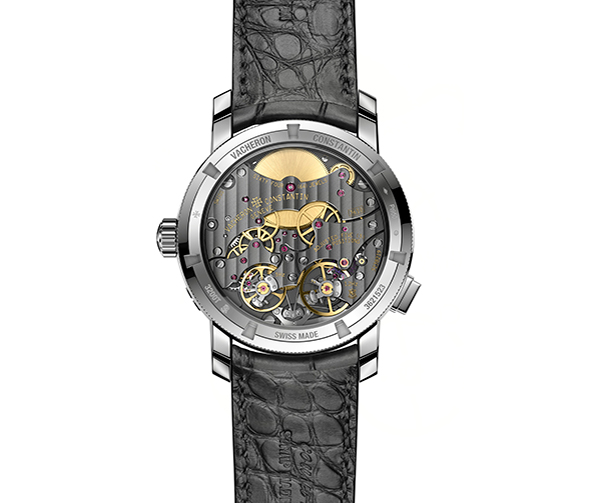
Traditionnelle Twin Beat Perpetual Calendar
Ref. | 3200T/000P-B578
Movement | In-house developed and manufactured manual-winding (Cal. 3610 QP), Hallmark of Geneva certified
Frequencies | Active Mode (5Hz, 36,000 vibrations/hour, approx. 4-day power reserve), Standby Mode (1.2Hz, 8,640 vibrations/hour, approx. 65-day power reserve)
Functions | Instantaneous perpetual calendar
Case Material | 950 Platinum
Case Back | Transparent (Sapphire Crystal)
Case Diameter, Thickness | 42.0mm, 12.3mm
Water Resistance | 3 bar
Strap Material | Mississippi Alligator Leather
Price | Price on request (preliminary ex-tax price as of June 2019: 29 million yen)
Limited Edition | Boutique exclusive
Release | Scheduled for Autumn 2019