August 22, 2025
A Dialogue with a Watchmaker from 100 Years Hence: Yosuke Sekiguchi's Unwavering Pride as a Craftsman in Switzerland
Yosuke Sekiguchi | Primevere
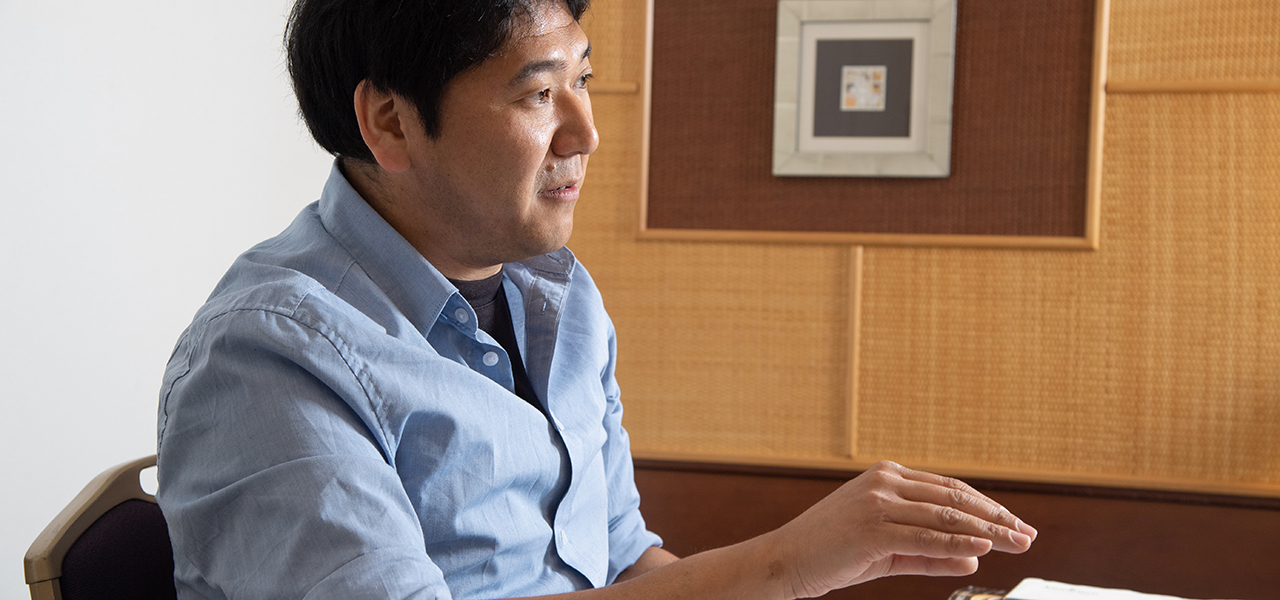
Annual production of 20 watches. No blueprints. All by hand. Yosuke Sekiguchi, 45, works as an independent watchmaker in Le Locle, Switzerland. His approach to watchmaking defies modern convention. Relying on experience restoring over 2,500 antique timepieces, he determines the necessary component shapes from the myriad designs in his mind. In an era that prizes efficiency, he deliberately chooses the inefficient, aiming to convey the profound depth of analog thinking from a craftsman who has made this choice.
Text by TSUCHIDA Takashi
A Japanese Craftsman's Spirit Echoes in the Swiss Mountains
Le Locle, at the foot of the Swiss Jura Mountains. In this mecca of watchmaking, one Japanese man pours his extraordinary passion. Yosuke Sekiguchi, 45. Though he produces only 20 watches a year, he is an independent watchmaker who crafts each of those 20 with immense care and astonishing precision.
At the beginning of our interview, Sekiguchi points to the escapement of an antique watch made about a century ago.
“I feel the presence of the watchmaker from that time here. What tools they used, in what order they finished this part. What their mindset was as they worked on this component. It feels like a conversation.”
A silent dialogue between craftsmen, transcending time and space. This is the origin of Sekiguchi's watchmaking.
Sekiguchi's path, unique in the world of watchmaking, stands out even in Switzerland. This is because the watches he creates have no blueprints.
“I just can't draw blueprints,”
Sekiguchi says with a wry smile, but behind this lies a unique stance that fundamentally overturns conventional watchmaking. Having learned watchmaking through self-study without formal schooling, he relies on his experience restoring over 2,500 timepieces to design micro-precision components and complete the final finishing.
Completing a single component takes about two to three weeks. With him handling everything from assembly to final adjustments alone, his watches require at least several months to complete. In an industry that prioritizes efficiency, there is perhaps no more inefficient method.
But therein lies the essence Sekiguchi pursues. He aims for watches that are not merely free of shortcuts, but are the crystallization of components that have been deliberately labored over.
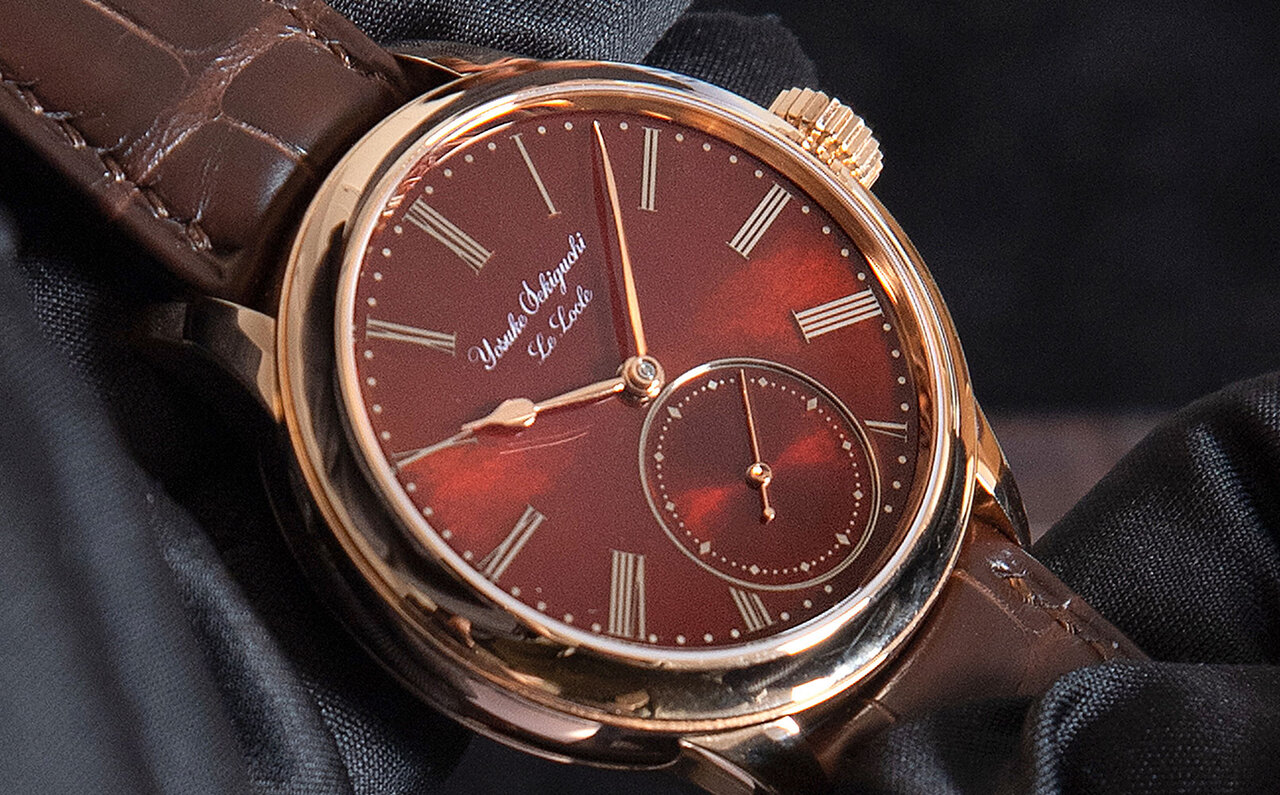
The 2025 new model from Yosuke Sekiguchi's first series, "Primevere." Limited to 10 pieces. The enamel dial features delicate indices. With three types of parts used for the small seconds indices, it embodies divine detail.
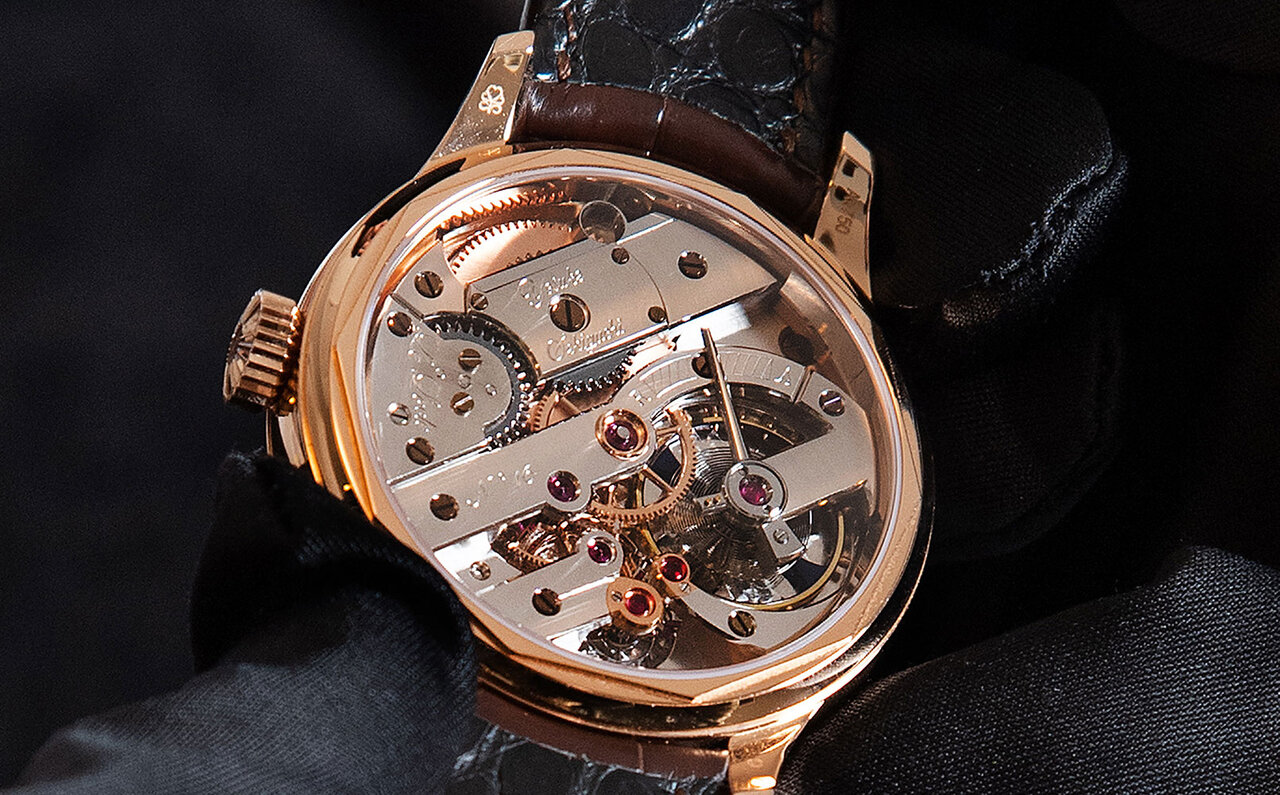
The case back is see-through. The movement boasts a rational and beautiful design that considers maintenance. Most pleasingly, the mechanism is not hidden but displayed.
The Beauty of Mechanical Watches Through the Eyes of a High Schooler
Yosuke Sekiguchi's journey as a watchmaker began in high school. His first encounter with mechanical watches was love at first sight. He was captivated by the sight of tiny gears precisely assembled, moving with regularity.
He then began collecting old watches. But collecting was not the goal. He would acquire broken timepieces, disassemble them, and try to understand 'why they are beautiful.' He was drawn to older watches, even those by unknown makers, more than contemporary luxury brands.
Through disassembly, Sekiguchi made a crucial discovery—the fundamental difference between modern and antique watches.
“Antique watches over 100 years old can be properly repaired. But the closer you get to modern ones, the more parts I can't fix myself.”
Modern watches can only be repaired by replacing parts made with the latest machinery. Antique watches, however, were shaped by human hands, and thus can be repaired by human hands. This distinction profoundly influenced Sekiguchi's outlook on life.
“When I take them apart, I can understand how they were made, even with parts over 100 years old.”
From the finishing of the parts and the tools used, he can imagine the skill level and even the personality of the watchmakers of the past. This experience is the fundamental motivation supporting Sekiguchi today. He hopes that his own watches will convey 'the presence of Yosuke Sekiguchi' to future craftspeople who may repair them.
Disappointment and Resolve Felt in Switzerland
In the mid-2000s, Sekiguchi set foot in Switzerland, the heartland of watchmaking. However, the reality awaiting him in this revered place was far from his expectations. He worked for several prestigious companies, but could not find the 'soul of watchmaking' he sought.
Sekiguchi keenly felt the structural problems of the modern watch industry through his work in repairs. When a watch malfunctioned, individual parts were not supplied; it had to be sent back to the manufacturer's headquarters. Even if a skilled watchmaker was present, the system made repairs impossible outside of the manufacturer.
Sekiguchi felt a strong sense of dissonance with this 'enclosure strategy.' The watches he idealized were those that 'any skilled person who understands this watch could repair.'
What was even more decisive was the attitude of his peers towards their work. He did not find the 'respect, affection, and passion' of the craftsman spirit he had expected among watchmakers of his generation.
The disappointment felt in the mecca of watchmaking, however, also served as a catalyst for Sekiguchi to solidify his resolve. In August 2020, Sekiguchi began working under his own name, achieving complete independence on January 1, 2022.
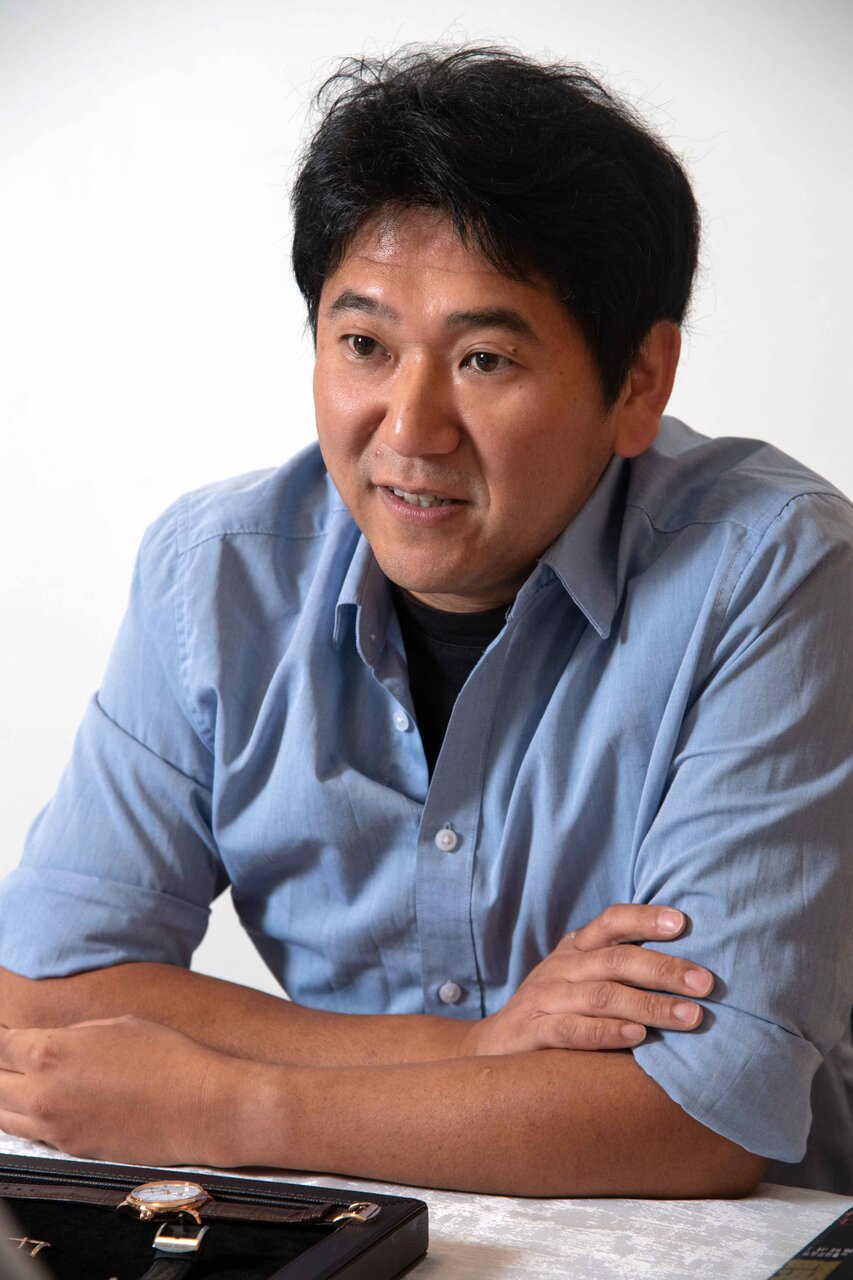
Yosuke Sekiguchi, 45. After graduating from Meiji University, he moved to France at 23. He self-taught to obtain the French national watchmaker qualification. After working at companies such as La Joux-Perret and Christophe Claret, he launched his own brand in 2020.
Why Can He Make Watches Without Blueprints?
For Sekiguchi, it is actually 'easier' without blueprints. Instead, a vivid three-dimensional image of the finished watch is depicted in his mind. He empirically grasps the shape, size, and interrelationships of each component.
Through countless watch repairs, Sekiguchi internalized the rules of watch construction. He understood the relationship between gear size and pinion thickness, the balance wheel's oscillation frequency and the mainspring's power, and other fundamental principles of mechanical watches not as theory, but as experience. Blueprints are communication tools, but unnecessary for Sekiguchi, who does everything himself.
However, the actual production process is a series of trial and error. While the initial prototypes involved making every component by hand, he now uses lathe-machined parts based on design data, which he then personally finishes and assembles for adjustment.
A single prototype can take over a year to complete. Proceeding without blueprints may indeed deviate too far from the standards of modern manufacturing that emphasizes efficiency. But for Sekiguchi, this method is the expression of his individuality. The process of imbuing components directly with the images from his mind, without the translation of blueprints, holds a pure joy of creation.
Indeed, a tourbillon he made ten years ago was also created without blueprints.
“It's a unique piece, and I couldn't make exactly the same one again.”
Being unable to replicate the same item might be a fatal flaw for an industrial product. However, for an artwork or craft, it is proof of the highest value.
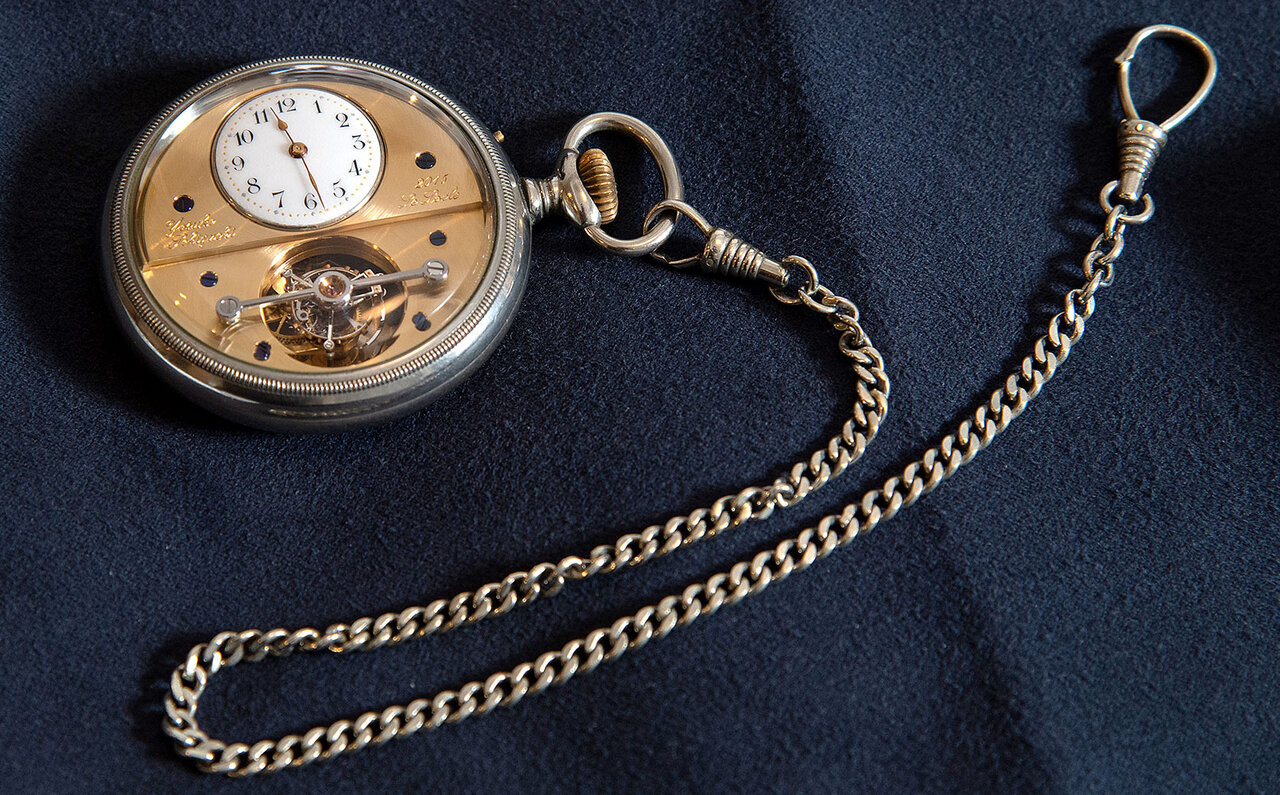
A tourbillon pocket watch made by Yosuke Sekiguchi. With an offset dial, it focuses on the tourbillon mechanism, creating a truly exquisite piece.
The Moment One's Mental State Appears in the Components
What is striking in Sekiguchi's account is his discussion of the 'relationship between mental state and quality.' In the world of precision handcrafting, the maker's psychological state directly influences the quality of the product.
He says that when he looks back at the parts he has made, he can recall his state of mind at that time. This is a phenomenon that absolutely cannot occur in mass production. However, in handcrafting, even slight shifts in emotion affect the movement of the hand, which then manifests in the final finish.
Sekiguchi views this phenomenon as a precious opportunity to imprint his own existence onto his work. Like a diary, his life is etched into the watch before him.
“Just as a composer leaves behind a piece of music, or a novelist a novel. Isn't it possible for watches to be the same?”
This perspective clearly positions Sekiguchi's watchmaking not merely as product manufacturing, but as artistic creation. The small annual production of 20 watches is also closely linked to this philosophy.
Of course, Sekiguchi produces components in batches. However, if he discovers a better method midway, he will not hesitate to redo even completed parts. For him, room for improvement is not a cause for regret, but a testament to growth.
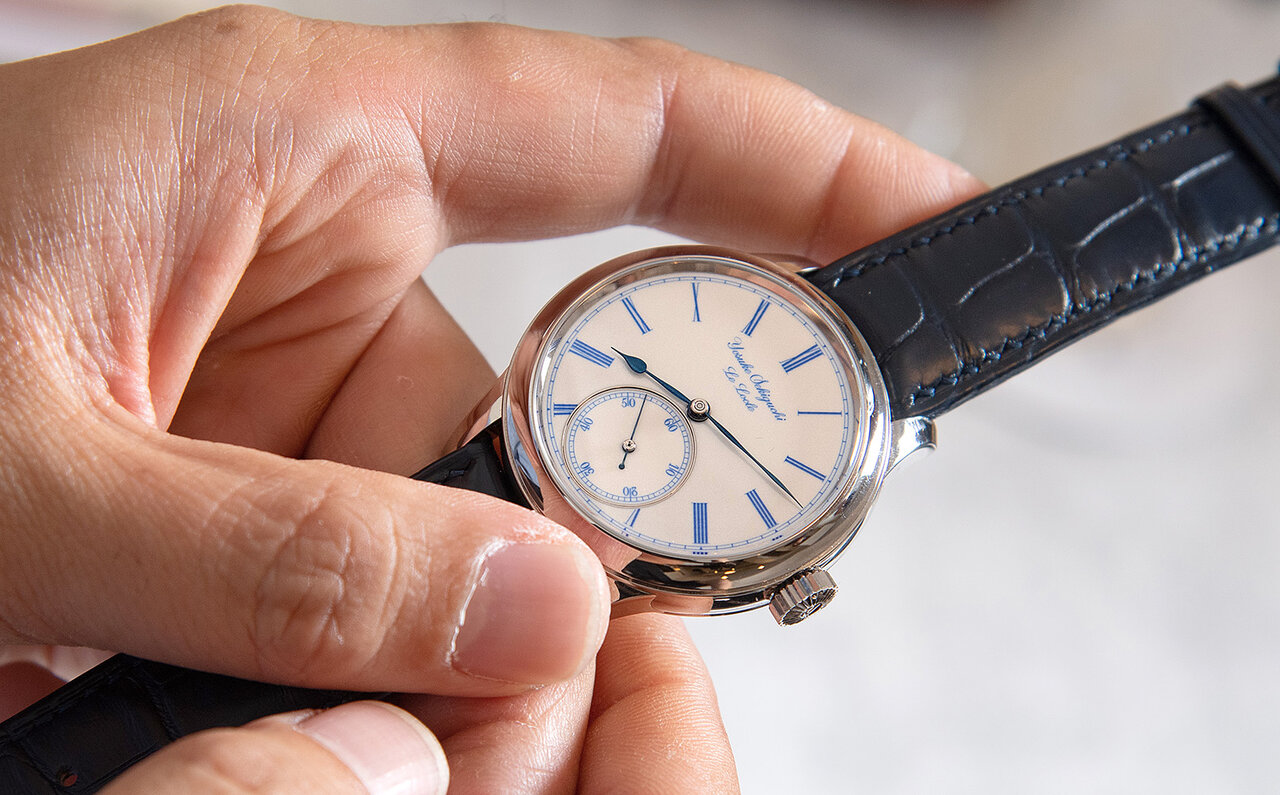
Another new model from the "Primevere" series for 2025. Limited to 10 pieces. The off-white enamel dial, with its profound charm, is complemented by blue indices, giving it a pure impression.
The Craftsman's Heart Learned from a Master
One person profoundly influenced Sekiguchi's watchmaking: a master watchmaker in his 80s, now deceased, who was legendary for finishing the Three Bridges Tourbillon at Girard-Perregaux.
This master's teaching method differed greatly from conventional technical instruction. First, the master would demonstrate his own technique, then have Sekiguchi try it. Only after Sekiguchi attempted 'his own considered method' would the master teach, 'This is how I do it.'
More importantly, the master always added these words at the end:
“But this is not the best way. Think for yourself.”
This demonstrates the attitude of a true mentor. While teaching his skills, he did not treat them as absolute, respecting the apprentice's creativity and independence. Such mental independence is what defines a watchmaker. Another crucial lesson Sekiguchi learned from this master was his approach to failure. When Sekiguchi broke four steel hands in a row during their production, his master told him as he despaired:
“That's how it is. Breaking them is part of the job. Don't expect everything to go smoothly. It never does.”
Perhaps the master's teachings were about a different perception of time. In modern society, efficiency reigns supreme with the adage 'time is money.' But in the world of craftsmanship, a different sense of time exists. That 'slower society' was the very soil that produced breathtaking works for the world.
The Philosophy of 'I Start It, I Finish It'
What is most unique about Sekiguchi's watchmaking is his stance on brand succession. While many craftsmen and entrepreneurs pursue business longevity, Sekiguchi has chosen the opposite.
“I will not expand. I will not hire anyone. When I stop, I don't think new watches under my name should be released.”
Behind this philosophy lies a sharp critique of the modern watch industry.
“There are brands named after various watchmakers, but they never sit at a desk for even a moment. They have everything done by others.”
In a conversation with Mr. Forster, co-founder of Greubel Forsey and a friend of Sekiguchi's, Forster stated that company growth and expansion are the marks of success. However, Sekiguchi explicitly says, 'It's the opposite.' In Sekiguchi's case, he clearly separates the succession of technique from the succession of the brand.
Technique has universal value. He is willing to pass it on generously to any successor who understands it. But the brand is inseparable from the individual, and should not be passed on—this is Sekiguchi's belief.
“However, anyone who understands and has the skill can undertake repairs. That is what I believe is most ideal.”
This approach resonates with the philosophy of open-source software. While Sekiguchi's watchmaking is personal, it ultimately aims to create universal value that transcends the individual.
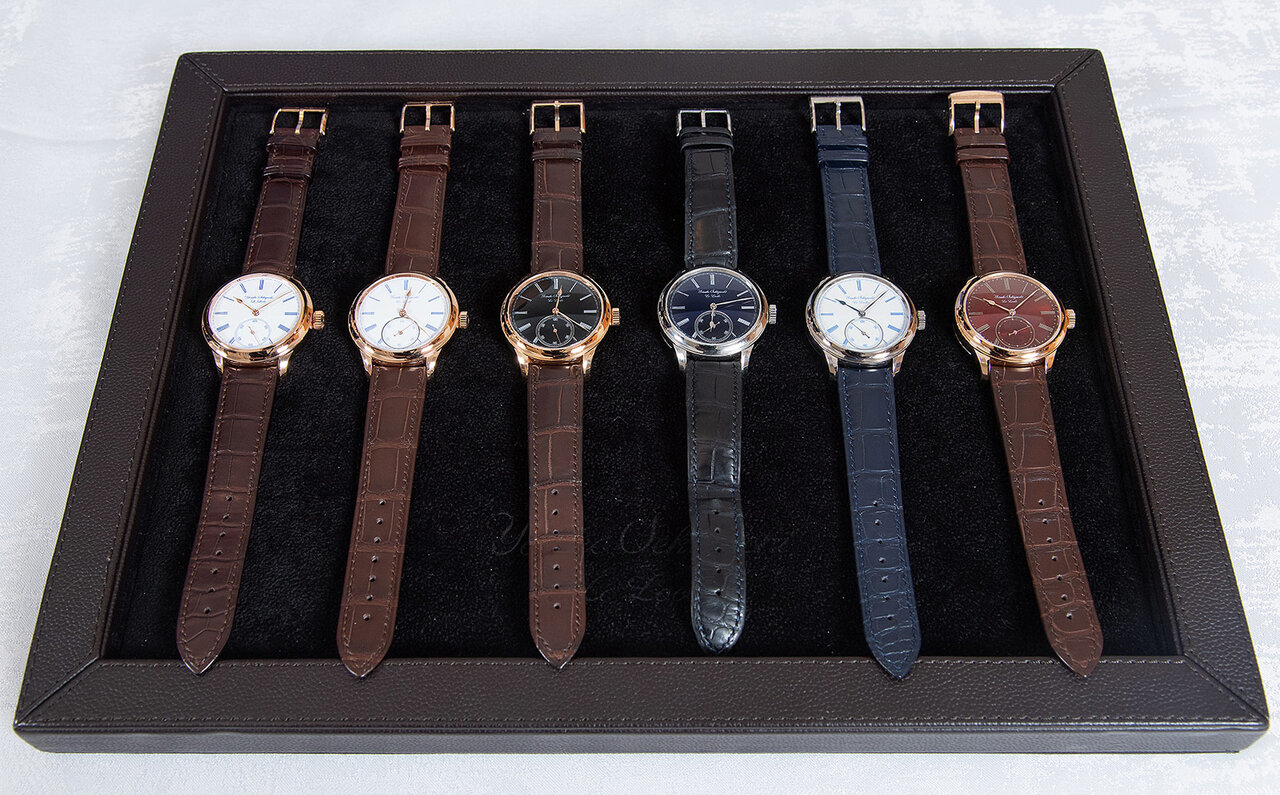
From left: The "prototype" of the first model. White Grand Feu Champlevé enamel announced in 2023. Black Grand Feu Champlevé enamel announced in 2023. Prototype of Aventurine Grand Feu Champlevé enamel announced in 2024. The two on the right are new models announced in 2025 (cases are all gold). Prices available upon inquiry.
What Do Watches Ask of Us? The True Meaning of Richness
Through Sekiguchi's watchmaking, we glimpse fundamental questions facing modern society. An inefficient production method making only 20 watches a year, a pursuit of quality over profit maximization, a management philosophy that chooses depth over expansion—all of these challenge contemporary notions of success. Yet, Sekiguchi himself is filled with fulfillment. Making watches he finds truly beautiful, under his own name and responsibility. Therein lies a richness that cannot be measured in monetary terms.
The annual production of 20 watches is not a limitation of Sekiguchi's capabilities. It is an expression of the life he has chosen. A choice to spare no time or effort necessary to imbue each watch with his entire being.
In modern society, we are constantly pressured to be 'faster, more, more efficient.' However, Sekiguchi's watchmaking suggests another possibility: a value system of 'deeper, more beautiful, more meaningful.'
The Japanese craftsman's spirit echoing in the Swiss mountains is, in essence, a powerful message to all of us living today.
Contact
Carillon(Importer)
Tel.0744-22-3853
https://yosuke-sekiguchi.com/japanese/index.html