
The Jaeger-LeCoultre manufacture building, nestled in the Vallée de Joux. Photographed in 2019.
December 6, 2019
Why Jaeger-LeCoultre is called a "true manufacture" | JAEGER-LECOULTRE
Presented by JAEGER-LECOULTREJAEGER-LECOULTRE
Why Jaeger-LeCoultre is treated on par with top-tier brands: it possesses all the essential elements of watchmaking (1)
Is it still a "brand for those in the know" in Japan? The deeper one's knowledge of watches, the more likely they are to highly value Jaeger-LeCoultre. Jaeger-LeCoultre is treated as either following or being on par with the so-called "Big Three" watch brands. So, why is that? Ultimately, is this brand a "buy"?
Text by TSUCHIDA Takashi
Jaeger-LeCoultre: The True "Manufacture"
A "manufacture" precisely refers to an integrated in-house production system. This system, where not only the case and dial that define a watch's design but also the movement are created in-house and assembled within the company, is called a "manufacture." However, this term requires a bit of caution. Nowadays, many watch manufacturers claim to be "manufactures," but if you peel back that label slightly, the reality varies. In my experience, the most common scenario is that only a very small number of high-end models are produced under an integrated in-house system. Beyond that, some even claim "manufacture" status for the production of just a few pieces.
The term "manufacture" likely sounds impressive. This is because such a system holds rarity value. The mainstream of the Swiss watch industry, however, operates on a production system that is the opposite of a manufacture: the "établisseur." Some may have learned this term in watch magazines. The mainstream of the Swiss watch industry is the "établisseur" (a style of fragmented division of labor).
Allow me to digress slightly and touch upon the origins of Switzerland itself. Switzerland was formed in the 1500s by Huguenots (Puritans) who were driven from their homes by the religious revolution, fleeing into the rugged mountains from France, Germany, and Italy. The watchmaking that developed in this region originated as a side job during the long winter months when farming was not possible. Thus, countless small organizations, each excelling in specialized processes, came together to support the precision instrument and watch industry. In light of this background, it becomes clear that the "établisseur" system is the natural state of this land.
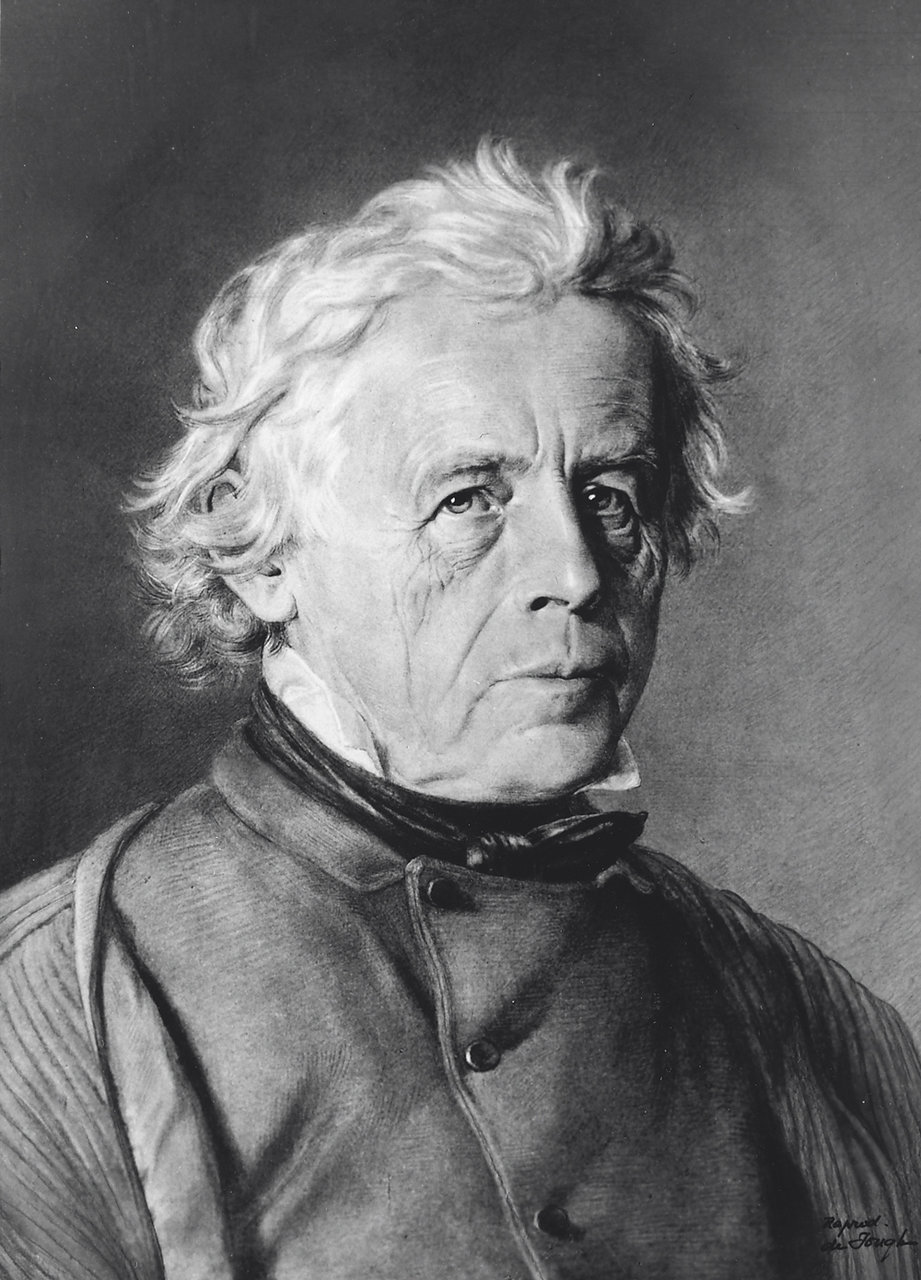
Founder Antoine LeCoultre (1803-1881)
So, why did the "manufacture" system emerge?
This production system emerged in the 1800s. Indeed, Jaeger-LeCoultre (or rather, LeCoultre before the merger with Jaeger) established the first manufacture in Switzerland. The catalyst for this was the "Millionomètre." The ultra-precise measuring instrument invented by founder Antoine LeCoultre, capable of measuring lengths down to the micron, revolutionized the watch manufacturing environment of the time. Eventually, the various units gathered in the Joux Valley, where LeCoultre was located, consolidated to form the manufacture. It is easy to imagine how LeCoultre, by leveraging the "Millionomètre" and proclaiming itself a manufacture, could emphasize its superior quality.
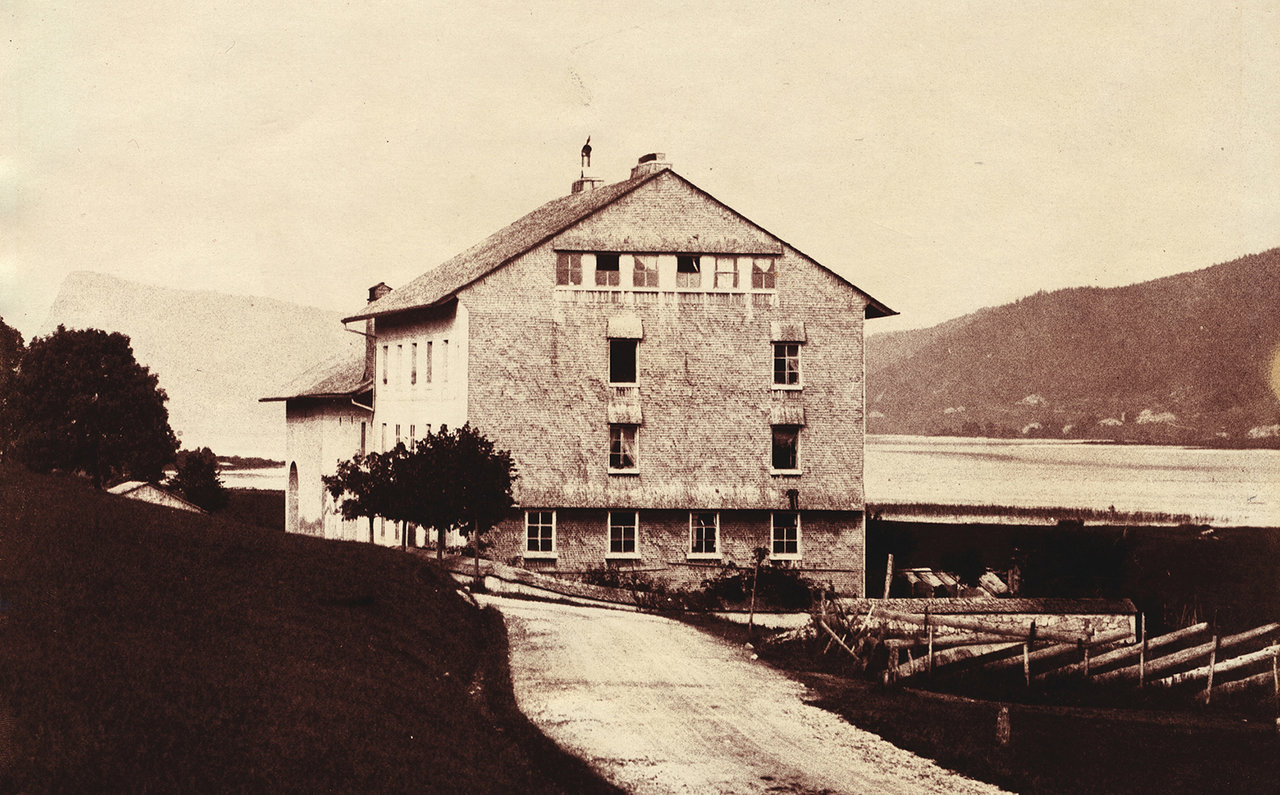
The company building when Antoine LeCoultre founded LeCoultre in 1833.
Another reason for the prominence of the "manufacture" system lies in product uniqueness. A prime example of this is a rectangular watch case housing a rectangular movement. This might sound obvious, but it is something that is difficult to achieve without a manufacture. Furthermore, many rectangular watches from "établisseur" brands still house round movements.
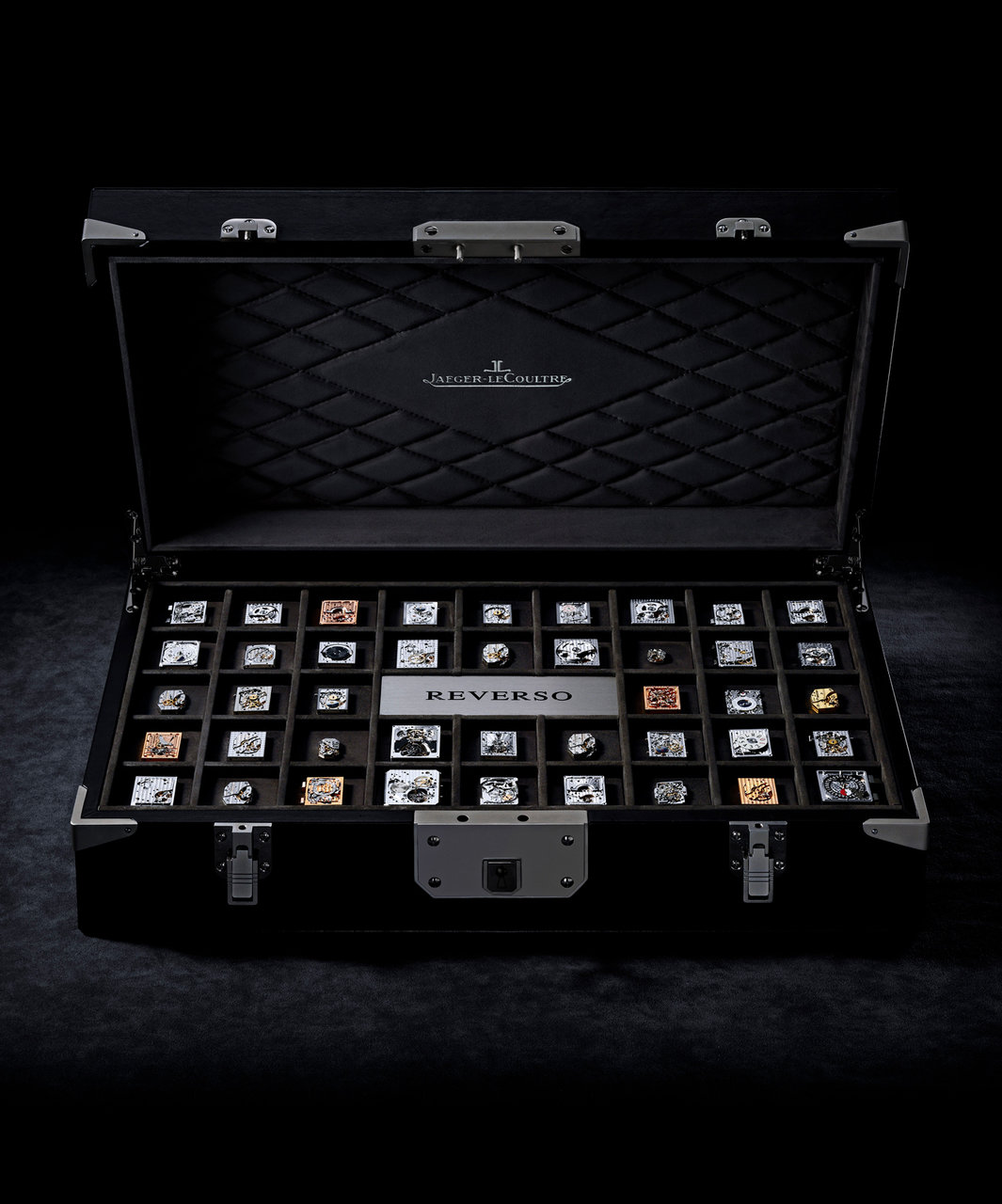
Jaeger-LeCoultre possesses such a wide variety of movements just for the "Reverso" alone.
Because Jaeger-LeCoultre is a manufacture, it can adhere to design and production systems tailored to its product concepts. This leads to a high potential for expressing uniqueness. Moreover, the key point is that this uniqueness is achieved in mass-produced models. By leveraging economies of scale, it can control costs as an industrial product while still pursuing originality.
Since its founding, Jaeger-LeCoultre has produced over 1,200 movements. This is evidence that for every new watch design, the movement has been developed and designed from scratch. Since its inception, Jaeger-LeCoultre has continuously exercised its creativity without being constrained by the physical limitations of movements.
Let's also touch upon another fact that solidifies Jaeger-LeCoultre's reliability: the internal inspection program, the "1000 Hour Control Test." This program, conducted with stricter standards than those of COSC, Switzerland's leading certification body, signifies that all Jaeger-LeCoultre products meet precision and quality standards exceeding COSC. While many luxury brands have recently begun conducting such proprietary checks, Jaeger-LeCoultre initiated this test in 1992. The brand is a pioneer in implementing high-level in-house testing early on.
Finally, to highlight Jaeger-LeCoultre's exceptional development capabilities, we point to its ultra-complicated timepieces. For instance, as seen in its gyrotourbillons, Jaeger-LeCoultre continues to boldly challenge the frontiers of watchmaking technology. This is proof that it does not neglect the refinement of its skills as a manufacture.
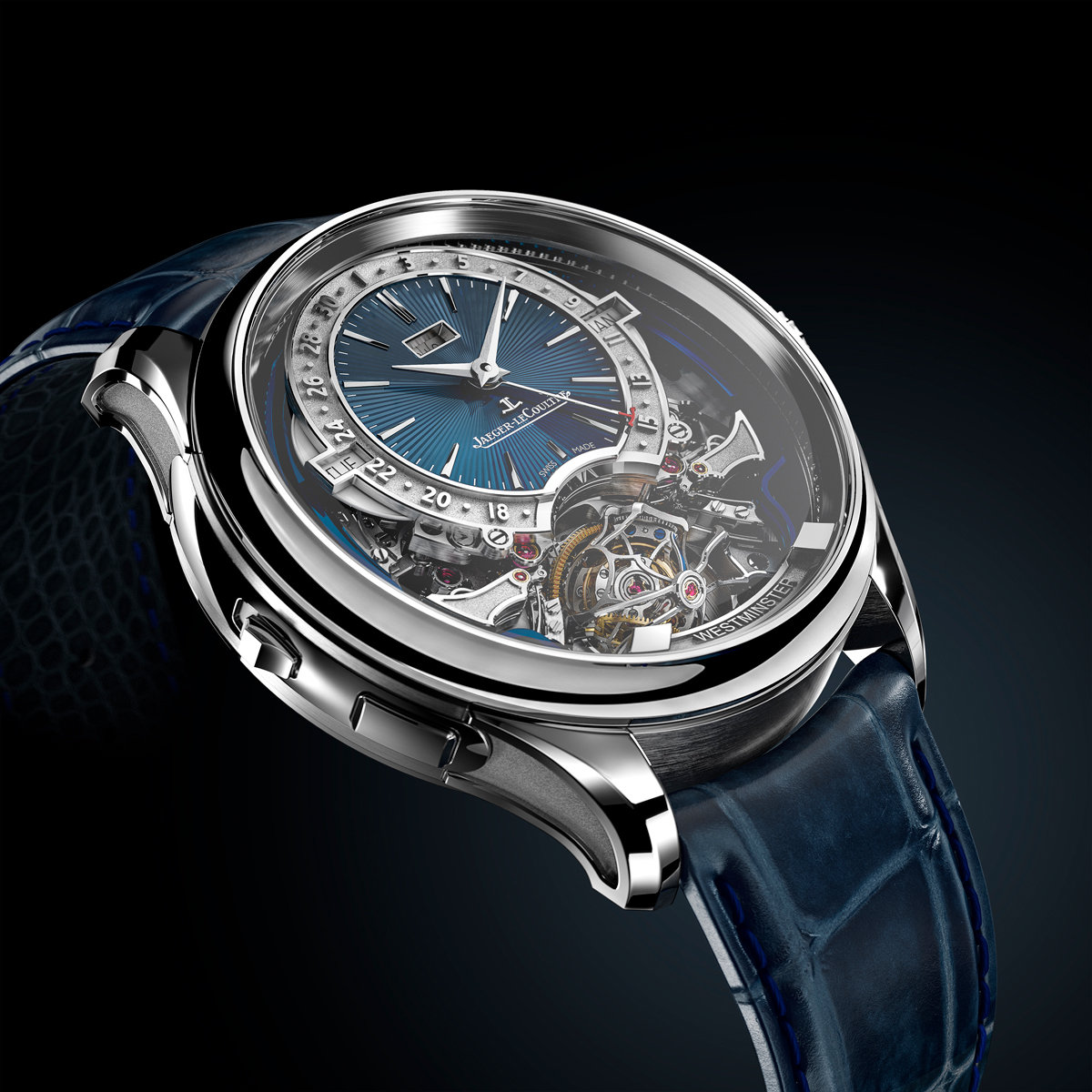
The latest gyrotourbillon model, unveiled in 2019. The escapement, which governs the watch's accuracy, is housed in a cage at the 6 o'clock position and rotates on two axes, X and Y, along with the cage. This mechanism counteracts the effects of gravity. The key point is that the design of the tourbillon components has been modified and the size reduced to make it more user-friendly than existing gyrotourbillons. It features a Westminster chime, minute repeater, perpetual calendar, and gyrotourbillon. Price available upon inquiry.
JAEGER-LECOULTRE
Why Jaeger-LeCoultre is treated on par with top-tier brands: it possesses all the essential elements of watchmaking (2)
The Ultimate Uniqueness: The Reversible Mechanism of the Legendary "Reverso"
The "Reverso," a prime example of Jaeger-LeCoultre's ability to embody unique designs precisely because it is a manufacture, is this very watch. The model name comes from the Latin word for "to reverse." It features a mechanism that allows the watch case to slide sideways, concealing the dial.
Legend has it that this mechanism was born from a request from British officers stationed in India for a watch that could withstand the impacts of polo matches. While playing polo with sticks while wearing a wristwatch might have seemed reckless, Jaeger-LeCoultre did not dismiss the request but earnestly took on the challenge. A wristwatch is not merely a tool to tell time; it can also be an item that inspires the spirit, like a talisman. The "Reverso" is a product made possible by a manufacture.
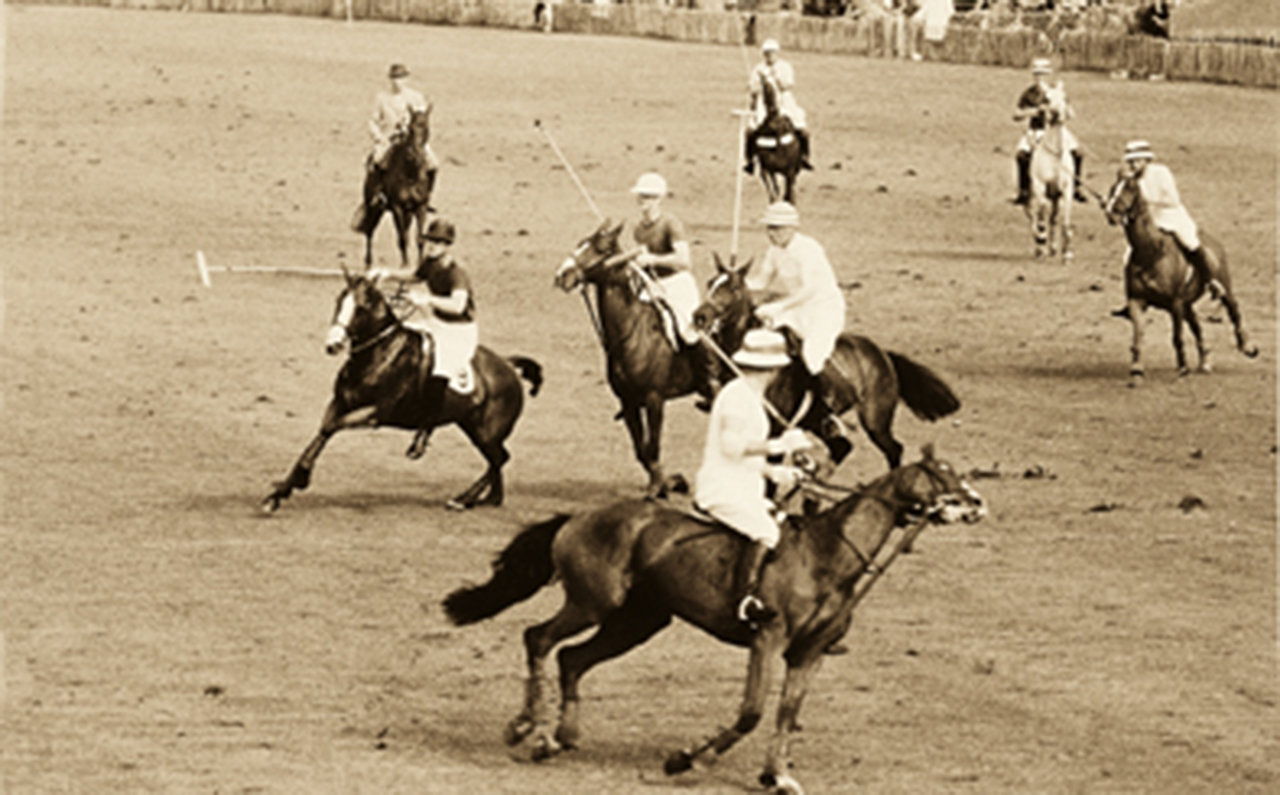
Initially, the "Reverso" was equipped with a round movement, but it was soon switched to a dedicated rectangular movement. This was to maximize the use of space and enhance the watch's performance. Incidentally, the case-reversing mechanism later appeared in several other famous Swiss brands, but they were all discontinued early on. Various ideas were tried, such as vertical reversal or rotation on a spherical axis, but it seems the "Reverso's" horizontal slide method was the most logical.
Furthermore, the case back of the "Reverso," which initially served as a protective cover against impact, eventually evolved beyond that role. It became a space for personalization, such as engraving initials on the reversed side. Later, a second dial was incorporated into the case back, allowing for two faces to be used on a single watch – the birth of the "Reverso Duo." In this way, the "Reverso" retained its uniquely ingenious mechanism while being updated to align with modern lifestyles. The enduring popularity of the "Reverso" likely stems from such factors.
Another reason the Reverso stands out from other watches is likely its enduring Art Deco aesthetic. The Art Deco design, symbolizing an era of sophisticated elegance for gentlemen and ladies, evokes a unique sense of premium quality.
In essence, the "Reverso" is a distinctive rectangular watch with a story rooted in its reversible case, and it is a rare example symbolizing a manufacture product. The combination of these elements ensures that the "Reverso's" allure never fades.
Now, let's return to the initial question: Is Jaeger-LeCoultre a "buy"? If you've read this far, you already know my answer. Of course, it's a YES. Acquiring a luxury watch means sharing the worldview behind the product. In that regard, Jaeger-LeCoultre's "Reverso" speaks volumes.
And another thing, I must confess, among all the watches I've handled, I find the sharp, "click" sound when reversing the "Reverso" to be the most satisfying. The precision of its meticulous craftsmanship is reflected in that metallic sound. This is another element that draws adult men to the "Reverso."
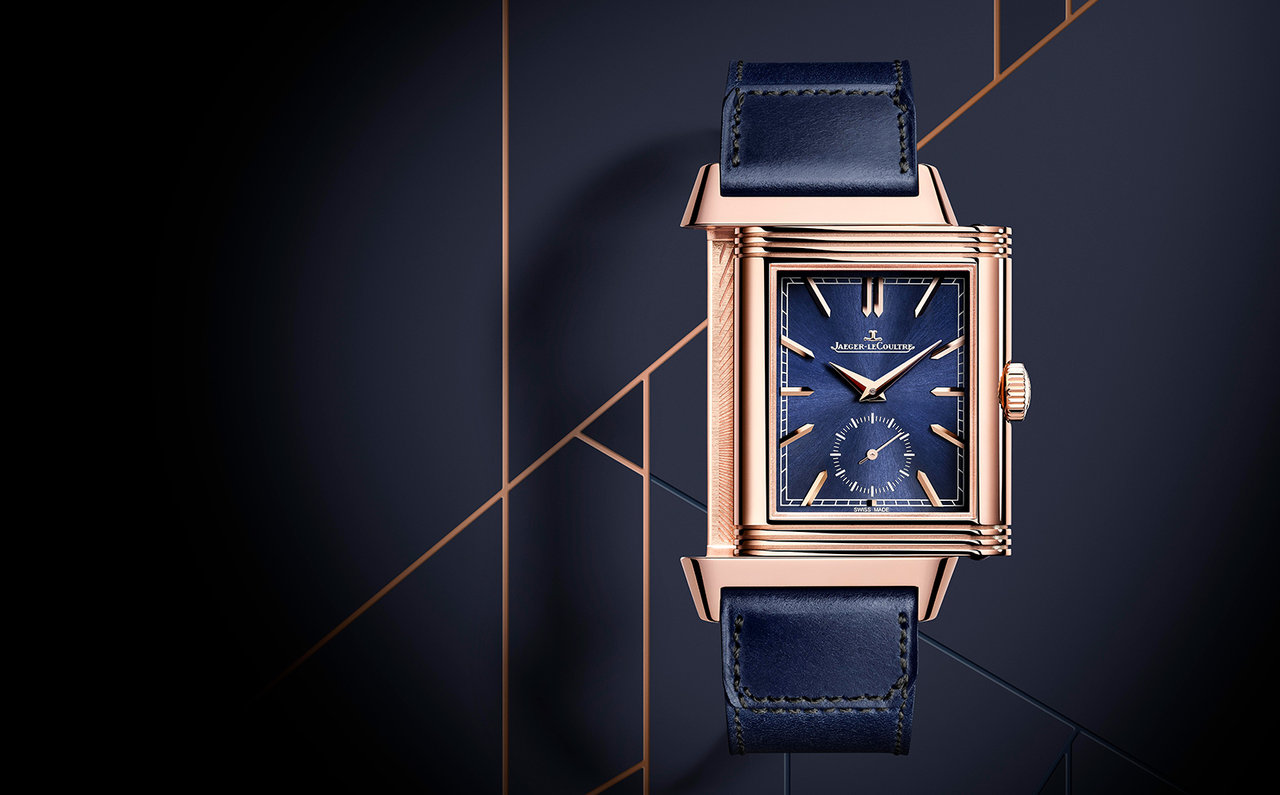
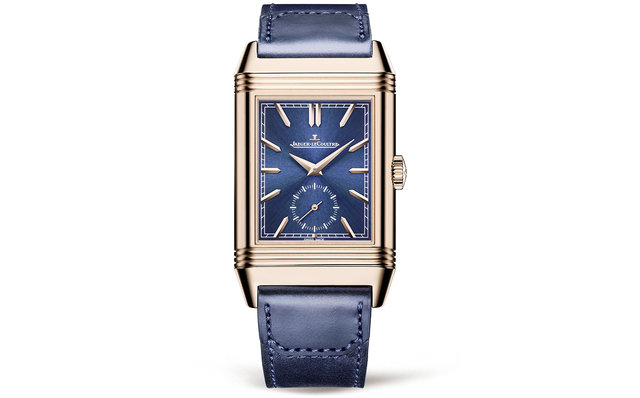
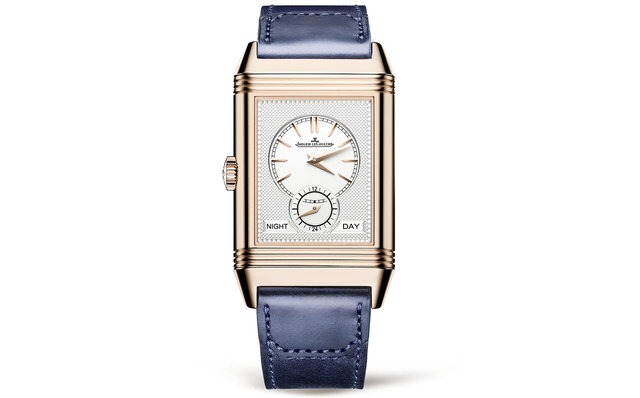
Reverso Tribute Duoface
This popular series of "Reverso" watches utilizes the traditional reversible case to incorporate a dual-time mechanism. Jaeger-LeCoultre's soft, warm pink gold contrasts beautifully with the blue dial. It comes with an exquisite leather strap made by Casa Fagliano.
Ref. | Q398258J
Movement | Manual winding (Cal. 854A/2)
Dial | Blue sunray finish (front), Silver guilloché (back)
Case material | 18KPG
Case size | 47 x 28.3mm
Case thickness | 10.3mm
Strap material | Cordovan leather (by Casa Fagliano)
Water resistance | 3 bar
Price | ¥2,272,000 (excluding tax)
Limited edition | Boutique exclusive
This popular series of "Reverso" watches utilizes the traditional reversible case to incorporate a dual-time mechanism. Jaeger-LeCoultre's soft, warm pink gold contrasts beautifully with the blue dial. It comes with an exquisite leather strap made by Casa Fagliano.
Ref. | Q398258J
Movement | Manual winding (Cal. 854A/2)
Dial | Blue sunray finish (front), Silver guilloché (back)
Case material | 18KPG
Case size | 47 x 28.3mm
Case thickness | 10.3mm
Strap material | Cordovan leather (by Casa Fagliano)
Water resistance | 3 bar
Price | ¥2,272,000 (excluding tax)
Limited edition | Boutique exclusive
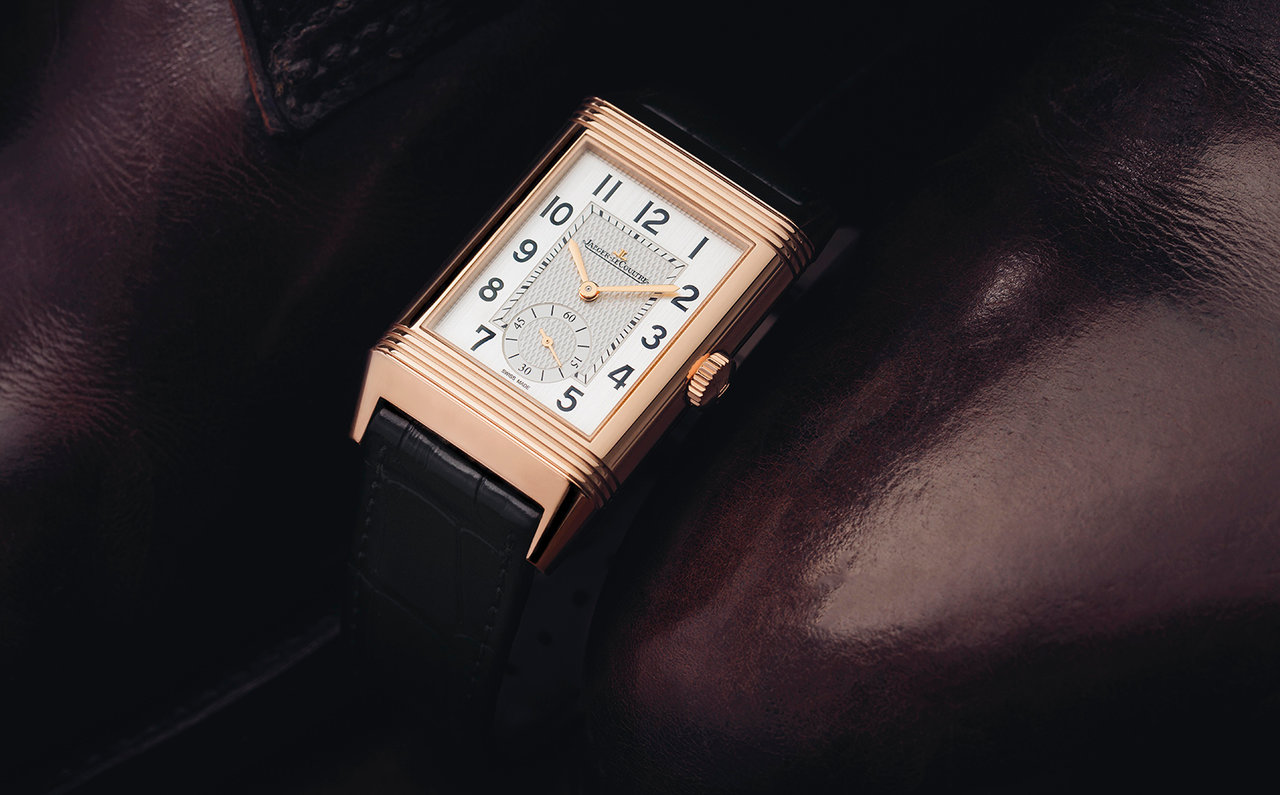
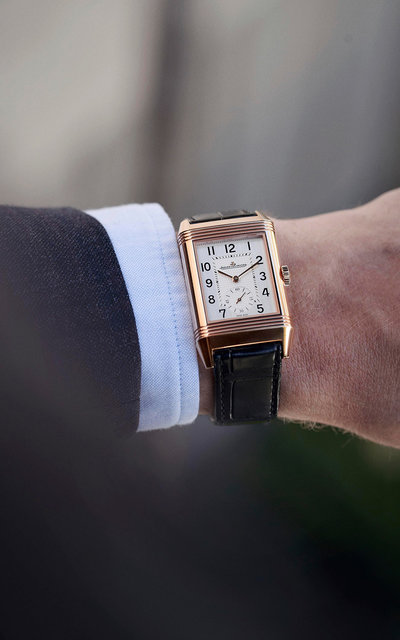
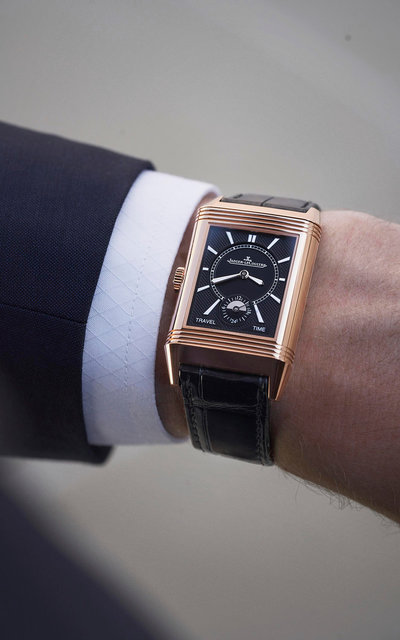
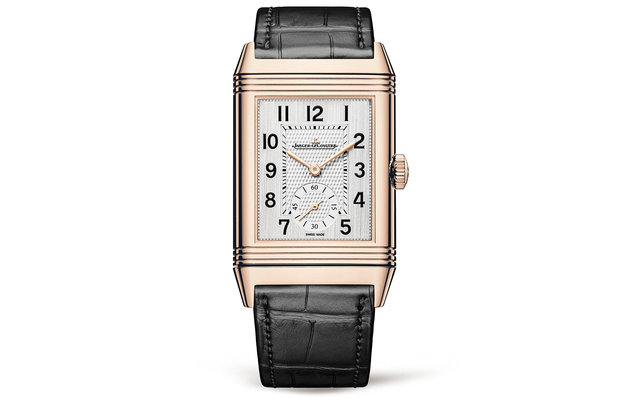
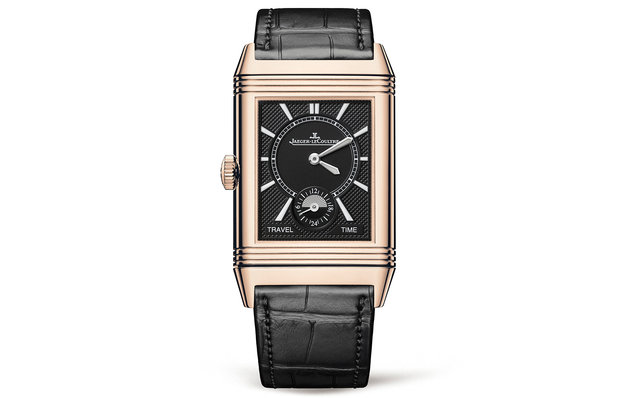
Reverso Classic Large Duoface Small Seconds
This popular series of "Reverso" watches utilizes the traditional reversible case to incorporate a dual-time mechanism. This is a design from the regular lineup. The front features the distinctive universal design numerals characteristic of the Reverso.
Ref. | Q3842520
Movement | Manual winding (Cal. 854A/2)
Dial | Silver vertical brushed & guilloché (front), Black guilloché & clous de Paris (back)
Case material | 18KPG
Case size | 47 x 28.3mm
Case thickness | 10.3mm
Strap material | Alligator leather
Water resistance | 3 bar
Price | ¥2,064,000 (excluding tax)
This popular series of "Reverso" watches utilizes the traditional reversible case to incorporate a dual-time mechanism. This is a design from the regular lineup. The front features the distinctive universal design numerals characteristic of the Reverso.
Ref. | Q3842520
Movement | Manual winding (Cal. 854A/2)
Dial | Silver vertical brushed & guilloché (front), Black guilloché & clous de Paris (back)
Case material | 18KPG
Case size | 47 x 28.3mm
Case thickness | 10.3mm
Strap material | Alligator leather
Water resistance | 3 bar
Price | ¥2,064,000 (excluding tax)
Contact
Jaeger-LeCoultre
Tel. 0120-79-1833
http://www.jaeger-lecoultre.com