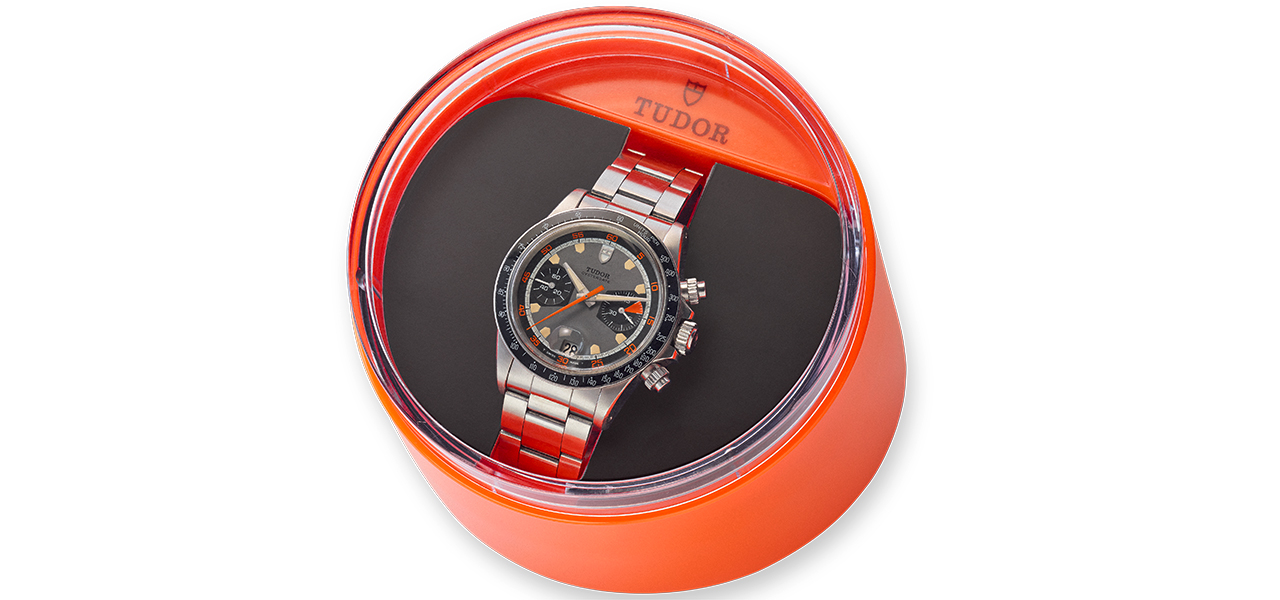
Much like the watch's innovative design, the 7000 series at the time was presented in a vibrant oran
WATCH & JEWELRY /
FEATURES
August 5, 2020
CHAPTER 1: Unraveling the History of Tudor Chronographs Through Epochal Models | TUDOR
TUDOR
A Half-Century of Tudor Chronographs: Why the Brand Has Consistently Pursued Its Own Style
Looking back at Tudor's half-century, the following epochal models have been part of its lineup.
[Tudor Chronograph Timeline]
1970 SERIES 7000 “HOMEPLATE”
1971 SERIES 7100 “MONTE CARLO”
1976 SERIES 9400 AND 79100 “BIG BLOCK”
1995 SERIES 79200 “SAPPHIRE CHRONOGRAPH”
2010 40th Anniversary of Tudor Chronograph Birth: Reissue of “HOMEBASE”
2013 Reissue of “MONTE CARLO”
Now, let's take a closer look at each model. Let's time-travel through the history of Tudor chronographs!
Text & Edit by Takashi Tsuchida
SERIES 7000 “HOMEPLATE”
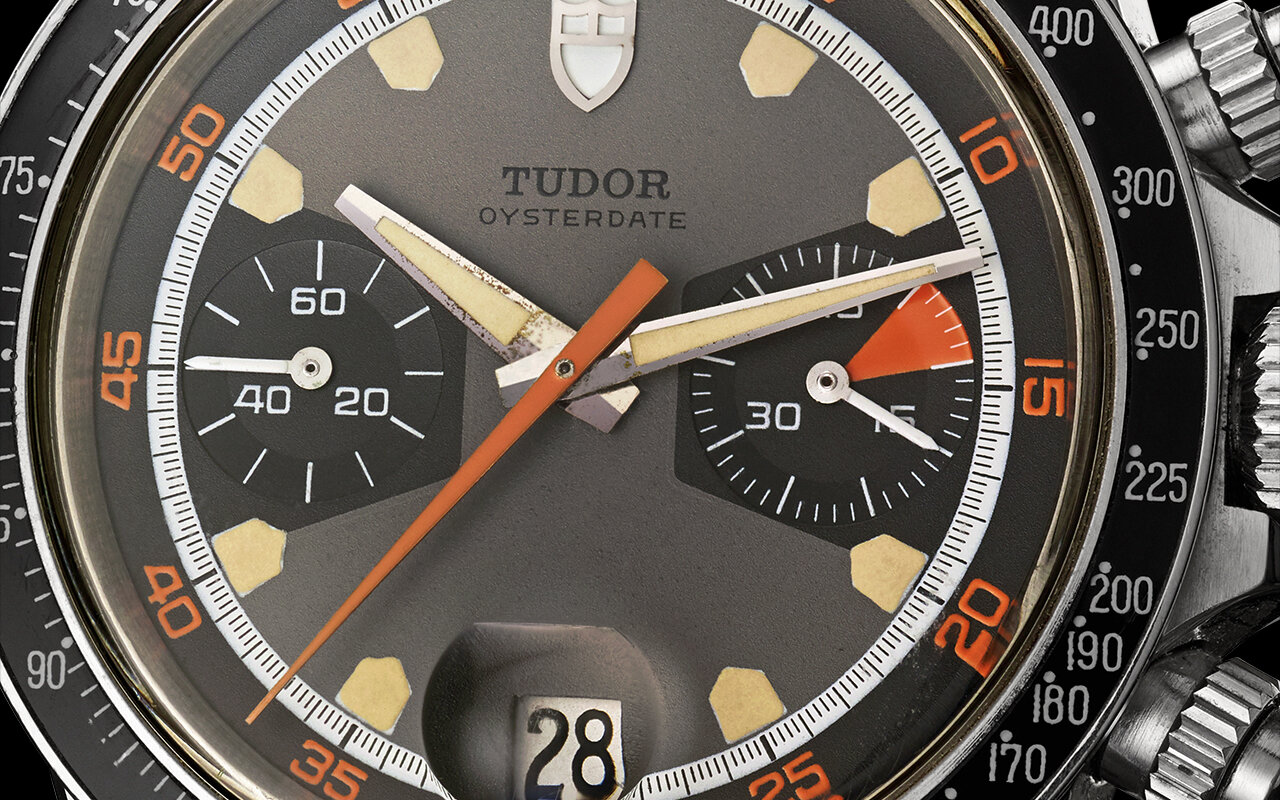
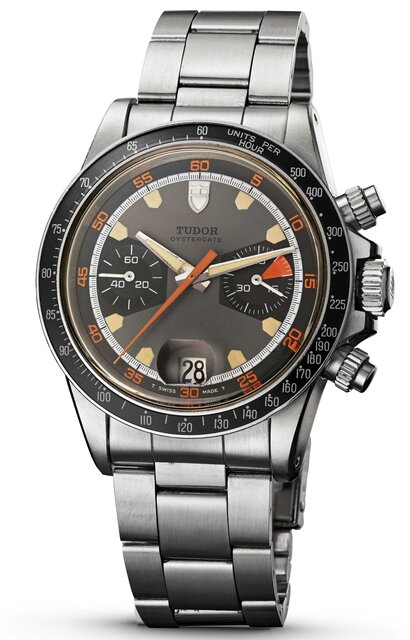
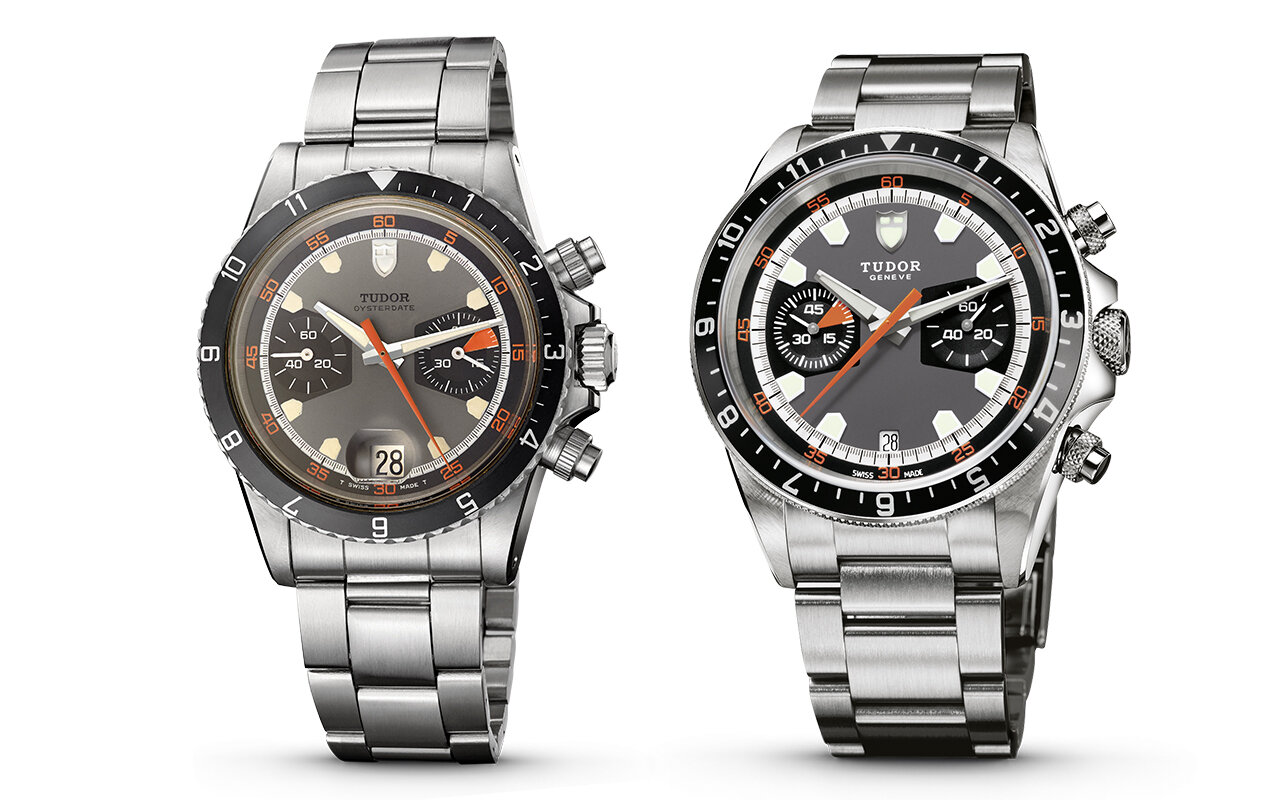
Tudor's first chronograph, officially named "Oysterdate," was released in 1970 and immediately established its position as a mechanical sports watch. It was equipped with the manual-winding caliber "VALJOUX 7734," featuring a cam-actuated chronograph transmission mechanism, emphasizing its robustness against repeated use. It boasted a balanced, sharp, and masculine design with a distinctive dial.
-
Oysterdate Ref. 7031
This model existed in three variations with different bezel designs. Ref. 7031 featured a bezel with a 500-unit tachymeter scale, covered with Plexiglas. Ref. 7032 (no photo available) used a satin-finished steel bezel, also engraved with a 500-unit tachymeter scale.
-
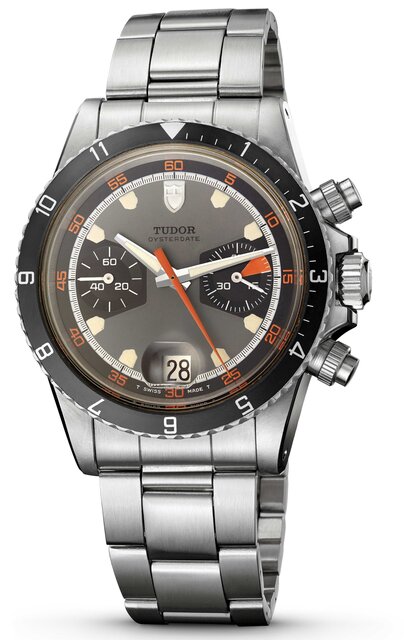
Oysterdate Ref. 7033
The remaining Ref. 7033 featured a bidirectional rotating bezel with black 12-hour markers, but this model was only produced as a prototype.
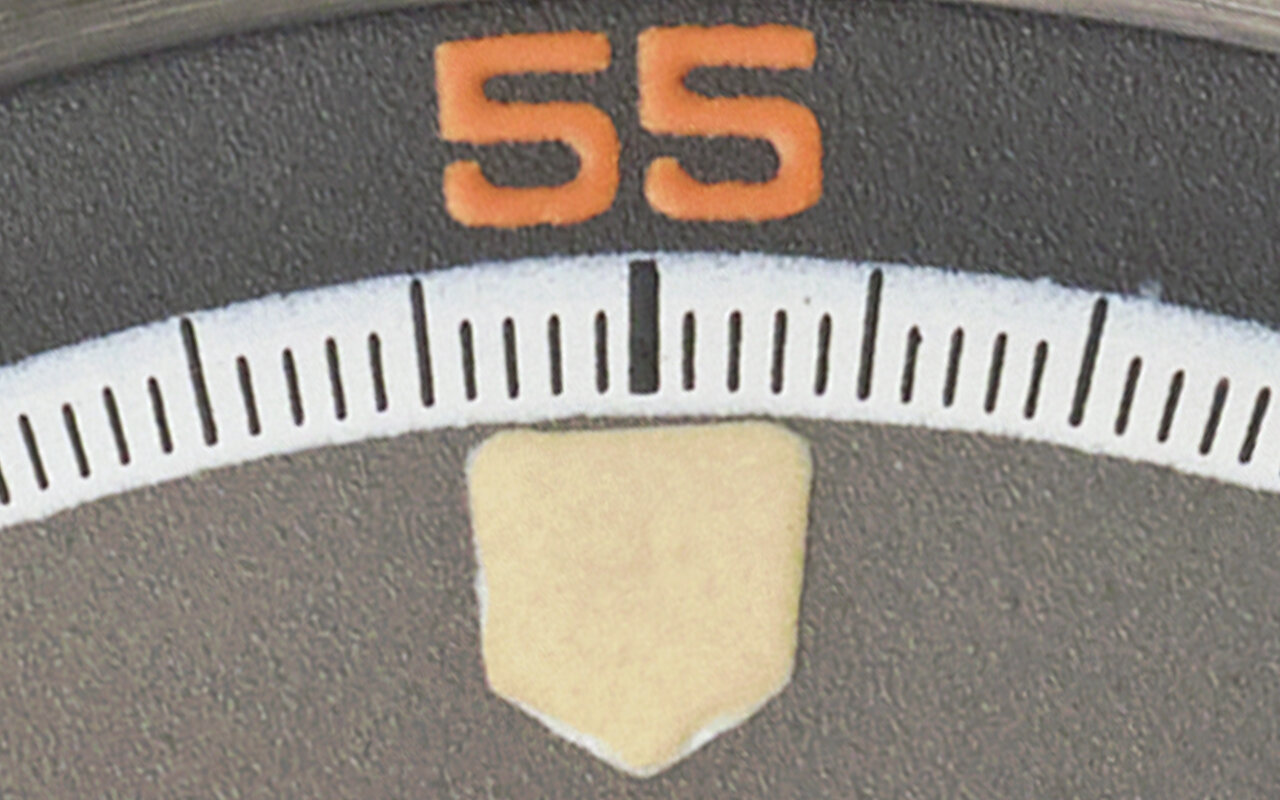
These models featured a two-tone gray dial. They were nicknamed "Homeplate" due to the distinctive pentagonal shape of their luminous hour markers. Another notable feature was the use of a 45-minute chronograph minute counter, differing from the more common 30-minute totalizer.
Indeed, Tudor chronographs have been affectionately given nicknames generation after generation. This is a testament to how deeply these chronographs have been loved by watch enthusiasts.
This is understandable, as Tudor chronographs, housed in Oyster cases, were inherently practical timepieces with high water resistance and robust mechanisms from their inception. The serious craftsmanship clearly resonated with fans.
SERIES 7100 “MONTE CARLO”
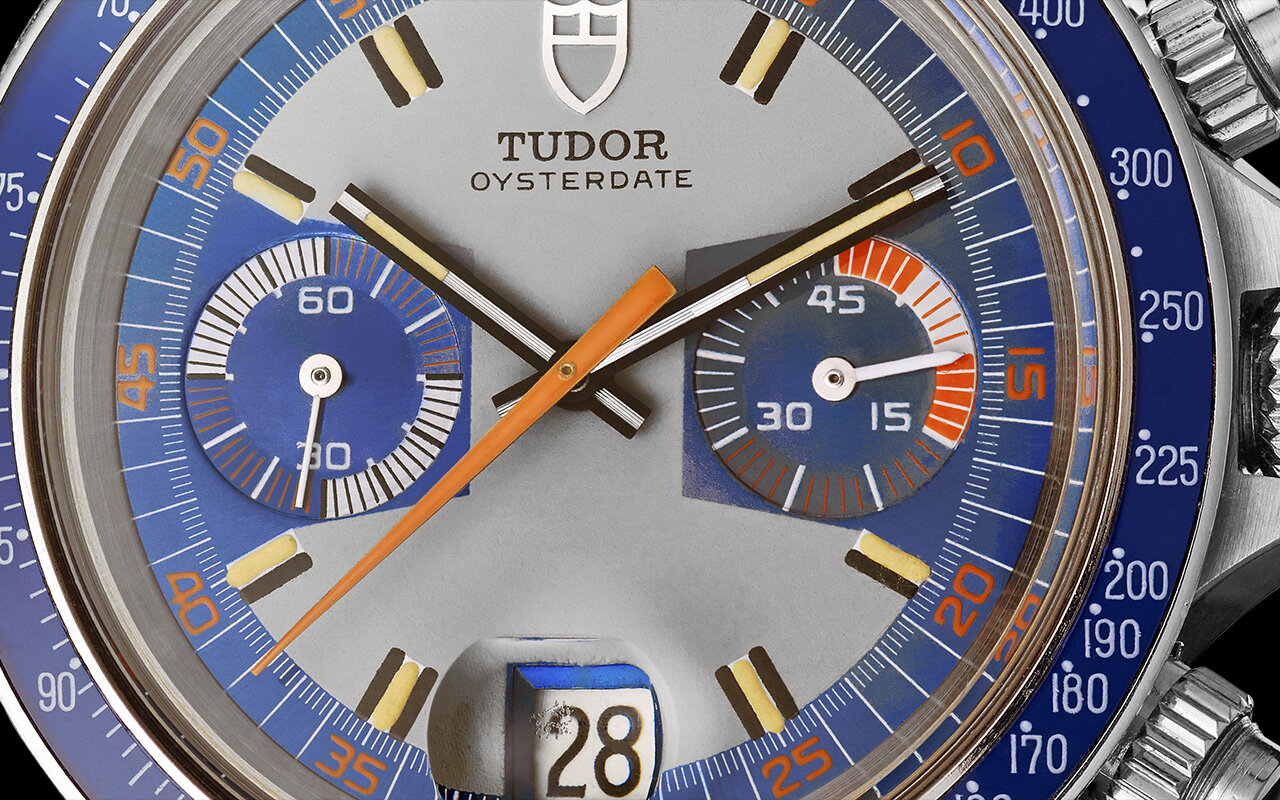
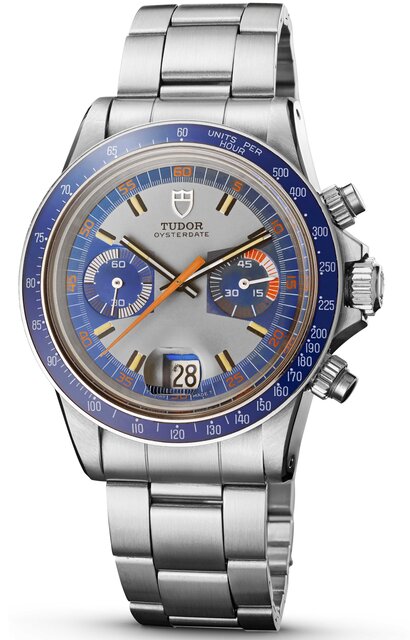
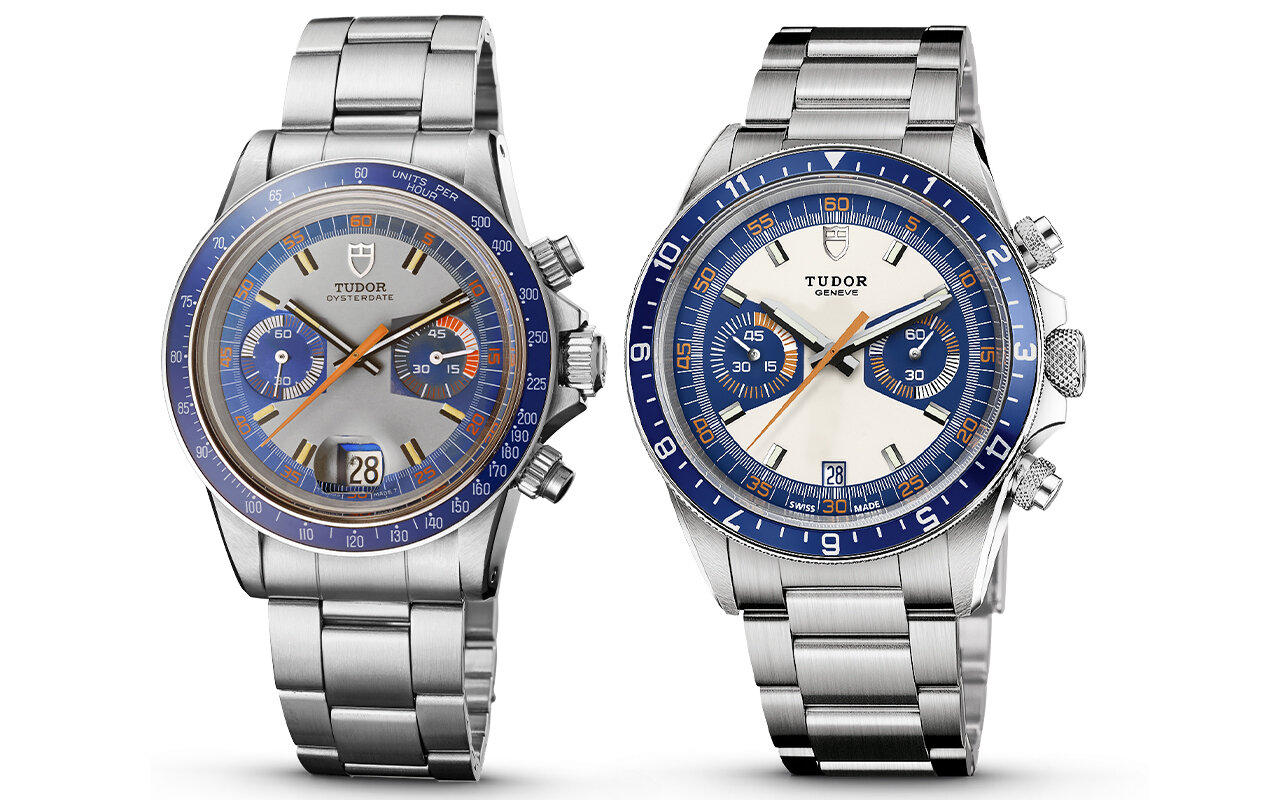
The second generation of Tudor chronographs debuted in 1971 and appeared in catalogs until 1977. These were the 7100 series chronographs, nicknamed "Monte Carlo" by collectors due to their dials, reminiscent of a casino roulette wheel. The case and dial designs carried over from the previous series.
The movement was updated from the "VALJOUX 7734" to the manual-winding caliber "VALJOUX 234." This new caliber, equipped with a clutch and column wheel, offered a more refined chronograph mechanism.
This series also introduced the color blue, which has since become a representative image color for Tudor. This color scheme, enhancing legibility, also added presence to the wrist.
-
Oysterdate Ref. 7149
Like its predecessor, this series comprised three references. Ref. 7149/0, featuring a 500-unit tachymeter scale on a Plexiglas insert bezel, replaced Ref. 7031/0 in the catalog. Ref. 7159/0, characterized by a satin-finished steel bezel with a tachymeter scale, took the place of Ref. 7032/0. Finally, Ref. 7169/0, based on the prototype Ref. 7033/0 with a rotating bezel, was finally put into production.
SERIES 9400 AND 79100 “BIG BLOCK”
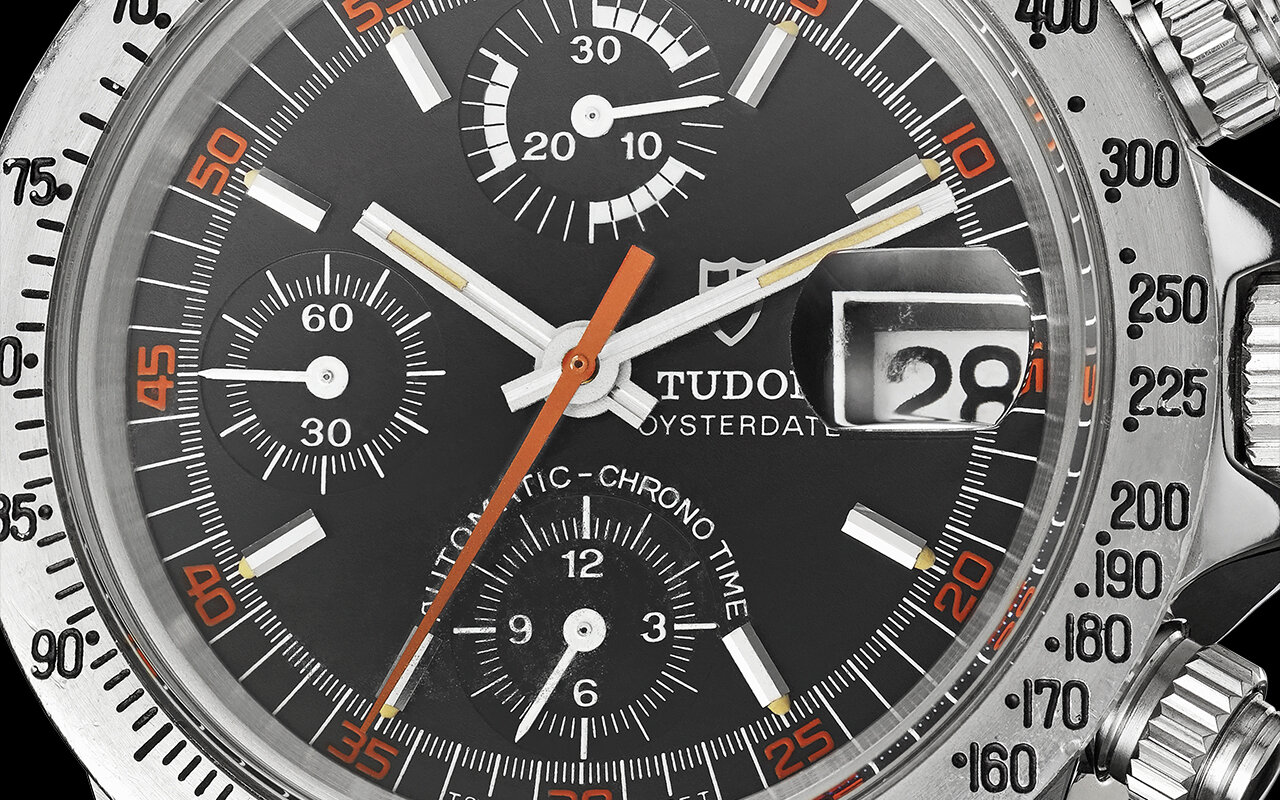
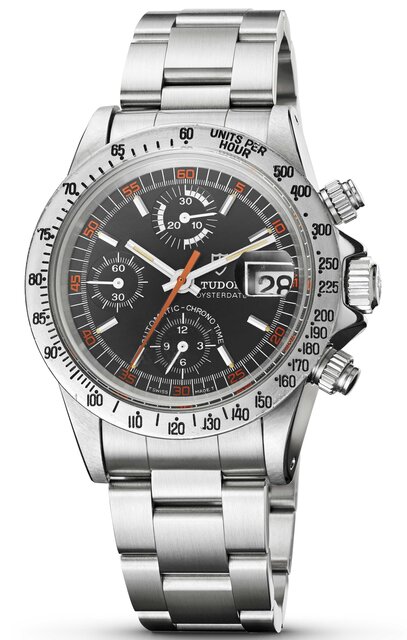
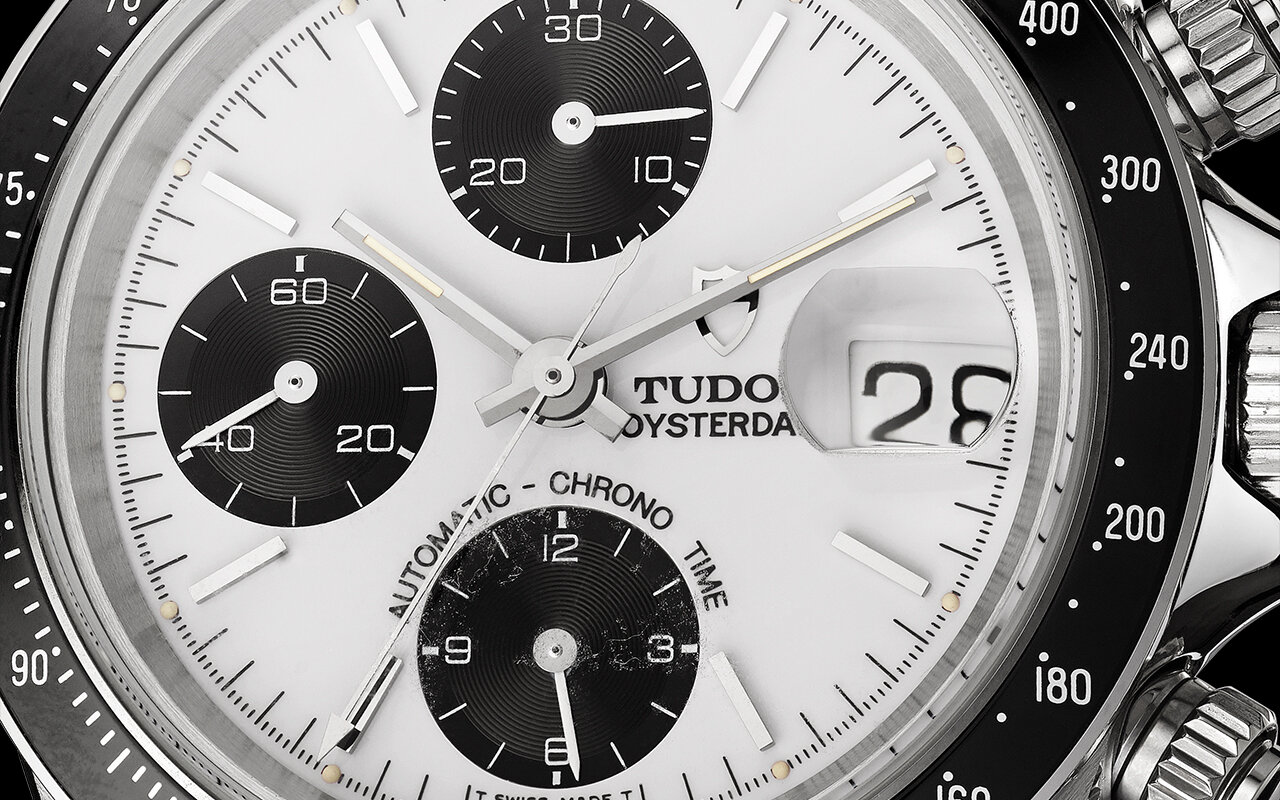
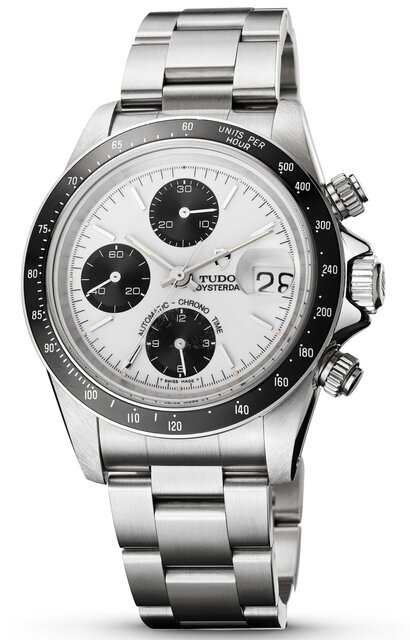
In 1976, a small revolution occurred for Tudor. The "Prince Oysterdate," Tudor's first self-winding chronograph, was born. While retaining the case shape from the previous series, it adopted a thicker design to accommodate the rotor of the automatic movement. This distinctive shape earned it the nickname "Big Block" among collectors. The "Big Block" name was carried over to the Ref. 79100 series, released in 1989.
The Ref. 9400 series, like its predecessors, consisted of three models with different bezel designs, a configuration that continued with the subsequent Ref. 79100 series. However, several dial variations were offered, showcasing two distinct aesthetics: one inspired by the previous two series, and the other featuring bold color contrasts combining black and white or silver and white.
The new chronograph was powered by the caliber "VALJOUX 7750." While having the same diameter as the previous "VALJOUX 234," it was 1.5mm thicker and featured a highly reliable cam-actuated chronograph mechanism. The introduction of this new movement led to a reorganization of the dial, including the addition of an hour counter, repositioning of the sub-dials to the left side, and the placement of a date window at the 3 o'clock position.
SERIES 79200 “SAPPHIRE CHRONOGRAPH”
In 1995, the "Prince Oysterdate" design was reborn with the introduction of the Ref. 79200 series. Although the changes were subtle, they held significant meaning.
The case, passed down through three generations, retained its sharp presence while evolving into a more refined and softer form. While preserving its instantly recognizable silhouette, it was reborn with beautifully rounded curves.
The design evolution of this fourth-generation series included the adoption of a sapphire crystal, which gave rise to its nickname, as well as combinations of gold and steel and the addition of leather straps. The movement was the significantly improved self-winding caliber "VALJOUX 7750."
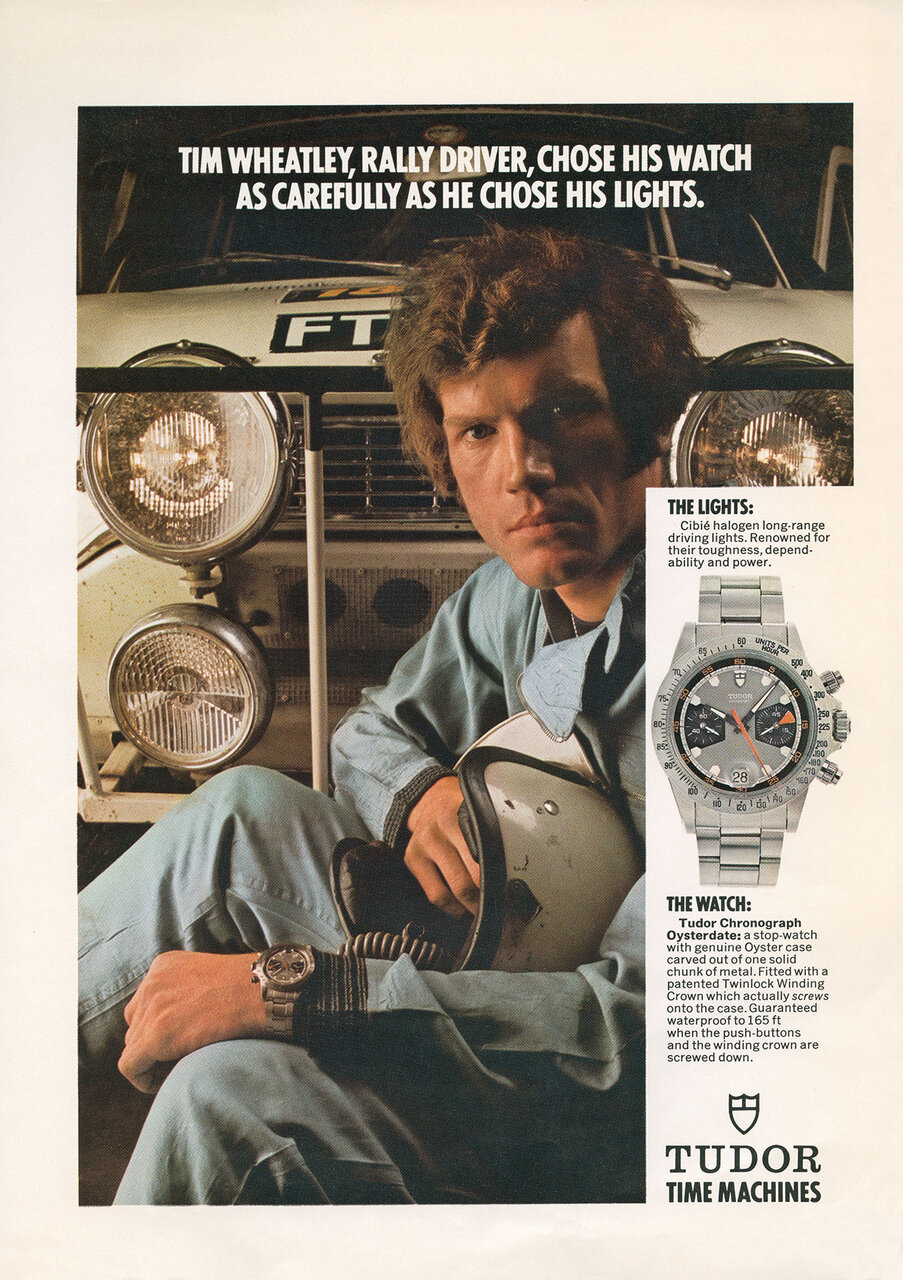
当時の広告ビジュアル。2000年代はじめにおいてもなお、単なるステイタスシンボルではなく、プロフェッショナルたちに向けた堅牢性にフォーカスされていました。
40th Anniversary Reissues of "HOMEPLATE" and "MONTE CARLO"
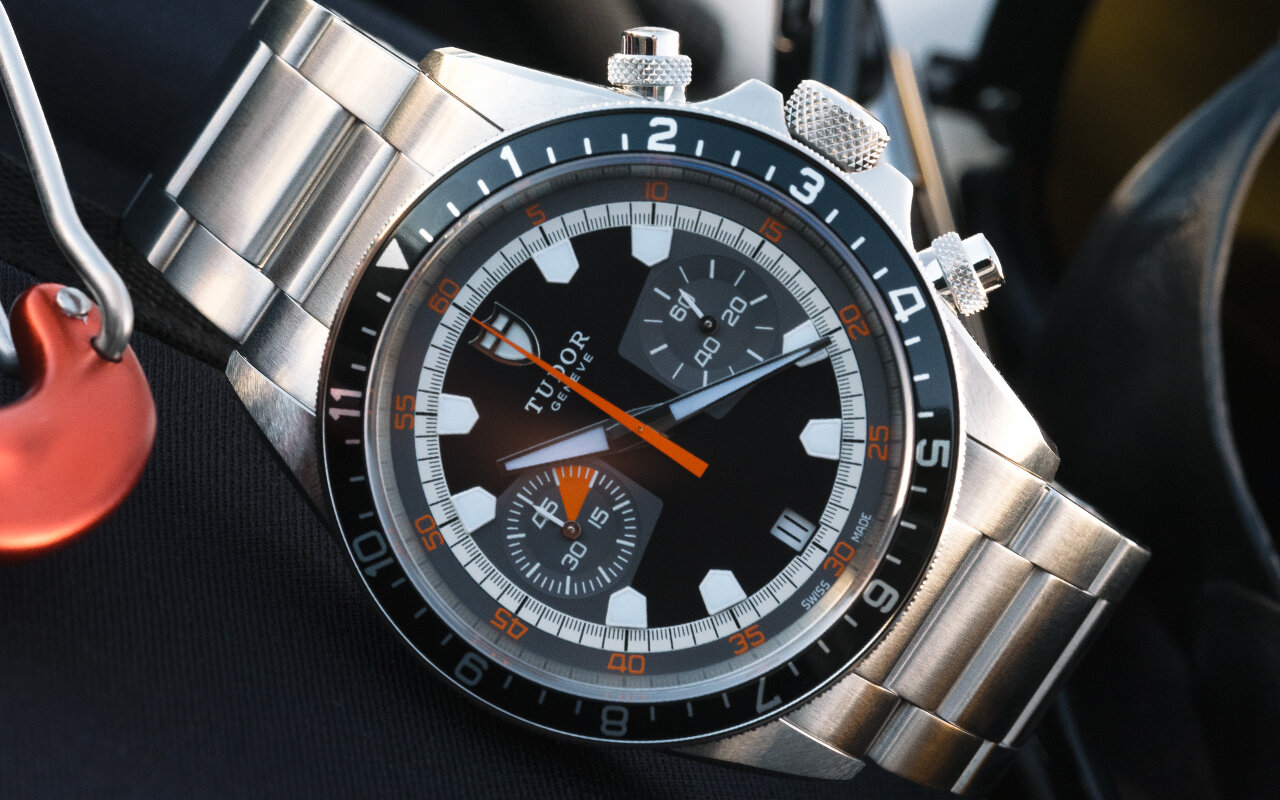
In 2010, to commemorate the 40th anniversary of the Tudor chronograph's birth, the "Heritage Chrono" was unveiled. This model, incorporating the essence of the Ref. 7033 (a 1970 prototype with a bidirectional rotating bezel with 12-hour markers) while evolving into a modern design, features unique characteristics such as trapezoidal hands with polished edges, crown guards, and textured bezels and pushers.
This model featured two distinct dial variations inspired by the 1970s models: gray with black sub-dials, or black with gray sub-dials. The pentagonal hour markers, known as "Homeplate," were painted on the original, but here they maintain the same shape while being designed with a subtle height difference from the dial for a more refined look.
In addition to a steel bracelet, this model could also be fitted with fabric straps in black, orange, and gray. Tudor's early adoption of fabric straps has since influenced the entire watch industry.
Then, in 2013, the "Heritage Chrono Blue" was released as a new iteration of the same model. Its design drew inspiration from the second-generation dials, commonly known as "Monte Carlo," in addition to its blue color.
These models were equipped with the new caliber "2892," featuring a 45-minute counter and a date display at the 6 o'clock position.