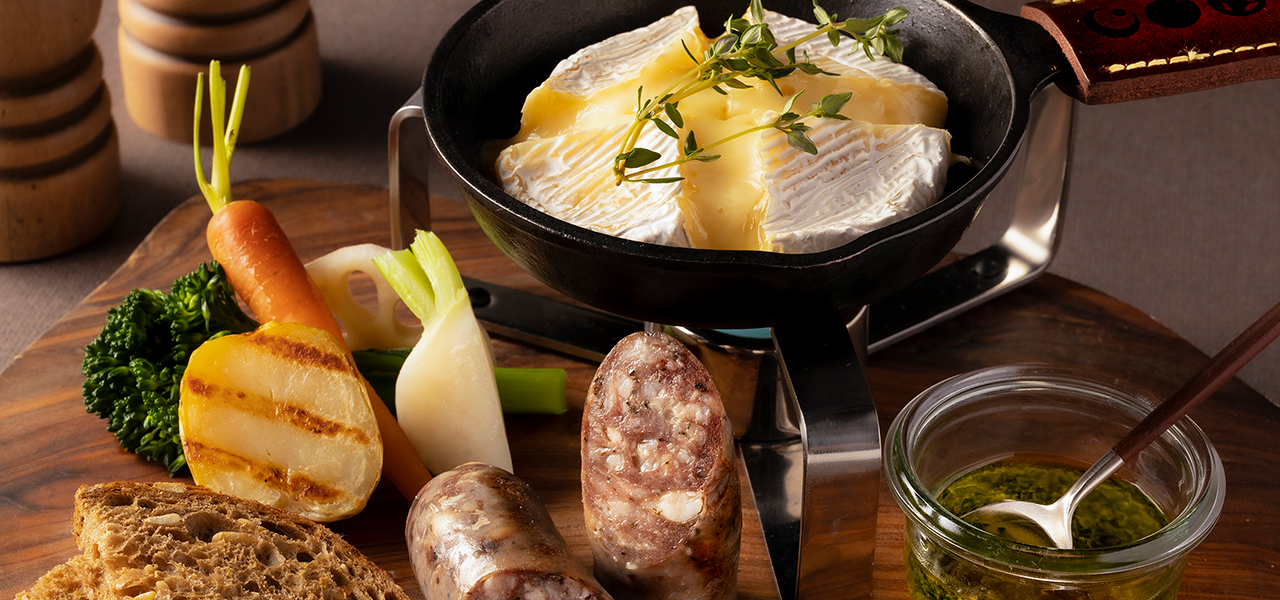
Appetizer: Venison, Cheese, and Whiskey, rather than a game meat dinner.
To Know Is To Taste: Hoshino Resorts KAI Kaga | TRAVEL
TRAVEL | HOSHINOYA Fuji
Journey to HOSHINOYA Fuji for This Dish (Part 1)
Do you remember when the term "Glamping," now used so casually, first gained widespread recognition? It wasn't all that common when "HOSHINOYA Fuji" opened on October 30, 2015, in Fujikawaguchiko Town, Yamanashi Prefecture.
Photographs by OHTAKI Kaku | Text by HASEGAWA Aya | Edit by TSUCHIDA Takashi
Wild yet Refined: Because There's No Unnecessary Flavor
First, a brief explanation of "glamping." The word is a portmanteau of "Glamorous" and "Camping." It's a travel style where professionals handle the troublesome aspects like setting up tents, preparing food, and cleaning up, allowing guests to enjoy the outdoors comfortably in well-equipped settings.
"HOSHINOYA Fuji" opened as Japan's first glamping resort, with the concept of "hillside glamping."
The location is nestled in a forest overlooking Lake Kawaguchiko, about a 20-minute drive from the Kawaguchiko Interchange or a 15-minute taxi ride from Fujikyu Railway's Kawaguchiko Station. It's situated on a hillside with an elevation difference of about 100 meters, ranging from 830 to 930 meters above sea level.
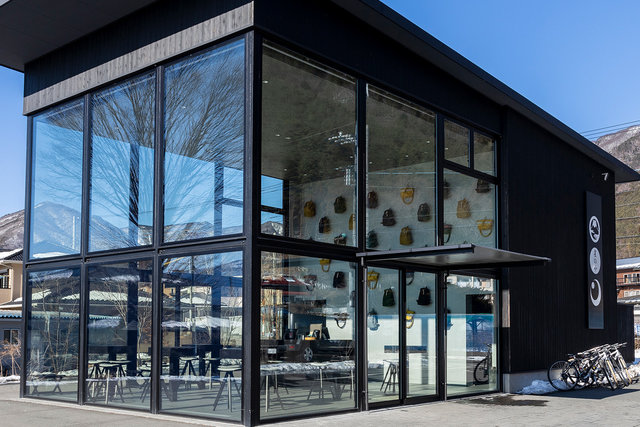
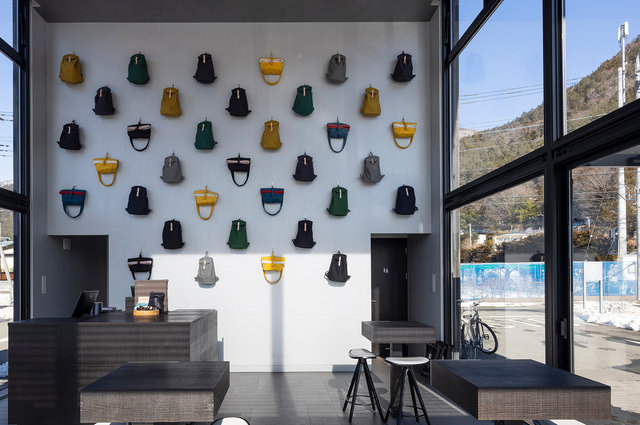
The arrival entrance at "HOSHINOYA Fuji." The reception at the foot of the hill. A wall of backpacks. Which one to choose?
The first thing guests do upon arriving at "HOSHINOYA Fuji" is choose a backpack.
During your stay, you'll be lent a backpack containing items for enjoying outdoor life (insect repellent, binoculars, headlamp, mat & pillow, drink bottle, and biscotti to satisfy a small hunger). It's a great way to signal, "Your glamping experience is about to begin!" The sight of colorful backpacks hanging on the wall is truly Instagrammable, heightening the excitement!
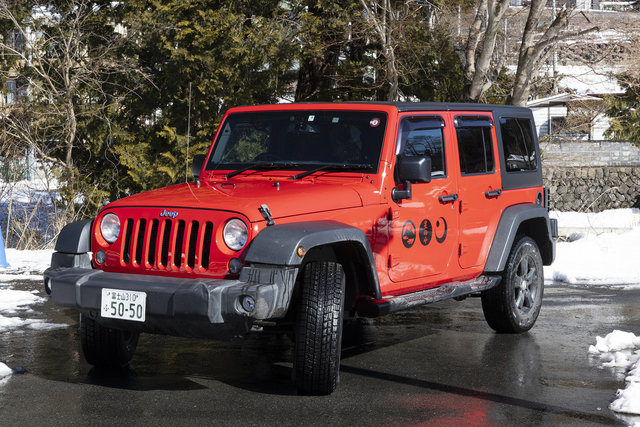
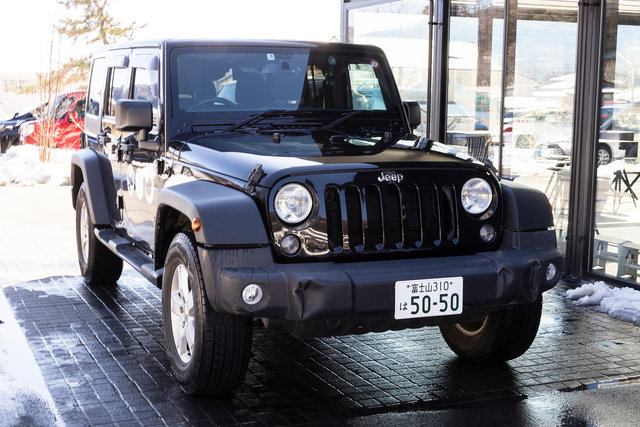
After selecting a backpack, you'll transfer to a dedicated RV to reach the resort. Incidentally, the license plate number is "5050" (go-go).
Moving guests subtly into a non-ordinary experience, from the reception to the resort via a dedicated vehicle (or a boat in Kyoto's case), is a signature elegant touch of HOSHINOYA, similar to its Karuizawa and Kyoto properties.
While there's much to say about the facilities, this series focuses on "cuisine." Let's begin by introducing the food. I had an insightful conversation with Chef Takafumi Tagawa, so I'll report on the exquisite dishes available at "HOSHINOYA Fuji," incorporating his words.
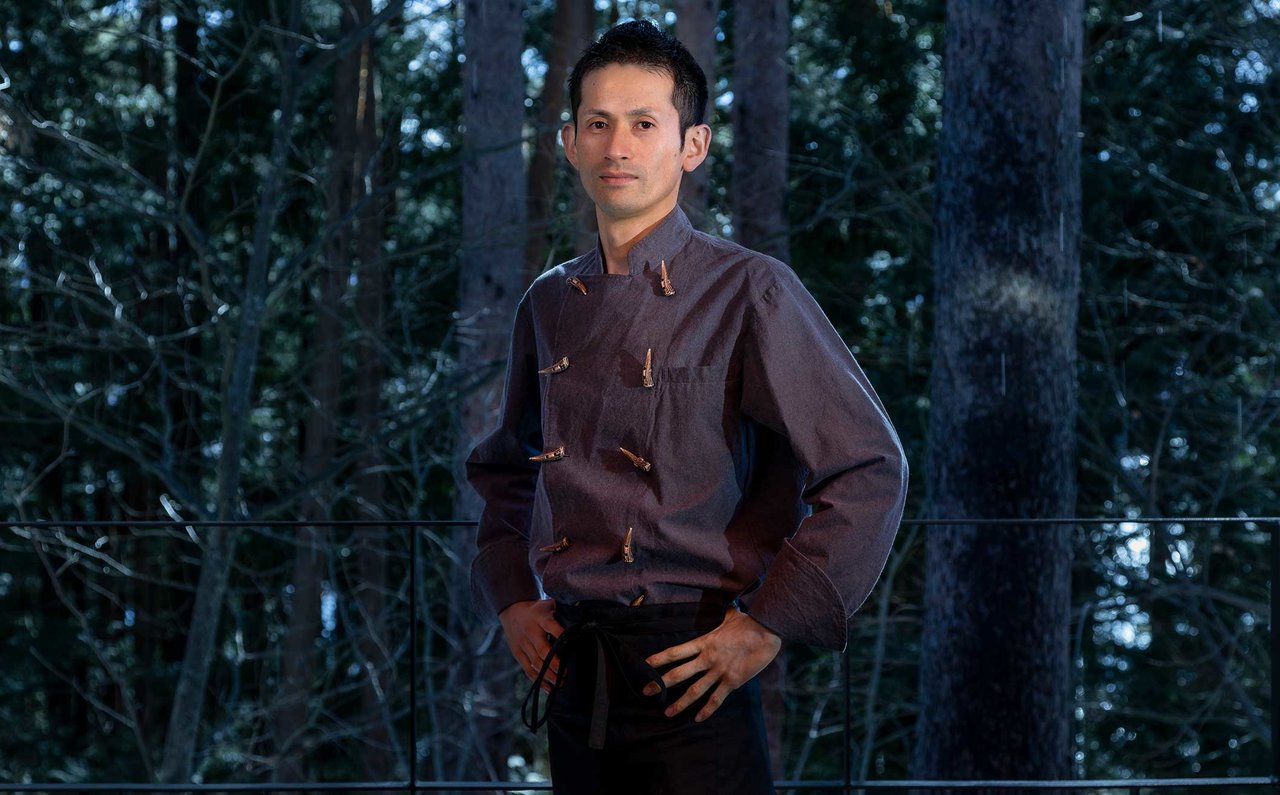
Takafumi Tagawa, Chef at "HOSHINOYA Fuji"
Tagawa has been involved with the facility since its pre-opening preparations. "We discussed what Japan's first glamping resort should be and what we could offer in this environment," he says. The answer they arrived at was: "A field where you can design your own adventures, comfortable guest rooms where you can feel the outdoors, meals orchestrated by a chef passionate about wildlife, and outdoor experiences proposed by glamping masters."
At "HOSHINOYA Fuji," staff are called "Glamping Masters" and offer various advice for enjoying life in the forest.
One answer to "what can only be eaten here" that "HOSHINOYA Fuji" has focused on since its opening is game meat, such as venison and wild boar. Tagawa explains, "We connected with local hunters, including Masahiro Takiguchi, a veteran hunter with 40 years of experience, and developed menus based on direct instruction from the hunting grounds."
When you hear the word "game," what image comes to mind? In France, it was once a delicacy reserved for the aristocracy. However, you might have had experiences where it was "a bit too bloody" or "tough and difficult to eat." This is often due to improper initial processing of the meat. Properly and quickly processed game meat is just as good as farmed meat. In fact, it's leaner, firmer, and highly nutritious – a true gift from nature. The Kawaguchiko area, in particular, is a treasure trove of game meat from deer and wild boar that roam the forests feeding on acorns.
"HOSHINOYA Fuji" offers three dinner courses. One is at the "Main Dining" with its large grill. Another is "Hillside Shabu-Shabu Hot Pot" that can be enjoyed on the cabin's terrace. Both are appealing, but this time I decided to experience the "Game Meat Dinner" (¥15,000 per person, excluding tax and service charge) at the outdoor "Forest Kitchen," another option. I must admit, the included drink pairing (alcoholic or non-alcoholic) was a significant draw.
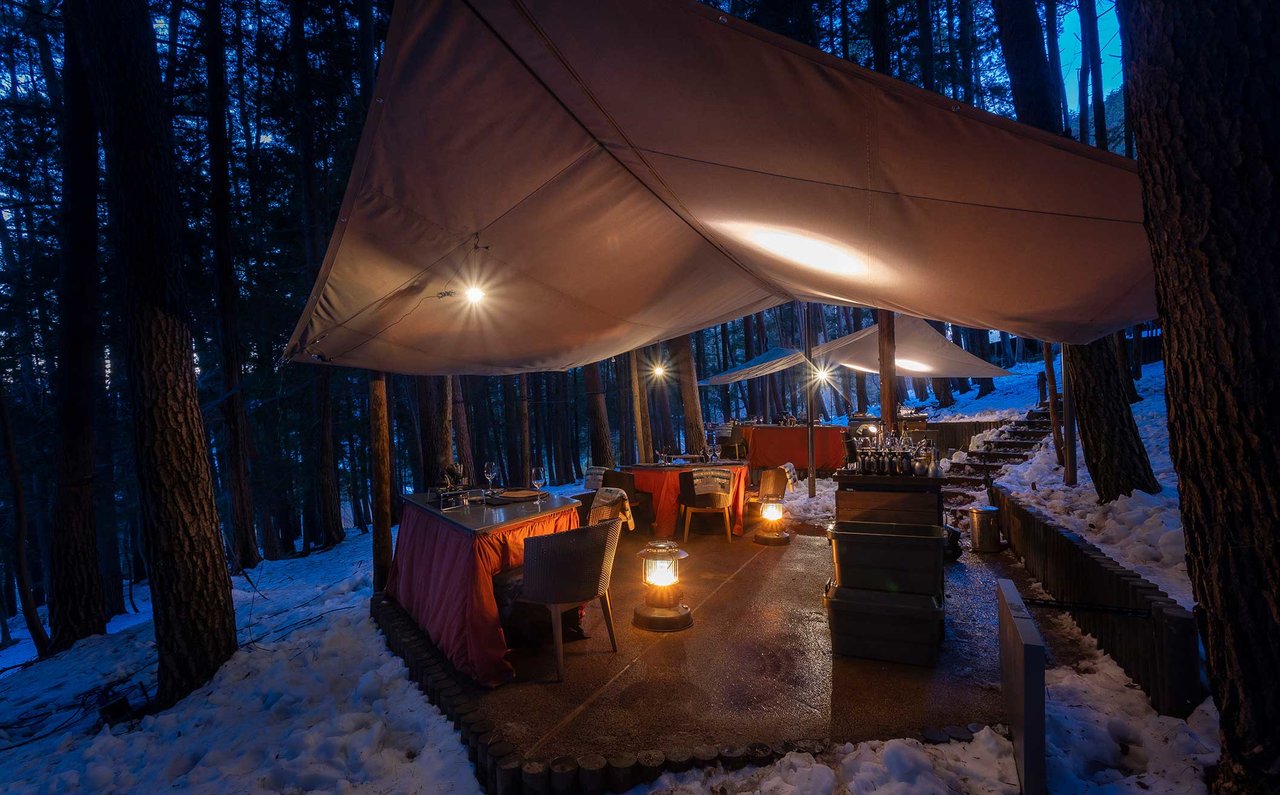
The Forest Kitchen. It's truly in the middle of the forest, but the tables are kotatsu-style. Outdoor heaters are also provided, making it toasty warm all around. This is glamping!
I casually mentioned "dining outdoors," but yes, the "Game Meat Dinner" is served outdoors.
It was mid-winter (interview date: January 29, 2020).
The elevation was 900 meters.
The elevation was 900 meters.
I was a bit intimidated when I first realized this, but to cut to the chase, the outdoor heaters were blazing, and the dining tables were actually kotatsu (heated tables). The thick quilted coats provided to guests were also excellent, making it easy to dine surrounded by snow for nearly two hours (laughs).
The course begins with guests being guided to the bonfire. The pairing (alcoholic, of course) is "Felicissimo," a sparkling wine from Yamanashi winery Cantina Hiro. There's something so exciting about drinking while gazing into a flickering flame, isn't there? We were so captivated we forgot to talk, but when we received the soup warmed over the bonfire, the adults were thrilled (laughs).
It's a consommé made from game meat scraps, with mushrooms and wild boar meatballs. It was incredibly delicious! Forgive the cliché, but it's rare to find a dish that so perfectly embodies the word "滋味深い" (jumi-bukai - rich in subtle, wholesome flavor). I'll use it with confidence! It warmed my body, and a fanfare for the upcoming outdoor game meat dinner began to sound in my head.
After finishing the soup, we were invited to move to our table, where a Dutch oven awaited. Everything was ready. Then, we slipped our legs under the table-style kotatsu.
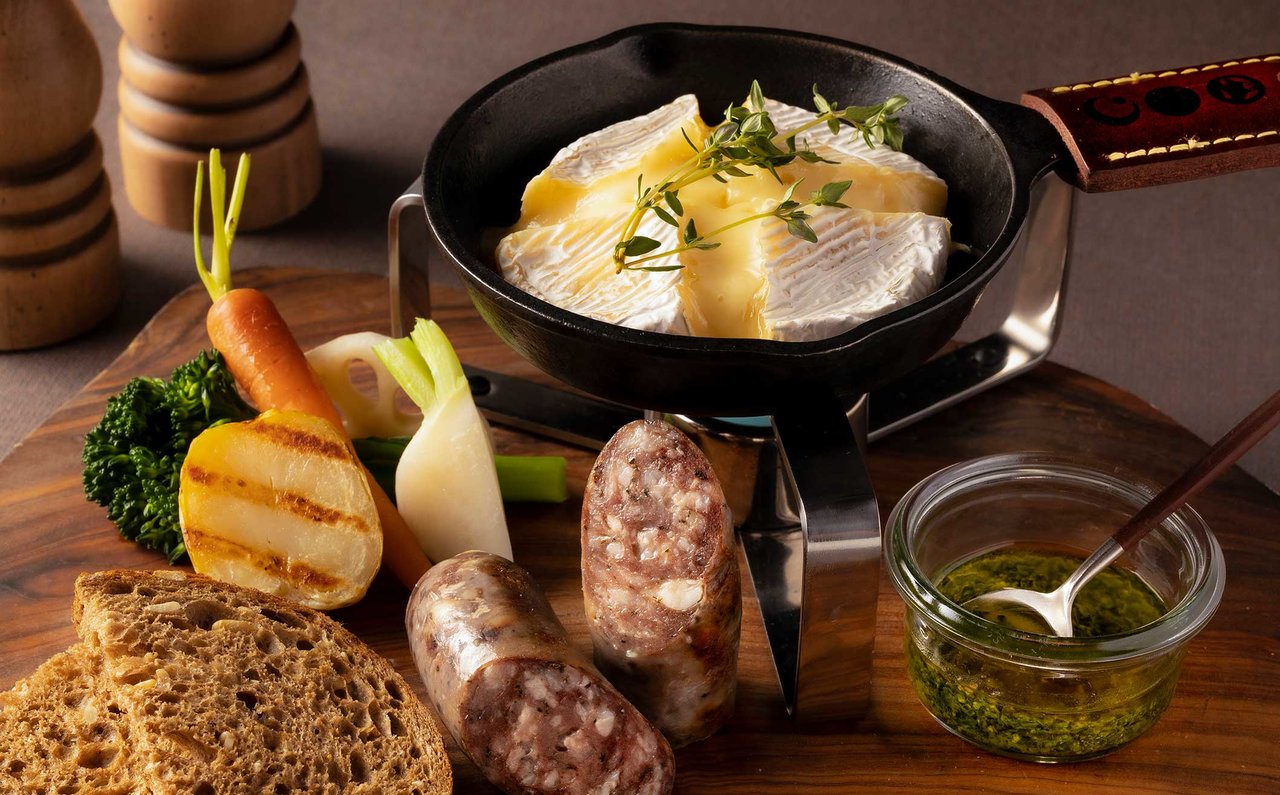
Appetizer: Deer, Cheese, Whisky
The appetizer was a cheese fondue using Camembert cheese. One whole Camembert per person! We melted the provided Camembert with a few drops of "Hakushu," a single malt whisky from a distillery in Hokuto City, Yamanashi Prefecture, and enjoyed it with wild boar sausage and root vegetables. They say they make the most of even the scraps of game meat to "convey its life." Still, I never imagined Camembert could be eaten this way (laughs).
The pairing was a refreshing white wine, "Koshu Sur Lie," which complemented the cheese perfectly.
Main Dish: Deer, Wine, Taro
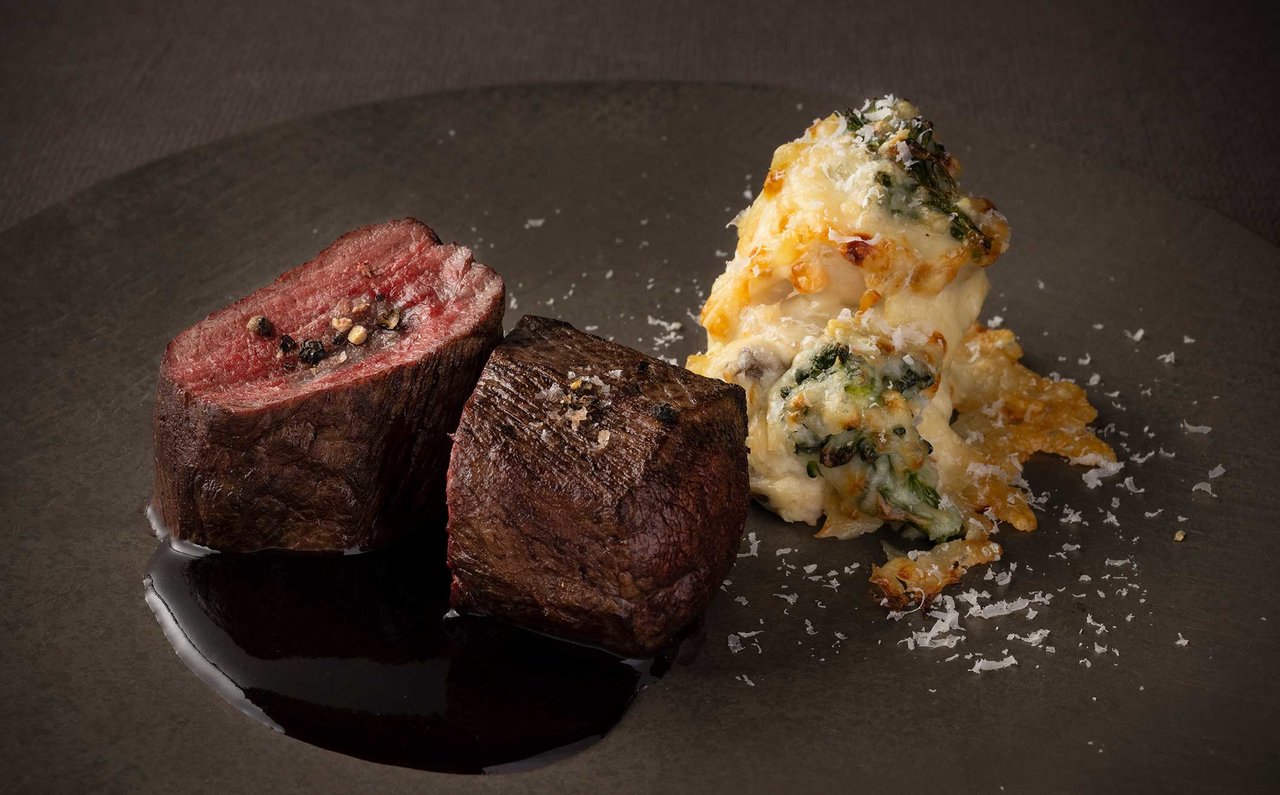
The main course was grilled venison loin. The deer meat, infused with the aroma of straw in a cold smoker, was grilled in a tabletop Dutch oven and served with a red wine sauce. "We've been experimenting with how to serve high-quality game meat since opening, but our conclusion now is that we want people to taste its flavor directly, with minimal intervention," says Tagawa. Grilling the venison ourselves at the table, its rich flavor spread through my mouth with each bite.
Wild yet refined.
Because there's no unnecessary flavor.
Because there's no unnecessary flavor.
"The taste of game meat varies significantly depending on how quickly and accurately it's hunted, bled, temperature-controlled, and butchered," Tagawa explains.
"HOSHINOYA Fuji" learns about and sources game meat from hunters like Takiguchi, and they are absolutely confident in its quality. In the Kawaguchiko area, from autumn to winter, acorns and nuts are abundant, firming the muscle fibers. The taste of the meat changes depending on what the animals eat; for example, deer and boar that have survived the harsh winter and welcomed spring have less excess fat and a lighter flavor from eating young leaves, bamboo shoots, and buds that sprout in the mountains.
...Does this mean I have to visit every season to compare the flavors? (laughs)
Still, I'd love for people who have negative impressions of game meat to try this and then show off their knowledge. Because the quality of the meat is sublime. The more you chew, the deeper the flavor. There's no other meat dish like it. It's like the difference between wild-caught and farmed seafood. And I thought: instead of simply culling deer and boar that cause damage, it's incredibly important to feel the weight of their lives, honor the nature that nurtured them, transform them into delicious food, and express gratitude. Isn't this the ultimate terroir?
And although I've spent a lot of words on game meat (laughs), the accompanying taro and broccoli gratin was also excellent. Taro is a local specialty here. You can even ask for "extra cheese" grated on the spot and enjoy it while it's hot.
Ah, the pairing for the grilled venison was "Sumi-re Rouge" from Yamanashi winery Okunoda Winery. The richness of the venison and the sweetness of the Yamanashi-produced Merlot melded in my mouth, seeping into my body.
Rice: Deer, Dried Mushroom, Rice
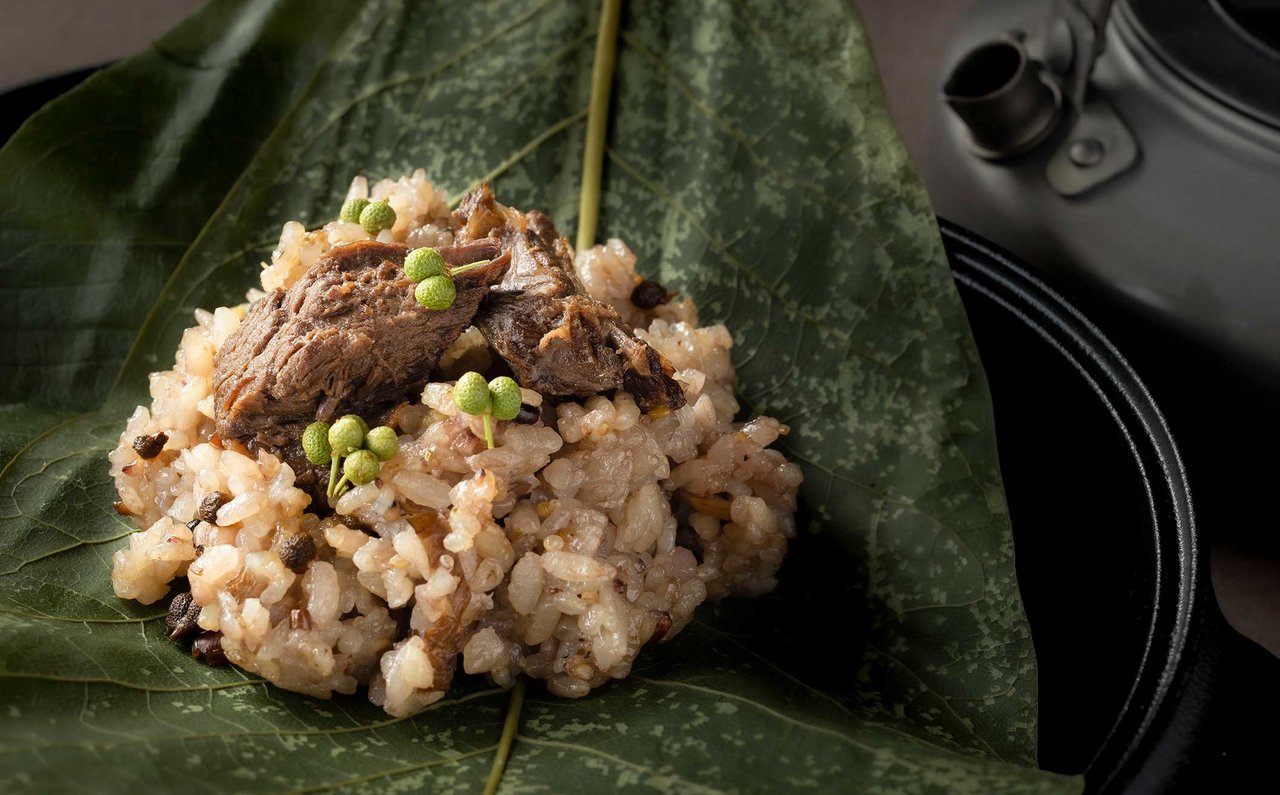
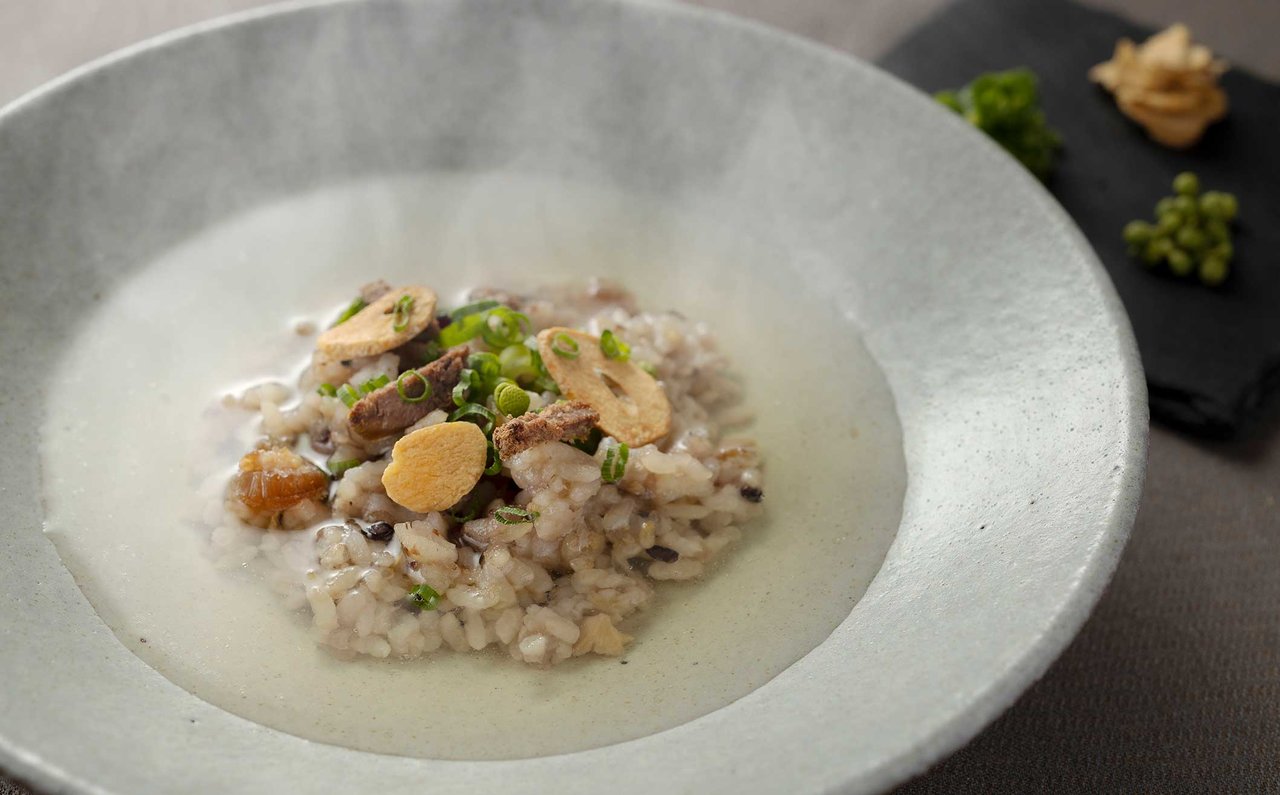
The finale was another astonishing dish that you could likely only have here. Deer simmered in a sweet soy sauce-based broth (yamato-ni) and a mixed rice with dried mushrooms were served, along with a game consommé, allowing for an ochazuke (rice with tea) experience. The mixed rice, rich in dashi, transforms dramatically when the consommé is added (though both are undeniably delicious). Adding sansho pepper, green onions, and fried garlic further enhances the dish. Pairing this with warm "Dan," a Ginjo sake from Sasai Shuzo brewery in Otsuki City, was divine (laughs).
Japanese game meat prepared with French techniques – superb!
TRAVEL | HOSHINOYA Fuji
Journey to HOSHINOYA Fuji for This Dish (Part 2)
There are also three breakfast options. This time, I chose the pressed sandwich (¥1,600, excluding tax and service charge) served at the "Cloud Terrace." Here, you select your own ingredients and grill them yourself, with options like bacon, roast chicken, and vegetables available.
Yes, you're bound to get greedy (laughs).
A homemade hot sandwich enjoyed in the crisp morning air is bound to be delicious. Other options include the "Morning Box" (¥2,800, excluding tax and service charge) that can be enjoyed in your cabin, or the "Grill Morning" (¥2,200, excluding tax and service charge) at the "Main Dining," featuring skillet-cooked omelets and chewy bread baked in a Dutch oven. Chef Tagawa highly recommends the Dutch oven bread, smiling as he says, "The heat distributes evenly, resulting in a moist and fluffy bake." Whichever you choose, you're unlikely to regret it, and it's wonderful to have options based on your preferences and mood.
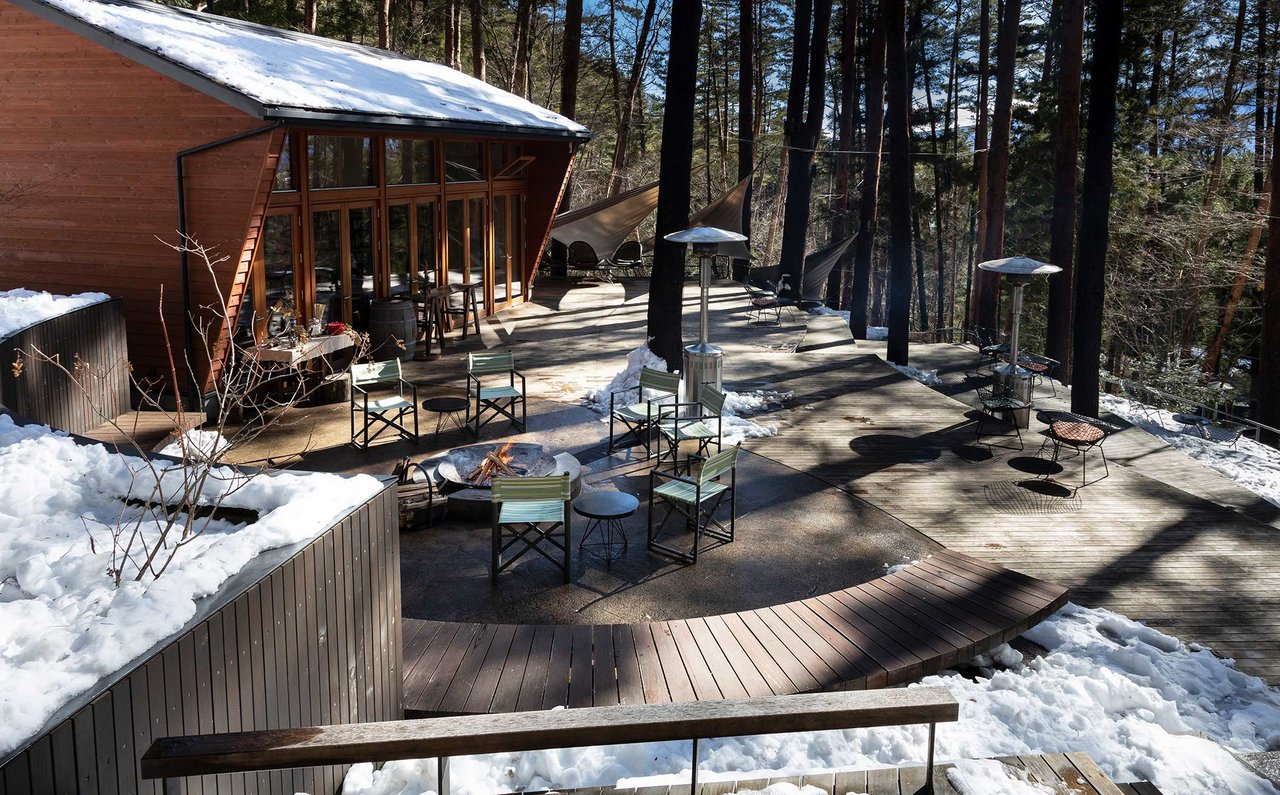
The Bonfire Lounge. The building on the left houses the Library Cafe.
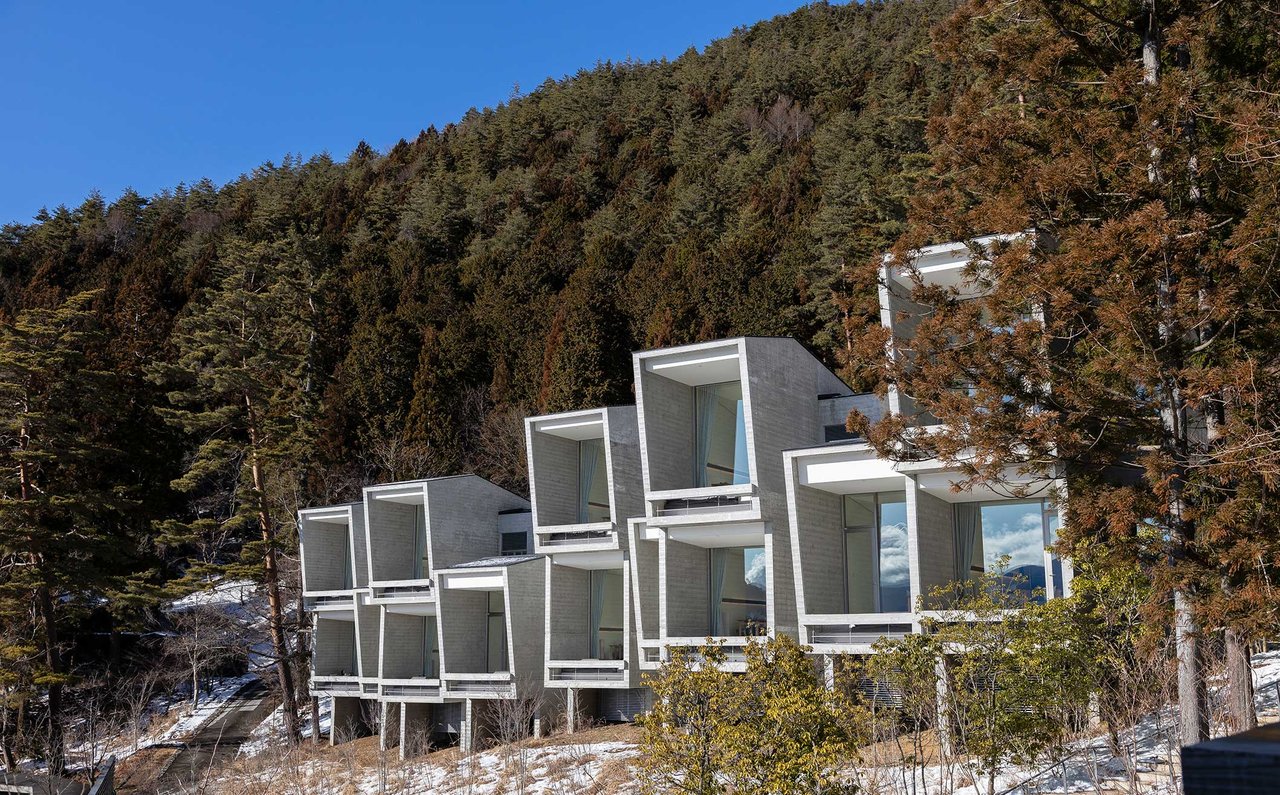
Now, let me introduce the facilities of "HOSHINOYA Fuji." It's important to reiterate that due to the terrain, there's an elevation difference of about 100 meters within the property. Along the hillside, the reception, the glamping entrance, is at the lowest point. The cabins (guest rooms) and front desk are in the central area, and the "Cloud Terrace," a series of wooden decks resembling clouds, is at the highest point.
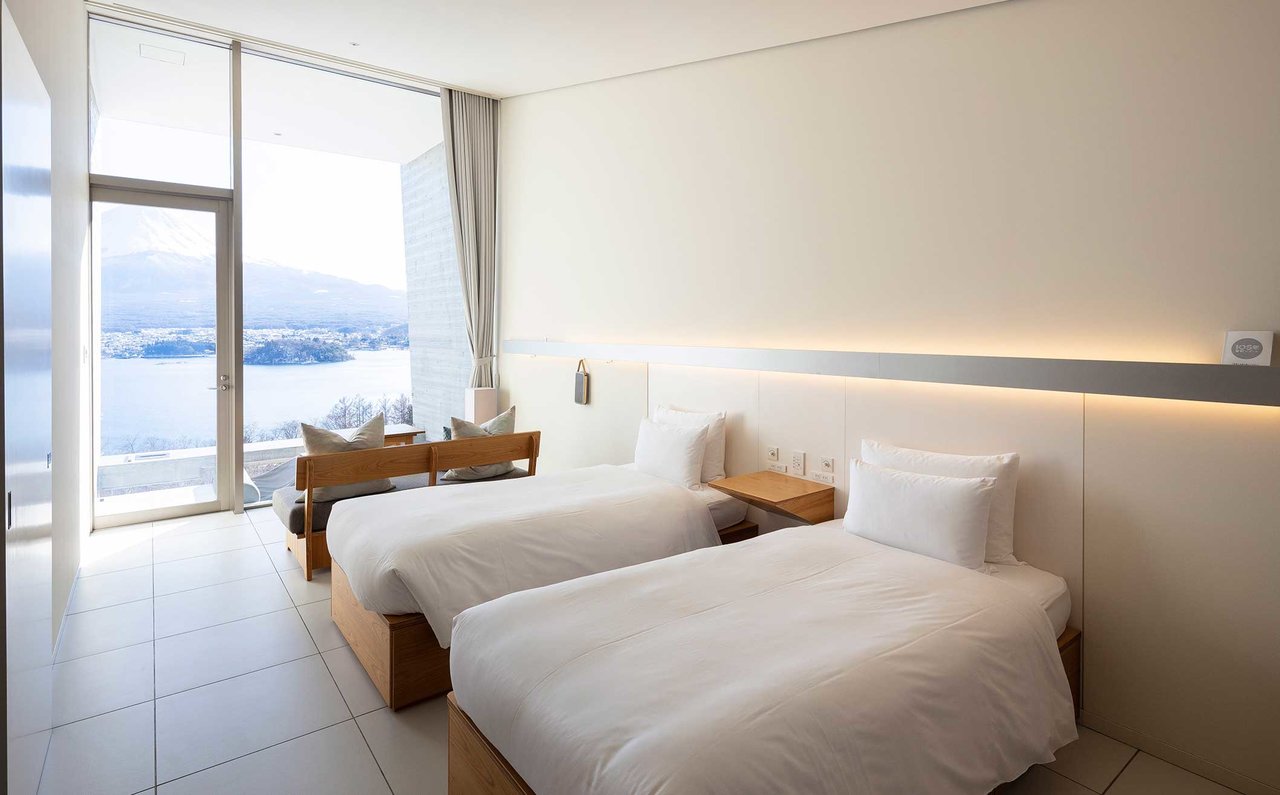
Twin-type T-Cabin
There are 40 cabins in total. All rooms are designed to jut out towards Lake Kawaguchiko. The guest rooms are simple and primarily white, intended to make the view from the window appear like a single painting.
Indeed, the view is spectacular!
Please see it for yourself.
Please see it for yourself.
The most standard room, the "T-Cabin," is a twin type with 41 square meters. One-third of this space is the terrace, so the room itself is not particularly large. At "HOSHINOYA Fuji," the public spaces are designed as the "living room," with the assumption that guests will spend time outdoors.
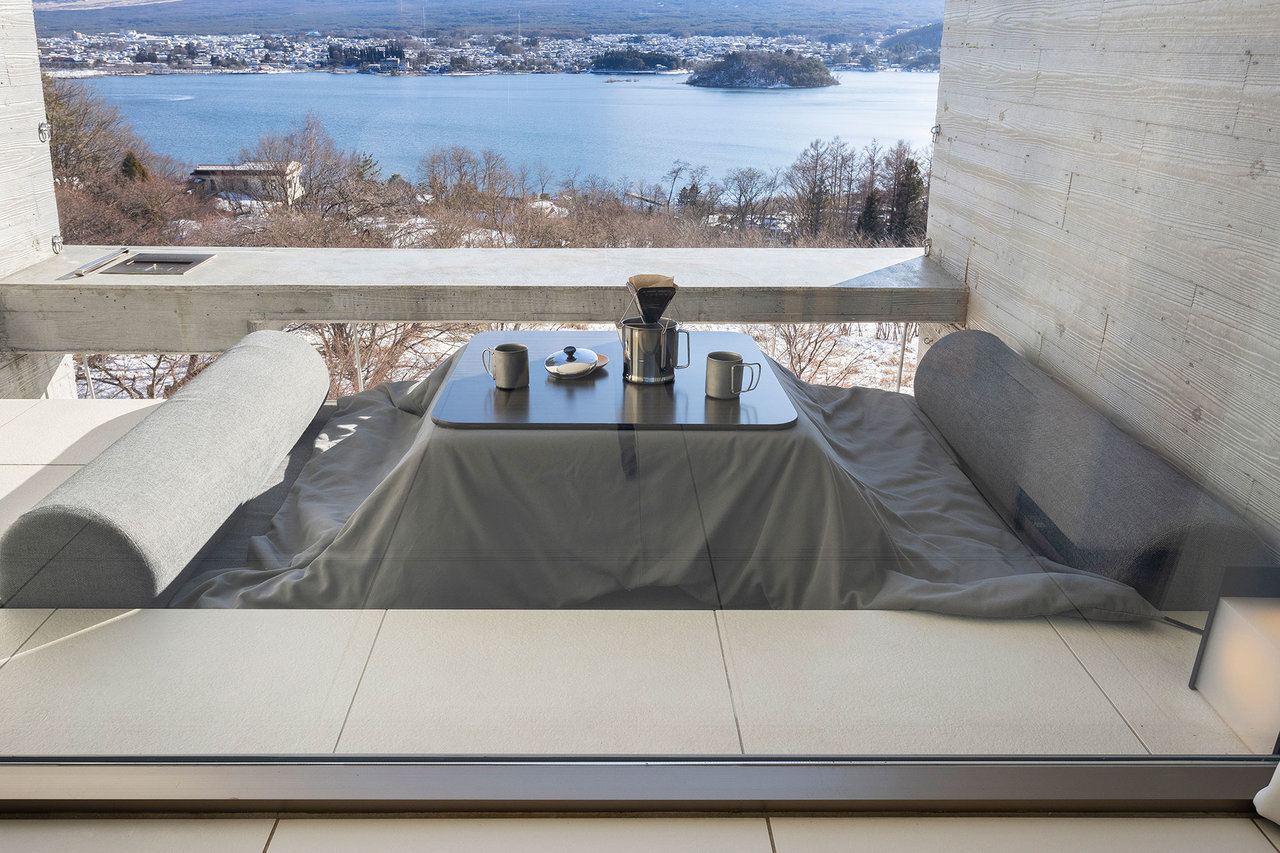
Terrace living area within the cabin
The pride of the cabin, the terrace, was equipped with a kotatsu (seasonal for winter). The kotatsu's power is immense; even in mid-winter, you can stay outside for hours, or rather, you won't want to leave (laughs). Here, you can enjoy drinks, read, or even brew original blend coffee with the Snow Peak dripper and mug.
You can comfortably enjoy the outdoors from your room, while nestled in the kotatsu.
In fact, during my stay, I spent almost all my time on the terrace (inside the kotatsu), except for sleeping and bathing...
After sunset, the fireplace is lit, creating a magical atmosphere. The problem is that it's so comfortable, you won't want to leave the kotatsu. But since we're here, let's explore the grounds.
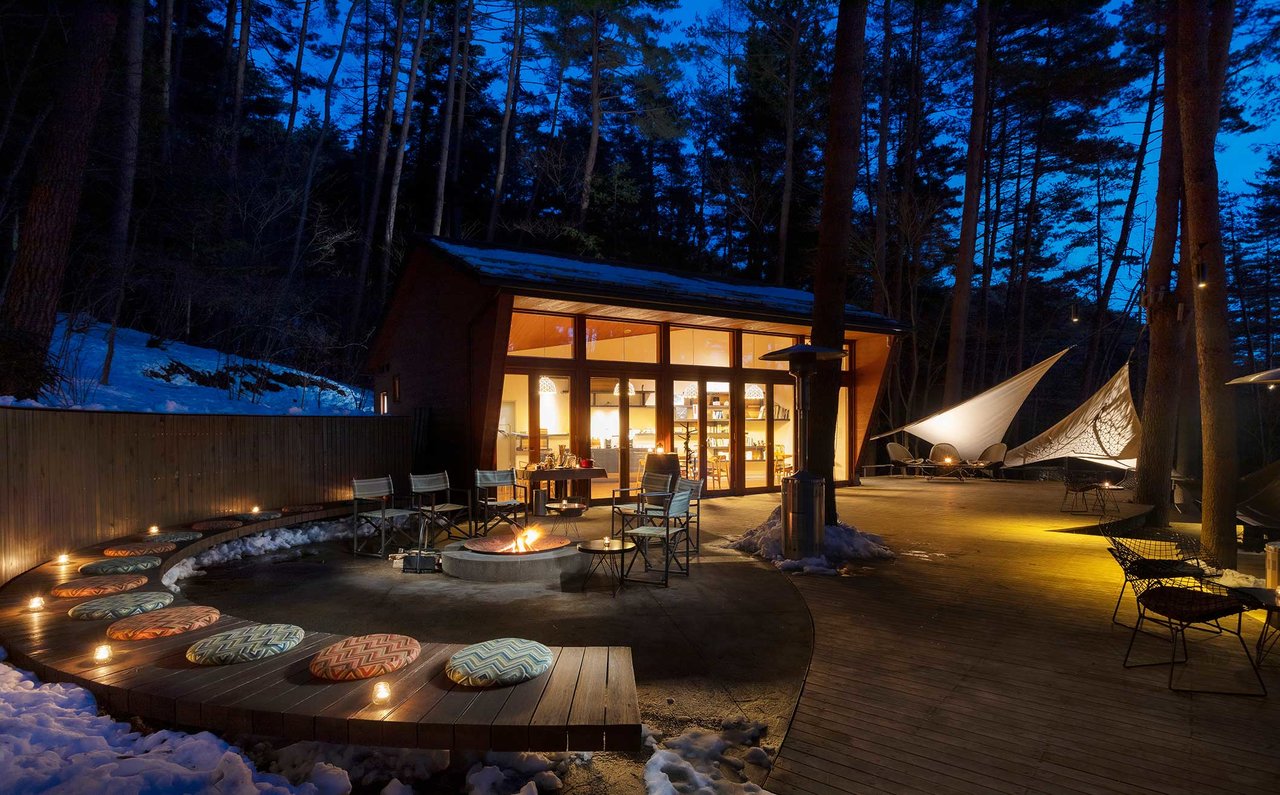
Bonfire Lounge
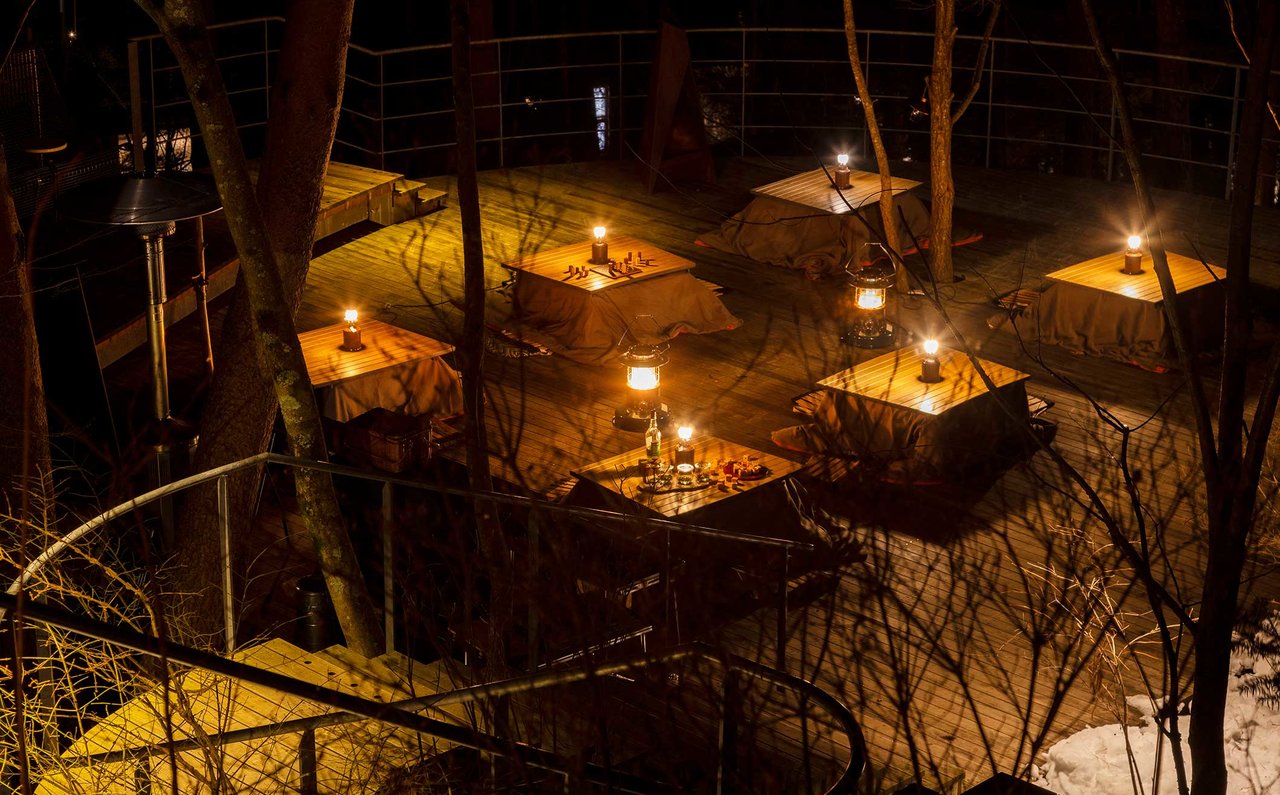
Sun-dappled Deck
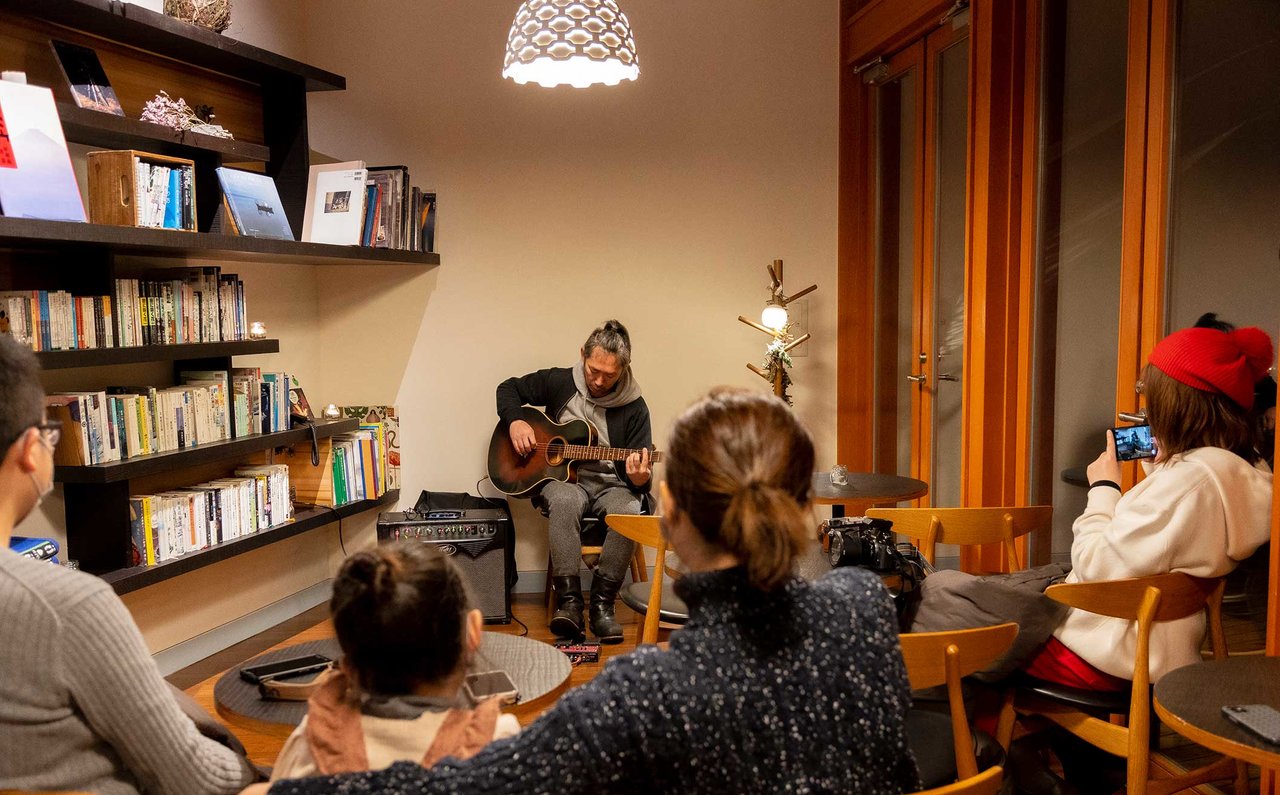
Forest Concert (held nightly; outdoors depending on weather)
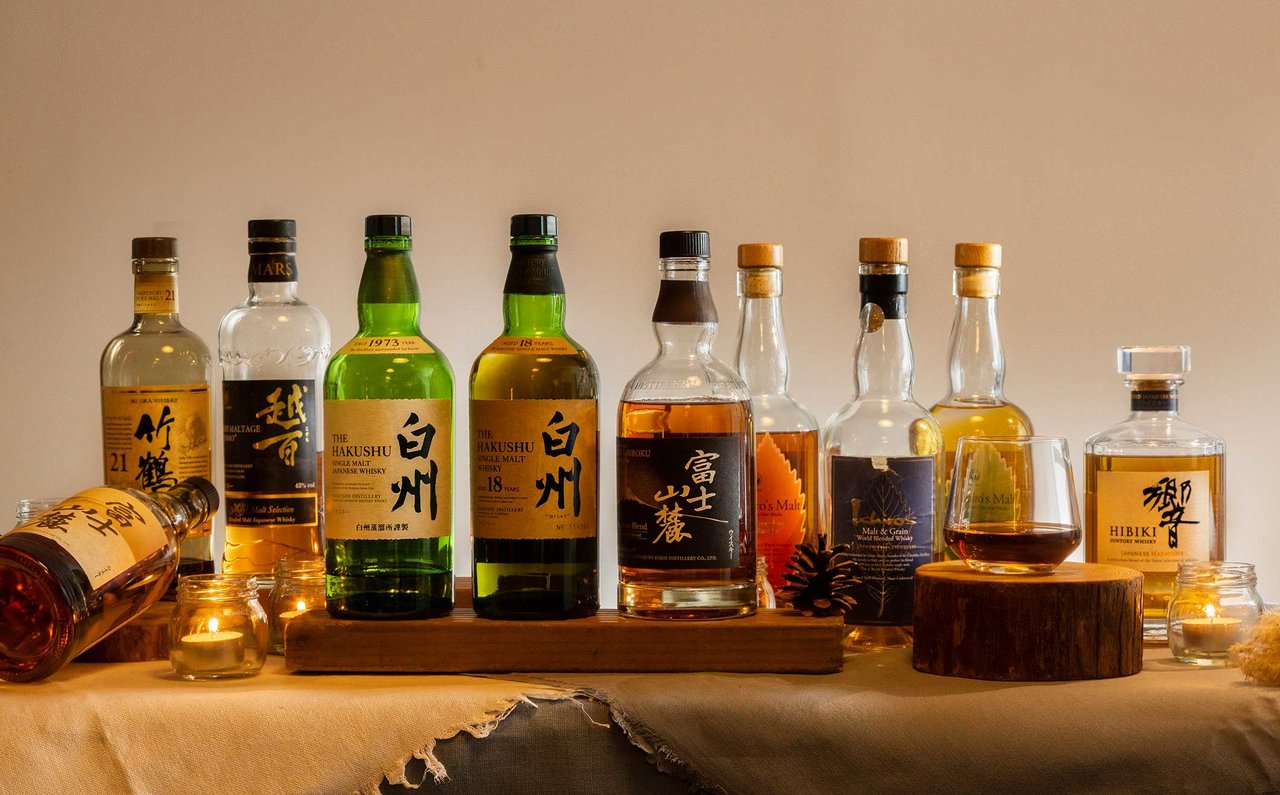
Bonfire Bar
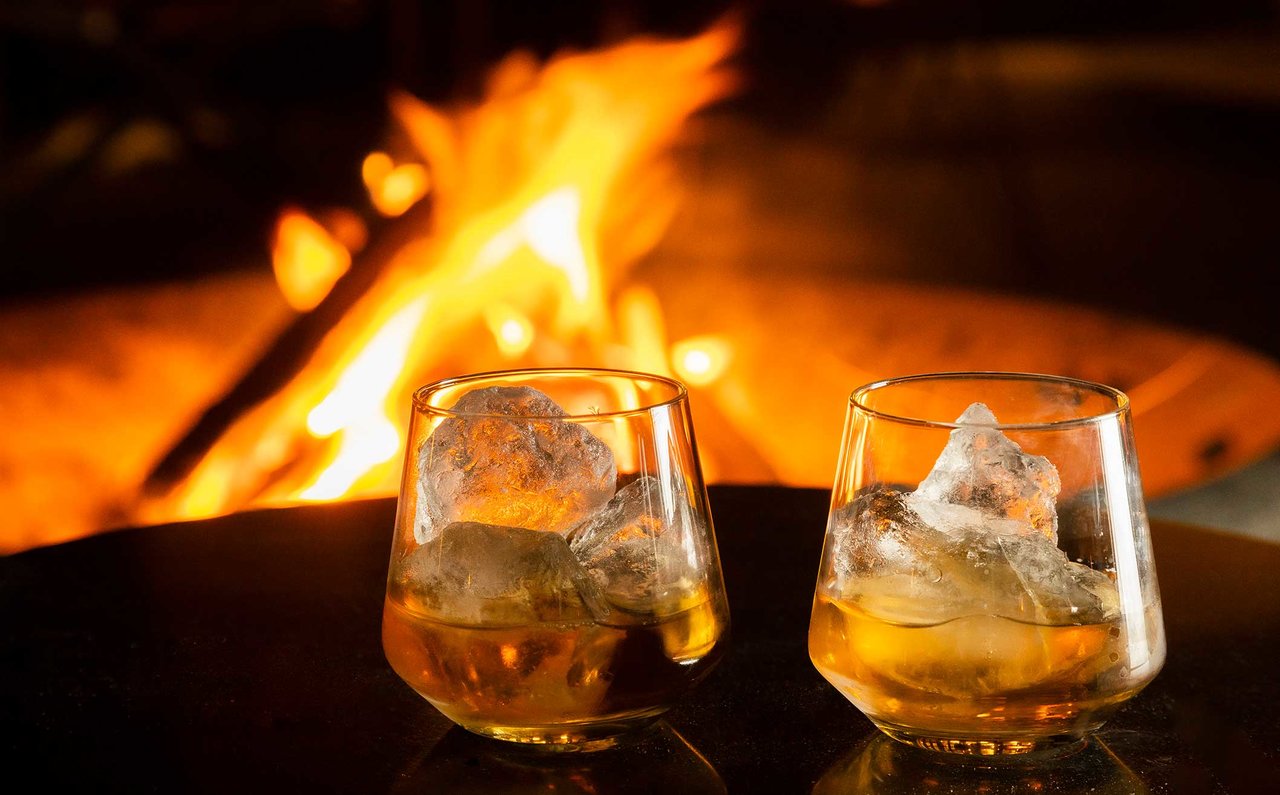
Around the "Cloud Terrace," which also serves as the resort's public space, there are hammocks, chairs, kotatsu (in winter), and benches, allowing for complete relaxation. There's also a "Library Cafe" and "Bonfire Lounge," with various events held at different times.
For example, at night, silent films are screened on a suspended screen in the woods. The Library Cafe hosts "Forest Concerts" with artists playing different genres daily, such as guitar, ocarina, and marimba. A "Bonfire Bar" also opens, offering a selection of whiskies, primarily local brands.
Comfortable music, brown spirits, and a bonfire.
This is the essence of outdoor enjoyment.
This is the essence of outdoor enjoyment.
Oh, and on clear days, be sure to look up at the sky.
Tables next to the Bonfire Lounge, where a fire burns from morning till night, are equipped with marshmallows and skewers. You can make s'mores to your heart's content! The Glamping Masters can teach you how to toast them perfectly, so don't hesitate to ask. During "A Moment in the Forest," held daily in the afternoon (2:30 PM - 5:00 PM), complimentary snacks are served. While the offerings vary by season, in autumn and winter, it was a baumkuchen baked in a skillet, topped with cream, chocolate, fruits, and nuts of your choice.
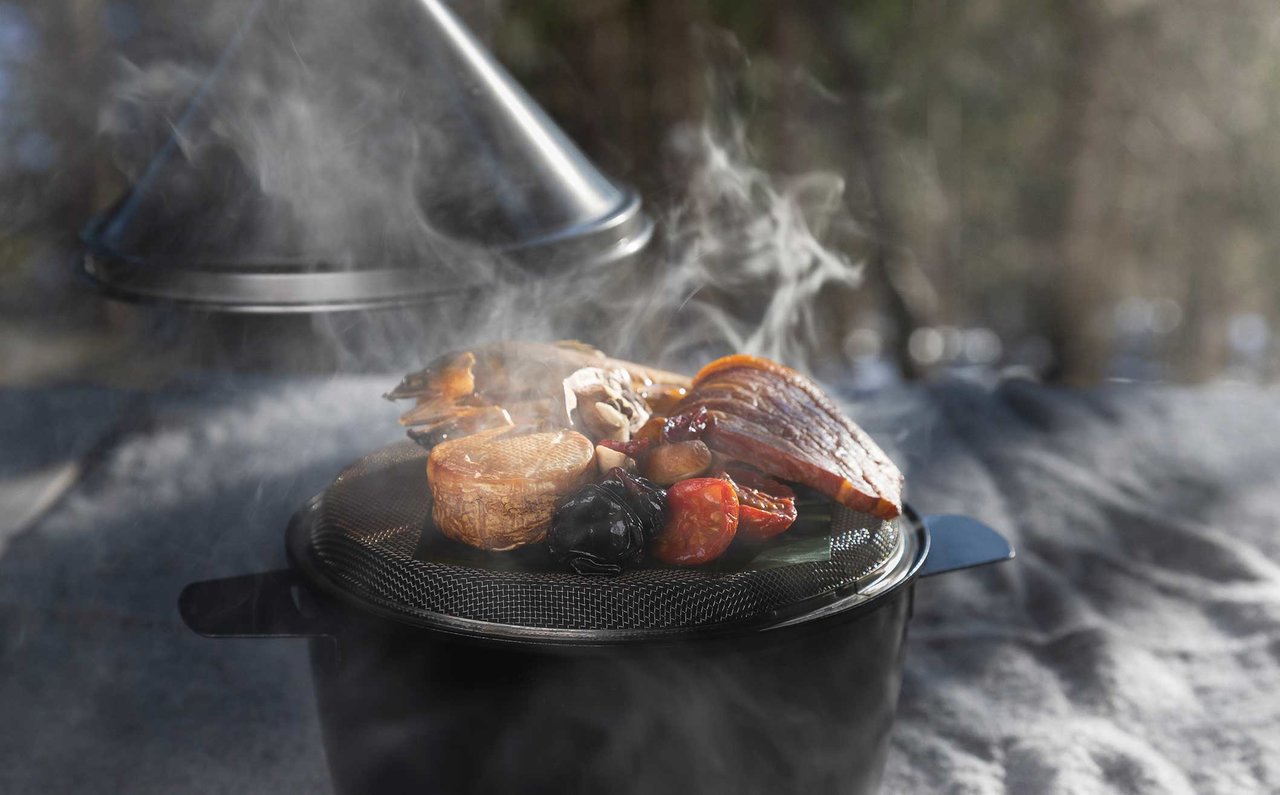
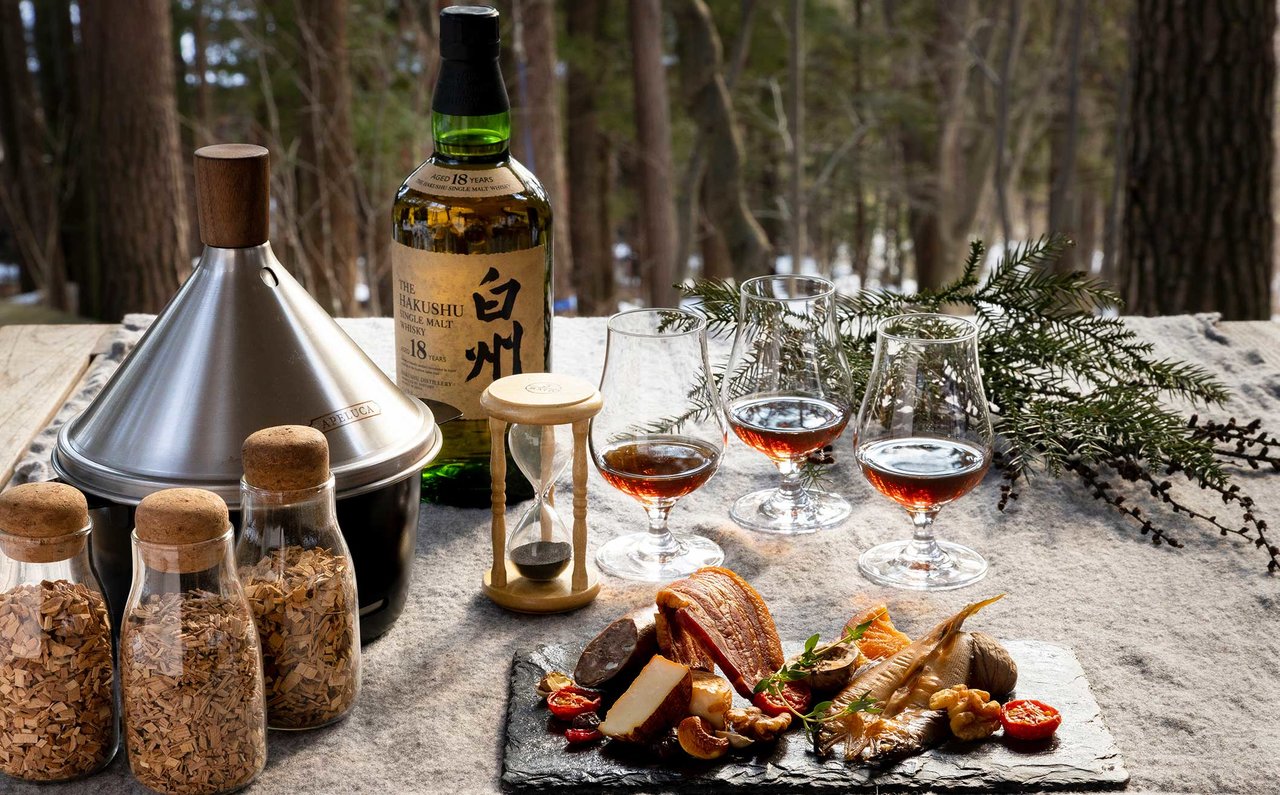
Hillside Smoked Foods Workshop
There are also plenty of activities. We participated in the "Hillside Smoked Foods Workshop" (¥3,000 per person, excluding tax and service charge). We cold-smoked ayu (sweetfish), Fujizakura bacon, semi-dried Kyoho grapes, miso, and salt using chips from barrels used to age Hakushu whisky, as well as apple and cherry wood chips. They even smoke ice cream in the summer. Wow, I'm curious!
A glamping resort. How wonderful is that? Just sipping whisky by the bonfire is wonderful enough, but with "game meat," "smoked foods," and "surprisingly delicious breakfasts," there are so many delightful temptations here. The luxury of the HOSHINOYA brand was certainly present amidst the great nature on the shores of Lake Kawaguchiko.
For those of you who have been meaning to go camping this year but haven't managed to make it happen, why not try a trip to "HOSHINOYA Fuji"? You're sure to encounter plenty of "excitement" that exceeds urban dwellers' imaginations.
HOSHINOYA Fuji
Address | 1408 Oishi, Fujikawaguchiko-machi, Minamitsuru-gun, Yamanashi Prefecture
Access | Approx. 20 minutes by car from Kawaguchiko IC
Number of Rooms | 40
Rates | From ¥67,000 per night (per room, excluding tax and service charge, meals separate)
*Ingredients and menu may change depending on availability.
Address | 1408 Oishi, Fujikawaguchiko-machi, Minamitsuru-gun, Yamanashi Prefecture
Access | Approx. 20 minutes by car from Kawaguchiko IC
Number of Rooms | 40
Rates | From ¥67,000 per night (per room, excluding tax and service charge, meals separate)
*Ingredients and menu may change depending on availability.
Contact
HOSHINOYA General Reservations
Tel. 0570-073-066
https://hoshinoya.com/