You'll groan, 'I must eat this before I die!' Innovative French by a master chef | TRAVEL
TRAVEL | HOSHINOYA Karuizawa
To Know is to Savor! Returns: HOSHINOYA Tokyo Edition (Part 2)
Next: "Snow Crab and Riz au Lait"
This is a visually stunning dish featuring a consommé jelly made with swimming crab, fresh cheese, and a riz au lait prepared with fermented sake lees, all topped with flaked snow crab meat.
The snow crab, glistening against the jelly, is sourced from "about 10 minutes from my childhood home in Tottori Prefecture's Sakaiminato," says Hamada. I had noticed a hint of the sea in Hamada's cooking since he came to Tokyo, and now I understood why. The noble and pure flavor of the crab pairs perfectly with a dry Riesling from Potter Valley in Northern California.
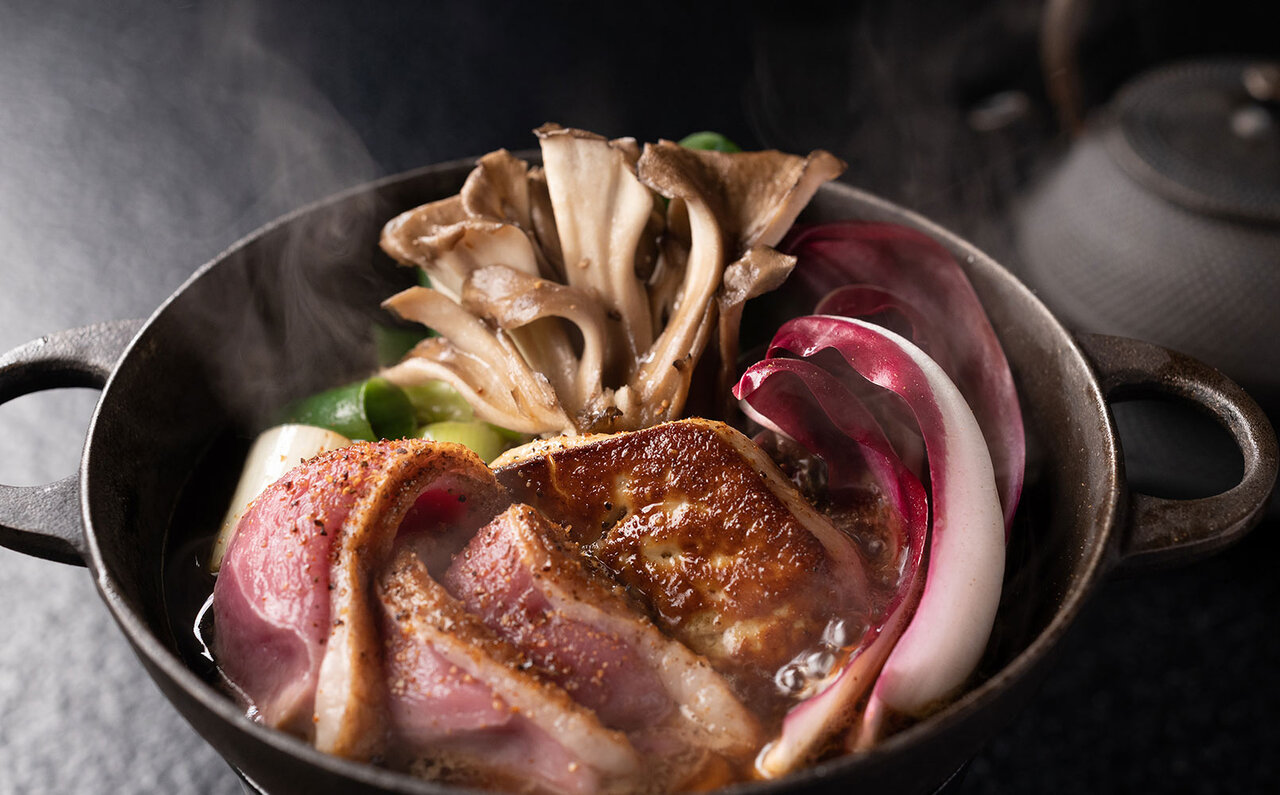
Duck and Grilled Leek Sukiyaki
Now, for the main course: a small pot of "Duck and Grilled Leek Sukiyaki." Roasted duck breast and grilled leeks are served with a sukiyaki sauce made from aged sake lees. And, incredibly, foie gras! It's recommended to simmer vegetables like Azuchi Nobunaga leeks, maitake mushrooms, and radicchio until tender. Madagascar vanilla pepper adds a nice accent, and everything blends together, creating a layered symphony, much like an orchestra.
The highlight was the foie gras, which Hamada proudly stated, "I've always thought foie gras is incredibly delicious in a hot pot." The sukiyaki sauce, enhanced with aged sake lees, seeps into the foie gras, giving it a Japanese twist... It's wonderful, truly wonderful. Who knew it would pair so well with Japanese dashi...
The pairing for this dish is, surprisingly, sake. But that's not all: when a pairing order is placed, strawberry stems are steeped in the sake. This is the epitome of sustainability. It was my first time trying sake infused with strawberry stems, and it was bursting with minerality. Well done, stems!
The pairing for this dish is, surprisingly, sake. But that's not all: when a pairing order is placed, strawberry stems are steeped in the sake. This is the epitome of sustainability. It was my first time trying sake infused with strawberry stems, and it was bursting with minerality. Well done, stems!
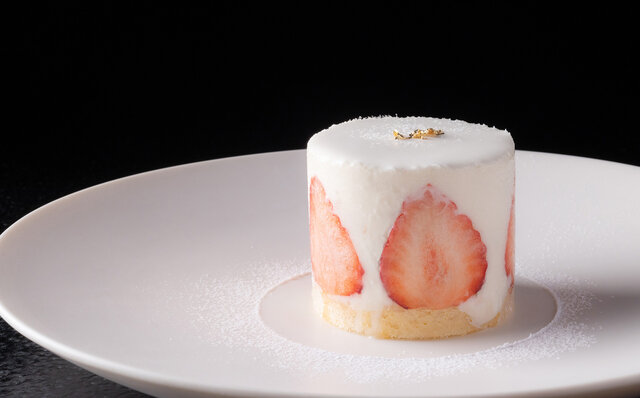
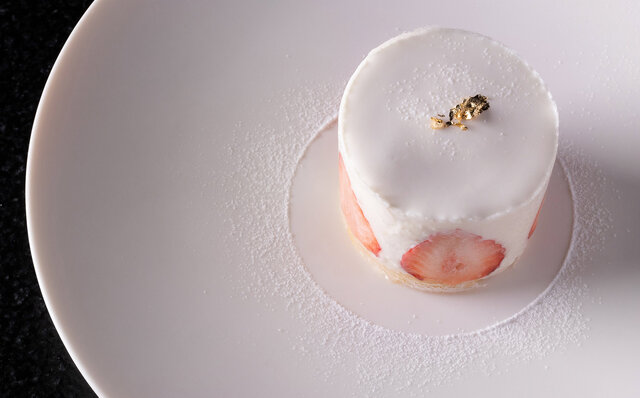
For dessert, we have "Strawberry and Crème Chantilly." A thin, cylindrical candy shell is layered with sponge cake, crumble, and fresh Amaou strawberries, then filled with crème chantilly (whipped cream). The crème chantilly is made by combining Les Ribots, a traditional fermented dairy product from Brittany, France, known for its light acidity, with white chocolate, creating a fragrant and elegantly sweet finish. The variety of textures is also a delight.
"Nippon Cuisine ~Fermentation~" was a course that made me proud of Japan and deepened my longing for France. And I believe Chef Hamada's cheerful personality is also reflected in his cooking, wouldn't you agree? (laughs)
Finally, let me introduce HOSHINOYA Tokyo itself. Well, where should I begin? (laughs) There's just so much I want to tell you about this place. First, HOSHINOYA is a brand that offers an overwhelming sense of the extraordinary with unique themes at each facility, based on the concept of "immersive relaxation." It is the flagship brand of Hoshino Resorts, which is celebrating its 108th anniversary. Among them, HOSHINOYA Tokyo's direct access from Otemachi Station and its proximity to Tokyo Station are significant advantages.
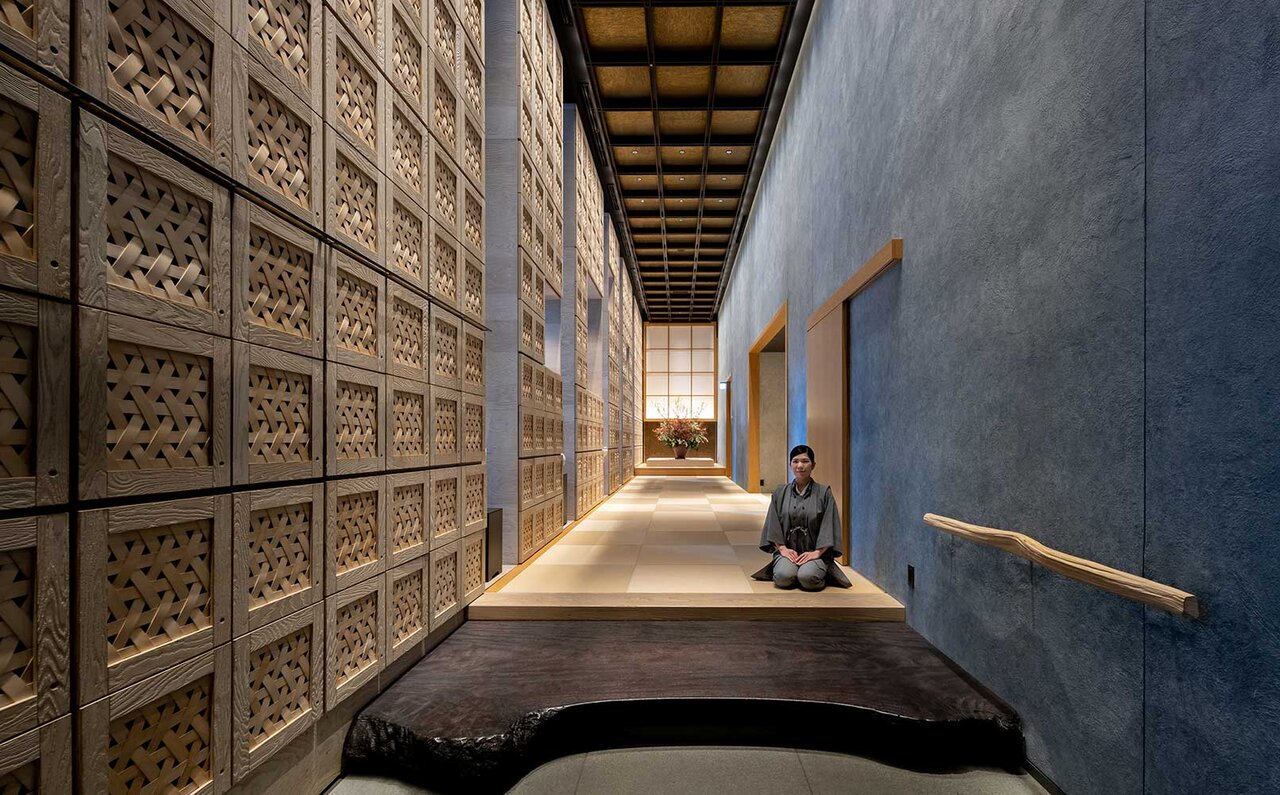
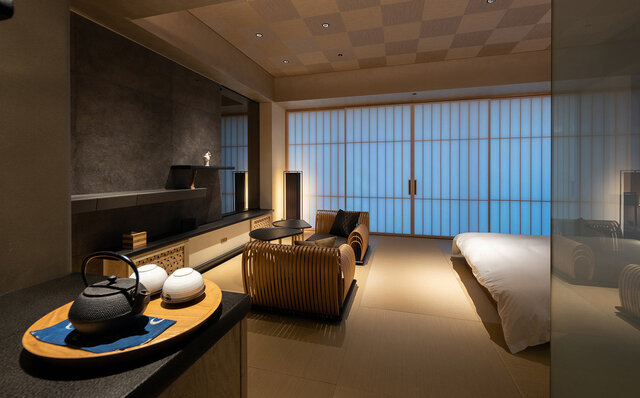
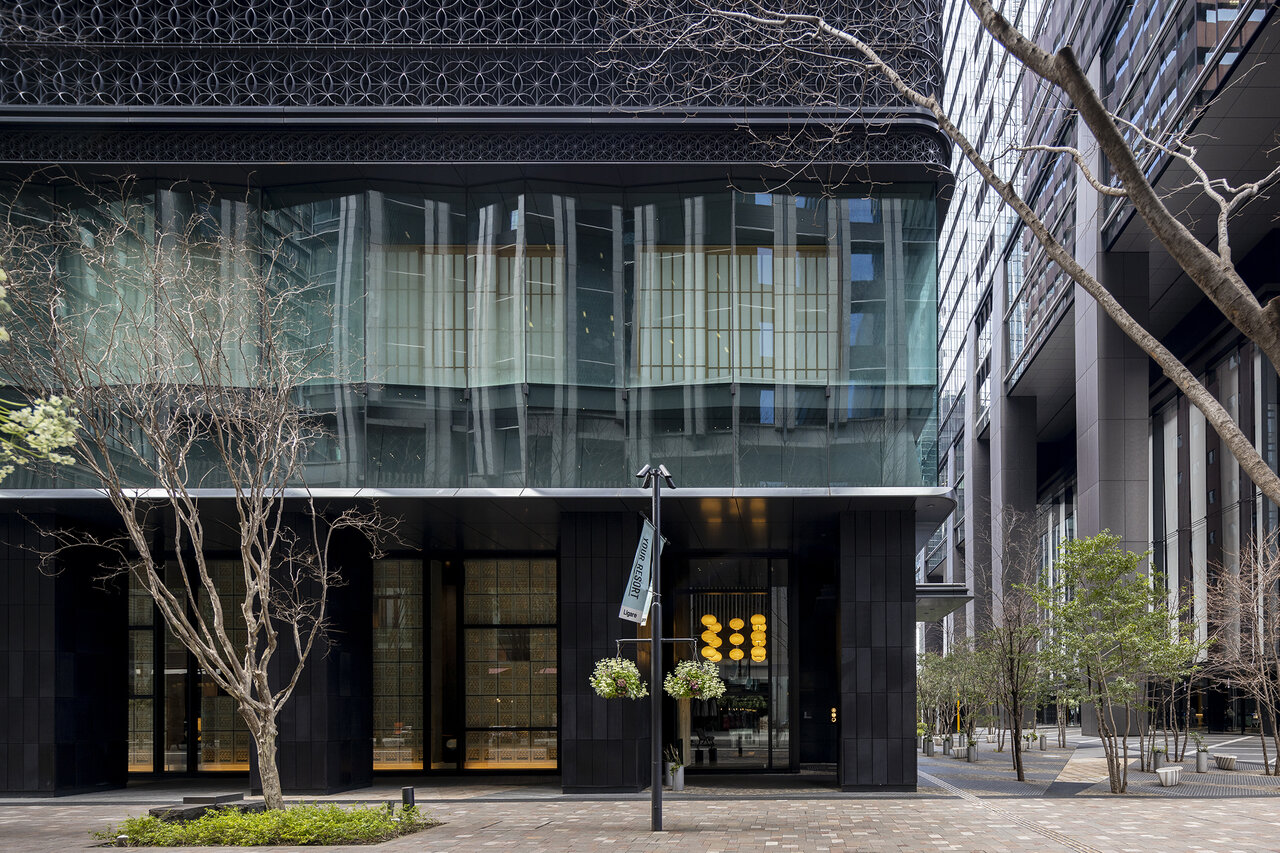
Opened in 2016, it is a "towering Japanese inn" composed of a building with 2 basement levels and 17 above ground. Passing through the large wooden door of Aomori Hiba, said to be over 300 years old, and stepping inside, you enter a world of overwhelming otherworldliness. Ah, that Hiba wooden door might have been a sort of threshold. The use of hyoshigi (wooden clappers) for the elevator sound is a charming touch that brings a sense of comfort. At first, I was taken aback, thinking, "What was that?" (laughs).
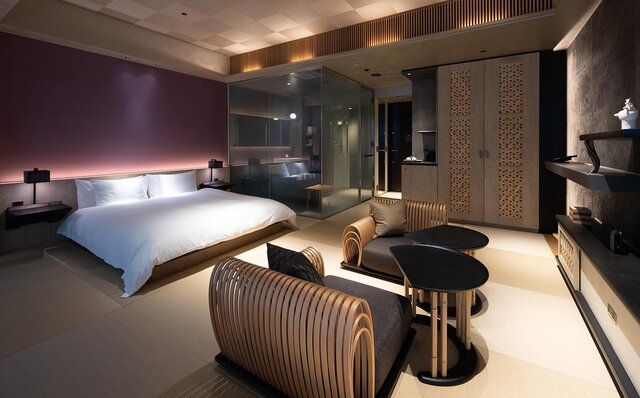
There are three types of guest rooms. "Yuri" with a double bed and "Sakura" with twin beds both accommodate two people and are 50 square meters. In addition, "Kiku," with one room on each floor, is 83 square meters and accommodates three people. The photo shows a "Yuri" type room.
There are three types of guest rooms. "Yuri" with a double bed and "Sakura" with twin beds both accommodate two people and are 50 square meters. In addition, "Kiku," with one room on each floor, is 83 square meters and accommodates three people. The photo shows a "Yuri" type room.
Living Room Lounge
Living Room Lounge
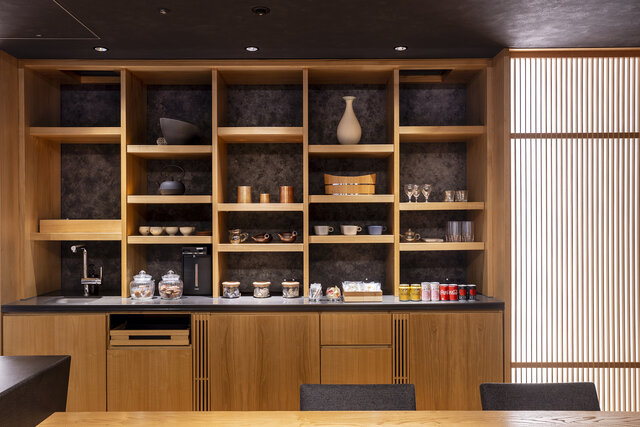
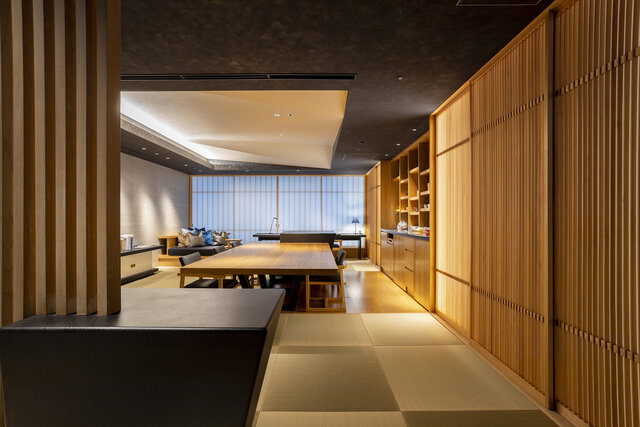
There are six guest rooms on each floor. Each floor has a "Living Room Lounge" accessible only to guests on that floor, offering soft drinks and light snacks. The most distinctive feature of the rooms is the meticulously crafted "tatami sofa." To accommodate modern lifestyles, where fewer people are accustomed to sitting on tatami, the furniture, including tables and sofas, is designed so that the seated eye level is the same as when sitting in seiza (formal kneeling). ...Once you hear that, you'll want to try it. Indeed, the comfort is such that you'll want to say, "This is what it means to be Japanese," and you'll find it hard to get up.
Otemachi Onsen. For guests only.
Otemachi Onsen. For guests only.
Otemachi Onsen. For guests only.
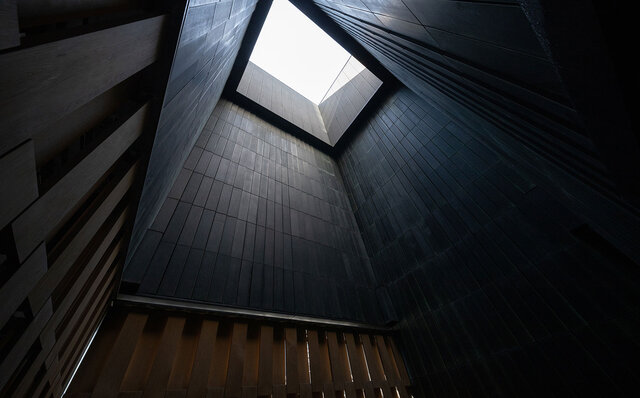
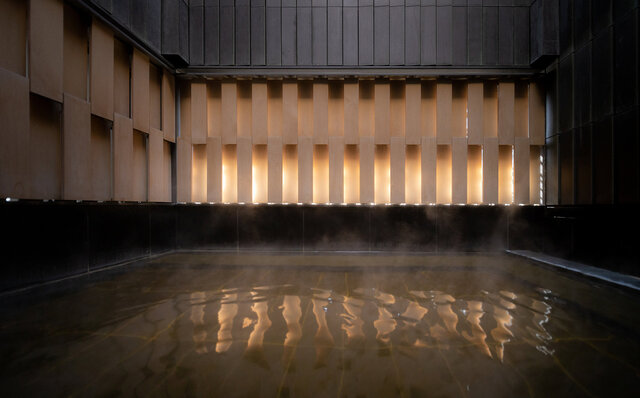
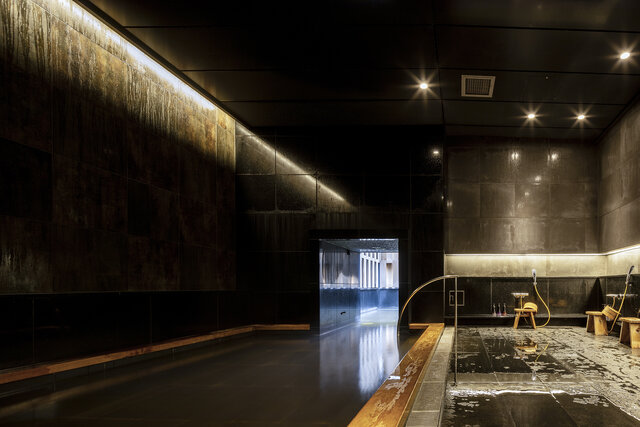
And we mustn't forget (though we wouldn't) the "Otemachi Onsen," which springs from 1500 meters below ground. I am a huge fan of its waters. The water quality is a highly saline sodium chloride spring with iodine content. It's even referred to as "ancient seawater" due to its high salt concentration. Don't you feel like you're truly in a hot spring when the water is this saline? Moving through the indoor bath leads to the open-air bath. Although surrounded by high walls, the Tokyo sky framed by the square opening in the walls is also quite picturesque.
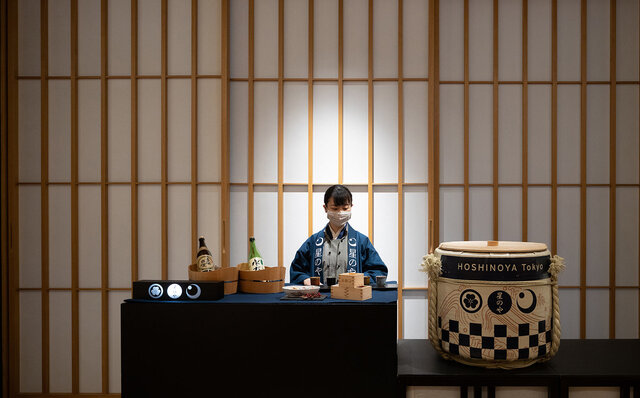
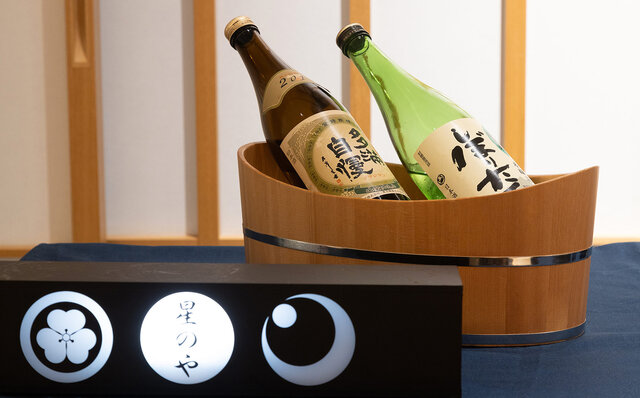
According to some insider information, the "SAKE Lounge" service began in 2017. It has evolved over time through trial and error, gradually taking its current form.
According to some insider information, the "SAKE Lounge" service began in 2017. It has evolved over time through trial and error, gradually taking its current form.
According to some insider information, the "SAKE Lounge" service began in 2017. It has evolved over time through trial and error, gradually taking its current form.
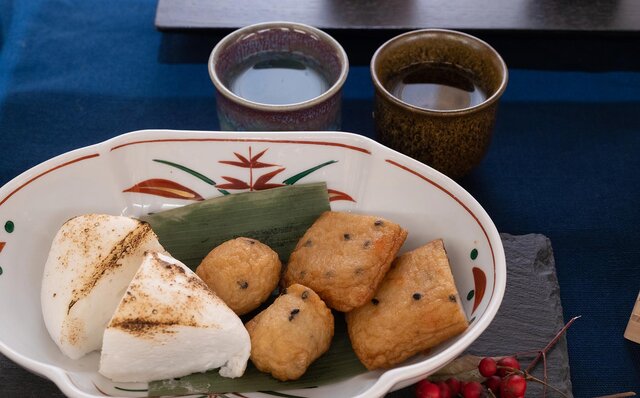
This is also something I must share! Sake from Tokyo breweries and accompanying snacks are offered free of charge. Both the sake and snacks change with the seasons. In February, when I visited, they were serving oden, which included hanpen from the long-established "Kamimo" in Nihonbashi. It's surprising how many delicious things I haven't tried yet in Tokyo.
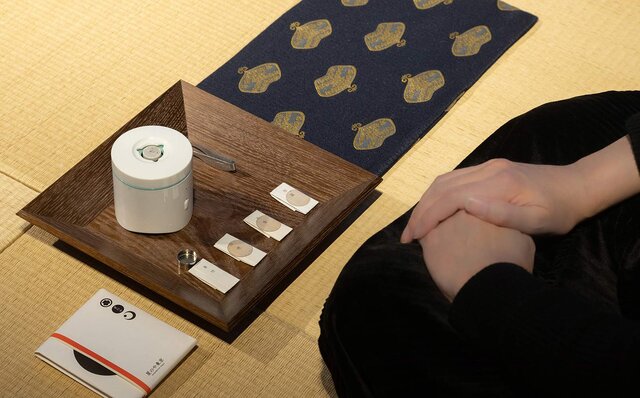
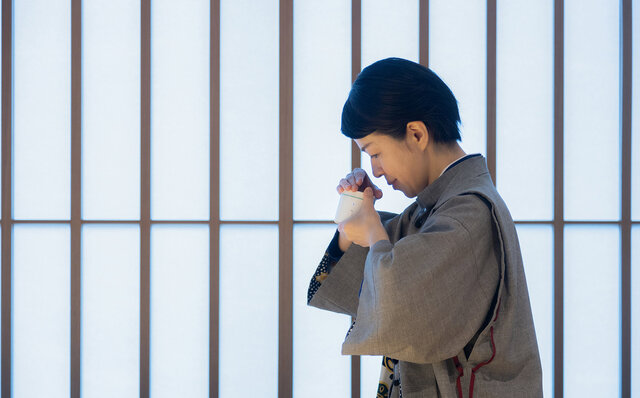
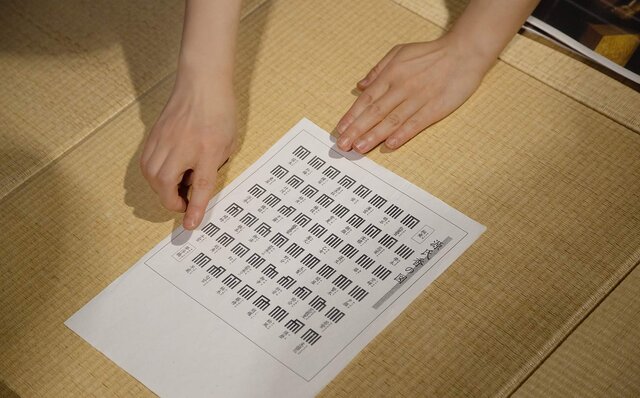
The activities also offer seasonal and uniquely Tokyo experiences. What I tried this time was Kodo, the art of incense appreciation, which was so popular among Heian period nobles that they would wager mountains on it. At HOSHINOYA Tokyo, you can enjoy "Ima-yo Kaori Awase" (paid), a modern version where you distinguish between three types of incense wood using a contemporary incense burner. It's quite challenging! I've tried this before elsewhere and never guessed correctly. I failed again this time! I'm truly glad I don't own any mountains. The staff's clear explanations of Kodo's history were also fascinating.
I also wanted to participate in "Tenku Chokeiko" (free, reservation required), an original exercise that combines sword-fighting movements with deep breathing, held on the rooftop of a nearby building. However, it was canceled due to rain on the day of my visit. Morning exercises at an altitude of 160 meters would undoubtedly be an unforgettable experience. A pity, but I'll save it for next time.
HOSHINOYA Tokyo
Address: 1-9-1 Otemachi, Chiyoda-ku, Tokyo
Number of Rooms: 84 rooms
Public Facilities: Onsen (hot spring), Dining, Spa, Auditorium
Check-in / Check-out: 15:00 / 12:00
Room Rates: From ¥112,000 per night per room (tax and service charge included, meals not included)
Access: 10-minute walk from the Marunouchi North Exit of Tokyo Station, 2-minute walk from Otemachi Station (Tokyo Metro) A1 or C1 ground exits