Japan's Piedmont? An Italian restaurant leading the culinary scene of the northern land with maximum expectations | TRAVEL
TRAVEL | HOSHINO RESORTS RISONARE TOMAMU
To Know Is to Savor: Returns - Hoshino Resorts RISONARE TOMAMU Edition
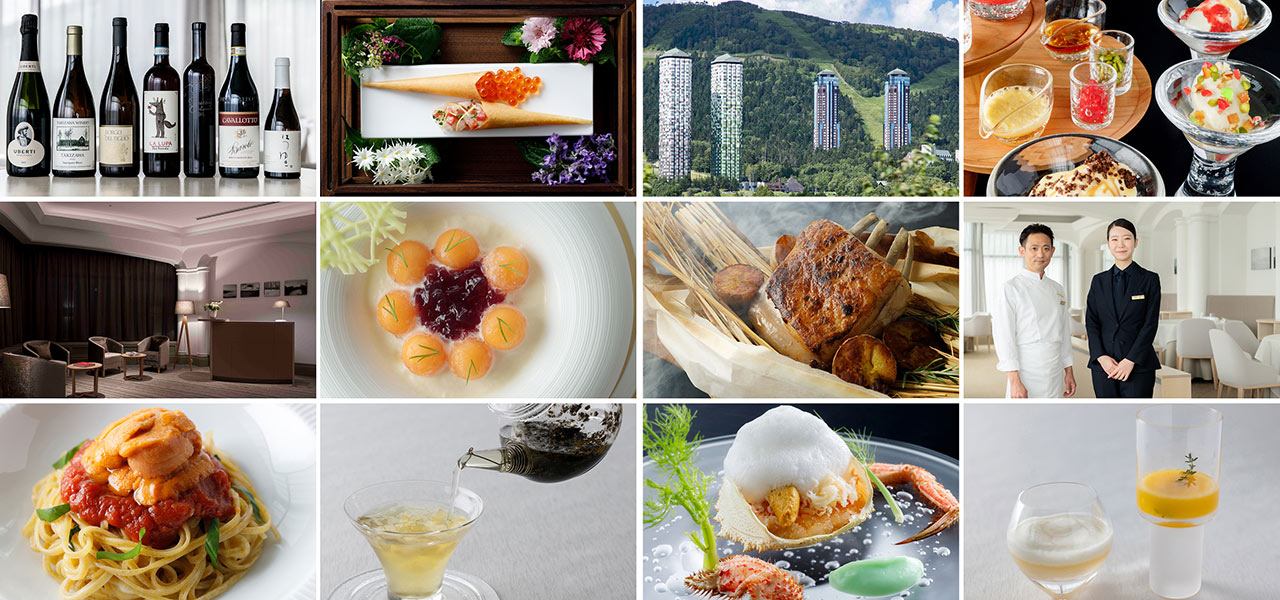
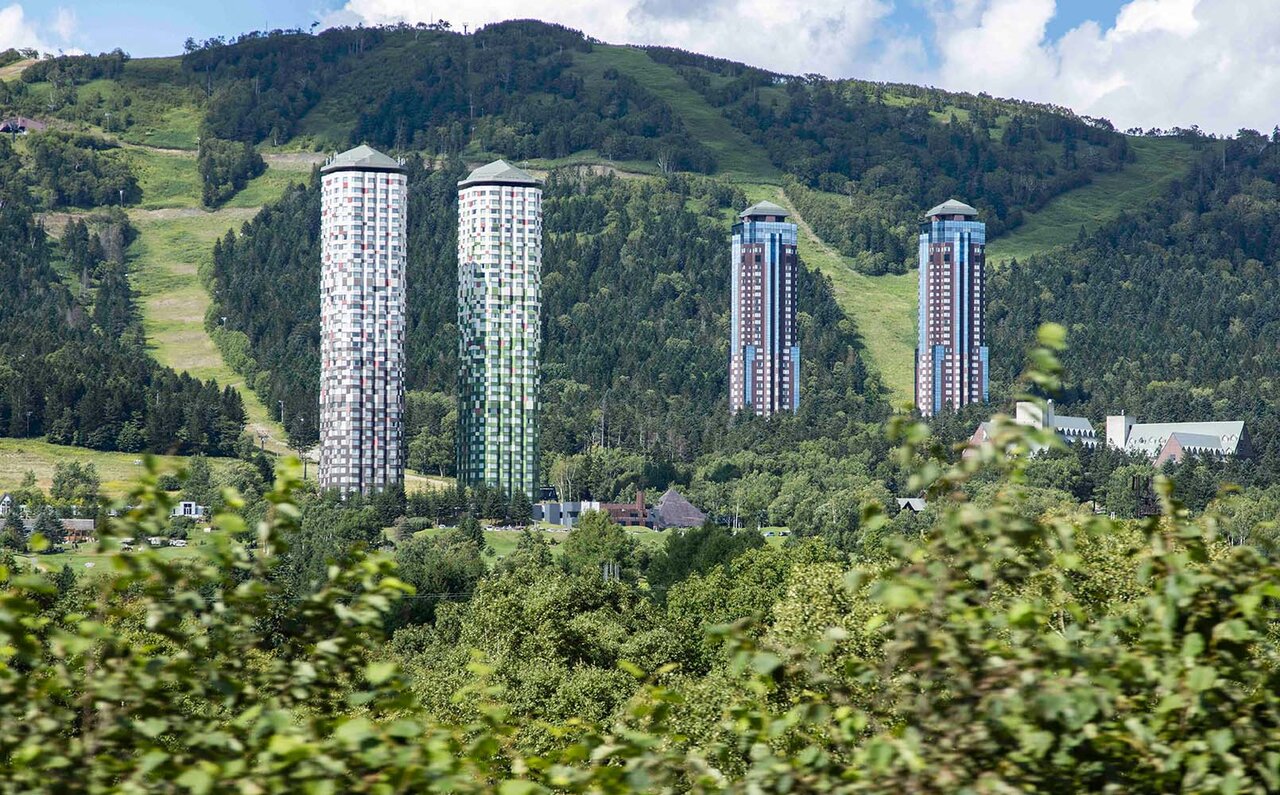
If you were to say, “I’m going to Tomamu to eat Italian,” many people might give you a puzzled look. But there is such a place. In Tomamu, there’s a restaurant worth flying for, a place to visit each season! It’s called “OTTO SETTE TOMAMU.” It is the main dining room of Hokkaido’s largest integrated resort, “Hoshino Resorts TOMAMU / Hoshino Resorts RISONARE TOMAMU.”
Photographs by OHTAKI Kaku | Text by HASEGAWA Aya | Edit by TSUCHIDA Takashi
An Innovative Non-Alcoholic Pairing Service Unexpectedly Knocks Out Even the Most Avid Drinkers!?
We first visited the restaurant in the autumn of 2019, not long after it opened in July of the same year. We were completely captivated by the dishes that Chef Manabu Takeda created, dishes that could only be eaten here. I fondly recalled, with a smile, that autumn day three years ago when I exclaimed in surprise and delight with every dish on the drive to Tomamu. This time, we returned with full anticipation. In the summer of 2022, Takeda’s cuisine had evolved even further!
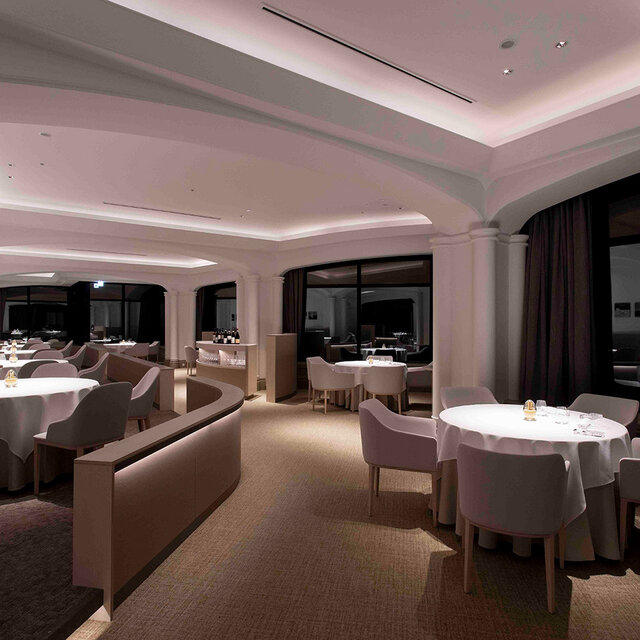
Located on the 31st floor of the South Tower at Hoshino Resorts RISONARE TOMAMU, “OTTO SETTE TOMAMU” is an Italian restaurant that uses Hokkaido’s seasonal ingredients. It is said to be inspired by the regional cuisines of Italy’s Piedmont region, a mountainous area similar to Tomamu, and Liguria, a region facing the sea with abundant seafood.
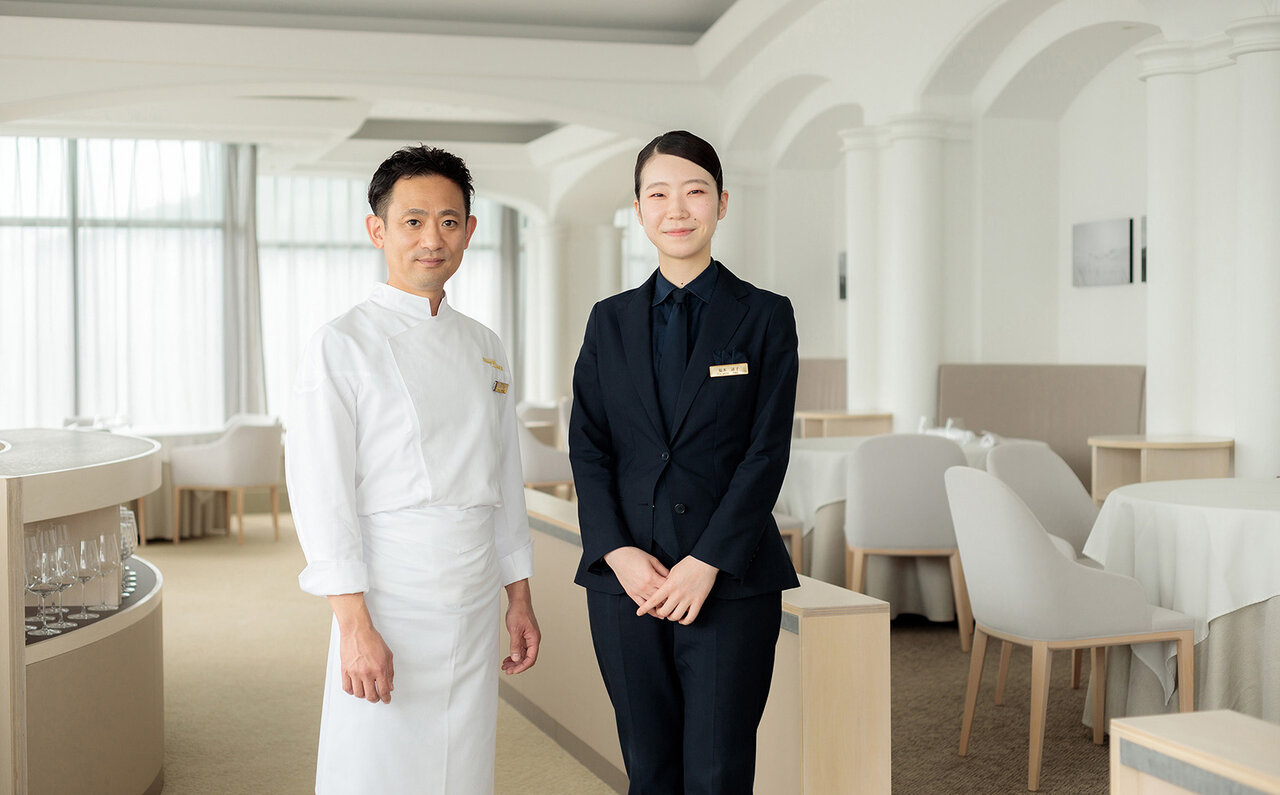
Presiding over the kitchen is… ta-da! Chef Manabu Takeda, whom we mentioned earlier. After honing his skills at several restaurants in Tokyo, including “L’Écrin” and “Four Seasons Hotel Tokyo at Marunouchi,” he returned to his hometown of Asahikawa, Hokkaido, and joined the “Asahikawa Grand Hotel.” He served as head chef for eight years. Yes, his background is in French cuisine. Then, the hotel came under the Hoshino Resorts umbrella, and he was appointed head chef for the opening of “OTTO SETTE TOMAMU,” where he remains today.
The simple yet warm ambiance, the vast Tomamu nature visible through the large windows, and the bouquet-like delicate grissini on the table instantly put me at ease, making me feel, “Ah, I’m home!” Before introducing the course, allow me to introduce someone else. She is the Service Manager, Haruko Fukumoto. This summer’s course was enjoyed with a non-alcoholic pairing developed by Fukumoto.
Chef Manabu Takeda (left) and Service Manager Haruko Fukumoto (right)
“Huh? Non-alcoholic pairing?!” you might be thinking. Yes, I understand. I felt the same way. I’m generally not interested in non-alcoholic drinks at all. It brings back the painful memories of the Prohibition era during the state of emergency…
But, though I tried to ignore it, I knew that high-quality non-alcoholic pairings held immense potential. Wine pairings involve finding existing wines that match the dishes, which is wonderful in itself. However, the non-alcoholic pairings at ambitious restaurants create drinks from scratch to match the food. They are unique beverages crafted specifically for each dish. Naturally, that’s enjoyable. So, this time, I decided to try the non-alcoholic pairing created by Fukumoto. Of course, I also had wine. Hehe.
Fukumoto explained that when developing the non-alcoholic pairings, she “analyzed the ingredients of the dishes and created them while considering what elements could be added to enhance their deliciousness.” …My expectations were soaring.
Now, let me introduce the summer course, available until August 31st. It’s an 8-course menu that generously uses Hokkaido’s summer bounty, including seafood like crab and sea urchin, as well as asparagus.
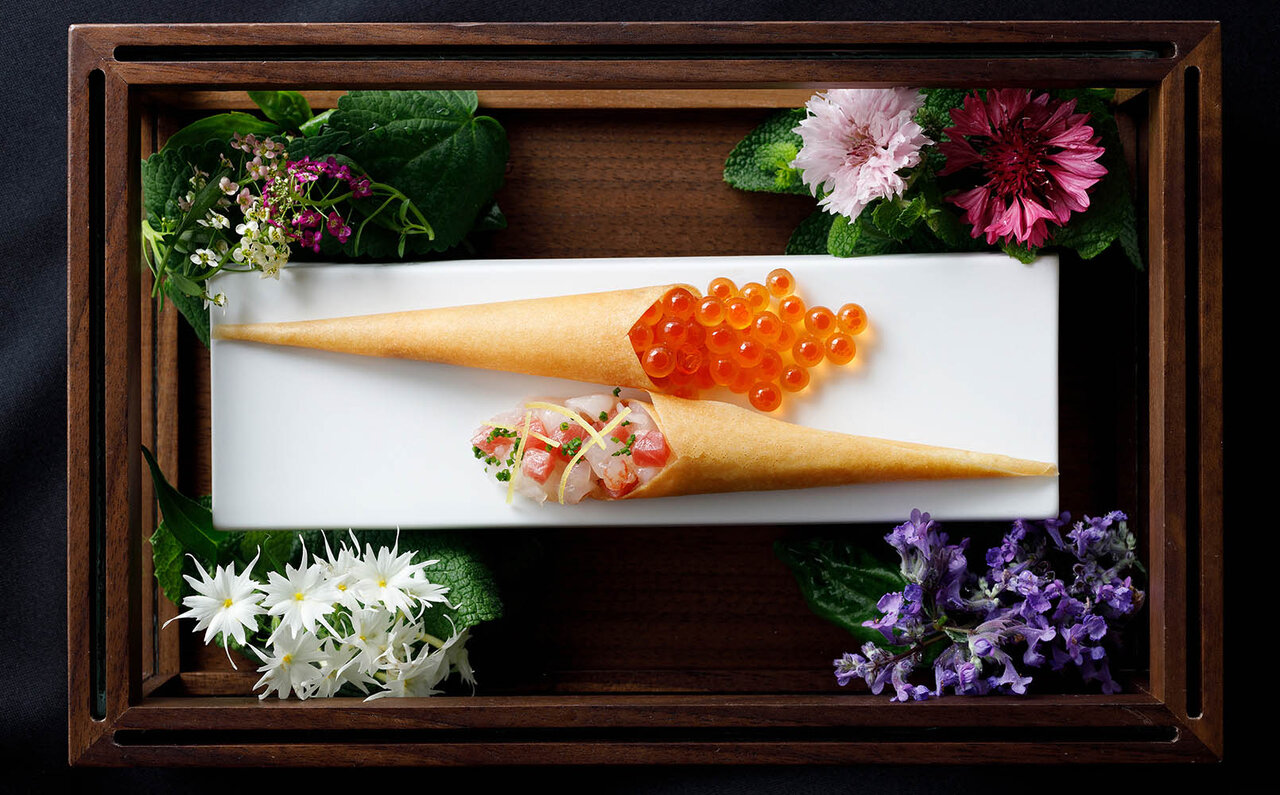
Amuse-bouche: "Ikura and Botan Shrimp Cornets"
The amuse-bouche, "Ikura and Botan Shrimp Cornets," immediately sent my excitement levels soaring (lol). Two types of cornets, featuring salmon roe and salmon, and botan shrimp and tuna, both emphasizing freshness, were presented in a case reminiscent of a jewelry box. They were surrounded by colorful little flowers! As I started taking photos with my phone, exclaiming with delight, a staff member said, “You can eat all the flowers too.” Really? In that case, shall we have a photo session of ourselves munching on flowers? (We did.)
This was the first time I had ever eaten so many different kinds of edible flowers at once. I was amazed at how much the flavors varied depending on the flower! It was so much fun. The world of edible flowers seems to have great depth. The edible flowers are grown by a farmer with whom Takeda has a close relationship. According to Takeda, “Depending on the season, we usually have about five types available.” I suspect I’ll be able to try different flowers on my next visit.
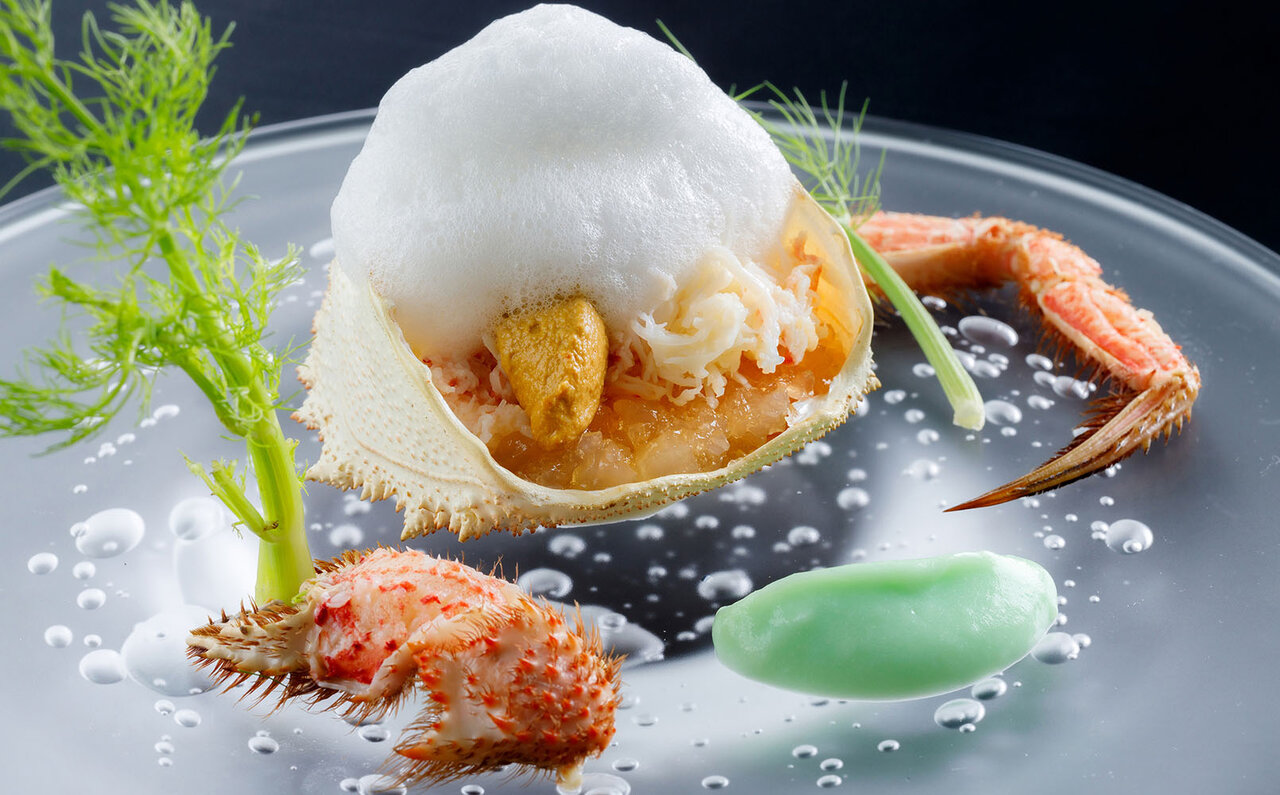
Chilled Appetizer: "Aromatic Crab and Fennel with Foam"
The next dish, the chilled appetizer “Aromatic Crab and Fennel with Foam,” knocked me out the moment it arrived (lol). A foodie friend once said, “Delicious food should be enjoyed with the eyes before the palate,” and this dish was exactly that.
The large crab shell was packed with fluffy, shredded crab meat. A light, kombu-flavored foam was placed on top. What a brilliant combination! To the side, a dollop of puree made from fennel and white balsamic vinegar. The sweet aroma of fennel and the oceanic scent blended exquisitely, captivating my senses. What I appreciated most was the generous amount of crab. I savored every bite, filled with happiness. “We’re delighted you enjoyed it. Our concept is to let our guests savor delicious food in abundance,” said Takeda. He mentioned that before opening, the kitchen staff, along with the floor staff, all work together to prepare the crab. How thoughtful. I will savor it to the fullest.
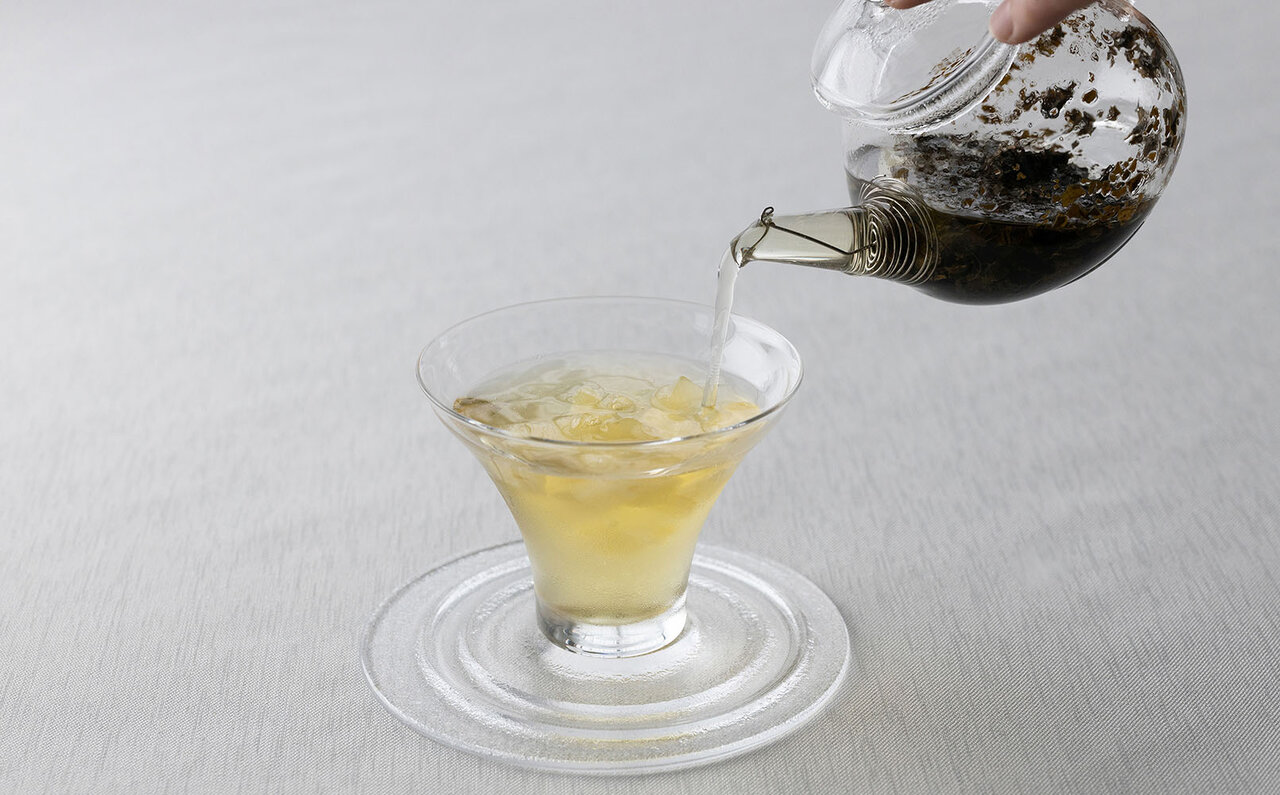
And then, Fukumoto’s non-alcoholic pairing was simply superb. A drink made by pouring a tea of grape leaves from the Hokkaido Yoichi winery “Domaine Takahiko” over frozen kombu dashi was a concentrated burst of umami (lol). It was practically a soup. Fukumoto explained, “Initially, I thought of serving the grape leaf tea as is, but it would have been overpowered by the dish. However, I wanted to emphasize the umami of the grape leaf tea itself, so I combined it with kombu dashi.” The kombu’s flavor, along with the acidity of the grape leaf tea, acted like a crab vinegar, elevating the crab’s umami to new heights.
Non-alcoholic pairing, you’re amazing. Well done, even as an opponent (though you’re not an opponent at all).
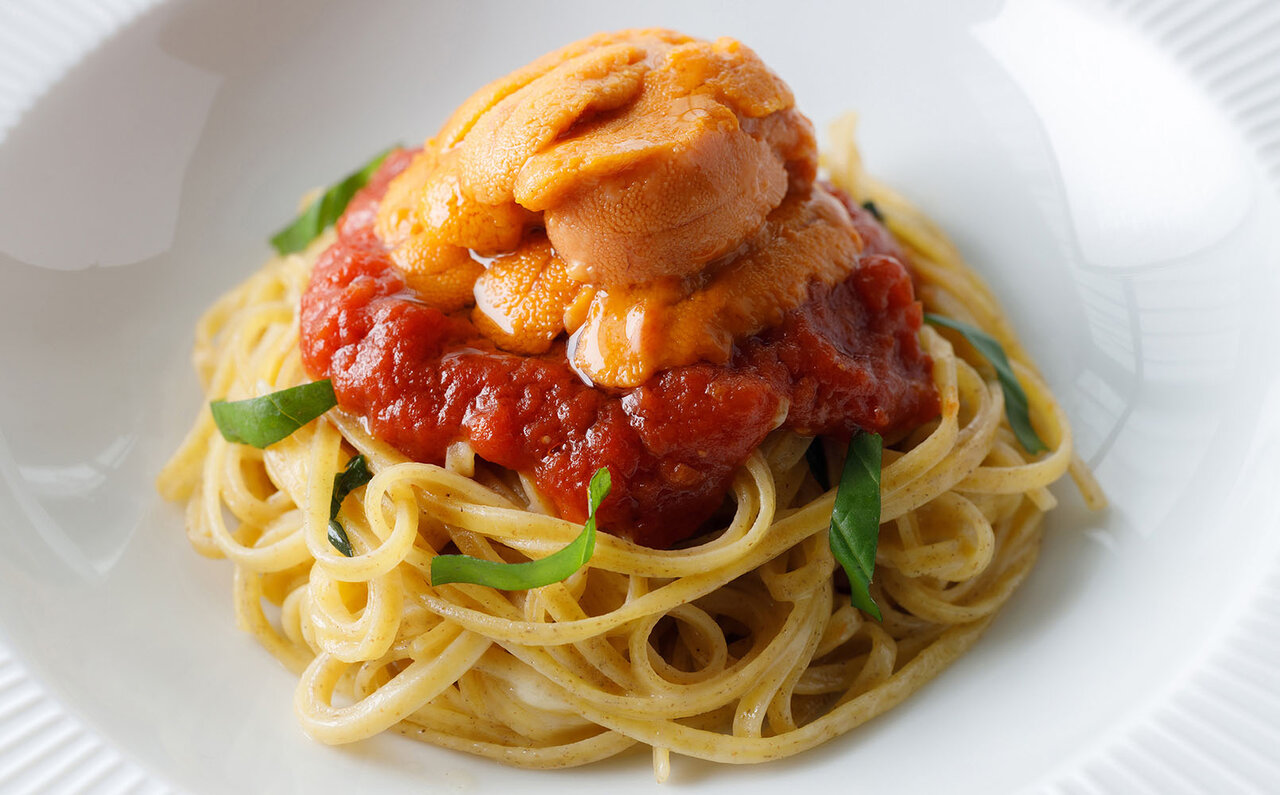
Sea Urchin and Tomato Tagliarini
The name alone, “Sea Urchin and Tomato Tagliarini,” made me want to skip it, but it was served with the words, “Please enjoy it while it’s warm.” Indeed, without those words, its beauty would have made me want to admire it forever (lol).
At “OTTO SETTE TOMAMU,” tagliarini, a pasta representative of the Piedmont region, is used for pasta dishes. It’s made with Hokkaido-grown wheat and, despite being about 3mm thick, its high egg yolk content gives it a firm texture that holds up to the rich sauce. Small, sweet cherry tomatoes are slowly cooked at low temperatures to enhance their flavor before being made into a tomato sauce. This is generously topped with fresh, seasonal sea urchin, known for its smooth texture and intense sweetness. Who knew tomatoes and sea urchin could be such a perfect match! Despite the richness of both components, there’s a refreshing quality. I was reminded of what a restaurant staff member told me on my last visit: “Takeda is a magician with sea urchin. He pursues its potential every day.” I wholeheartedly agree (lol).
The non-alcoholic pairing was a drink made by infusing rosehip with basil aroma and flavor, then carbonating it. Fukumoto explained, “By adding carbonation to the acidity of the rosehip, we’ve made the sauce’s flavor feel lighter. The sweetness and acidity pair well with the tomato sauce, and the basil aroma enhances the overall flavor of the dish.” I see, the way it complements the dish is truly remarkable. The subtle basil acted as a perfect bridge, enhancing the wheat aroma of the tagliarini.
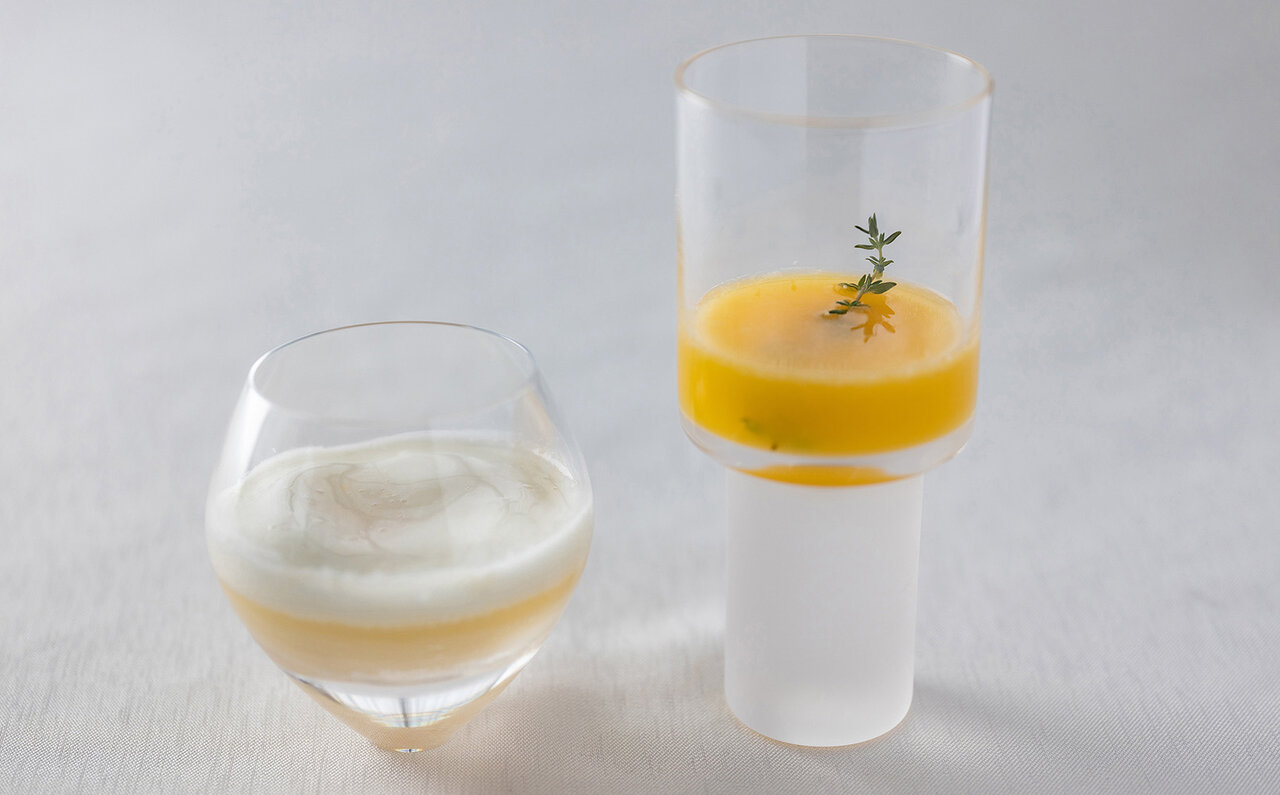
The non-alcoholic pairing for the warm appetizer “Gratinated Asparagus” was made with amazake mixed with non-alcoholic beer, topped with yuzu espuma (left). Fukumoto noted, “While asparagus is the star, we considered how to make each ingredient stand out. For example, we paired the amazake, with its rich, fermented umami, with the butter.” The non-alcoholic pairing for the fish dish, “Steamed Fish Hidden in Herbs,” was a juice made from cold-pressing three types of citrus (grapefruit, orange, and lime) to bring out their sweetness and acidity, with freshly grated ginger added (right). The ginger’s umami gently permeated the soup, perfectly enhancing the sweetness of the oil.
Lamb Wrapped in Straw
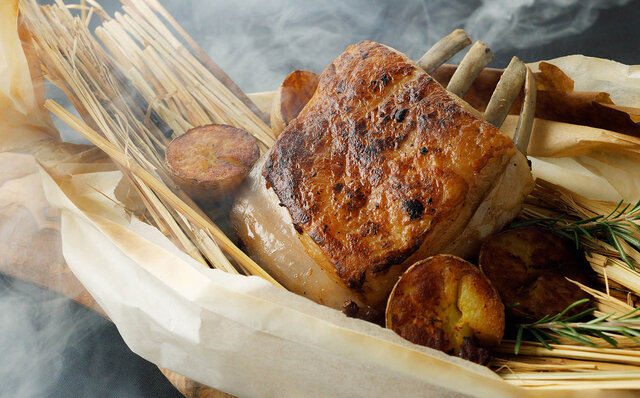
Lamb Wrapped in Straw
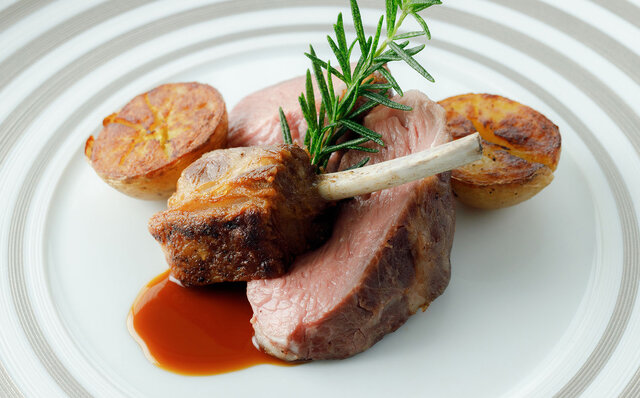
The main dish of the course was the “Lamb Wrapped in Straw,” featuring tender lamb (Suffolk from Shibetsu, Hokkaido) roasted and wrapped in straw. This is an adaptation of a traditional Piedmontese peasant dish where ingredients were wrapped in straw and placed in a fireplace while farmers worked. Slow-cooked at low temperatures, it brings out the milky umami of the lamb. The aroma of the lamb, the toasted straw, and the refreshing rosemary were simply divine. It was cooked with both power and precision. We were also delighted to be served the bone-in parts, allowing us to fully savor the lamb’s flavor. Let’s dig in with our hands and enjoy it heartily!
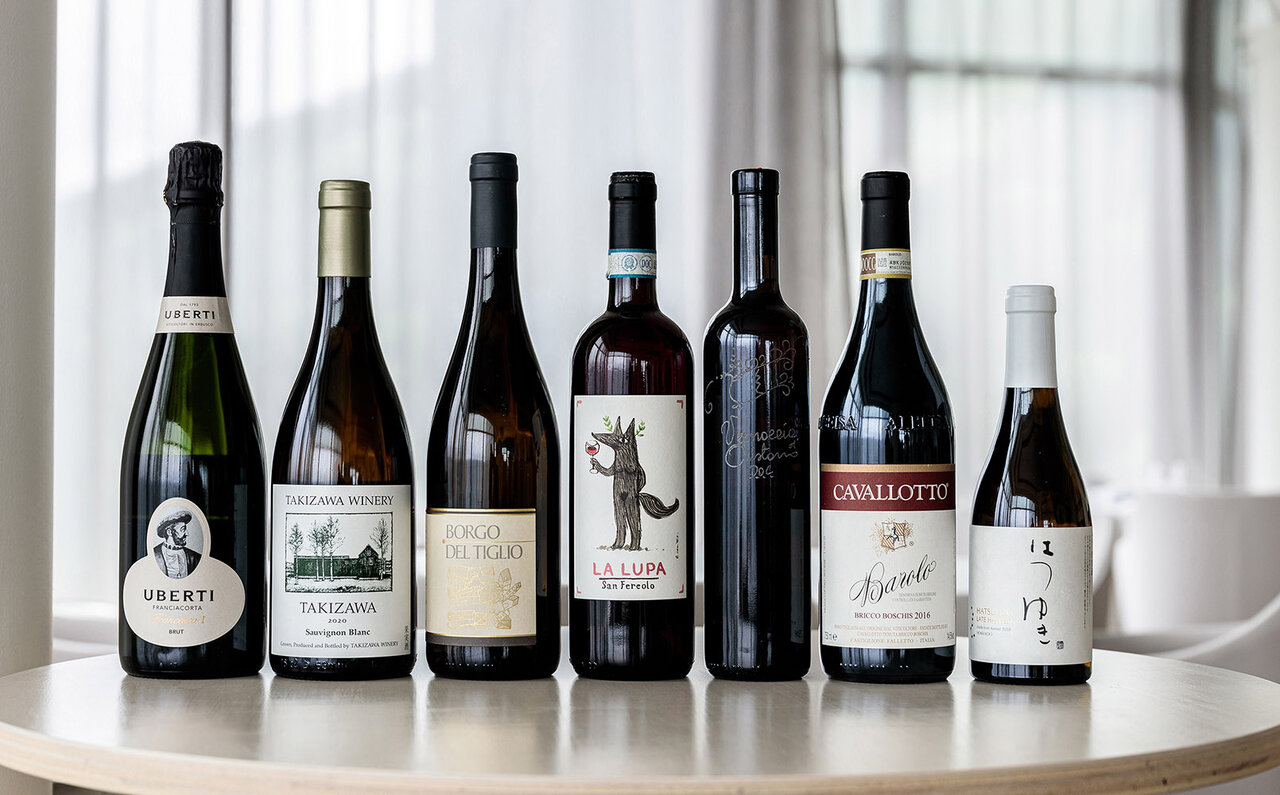
Incidentally, the wine pairing included the bottles shown above. For the main lamb dish, we had Barolo, the king of Italian wines! With its exceptional elegance and robust fruitiness, the Barolo generously enveloped the lamb’s milky flavor. The wine pairing selection was, as always, impeccable.
Primo Dolce
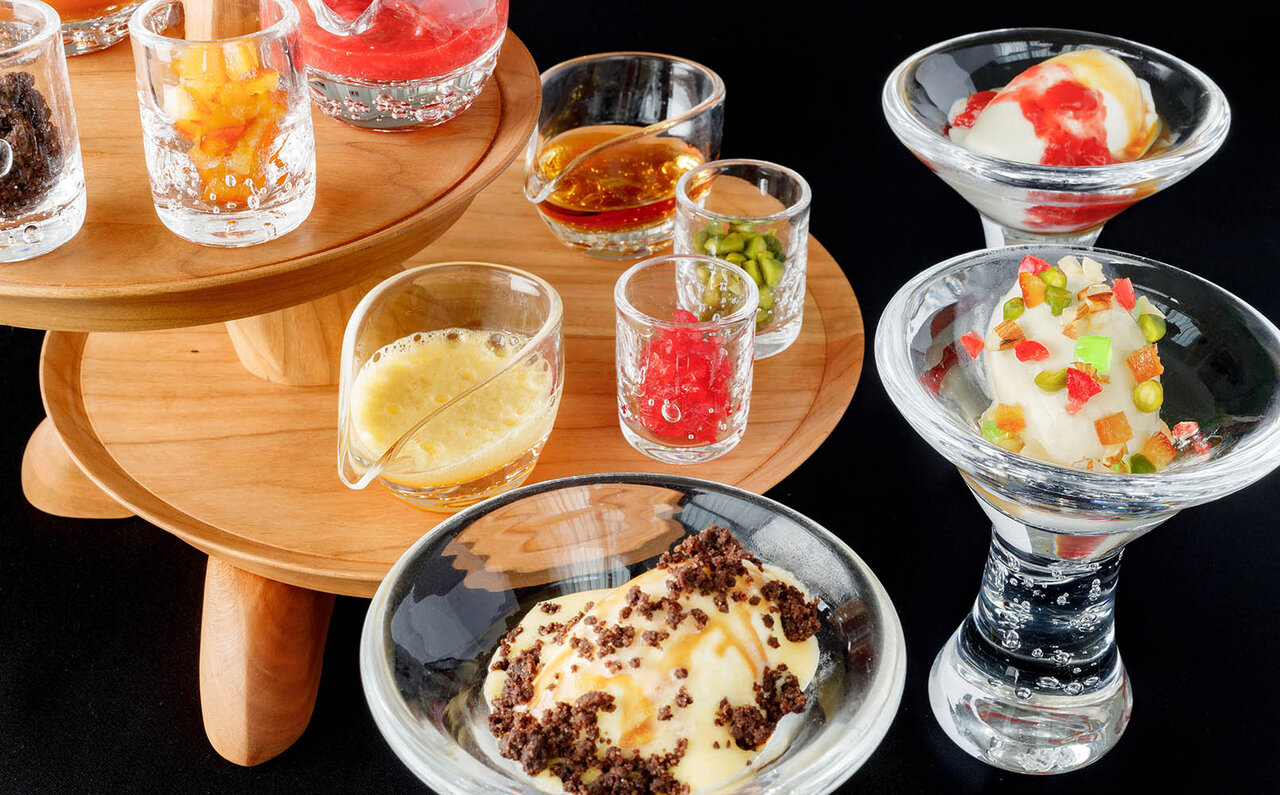
The festivities continued with the primo dolce (palate cleanser): a gelato made with Tomamu milk, from the cows raised at the resort. This was then topped with strawberry sauce, dried fruits, amaretto, or coffee liqueur to create the flavors of Italian traditional desserts like tiramisu, cassata, and panna cotta. You could choose one, or have them all. This wonderful primo dolce embodies the desire to actively incorporate products from the resort’s farm into the restaurant’s offerings and to let guests enjoy traditional Italian sweets.
It turns out Takeda also spent about three years working in pastry at a famous patisserie. That explains why all his dishes are so delicate and beautiful.
Melon Zuppa Inglese
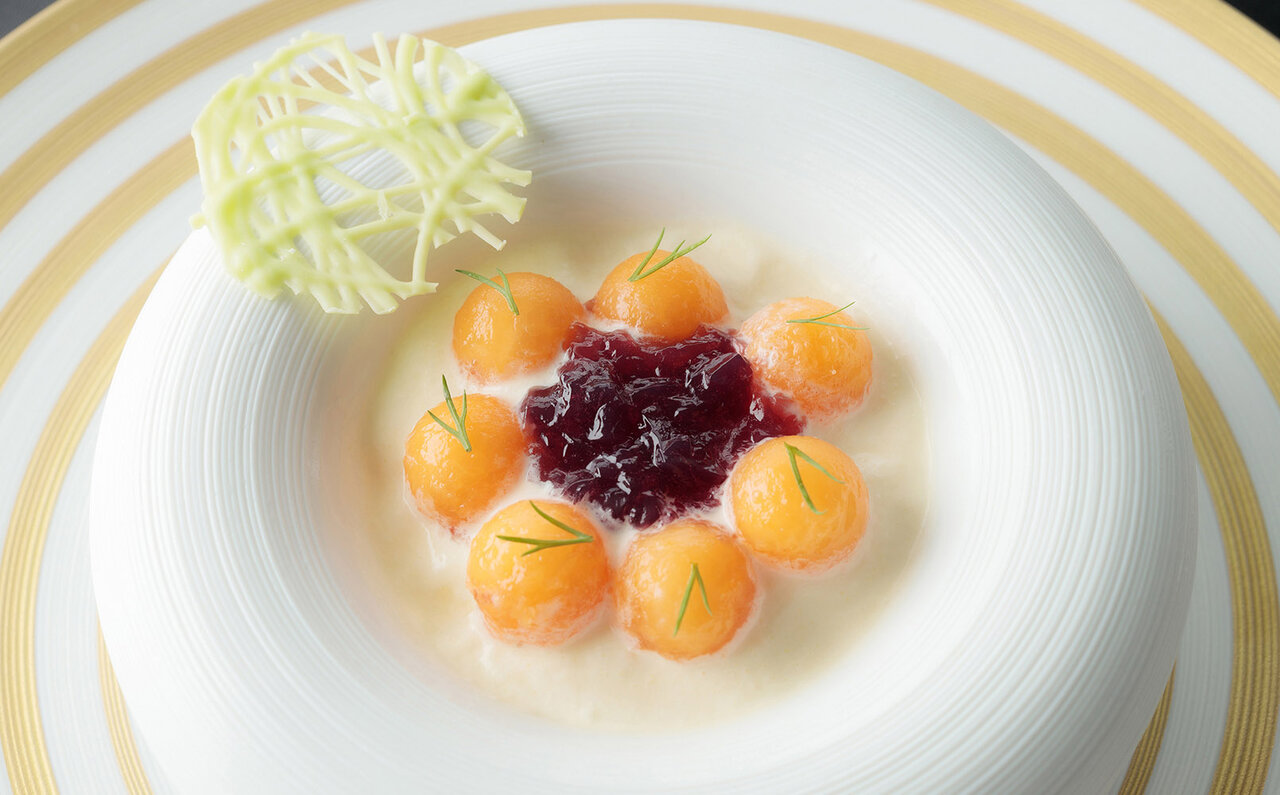
The main dessert was “Melon Zuppa Inglese,” an adaptation of one of Italy’s representative desserts. It featured sponge cake soaked in liqueur and syrup, a lightly whipped custard, a sweet wine (port) jelly, and the star ingredient, red-fleshed melon. This dessert, as Takeda put it, “Red-fleshed melon is synonymous with Hokkaido summer,” truly captured the essence of Hokkaido’s summer. And then I realized: this sense of exhilaration, this gentle deliciousness that relaxes the body and soothes the soul – perhaps this is why I love Takeda’s cooking.
Well, I certainly ate well this time. My stomach and heart are full to bursting, but I find myself already thinking, “I wonder what the autumn menu will be like. When should I visit again?” I return to my room, laughing at my gluttonous self. “Local gastronomy” is truly enjoyable. It even sparked a desire to bring my family and friends here and boast, “See? Delicious, isn’t it?” as if it were my own accomplishment.
Now, tomorrow is for playing! The feature on the facilities and activities at “Hoshino Resorts TOMAMU / Hoshino Resorts RISONARE TOMAMU” will be published at a later date (coming soon).
Overview of "OTTO SETTE TOMAMU" Limited-Time Summer Dinner Course
Period | Until August 31, 2022
Price | 8 courses: ¥15,730; Pairing: ¥8,500; Non-alcoholic pairing: ¥5,000 (tax and service charge included)