HOSHINOYA Karuizawa's main dining room is "Nihon Ryori Kasuke" (hereinafter, "Kasuke"). While there are various dining facilities nearby, such as the main dining room "Breston Court Yukawatan" at Hoshino Resorts' "Hotel Breston Court," the "Sonmin Shokudo" which offers dishes using Shinshu ingredients, and the restaurants at "Harunire Terrace," a small town with shops scattered among the elm trees, "Kasuke" is the only restaurant within HOSHINOYA Karuizawa.
Photographs by Kaku Ohtaki | Text by Aya Hasegawa | Edit by Takashi Tsuchida
A Cascade of Bliss: A Feast for the Eyes and Palate, the Overwhelming Power of Modern Japanese Cuisine
We have arrived at HOSHINOYA Karuizawa. This is the birthplace of Hoshino Resorts, which now boasts immense recognition and brand power among Japanese hotel brands. In essence, it is the flagship of the group, embodying the philosophy of Hoshino Resorts as a whole.
Hoshino Resorts began in 1914. In Karuizawa, which was just beginning to be developed as a villa area, they drilled a well and opened "Hoshino Onsen Ryokan." As early as the Taisho era, they established a hydroelectric power plant, making them pioneers of eco-resorts. HOSHINOYA Karuizawa opened in its founding location in 2005.
There is much I could say, but as the series title eloquently suggests, the theme of this article is "food." Let us introduce HOSHINOYA Karuizawa through the lens of "food."
Main Dining Room "Nihon Ryori Kasuke"
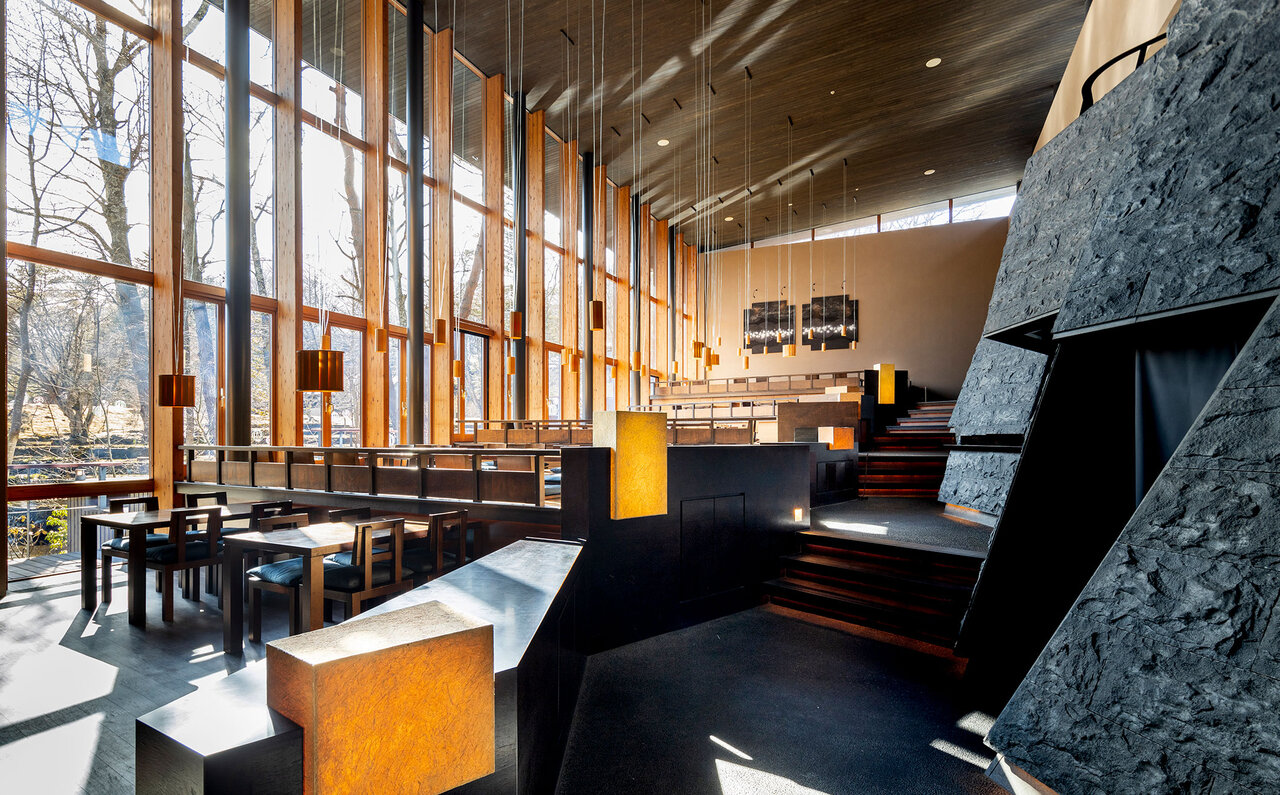
"Kasuke," named after the grandfather of the current president, Yoshiharu Hoshino, who developed Hoshino Onsen, is impressive in its very structure. It features tiered levels like a staircase. The aisles are designed to evoke a "river," and the seating areas a "river terrace," with a view of terraced rice paddies unfolding beyond the large windows, designed to take advantage of the original valley terrain.
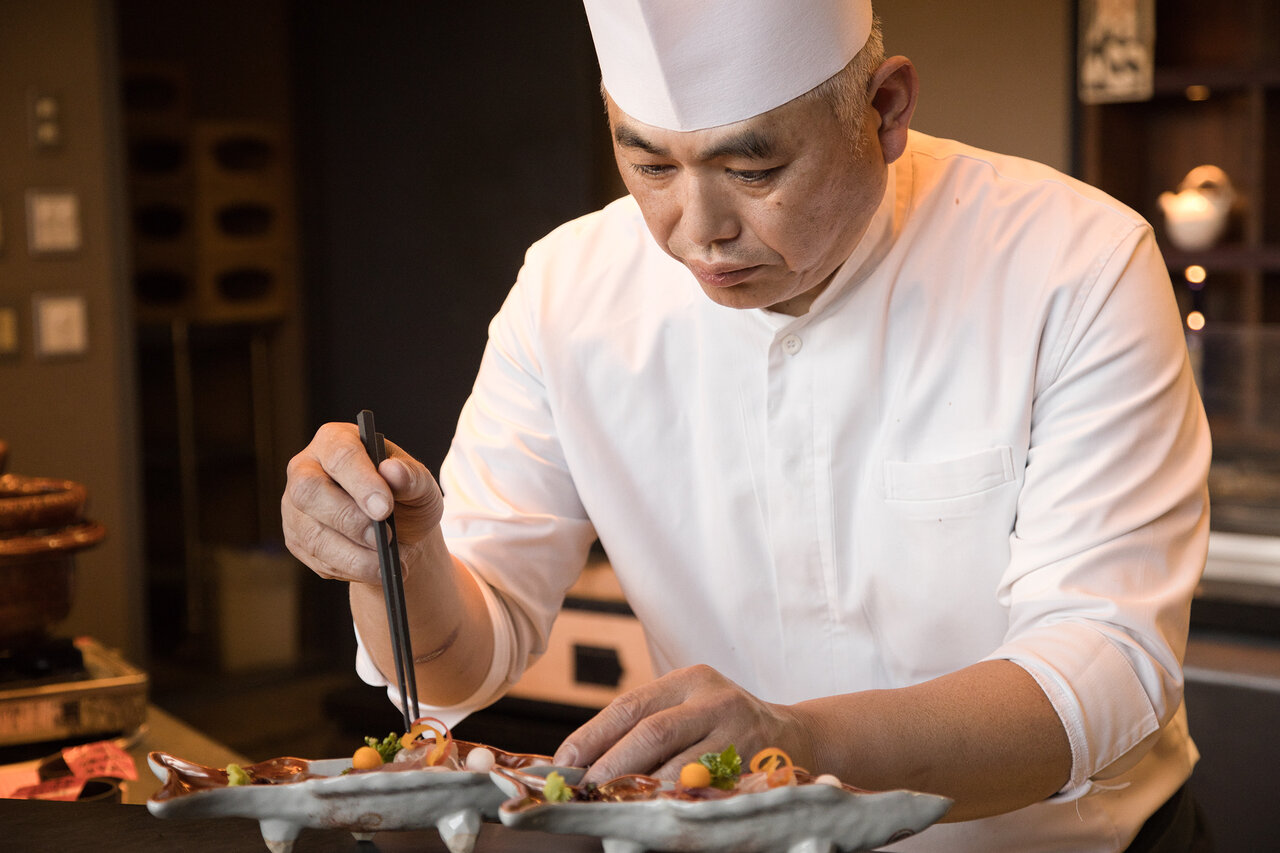
Eiji Inaya, Chef at "Kasuke"
Eiji Inaya, who has been the chef at "Kasuke" since 2013, smiles gently and says, "With a restaurant on this scale, the cuisine must also have a presentation to match."
The theme of the cuisine is "Mountain Kaiseki." "When I listen to our guests, what they want to eat when they come here is local, mountain ingredients," says Inaya. Of course! When traveling, one wants to savor the delicious local specialties!
Inaya focuses on creating "rustic regional cuisine that isn't rustic" by arranging local dishes in the "Kasuke" style. He also emphasizes the "bitterness" characteristic of Japanese cuisine.
Now, let us introduce the spring "Mountain Kaiseki," filled with delight and surprise.
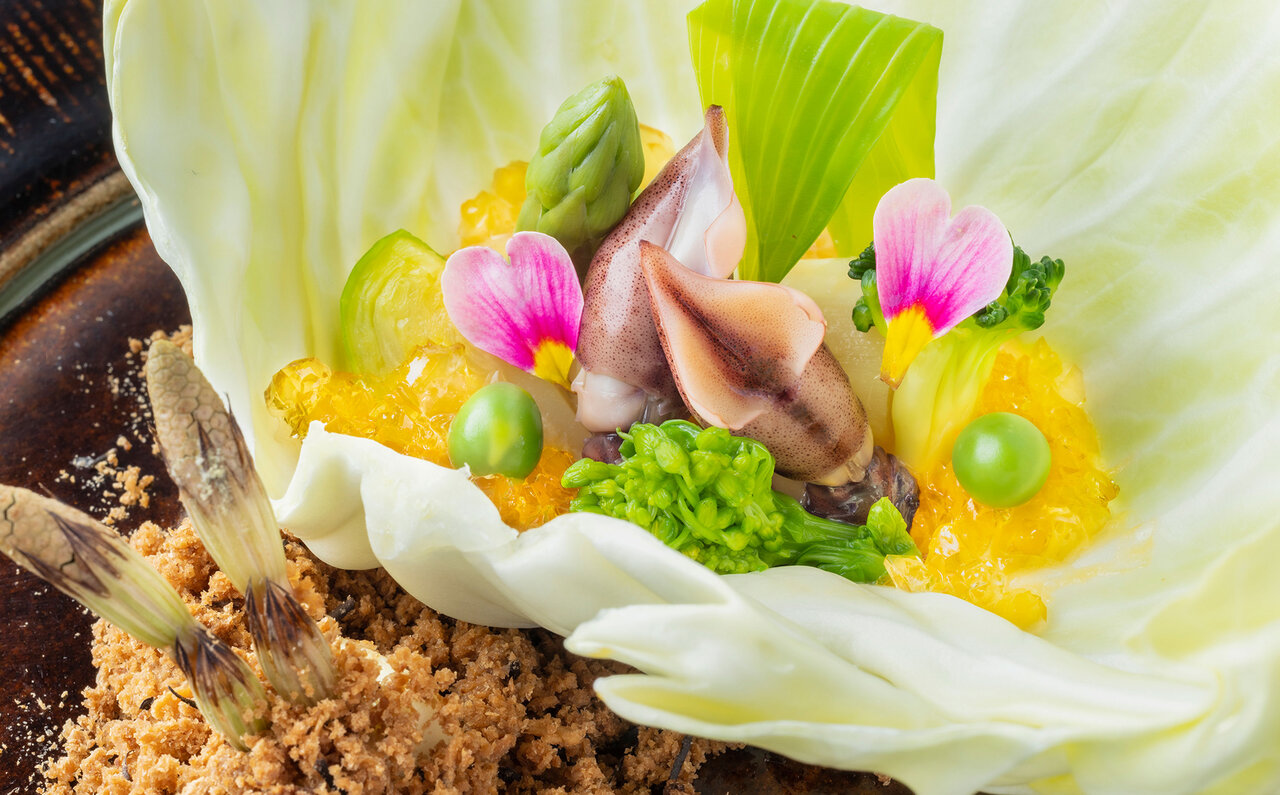
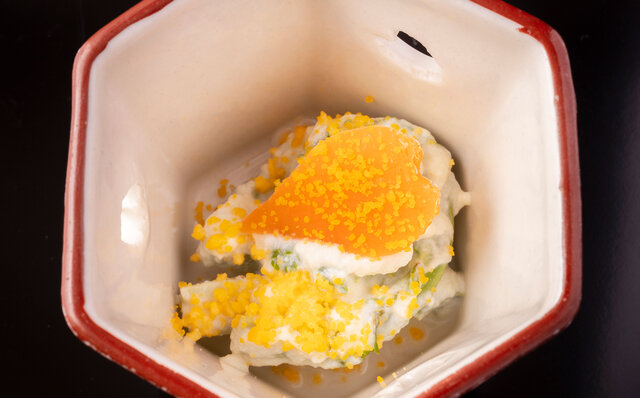
Sakizuke: Spring Vegetables with Egg Yolk Vinegar Dressing
The sakizuke is "Spring Vegetables with Egg Yolk Vinegar Dressing." Despite my age, its appearance made me want to exclaim, "Wow!" How charming are the horsetail shoots peeking out from the "earth" (made of okara mixed with roasted green tea)? "I've packed the spring scenery of where I live into one dish," says Inaya. The egg yolk vinegar enhances the natural sweetness of the cabbage. With this "supreme mayonnaise," I feel like I could eat cabbage forever...
Hassun: HOSHINOYA's Spring Delicacies
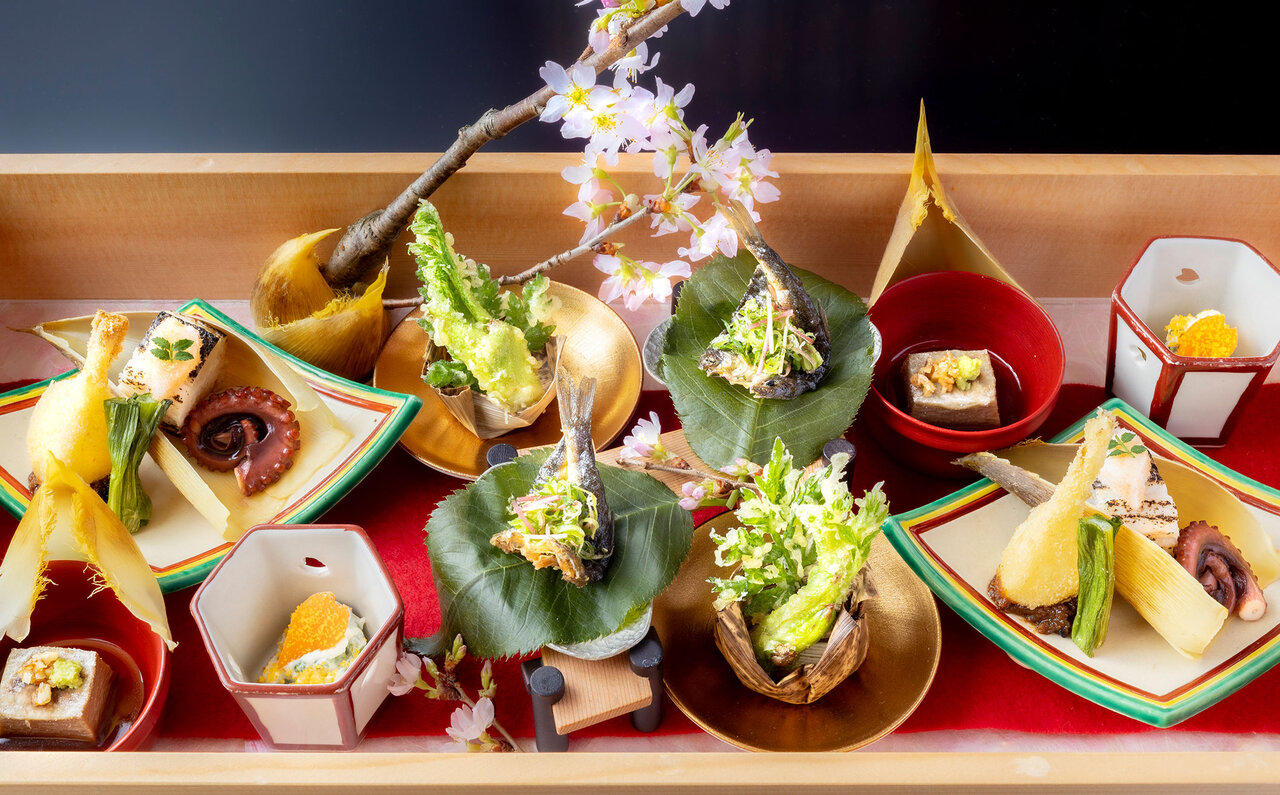
After the soup and sashimi, the hassun "HOSHINOYA's Spring Delicacies" was served. It was spring in full bloom!
I was listening to the staff's explanation with a grin, but when they finally said, "You can have seconds of anything you like, as much as you like," I froze. Excuse me, what did you just say?
Later, when I asked General Manager Naoya Kaneko about this thoughtful gesture, he replied, "It's our way of encouraging guests to relax and enjoy their meal without feeling any pressure."
It's truly enjoyable to dine while having conversations like, "I love this one," or "I think I'll have another of this."
Inaya says, "We want guests to enjoy themselves freely. While compliments on the taste are welcome, hearing that they had a good time is the most rewarding." "Kasuke" has an open kitchen with a grill. Inaya stands at the grill every day, reading the guests' true feelings from their expressions.
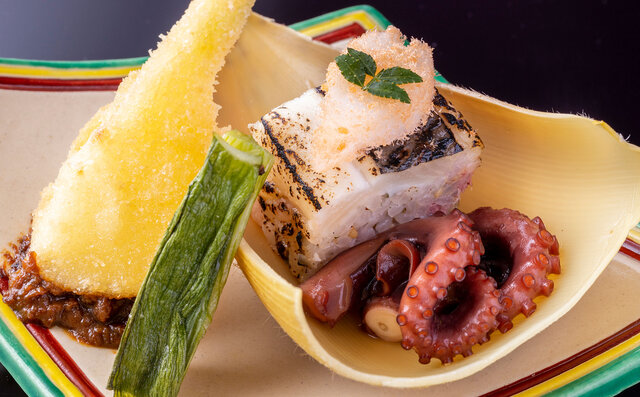
Grilled Onion Nouveau, Shinano Yuki Masu Sakura Sushi, Boiled Water Octopus
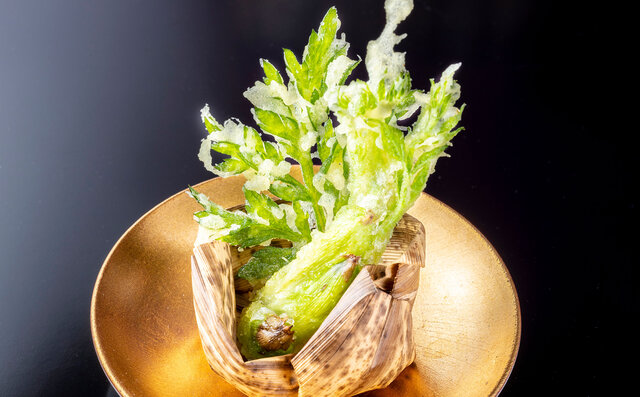
Wild Vegetable Tempura
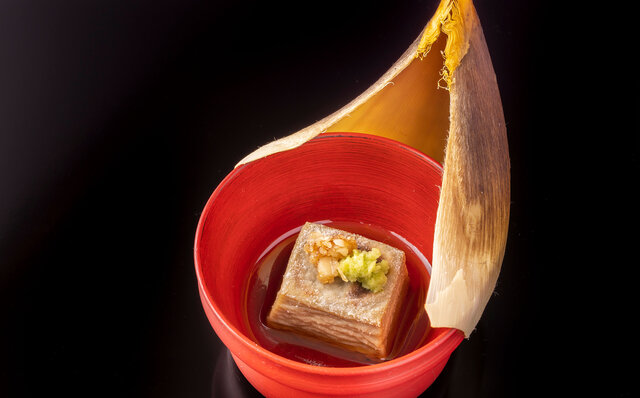
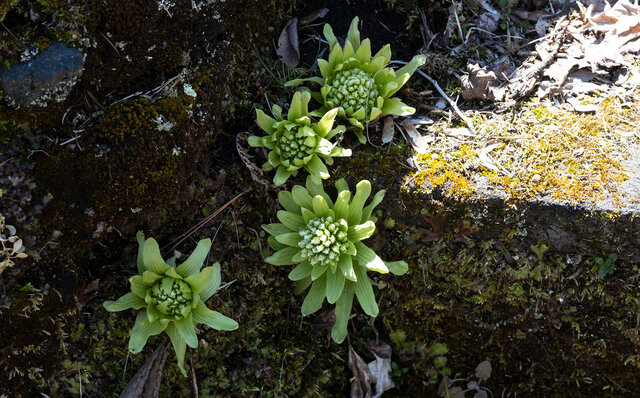
Butterbur Bud Tofu
Kogomi (Ostrich Fern) with White Gomae Dressing
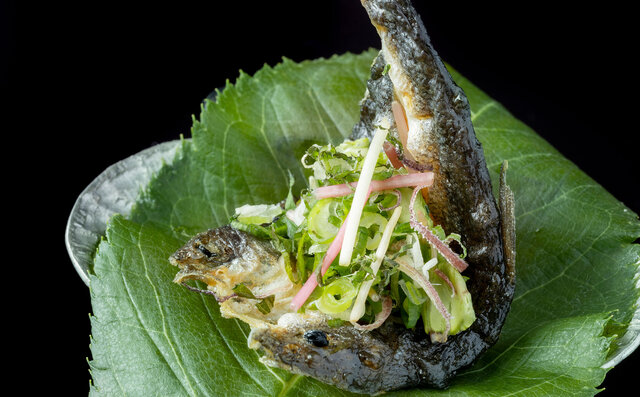
Ugui Nanban
Incidentally, our personal favorite of the day was the "Ugui Nanban." It's a dish inspired by how locals prepare ugui, by frying it and serving it with a sweet and sour sauce. "I thought it would be delicious with spring shoots. Ugui are commonly available in supermarkets in Karuizawa. I was surprised to find so many river fish besides ayu and carp," says Inaya.
"I thought it would be delicious with spring shoots. Ugui are commonly available in supermarkets in Karuizawa. I was surprised to find so many river fish besides ayu and carp," says Inaya.
The Sakura Sushi, made with Shinano Yuki Masu, a type of trout whose farming techniques were established by the Nagano Fisheries Experiment Station, melts in the mouth with its rich fat, perfectly complemented by the sharp acidity of the vinegared rice. Glancing up, I met Inaya's satisfied smile. I'll have another, please!
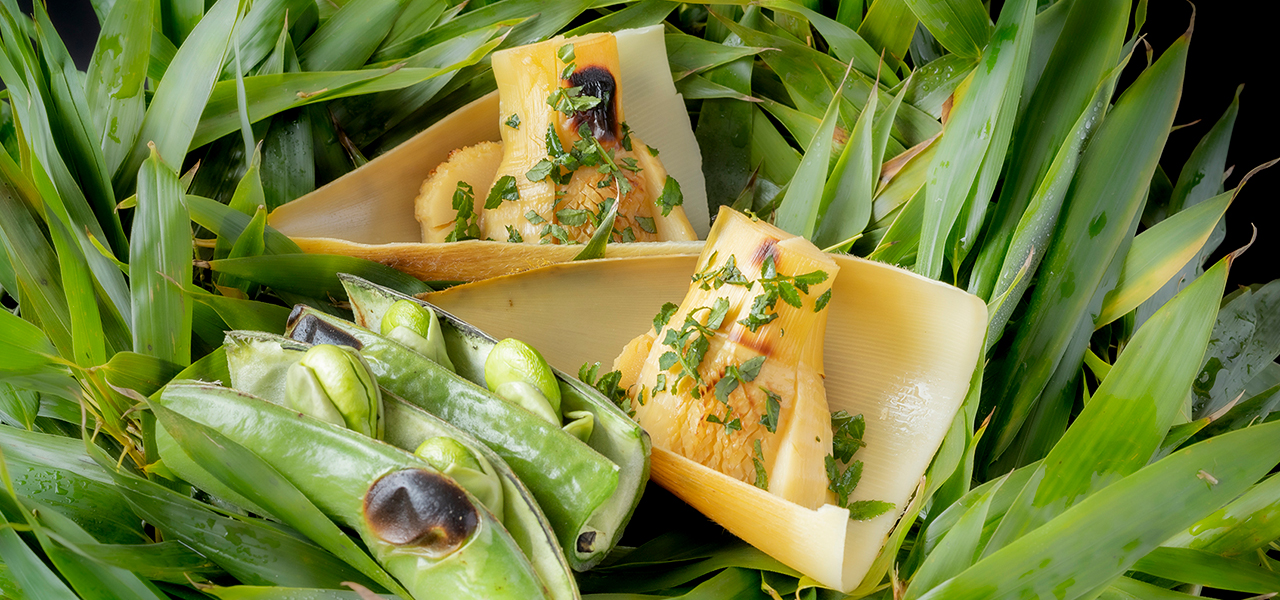
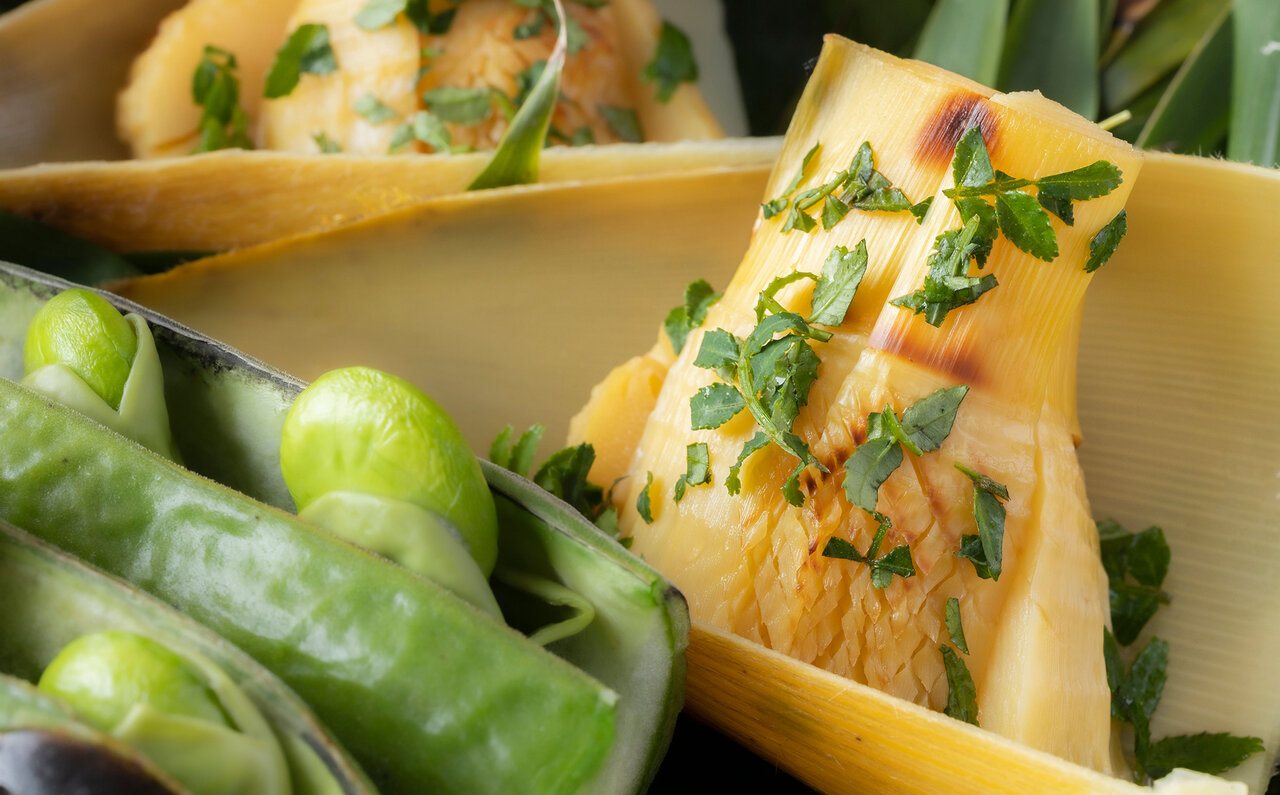
Yakimono: Grilled Bamboo Shoots with Kinome
For the yakimono, we had a choice between grilled bamboo shoots with kinome and grilled beef sirloin over charcoal (an additional ¥2,000). Even with the extra charge, the choice between bamboo shoots and beef... With such confidence, I chose the bamboo shoots without hesitation. "Bamboo shoots are synonymous with spring in the mountains. This time, I decided to go with a classic, bold preparation," says Inaya.
The moment it was placed before me, I swallowed hard. The plump bamboo shoot seemed to exude, "I'm incredibly delicious, so please treat me with respect!" I picked it up with my chopsticks and took a bite. Wow. I almost let out a sound again. The seasonal bamboo shoot asserted its presence, yet it was infused with dashi, offering a rich flavor.
I later learned that great care was taken in rehydrating and infusing the bamboo shoots with dashi, before grilling them to a perfect glaze. A dish of the finest ingredients, prepared by the finest chef. The happiness of savoring this dish sent shivers down my spine. It was a taste of "seasonality" that demanded the use of all my senses.
The course continued with a spring hot pot, and the finale was "Kanshibi Daikon and Butterbur Rice." Kanshibi daikon, made using winter cold, is prepared with guidance from locals: "We started by washing and cutting the daikon at the community center and skewering them," says Inaya. The kanshibi daikon, with its concentrated umami, paired wonderfully with the springy butterbur! The fluffy sweetness of the rice also held its own. Could this be a miracle of chemistry?
The dessert, "Yomogi and Shiratama Zenzai," was also a delightful and spring-filled dish. What do you think of this cascade of dishes? Appreciating spring, being surprised, and enjoying yourself – it's guaranteed to be a completely satisfying feast.
Mountain Breakfast
Mountain Breakfast
And then, the next morning.
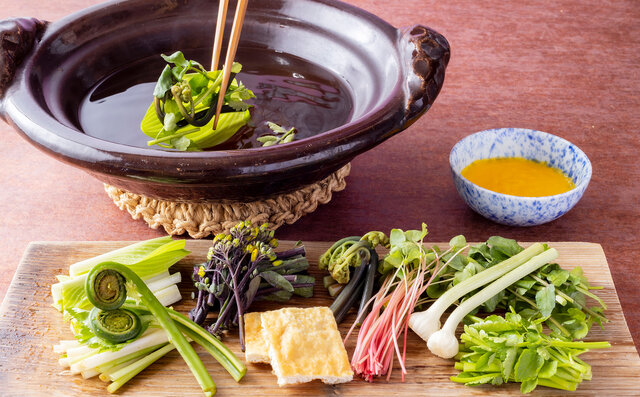
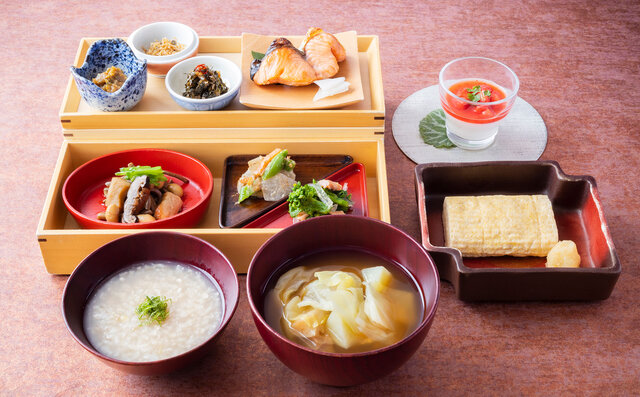
Once again, a menu that makes you want to exclaim, "Hooray for the bounty of the mountains!" The main dish is wild vegetable shabu-shabu, cooked in a vegetable broth made by simmering vegetables and kombu, then further reducing the vegetables alone, and finally adding roasted soybeans – a broth so concentrated with natural umami that you could drink it on its own.
The wild vegetables such as urui, kogomi, cresson, and nobiru, lightly dipped in the broth just enough to retain their texture, were exquisite! I was also captivated by how the broth, infused with the essence of the vegetables, transformed into something so elegant. The dashimaki tamago, prepared with a vegetable broth base and cooked after guests are seated, was also unforgettably delicious.
TRAVEL | HOSHINOYA Karuizawa
To Karuizawa for This One Dish (2)
The brand concept of "HOSHINOYA" is "Rest in the Modern Age." HOSHINOYA Karuizawa further embraces the slogan, "Stay in a Valley Village, Another Japan." General Manager Kaneko states, "Our theme is to provide a break from the modern world while stimulating intellectual curiosity. At Kasuke, we aim to offer meals that aid in relaxation. Our goal is cuisine that won't weigh on you the next day, even when you're full."
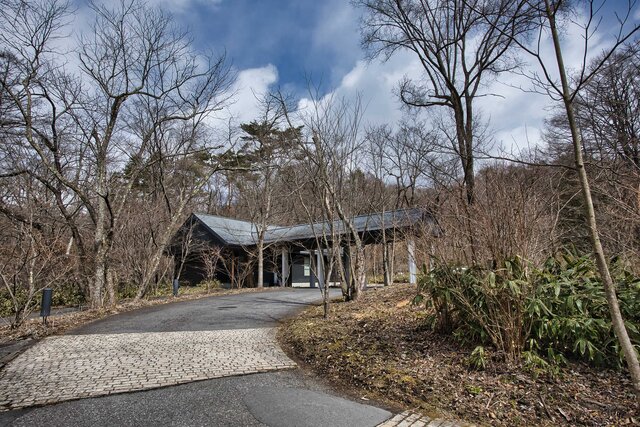
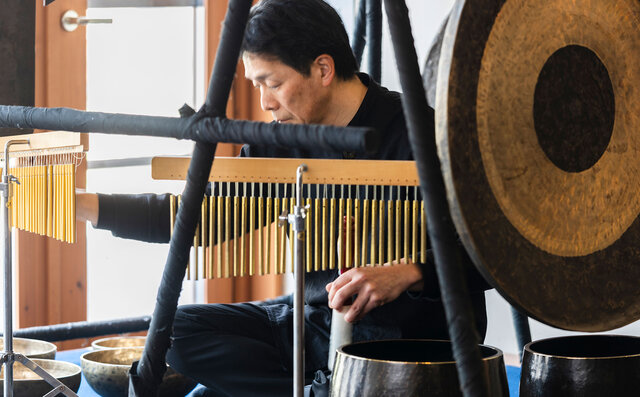
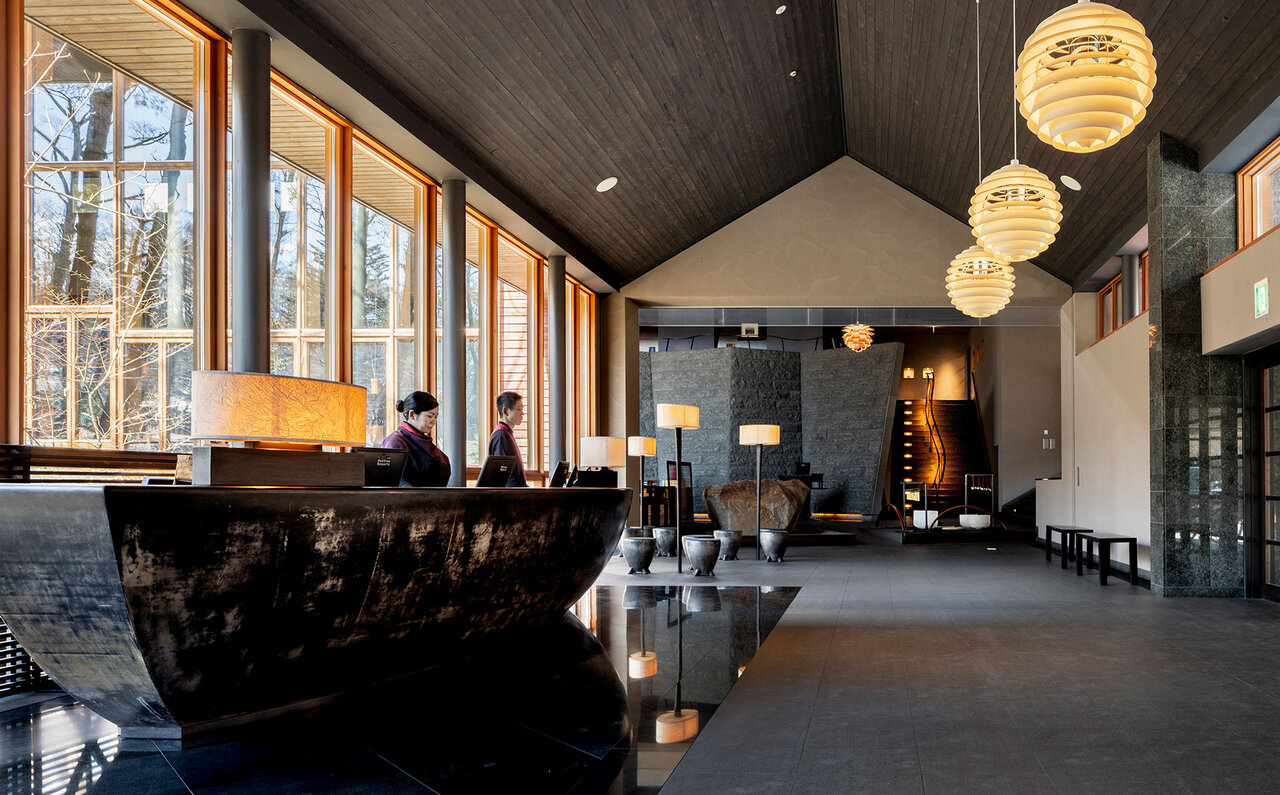
Upon arrival, guests first access the separate reception building. Check-in takes place amidst the mystical performance of an original instrument called "Yagura," featuring gongs and bells, ushering guests into the world of HOSHINOYA Karuizawa.
This could be described as a small "ritual." The welcome drink, called "Yutani," is based on amazake, a sweet fermented rice drink produced in this region. Its contents are varied according to the season and weather, sometimes served warm or with added citrus.
From here, you will be transported within the grounds by a dedicated vehicle.
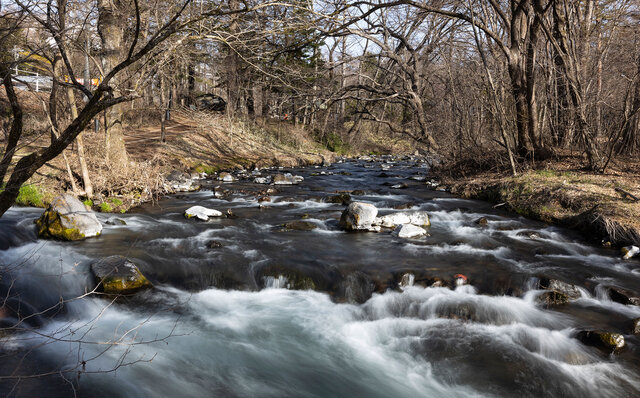
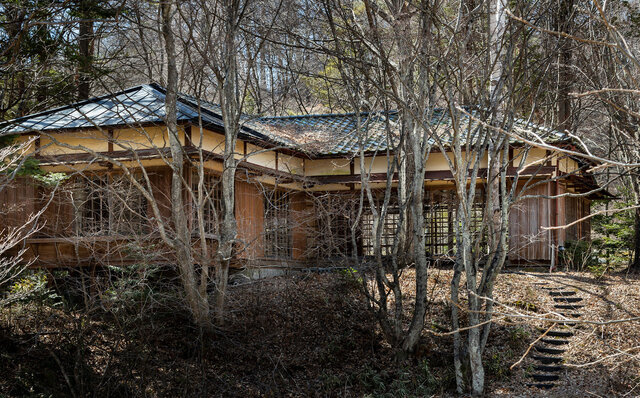
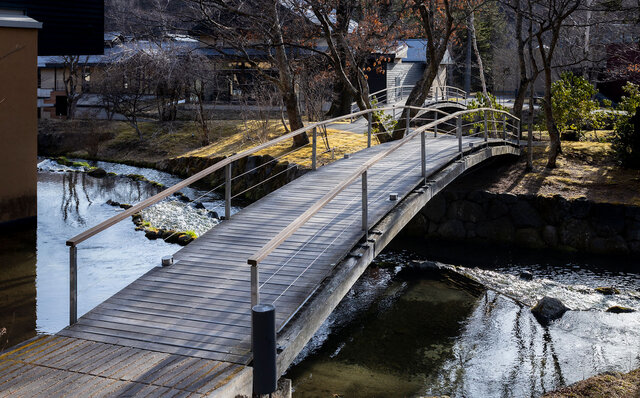
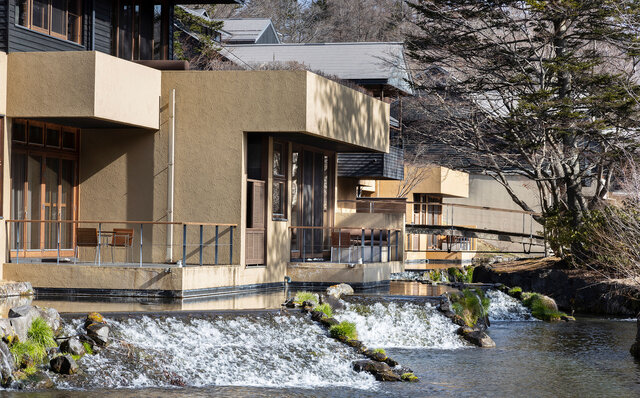
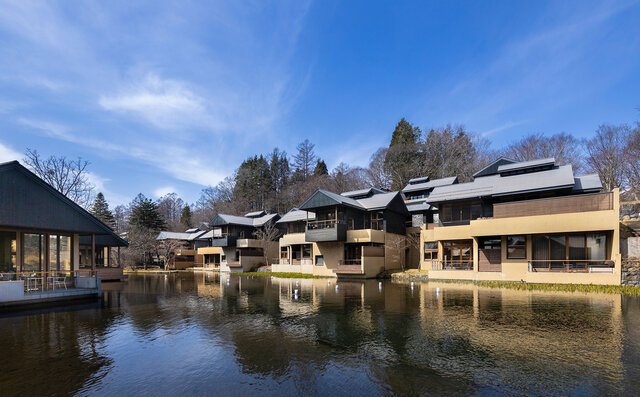
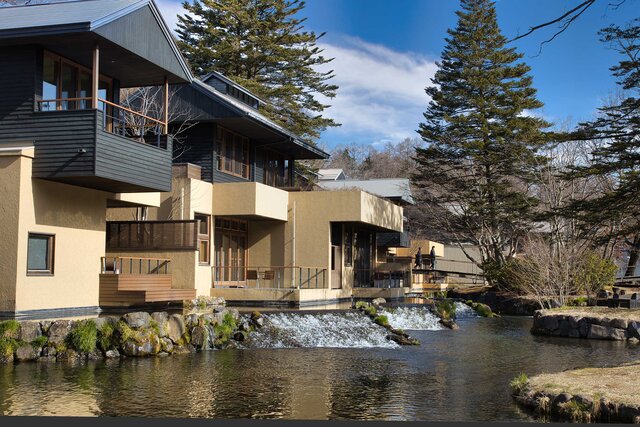
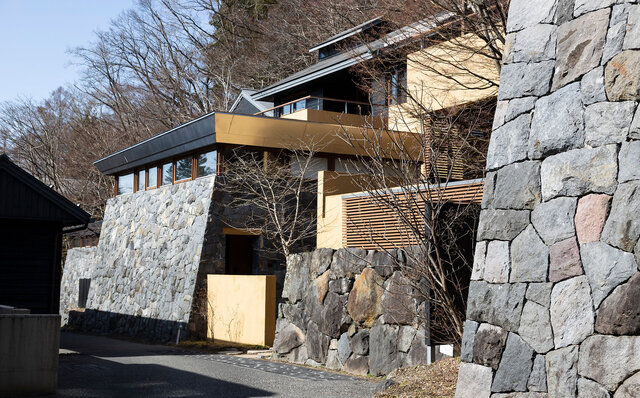
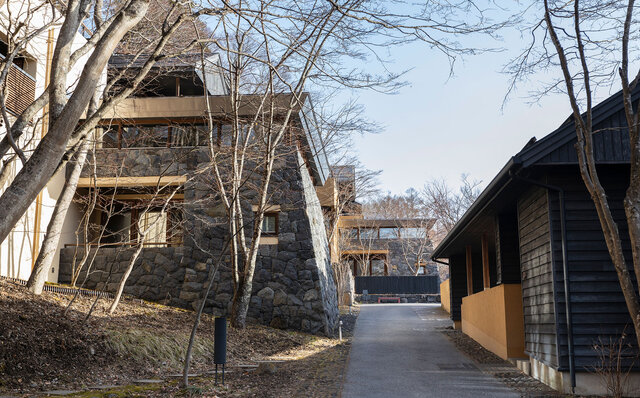
It takes about two to three minutes by car from the reception to the "Valley Village" where HOSHINOYA Karuizawa is located. The Tomoegawa River, a tributary of the Chikuma River system, flows through the center of the grounds. The original landscape of Karuizawa, the "Valley Village," has been recreated with minimal alteration to the natural terrain and existing trees.
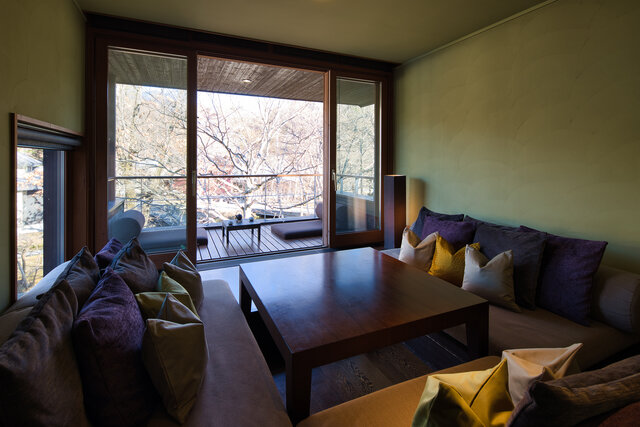
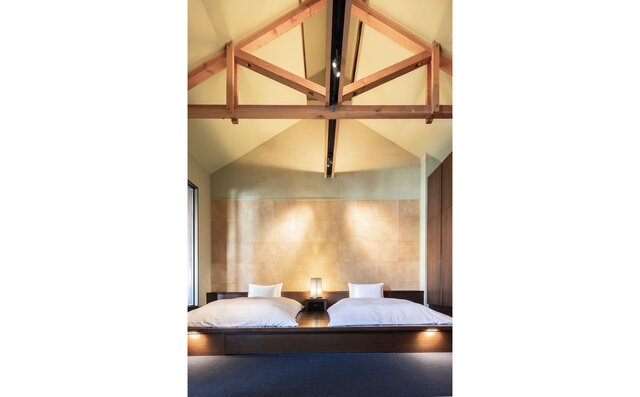
There are 77 guest rooms. As many of you may know, the rooms do not have televisions or clocks. This is part of the experience designed to immerse guests completely in an extraordinary environment.
Mizunami Room
Mizunami Room
Mizunami Room
Mizunami Room
A ventilation opening called "Furou" is installed in the ceiling. This circulates the air within the room, maintaining a comfortable coolness in the summer and lowering the room temperature by about 2 degrees Celsius.
There are three types of guest rooms: Mizunami, Yamaroji, and Niwaroji. The "Mizunami rooms" are arranged around a pond. These rooms offer a natural soundtrack of gently flowing water and birdsong. They might be recommended for a first-time stay.
Yamaroji Room
Yamaroji Room
The "Yamaroji rooms" are popular with repeat guests. Located on the mountain side of the village, these rooms feature the sounds of birdsong and wind as their background music. The staff member who showed me around mentioned, "When you open the window, the sounds become more intense." In autumn, you might even hear the sound of chestnuts falling.
Niwaroji Room
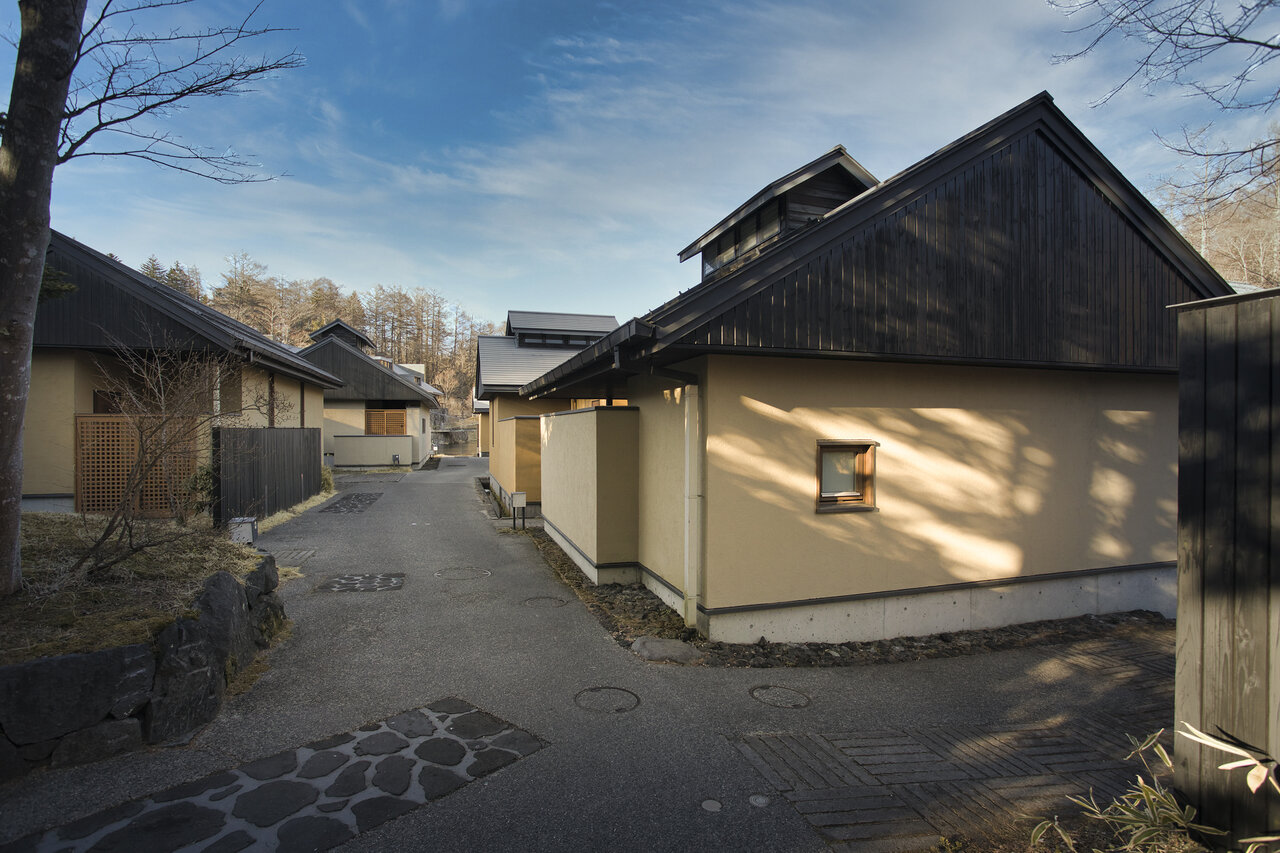
And the "Niwaroji rooms" are detached houses located on a side street off the main path in the village center. There are various types, including those with wood-burning stoves, but the cottages that allow guests to stay with their dogs are extremely popular. These rooms are rarely available.
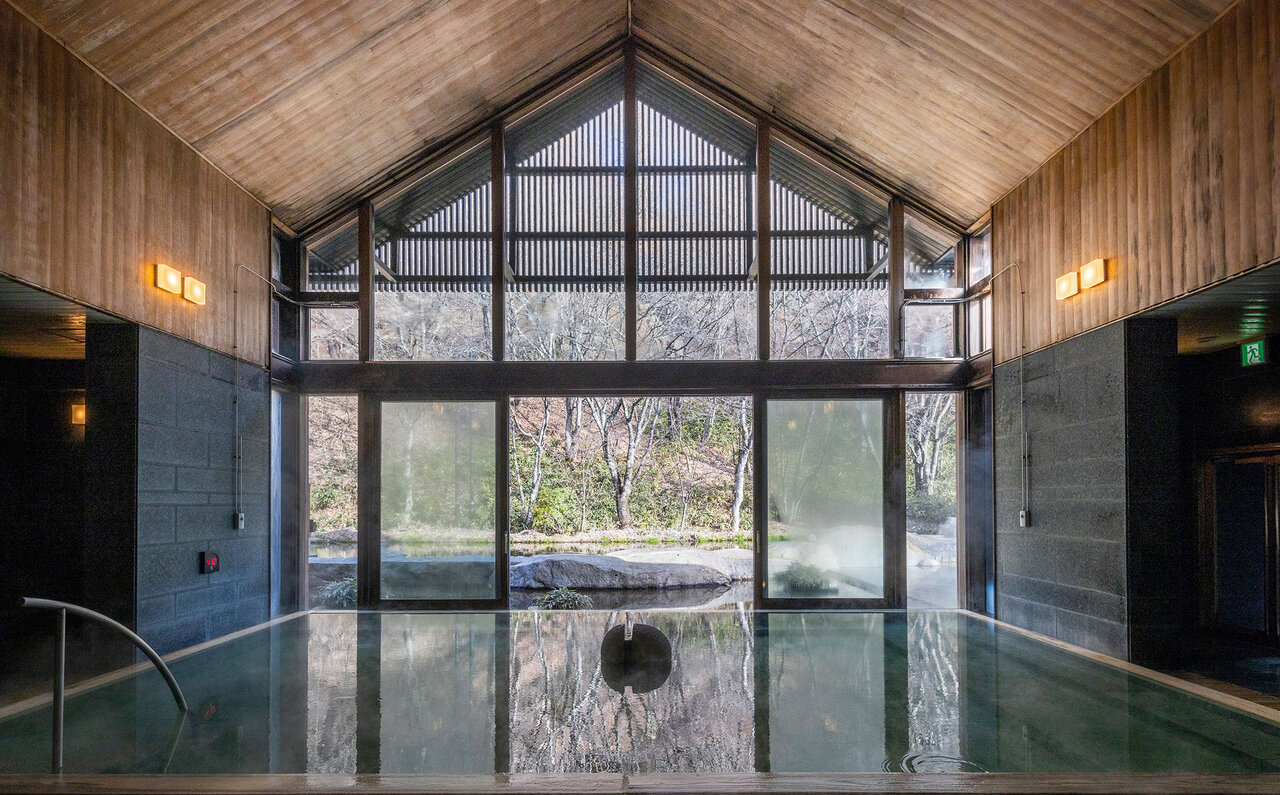
As the resort originated from the historic and renowned Hoshino Onsen, there is a hot spring facility exclusively for guests called "Meditation Bath" within the grounds. And it is quite daring. The theme is "meditation," and the indoor baths, named "Light Room" and "Dark Room," are sure to astound you. The deep bathtubs, 90 cm deep, and the "Dark Room," which is literally pitch black, will surely change your perception of hot springs... Please see for yourself (therefore, no photos are included).
About a 5-minute walk along a wood-chip path from the village leads to the day-use hot spring facility, "Hoshino Onsen Tombo no Yu." Both the open-air rock bath, where you can fully experience the four seasons of Karuizawa, and the indoor bath with its large windows offering a sense of openness, are heavenly. There are also designated times for HOSHINOYA Karuizawa guests.
In the "Valley Village," detached from everyday life, stimulated and with every cell in my body awakened—some time after leaving HOSHINOYA Karuizawa, I realized that a kind of energy for living in the present world was filling my body. It could also be called a state of euphoria.
The "Shu-i no Kan" (Gathering Hall) with the front desk. The lounge on the second floor can be used freely 24 hours a day.
And then, I had this thought: The Meditation Bath, the "Deep Breathing" sessions held every morning, the sight of the water lanterns swaying gently, the fact that each lantern is lit by hand, and the meals at "Kasuke"—all of them are creations that harness the blessings of nature and the wisdom of the mountains.
Suddenly, the words of General Manager Kaneko came to mind.
"We don't just present tradition as it is. Our role is to maximize that heritage and present it in a way that suits the current era."
HOSHINOYA Karuizawa Address: Hoshino, Karuizawa Town, Nagano Prefecture Number of Rooms: 77 rooms in total Public Facilities: Hot springs, dining, spa, lounge Check-in / Check-out: 3:00 PM / 12:00 PM Room Rates: From ¥84,000 per night per room (excluding tax, service charge, and meals) Access: From Tokyo, take the Hokuriku Shinkansen to Karuizawa Station, then approx. 15 minutes by taxi or shuttle bus Approx. 25 minutes by car from the Usui Karuizawa IC