Series | Letters from Kesennuma | January: A Tuna Feast at the Fishermen's Cooperative Restaurant
Kamaishi Letters | January
January: A Tuna Feast at Kamaishi Fishermen's Cooperative Restaurant
In April 2014, travel journalist Naoko Terada headed to Kamaishi City in Miyagi Prefecture. Her goal was to participate in a "fishing boat experience tour" aboard a new vessel, the first built in 20 years. Three years after the Great East Japan Earthquake, which devastated the region, Kamaishi was steadily, surely moving towards the future. Terada believes this boat represents a "beacon of hope" for Kamaishi, and indeed for the entire Tohoku region. Following the fishing boat, what did Terada observe about Kamaishi's present and future? After concluding the tour's highlight, the "boat experience," the group headed straight for a restaurant directly managed by the fishermen's cooperative, beloved by locals. This was another objective of the trip: to fully savor the flavors of Kamaishi.
Text & Photographs by TERADA Naoko
Kamaishi's Local Delicacies?
The tour's main highlight: a trip aboard a tuna longlinerwas successfully completed. Although it was only about an hour of sailing within Kamaishi Bay, hearing the passionate aspirations of Mr. Sōtarō Usui, president of Usufuku Honten and the owner who organized this experience, I too felt the spirit and pride of Kamaishi's fishermen, who live in harmony with the sea, deeply resonate within me.
This was his earnest desire to convey, even by undertaking the unprecedented act of allowing women—myself included, along with other female participants and staff, and local children—to board the sacred fishing boat, traditionally off-limits to women, for two days. He wanted people to understand the "current state" of the fishing industry surrounding Kamaishi.
Back at the fishing port, as I took off my orange life jacket, the tension from the boat ride dissolved, and I felt a sense of relief. My fellow tour participants, still gazing at the impressive size of the "Dai-18 Shofuku Maru" from the pier, were busily taking photos. At the same time, I realized I was getting hungry.
A major objective of joining this tour was to witness Kamaishi's recovery with my own eyes, but enjoying the local cuisine was also a significant pleasure for the participants. After waving goodbye to President Usui, the crew, and the staff, our group boarded a bus and headed for lunch.
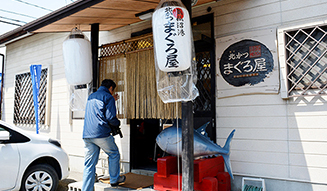
Kitakatsu Maguroya: Perfect for a hearty meal or a drink with small bites
The restaurant was called "Kitakatsu Maguroya" in the Tanaka-mae district. "Kitakatsu" is read as "Hokkatsu." It is operated by the Miyagi Northern Tuna and Bonito Fishery Cooperative, an organization of fishermen engaged in offshore bonito and tuna fishing, based in Kamaishi. The long cooperative name is shortened to "Kitakatsu" by locals.
Kitakatsu Maguroya directly sources and serves tuna caught by Japanese offshore tuna fishing vessels, primarily from cooperative members.
With its delicious tuna dishes at affordable prices, it's a popular spot for both tourists and locals. The restaurant's philosophy is to introduce customers to the quality of safe, secure, natural Japanese tuna from reliable supply chains, encourage its consumption in daily life, and thereby support not only Kamaishi's but also Japan's offshore fishing industry.
The interior, decorated in Japanese style, also has a pub-like atmosphere. Luxuriously, the restaurant was reserved for the tour participants and staff for lunch that day. As the warmth of the heating system thawed our bodies, chilled from the boat ride, we eagerly awaited the arrival of the food.
Savoring an Exquisite Tuna-Filled Lunch
“Here you go, sorry to keep you waiting!”
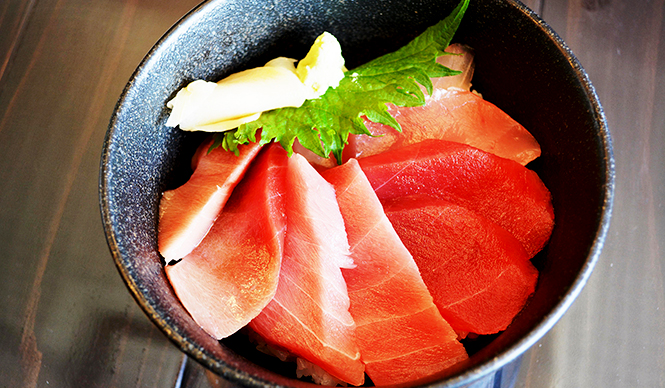
A tuna bowl was placed with a flourish on our table. It's the restaurant's specialty. Everyone gasped in unison. Normally, it's a three-color bowl, but this was a special "four-color bowl" for the occasion. What's more, they had specially sourced tuna caught by the fishing boat from Usufuku Honten, which we had boarded. The participants expressed their gratitude and delight at this thoughtful attention to detail.
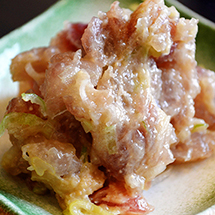
Tuna miso tataki: Perfect as an appetizer
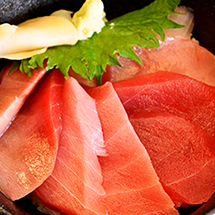
Special four-color tuna bowl for the tour
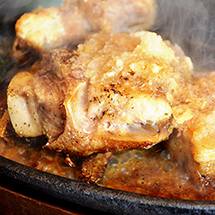
Kama-toro steak: Piping hot and juicy
We peered into the luxurious tuna bowl. It featured four types of tuna: Southern bluefin, bigeye tuna medium fatty, bigeye tuna lean, and skipjack tuna, also known as 'tonbo'. The glossy red meat and the beautifully marbled medium fatty cuts were a sight to behold. Tuna, once caught, is immediately flash-frozen at -60°C to preserve its freshness. The tuna at Kitakatsu Maguroya is then thawed using a method said to bring out its best flavor, resulting in a succulent sashimi. Our anticipation for the taste soared.
First, I tried the bigeye tuna lean. I placed a dab of wasabi on it, dipped it lightly in soy sauce, and brought it to my mouth. The delicate sweetness of the fresh lean meat was profoundly delicious. Next, the bigeye tuna medium fatty. Unlike the lean cut, the soy sauce momentarily beaded on the fat. As it melted in my mouth, the characteristic rich sweetness of the medium fatty tuna filled my palate, eliciting an involuntary groan of pleasure. Perhaps because I was hungry, I quickly ate a mouthful of rice. The tuna's umami, the rice's sweetness, the soy sauce, and the wasabi melded together in my mouth. It was a moment when I truly felt grateful to be Japanese.
As we silently moved on to the bigeye tuna medium fatty and skipjack, a sizzling hot plate arrived. It was another signature dish: "Kama-toro Steak," made with swordfish from Kamaishi. I immediately poured grated daikon radish and ponzu sauce over the piping hot kama-toro. Steam rose with a sizzle, releasing a fragrant aroma. This, too, whetted the appetite. As if on cue, the participants eagerly reached for their chopsticks, devouring the large pieces of kama-toro. The firm, meaty flavor and the gelatinous texture of the cut, coated in the grated daikon and ponzu, were undeniably delicious. Truly, this was Kamaishi at its finest.
With about ten types of donburi bowls and other exquisite dishes like "Tuna Miso Tataki," "Tuna Yukke," and "Tuna Carpaccio" that tempt you to order drinks, Kitakatsu Maguroya is a conscientious dining establishment that I highly recommend for anyone visiting Kamaishi to fully enjoy a tuna feast.
Reflecting on Japan's Future Fisheries Through Tuna Bowls
As I mentioned in the previous installment, the environment surrounding Japan's fisheries is challenging. According to materials from "Kitakatsu," Japan's fishery production volume and value have been declining since their peak in 1985. Factors contributing to this include the "200-nautical-mile issue" regulating each country's fishing zones, tuna resource management, decreased consumption by Japanese people, soaring fuel costs, and a shortage of successors. The challenges concerning natural resources are multifaceted and cannot be resolved immediately, but a significant transformation is undoubtedly necessary. Painful new systems may also be required. Furthermore, fishermen in Tohoku, including Kamaishi, face the considerable hurdle of post-disaster reconstruction. The dilemmas of those involved are subtly apparent.
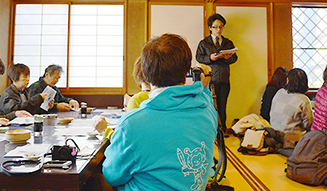
Before the meal, a representative from Kitakatsu explained the current situation of Japanese fisheries, and everyone listened intently.
On the other hand, this is also an issue that cannot be overlooked by us consumers. Sustainability and traceability ultimately mean conserving natural resources and promoting local consumption. We should be more conscious of how the food we eat is harvested and where it comes from, and purchase it at a fair price. We must more seriously consider that supporting Japan's industries is entrusted to us consumers.
By boarding a fishing boat and tasting tuna caught far out at sea that day, my perspective clearly shifted. I could no longer ignore the labor of the many fishermen involved in bringing the tuna in the bowl to our mouths.
Whether to eat and protect, or not. While the answer may differ for each individual, I strongly felt the importance of having as many Japanese people as possible experience firsthand the reality of the fishing industry, just as I did that day. How does food end up on our tables? By knowing this, I believe people can gain new "insights."
Kitakatsu Maguroya
http://www.maguroya-honten.com
Naoko Terada
Travel journalist. Spends about 150 days a year living in hotels abroad. Has visited around 60 countries, including Australia, Asian resorts, and Europe. Primarily contributes to magazines, weekly publications, and newspapers. Her books include "Hotel Brand Stories" (Kadokawa Shoten), "London Gourmet Guide" (Nikkei BP, co-authored), and "A Journey Through English Gardens" (Nikkei BP Kikaku, co-authored). She also produced "Wagamama Aruki Bali" (Jitsugyo no Nihon Sha).