[Short Series 3] To Chicago, a Metropolis of Architecture, Art, Entertainment, and Gastronomy—The Art | TRAVEL
To Chicago, a Metropolis of Architecture, Art, Entertainment, and Gastronomy—The Art
From America's leading museums to public art, a city where art is woven into daily life
Chicago, the third-largest city in North America after New York and Los Angeles. As the birthplace of the skyscraper, its atmosphere bears a resemblance to New York. This compact city, only a fraction of New York's size and population, is densely packed with captivating attractions comparable to its larger counterpart, including art, architecture, entertainment, and gastronomy. This short series introduces Chicago's charms by theme. The third installment explores the city through the lens of art.
The Art Institute of Chicago: Home to one of America's three great museums and a world-class Impressionist collection
The Art Institute of Chicago is the foremost art institution in the city. Founded in 1879, with roots in the Chicago Academy of Design, it is recognized as one of the three great museums in America, alongside New York's Metropolitan Museum of Art and Boston's Museum of Fine Arts. It boasts an immense collection of approximately 300,000 works spanning ancient to contemporary art from around the globe, with over 8,000 pieces on display.
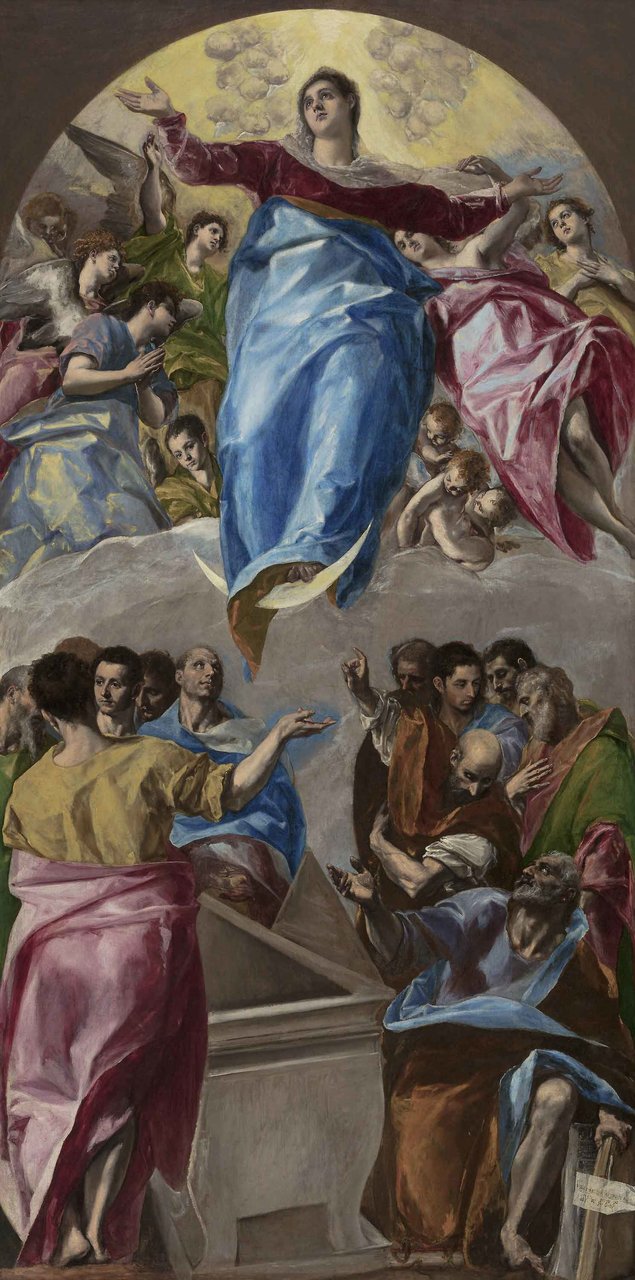
The museum houses numerous familiar works by artists like El Greco and Renoir, making it enjoyable even for those not deeply versed in art. Notably, while Spain prohibits the export (and sale) of El Greco's works, the museum's "Assumption of the Virgin" was acquired before this ban and is considered El Greco's largest work outside of Spain.
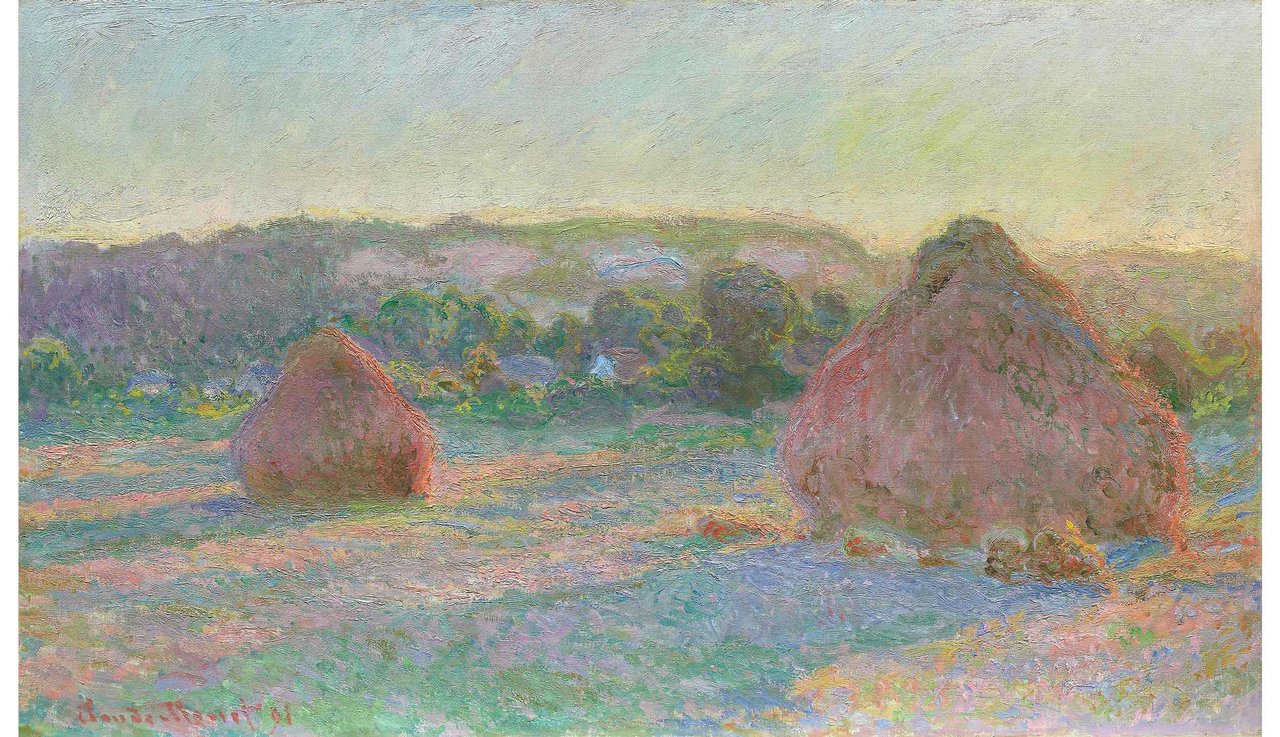
The museum's Impressionist collection is particularly outstanding. This is because, during the era when Impressionist painters like Monet and Renoir were not yet appreciated in France, they were supported by wealthy Chicagoans. For instance, the Art Institute holds six of the twenty-five paintings in Claude Monet's "Haystacks" series.
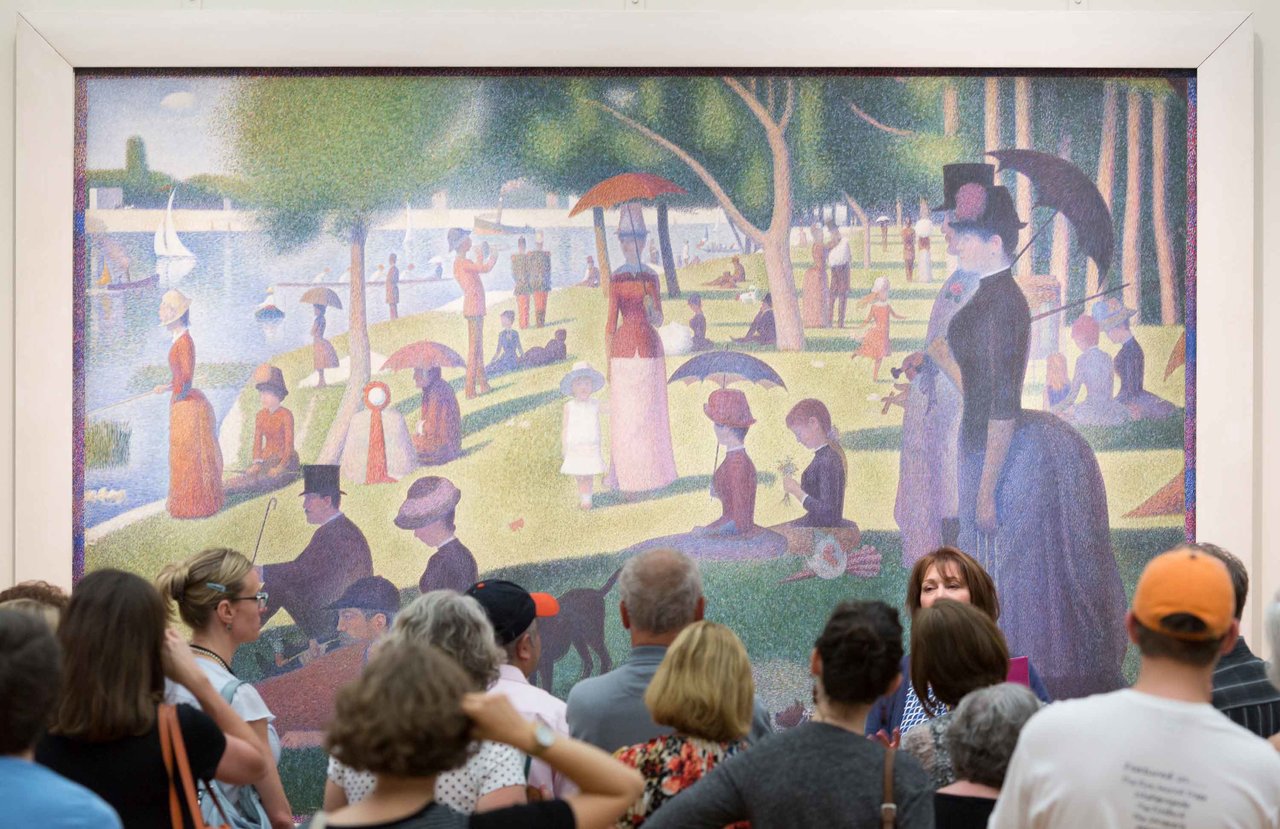
The Art Institute of Chicago's most renowned piece is Georges Seurat's "A Sunday Afternoon on the Island of La Grande Jatte." A masterpiece of pointillism, composed of countless delicate dots, it is considered one of the most significant works of Post-Impressionism.
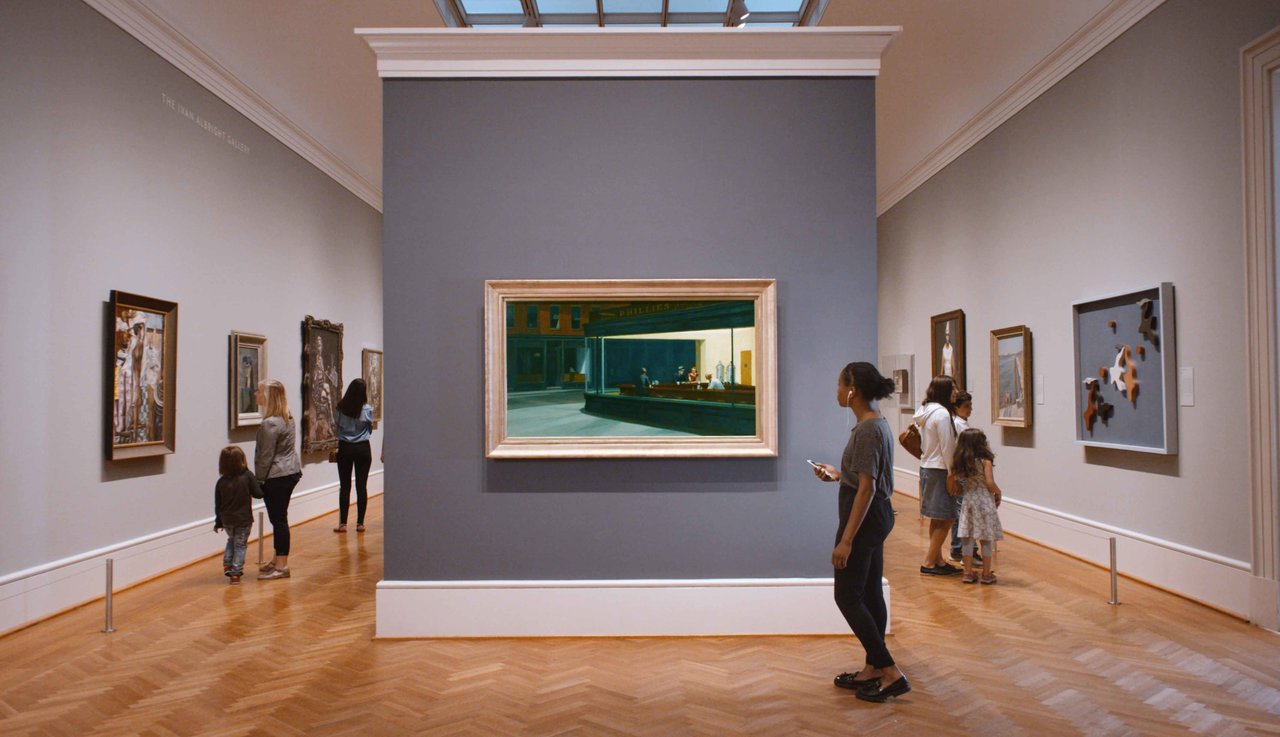
The Art Institute of Chicago also features a strong collection of 20th-century American art. "Nighthawks" by Edward Hopper is especially popular among Americans. Hopper once remarked, "Perhaps I was unconsciously trying to paint the loneliness of a big city," referring to the scene of a late-night diner where staff and three patrons are lost in their own thoughts. This sense of modern solitude likely resonates with many viewers.
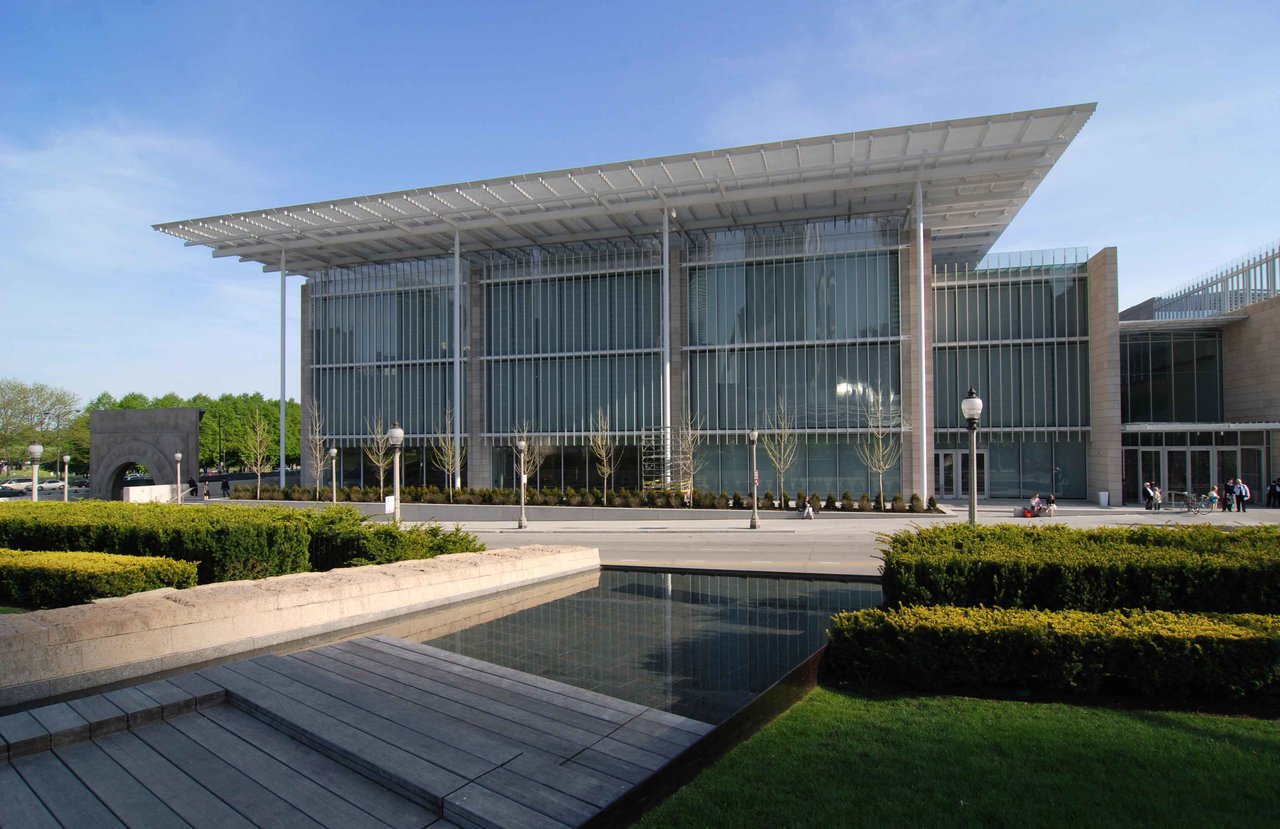
The Art Institute's main building, constructed for the 1893 World's Columbian Exposition, is itself a historic structure. The Japanese gallery, completed in 1992, was designed by Tadao Ando, and the new wing, opened in 2009, by Renzo Piano. The architecture alone is worth appreciating, a fitting characteristic for a city renowned for its buildings.
The Art Institute of Chicago
111 South Michigan Avenue, Chicago, Illinois 60603
https://www.artic.edu/visit?lang=ja
The Museum of Contemporary Art Chicago: A world-class museum for modern art
The Museum of Contemporary Art Chicago (MCA), a hub for contemporary art in the city, is another essential stop for art lovers visiting Chicago.
Established in 1967, the MCA is one of the world's largest institutions dedicated to contemporary art, housing thousands of works across diverse genres including painting, sculpture, photography, and video. All pieces in its collection date from 1945 onwards, featuring works by prominent artists such as Andy Warhol and Francis Bacon, making it accessible even for those unfamiliar with contemporary art.
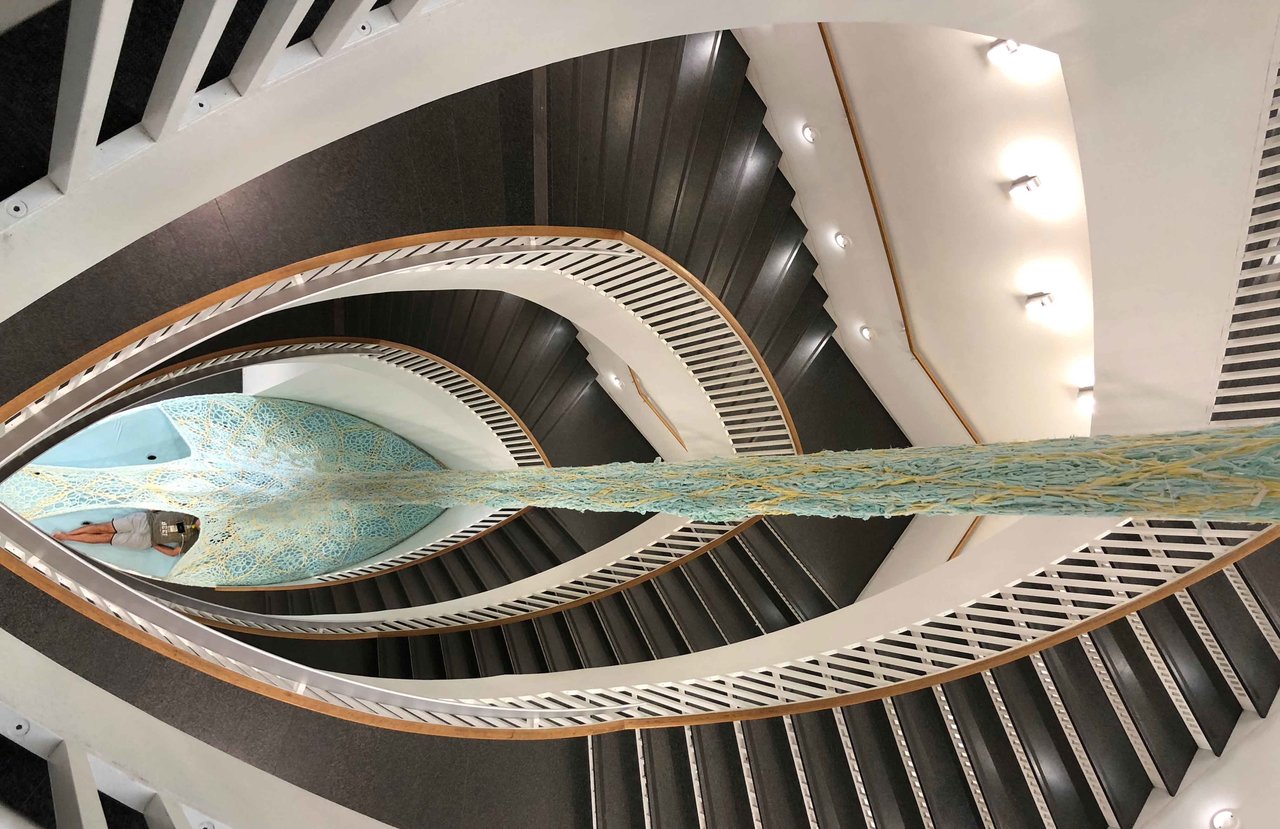
The current building, completed in 1996, was designed by Josef Paul Kleihues, a German architect known for his work in rebuilding Berlin after German reunification. It masterfully blends the modernism of Mies van der Rohe, who was active in Chicago, with the traditional Chicago School style. Kleihues is also recognized for renovating the Hamburger Bahnhof in Berlin into a museum of contemporary art.
Since its inception, the MCA has garnered attention for its consistently engaging special exhibitions. For example, Christo, the artist known for wrapping structures like the Pont Neuf in Paris, chose the MCA for his first project in the United States in 1969, wrapping the museum itself.
In the 1970s, the museum hosted solo exhibitions for contemporary art stars like Roy Lichtenstein, Robert Rauschenberg, and Andy Warhol. It also held Jeff Koons's first solo exhibition in 1988, consistently recognizing and showcasing emerging talent through its innovative programming.
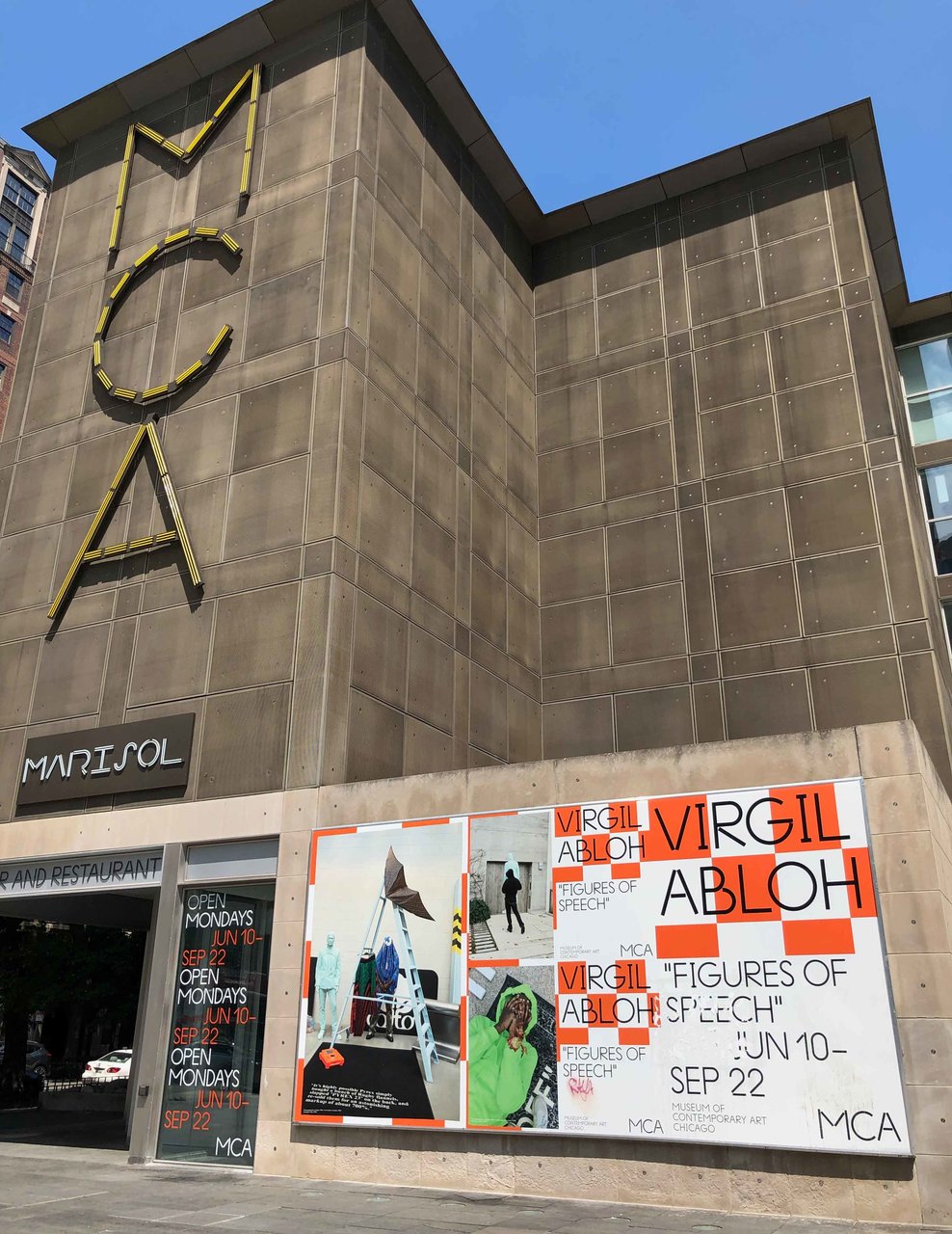
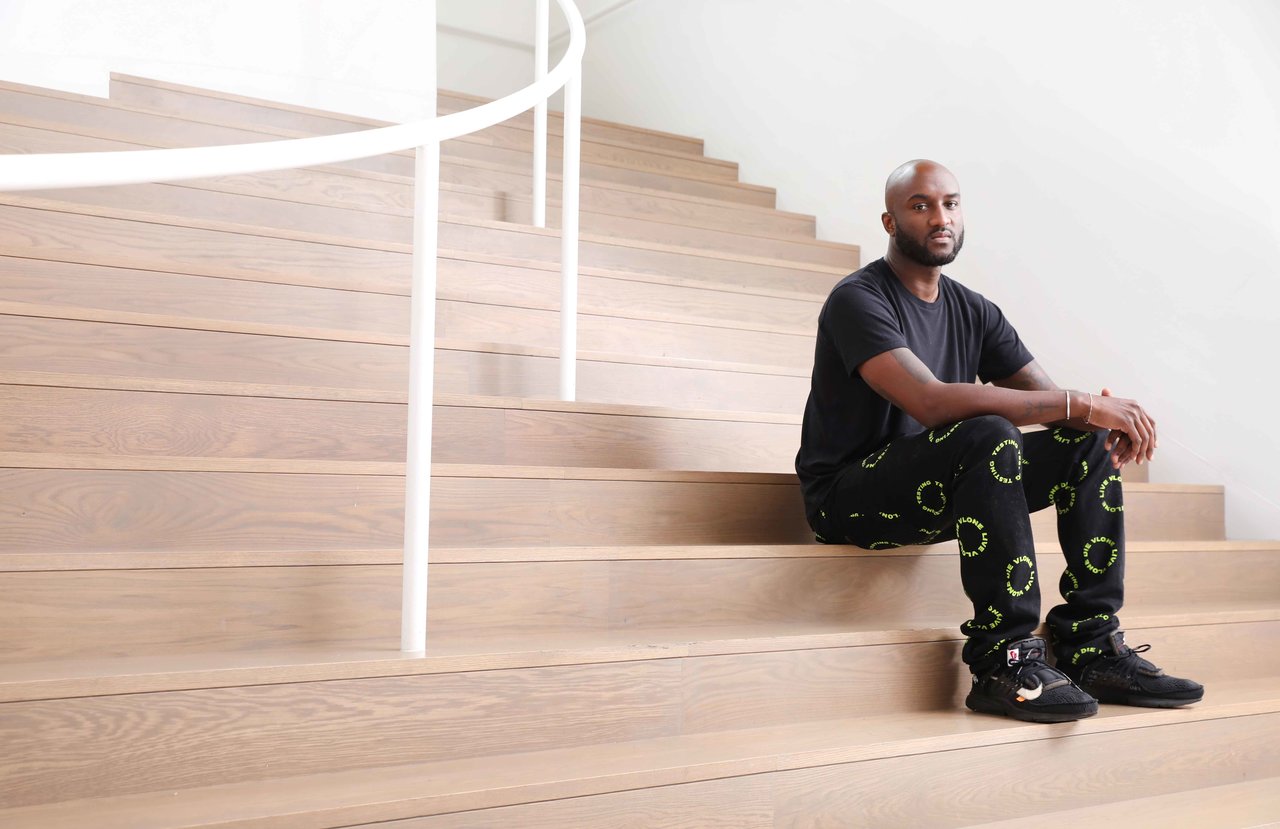
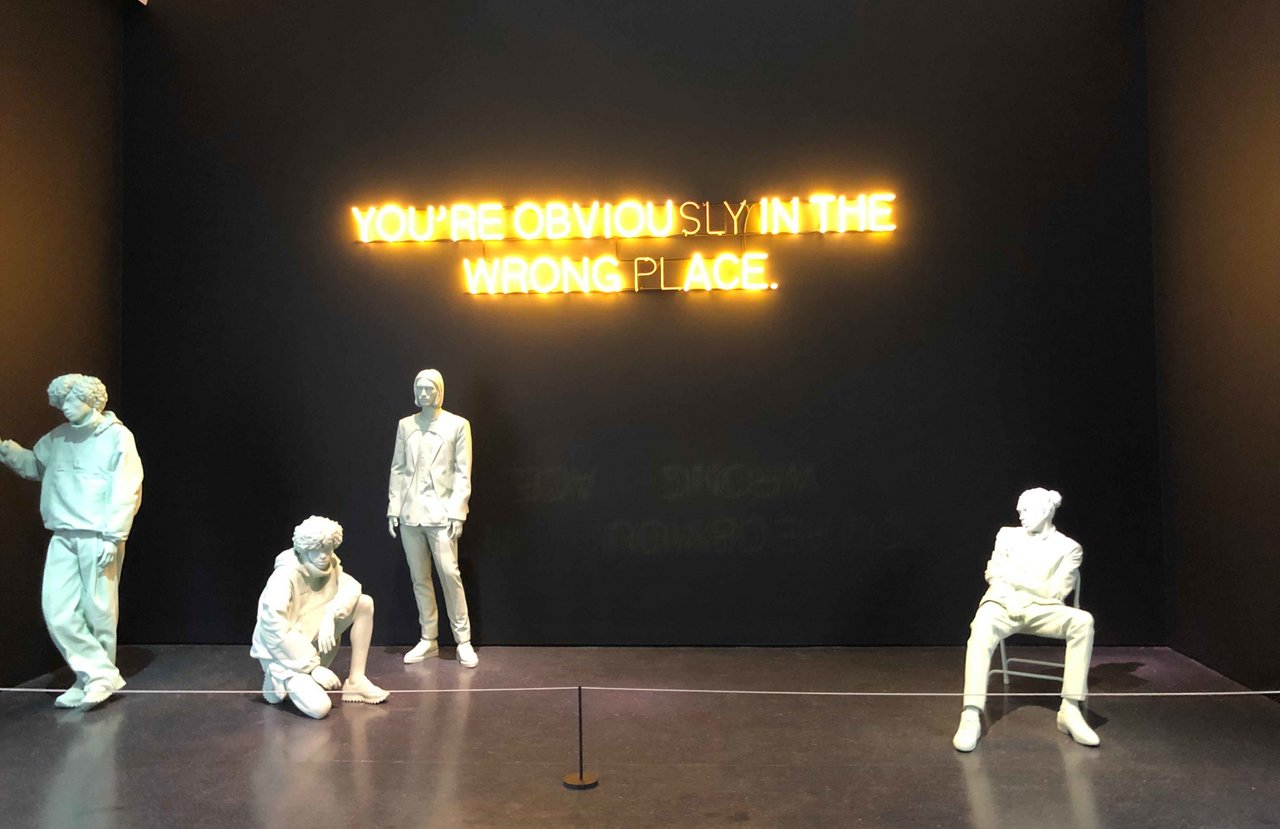
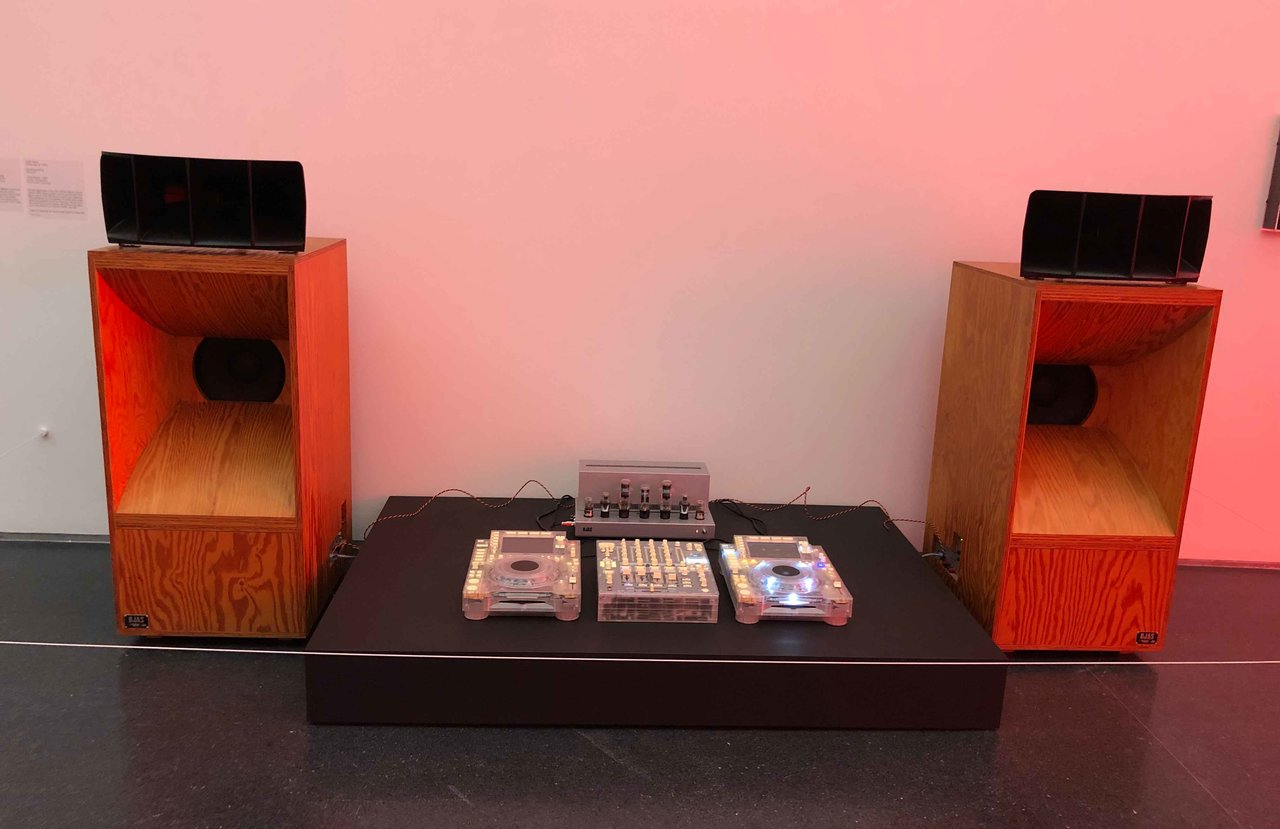
During my visit, the museum was hosting "Figures of Speech," the first major exhibition for Virgil Abloh, a Chicago native. Abloh, who heads his fashion brand Off-White c/o Virgil Abloh and became Louis Vuitton's Men's Artistic Director in 2018, is one of the most influential creators bridging street culture and high fashion today. The exhibition ran from June 10 to September 22.
This exhibition, exploring Abloh's career through seven distinct themes such as "Fashion," "Music," and "Black Gaze," offers a profound look into the creativity and identity of an artist who rose from being Black to becoming a celebrated figure in fashion and street culture.
The MCA has more exciting exhibitions planned, including a solo show by Duro Olowu, a London-based Nigerian fashion designer favored by Michelle Obama. Be sure to check their schedule when visiting Chicago.
Museum of Contemporary Art Chicago (MCA)
220 E Chicago Avenue, Chicago, Illinois 60611
https://www.mcachicago.org/
A City Where Art Breathes in People's Lives
Walking through Chicago, one is struck by the ubiquitous presence of public art, transforming the entire city into an open-air gallery. Here are a few notable examples.
In the heart of Chicago's Loop district, a vast mosaic mural appears in the plaza of the Chase Tower. Marc Chagall's "The Four Seasons" (1974), a monumental work measuring 21 meters wide, 4.3 meters high, and 3 meters deep, adorns all four sides of a rectangular prism. Chagall himself donated this piece to the city.
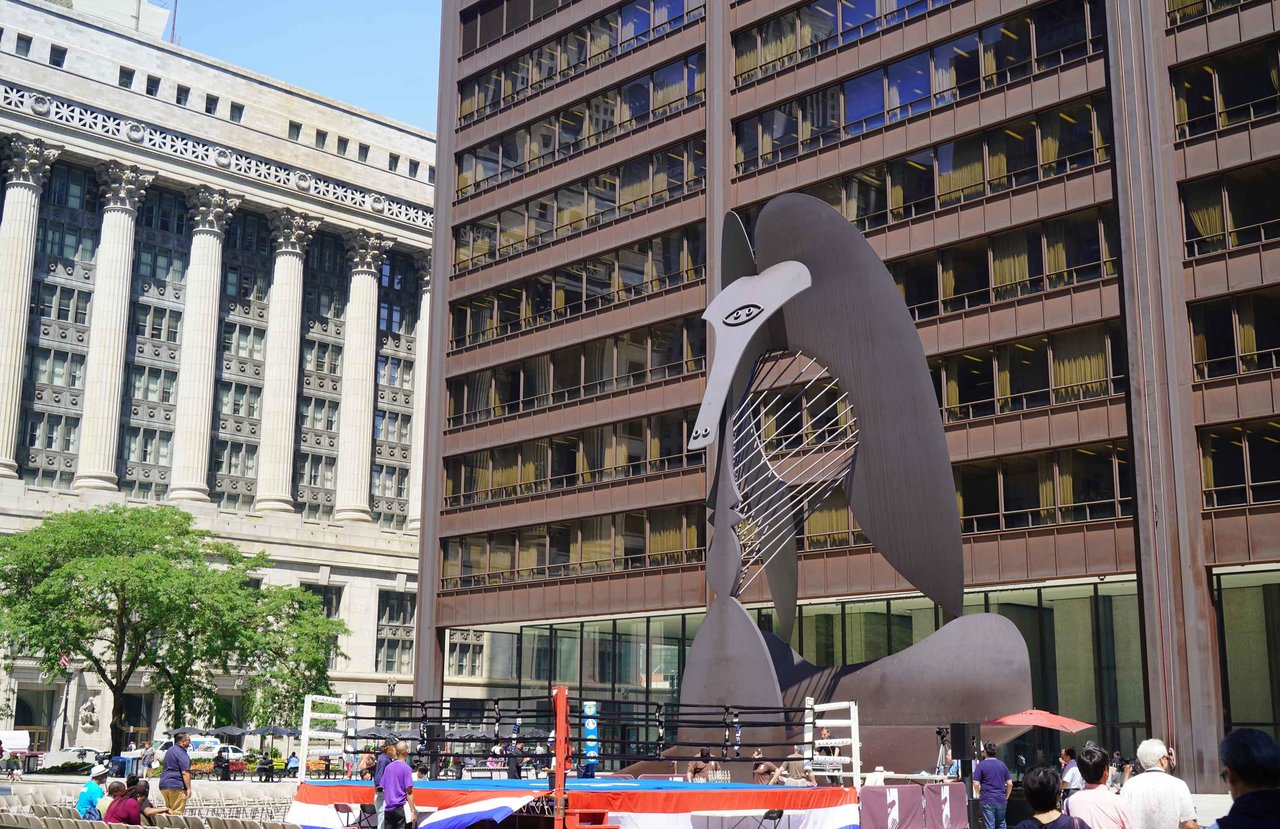
A five-minute walk from Chase Tower, in the plaza before the Richard J. Daley Center, which houses government offices, stands an outdoor sculpture by Pablo Picasso, titled "Untitled." Beyond Picasso's signature playful abstraction, its sheer scale, exceeding 15 meters in height, is awe-inspiring. This work, also a gift from Picasso to the city of Chicago, is affectionately known by locals as the "Chicago Picasso."
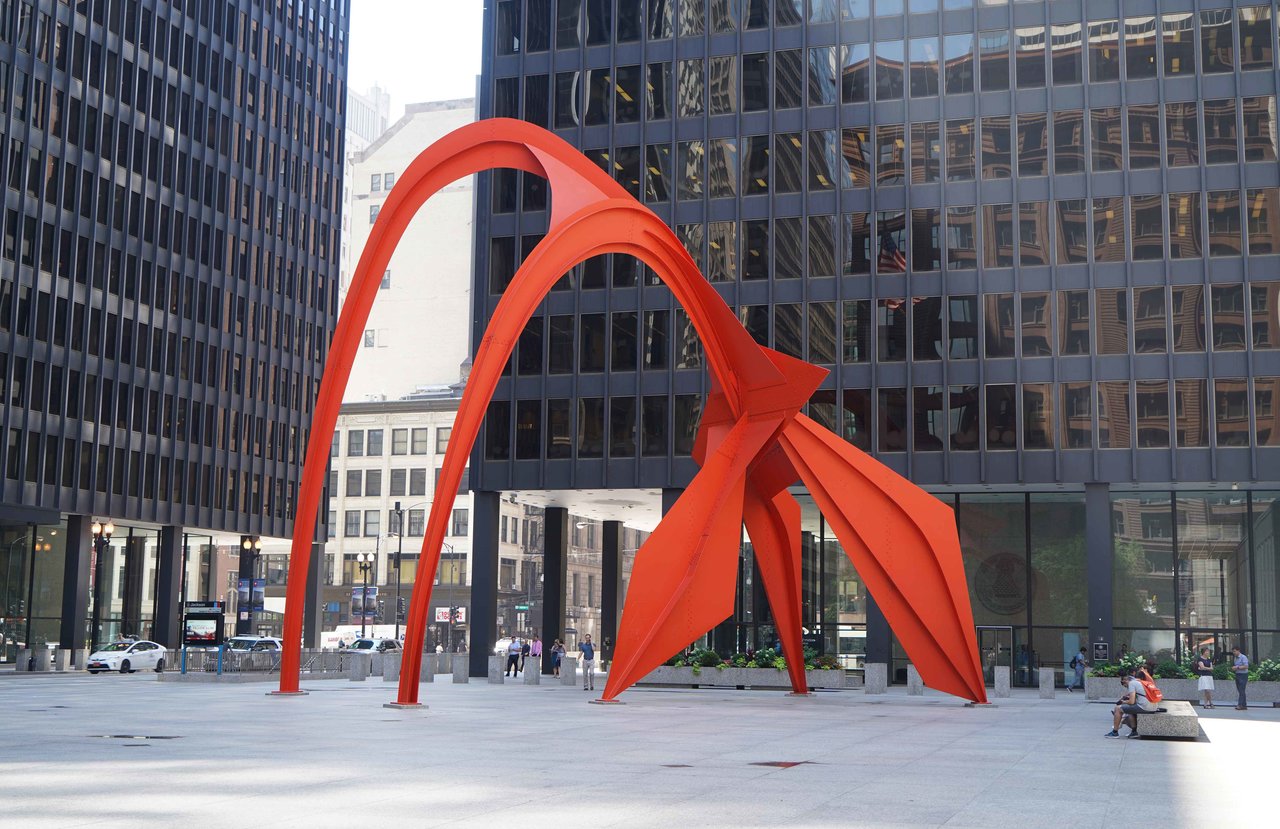
Also located in the Loop, in the plaza of the Federal Center building designed by Mies van der Rohe, is Alexander Calder's monumental outdoor sculpture "Flamingo" (1974). Like the Chicago Picasso, it stands over 15 meters tall and its vibrant red hue provides a striking contrast to the surrounding dark steel skyscrapers.
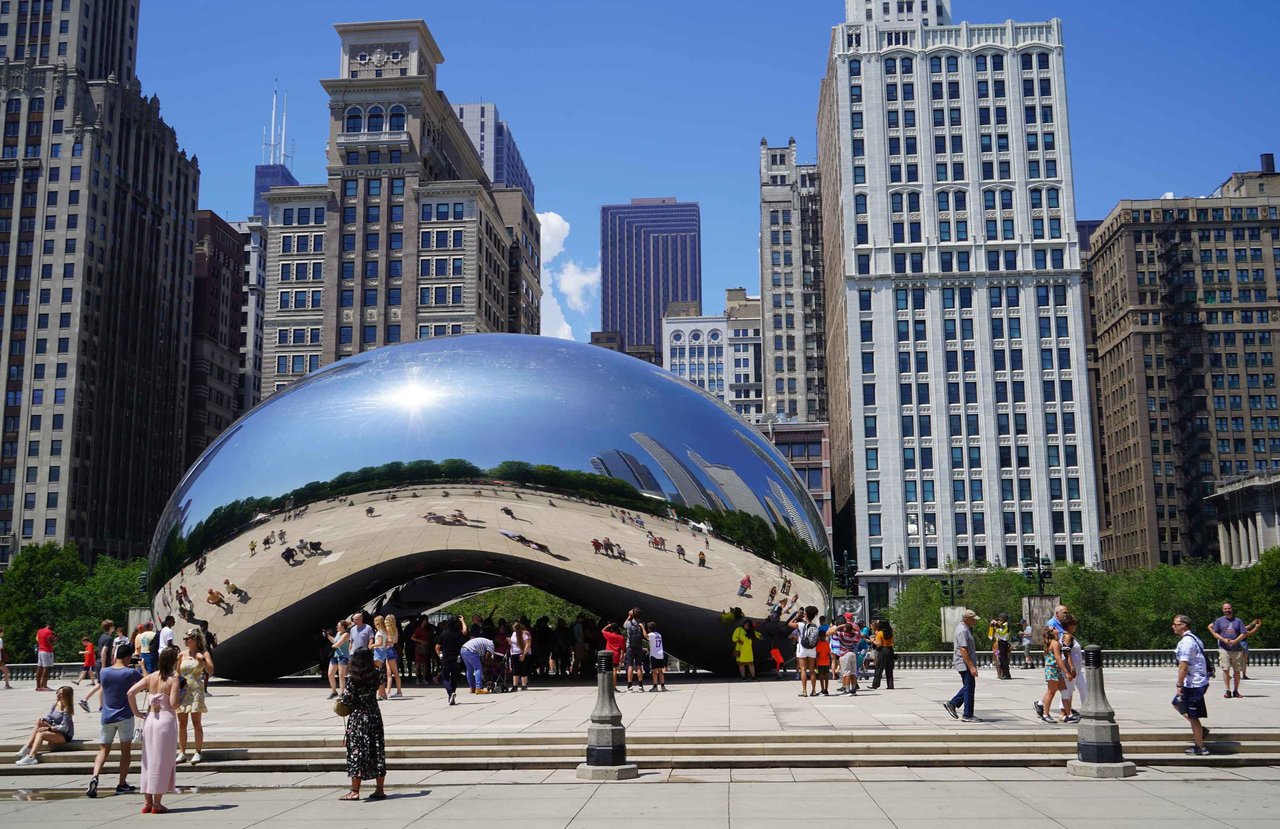
In Millennium Park, a verdant oasis on the east side of the Loop, one's attention is captured by a uniquely shaped, mirrored object. "Cloud Gate" (2006) by Anish Kapoor, an Indian-born sculptor based in London, is a colossal work measuring 20 meters wide, 10 meters high, and 13 meters deep. Resembling a UFO from outer space, its bean-like shape has earned it the nickname "The Bean."
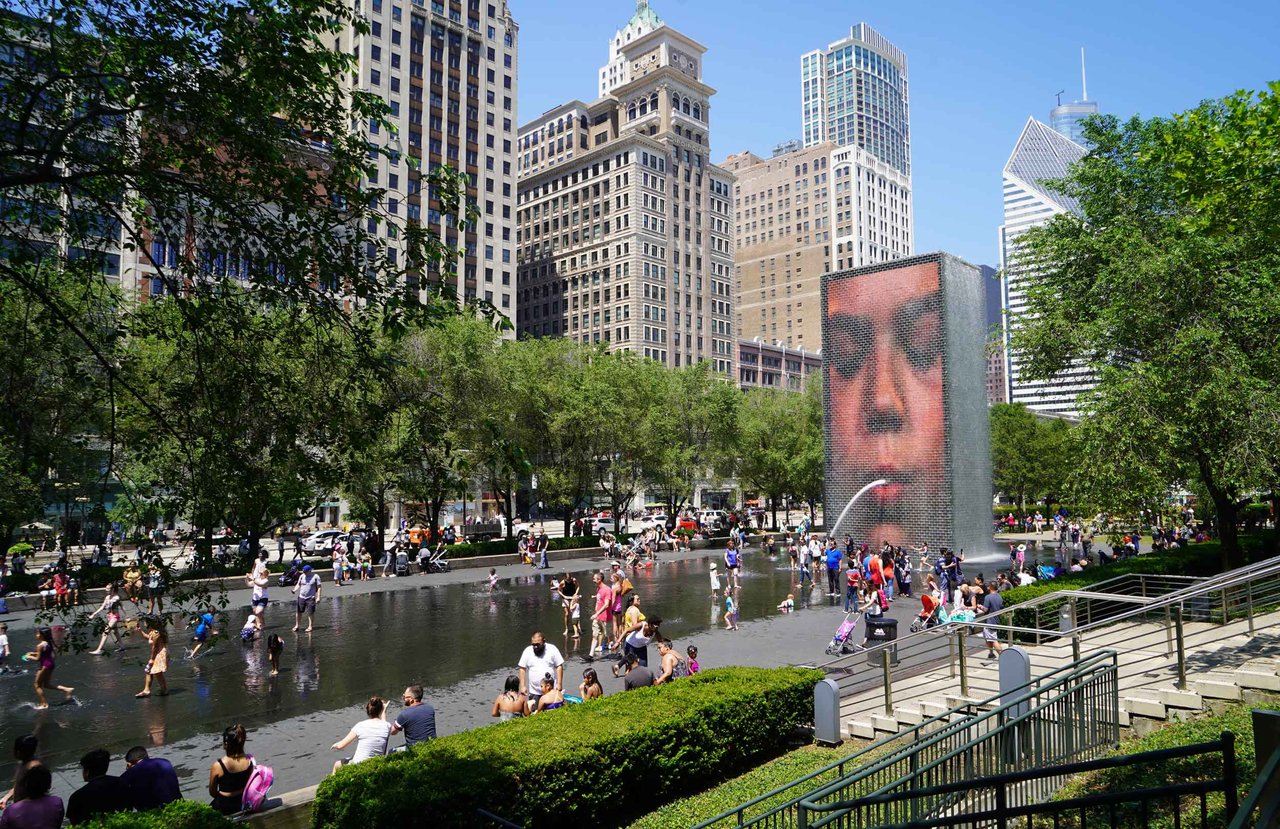
Also within Millennium Park, "Crown Fountain" (2004) by the renowned Spanish artist Jaume Plensa draws crowds. This interactive video sculpture features two 15.2-meter-tall towers displaying faces of diverse Chicagoans. The faces shift expressions, and every few minutes, water spouts from the mouth area, creating a playful fountain. On sunny days, children delight in splashing in the water, embodying Chicago's unique integration of public art and urban life.
![[Short Series 3] To Chicago, a Metropolis of Architecture, Art, Entertainment, and Gastronomy—The Art | TRAVEL](https://nrzrbfnxu4s7ucc9gsgt7ehg.global.ssl.fastly.net/articles/images/000/056/608/original/699b6ada-6f67-422b-8934-7be048d496ae.jpg)