Talking about "Chaos" 03 | A Story About a Restaurant & Cafe Bar in Tokyo Where Cultural Figures Gather for Some Reason
Talking about “Chaos” 03
A Conversation with Naoto Takenaka on "Places to Frequent"
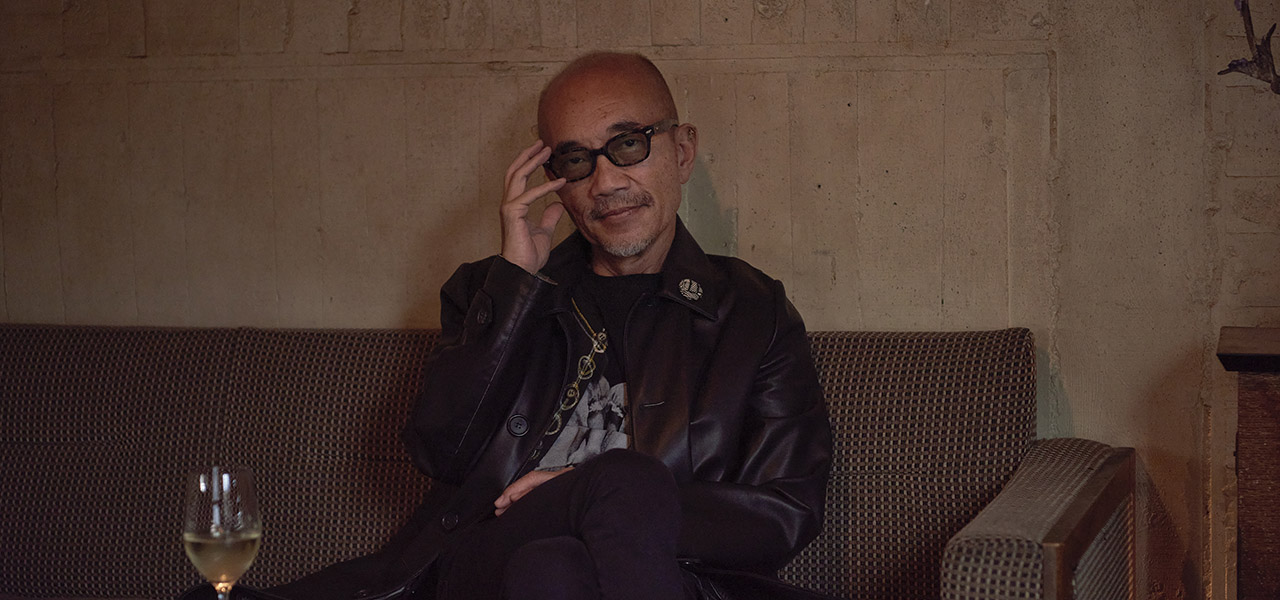
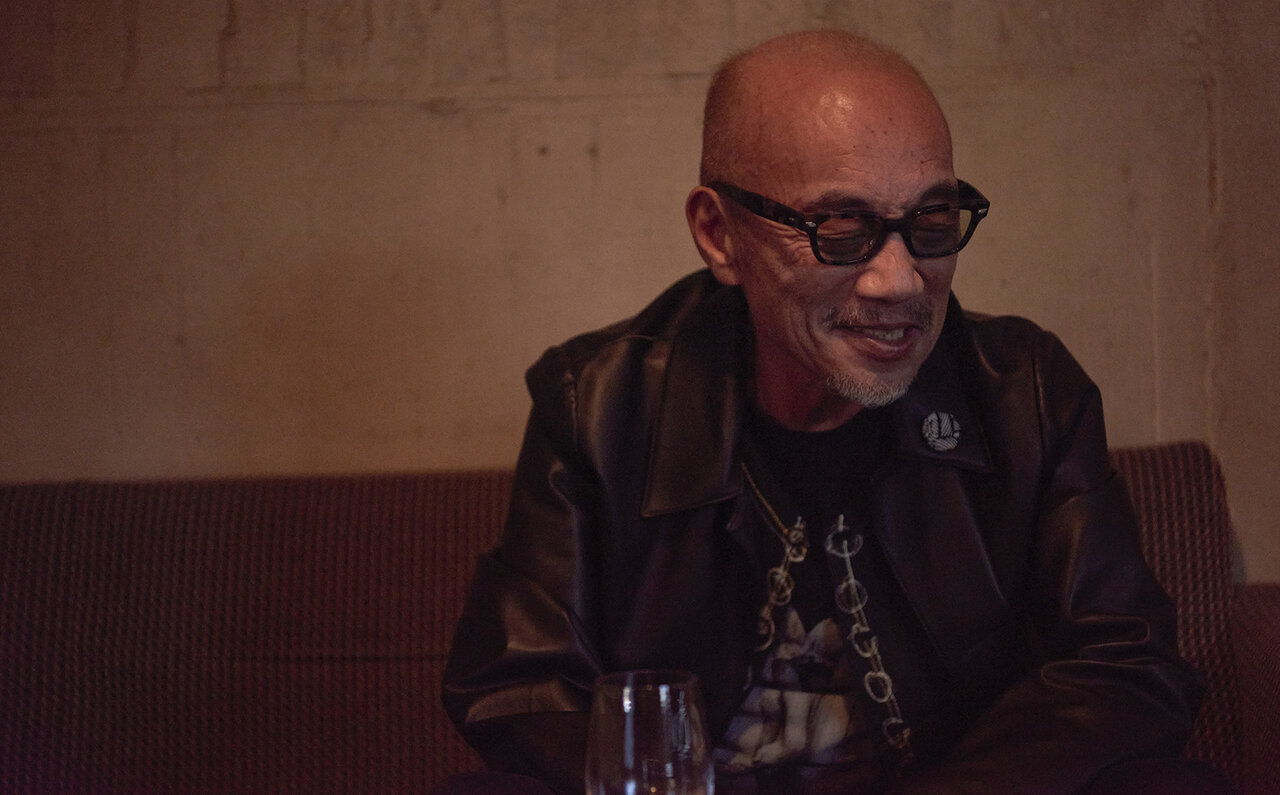
“I want to photograph places I love, just as I want to photograph actors I love.” Naoto Takenaka, who is active as both an actor and director, shares his special places for relaxation and inspiration for his own work. What is the character of these places that a busy creator describes as “places where one can sigh”?
Text by HONJO Maho|Photograph by YOKOKURA Shota|Interview & Edit by TANAKA Toshie(KIMITERASU)
Drawn to "Places Where One Can Sigh"
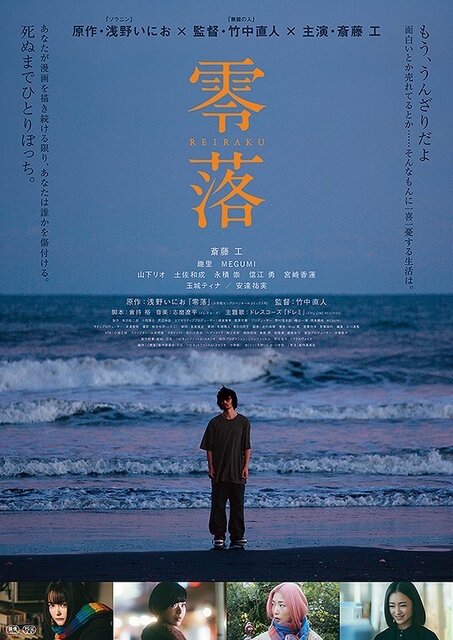
— You’ve not only acted but also directed many films. Your latest film, 'Zero Act,' which is currently in theaters, features 'Kong Tong,' correct?
Naoto Takenaka (hereinafter Takenaka)I really wanted to include 'Kong Tong' in my film. But I didn't want to shoot inside the restaurant; I wanted to capture it in a different way. So, I filmed from the balcony of an apartment building across the street from Kong Tong. The setting was that the protagonist, Fukasawa (Takumi Saitoh), has his workroom in one of the rooms in the apartment building opposite Kong Tong. He steps out onto the balcony and gazes into the distance. It’s a shot of Kong Tong seen over Takumi Saitoh’s shoulder. Tatsuro Fukuda, who has been behind the counter for many years, was surprised, saying, “I’ve never seen this view before!”
— You reportedly spent a considerable amount of time carefully negotiating with the residents of the apartment building opposite to get permission for filming. Why did you feel such a strong need to feature Kong Tong in your film?
TakenakaOf course, I want to involve actors I love in my directorial projects, but the same applies to filming locations. I always want to shoot in places that hold meaning for me. This time, I also filmed at 'Den-en,' a cafe in Kokubunji where I lived during my Tama Art University days, and at 'Honyarado,' the shop of folk singer Rabi Nakayama. They retain the same atmosphere as they did back then.
— You form deep, long-lasting relationships with the places you love. Among the countless restaurants and cafes, what made you keep coming back to this one?
TakenakaMr. Fukuda's presence is a big factor. The charming atmosphere of the place is very comforting. Mr. Fukuda's refined gentleness creates the mood of the restaurant. That's why I often have film meetings at Kong Tong. For 'Zokki,' released in 2021, I gathered members I felt inspired to work with—Takumi Saitoh, Takayuki Yamada, CHAI, Masanobu Ando—at Kong Tong and exclaimed in front of them, “Let’s make Hiroyuki Oshii’s 'Zokki' into a movie! Woooah!!! Woooah!!”
Then, Mr. Fukuda told me, “Please lower your voice a bit.”
That’s a lie...
— So, many works have been born from this restaurant.
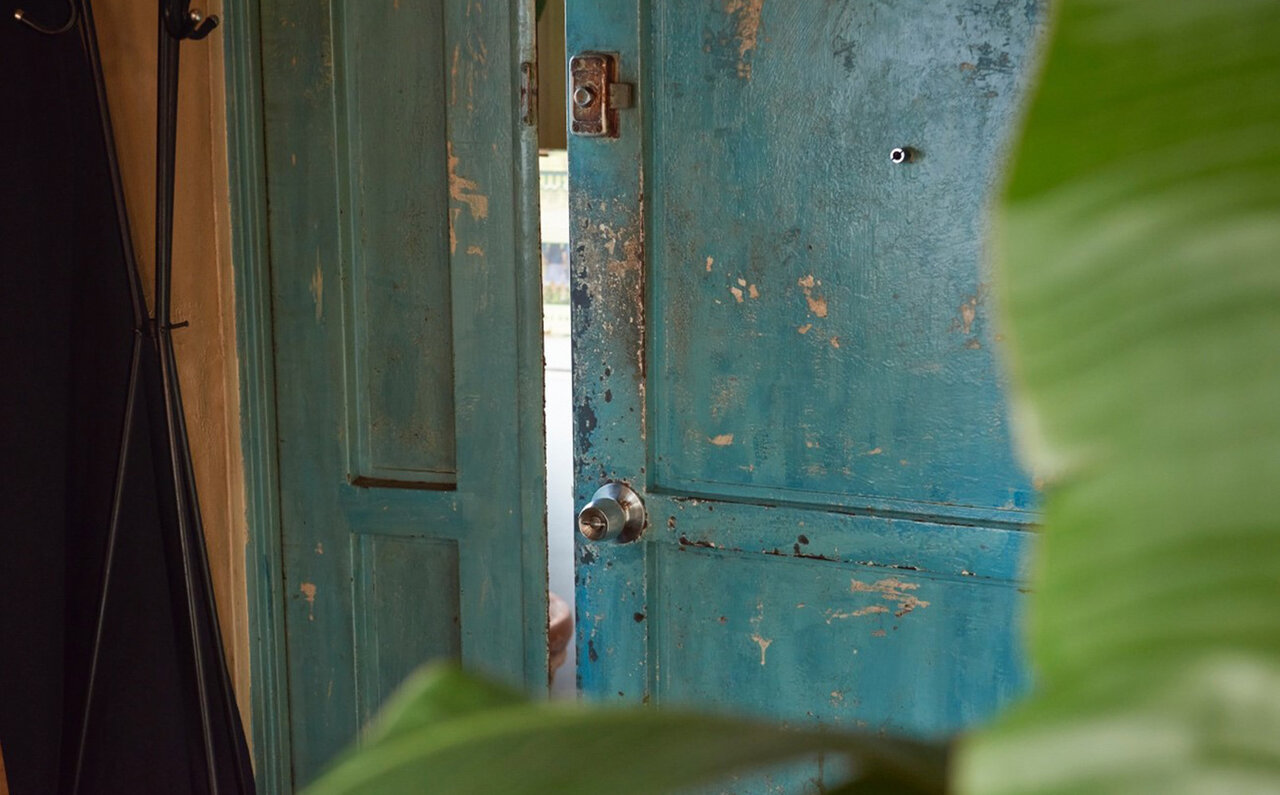
TakenakaSitting at the counter here, various inspirations come to me. The wonderful music selection, the lights of cars passing by on the highway, raindrops trickling down the window on a rainy day, the pleasant murmur of the customers... everything stimulates my mind. I take the stairs to the fifth floor where the restaurant is located, not the elevator. Sometimes I get out of breath, but the act of climbing those stairs is romantic. I also enjoy the time I spend smoking a cigarette and looking out the window in the hallway. But I've quit smoking now... That's true. The scenery, sounds, and smells I happen to notice at Kong Tong sometimes find their way into the films I make.
— Are there commonalities among the places that capture your heart?
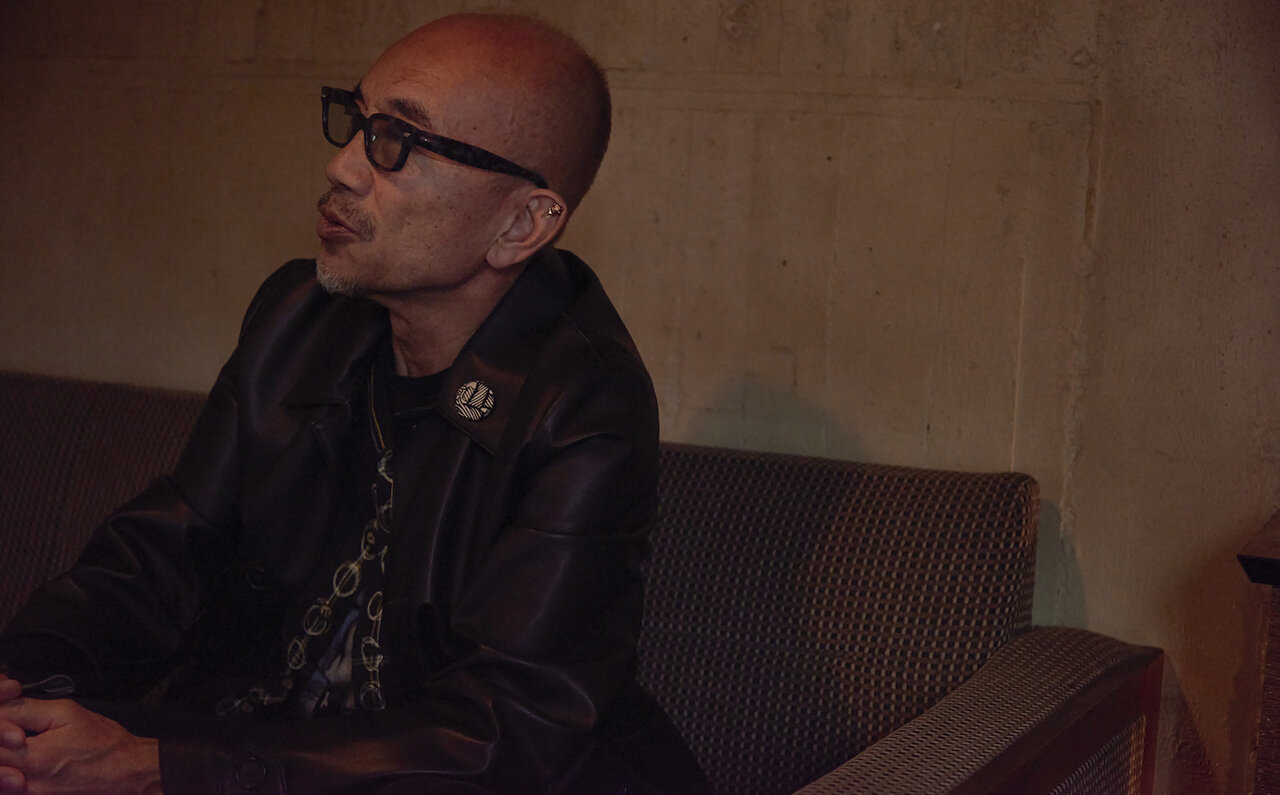
TakenakaThe atmosphere inside the establishment. The light in the place, the tone of the master's voice—the tone is important. I also like places where you can feel the air from outside the window. The shadows of people passing by visible from the window, the evening sky, the hint of impending rain, the pleasant buzz of customers... I'm drawn to places where I can sense these things. I also like places located on backstreets. When I'm on location for a play or film in a different region, I enjoy getting lost without looking at a map. I just wander and enter a place that catches my eye. It’s better if I can sense the atmosphere of the place from the window. Like the light of the establishment. Usually, places I enter on impulse have never disappointed me. Once, when filming in Kyoto ended early, I was taking a walk and found a very atmospheric restaurant. I was led to a small tatami room. It was a traditional Japanese house with a large window. After finishing my meal, it started to rain without me noticing. It was the rainy season. Surrounded by the scent of fresh greenery that had arrived with the wind, I felt like lying down for a bit.
I told the restaurant staff, “I’m feeling rather sleepy…” and they replied, “Please, just rest here…” Their voices were so gentle… The sound of the rain was the background music, and I took a nap right there.
— Perhaps you are drawn to places with a sense of "inclusivity"?
TakenakaYes. For me, Kong Tong is a “place where one can sigh.” I believe that comfort comes from feeling the passage of “time” that the master has lived through.
Accepting the master's life, and revealing one's own life. That's why one can sigh deeply and profoundly.
— It’s a place that colors both the celebrations and the everyday moments of life, isn't it?
TakenakaI only started drinking alcohol properly at the age of 47. Until then, I never had the habit of drinking at the counter, which is strange. When I first started drinking, I often had red wine or shochu.
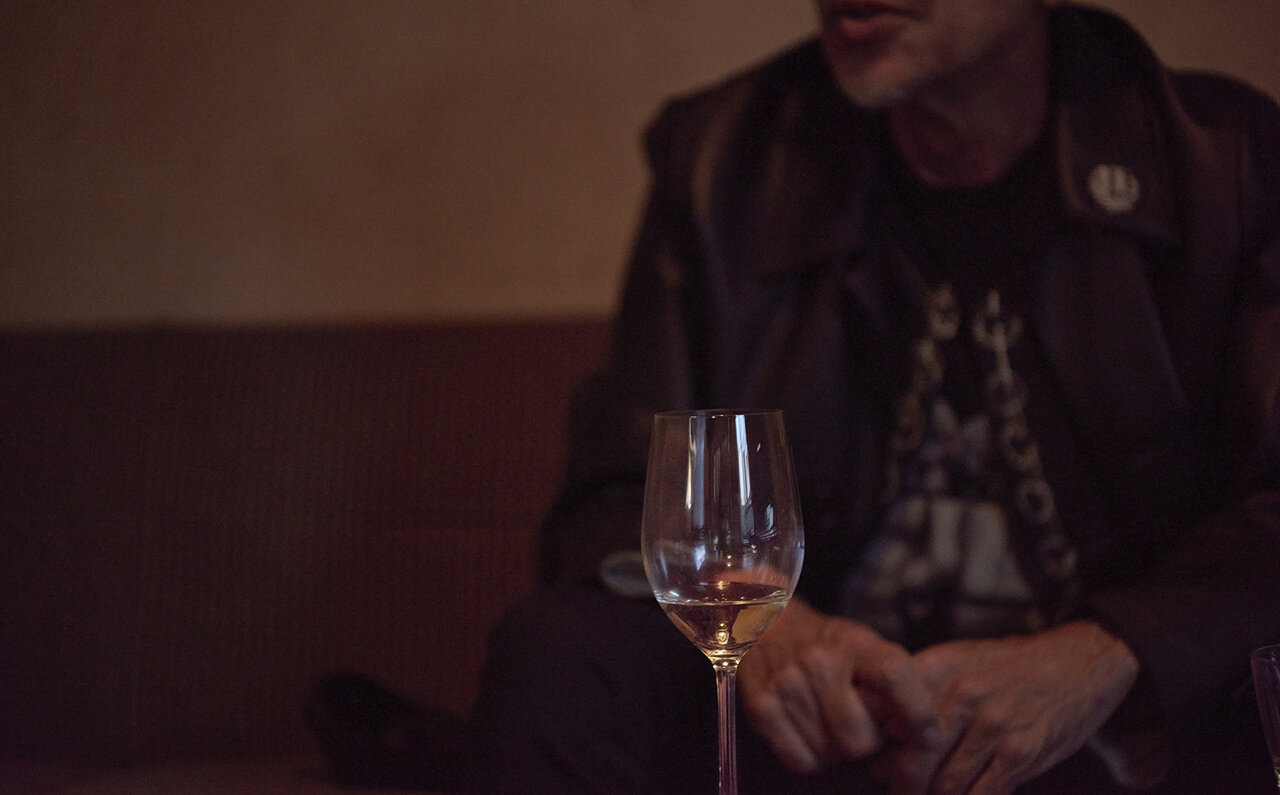
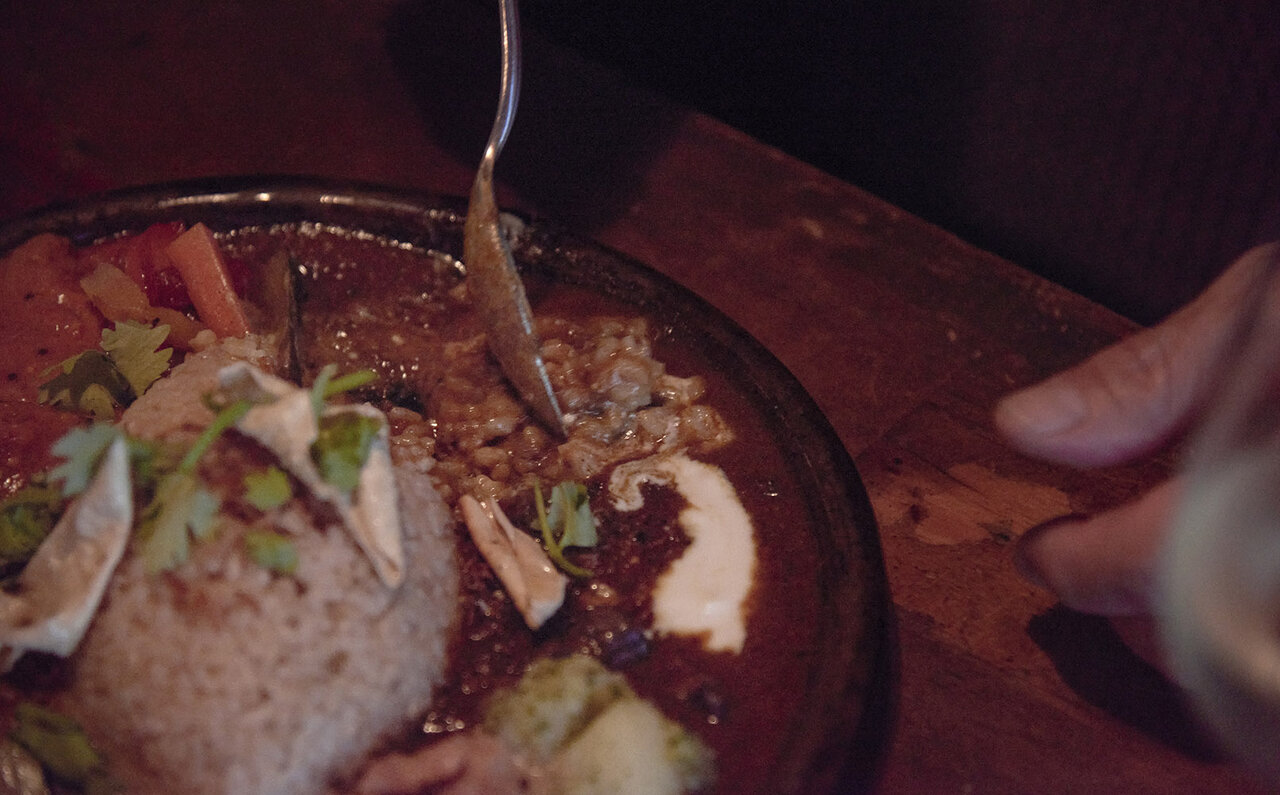
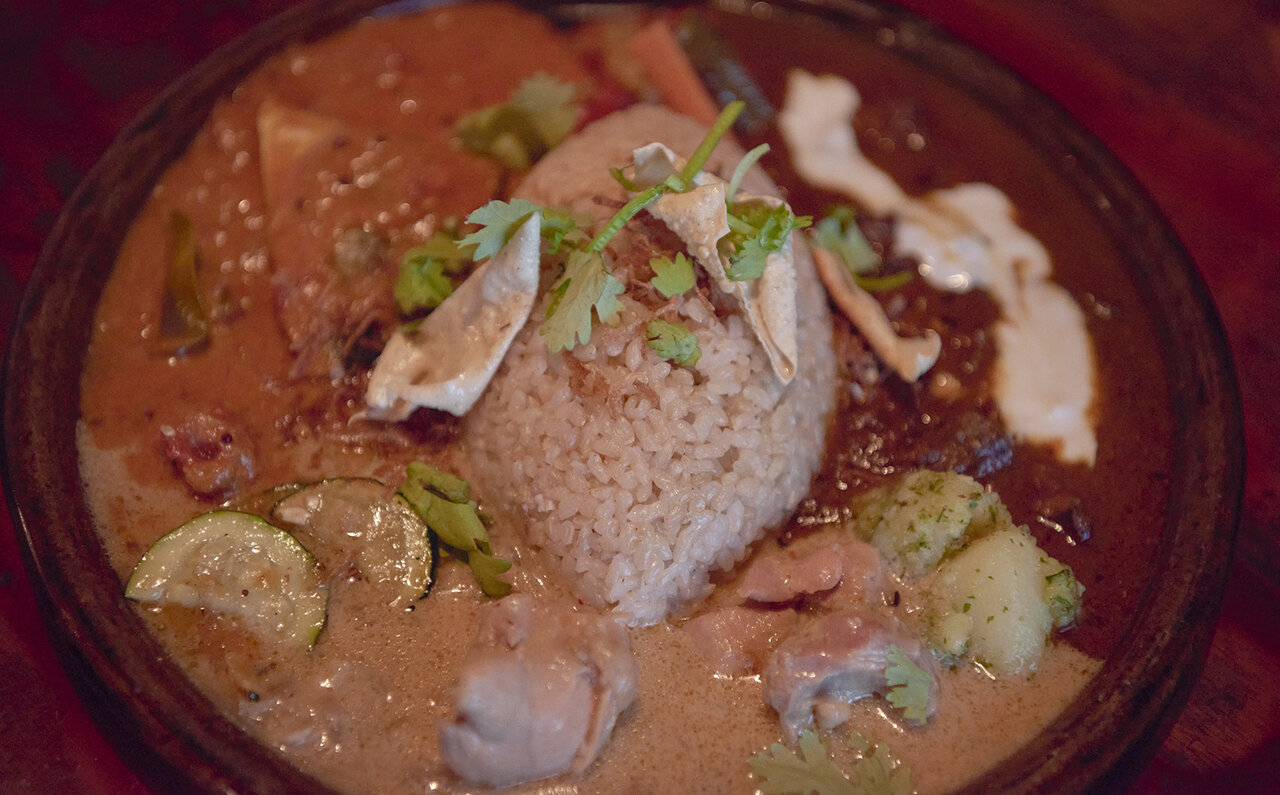
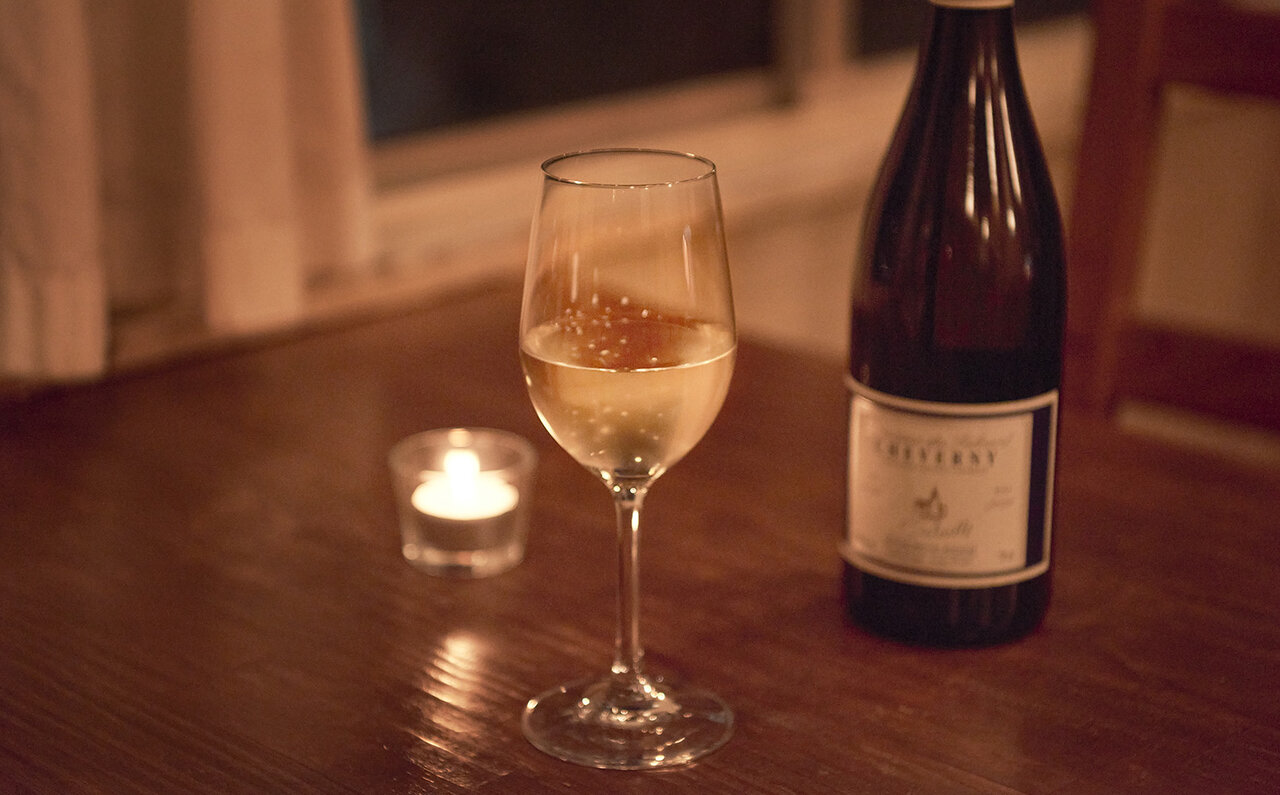
But about 20 years ago, I coincidentally met my chiropractor at Chitose Airport. He gently rubbed my back and said, “Mr. Takenaka, your body is most compatible with white wine. You can drink as much white wine as you want!” Since then, white wine has been my primary choice. Kong Tong's curry is delicious, so I often have it with white wine as a pairing.
People are good precisely because they are eccentric.
— It was a bit surprising to learn that you started drinking alcohol in your late 40s.
TakenakaAround that time, two of my film projects were rejected. I was quite dejected, thinking, “My own ideas are no longer viable…” It was Taeko Onuki and Atsushi Yanaka who encouraged me. They taught me the joy of drinking and getting tipsy.
Ah, it wasn't that Ms. Onuki and Mr. Yanaka encouraged me together. It was Ms. Onuki with Ms. Onuki, and Mr. Yanaka with Mr. Yanaka...
— Is there a particular piece of advice from Ms. Onuki that you cherish?
TakenakaOne time, I said to Ms. Onuki, “Ms. Onuki, I tend to be eccentric…” And she replied, “Isn't it good that you're eccentric?” That gave me courage.
Taeko Onuki is an unparalleled woman who is never shaken. I am sometimes consulted by younger people, and I sometimes borrow Ms. Onuki's words. I tell them, “It’s good that you’re eccentric.”
— What kind of concerns do younger generations bring to you?
TakenakaI don't really feel like a reliable senior figure, so people rarely consult me. Sometimes, when I've had a few drinks, I say, “It’s better for actors to be bad at acting.” In fact, I have a book I wrote called 'It's Better for Actors to Be Bad at Acting' (laughs). When young actors occasionally ask for advice, I sometimes tell them, “Acting isn't fun if you get too good at it.” I definitely don't want to become a preachy old man. Fundamentally, I think it's very embarrassing for people to express themselves. Of course, I want people to see the films I make, and I want to promote them. And now, we live in an era where we can promote widely on social media. But somehow, it still feels embarrassing. I can't really announce, “I made this!” (laughs). I like the idea of 'for those in the know.' I'm happy when people who want to see it, see it. I find that kind of existence, like Yoshiharu Tsuge's, romantic...
— It’s something that those who understand will understand, and those who it resonates with will feel it, right?
TakenakaRather than wanting to move others, I first want to be moved myself. I don't think I can create something that appeals to everyone... If I happen to encounter a film that is truly wonderful, I want to keep it a secret. I want to quietly tell my close friends. I'm happy when a beloved film doesn't have many customers. It feels like it's my movie alone. But if my own directed film doesn't attract an audience, it's incredibly painful... It feels so contradictory! Years ago, Ryozo Naka-jima said, “If there are 100 people, and none of them are laughing, but there’s just one person laughing among them, isn’t that the best?” I really love that sentiment.
— Perhaps that feeling is also reflected in the atmosphere of Kong Tong, a place you've frequented for many years?
TakenakaIt's good that Kong Tong exists beyond the dimensions of mainstream or niche. It feels like it doesn't choose people, yet it does... It's hard to explain... It has a cool yet unpretentious vibe... But it creates an overwhelmingly unique and comfortable space. It's the kind of 'for those in the know' place that I love.
I've talked quite a bit... I'll end here. Mr. Fukuda, I'm truly happy to have discovered such a wonderful place. Thank you, Mr. Fukuda, and to all the staff at Kong Tong, for everything. With gratitude and surprise!
Naoto Takenaka
Actor, film director. Born in Kanagawa Prefecture in 1956. Appeared in numerous works, including the film 'Shall We Dance?' and the NHK historical drama 'Hideyoshi.' His directorial debut, 'Dio Brando,' which he also starred in, received the International Critics' Award at the Venice International Film Festival and numerous domestic awards. His latest directorial work, 'Zero Act,' an adaptation of a shocking work by manga artist Inio Asano, is currently in theaters.
What’s Kong TongLocation|Sanko Bldg. 5F, 3-30-10 Ikejiri, Setagaya-ku, Tokyo
https://garlands.jp/kongtong/
Today’s Drink and Food
● Today's Curry, Assortment of 3 Types
● French White Wine (Sauvignon Blanc)
Les Ogres De Barback / Amours Grises & Colères Rouges
Sam Gendel & Antonia Cytrynowicz / LIVE A LITTLE