Talking about “Chaos” 02 | The Story of a Tokyo Restaurant & Cafe Bar Where Cultural Figures Mysteriously Gather
Talking about “Chaos” 02
An Interview with Ellie Omiya on Her Favorite Haunts
“I arrived at where I am today by shedding my preconceptions.” So says Ellie Omiya, who has found a place to both relax and immerse herself in her creative work. What is it about this space, which stimulates the creativity of a woman with so many facets, and what are her methods for breaking free from preconceptions?
Interview & Edit by TANAKA Toshie (KIMITERASU) | Photograph by YOKOKURA Shota | Text by HONJO Maho
This Place is Like a Club Room
— You are a writer, screenwriter, film director, theater director, commercial director, and copywriter… and now, a contemporary artist who holds solo exhibitions worldwide. Your versatility is always astonishing. How many projects do you currently have in progress?
Ellie Omiya (hereafter Omiya)— Hmm, the number… For this year and next, I might have around 20 projects, big and small…
— 20 projects, that’s incredible. With so many offers, what’s your deciding factor when choosing whether to accept or decline?
Omiya— It really depends on my schedule… and perhaps compatibility? Sometimes, it’s better if someone else handles it. Also, whether the people involved are appealing… and maybe fate? For example, the exhibition “Traveling Feelings,” which ran from last autumn to the end of March this year, is being held at JAL’s “SKY MUSEUM,” a museum created for aviation education. I’ve created and exhibited 100 paintings of the sky there. When I was first invited to see the venue, I found the atrium pleasant and enjoyed being able to enter the cockpit, so I thought, ‘Why not?’ (laughs). At first, I thought, ‘Do they really need my paintings?’ as it’s already an interesting and popular museum. But the people at JAL were all wonderful, and the desire to create something interesting with them was the biggest deciding factor. Also, JAL mentioned that the people working there, like the mechanics, would be able to see the paintings, which resonated with me. That kind of resonance, you know, is important when taking on a job. The meaning behind it. Of course, it’s a facility with an educational focus for children, so there was also a sense of purpose and fulfillment in supporting that mission. They asked if I would do something, and looking around, there was a jumbo jet inside the facility, but you couldn’t see the sky from there, so I decided to paint 100 skies, representing each person’s sky. Skies that look like cream buns, or soccer balls. I made them into 100 paintings that people could enjoy, saying, ‘Oh, that looks like it!’
— Juggling so many projects must be overwhelming. Do you have any tips for managing them smoothly? How do you switch gears mentally?
Omiya— Hmm, I don’t really consciously switch gears. Because I have so many different jobs, they sort of switch themselves (laughs). With each project, there are other people involved, so it’s like cooking – I consider their condition and preferences, and then I offer something, thinking, ‘Would this be good?’ And then we sort of eat it together (laughs). It’s enjoyable, all of them.
— Now, the busy Ellie Omiya frequents this very bistro and cafe bar, “Kong Tong,” located in Mishuku.
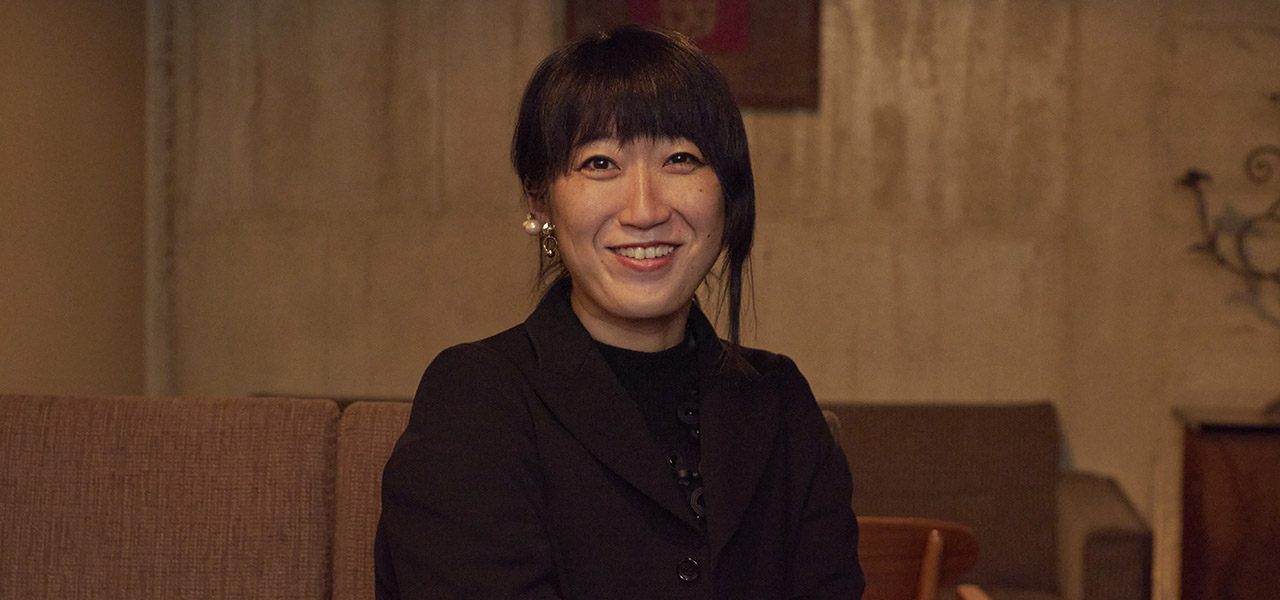
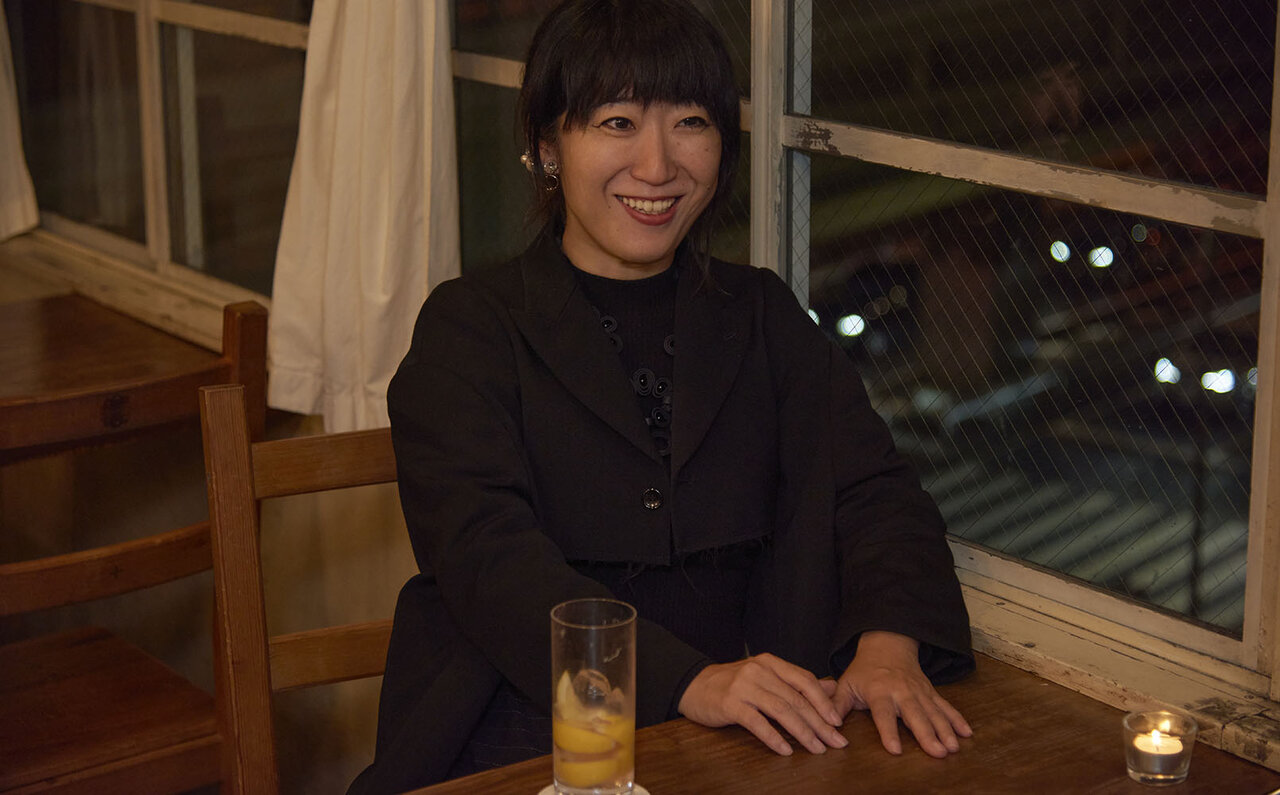
Omiya— I first visited over 10 years ago. Bose from Schadaraparr invited me, and Ikuko Harada from Clammbon was there. I fell asleep on the sofa after she gave me a massage, and when I woke up, the Tokyo Ska Paradise Orchestra members were surrounding me in a huddle (laughs). I’ve been coming back ever since. I especially love their curry; it energizes me. I come here for my spice fix. I truly believe it’s magical curry. The effects are immediate (laughs). They have many other tempting dishes, and I often order quite a bit for myself, like the “Duck Confit,” which sometimes makes Fukuda-san, who works behind the counter, tilt his head (laughs). He’ll ask, ‘Can you eat all that?’ And I’ll say, ‘I can,’ then eat, drink, and even get some work done. For me, this place is like a club room for my activities.
— “Club room” is an interesting expression. Above all, I’d like to ask about the source of your creativity, given your many roles. Your depth of resources feels like an old Chinese apothecary cabinet.
Omiya— Is that so? It’s more like a desperate measure (laughs). If I have many resources, it might be because the requests I receive are often quite unconventional, and I’ve been trained by my work and the people I collaborate with, which has expanded my capabilities. I’m grateful for those experiences. After all, it takes courage for someone to offer a project to someone with little experience in that area. It takes courage on my part too, but the person entrusting me with it is truly remarkable. They must see something in me that I can’t yet see myself. That’s why I’ve taken the leap.
— Where does that courage to dive into various projects come from?
Omiya— It might be about letting go of the preconception that you can’t do something without experience. I’m involved in art now, but I didn’t study at an art university. I studied at the University of Tokyo’s Faculty of Pharmaceutical Sciences. I spent my time doing experiments. Tomio Koyama, the gallerist who represents me, says that studying doesn’t necessarily lead to creating good art. I haven’t formally studied painting, but I’ve worked in commercials, scripts, theater, film, radio, and many other fields. If all of that has actually led to my painting, then perhaps the things you do casually, or the things you’re working hard at now, might connect to something unexpected in the future. So, I think it’s good to trust that flow and believe that coincidence is destiny.
A while ago, after finishing a film, I was so scared of the next one that I kept turning down offers. But then I realized I wouldn’t be able to make a living if I refused any more, so I decided I would definitely accept the next request! When I received a call asking, ‘Would you like to try theater?,’ I was taken aback. But I thought, ‘Film is on film, theater is live, it’s just a different channel. Expressing a story is the same, so I should be able to manage,’ and I jumped in. Well, most people wouldn’t do that (laughs). I’ve come to believe that it’s important to “shed preconceptions and find joy in them.”
— How can one overcome that “preconception of inability”?
Omiya— Well, in 2020, at the height of the pandemic, I established a school called “Ellie Academy” with the motto “Train Your Creative Muscle.” Many people enrolled, including housewives, caregivers, healthcare professionals, designers, and farmers. I created a space that feels like a village. It’s a third place, beyond family and work. I also teach classes there, and one of the modules is about shedding preconceptions. For example, if I give you a prompt from a script, would you like to try it? (laughs). Let’s say the theme is: “Two men in suits are in a coffee shop. Consider their relationship and write four lines of dialogue.” What do you think? First, the relationship. What could it be?
— Perhaps a boss and subordinate from the same company…?
Omiya— That’s the most common answer. It’s because of the general preconception that “suits = company employees.” If you break free from that, what else could it be? Next, people usually suggest fellow alumni who met after a wedding, or perhaps magicians. As we break down more preconceptions, we once came up with the idea that they were “aliens discussing their plan to invade Earth,” and everyone was thrilled. It’s interesting, isn’t it? Wearing suits and disguising themselves as humans. The important thing is not to be bound by assumptions. Everyone has talent and imagination. Having more options is beneficial in this era of rapid change and unpredictability, so practicing to let go of assumptions can be a surprising strength.
— “Ellie Academy” sounds like a fascinating school. What else do you offer?
Omiya— At the beginning of the year, I offered a class called “This is not me.” We’re currently in what’s called the “Age of Wind,” with messages like “Live by your new self-axis” and “Live lightly,” but doesn’t that make you feel rushed? (laughs) I certainly felt rushed! (laughs) So, I thought, what is this “new self?” It’s very difficult and vague. So, I suggested thinking about what we want to let go of, saying, “This is not me, I want to let this go!”
When I had the students do this, they were silent when asked about their “new self,” but when asked what they wanted to let go of, they had so much to say! (laughs) Things like, “I want to stop conforming to others,” or “Sleeping in is not me.” Instead of “This is me,” I suggested writing “This is not me,” and then reversing it to find “New me.” When you do this in a group, not alone, there are many resonances. Everyone realizes they are unique, talented, and interesting individuals, which strengthens self-affirmation. Self-affirmation is crucial for self-realization, isn’t it?
A Place to Cultivate the Seeds of Creativity
— After holding numerous painting exhibitions, you had a solo exhibition at the Towada Art Center in 2016. Then, in 2019, your first overseas solo exhibitions were held in Paris, Hong Kong, and Milan, correct?
Omiya— Yes. I’ve done many things, but painting has been my longest pursuit, exactly 10 years now. The catalyst was an accident. I never thought I would become a painter. I happened to be passing by a ceremony where an international artist was supposed to do a live painting, but they suddenly couldn’t make it. So, the organizer, who happened to find me there, asked me to paint something, anything (laughs). As I mentioned earlier, coincidence is destiny. I, who have been brought to life by unconventional requests, did it with trepidation. Of course, I couldn’t do it sober, so I drank a whole bottle of this red wine, which I also enjoy at Kong Tong, while I painted. It turned out that my performance, wearing a kimono and chugging red wine from a bottle, was well-received by the international guests. Souichiro Fukutake of Benesse saw the first painting I created and praised it, saying, “I want this painting!” That was the start of my career. Solo exhibitions followed, and it was very challenging, but it led me to where I am today. Being called “multi-talented” used to be a complex for me. But Mr. Fukutake, who bought my paintings, told me, “I’ve looked at all your work, and your paintings are the best. Haven’t all your previous endeavors led to painting? You should pursue a career as a painter!” That’s when my complex was finally laid to rest (laughs). I realized that my “multi-talented” nature had transformed into color.
— After your overseas exhibitions concluded, have you been visiting Kong Tong more frequently since 2020?
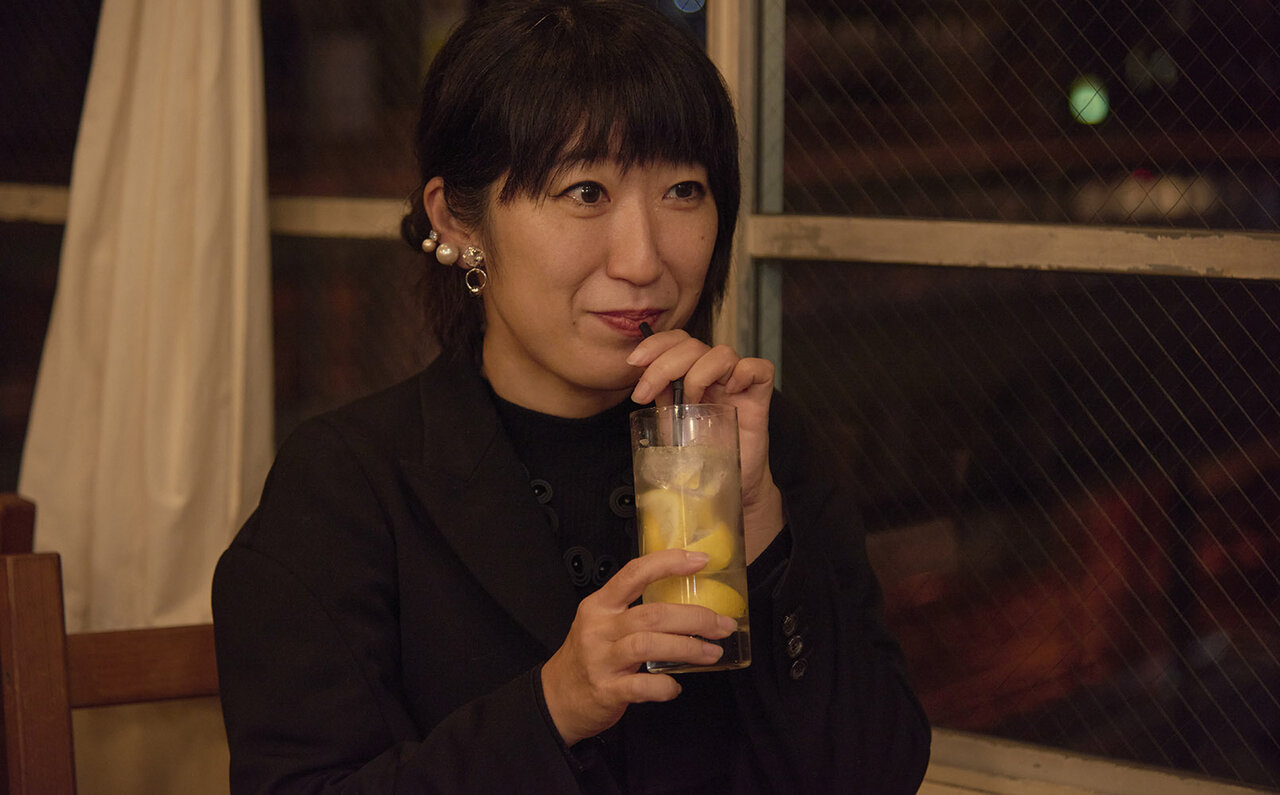
Omiya— Yes, I have. I wonder why. I always cook for myself, but I was incredibly busy from 2019 to 2022, so I found solace at Kong Tong. I even wanted to have staff meetings there instead of in a conference room! In 2019, I had solo exhibitions in Paris, Milan, and Hong Kong. In 2020, I established the school, had a solo exhibition at the Mori Art Museum’s AD Gallery, and then another at Isetan Salone in the summer after the pandemic began. In 2021, I had a solo exhibition at Shibuya Seibu, created my first 6-meter sculpture in Osaka, and in 2022, I had a solo exhibition in London, created two works for the Setouchi Triennale, had a solo exhibition at Phillips, and did live painting twice at Midtown. It was a fulfilling period, but I felt like I didn’t know where I was. That’s when I started coming here. It’s calming. They leave me alone to a comfortable degree (laughs), and they also interact with me to a comfortable degree (laughs). I always came here when I felt overwhelmed. I’m soothed by the curry made by the owner-chef, Daichi Tajima, and revitalized by the lemon squash made by Fukuda-san. There were times when my brain was so overloaded with work that I’d decide to postpone it and close my laptop, but after two glasses of Fukuda-san’s lemon squash at Kong Tong, I’d feel so much better and turn my computer back on! When my breathing becomes shallow due to fatigue, I come here to savor Daichi-san’s curry with my eyes closed. It sinks in. And then I can get back to work. It has truly saved me from numerous crises. It’s like a “pit stop” in F1 (laughs).
— It must be a great source of support for you that Kong Tong serves as both your “club room” and your “pit stop spot.”
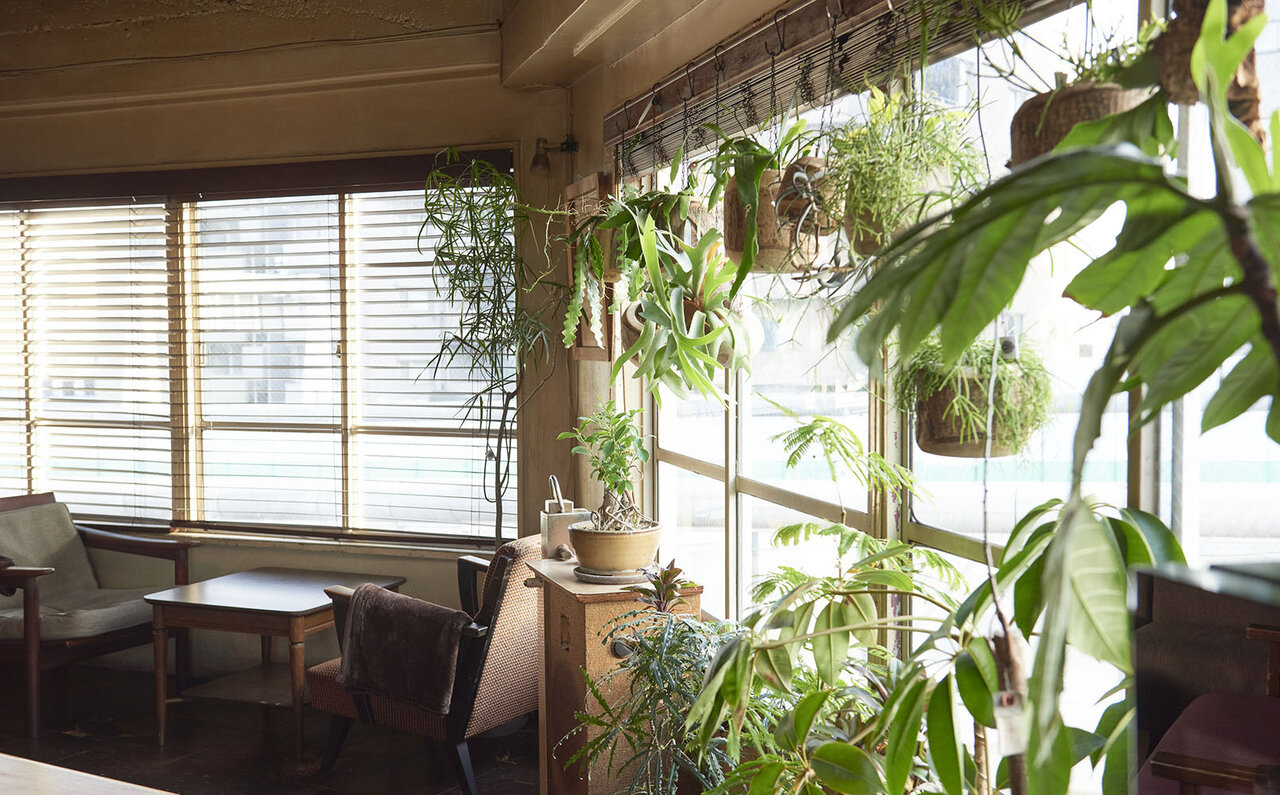
Omiya— It’s the most comfortable place. The chairs are wonderful, the lighting is great, the music sounds good, and the acoustics are excellent. There’s also plenty of greenery. And yet, looking out the window at the highway lights (even at night), I can get intoxicated (laughs). I also like that it feels like a hidden gem. I feel a bit guilty about recommending it in this article to those who might want to use it as their own secret hideaway.
— So, it’s a place for relaxation and, at the same time, a place for creation.
Omiya— Yes, it feels quite international, doesn’t it? In Paris, cafes often serve as spaces that nurture creators. I feel that kind of atmosphere at Kong Tong. I’d love to hold an exhibition for children’s art here someday. It would be a place for my students to showcase their work, but it would be wonderful if strangers could view their art while enjoying a meal. The children’s paintings are amazing! (laughs) I also loved the works from a class where they were asked to paint the blue sea using only red. It was the “Mastering Red” session. The hats created when we invited designer Misao Harada, who also designed for Queen Elizabeth, via online were also wonderful. I wish people could see them. I’ve never organized an exhibition for others myself, but I wonder what it would be like here. Kong Tong is truly a creative club room and a hidden salon.
Ellie Omiya
Born in Osaka in 1975, graduated from the University of Tokyo. While active in various fields as a writer, stage director, and drama/film director, her career as a painter began in 2012 with a live painting request at the award ceremony for Souichiro Fukutake, recipient of the Montblanc International Award, held at the Tokyo National Museum. In 2016, she held her first solo exhibition at a museum, “Sincerely Yours” (Towada Art Center). In 2019, she held solo exhibitions in Hong Kong, Milan, and Paris. In 2022, she held “Lounging around” (Gallery Brachia) in London. She has also created mural works at children’s libraries and other locations, such as on Amami Oshima Island. As an exhibiting artist at the Setouchi Triennale 2022, she presented the sculptural works “Flower Fairy Dancers” and “Flower Bench of Light and Reflection” on Naoshima Island.
What’s Kong TongA restaurant & cafe bar that celebrated its 20th anniversary on March 9, 2023. Various events featuring affiliated artists are scheduled for March.
Location: Sankyo Bldg. 5F, 3-30-10 Ikejiri, Setagaya-ku, Tokyo
https://garlands.jp/kongtong/
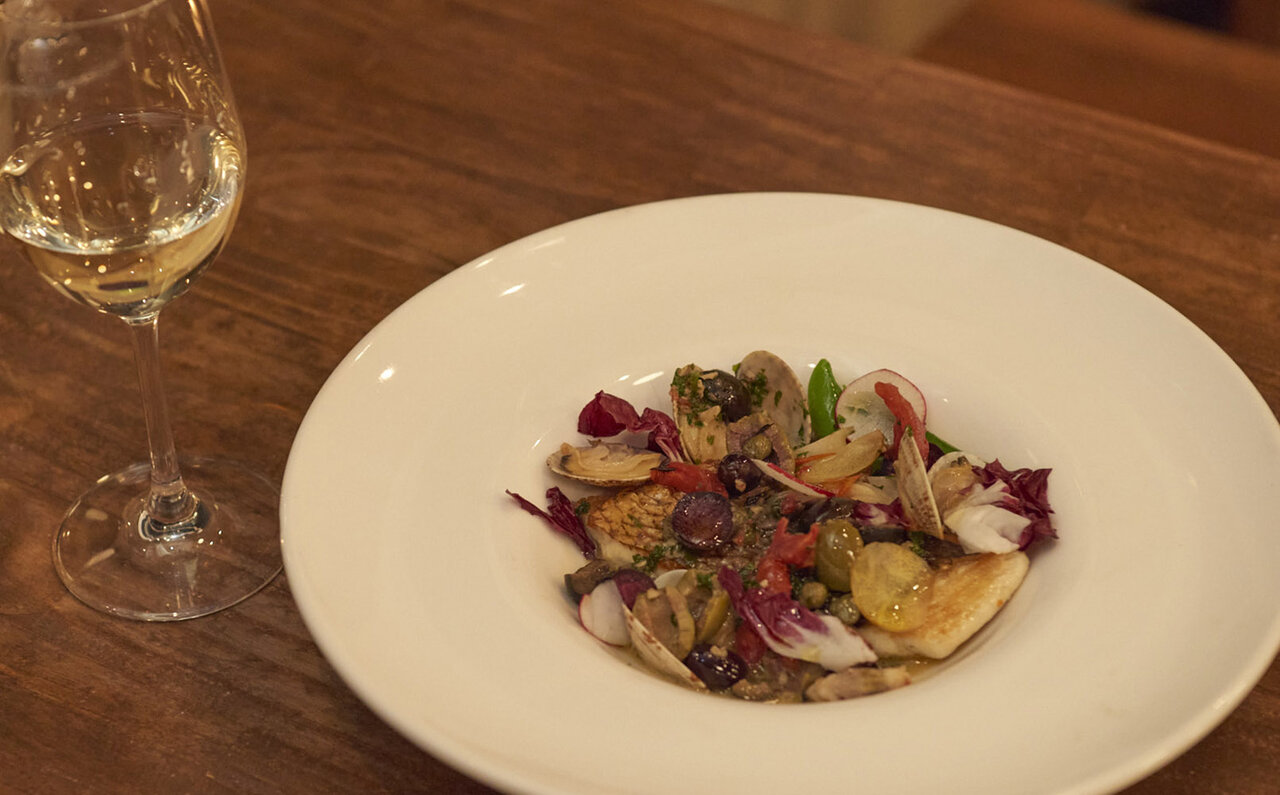
Today’s Drink and Food
• South African Natural Wine (White: Chenin Blanc)
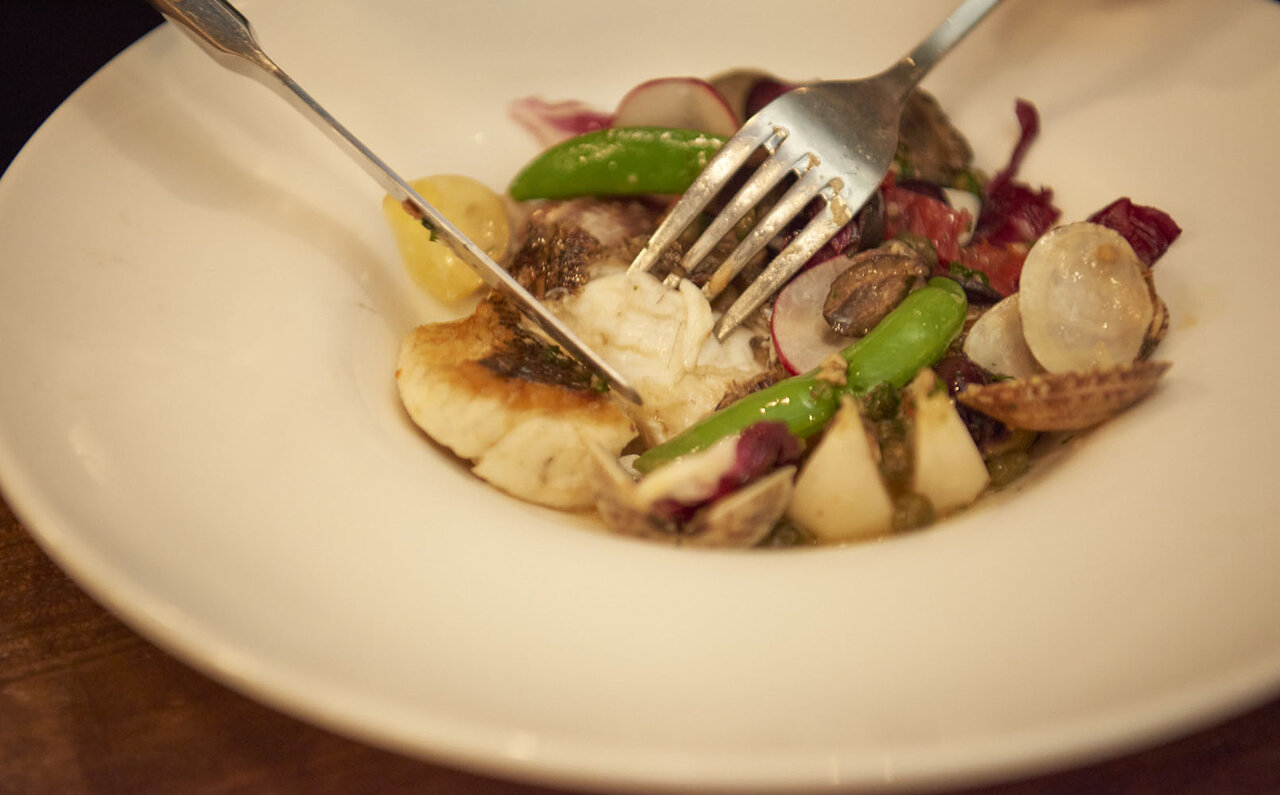
• Fresh Sea Bream Aquapazza
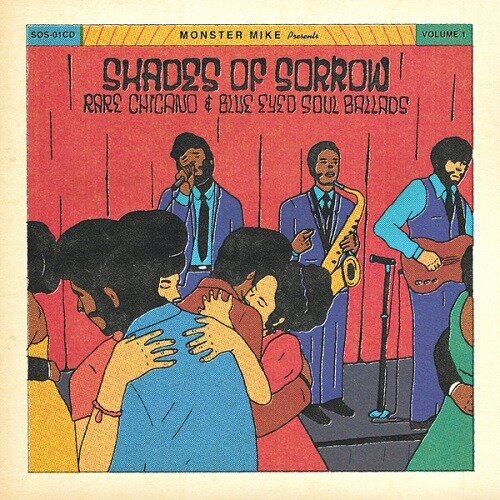
Shades of Sorrow : Rare Chicano & Blue Eyed Soul Ballads Vol. 1 / Various Artists
Cha-Cha Au Harem / Various Artists