Celebrating 150 Years of Non-Vintage Brut | MOËT & CHANDON
Sponsored
MOËT & CHANDON
Moët & Chandon and 276 Years of Champagne (1)
The icon of Moët & Chandon, the champagne that represents Champagne, is Moët Impérial. This champagne, named Impérial meaning emperor, celebrates its 150th anniversary this year. Let us now re-examine the meaning of Moët Impérial, with words from Moët & Chandon's Chef de Cave, Benoît Gouez.
What is Non-Vintage Brut?
Before discussing Moët Impérial from Moët & Chandon, I would like to first review what non-vintage champagne and brut mean, as exemplified by Moët Impérial.
Grapes are harvested once a year. For still wine, which is non-sparkling, wine is typically made using grapes harvested in 2019 for the 2019 vintage. Strictly speaking, it doesn't have to be 100% of that year's harvest; in the EU, if at least 85% of the grapes are from that year, the year can be stated on the label. In the US, it's 95%, and in Chile, it's 75%. This year indicated on the label is called the vintage in wine.
The rules for Champagne are stricter: to display a vintage, the wine must be made from 100% of that year's grapes. Vintage Champagne also requires a minimum of three years of aging in the bottle. Therefore, vintage Champagne is often a special production, made to express the characteristics of a particular year when the harvest was good, and accounts for only about 20% of total Champagne production.
So, what is the mainstream in Champagne? Champagne producers typically keep reserve wines, which are still wines made from grapes harvested in previous years. These are then blended with grapes from the current year for bottling. This is called non-vintage Champagne. Incidentally, this also requires a minimum of 15 months of aging in the bottle.
Wine has many variables. For example, even if grapes are from the same harvest year, the same village, and made from the same varietal, the taste of the wine can differ significantly between one side of a narrow farm road and the other in Burgundy or Champagne. Even within the same village, conditions like sunlight, wind, temperature, and humidity differ between a west-facing slope, an east-facing slope, and a plain with a river in between. Conditions also vary between the lower and upper parts of the same slope, or between one side of the river and the other. Depending on these conditions, and on the grower, cultivation methods differ. After harvest, how the grapes are grouped as being from the same conditions for winemaking, and how they are vinified, also varies by person. Furthermore, there's the question of whether these different wines are bottled as is or blended. If blended, what is blended with what?
Limiting the discussion to Champagne, the planted area is 34,000 hectares. There are even Champagnes made from grapes of just one hectare. While that's a rather special case, Champagne has 319 municipalities, called crus, each distinguished as a grape-growing region. There's also a classification system: 17 Grand Crus, translated as 'great growth,' and 44 Premier Crus, referred to as 'first growth.' While eight grape varietals are permitted, primarily Pinot Noir, Chardonnay, and Meunier are cultivated. Each region has its preferred varietals suited to its terroir. Champagne is made by blending these, or not. The choice of whether to use reserve wines, and if so, how, adds another layer of complexity. By the way, blending different wines is called 'assemblage' in French, a word that shares its origin with the English 'assembly,' and some feel it conveys a more constructive nuance, which is fitting.
Champagne still has important variables. To make Champagne, after assembling the wines, they are bottled with a small addition of wine mixed with sugar and yeast, then sealed with a crown cap or cork. In the bottle, this sugar and yeast undergo alcoholic fermentation, producing alcohol and carbon dioxide. The carbon dioxide dissolves into the wine, slightly increasing the alcohol content and creating a sparkling wine. After fermentation, the yeast becomes lees. These lees undergo autolysis, producing amino acids and imparting a toasty aroma to the wine. By regulation, all Champagnes must age in the bottle with these lees for at least 12 months, plus an additional three months regardless of lees contact, for a total of 15 months. After this, the lees are removed before shipping in a process called 'dégorgement.' Once the lees are removed, a liqueur of wine and sugar is added, and the bottle is re-sealed. This final addition of liqueur is called 'dosage,' and it's here that the sweetness level is determined, or if no sugar is added at all. The contact time with the lees also affects the taste. 'Brut' refers to Champagne with a sugar content of 10g or less per liter. Below that is 'Extra Brut,' with 0 to 6g.
To create a wine that is at least palatable, let alone delicious, by manipulating so many variables is not something an amateur can do. Of course, there are very small producers in Champagne, and in reality, the variables may be limited. But for major producers, the number of variables is immense.
What is the value in manipulating such a vast number of variables? The value lies in being able to create a Champagne that is closer to what the Champagne maker envisions as the ideal, rather than just a drinkable, delicious Champagne.
Moët & Chandon and 276 Years of Champagne (2)
Champagne Was Sweet
Today, 'Moët Impérial' accounts for about 60% of Moët & Chandon's production and is likely what is automatically referred to when one says Moët & Chandon. To celebrate its 150th anniversary this year and reintroduce it, Moët & Chandon invited journalists to its ancestral home in Épernay, Champagne. I was among them and had the opportunity to ask Benoît Gouez, the man who makes Moët & Chandon's Champagne, various questions.
Incidentally, the fact that Moët Impérial is celebrating its 150th anniversary this year has significance. 'Impérial' in Moët Impérial means emperor in French, and in France, the emperor is Napoleon Bonaparte. Napoleon Bonaparte was born in 1789, the same year as the French Revolution. As mentioned on the previous page, Moët & Chandon named this Champagne 'Moët Impérial' to commemorate the 100th anniversary of the birth of the emperor, who was a connoisseur and patron of Champagne and Moët & Chandon. Strictly speaking, at the time, it was named 'Brut Impérial.'
As someone on the fringes of the wine industry, my first question for Benoît Gouez was: why 'Brut'?
'I believe wine lovers have likely heard that Champagne was originally sweet. It is said that when Brut Impérial was born 150 years ago, Champagnes labeled 'Brut' accounted for less than 1% of the total. The sugar content of typical Champagnes worldwide was around 100g/liter, even for those destined for Britain, the driest market. For Russia, the sweetest market, it was around 200-250g/liter. The French style was around 200g/liter. Brut Impérial, at that time, was labeled 'Brut' with a sugar content below 100g/liter. While I haven't tasted the original Brut Impérial, by today's standards, I imagine it was quite sweet.'
For reference, the sugar content of sweet carbonated soft drinks, which are familiar to us today, is around 100g/liter. At around 200g/liter, it would be a level of sweetness beyond our current experience.
'Indeed, Brut Impérial was not the first Champagne to be labeled Brut. However, I believe Moët & Chandon created the demand and the category for Brut. This is because, at that time, there was no definition for Brut. Not even an AOC.'
AOC stands for Appellation d'Origine Contrôlée, which refers to the rules that must be met to display the place name 'Champagne' on a product. In the case of Champagne, the place name almost equates to the type of wine, but AOC rules go beyond preventing geographical misrepresentation; they also stipulate aging periods and dosage levels, serving as quality standards.
The absence of such regulations at the time meant that they defined 'Brut' for themselves. This implies they had the business acumen, planning, and confidence to either meet or create a demand for it. The fact that Moët Impérial is now representative of Champagne proves its success.
A Revolution Occurred
Then, Benoît Gouez said something profound.
'The journey of reducing dosage, a revolution, began at that time.'
It might sound exaggerated. Going against the prevailing sweet Champagne by reducing the added sugar would certainly have been risky. It was gradually reduced, so perhaps it was adventurous, but can it be called a journey? Isn't a revolution more dramatic, a break from the old and a shift to a new system?
Benoît Gouez's answer to this is:
'With Impérial, the biggest change was in the spirit, the mission. We became able to share moments of joy from Moët & Chandon more widely. Moët Impérial is Moët & Chandon's flagship, existing between authenticity and contemporaneity. History, buildings, vineyards, people, style – that is Moët & Chandon's heritage and authenticity. I don't like to call it tradition, because that implies being bound by the past. Moët & Chandon's spirit is about revisiting and reinterpreting.'
Interpreting this, the revolution occurred in the spirit. That spirit is about questioning. Therefore, questioning was the revolution. Furthermore, since history, architecture, vineyards, people, and style were not affected by the revolution, by questioning dosage, Moët & Chandon's mission changed, allowing for greater sharing of Moët & Chandon.
The conversation then becomes more specific.
'I believe today's Champagne is more balanced than that of the past. In the 1940s and 50s, grape harvests were in October. In the 60s and 70s, it was late September. In the 80s and 90s, it was mid-September. Since the 2000s, we have harvested in early September four times, achieving a more favorable balance of ripeness and acidity. If it were any earlier, we might get a grassy acidity, which is not what I seek, but for now, I believe global warming can be viewed positively in Champagne.'
'But what about 150 years ago? Field labor was done by horses and people, and the juice was fermented in wooden barrels. I don't think we could have controlled ripeness, vinification, or taste as precisely as we can now. With advancements in technology, such as tractors and stainless steel tanks, we have become able to express freshness, lightness, and delicacy with greater precision.'
This is what Moët & Chandon has done. They have pursued expressions made possible by technology. The times welcomed and demanded it.
'The space between authenticity and contemporaneity could perhaps be expressed as modernity.'
Consensus and Challenge
A journalist present then asked: if Moët & Chandon recognized the demand for Brut and didn't misread the market, what does the future hold?
Benoît Gouez responded with a question:
'For example, in fashion trends, can you accurately predict the style five years from now?'
And continued:
'However, I don't think a Champagne with 40g/liter dosage will become the mainstream.'
Yet, Moët & Chandon also produces sweeter wines like 'Nectar Impérial' (45g/liter dosage).
'What I find excellent about Moët & Chandon is that Nectar Impérial still accounts for only about 60% of total production. Today, Brut Champagne accounts for over 90% of the total. We have a diverse lineup: 'Nectar,' a modern interpretation of traditional sweet Champagne; 'Vintage,' where the individuality of us winemakers and the character of the harvest year are expressed; and 'Ice Impérial,' designed to be enjoyed with ice. Within this range, Impérial is where consensus is sought. We cannot ignore what our customers want from Impérial.'
At this point, I thought of Porsche. When one says Porsche, we probably think first of the 911. Which 911? It's now in its eighth generation. The first model was a car from 55 years ago. Yet, when you see a 911 on the street, regardless of its generation, it looks like a 911. And the basic mechanism, the rear-mounted flat-six engine, has remained unchanged for 55 years. Moreover, Porsche is not just about the 911. Porsche now has the 718, Panamera, Macan, and Cayenne. Although their mechanisms, shapes, and sizes differ from the 911, we recognize them as Porsches. Isn't Moët Impérial to Moët & Chandon what the 911 is to Porsche?
Moët & Chandon and 276 Years of Champagne (3)
The Pinnacle of Simplicity
Let's return to Benoît Gouez's words.
'I took on my current role in 2005. At that time, Moët Impérial was already successful, and I could have continued without changing anything. But I didn't. I increased the use of reserve wines, reduced the dosage from 11g to 9g, and in the last two years, to 7g.'
This genius, who took on the significant responsibility of Moët & Chandon's Chef de Cave at the young age of 35, is now a veteran with 21 years of experience, yet continues to challenge himself.
'The strength of non-vintage Champagne lies in its ability to produce a consistent Champagne by mitigating the variations in grape quality from year to year. However, as I've discussed, consistency does not mean replicating the exact same taste. It means maintaining high quality, the emotion evoked by Moët Impérial, its accessibility, naturalness, generosity, and elegant style. That is the constancy of Moët Impérial.'
Indeed, the 'sharing widely' from the aforementioned revolution also implies not being prohibitively expensive and being available worldwide. Moët Impérial is certainly present alongside celebrities and successful individuals. However, it is different from a secret pleasure of feudal lords, something unattainable and only to be admired. Born in 1869, the year before the end of Napoleon III's reign and the symbolic Paris Commune, Moët Impérial grew with the Belle Époque and was cherished during the post-war economic boom. It is a democratic Champagne born alongside civil society.
'Even if I can't accurately predict the trend five years from now, it's no longer an era where we only look at current fads. There are people all over the world who love Brut Champagne.'
Benoît Gouez then listed the countries of origin of the journalists present – 'in America, in Canada, in Belgium, in Japan' – and added 'in China, in Africa,' referring to the journalists who would visit the next day. He then continued with a smile,
'To captivate the greatest number is also the mission of Impérial.'
Moët Impérial certainly fulfills this mission. Yet, hearing it again, one wonders how it's possible. Perhaps it's achievable for mass-produced goods, or for ultra-luxury items as objects of desire. However, while Moët Impérial is produced in large quantities, it's with the caveat of being Champagne. In the context of all alcoholic beverages, it's a minuscule amount. Champagne, made from grapes from a limited region, with its myriad diverse terroirs, cannot be mass-produced; it is crafted by limited experts, led by Benoît Gouez.
Perhaps my confusion was evident. Benoît Gouez continued, even more cheerfully.
'I believe you can see every element of Champagne within Moët Impérial. The structure of Pinot Noir forms the backbone, which you'll feel first. Then, the freshness and delicacy of Chardonnay, and the impact on the finish. Meunier, the indigenous varietal of the Champagne region, bridges these potentially opposing elements. You might even perceive the diversity of the vineyards where they grew. Also, the richness of the reserve wines, the lightness of young grapes. Moët Impérial ages in the cellar for at least two years, so you can also perceive its maturity. Diversity is key to Moët Impérial.'
As he speaks, I swirl my glass, and perhaps because the maker is beside me and I'm drinking it in its region of origin, it tastes better than usual, but the liquid in the glass is, indeed, Moët Impérial. It forms a cohesive whole.
'Diversity doesn't stop there. My team, which determines the taste of Moët Impérial, consists of people from their 20s to 60s, an equal mix of men and women, from various countries and cultural backgrounds. I ensure diversity there as well. And I never make the decision of 'This is Moët Impérial' without the team's consensus. That is the consensus of Moët Impérial.'
Furthermore, something I didn't know until now is that Moët Impérial is produced in three batches per year. This is because, even though grapes from the same harvest year form the primary component, there is a year's difference between the first and last bottles shipped, during which the wine ages, compromising consistency.
'Only Moët Impérial within Moët & Chandon is made this way. Moët Impérial is bespoke for lovers of Brut Champagne.'
It's truly remarkable. In a way, could it be that the focus is slightly blurred, and it comes into sharp focus depending on the drinker's state of mind? However, if elements are ignored, they might remain as noise, becoming bothersome depending on one's mood. I've never had such a vague impression from Moët Impérial. While I was pondering this, it was time for dinner, and the conversation was interrupted. However, I later had the chance to speak with Benoît Gouez and asked him about the secret again. He replied:
'In a word, simplicity. And by my definition, simplicity is the ultimate complexity. We think in terms of complement and contrast. When considering food pairings, Moët Impérial has acidity, bitterness, umami, and sweetness. But it lacks saltiness. Therefore, salty foods pair well. Wine connoisseurs might argue about minerality, but think about it: that is not saltiness.'
Salt and Moët Impérial are contrasts, so they complement each other.
'Without complicating, rejecting excess, and thinking about subtraction rather than addition. Faced with complexity, we ask, 'What else can be removed?' By doing so, we reach a balance where removing any more would cause it to collapse. That is Moët Impérial.'
I feel an urge to write a concluding remark, but that would likely be an excess to be avoided. Today, alone with Moët Impérial, I want to contemplate the meaning of Benoît Gouez's words. Moët Impérial should accept such a way of enjoying it.
Contact Information
MHD Moët Hennessy Diageo
Tel. 03-5217-9906
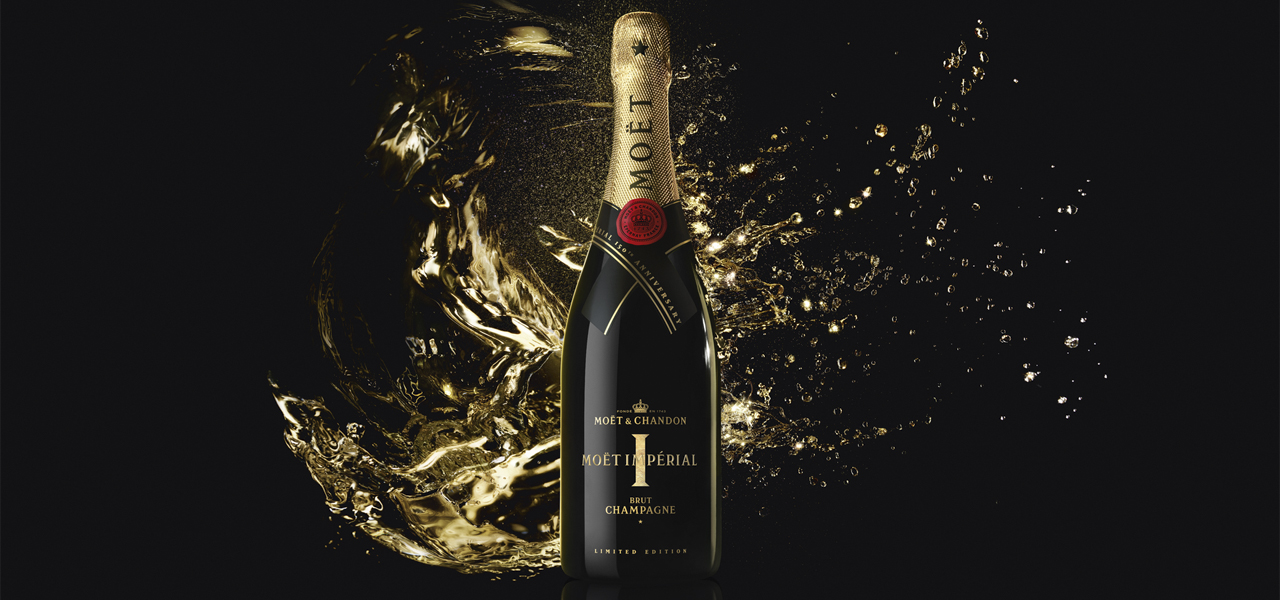
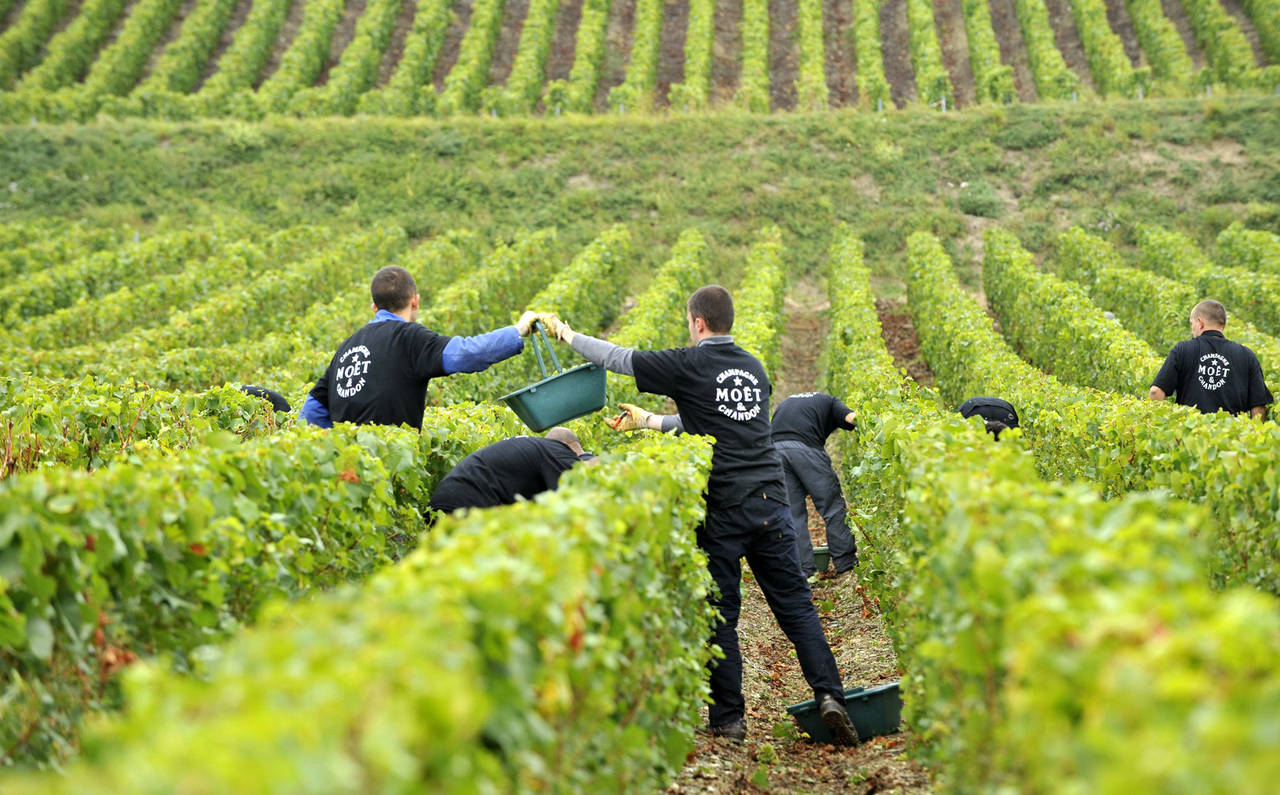
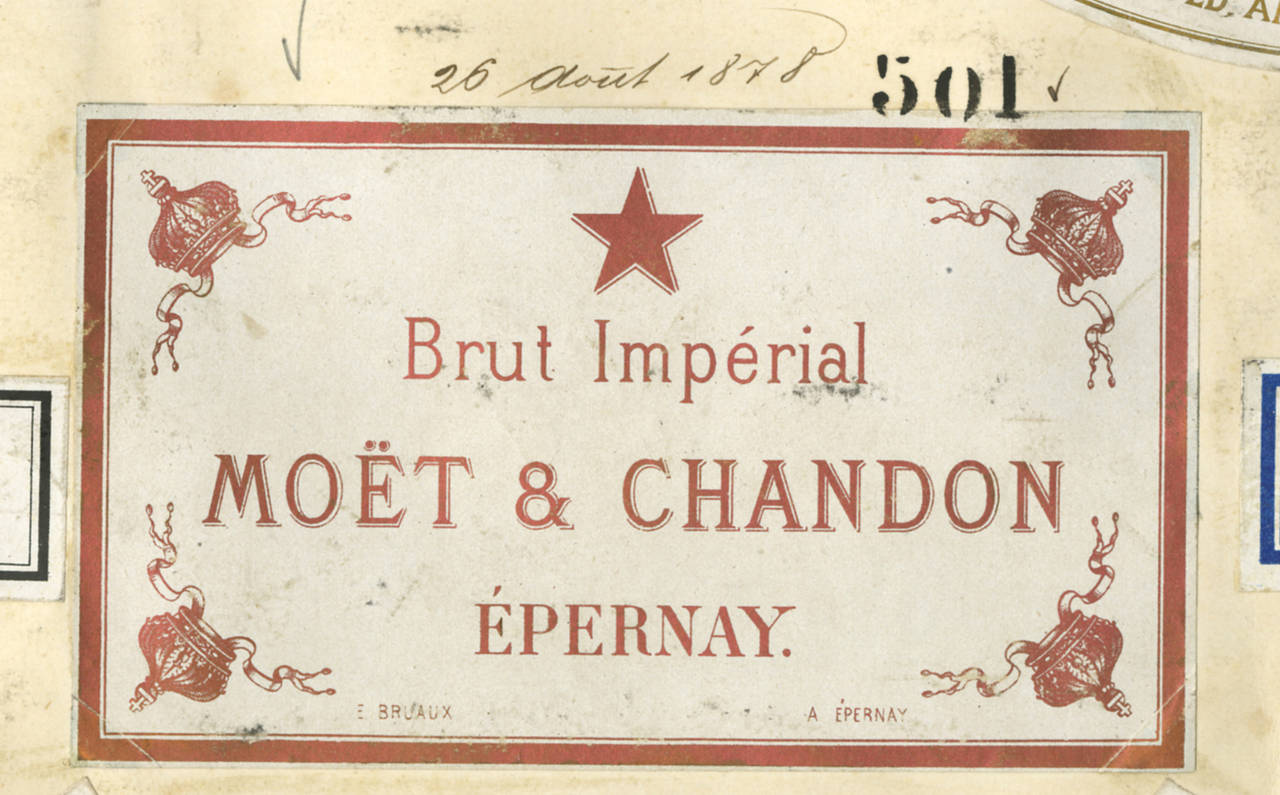
In particular, the dry, or brut, non-vintage, which relies on precise adjustments to the base flavors rather than sweetness from added sugar that can obscure the taste, is the face of the Champagne producer, the Champagne house. And for Moët & Chandon, that is 'Moët Impérial,' which celebrates its 150th anniversary this year.