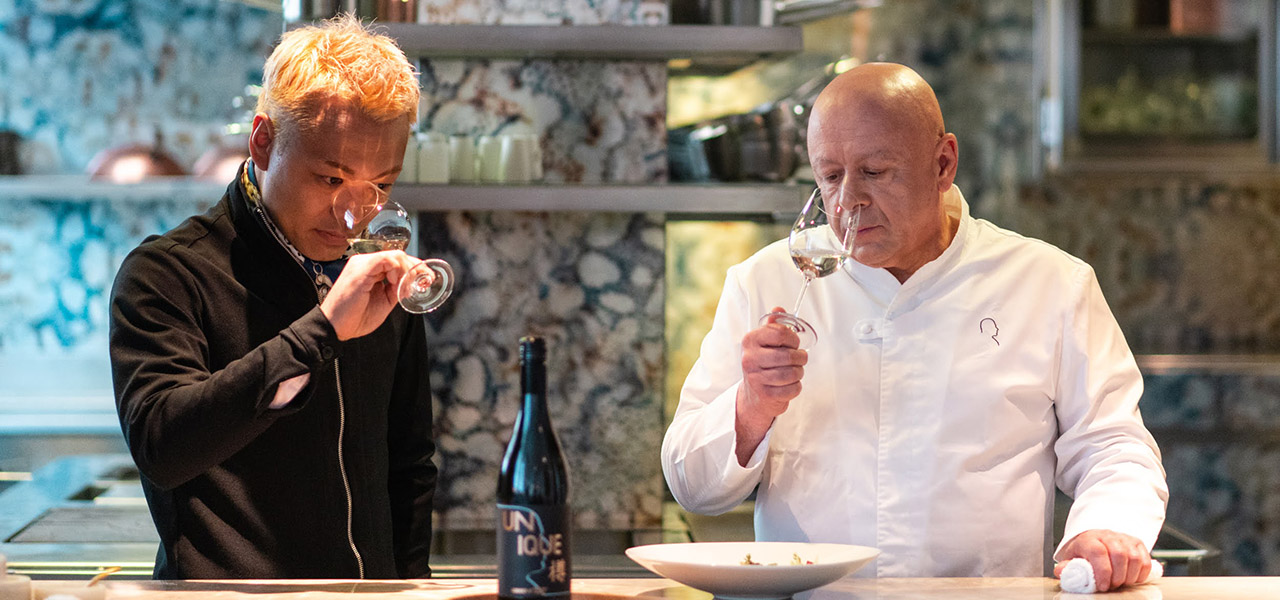
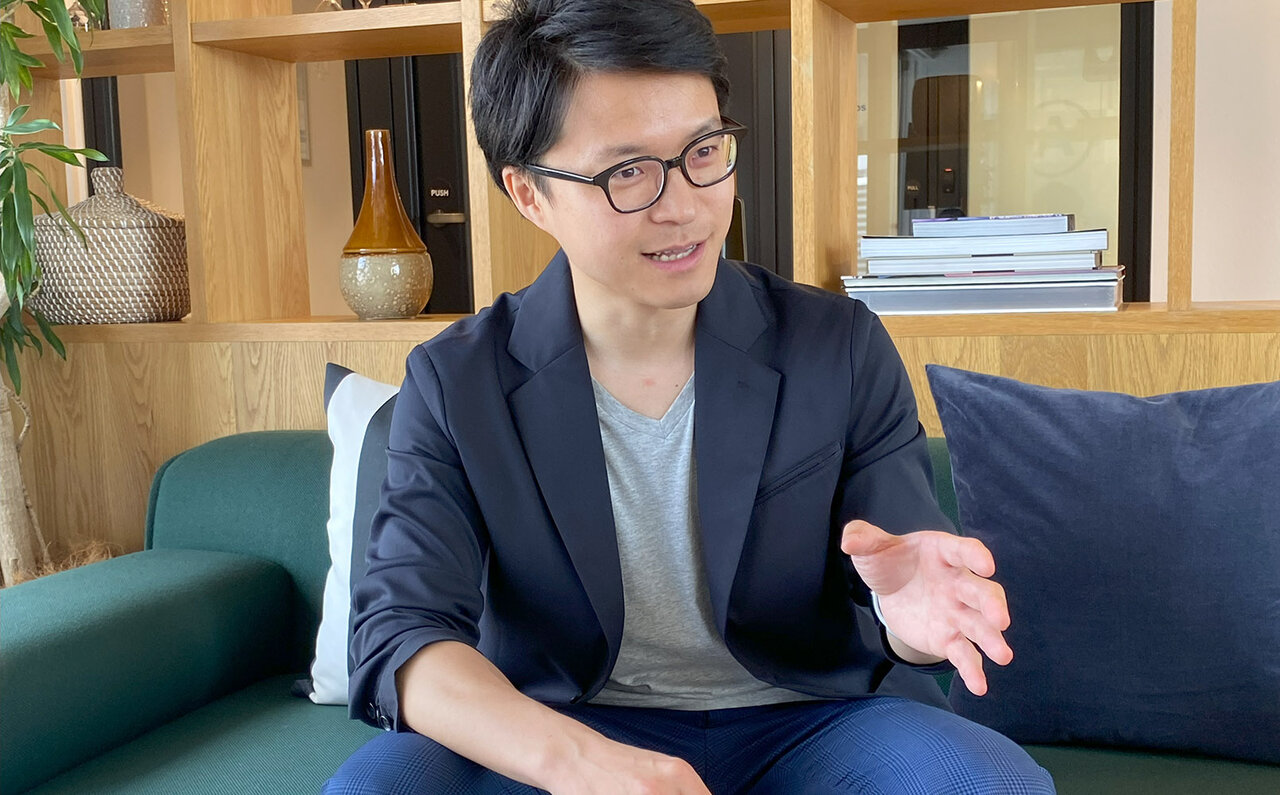
© @sadiksansvoltaire - On the left is Mr. Inagawa, CEO of WAKAZE, and on the right is Mr. Thierry Ma
WAKAZE Collaborates with Thierry Marx on Limited Gastronomy-Style Sake | WAKAZE
FEATURE|WAKAZE
Available online from August 1st! A limited-edition, gastronomy-style sake collection by WAKAZE, approved by a culinary master, is being re-imported to Japan.
As a devoted sake enthusiast, WAKAZE is one of the brands I consistently follow. They have established a brewery near Paris, France, delivering the essence of sake to the people of the culinary capital. Using French rice, local hard water, and regional wine yeasts, they embody the 'when in Rome, do as the Romans do' philosophy while brilliantly forging their own identity. Now, WAKAZE has created a special capsule collection, a collaboration with the legendary French chef, Thierry Marx!
Crafted in France, it's not just Japanese sake, but 'World Sake.' Delicious!
While the story of why WAKAZE established a brewery in France can be found in this report interviewing CEO Inagawa-san (
https://openers.jp/lounge/lounge_features/c0sg7), the reason I pay close attention to WAKAZE is my admiration for their approach. Japanese sake, with its long history in our country, is also burdened by deeply entrenched traditions. It's not easy to break through rigid conventions.
But consider this: the currently popular craft sake (※). Beyond the 'Seishu' category defined by the National Tax Agency, they've pushed boundaries, experimenting with more flexible fermentation of fruits and herbs alongside rice, or creating styles akin to Doburoku. These free-thinking endeavors are what the brand has been pursuing since its inception. In essence, they've shaped the current trend.
※ According to the Craft Sake Brewery Association's definition, 'craft sake' is a fermented beverage based on Japanese sake brewing techniques, offering flavors and aromas not found in traditional Japanese sake.
Staying within the 'Japanese sake' category offers various protections. The most significant is the liquor tax, as 'Japanese sake' enjoys preferential treatment as a national beverage. Distribution is similar; it can leverage established networks. Craft sake, however, falls into the 'other fermented beverages' category, which offers the least protection. While craft sake is now recognized for its deliciousness even in specialized sake shops, it was likely dismissed as 'What's that?' in the beginning.
To dive into such turbulent waters and persist with their passion, maintaining an unwavering stance, is truly admirable in my eyes. Furthermore, the ambition to establish a brewery from scratch in Paris is something to aspire to. So, you might think, 'Isn't this writer, overflowing with WAKAZE affection, a bit biased?' No, I never compromise on taste (absolutely!).
My preamble has been long, but let's get to the premium capsule collection from WAKAZE. It's a collaboration item directed by French culinary master Thierry Marx. Reportedly, he didn't seek a single flavor profile but requested three distinct bottles, each highlighting unique characteristics.
Imai-san, WAKAZE's Head Brewer, recalls Thierry Marx's request:
'The key is lightness,' he said. 'No sweetness. I want transparency, clarity, and a sense of purity.' I remember him making this request when he visited the brewery last October, when the project first began.
What's truly remarkable about this sake's concept is that, much like wine pairings, each bottle is designed to play a specific role and showcase its individuality within the progression of a meal. The sake's quality is meticulously crafted with this in mind. Just as a story unfolds through multiple dishes, the distinct characteristics of each sake are intended to harmonize and create a synergistic effect. This sommelier-like perspective is the core of its design.
Moreover, this narrative isn't confined to just these three bottles; it allows for the inclusion of other Japanese sakes, or even a blend of wine and sake at the same table. This modern, flexible pairing concept serves as the inspiration.
Consequently, they aren't competing solely on rice polishing ratios, nor are they adhering to outdated concepts like 'Daiginjo equals superior, impressive, and delicious.'
'The theme this time was subtraction. We explored what elements of WAKAZE's traditional brewing process could be removed to achieve the lightness Thierry-san desired, pursuing this for each of the three bottles,' says Imai-san.
Using local edible rice, they've minimized polishing and processing to preserve the ingredient's natural character. Yet, without sacrificing refinement, they've created a sophisticated flavor that stands alongside Thierry Marx's French cuisine. The fact that all three bottles are listed in all of his restaurants is a testament to Thierry Marx's satisfaction with their quality.
Incidentally, WAKAZE already holds approximately 50% of the sake market share in France. Why has such an exceptional brand suddenly emerged? It's not entirely surprising. The Japanese sake industry is currently rich in talent, with brewers influencing and inspiring each other's growth. Imai-san honed his skills at renowned breweries such as Aramasa Sake, Masuda Shuzo, Abe Brewery, and Sei Brewery (his family's brewery).
'The approach to brewing I learned at Aramasa involved delving into historical texts from periods like the Edo era and reconstructing them through fermentation. Furthermore, in other fermented beverages, I expanded my learning beyond sake to include technical books from various fields, leading to new discoveries. WAKAZE plays a role in carrying this contemporary momentum, not just within Japan but also by creating a stir overseas,' states Imai-san.
I must say, that's a brilliant statement from a University of Tokyo graduate. While learning from seniors is fundamental in brewing, seeking knowledge from historical texts for what cannot be taught is also crucial. We are fortunate to be able to drink sake crafted by such talented individuals. I believe there's no reason not to experience the cutting edge of taste that this era offers. What do you think?
※ While it's widely known that Aramasa Sake's CEO, Yusuke Sato, is a University of Tokyo graduate, WAKAZE's Head Brewer, Shoya Imai, is also an alumnus. This isn't about academic elitism, but rather my belief that the modern sake industry is reviving lost techniques, once reliant on artisanal intuition, by quantifying and reconstructing them with contemporary technology.
I highly recommend trying WAKAZE's new releases, not only to dedicated sake geeks but also to those who casually select wine for their weekend gatherings. However, please note that to achieve the level of excellence envisioned by Thierry Marx, these sakes undergo an exceptionally labor-intensive process. Furthermore, as they are imported from France (though technically they are imported goods since they are brewed there), they will be more expensive than domestic Japanese brands due to tariffs and transportation costs. Nevertheless, I believe experiencing the forefront of this era at this price point is a remarkable value compared to wine or whiskey.
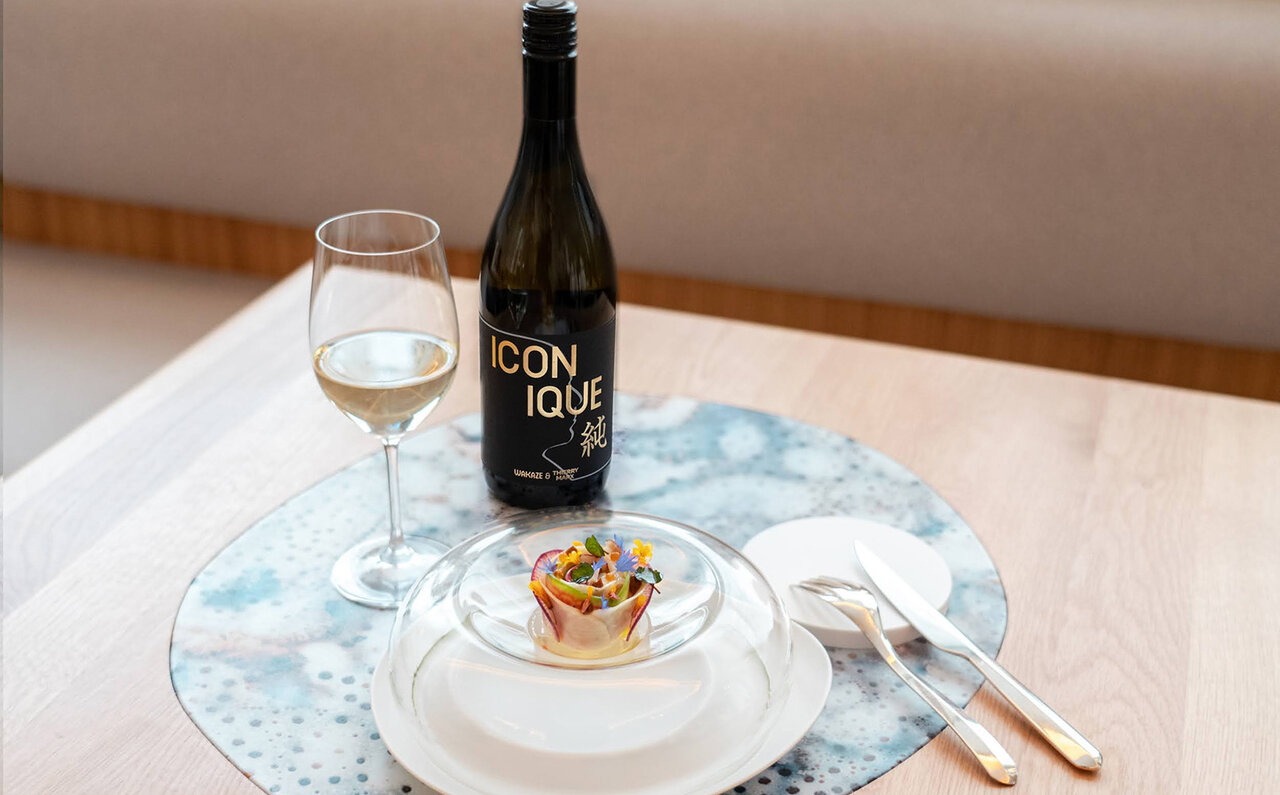
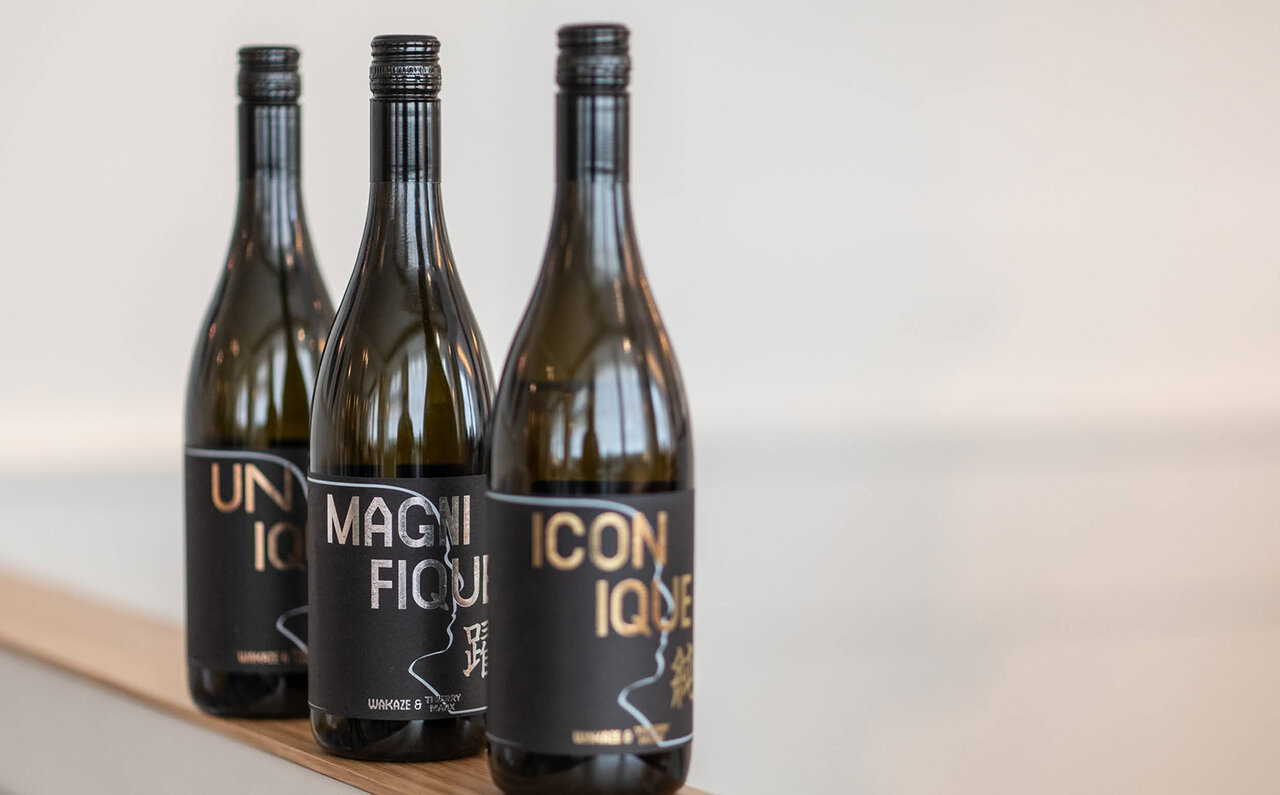
Right:ICONIQUE
Fermented meticulously at low temperatures for 1.5 to 2 times the usual duration, slowing the fermentation speed. Furthermore, only the 'nakadori' (middle press), the most delicate part of sake pressing, is used. This results in a transparent flavor and fruity aroma. The assemblage also creates a gradient of taste. 9,900 yen (tax not included)
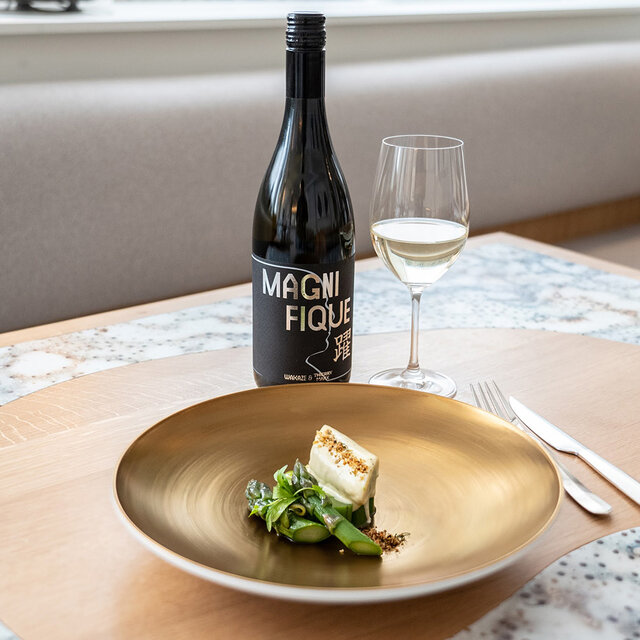
Center:MAGNIFIQUE
An original recipe primarily using white koji, typically used for shochu. The citric acid provides a refreshing tartness, creating a pop-like sake profile that breaks the mold of traditional Japanese sake. Fermented at extremely low temperatures, it draws out the subtle sweetness produced by the white koji, resulting in a sweet and sour balance that allows for a gentle enjoyment of citrus-like acidity and the minerality of hard water. 9,700 yen (tax not included)
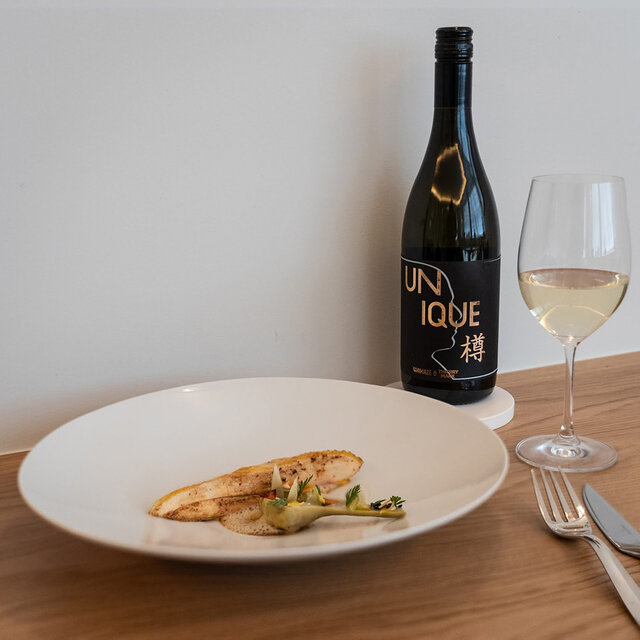
Left:UNIQUE
Aged for approximately 2.5 months in barrels from a Parisian whiskey distillery (La Fabrique à Alcool). This sake, with its transparency and delicate aroma achieved through low-temperature, long-term fermentation, treads a fine line. It's a daring attempt that pushes the boundaries of barrel influence, resulting in a balance akin to a crisp white Burgundy Chardonnay, where the barrel notes enhance rather than overpower the delicate character. 11,200 yen (tax not included)
Release Date: August 1, 2023 (Tuesday)
※ The above date applies to the WAKAZE online store ( https://www.wakaze-store.com/), with retail sales beginning sequentially. All items are limited editions.