What We Saw and Felt at the Black Forest Distillery | MONKEY 47
MONKEY 47
Unwavering dedication, distinctive character. Experience the style born from a small distillery.
In these times of pandemic, it feels like a distant memory, but in February 2020, I had the rare opportunity to visit the home of "MONKEY 47," the Black Forest distillery, and took a whirlwind trip to Germany. This article is an account of that visit.
Edit & Text by Takashi Tsuchida
Where Exactly is the Black Forest?
The Black Forest is a region in southwestern Germany, known in Japan as the "Black Forest." Why black? This area is densely forested with conifers, and the dense canopy appears dark because the leaves don't reflect much sunlight.
This region has a long history of distillation. Even today, it is home to approximately 20,000 distilleries, including many small, family-run operations. However, the primary products have traditionally been schnapps, liqueurs, and fruit brandies. This is due to the region's rich botanical resources, such as local fruits, flowers, and herbs, as well as abundant water from its forests. Consequently, a history of distilleries flourished throughout the Black Forest, fostering advanced distillation techniques.
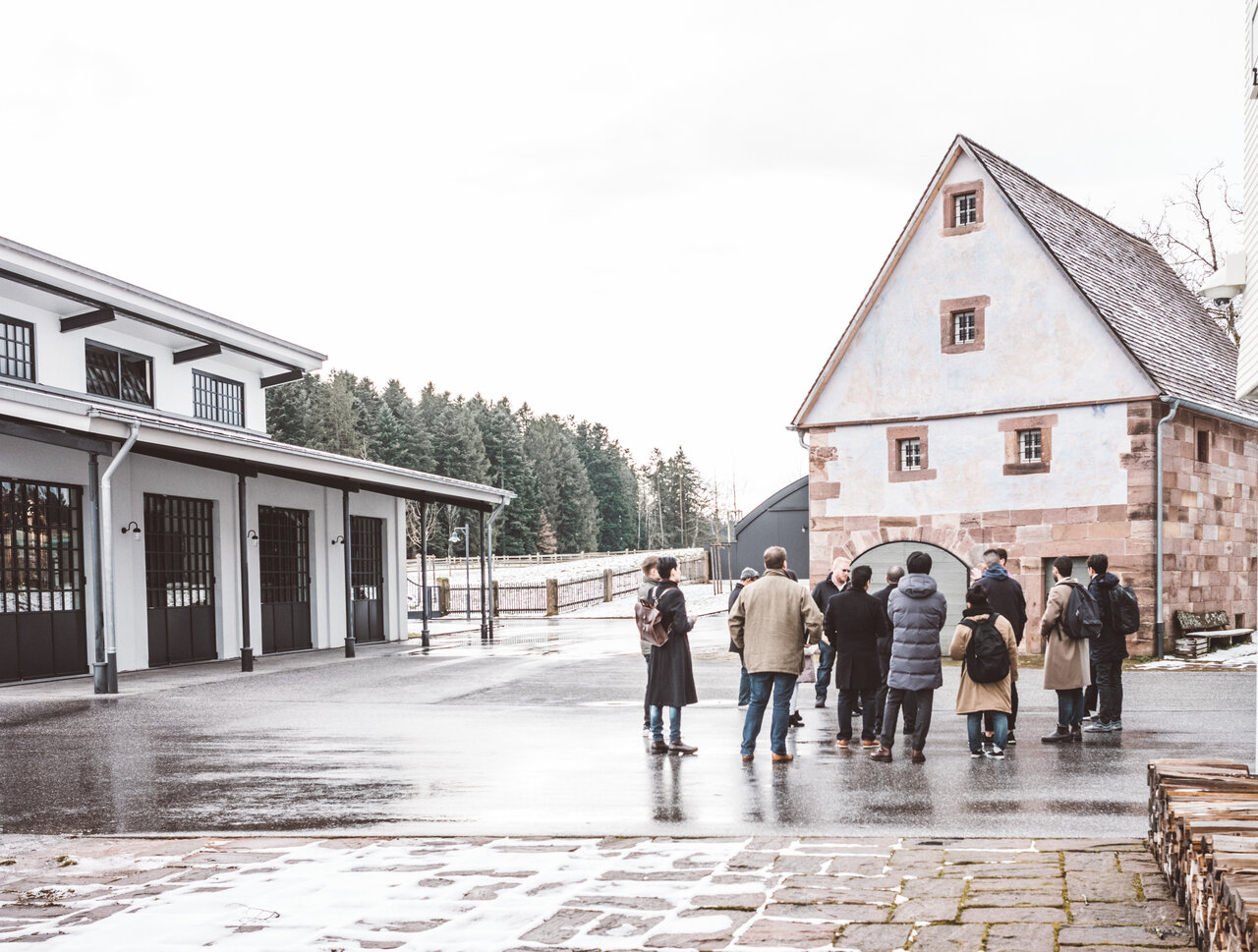
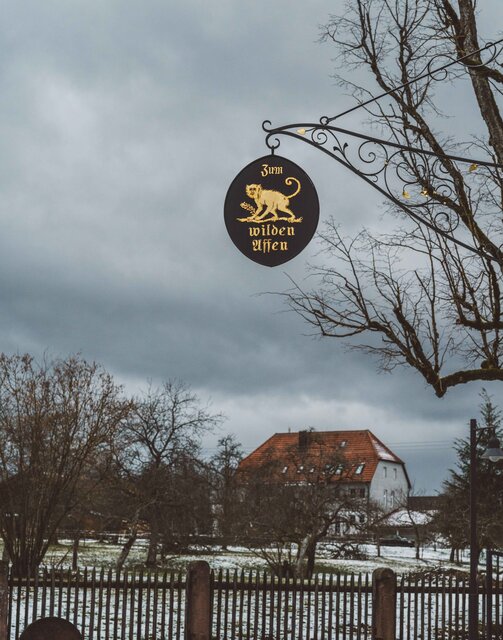
Returning to "MONKEY 47," the Black Forest distillery, renovated in 2015, is broadly divided into four buildings: the production house, the distillation house, the storage house, and the visitor center. However, the exterior is that of a traditional house typical of the region. From the outside, one could never imagine it to be the distillation facility for a world-class craft gin.
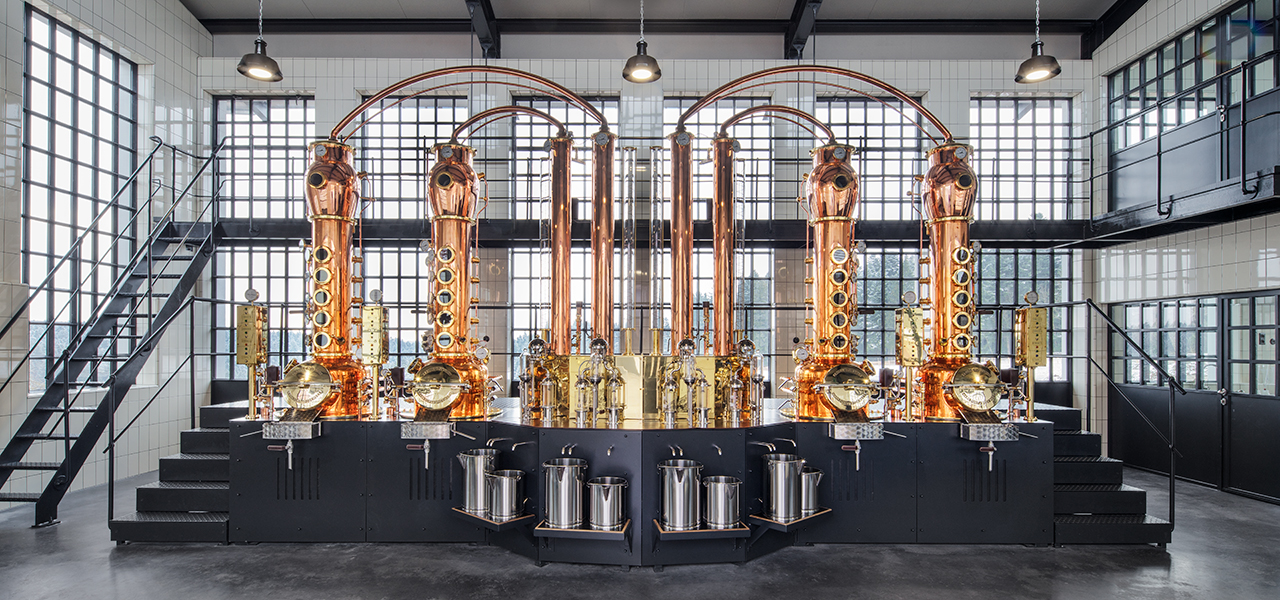
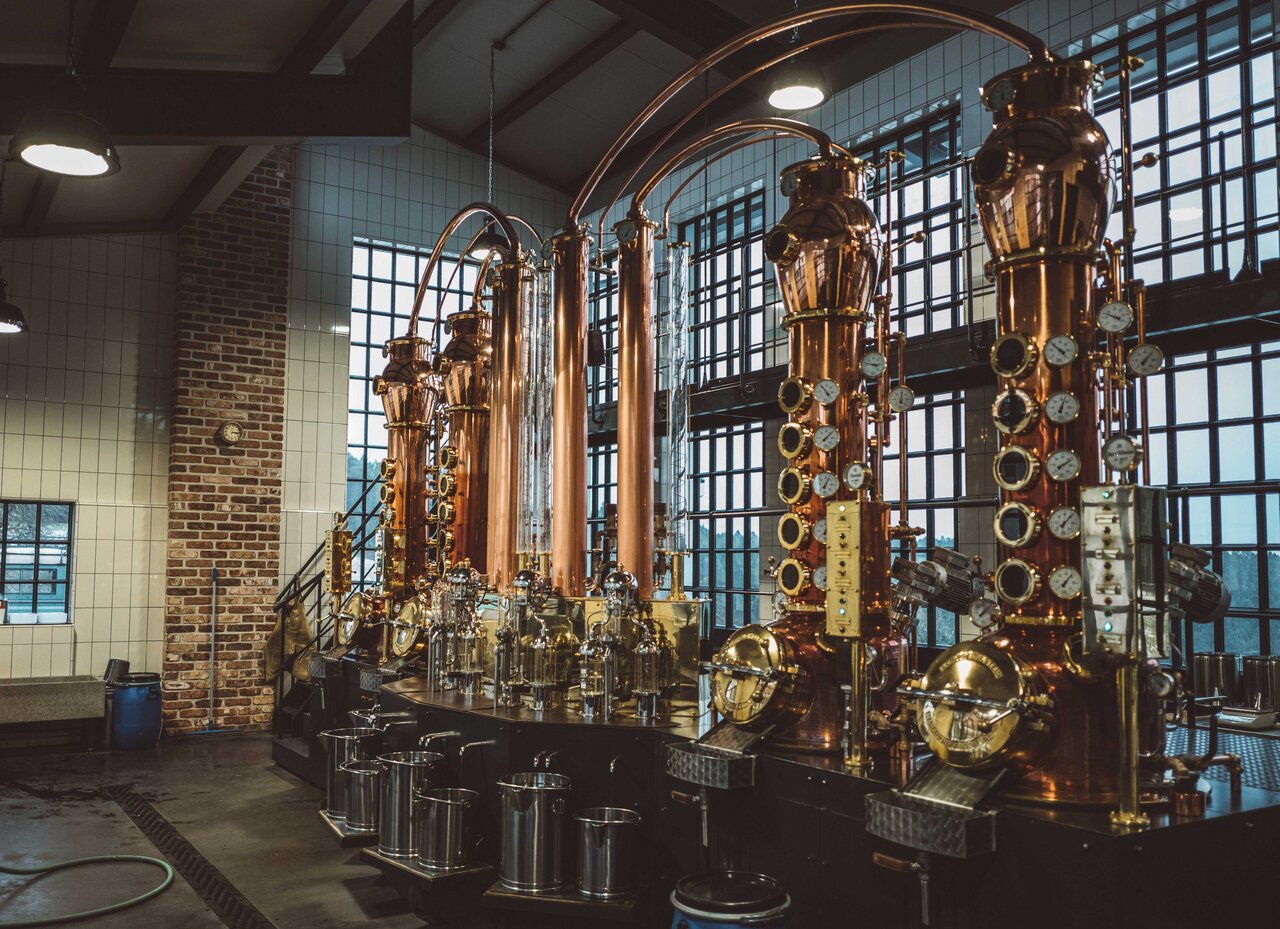
Yet, stepping inside, one is met with a clean, beautiful workspace equipped with modern facilities. The highlight is the pot stills. Their stylish, unique forms exude functional beauty. The height of the stills is designed to ensure a clear distillation, and further refinements have been made to capture the aromatic essence of spices and botanicals.
Production House
By the way, do you know how gin is made? I learned for the first time here. The key to gin production seems to lie entirely in maceration and distillation. This is because the base spirit is usually purchased from specialized suppliers, a significant difference from wine or whiskey production. While some brands do produce their own base spirit, they are a minority, as there is little variation in taste or quality with base spirits.
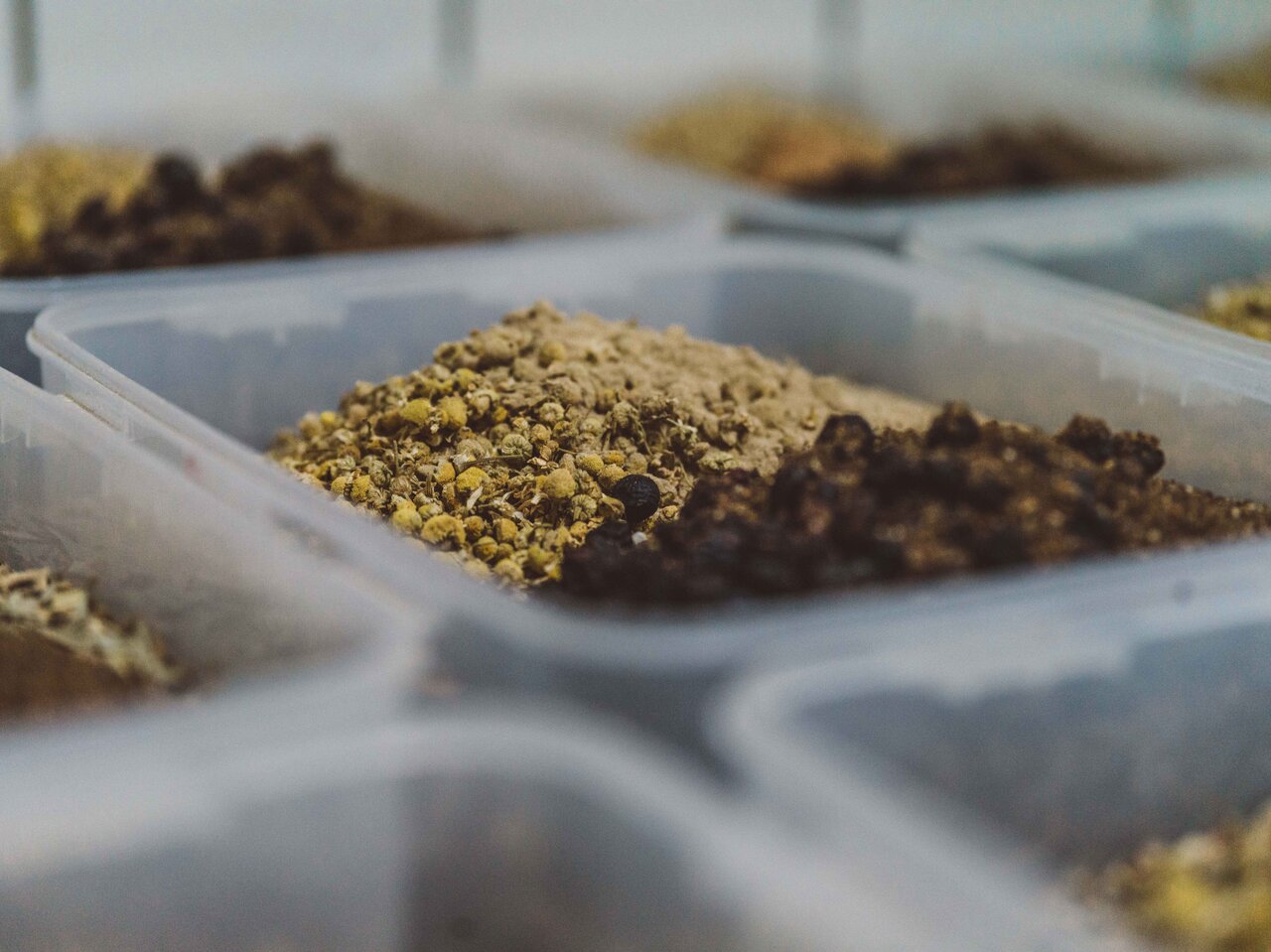
Therefore, at the "MONKEY 47" production site, the process begins with maceration, the crucial step for flavor and aroma. It's quite a task, considering the use of 47 different ingredients! Indeed, no other gin uses such a wide array of components.
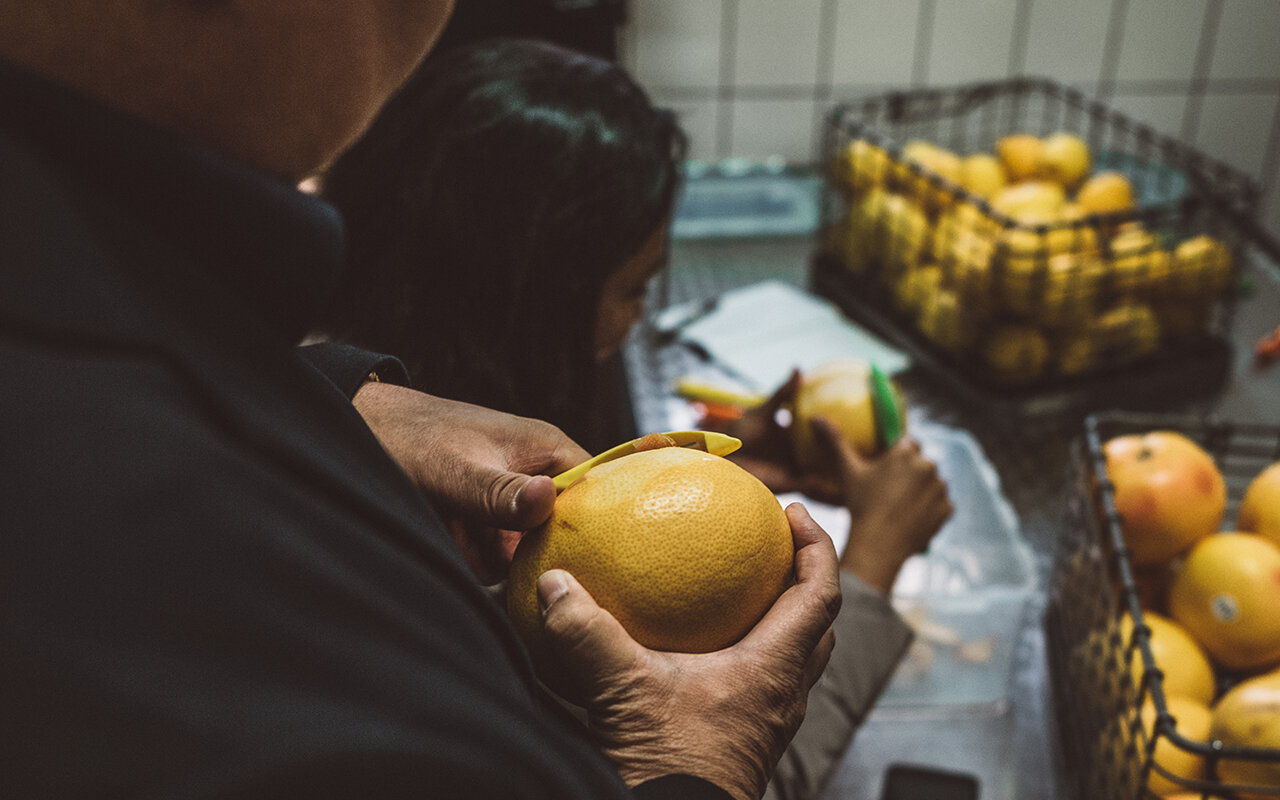
In the production house, local staff meticulously peel fruits every morning starting at 6:30 AM. Oranges and grapefruits are used for their peels, not the flesh. Other ingredients include peppermint, cumin, pepper, cinnamon, nutmeg, lavender, angelica, spruce, coriander, acacia, and cranberries, among many others.
The juniper berries, the essence of gin (spirits using juniper berries are called gin, making juniper berries the key ingredient), are sourced whole and then ground at the distillery. This prevents them from drying out and allows for a more potent aroma extraction when steeped in alcohol. Incidentally, about one-third of the 47 ingredients are sourced locally from the Black Forest. While pursuing the world's finest ingredients, there's a clear love for the local region.
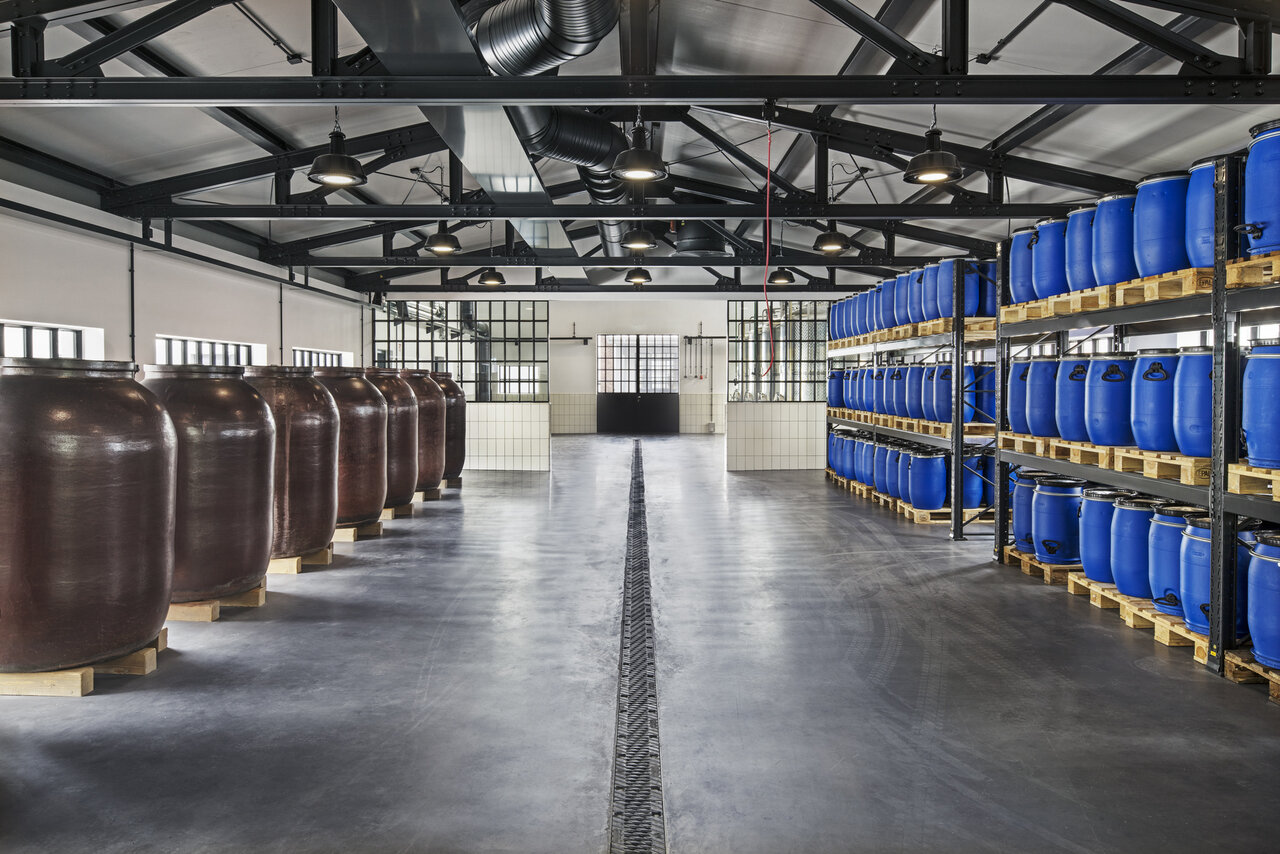
Next is the maceration process, where fruits and botanicals are steeped in the base spirit within specialized jars. Using electric mixers, the ground raw materials and fruit peels are steeped and agitated. One barrel of these specialized blue jars (40 liters) yields approximately 120 bottles of dry gin.
The base spirit used for "MONKEY 47" is derived from molasses, with an alcohol content of about 94%. This is then diluted with spring water from the Black Forest to approximately 70% alcohol by volume. It's said that too high an alcohol content can extract unwanted aromas. The maceration process is completed over 36 hours.
Distillation House
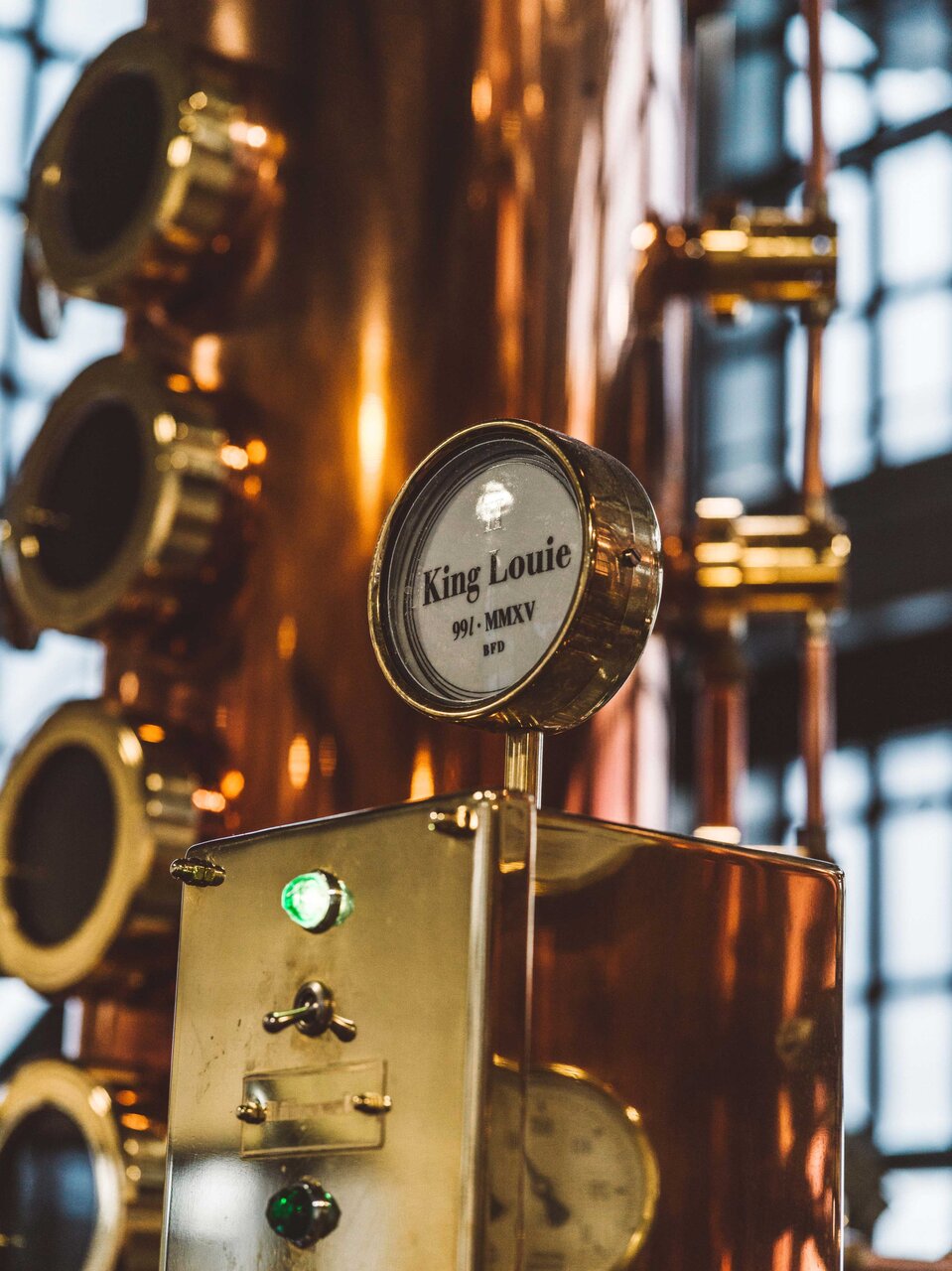
The Black Forest distillery features original stills. Four gleaming 100-liter copper stills, custom-made, were newly installed in 2015.
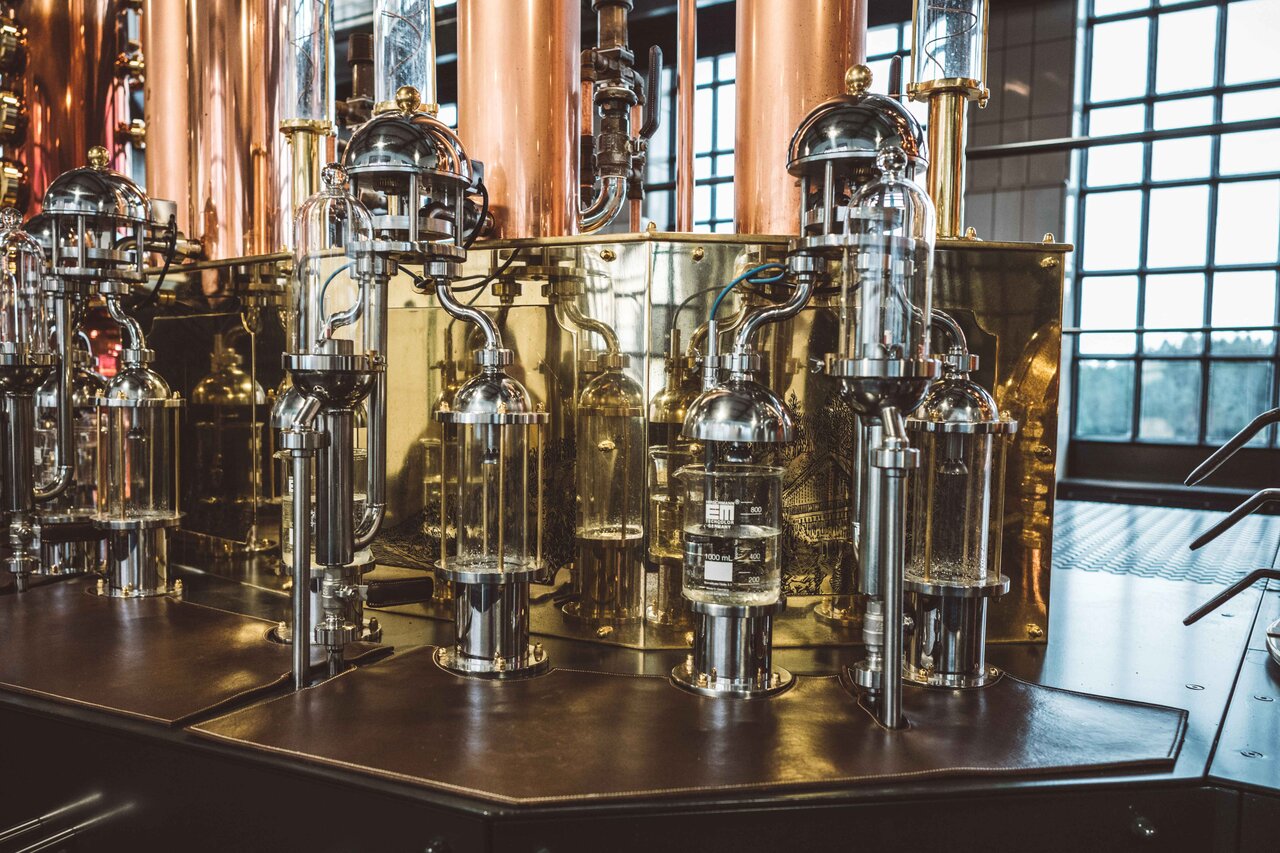
Based on the Carter-head still design but with a modified configuration, these entirely new stills allow for the sequential extraction and separation of delicate aromas, creating the exquisite balance of scents found in "MONKEY 47."
*A Carter-head still is a type of still that vaporizes spirits and passes them through a basket containing botanicals to impart aroma.
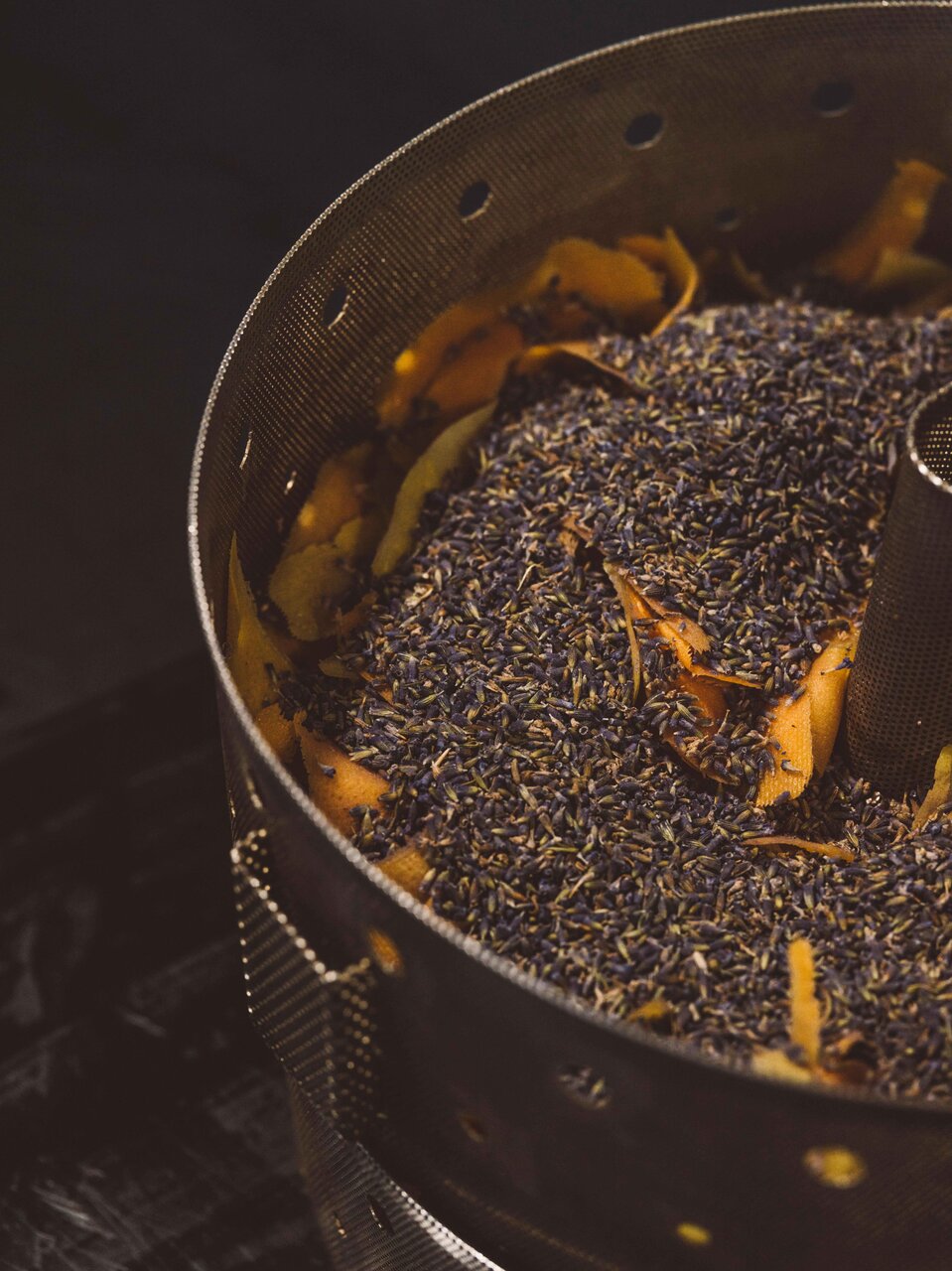
The vapor from the spirit, infused with botanicals, passes through baskets containing lavender, lemon peel, and grapefruit peel, then is filtered and condensed to extract the distillate.
The master distiller carefully draws off precise amounts of the distillate, which changes in aroma in stages depending on temperature, blending them to create a contrast in scent.
The Black Forest distillery uses small 100-liter stills instead of the conventional 1000-liter ones. This optimizes the copper surface area for warm infusion and allows for fine-tuning the extraction of botanical aromas according to the distillation cycle.
*Each of the four stills is named after a famous monkey from history.
King Louie, Cheetah, Herr Nilson, Miss Baker
King Louie: A monkey from The Jungle Book
Cheetah: A monkey from the movie Tarzan
Herr Nilsson: A monkey from Pippi Longstocking
Miss Baker: The first monkey in space
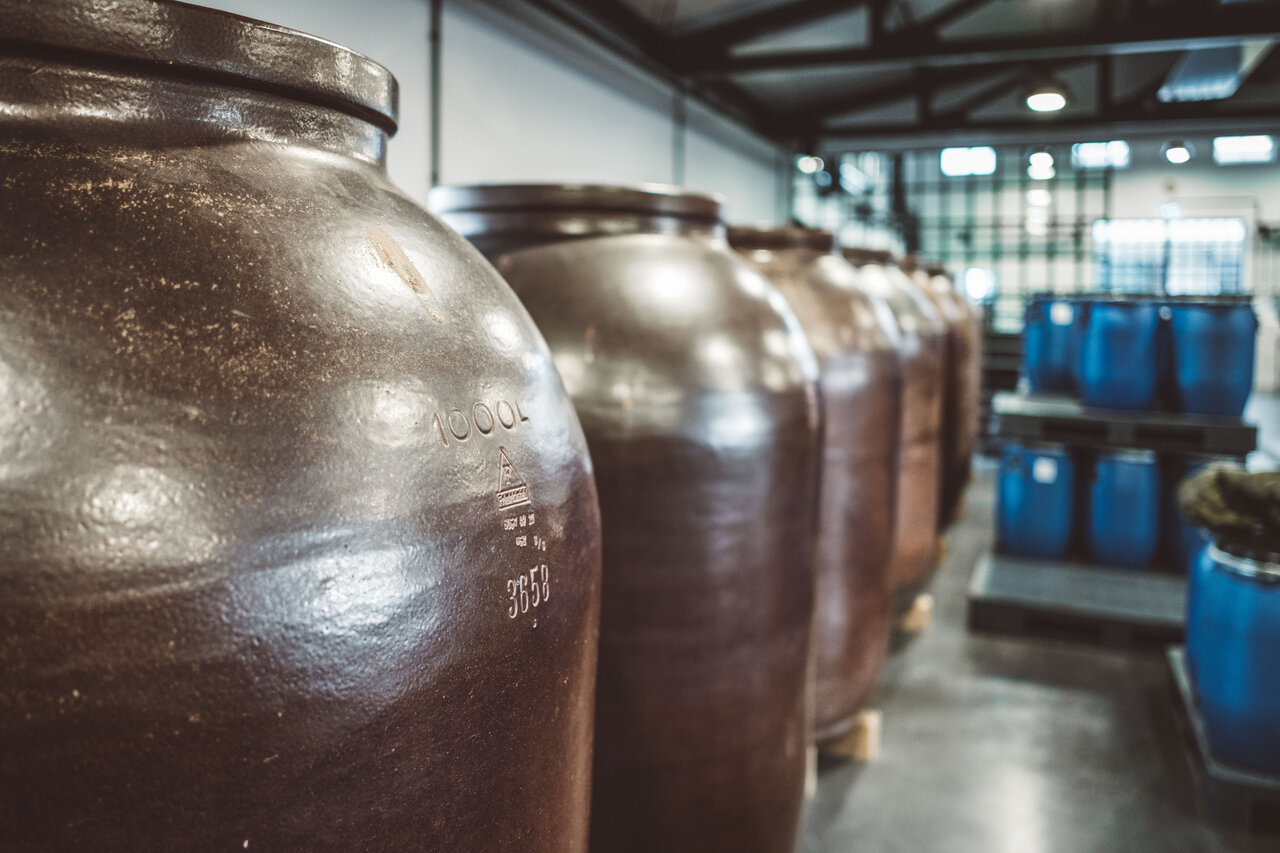
The distillate is returned to the production facility and aged for three months in traditional ceramic vessels to achieve mellowness and balance. Afterward, Black Forest spring water is added to reduce the alcohol content to 47%. Notably, "MONKEY 47" is not filtered after distillation to maintain its unique and complex aromatic profile.
*Bottling is carried out off-site.
Storage House
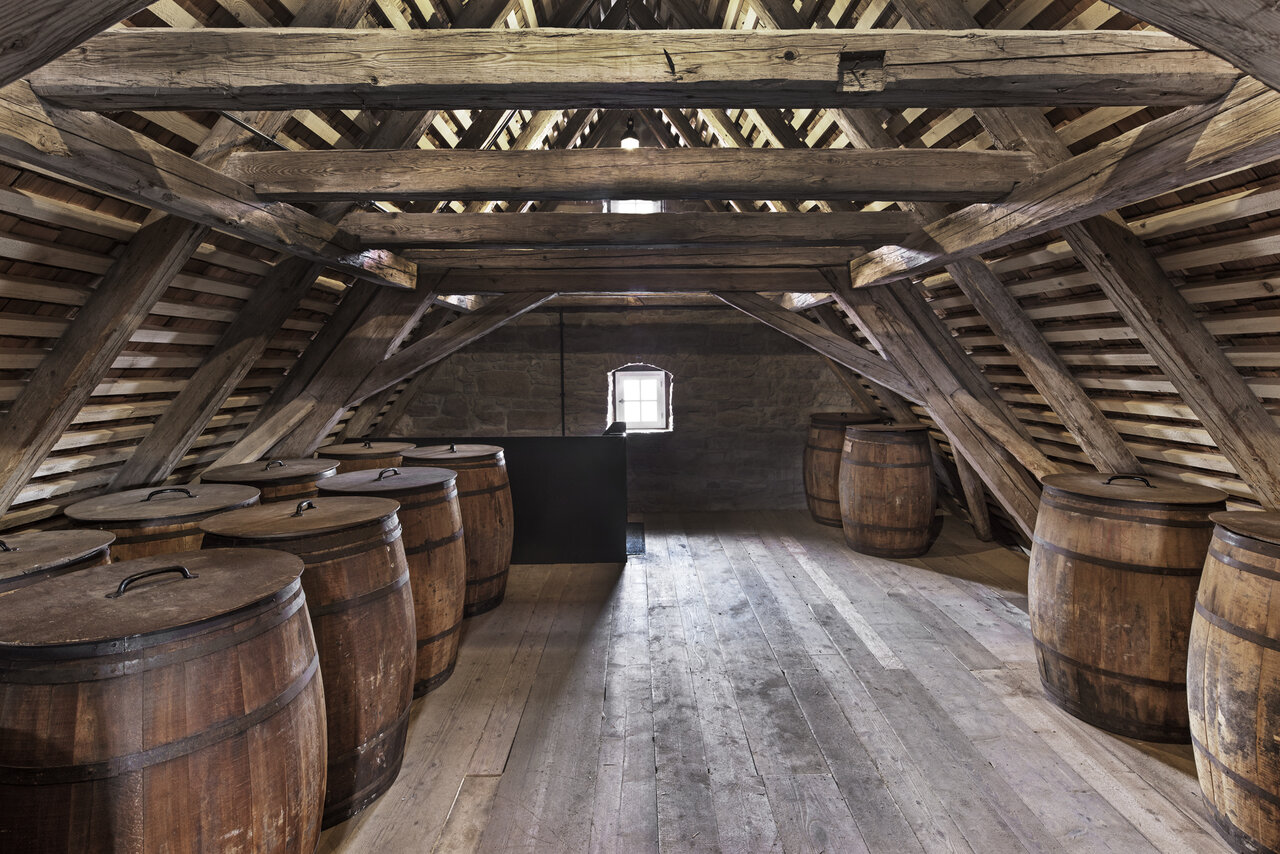
In this space, we also caught a glimpse of "MONKEY 47's" approach to product development. Various colored gins are stored in the cellar, and experimental aging in different types of wooden barrels is underway. It's reminiscent of whiskey production!
Visitor Center
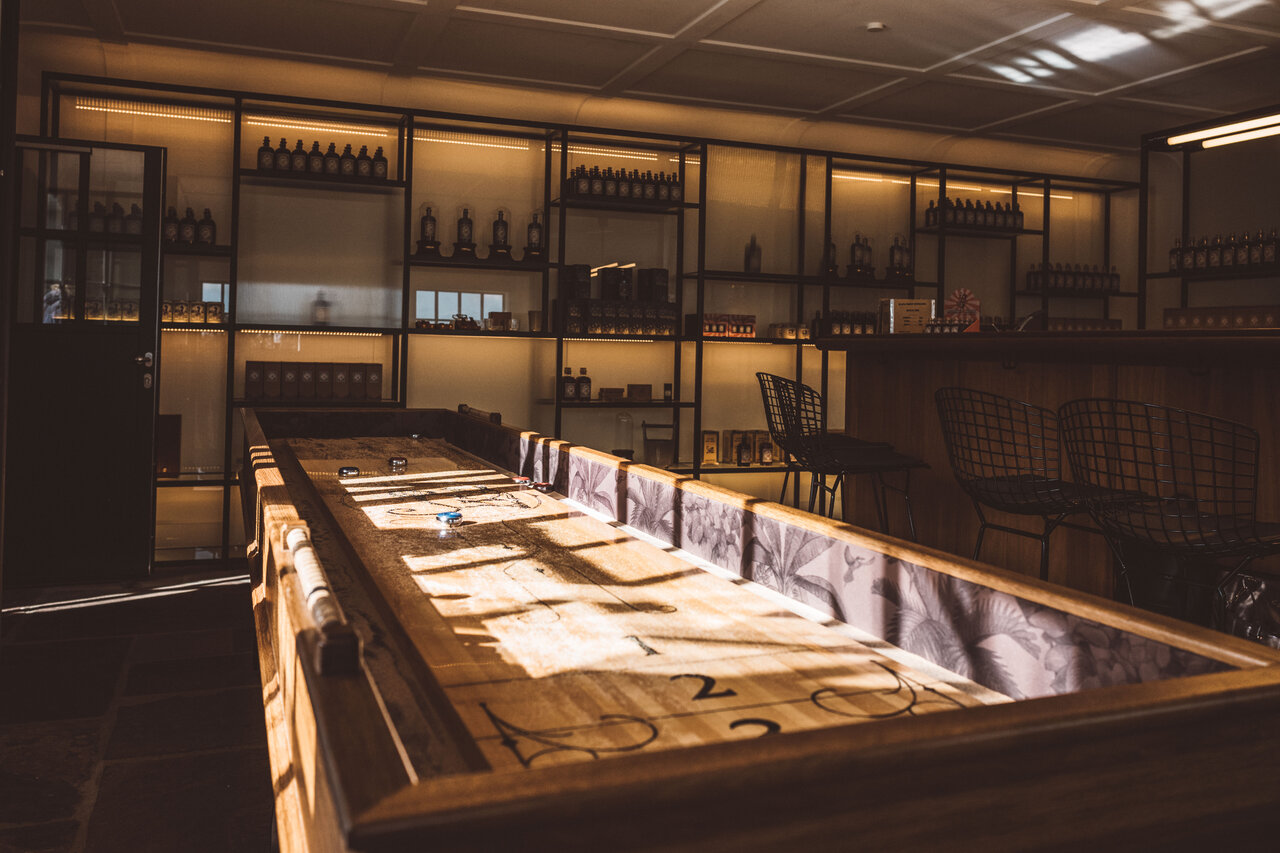
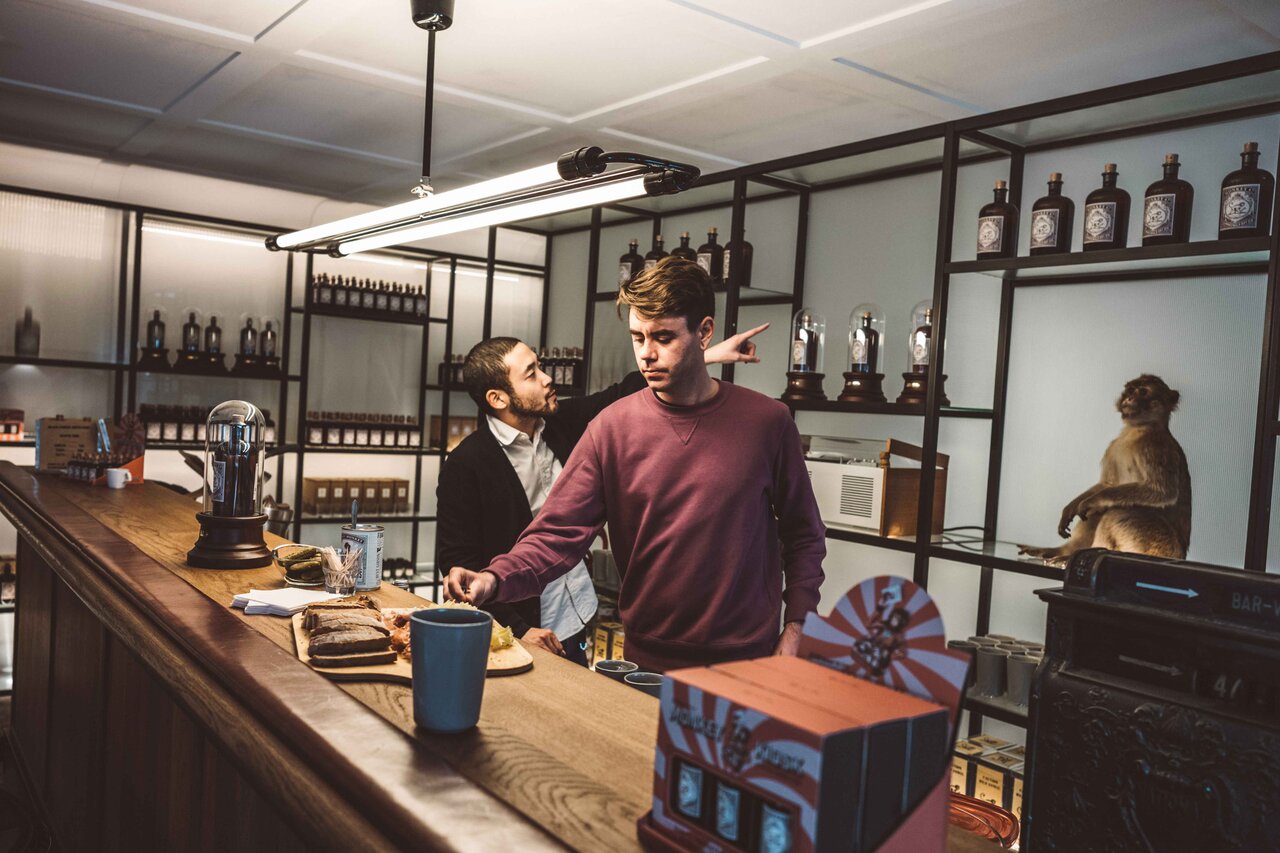
The visitor center features stylish displays. Here, visitors are welcomed with a "Monkey Tonic." In addition to the standard Dry Gin and Sloe Gin, there were also limited edition bottles, the "MONKEY DRUM" booklet, original ceramic tumblers, aprons, and mini bottles available for purchase.
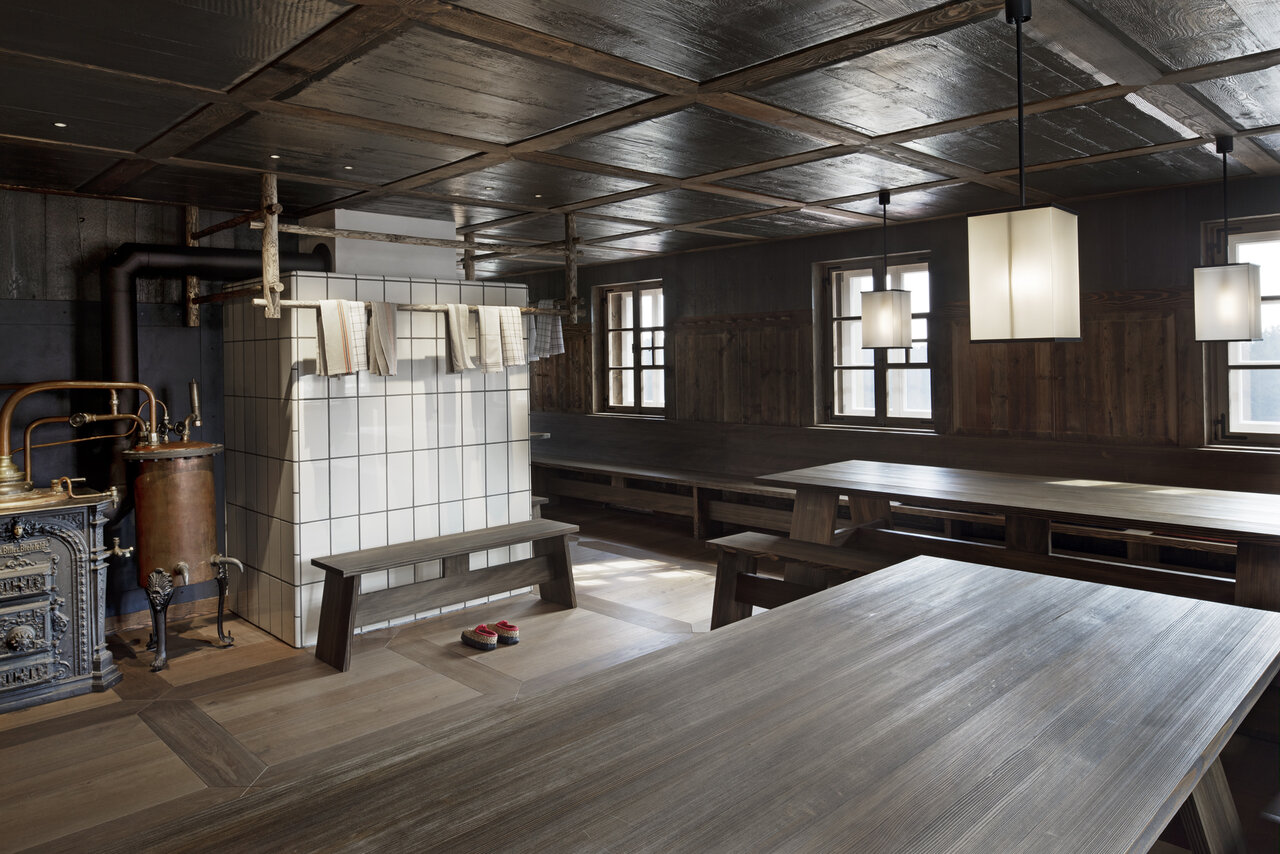
Furthermore, the second floor of the facility serves as a dining area where we enjoyed traditional German cuisine. The space, designed in a stylish interpretation of a German farmhouse, is full of thoughtful details. The design was handled by the renowned German firm Philipp Mainzer, and furniture from the modernist furniture brand e15
https://www.e15.com/en/is used.
So, that concludes the distillery tour. It's astonishing that a team of only 26 employees handles the entire production process. However, it's precisely this agility that allows "MONKEY 47" to maintain its small-batch, ultra-high-quality standard. While manufacturing sites are always fascinating, the Black Forest distillery, in particular, embodies a refreshingly pure commitment to its craft, giving an impression of upright integrity, akin to the Japanese tea ceremony. They clearly love their brand and take immense pride in it, demonstrating a professional dedication to their work.
I believe that spirits are not just about taste, but also about sharing and immersing oneself in their worldview. "MONKEY 47" will undoubtedly continue to offer this experience. Touched by the warmth of the team that welcomed us, I felt this strongly. Once the pandemic subsides and if you have the chance to visit the Black Forest, I highly recommend visiting this distillery. I'm sure you'll feel the same way I do. And exploring the Michelin-starred restaurants in the Black Forest region, known as a culinary hotspot, would also be a wonderful experience.