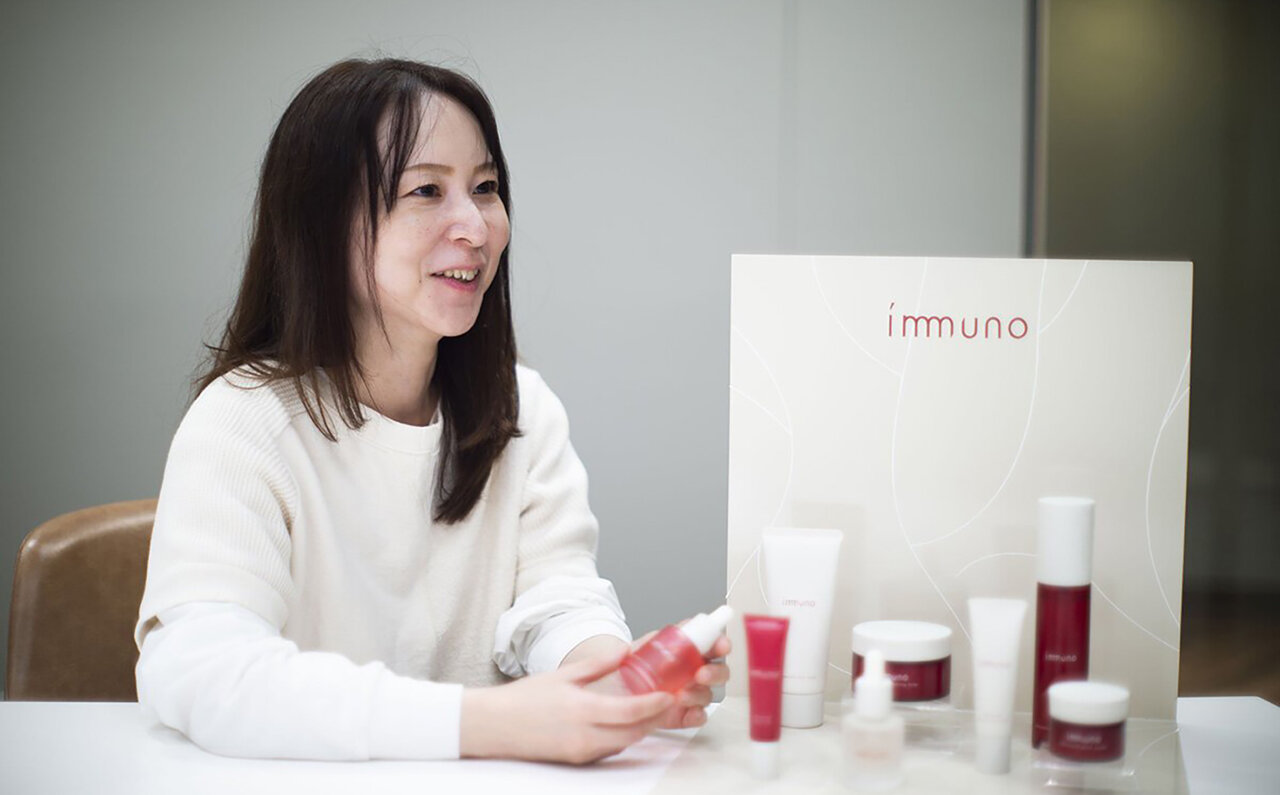
Tracing Back to the Origins of Ingredients, Focusing on Factory Backgrounds: The Thorough Commitment to Skin and Earth's Environment, "immuno" Part 2 | BEAUTY
immuno
Moving beyond the idea of simply being sustainable, we explore the "future" that emerges when we delve deeper into the origins. Premier Anti-Aging's philosophy, which believes that seeing the Earth's tomorrow leads to user satisfaction, and the development story behind "immuno".
PreviousWe continue our report from the previous installment.
Equally beautiful Editorial Department
While we naturally use naturally derived ingredients with organic certifications like ECOCERT and COSMOS (natural & organic cosmetic standards), "immuno" goes even further, focusing deeply on ingredient selection. For example, even if a product claims to be paraben-free or alcohol-free, it's meaningless if the raw ingredients themselves were produced using parabens or alcohol. However, the more stringent the selection, the fewer the options become.
"We believe that the efficacy and benefits for the skin are only fully realized when we scrutinize every ingredient, including carry-over components*. That's why we verify their origins. For instance, we once discovered that squalane, a solvent used to extract oil-soluble plant extracts, was derived from sharks, and we changed the ingredient we used. Many manufacturers claim a product is free of certain ingredients (e.g., displaying 'alcohol-free' if they don't add alcohol themselves), even if those ingredients are present as carry-overs in the raw materials. However, we never neglect to verify."
* Carry-over refers to "leftovers," "remnants," or "influences," and in this context, it means tracing back to the origin of the raw ingredients.
Thorough environmental consideration, extending not only to ingredients but also to container manufacturing.
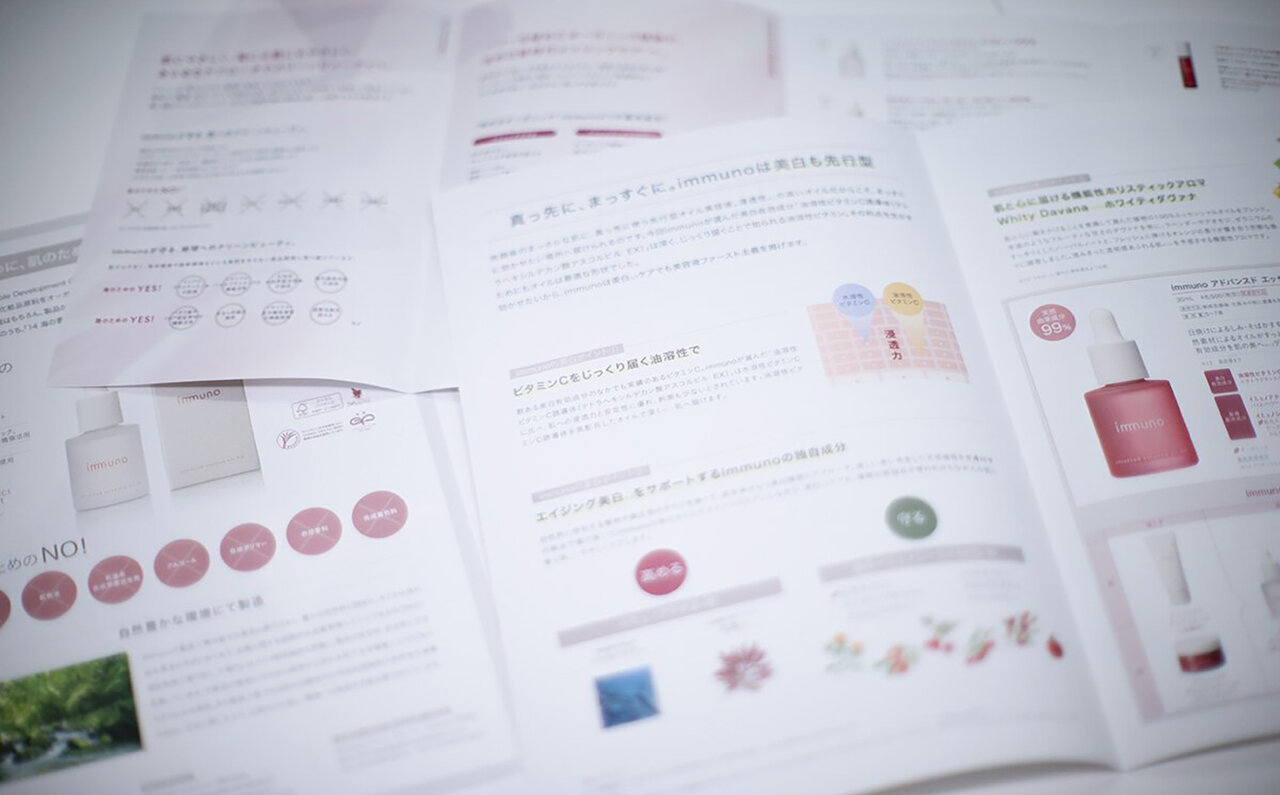
"Regarding materials, we make maximum efforts to use recycled or biomass-based options. We select containers while also considering the minimization and weight reduction of the materials themselves. For products with small volumes or luxury cosmetics, containers often feature two-part designs or thick walls for decorative purposes. By reducing this ornamentation, we can decrease the amount of plastic used in the container. Instead of using a virgin seal on the outer box, we've devised a way to secure the opening so that the OPP seal isn't needed. Furthermore, our brand books, which we provide to customers, are made as thin as possible while maintaining the minimum brand image, such as preventing ink bleed-through. We also limit the use of acrylic panels for in-store displays and use minimally thick outer boxes for mail-order, ensuring strength through clever design."
This demonstrates a commitment to environmental consideration not just in the cosmetics themselves, but in everything surrounding them. It seems there are many unique challenges related to cosmetic containers.
"When producing containers, even if we propose using recycled materials, the first hurdle is the difficulty in sourcing the raw materials themselves. Furthermore, creating containers from such materials requires designing new molds, which significantly increases costs, making product commercialization challenging. Additionally, we must also produce mini bottles for samples, presenting a mountain of problems. There's also the issue of compatibility with the product's ingredients. Since organic, naturally derived ingredients can easily degrade, even basic tests for scent changes are conducted under rigorous conditions."
This behind-the-scenes development work, carried out day and night, finally leads to products on the shelves, reminding us anew of the difficulties in product development. Although "immuno" boasts over 90% naturally derived ingredients, there are also development stories behind that.
"We need to approach not only the ingredients but also their effects and efficacy scientifically. While lavender extract and jojoba oil have antioxidant properties for the skin, they might not be organic for concept appeal, or they might contain ingredients we aim to exclude. Conversely, even with organically certified ingredients, if testing reveals they don't provide the desired level of moisturizing or anti-inflammatory effects, they are not approved as ingredients for "immuno" products. We believe that adhering to these minimum standards is the "immuno" philosophy."
Simply calling a cosmetic "sustainable" is not enough to satisfy users. Functionality must be present. For this, ingredient selection is crucial, as Ms. Miyashita explains.
"For example, the efficacy of chamomile varies depending on its origin. That's why we read various research papers. By formulating with ingredients that go beyond the visible, even if the cost price increases, we prioritize the evidence of their functionality. Cosmetics evolve as we observe multiple aspects, such as increased moisture levels based on skin data."
This interview offered a glimpse into the world of cosmetic development. Ms. Miyashita's final words left a lasting impression: "As you continue to use cosmetics, they eventually become part of your body, becoming your skin." Her insistence on ingredient integrity stems from a deep consideration for the human body. She emphasized her strong desire to enhance the user experience, resolve concerns, and encourage repeat use.