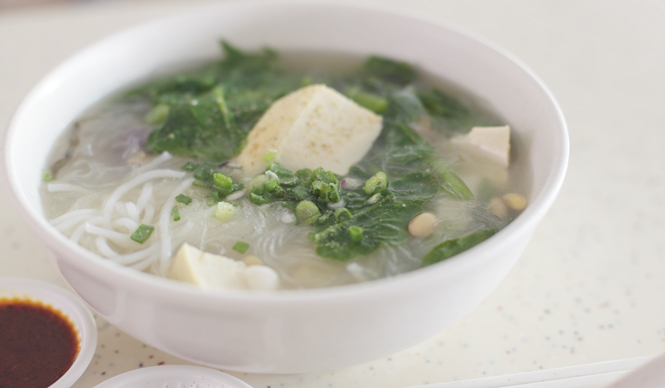
Feature: Singapore is a Hawker Heaven! | Day 2: Is There a Hawker Stall Next to the Landmark?
Feature: Singapore, a Hawker Paradise
A 3-Day Culinary Journey
Day 2: "Is There Always a Hawker Center Next to Every Landmark?" (1)
Singapore is a melting pot of Chinese, Malay, and Indian cultures, among others. Though small enough to fit within Tokyo's 23 wards, its embrace is vast. While cherishing their roots, people here readily accept different cultures within reasonable bounds. This easygoing connection between ethnic groups weaves the fabric of the nation. Food, particularly "soul food" (local cuisine) and hawker fare, based on the flavors of their homelands, can be seen as a microcosm of this. We embarked on a 3-day culinary adventure, exploring the charms of these hawker stalls. We hope you'll join us until the end.
The heart of Singapore's culinary scene lies in its hawker centers, commonly known as "hawker centers." From morning till night, people of all ages gather here to satisfy their hunger. This applies to tourists as well. It seems that wherever there's a landmark, there's almost always a hawker center nearby.──Hearing this rumor, we set out into the city early in the morning.
Photographs by JAMANDFIXText by TANAKA Junko (OPENERS)Special Thanks to Singapore Tourism Board
The Untold Story of Hawker Centers
As the English term "street food" suggests, hawkers traditionally prepared and sold food on the streets. However, these old-fashioned street stalls are now largely prohibited by law, and very few exist in Singapore today.
A turning point came about 50 years ago. Regulations were imposed throughout the city, leading to a cat-and-mouse game between hawkers and the police. It was then that Daniel Wang, a former Director of Public Health, stepped in. In the 1960s and 70s, he persuaded the hawkers, who were constantly being chased by the police, to establish hawker centers – safe and hygienic communal eating spaces.
Reflecting on his efforts, Wang recalls visiting hawkers across the nation, persuading those operating without permits. By 1968, he had successfully licensed over 20,000 "illegal" stalls, bringing an end to the conflict between hawkers and the police. From 1971 onwards, he began persuading them to relocate to hawker centers.
Wang's vision for hawker centers was a complex of stalls located near train and bus stations, and residential areas, equipped with facilities like electricity, water, and gas (and sometimes air conditioning). Hygiene, previously neglected, was enhanced with surprise inspections to check the sanitary conditions of the stalls. A passing grade was given for A to C ratings, while a D meant closure. This was a completely new initiative, offering comfort to both hawkers and diners.
"Even though the location has changed, the hawker spirit lives on within them," says Wang. Whether on the street or in a hawker center, what's served is undoubtedly hawker food. These "neo-hawkers," now numbering over 120 nationwide, are said to be as common as "finding a needle in a haystack" when exploring Singapore's landmarks. Let's embark on a journey to discover these hawker centers.
The Delicious Relationship Between Landmarks and Hawker Centers
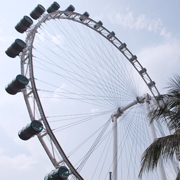
Beneath the World's Largest Ferris Wheel The "Singapore Flyer," known as the "world's largest Ferris wheel," has a retro-themed hawker center at its base. Here, you can experience the atmosphere of the old-fashioned street stalls that no longer exist.
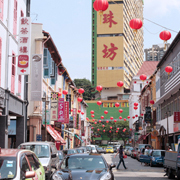
Chinatown: A "Hometown" for the Heart Chinatown possesses a unique charm that makes people, whether Chinese or not, feel like they've returned home. On Smith Street, the outdoor hawker center offers a chance to briefly experience life as a local.
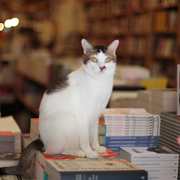
A "New" Town with Old Charm We visited Tiong Bahru, a district steeped in history and culture. At its heart lies a market preserving traditional culinary heritage, while young creatives are breathing new life into the neighborhood.
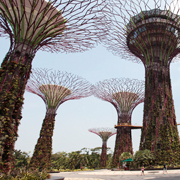
Satay: The Perfect Companion to New Landmarks? Opened in 2012, the new landmark "Gardens by the Bay" is a vast garden spanning 101 hectares. After immersing yourself in its lush greenery, savor some Singaporean skewers.
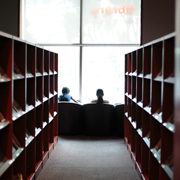
The Durian: Satisfying the Soul Inside and Out The "Esplanade – Theatres on the Bay," shaped like a durian, is a treasure trove of performing arts within, offering a spectacular view and culinary delights outside.
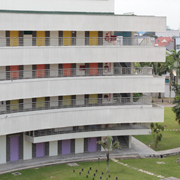
Knocking on the Door of Art The "Goodman Arts Centre (GAC)," established in 2011, supports the activities of artists and creators. What lies within? Driven by curiosity, we decided to knock on its door.
Feature: Singapore, a Hawker Paradise
A 3-Day Culinary Journey
Day 2: "Is There Always a Hawker Center Next to Every Landmark?" (2)
Beneath the World's Largest Ferris Wheel
The "Singapore Flyer," which opened in 2008 as the "world's largest Ferris wheel," stands at an impressive 165 meters, equivalent to a 42-story building. It offers panoramic views not only of Singapore's landmarks but also of Sentosa Island and even parts of Indonesia and Malaysia.
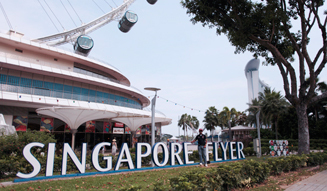
Each large cabin can accommodate up to 28 people. A full rotation takes 30 minutes, and some people even host cocktail parties or dinners inside. The idea of using a cabin as a meeting room might also lead to smoother discussions while enjoying the beautiful scenery.
For a final drink, head to the adjacent "Flyer Lounge." Here, you can be among the first to sample award-winning cocktails and mocktails (non-alcoholic cocktails) from cocktail competitions.
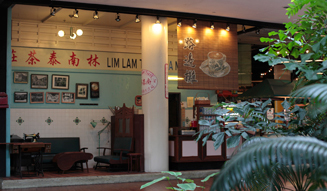
After enjoying the world's largest Ferris wheel, visit the "Singapore Food Trail" located near the ticket counter on the first floor. This hawker center, themed around 1960s street stalls, is like a theme park, faithfully recreating the atmosphere of that era in its interior and streetscape.
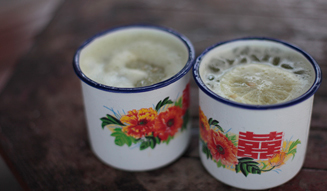
In addition to popular dishes like "Chicken Rice," "Bak Kut Teh," and "Oyster Omelette," we also recommend trying recreated traditional stall foods such as the peanut snack "Kacang Putih" and the ball-shaped shaved ice dessert "Ice Ball." It's the perfect place to savor the flavors of old-fashioned street food that is rarely seen today.
Singapore Flyer
30 Raffles Avenue
Tel. +65-6333-3311
Nearest Station: 5-minute walk from MRT Promenade Station
Hours: 8:30 AM – 10:30 PM (Last admission at 10:15 PM)
Admission: Adults = $33, Children (3-12 years) = $21, Family Combo (2 Adults, 1 Child) = $78
http://www.singaporeflyer.com
Flyer Lounge
30 Raffles Avenue #03-01
Tel. +65-6854-5247
Hours: 11:00 AM – 11:00 PM
Budget: From $30
Singapore Food Trail
30 Raffles Avenue #01-09/12
Nearest Station: 5-minute walk from MRT Promenade Station, right next to Singapore Flyer
Hours: Monday–Thursday 10:30 AM – 10:30 PM, Friday–Sunday 10:30 AM – 11:30 PM
Budget: From $5
http://www.singaporefoodtrail.com.sg
Feature: Singapore, a Hawker Paradise
A 3-Day Culinary Journey
Day 2: "Is There Always a Hawker Center Next to Every Landmark?" (3)
Chinatown: A "Hometown" for the Heart
Chinatown was designated as a residential area for Chinese immigrants in the early 19th century. Amidst Singapore's construction boom, this area alone seems to have frozen in time, retaining its old-world charm. While Chinatowns exist worldwide, in Singapore, where over 70% of the population is of Chinese descent, it holds a different significance. More than just a tourist attraction, it is a living space for Chinese Singaporeans and a cherished town where they can reflect on their distant homeland.
First, we visited the Thian Hock Keng Temple, the Buddha Tooth Relic Temple, and Sri Mariamman Temple, then exchanged greetings with elderly gentlemen playing chess in the park. Amidst the bustle, a serene, river-like flow of time prevails. It possesses a charm that draws people back, regardless of their ethnicity.
Chinatown is characterized by its eclectic mix of casual and fine dining restaurants, shops selling groceries and daily necessities, and souvenir stores.
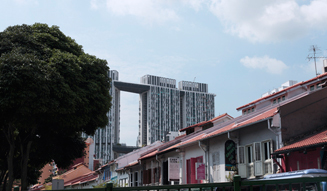
For dining, we recommend Smith Street, affectionately known as "Food Street." This area, where former clinics and pharmacies have been repainted in vibrant, modern colors, has been transformed into an outdoor hawker center. In the evenings, it teems with locals seeking dishes like "fishball noodles" and "popiah" (vegetable crepes). By joining the crowds on the pedestrianized street, you can briefly immerse yourself in the local atmosphere while enjoying hawker fare.
Chinatown
Nearest Station: Immediately accessible from MRT Chinatown Station
http://www.chinatown.sg
Thian Hock Keng Temple
158 Telok Ayer Street
Tel. +65-6423-4616
Nearest Station: 5-minute walk from MRT Tanjong Pagar Station
Hours: 7:30 AM – 5:30 PM
http://www.thianhockkeng.com.sg
Buddha Tooth Relic Temple
288 South Bridge Rd
Tel. +65-6220-0220
Nearest Station: 3-minute walk from MRT Chinatown Station
Hours: 9:00 AM – 6:00 PM
http://www.btrts.org.sg
Sri Mariamman Temple
244 South Bridge Rd
Tel. +65-6223-4064
Nearest Station: 2-minute walk from MRT Chinatown Station
Hours: 7:00 AM – 12:00 PM
Chinatown Food Street
Smith Street
Nearest Station: Immediately accessible from MRT Chinatown Station
Hours: 12:00 PM – 2:00 AM
Budget: From $10
Currently closed. Scheduled to reopen after renovation in late 2013.
Feature: Singapore, a Hawker Paradise
A 3-Day Culinary Journey
Day 2: "Is There Always a Hawker Center Next to Every Landmark?" (4)
A "New" Town with Old Charm
A District Steeped in History and Culture──These words came to mind as we stepped into Tiong Bahru. We learned that in recent years, young couples have been moving into the public housing estates built during the colonial era. Perhaps because of this, modern cafes and boutiques are scattered throughout the neighborhood.
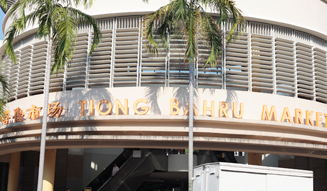
At the heart of the neighborhood is "Tiong Bahru Market." This two-story building houses a fresh produce market on the first floor, with fruit and vegetable stalls, and a hawker center on the second. It's a popular market, bustling from morning till night with locals grabbing breakfast before work and tourists seeking delicious food.
We visited during breakfast time. It was striking to see people, from families to individuals reading newspapers, eating in a relaxed manner, some even in sleepwear, as if they were in their own kitchens.
While preserving the charm of old Singapore, this area is also revitalizing historic buildings with a modern sensibility. This movement is taking root in Tiong Bahru. For example, on Yong Siak Street, cafes like "40 Hands Coffee," which introduced cappuccino and latte to a nation traditionally known for its tea culture, are emerging, driven by a new generation's unconventional spirit.
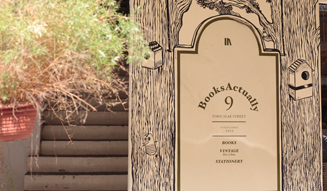
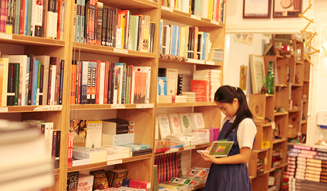
A symbol of this transformation is "BooksActually." This independent bookstore, opened in 2005, has gained attention for its unique selection. Its towering bookshelves are filled with lifestyle magazines, photo books, stationery, and antique curios gathered from around the world. These items are carefully chosen by the store's staff, led by owner Kenny Leck. The books and goods, imbued with their passion, are sure to enrich your spirit.
Tiong Bahru
Nearest Station: Immediately accessible from MRT Tiong Bahru Station
Tiong Bahru Market
30 Seng Poh Road
Nearest Station: 9-minute walk from MRT Tiong Bahru Station
Hours: 7:00 AM – 11:00 PM
Budget: From $3
40 Hands Coffee
Yong Siak Street #01-12
Tel. +65-6225-8545
Nearest Station: 8-minute walk from MRT Tiong Bahru Station
Hours: Tuesday–Thursday 8:00 AM – 7:00 PM, Friday & Saturday 8:00 AM – 10:00 PM, Sunday 8:00 AM – 7:00 PM
Closed: Mondays
http://www.40handscoffee.com
BooksActually
9 Yong Siak Street
Tel. +65-6222-9195
Nearest Station: 8-minute walk from MRT Tiong Bahru Station
Hours: Monday 11:00 AM – 6:00 PM, Tuesday–Friday 11:00 AM – 9:00 PM, Saturday 10:00 AM – 9:00 PM, Sunday 10:00 AM – 6:00 PM
http://booksactually.com
Feature: Singapore, a Hawker Paradise
A 3-Day Culinary Journey
Day 2: "Is There Always a Hawker Center Next to Every Landmark?" (5)
Satay: The Perfect Companion to New Landmarks?
Are you aware that Singapore is gaining attention as a "City in a Garden"? The government's slogan, "From a City in a Garden to a Garden in a City," reflects their commitment to greening the urban landscape. Walking through the city, you'll notice trees emerging everywhere, even between skyscrapers.
It was in this context that "Gardens by the Bay" made its grand debut.Marina Bay SandsA 5-minute walk from the bustling Marina Bay district, where "Marina Bay Sands" is located, reveals a vast garden spanning 101 hectares. This new landmark opened in June 2012.
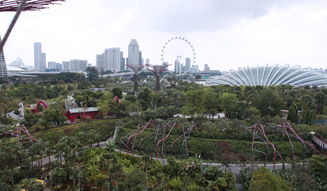
The Supertrees, artificial vertical gardens reaching up to 50 meters, are a striking feature. Each of the 18 Supertrees serves a purpose: some are equipped with solar panels for nighttime illumination, others absorb and release heat, and some collect rainwater to irrigate plants. They embody the eco-friendly design philosophy of Gardens by the Bay.
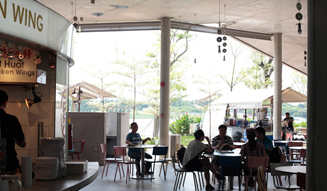
After exploring the gardens, head to the adjacent hawker center, "Satay by the Bay." As the name suggests, its specialty is "satay" – skewers of meat grilled over charcoal, a perennial favorite in Singapore. While available at every hawker center, here you can savor traditional satay prepared according to classic recipes.
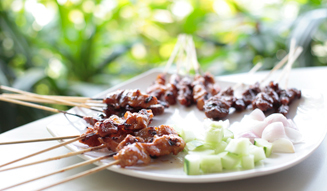
Gardens by the Bay
18 Marina Gardens Drive
Tel. +65-6420-6848
Nearest Station: 7-minute walk from MRT Bayfront Station
Hours: Outdoor Gardens 5:00 AM – 1:00 AM, Conservatories & Skyway 9:00 AM – 9:00 PM
Admission: Conservatories Adults = $28, Children (3-12 years) = $15
Skyway Adults = $5, Children (3-12 years) = $3
www.gardensbythebay.com.sg
Satay by the Bay
9 Senoko Loop
Tel. +65-6273-1217
Nearest Station: 15-minute walk from MRT Marina Bay Station
Hours: 8:00 AM – 10:00 PM (Drink stalls open 24 hours)
Budget: From $4
http://www.sataybythebay.com.sg/
Feature: Singapore, a Hawker Paradise
A 3-Day Culinary Journey
Day 2: "Is There Always a Hawker Center Next to Every Landmark?" (6)
The Durian: Satisfying the Soul Inside and Out
Singapore is increasingly making its mark in the arts, a testament to its national efforts. One such initiative is the "Esplanade – Theatres on the Bay," a multi-disciplinary arts center in the Marina area. Its striking exterior, resembling a spiky shell, has led to comparisons with the pungent durian fruit. Opened in 2002, it quickly became a sensation.
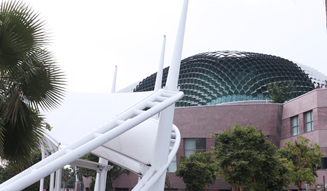
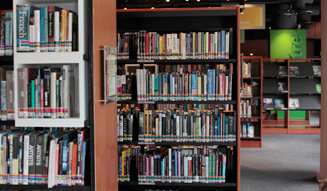
Inside, it's a haven for intellectual curiosity, boasting a state-of-the-art concert hall, theaters hosting diverse performances day and night, and the "Library@Esplanade," a rare library dedicated to performing arts. It consistently offers engaging content, ensuring it remains a topic of conversation.
Outside the building lies Marina Bay. Across the water stand iconic Singaporean landmarks such asMarina Bay Sands, the "ArtScience Museum," and the "Merlion." This view truly makes you feel you've arrived in Singapore.
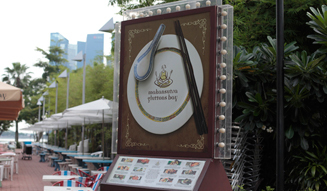
Another "durian" awaits outside: "Makansutra Gluttons Bay," a cluster of 12 food stalls.World Street Food CongressThis is an outdoor hawker center operated by Makansutra, featured on Day 1.
If you can secure a seat along the waterfront, you can savor delicacies like "Chilli Crab," a signature dish of crab stir-fried in egg and chili sauce, and "Roti John," a Malay-style sandwich, while enjoying the spectacular view. Dining here, with a gentle sea breeze, is an exceptional experience.
Esplanade – Theatres on the Bay
1 Esplanade Drive
Tel. +65-6828-8377
Nearest Station: 5-minute walk from MRT Esplanade Station
Hours (Ticket Counter): Monday–Friday 10:00 AM – 8:00 PM, Saturday 11:00 AM – 8:00 PM
http://www.esplanade.com/
Library@Esplanade
8 Raffles Avenue #03-01
Tel. +65-6332-3255
Hours: 11:00 AM – 9:00 PM
Closed: Public Holidays
Makansutra Gluttons Bay
8 Raffles Avenue #01-15
Tel. +65-6438-4038
Nearest Station: 5-minute walk from MRT Esplanade Station, right next to Esplanade – Theatres on the Bay
Hours: Monday–Thursday 5:00 PM – 2:00 AM, Friday–Saturday 5:00 PM – 3:00 AM, Sunday 4:00 PM – 1:00 AM
Budget: From $10
http://www.makansutra.com/
Feature: Singapore, a Hawker Paradise
A 3-Day Culinary Journey
Day 2: "Is There Always a Hawker Center Next to Every Landmark?" (7)
Knocking on the Door of Art
Esplanade – Theatres on the BayLet's continue our artistic journey from "Esplanade – Theatres on the Bay." Our next destination is the "Goodman Arts Centre (GAC)," established in 2011 to support artists and creators. This site was formerly a Malay secondary school. It later transformed into "LaSalle College of the Arts" and "School of the Arts (SOTA)" (both leading art institutions in Singapore), but it consistently served as an educational facility.
Following this, the "National Arts Council (NAC)," a government agency supporting various artistic endeavors including music, film, visual arts, performing arts, and publishing, announced its plan to transform the lush 2.8-hectare site into a hub for artistic expression, comprising rental spaces and tenant studios.
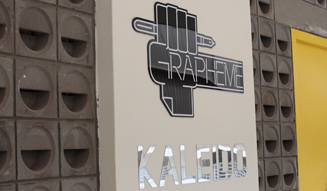
The inception of GAC signifies a shift from nurturing students to embracing artists. The former classrooms have been reborn as a base for the art community, reflecting the government's commitment to fostering creative activities in a more sustained and profound way.
Currently, the premises house the NAC office, 35 rental spaces including galleries, theaters, and a ceramics studio, and 48 tenant artists and creators. Notably, the tenant spaces have been fully occupied since the center's opening in 2011.
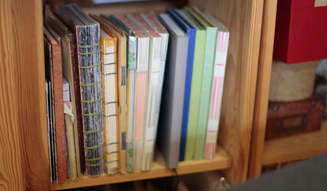
"I believe it's an environment conducive to artistic activities. I've been a tenant here since it opened." So says Eriko Hirashima, who operates her book art studio in Building B. "As Singapore is a small country, people involved in creative fields quickly get to know each other. GAC further concentrates this community. Dance companies, publishers, theater groups... although their genres differ, there's a loose network connecting them. It's a very comfortable place to be."

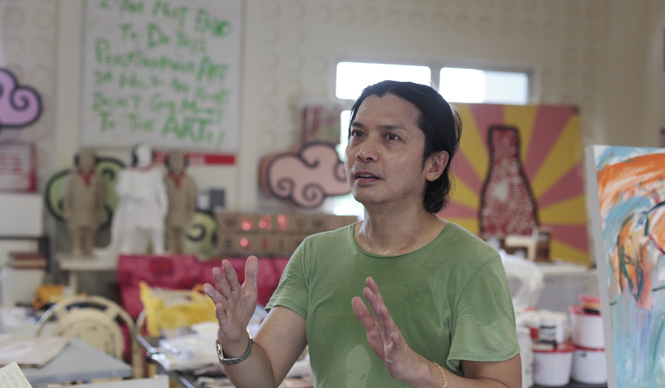
Like Hirashima, contemporary artist Justin Lee, who uses Building B as his studio, is also among the first cohort of GAC residents since 2011. He is also an alumnus of "Lasalle College of the Arts," which was based here from 1992 to 2007. "This place holds special significance for me, so I'm happy to be back," he says.
He analyzes why GAC is so popular among artists and creators: "There are no other tenant spaces available at such affordable rent. For example, a 30-square-meter space can be rented for over $200 less per month. The government subsidizes the rent, which is incredibly helpful for artists. I hope to see more collaborations among residents and events unique to GAC in the future."
Two years since its opening, GAC has been functioning effectively as a hub for artistic creation and dissemination, hosting regular exhibitions and performances, as well as pottery and bookbinding workshops open to the public. Additionally, "Open House" events, where tenant studios are open to the public, are held several times a year. The next one is scheduled for September.
After enjoying an art stroll, hurry to "51 Old Airport Road Food Centre." It's just a 3-minute drive from GAC. From familiar noodle dishes like "Wonton Noodles" and "Fishball Noodles" to "Oyster Omelette," where oysters are encased in egg and served with oyster sauce, the cost-performance is highly rated by locals. Be sure to give it a try.
Goodman Arts Centre
90 Goodman Road
Tel. +65-6342-5790
Nearest Station: 5-minute walk from MRT Mountbatten Station
http://www.goodmanartscentre.sg
Eriko Hirashima (Director of LA LIBRERIA)
http://www.lalibreria.com.sg
Justin Lee (Contemporary Artist)
http://www.justinleeck.com/
51 Old Airport Road Food Centre
Blk 51 Old Airport Road
Nearest Station: 3-minute walk from MRT Dakota Station, 3-minute drive from Goodman Arts Centre
Hours: 7:00 AM – 12:00 PM
Budget: From $2