Feature | BLUE NOTE NOW! | Chapter 1: "Blue Note in 30 Minutes: A Q&A"
Feature | BLUE NOTE NOW!
Exploring the Appeal of Blue Note, the Esteemed Label Approaching its 75th Anniversary
Chapter 1 | Ask "Mr. Blue Note"!
Q&A: Understanding Blue Note in 30 Minutes (Part 1)
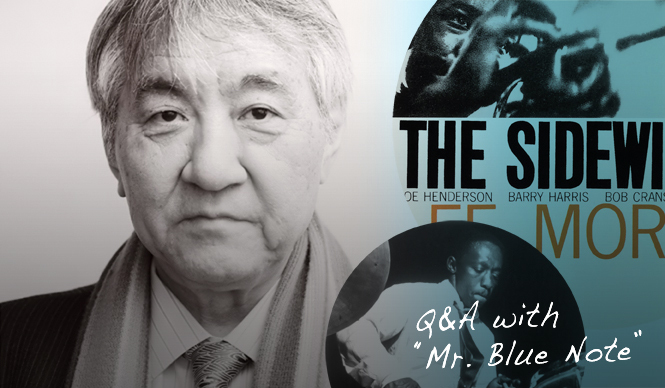
Blue Note, a jazz label born in New York in 1939, is now garnering renewed attention as it approaches its 75th anniversary next year. Young musicians poised to lead the future of jazz, such as Norah Jones, Robert Glasper, and Jose James, are emerging one after another. In an era where many labels are in decline, what makes Blue Note so special? To explore this question, OPENERS has enlisted the help of Hitoshi Namekata, known as "Mr. Blue Note," who has been instrumental in popularizing jazz in Japan. We aim to delve into the allure of this label where youth and tradition coexist.
First, we posed ten questions to Mr. Namekata. Read on to understand everything about Blue Note!?
Photographs (portrait) by JAMANDFIXInterview & Text by TANAKA Junko (OPENERS)
1. Why was Blue Note created?
Blue Note was founded by a young German man named Alfred Lion. It happened in New York in January 1939. He was simply a huge jazz fan. In Europe at the time, especially in Berlin where he lived, it was difficult to get jazz records. So, to deepen his understanding of jazz, he often traveled to America, but eventually, he decided to leave his homeland, where Nazism was on the rise, and immigrate.
He didn't set out to create a record company; he wanted to make records. As he repeated this process, I believe it naturally evolved into Blue Note.
2. What's the origin of the label's name?
What Black music possesses that traditional European music lacks is "the blues." While there are various expressions like "blues chords" or "blue notes," there are distinct characteristics and scales inherent to Black blues. The reason Alfred was drawn to jazz is that, at its core, it's blues. The very first recording Blue Note made was boogie-woogie※indeed.
He was drawn to the blues sensibility of Black music, so he started a label that emphasized it. Initially, they considered naming it "Blues Note," meaning the sound of the blues, but ultimately, they settled on "Blue Note" simply because it "sounded better."
※Boogie-woogie: A style of blues piano performance pioneered by Black American pianists in the 1920s. It is played with a free melody over an 8-beat rhythm per measure. (Source: Daijisen, Shogakukan)


3. Tell us more about Alfred Lion!
One thing we can say is that he knew what music he wanted to hear and was incredibly greedy for it. People often say, "Blue Note was Alfred's one-man show, so he only recorded what he liked," but rather than just recording what he liked, he crafted the jazz he loved in the studio. I believe that's the kind of person he was.
For example, one method is to record a group that's getting a good reputation for their live performances. That's the usual approach. However, many of Blue Note's "masterpieces" are by groups and bands that didn't actually exist outside the studio. They were assembled to make records, and after creating the music, they'd say, "See you later!" (laughs).
At the same time, he was open to new things. It's said that his favorite artist just before he passed away was Michael Jackson. He apparently loved danceable music. When a recording went well, he would dance in the studio (laughs).
4. Who took over the label?
Alfred, concerned about his health, stepped down from the front lines in 1967. Frank Wolff, a friend from his Berlin days, took over. Together, they formed the Lion and Wolff (wolf) duo (laughs). After Frank passed away a few years later, the label has been passed down to people who seemed destined for the name Blue Note.
At its core, there's a solid Blue Note mechanism that Alfred created, and I think the challenge has always been how to adapt that to each era. After his passing, those who understood that mechanism well, or those who had a deep affection for it, have expressed the sound of their respective times. That's probably the closest answer.
Feature | BLUE NOTE NOW!
Exploring the Appeal of Blue Note, the Esteemed Label Approaching its 75th Anniversary
Chapter 1 | Ask "Mr. Blue Note"!
Q&A: Understanding Blue Note in 30 Minutes (Part 2)
5. What led to Blue Note becoming known worldwide?
In the late 1960s, riding the wave of "funk※", Art Blakey & The Jazz Messengers' "Moanin'" became a global mega-hit. It was precisely at this time that jazz became a "world music." Conductors of European classical music began to praise jazz musicians, and it spread worldwide as popular music during this period.
The band Art Blakey, as its name suggests, delivered jazz to the world. Along with that, the rumor that "Blue Note exists in New York" also spread widely.
※Funky: Within hard bop jazz, particularly influenced by Black blues and gospel. Popular from the late 1950s to the 1960s. Representative artists include Art Blakey and Horace Silver. (Source: Daijisen, Shogakukan)
6. How does Blue Note differ from other labels?
Someone once said, "The difference between Blue Note and other jazz labels is three days of rehearsal." Jazz is improvisational music, so it can be played without practice. In fact, some people say, "That's what's good about it."
However, Blue Note approached recording with a clear objective. They'd think, "This kind of music should be created," or "We're bringing together musicians who usually work separately to create music like this." Or they might even call in someone who couldn't perform live due to drug addiction... They aimed to bring out the full potential of jazz musicians, so the concept of just playing as usual wasn't really there.

The phrase "three days of rehearsal" doesn't mean that great music was made because of three days of rehearsal, but rather that a group assembled with a purpose was brought into the studio after appropriate rehearsal. They were extremely particular about making records.
They would also record "one more take." Since jazz is improvisational, each take sounds different. But in the past, jazz labels didn't want to waste tape, so they'd wrap things up after a reasonable amount of takes (laughs). Blue Note, however, would record one more take. As a result, many masterpieces were born.
7. Why are many Blue Note fans called "collectors"?
To answer that, I first need to explain the difference between a "jazz fan" and a "record collector." A jazz fan is a fan just by listening to live performances, but a record collector loves music that is beautifully packaged in a beautiful form. Alfred Lion himself was a record collector who deeply loved records.
Given that he founded a label that was meticulous about record production, I think it's natural that people would want to collect everything. They were particular about not just the music and sound quality, but also the jackets, the ink used for printing, and even the liner notes. Rudy Van Gelder, the renowned engineer responsible for the sound, also took great pride in the sound he created with Alfred.
The completeness of the records as objects is exceptionally high. That's why people buy original pressings for 200,000 yen, even though a 1,000 or 2,000 yen CD would suffice for just listening to the music. Particularly popular is the "1500 series" (followed by the "4000 series" after 1958). These 100 records released between 1956 and 1958 feature almost all the famous musicians of the golden age of modern jazz. That's why so many collectors aim to gather them all.
Feature | BLUE NOTE NOW!
Exploring the Appeal of Blue Note, the Esteemed Label Approaching its 75th Anniversary
Chapter 1 | Ask "Mr. Blue Note"!
Q&A: Understanding Blue Note in 30 Minutes (Part 3)
8. Who are the stars of Blue Note?
For example, you could say Bill Evans is a star for Riverside, Oscar Peterson or Stan Getz for Verve, or Miles Davis and Sonny Rollins for Prestige. But you can't say that for Blue Note. This simply means they have so many artists who deliver wonderful music.
In a sense, the protagonist of Blue Note is the stage itself, Blue Note. The character doesn't change drastically with each artist; the stage is firmly set.
The reason it still has such a strong fanbase is, I believe, the deep trust in that stage. Theaters probably have a similar quality. The attitude of "it doesn't matter who the star is." Blue Note has a similar characteristic.
9. What was the relationship with musicians like?
I believe he lived and interacted with jazz musicians on the same level. He would go to jazz clubs at night and to the studio during the day. Alfred seemed to have deep relationships with various artists, Miles Davis being one example. For Miles, 1952 to 1954 wasn't a particularly happy period. In 1952, he was addicted to drugs; in 1953, he was starting to break free; and in 1954, he became clean. His golden age was about to begin, but Alfred continued to support him through that dark period. While other record companies wouldn't touch him in his severe state of addiction, Blue Note meticulously documented those three years.
What's interesting, though, is that Alfred wasn't necessarily attached to the artists he nurtured. He didn't bind artists with contracts. The stance was, "If you want to stay, you can stay forever, and if you have better offers elsewhere, you can go." Miles, too, was "given away" to a major label called Columbia, but later, as a token of his gratitude to Alfred, he recorded one album in 1958 that was considered his best at the time. That masterpiece is called "Somethin' Else."
There's a relationship between Blue Note and its artists that transcends contracts and such. It was the same with Coltrane. His "Blue Train" was also recorded during a break from his commitments with another label.
10. In a word, how would you describe "Blue Note-esque jazz"?
It's difficult to put into a single word, but if I had to choose, I'd say it's extremely essential jazz.
Furthermore, Blue Note's music is always looking towards tomorrow. Youth and tradition coexist. Tradition allows for the emergence of current young talent, and when young talent emerges from it, the past traditions and the artists who built the past appear even more monumental.
In that sense, Blue Note is fated to debut new artists continuously. The approach to making records is not to simply document a group seen somewhere yesterday, but to create the best form of newly discovered talent in the studio. That concept itself is highly creative, and I believe it comes through in the sound. /p>
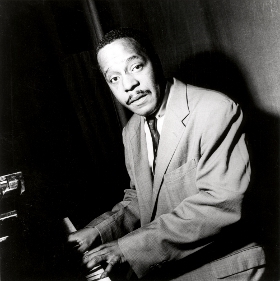
Bud Powell
Actually, my first encounter with Blue Note was Bud Powell's "Un Poco Loco." It was recorded twenty years ago. Yet, I found it more stimulating than The Beatles or Pink Floyd, who were recorded at the time. I believe it possesses that kind of power.

Hitoshi Namekata | NAMEKATA Hitoshi
Record producer. Has released numerous works both domestically and internationally through "Blue Note" and its sister label "Somethin' Else." His edited and translated works include "21st Century Edition Blue Note Book" (Jazz Critique Books), "Revisiting Blue Note" and "Blue Note Records" (both Asahi Bunko). He is currently promoting a campaign titled "BLUE NOTE NOW 2013" leading up to the label's 75th anniversary next year. http://www.emimusic.jp/jazz/bluenotenow2013/