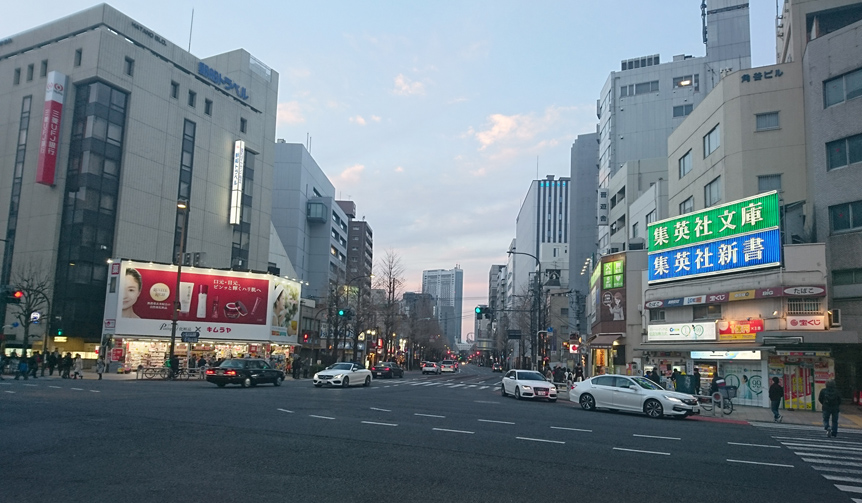
Essay Series | #ijichiman's Musings, Part 2: 'Jimbocho, A Town That Makes the Everyday a Little More Luxurious'
Essay Series | #ijichiman's Musings
Part 2: 'Jimbocho, A Town That Makes the Everyday a Little More Luxurious'
'To insist solely on the safety and security of the body, and to disregard the life and death of the soul and spirit, is wrong' (Yukio Mishima) — In this series, Yasutake Ijichi, a board member of Sunshine Juice, Japan's first cold-pressed juice specialty store, delves into the human, earthy content of the town, which stands in stark contrast to the ultimate healthiness of Sunshine Juice, exploring its history, changes, customs, and culture. Part 2 introduces Jimbocho, a retro town that is the world's largest book town and a fierce battleground for curry.
Photographs and Text by IJICHI Yasutake
Where Everyday Scenes Are Elevated to the Intellectual and Elegant
My first visit to Jimbocho was during the spring break before I entered junior high school. At 12 years old, I loved old books, and when I heard from my father about a book town called Jimbocho, he took me there. I don't remember what book he bought me. What I vividly recall is being taken to a famous tempura restaurant in the area called 'Imoya'.
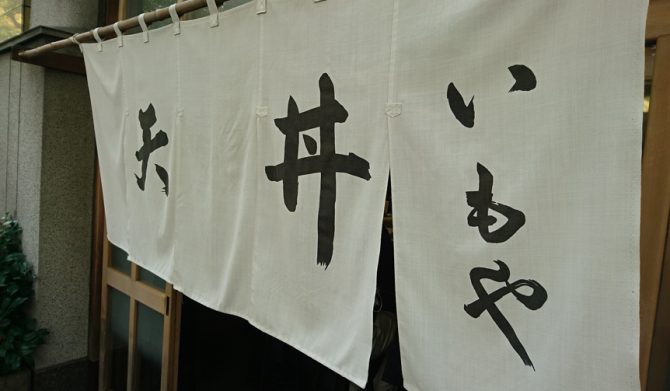
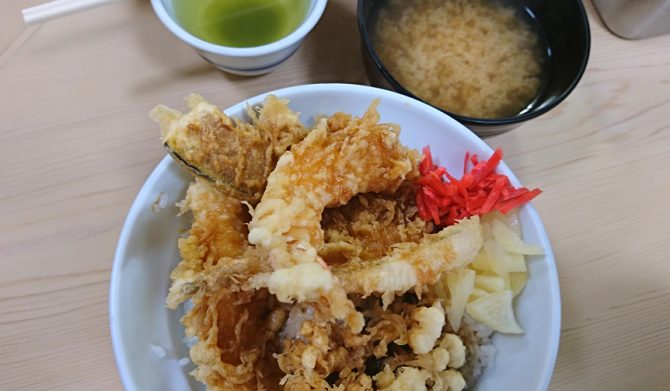
As I passed through the white noren curtain, I found a counter with about ten seats. It was full. Behind the counter, a seasoned chef was calmly frying tempura. The tempura bowl that was served shortly after I sat down and ordered was undeniably delicious. But what was most shocking was that it cost only 500 yen at the time. As an elementary school student, I was awestruck by the high quality of the tempura bowl served at a price comparable to chain restaurants.
After that, I always remembered Imoya. However, I didn't go back for a long time. Then, at the age of 35, I had the chance to go back after 23 years. The price of the tempura bowl had risen to 650 yen, but nothing else had changed. And the following year, in 2018, Imoya sadly closed its doors after nearly 60 years of history.
In the end, I only ate there twice in my life, but Imoya left an incredibly strong impression on me. The more vivid the impact of our encounter, and the more fleeting our connection, the more impermanently it is etched into memory. In baseball, it might be Tomohito Ito; in horse racing, it might be Fujikiseki.
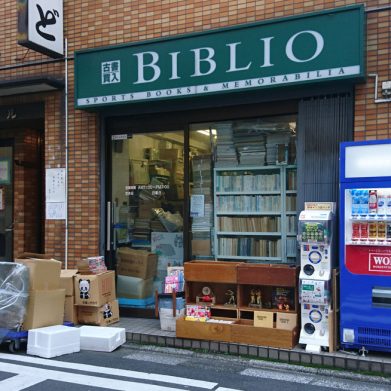
Incidentally, in Jimbocho, known as a book town, there is a unique used bookstore called 'Biblio' that mainly deals in sports-related books. From valuable books published before the Showa era to niche books published after 2000, covering baseball, sumo, soccer, and martial arts, they are piled high. Not only books but also countless goods, cards, and autographs are handled, and if you ask the owner, the desired item will appear from somewhere. For sports fans, it's a dream come true, like being inside Doraemon's pocket.
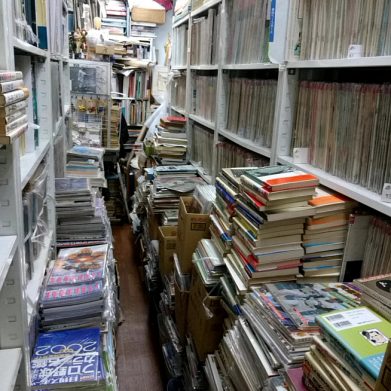
Apparently, Jimbocho became a book town because it was originally a student town. Tokyo University, Meiji University, Hosei University, Chuo University, and Senshu University all started in the Jimbocho area in the Meiji era. It is said that the current town originated from the flow of graduates selling their textbooks and junior students coming to buy them. That's why there are many academic books. It's a very understandable progression.
Besides sports-related books, I usually read books on psychology and behavioral science. It's no exaggeration to say that my reading comprehension and kanji skills were honed by reading Jump and Magazine in my youth, so I also enjoy manga with strong storylines.
I like psychology and behavioral science because I've been involved in marketing and communication for a long time and enjoy thinking about consumer behavior. I believe they are far more useful than business books or how-to guides that present a localized case as if it applies to all things in the universe.
When I want to find old books on psychology or behavioral science, I stop by 'Murayama Shoten' along Yasukuni Street. It's become my favorite since I happened to find a book on developmental psychology by Jean Piaget, which I had been wanting to read for a long time, here.
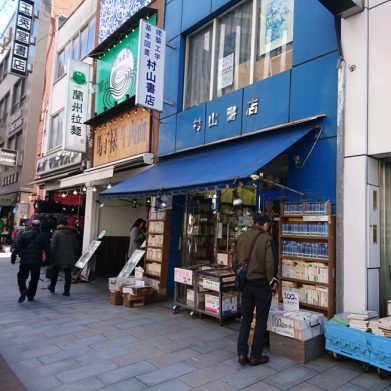
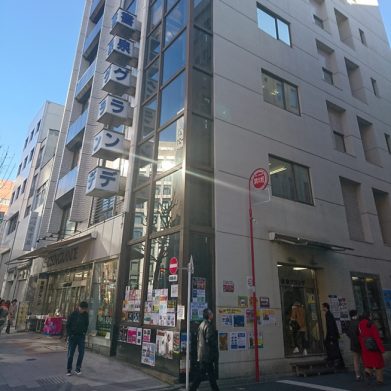
For new books, there's 'Shosen Grande' next door. In Jimbocho, there's also 'Sanseido' for new books, but I visit this one. Shosen Grande is also famous for hosting idol events, and its floor plan ranges from the 7th floor, where the event space is located, down to the B1 floor.
The 2nd floor has sections for Osamu Tezuka and Fujiko Fujio, the 3rd floor is packed with domestic and international board games, the 4th floor offers books on esoteric spiritual subjects, and the 6th floor is considered a sacred place among railway enthusiasts. While the absolute number of books might not be as large as at Ikebukuro's Junkudo, Marunouchi's Maruzen, or Yaesu Book Center, as a long-established bookstore that has been around since 1948, its selection sense is captivating.
When I go looking for 'something interesting,' I always find something, and once my heart is captured, I find myself drawn back to seek out more.
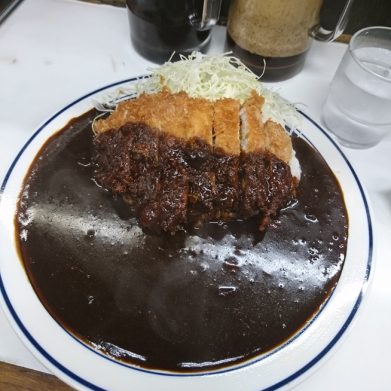
And we must not forget that Jimbocho is not only a book town but also a curry town and a coffee shop town.
The curry at 'Bondy,' the birthplace of European curry; 'Gavial,' opened by a former Bondy staff member; and the katsu curry at 'Kitchen Nankai,' which draws long lines at lunchtime, all satisfy the appetites of working men both in quantity and quality.
For coffee shops, there are many famous establishments, including 'Sabouru,' which captivates people of all ages with its striking facade and fresh juice, and 'Kanda Brasil,' where you can relax with coffee and handmade cake in a spacious setting.
However, if you want to enjoy both coffee and curry at once, 'LADRIO' is the place to go.
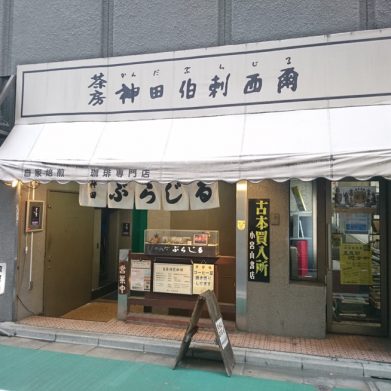
Coffee shops in Jimbocho are often hidden in back alleys or located underground, making them difficult to find. LADRIO is no exception, but it's easy to remember if you think of it as being in the alley directly behind Shosen Grande. Long-time regulars and young couples enjoy their time and space here, sipping the Wiener coffee that this shop is said to have originated.
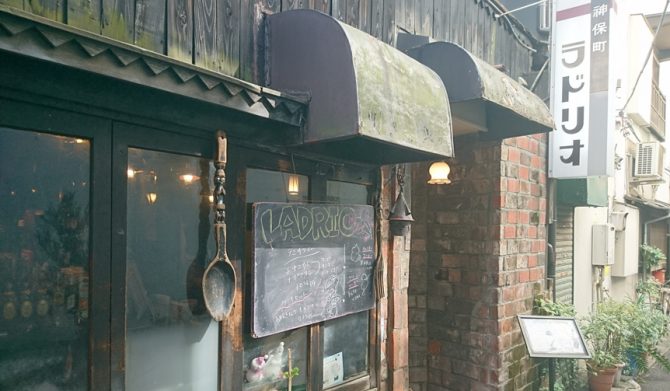
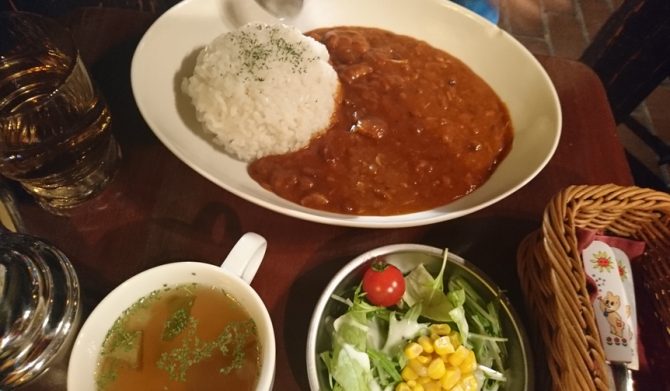
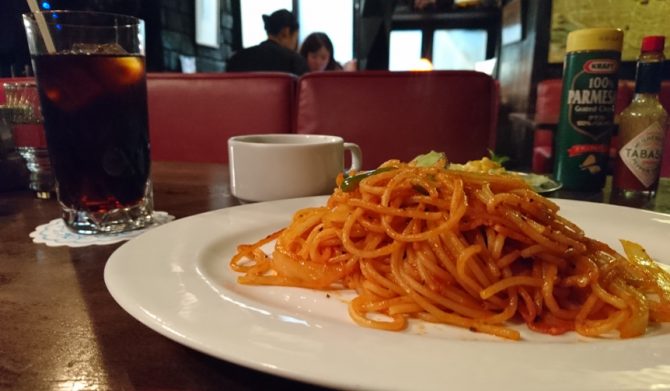
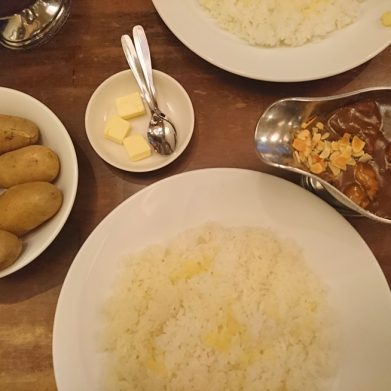
At LADRIO, the lunch menu centers on Neapolitan spaghetti and curry. The curry is chicken curry. It looks like it's been simmered with plenty of vegetables, and it's neither Indian, European, nor Japanese style, nor is it homemade or original, but rather universal. It's gentle with moderate sweetness and spiciness, yet deeply flavorful. It fills you up endlessly and warms you from the inside out.
If you're strolling through Jimbocho, it's worth taking a walk to 'Yamanoue Hotel.' It's located on a small hill, uphill from Jimbocho towards Ochanomizu. It was built before the war, and after being requisitioned by GHQ, it reopened as a hotel in 1954 after the requisition was lifted.
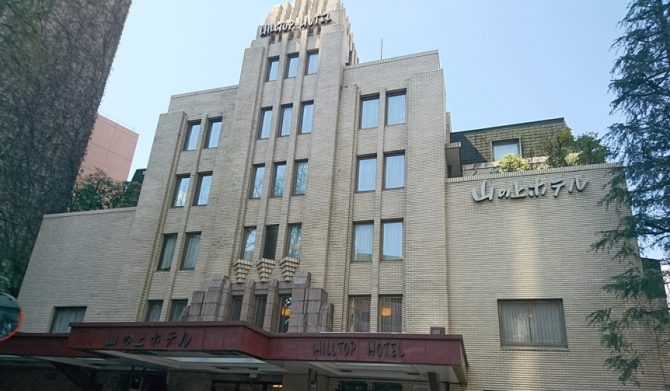
Recently, there has been a rapid increase in compact, minimalist, and modern city hotels, such as CLASKA in Meguro, TRUNK HOTEL in Shibuya, and hotel koé tokyo. I personally believe that Yamanoue Hotel might be the origin of these establishments. It is also known as the 'hotel of cultural figures' as many renowned literary masters like Yukio Mishima, Yasunari Kawabata, and Shotaro Ikenami were regular guests, but it is actually quite suitable for everyday use.
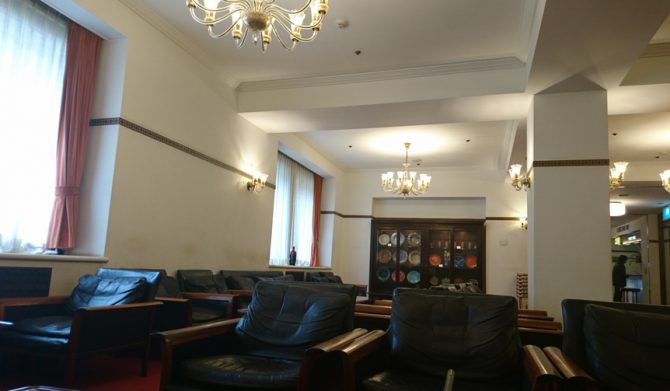
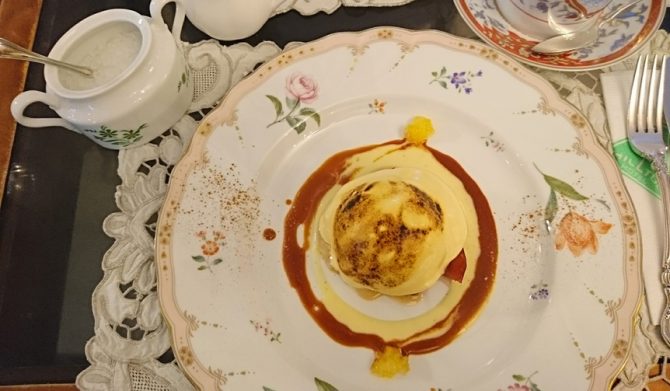
In the lobby lounge, accessible to everyone, you can spend a quiet and calm time with exquisite roll cake or cheesecake on the elegant red carpet and black leather sofas, and like modern hotels, it is equipped with Wi-Fi. It's a truly luxurious experience to relax with a cup of tea and read a book you bought in Jimbocho.
Yukio Mishima is said to have said, 'I pray that this place does not become too famous or too trendy,' but I believe the atmosphere of this elegant, classic hotel should be known to many people.
Buying books and having tea. Jimbocho is a town that makes such ordinary, everyday moments feel a little more intellectual and elegant. I believe Jimbocho is a town composed of good old food culture created by people who love books, and various tastes with high levels of individuality.
Biblio
Address: 1-25 Kanda Jimbocho, Chiyoda-ku, Tokyo, Kanou Bldg. 1F
TEL: 03-3295-6088
Hours: 11:00–18:00, Closed Sundays
Shosen Grande
Address: 1-3-2 Kanda Jimbocho, Chiyoda-ku, Tokyo
TEL: 03-3295-0011
Hours:
Weekdays 10:00–21:00
Weekends & Holidays 10:00–20:00
Open year-round
LADRIO
Address: 1-3 Kanda Jimbocho, Chiyoda-ku, Tokyo
TEL: 03-3295-4788
Hours:
Weekdays 11:30–22:30
Saturdays 12:00–19:00
Sundays 12:00–18:00
Closed on public holidays and New Year's holidays
Yamanoue Hotel
Address: 1-1 Kanda Surugadai, Chiyoda-ku, Tokyo
TEL: 03-3293-2311 (Main)
*Scheduled to be closed for renovation from April 30, 2019, to November 30, 2019
IJICHI Yasutake
Sunshine Juice Inc., Vice President
Born in Tokyo in 1982. While at Keio University, he was involved in planning and producing receptions and parties for major brands at an event company. He then moved to a PR company, where he was involved in planning and managing marketing, communication, and branding from a PR perspective. He quit his job at the age of 30. With his representative, a friend since junior high school for over 20 years, he launched Sunshine Juice, Japan's first cold-pressed juice specialty store, and currently holds his position. His favorite foods are fugu and soft-shelled turtle. His favorite sports are baseball and horse racing. His favorite places are traditional coffee shops and local taverns.
Instagram:ijichiman