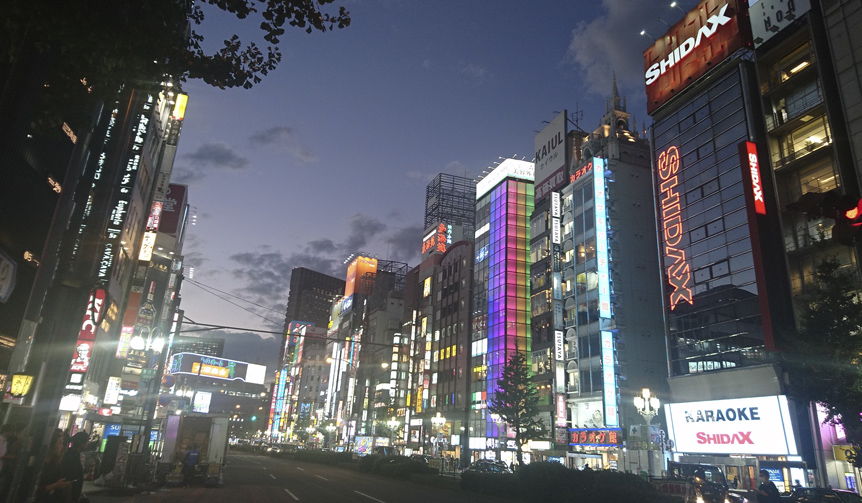
New Essay Series | #ijichiman's Musings, Part 1: "Shinjuku, A City Overflowing with Humanity"
New Essay Series | #ijichiman's Musings
Part 1: "Shinjuku, A City Overflowing with Humanity"
"To insist solely on the safety of the body, without questioning the life or death of the soul or spirit, is wrong (Yukio Mishima)" – In this series, Yasutake Ijichi, a board member of "Sunshine Juice," Japan's first cold-pressed juice specialty store, delves into the various human elements of the city, a stark contrast to the ultimate health offered by Sunshine Juice, exploring its history, transitions, customs, and culture. For the first installment, he navigates Shinjuku, the city where he grew up.
Photographs and Text by IJICHI Yasutake
What Remains Unchanged Amidst Change
I spent over a decade, from my early teens to mid-twenties, in Hyakunincho, Shinjuku. Kabukicho, just a ten-minute walk away, was a familiar part of my world. Ten years have passed since then, and Kabukicho has subtly transformed with the times.
In my teens, the east exit of Shinjuku, leading to Kabukicho, was one of my hangouts.
When I went out with my parents, stopping by "Takano Fruit Parlor" was a treat, and I casually enjoyed the curry at "Nakamuraya" and tempura at "Tsunahachi." It's only now that I realize how crucial these long-standing establishments were in shaping my palate.
When I wanted to make accessories, my grandmother told me "Okadaya" had everything, so I bought beads and leather cords. In high school, a senior told me I could find most of the clothes I wanted at "Isetan Men's Building" or "Barneys New York," and I happily frequented those stores.
Even now, I know I can find any book at "Kinokuniya Shoten" and any cigar at "Kagaya." The east exit of Shinjuku, then and now, is characterized by its collection of long-standing establishments loved for a century and specialty stores boasting unparalleled selections.
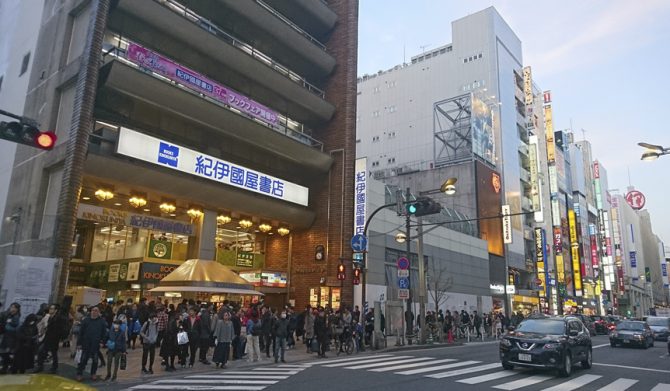
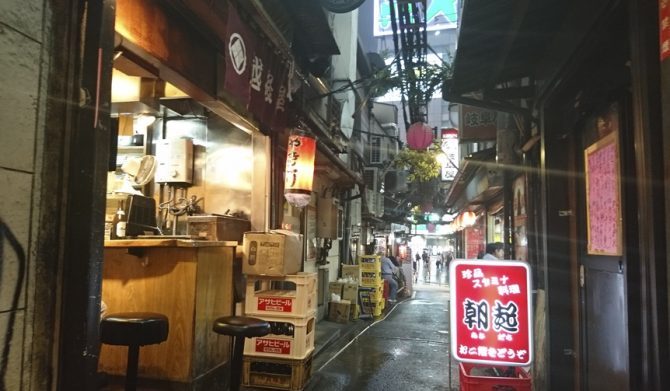
However, there's also an aspect that has evolved, reflecting about ten years of changing times.
It began as a black market after the war, then became a red-light district, and in the Showa era, it's said to have been a gathering place for literary masters and filmmakers – this is "Golden Gai." I first visited Golden Gai in my early twenties, and it was quite deserted back then.
But now, after a period of decline, it's bustling as an area popular with international tourists. Omoide Yokocho on the west side of Shinjuku, also known as "Shoben Yokocho," which also started as a black market, has also become a tourist spot steeped in Showa-era nostalgia.
Kabukicho has changed too. At first glance, the most noticeable change is the disappearance of the Kabukicho symbol, the "Koma Theater," but its inner character has transformed significantly. In the past, incidents happened almost daily. On my way to school, I once saw police cars and TV crews gathered, only to find out it was a murder case. At night, I was almost always stopped for questioning when I went out to rent CDs or DVDs. It was that kind of dangerous town.
But now, with security cameras installed throughout the streets, the tense atmosphere unique to lawless areas has considerably eased. It's like a friend who hasn't changed much in appearance from when they were young, but whose personality has mellowed considerably.
There are a few places I frequent in Kabukicho. One of them is "Parisienne," a cafe located on the first floor of the Furin Kaikan, a landmark in Kabukicho situated in the center of Kuseidori street.
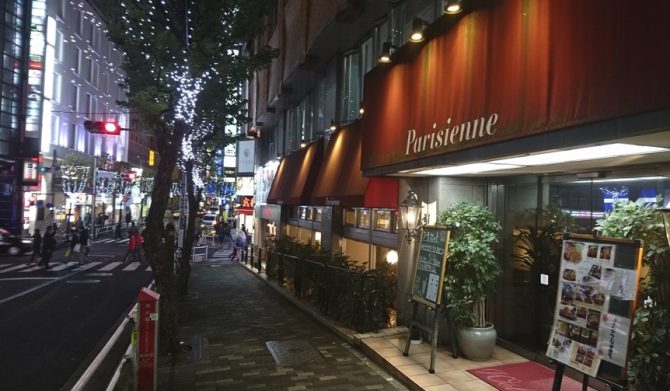
Shinjuku has many cafes. "Meikyoku Coffee Rambl" in Shinjuku Sanchome, the oldest large cafe, "Coffee Kizoku Edinburgh" also in Sanchome, which serves coffee brewed with a siphon despite being open 24 hours – these are all must-visits, but "Parisienne" is where I go for meetings in Shinjuku.
This long-standing cafe has been here for over 50 years, since the Furin Kaikan was built. In the past, there was even a shooting incident inside the cafe, so it can be said to have witnessed both the public and private history of Kabukicho. While the danger has diminished, or rather, is almost non-existent now, the fact that there are no restrooms inside and you need to borrow a key to use the auto-lock toilet at the adjacent pharmacy is a bit of a hassle, but conversely, it feels like the only hint of its past.
Inside, there are people reading newspapers, people sleeping, people engrossed in their smartphones, couples about to argue, and people having suspicious business meetings. There's a diverse clientele. Yet, no one intrudes on the space or time of others; customers maintain a good distance from each other, and the establishment maintains a good distance from its customers. The personality of each individual there shines through, creating a world that feels like a condensed version of Kabukicho itself. This atmosphere is comforting.
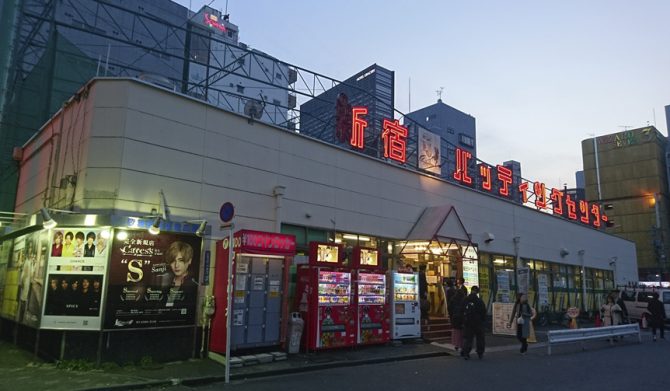
And then there's the "Shinjuku Batting Center," just a short walk from Parisienne towards Shokuan Dori, another indispensable spot.
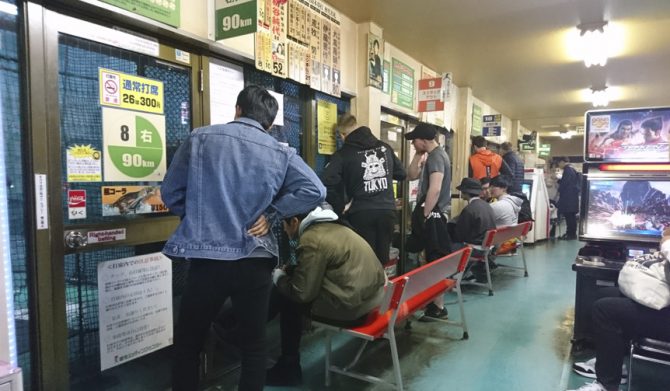
Strangely, Kabukicho (also in the same 2-chome) has two batting centers: "Oslo Batting Center" and "Shinjuku Batting Center." I prefer the Shinjuku one. While Oslo offers 20 pitches for 300 yen, Shinjuku gives you 26 pitches for the same price. It's an affordable price that hasn't changed since long ago.
Furthermore, Oslo is clean and non-smoking, while Shinjuku is enveloped in smoke, much like a smoking area at Haneda Airport. I believe a batting center is not just a place for sporty fun and sweating it out, but also a place to hit away the frustrations, pent-up emotions, and self-deception that people carry after drinking. The Shinjuku Batting Center best embodies this.
There are women who look like they work in the nightlife industry, swinging bats alone in a tipsy state in the early afternoon, and tough-looking men shouting boisterously before dawn. The Shinjuku Batting Center is a place where various human dramas coexist.
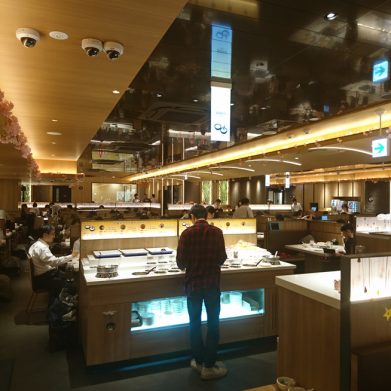
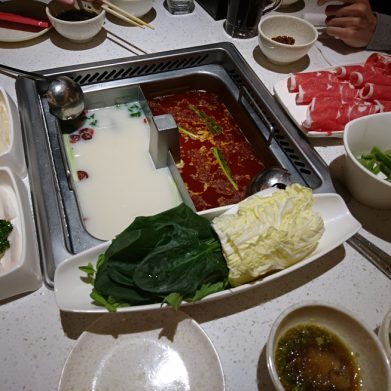
And then there's "Haidilao Hot Pot" in the Dai-ni Toa Kaikan building, opposite the old Koma Theater. This is a relatively new establishment, but I visit it often. I've always liked hot pot. However, it was only recently that I learned the true essence of hot pot isn't as a medicinal, healthy, and stylish dish, but as a fun, lively, junk food experience.
As you step out of the elevator on the 6th floor of a building in the heart of Kabukicho, you're greeted by a scene that makes you momentarily forget you're in Japan, let alone Kabukicho. The language spoken is Chinese. The efficient way the staff handles customers and tables is impressive, and inside, it's a massive establishment with about 300 seats, akin to a family restaurant.
All orders are placed via electronic menus. You can choose from multiple soup bases, up to four, and the meat selection is diverse, ranging from beef, pork, lamb, and venison to rarer options like pork heart, beef tripe, and duck intestines. It's an authentic style where you choose your own sauce, with options ranging from soy sauce and ponzu to white sugar and MSG readily available.
The restaurant is new, but I became fond of it after a junior colleague who had lived in Beijing recommended it. It's a giant entertainment spot that encapsulates the current Kabukicho.
After a meeting at Parisienne, enjoying a heart-to-heart chat over hot pot, and then working it off and sublimating it at the Shinjuku Batting Center – this is my healthiest route in this un-healthy Kabukicho. Kabukicho is always changing, but the fundamental human desires scattered throughout remain, and the city is still overflowing with humanity. It remains the best city.
Parisienne
Address: 1F Furin Kaikan, 2-23-1 Kabukicho, Shinjuku-ku, Tokyo
TEL: 03-3209-1411
Hours: Mon-Sat 11:30 AM - 3:00 AM, Sundays Closed
Shinjuku Batting Center
Address: 2-21-13 Kabukicho, Shinjuku-ku, Tokyo
TEL: 03-3200-2478
Hours: 10:00 AM - 4:00 AM, Open Year-Round
Haidilao Hot Pot Shinjuku
Address: 6F Dai-ni Toa Kaikan Bldg., 1-21-1 Kabukicho, Shinjuku-ku, Tokyo
TEL: 03-6278-9799
Hours: 11:00 AM - 5:00 AM, Open Year-Round
IJICHI Yasutake
Sunshine Juice Inc., Vice President
Born in Tokyo in 1982. While at Keio University, he was involved in planning and producing receptions and parties for major brands at an event company. He then moved to a PR firm, where he engaged in planning and managing marketing communications and branding from a PR perspective. He resigned at the age of 30. With his representative, a friend since junior high school for over 20 years, he established "Sunshine Juice," Japan's first cold-pressed juice specialty store, and currently holds his position. His favorite foods are fugu and soft-shelled turtle. His favorite sports are baseball and horse racing. His favorite places are old-fashioned coffee shops and casual bars.
Instagram:ijichiman