Mitsuru Uragami, World's Foremost Collector of Hokusai Manga, Discusses the Genius Hokusai and the Edo Period | MITSUKOSHI
MITSUKOSHI | Nihonbashi Mitsukoshi Main Store
Welcome to the World of Hokusai Manga! Exhibition to be Held at Nihonbashi Mitsukoshi Main Store from Wednesday, August 12!
The World's Foremost Collector of "Hokusai Manga" Discusses Hokusai and the Edo Period (Part 1)
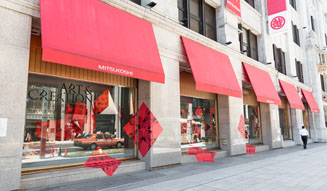
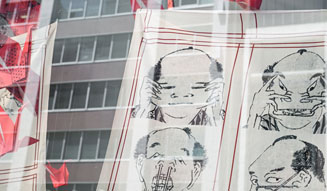
This summer, Nihonbashi Mitsukoshi Main Store features "Hokusai Manga." The exhibition "Welcome to the World of Hokusai Manga," opening on Wednesday, August 12, in the Central Hall on the first floor of the Main Building, will showcase and sell Hokusai Manga, alongside workshops by woodworkers and tatami mat artisans, recreating the atmosphere of Edo town. We spoke with Mitsuru Uragami of Uragami Sokyudo, a specialist dealer in East Asian antiquities and the world's foremost collector of "Hokusai Manga"—a collection of 15 volumes comprising approximately 4,000 drawings, which the Edo-period genius artist Katsushika Hokusai described as "pictures drawn idly at the whim of the moment"—about its allure.
Photographs by SUZUKI Shimpei (INTERVIEW)Text by KAJII Makoto (OPENERS)
Encountering "Hokusai Manga"
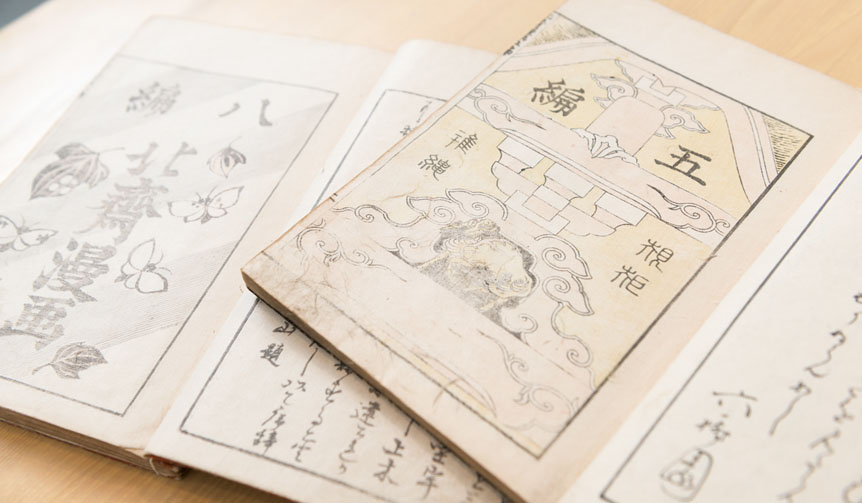
Mitsuru Uragami of Uragami Sokyudo in Nihonbashi, Tokyo, has collected approximately 1,500 volumes of "Hokusai Manga" and is considered the world's leading collector in both quality and quantity among experts. He is cooperating with the exhibition and sale event "Welcome to the World of Hokusai Manga" by providing items for display and sale. Approximately 100 selected pieces, focusing on rare first editions, will be framed and offered for sale.
I first encountered "Hokusai Manga" at the age of 18, during my first year of university. My father was a collector of ukiyo-e prints, and when we visited an antique shop together, I saw "Hokusai Manga" for the first time. My father also recommended it, and I bought it for several tens of thousands of yen at the time. It was an impulse buy, but for the past 45 years, I have continued to collect and purchase original volumes from auctions and collectors both in Japan and abroad.
The Appeal of First Editions of Edo-Period Prints
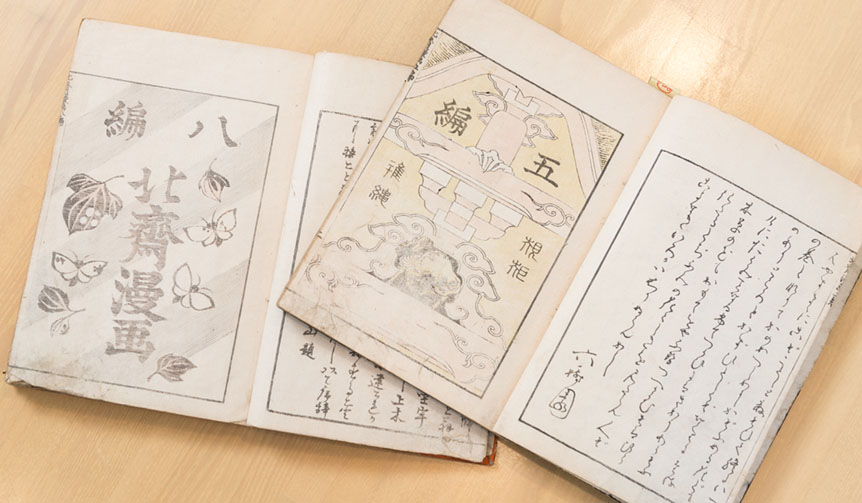
As you know, woodblock prints from Katsushika Hokusai's era were the result of a collaborative effort by three artisans: the artist, the carver, and the printer. Typically, about 200 first editions were printed. Later, popular prints might be printed in the thousands, but as the woodblock wore down, the lines and colors would become duller. Initially, thick paper was used, but it would also become thinner. The first editions have vibrant lines, a powerful quality, and very beautiful colors. I have continued to seek out prints that were made quickly and are in good condition, and before I knew it, I had amassed 1,500 volumes.
As the 21st century approached, Katsushika Hokusai was the only Japanese person selected among the "100 Great Figures of the Millennium" by the American magazine "LIFE" in 1998 (the first place went to Thomas Edison). Hokusai's global recognition was largely due to "Hokusai Manga" significantly influencing French Impressionist painters and cultural figures. Manet copied Hokusai Manga, Monet was so strongly interested in Hokusai that he was described as "Hokusai's faithful rival," and he also collected Hokusai Manga. Degas is said to have learned about human anatomy from Hokusai Manga.
What is the Greatest Appeal of Hokusai Manga?
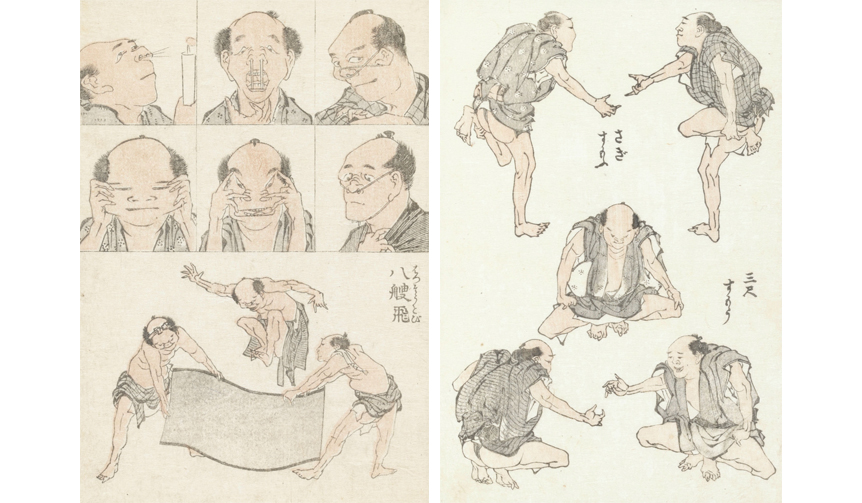
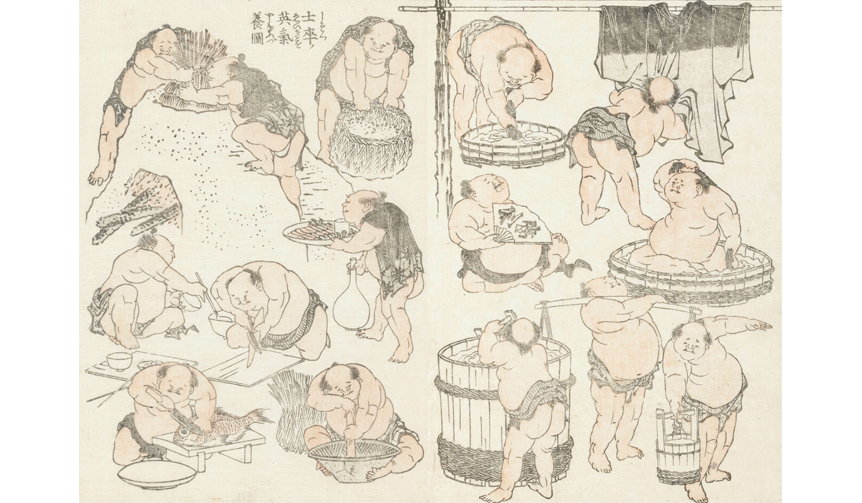
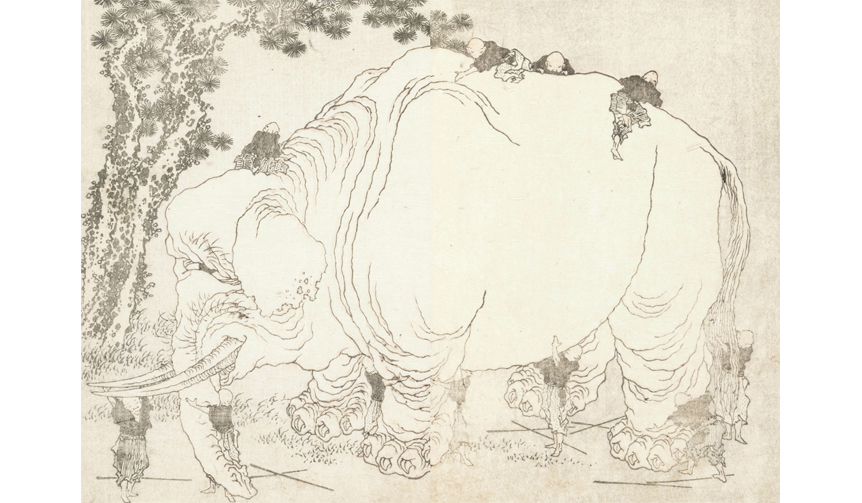
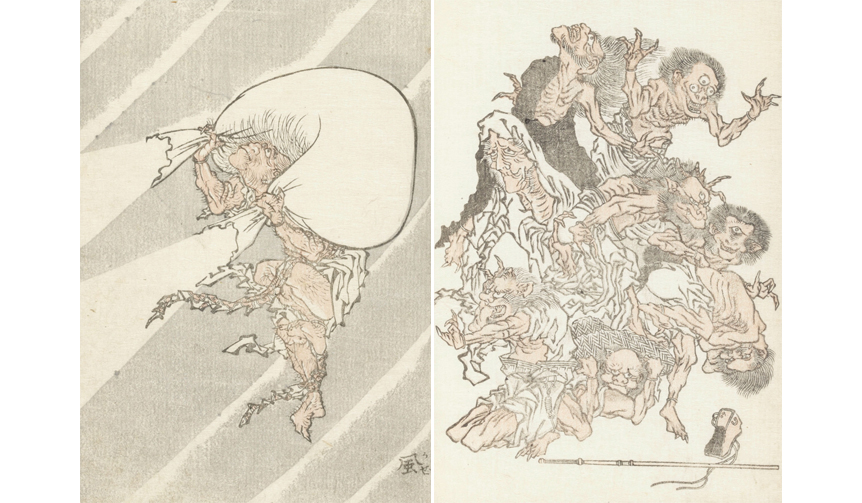
Katsushika Hokusai produced a wide variety of works, but "Hokusai Manga" contains the essence of all of Hokusai. When I first started collecting, I was drawn to the many common people depicted, thinking, "There are still people like these old men and women today," and I found them incredibly relatable. Rather than tiring of them, my fascination grew. The common people themselves are the protagonists, and even dogs, cats, insects, fish, and frogs are depicted with individuality. There are even kappa and yokai. It is truly an "encyclopedia of the Edo period," meticulously illustrating the myriad phenomena of that era, and it's clear that everyone from daimyo to commoners enjoyed looking at it.
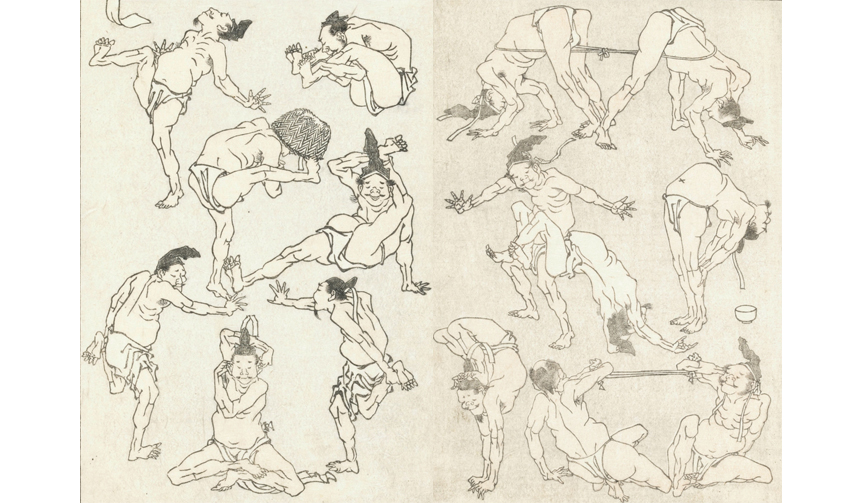
Page02.Hokusai Manga: Hokusai's Databank
MITSUKOSHI | Nihonbashi Mitsukoshi Main Store
Welcome to the World of Hokusai Manga! Exhibition to be Held at Nihonbashi Mitsukoshi Main Store from Wednesday, August 12!
The World's Foremost Collector of "Hokusai Manga" Discusses Hokusai and the Edo Period (Part 2)
Hokusai Manga: Hokusai's Databank
Furthermore, Mitsuru Uragami continues, "Hokusai, after becoming a disciple of the ukiyo-e artist Katsukawa Shunsho at the age of 19, was insatiably curious. He learned painting techniques from various schools, including the Kano school, and incorporated elements of Western art that entered Japan through Dejima, dedicating himself entirely to his art. 'Hokusai Manga,' first published when he was 55 years old (1814), expresses this unending quest. Hokusai Manga can be considered Hokusai's databank, his own source of inspiration.
Perhaps the charm of Katsushika Hokusai lies in his being an artist of transformation. He excelled at beautiful women portraits and produced magnificent landscape paintings. He called himself a "madman of painting" and dedicated his life to his art. Globally, only Hokusai and Picasso can be described as such painters. Hokusai was never one to settle, and his full scope is elusive. However, "Hokusai Manga" is like Hokusai's sketchbook, offering insight into his evolving interests. It contains sketches that foreshadow his immortal masterpiece "Thirty-six Views of Mount Fuji," revealing it as a sourcebook.
Old Items are Just Old; Antiques are Timeless
Moreover, "Hokusai Manga" served as a textbook, or rather, an illustrated guide, for Hokusai's approximately 200 disciples across Japan. "When Hokusai began drawing 'Hokusai Manga,' he left behind the profound statement, 'Now, I only learn from nature.' For him, it was a sketchbook and a drawing journal. For his disciples, it was a precious illustrated guide—a textbook. It also opened the door to Japonisme in the West, influencing artists like Manet, Monet, and Degas."
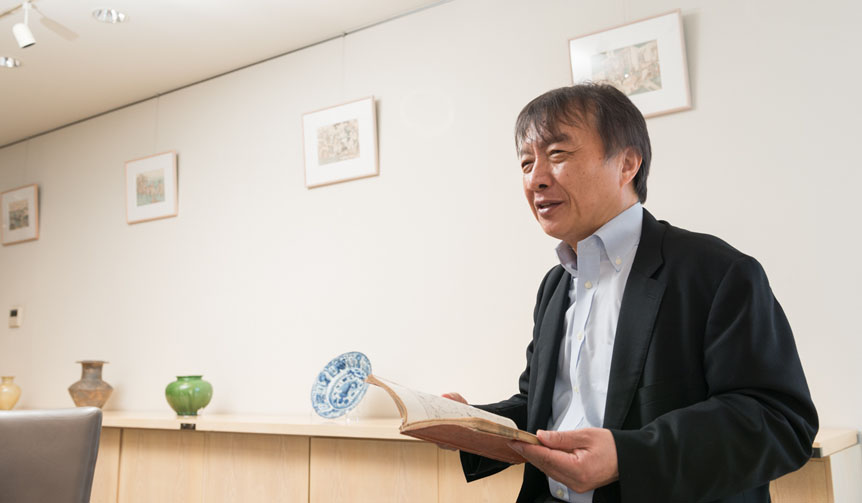
Furthermore, Uragami states, "My primary work is in ancient ceramics, but like excellent ancient ceramics, I never tire of looking at 'Hokusai Manga.' Artworks that possess a certain 'class'—strength and refinement—are endlessly fascinating. Objects that are merely old are just old items; those that evoke emotion and never bore are antiques."
Framed, Hokusai's Art Endures for Posterity
At this event at Nihonbashi Mitsukoshi Main Store, I have selected only those prints that are early, in good condition, and particularly interesting, and Uragami Sokyudo will be selling them framed with full responsibility. You might ask why I frame books; I consider it 'returning the picture from the book.' As I've said before, I never tire of pictures I love. I want to look at them constantly and share them with family and friends. Moreover, when they are framed and go to people's homes, Hokusai's art is preserved for future generations.
See the art of the genius Katsushika Hokusai, purchase what truly resonates, keep it in your home, display it, and begin a new life with art. For such an encounter with a single piece of art, let's visit Nihonbashi Mitsukoshi Main Store during the Obon holiday.
Mitsuru URAGAMI
Influenced by his father, Mitsuro Uragami (Honorary Director of the Yamaguchi Prefectural Hagi Museum and Uragami Collection), a collector since childhood, he became familiar with antique art. After graduating from university and completing his training at Mayuyama & Co., Ltd., he established Uragami Sokyudo in 1979.
He has planned and held numerous exhibitions and was the first Japanese art dealer to exhibit at the "International Asian Art Fair" in New York for 11 years starting in 1997, where he also served on the vetting committee. He is currently a director of the Tokyo Art Club and vice chairman of the Tokyo Art Dealers Association. In 2011, he published "Learning from an Antique Dealer: How to View and Select Chinese and Korean Ceramics" (Tankosha). He has also released an iPhone app called "Manga-o Hokusai" that allows viewing of Hokusai Manga. He is also cooperating with the "Shunga Exhibition" to be held at the Eisei Bunko in Bunkyo Ward from Saturday, September 19.
http://www.uragami.co.jp/
"Welcome to the World of Hokusai Manga"
Dates | Wednesday, August 12 - Monday, August 17
Hours | 10:30 AM - 7:30 PM
Venue | Nihonbashi Mitsukoshi Main Store, Main Building 1st Floor Central Hall
1-4-1 Nihonbashi Muromachi, Chuo-ku, Tokyo
Cooperation | Uragami Sokyudo
Nihonbashi Mitsukoshi Main Store
Tel. 03-3241-3311
http://www.mitsukoshi-special.com/art-and-creation2015/