People and Companies Building a New Era—IBM | SHIFT JAPAN
People and Companies Building a New Era – IBM
Toward a Company Spearheading Next-Generation Power Grid Platforms (1)
Smarter cities that use electricity efficiently. This is said to be the ideal form of future cities, but it seems to be already becoming a reality. We interviewed Hideyuki Kawai, a department manager at IBM Japan, the local subsidiary of IBM, an IT company contributing to the realization of smarter cities through cloud technology and other means, who is in charge of smart energy solutions.
Text by Fumio OgawaPhotos (Portrait) by JAMANDFIX
Japan's View on Energy Has Changed
—Has the way Japanese people think about energy changed significantly?
In the past, many energy consumers, both individuals and companies, likely thought that the energy they needed would always be available, that renewable energy was just part of CSR (Corporate Social Responsibility), that visualizing energy consumption would have no effect, and that they wouldn't save electricity without incentives. However, against the backdrop of anxiety about power supply caused by the earthquake and the nuclear power plant accident, this attitude is now changing significantly.
—What does that mean specifically?
Energy suppliers have begun displaying energy supply status in public places like train stations and on television. Energy consumers are becoming more proactive about saving electricity, even without incentives, such as turning off office lights during daylight hours or recognizing the importance of visualizing energy consumption.
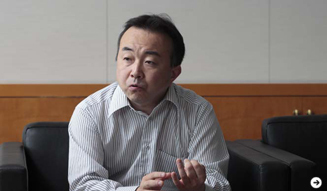
Hideyuki Kawai, Department Manager of Smart Energy Solutions
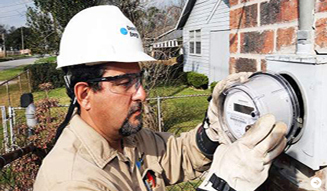
He also develops software that works with smart meters.
—As a result of the change in thinking about energy consumption, what kind of society can be envisioned?
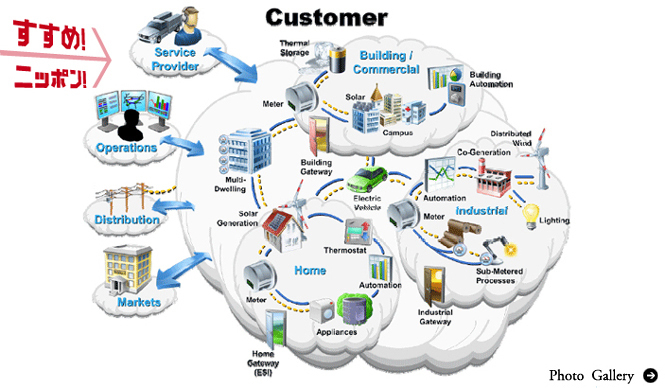
Until now, the effort has primarily been on the energy supply side. However, as a result of changes in consumer awareness, projects in which consumers actively participate are emerging worldwide. One of these is the smart grid. By connecting in-home devices to the outside and exchanging information, it enables coordination between supply and demand, such as reducing power consumption and shifting appliance usage times. What is necessary for this is an electronically controlled distribution board, or what is known as asmart meter. Dynamic pricing, which finely adjusts electricity charges based on consumption, is also a billing system that assumes the installation of smart meters.
What IBM Is Doing
—How is the world moving toward smarter cities equipped with smart grids?
Japan's Ministry of Economy, Trade and Industry has set the final goal for the full deployment of smart meters to all households in the 2020s. In other countries, there are several places showing faster progress. Cities with smart meters installed can be found in Italy, the United States, and Germany. Furthermore, in Germany and China, it is said that by 2015, 'grid parity,' where power generation from solar panels becomes equal to or less than the regular electricity cost, or the phenomenon of reversed electricity costs, may be observed.
—In that context, what is IBM doing?
Globally, we are supporting smart grid projects in over 150 locations. While the specifics vary by case, in many instances, it involves creating platforms for information exchange to enable smart grids. We integrate information from both energy suppliers and consumers to formulate optimal power supply volumes and pricing structures. This is support for information analysis and utilization.
People and Companies Building a New Era – IBM
Toward a Company Spearheading Next-Generation Power Grid Platforms (2)
Participating in Demonstration Experiments in Kitakyushu City
—What is needed for that?
When making homes and offices smart, in addition to smart meters, it is necessary to connect a computer called a home gateway, which monitors and adjusts power consumption as needed, with the supplier. This allows for control of household power consumption, such as cutting off power to non-essential appliances when regional power consumption is high. In this process, a third party that manages information between suppliers and consumers, handling security and authentication, and a server that mediates data are required. IBM has been developing and demonstrating this as a 'Service Delivery Platform'.
—Is this being done in Japan too?
IBM Japan is providing services for the Service Delivery Platform in the Kyushu Smart Community Creation Project, a demonstration experiment that has been underway in Yahata Higashi Ward, Kitakyushu City, for five years since 2010. Additionally, we are building a management service environment that assumes the use of storage batteries for storing electricity generated by homes and companies.
Why Must This Be Done Now?
—What will be the trend of the energy business in future society?
According to IBM's research, there are two factors influencing the energy industry: one is technological advancement, and the other is consumer autonomy. By around 2017, new technologies will be utilized by both energy companies and consumers, leading to the development of new products and services to meet diverse energy usage needs.
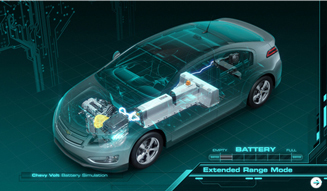
How it integrates with electric vehicles is also a key aspect of smart grids.
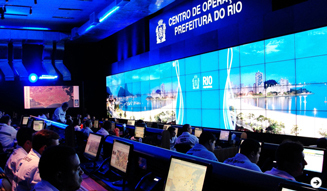
Centralized management of all city information, including power status, is also important.
—Does this include new companies entering the market?
It is conceivable that individuals and companies not traditionally involved in the energy industry may enter the space between energy companies and consumers. Cloudification in smart grids and service providers are examples of this. This includes consumers who will likely also sell electricity, collectively referred to as the energy value chain. This is something that did not exist before.
—Will communication technology also play an important role?
Just as applications are important for mobile phones, forsmart homes, where visualizing power consumption is advancing, service providers are needed to provide information on power supply status and prices, and to adjust usage based on that information, as mentioned earlier. Who will manage that information? I believe it presents a significant business opportunity. Even from overseas, one can grasp Japan's power situation in real-time, so it is possible for foreign companies to enter the market.
—What is the future potential of natural energy?
There is talk about large-scale installation of solar panels, but what is important is to make consumers feel anticipation and excitement about the realization of smart homes and smart grids for intelligently using energy. To achieve this, in addition to communicating the results of demonstration experiments and future visions to consumers, it is crucial to provide services that meet their expectations and to develop the social infrastructure and systems that support them.
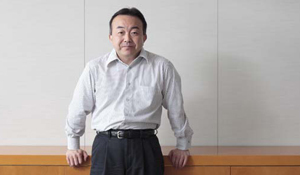
Hideyuki KAWAI
IBM Japan, Cloud & Smarter Cities Business, Social Infrastructure Business Development, Smart Energy Solutions Department Manager. After leading the development of Electronic Data Interchange (EDI) systems and B2B/EC e-commerce solutions, he became the Utility Solutions Leader for electricity and gas in 2005, and since 2009, has been in charge of energy solutions, including new energy, within the Future Value Creation Business.