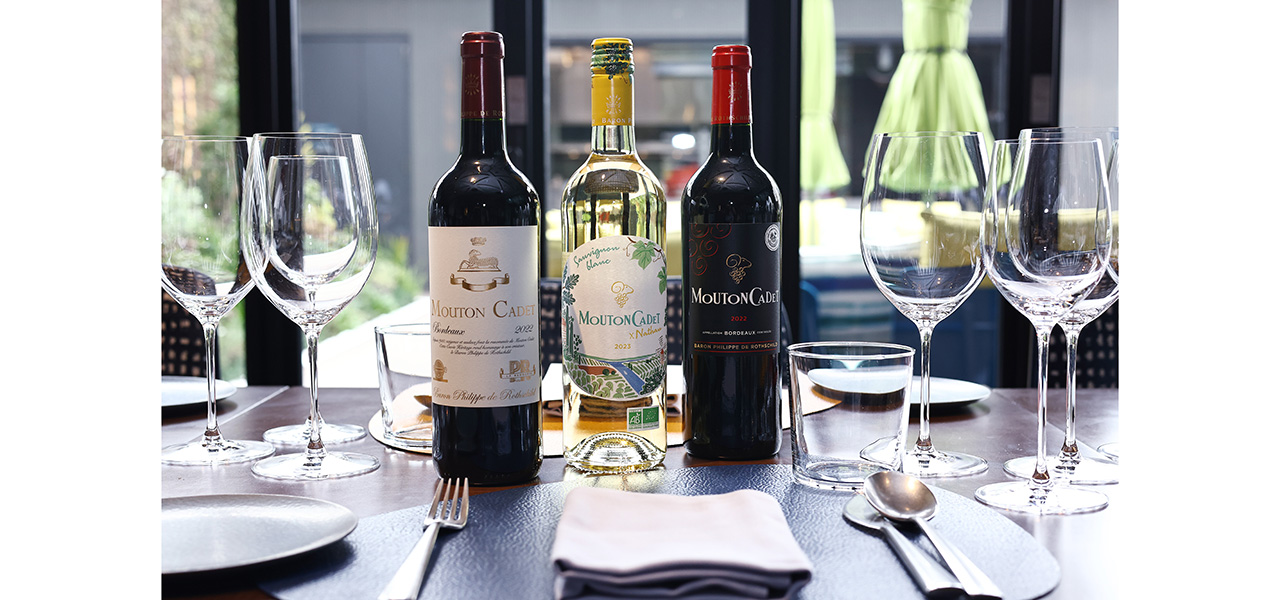
Authenticity within reach. Mouton Cadet embodies the tradition and innovation of Bordeaux wine.
Mouton Cadet
“We want people to enjoy wine more easily…” This was the wish of Baron Philippe de Rothschild, owner of the prestigious Bordeaux estate Château Mouton Rothschild, when Mouton Cadet was born in 1930. Today, it has become the world's most recognized Bordeaux wine brand, boasting the No. 1 sales volume in the premium wine category in France (2024 survey). This esteemed achievement is undoubtedly made possible by its accessible price point. However, its hidden value may not be as widely known as one might think.
Edit & Text by Takashi Tsuchida
The Excellence of Baron Philippe de Rothschild SA?
Baron Philippe de Rothschild SA is a distinguished wine company that owns Château Mouton Rothschild, a First Growth classified estate and one of the five Bordeaux First Growths. Mouton Cadet is the casual line produced by this company. "Cadet" means "youngest son" in French. The brand name reflects Baron Philippe himself, who was the youngest son of the Rothschild family.
Until then, château wines were considered something to be enjoyed only in special places by special people. Baron Philippe broke this convention with his innovative vision to deliver high-quality Bordeaux wines to a wider audience, leading to the creation of Mouton Cadet. The very concept of a "brand wine," now commonplace, was a new path pioneered by Baron Philippe. This vision has been continuously passed down through nearly a century of history.
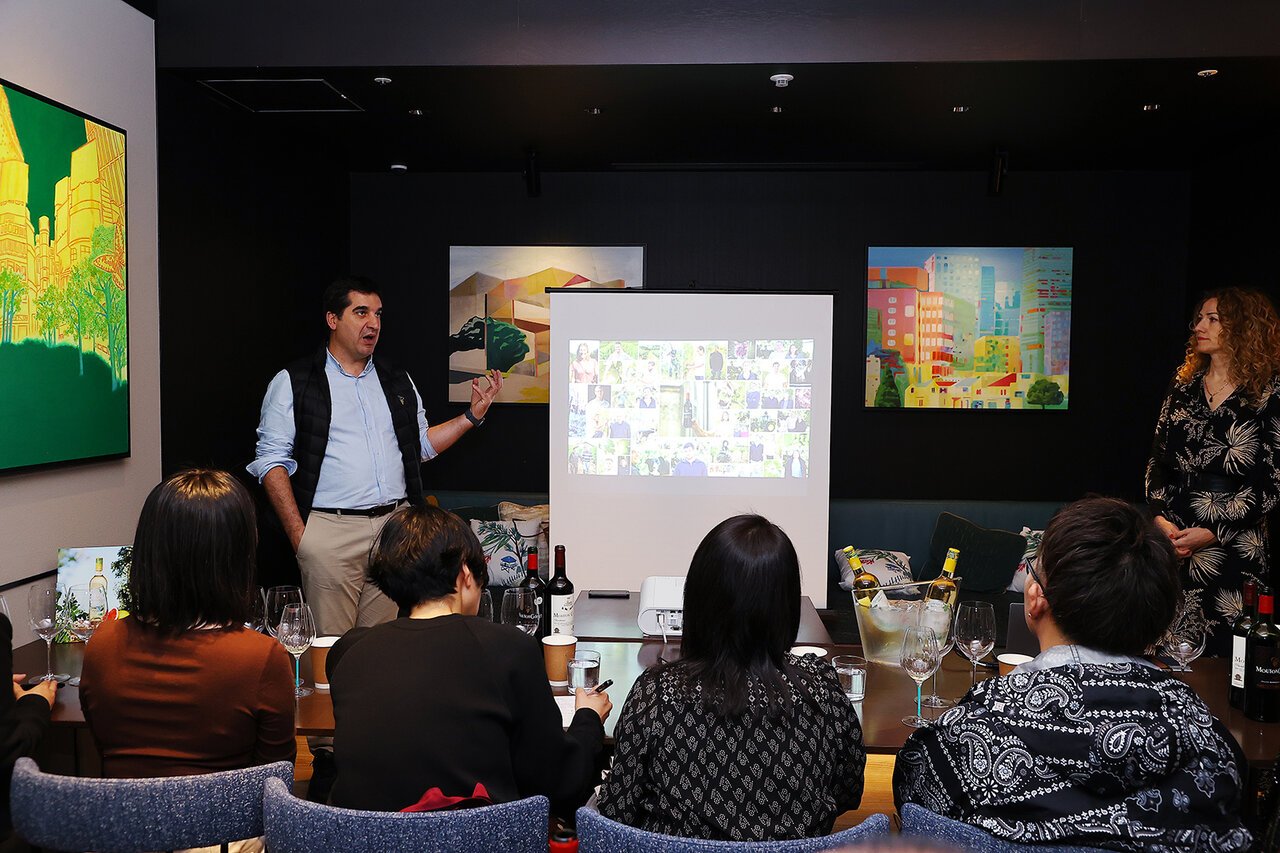
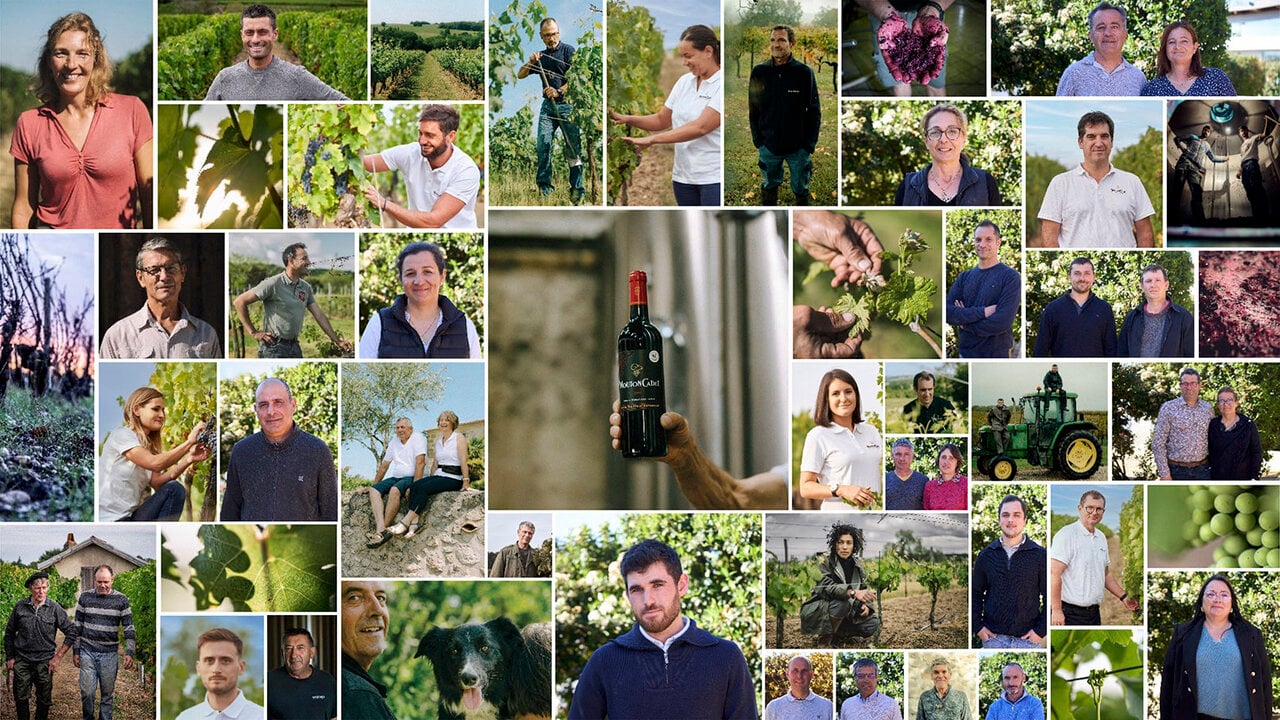
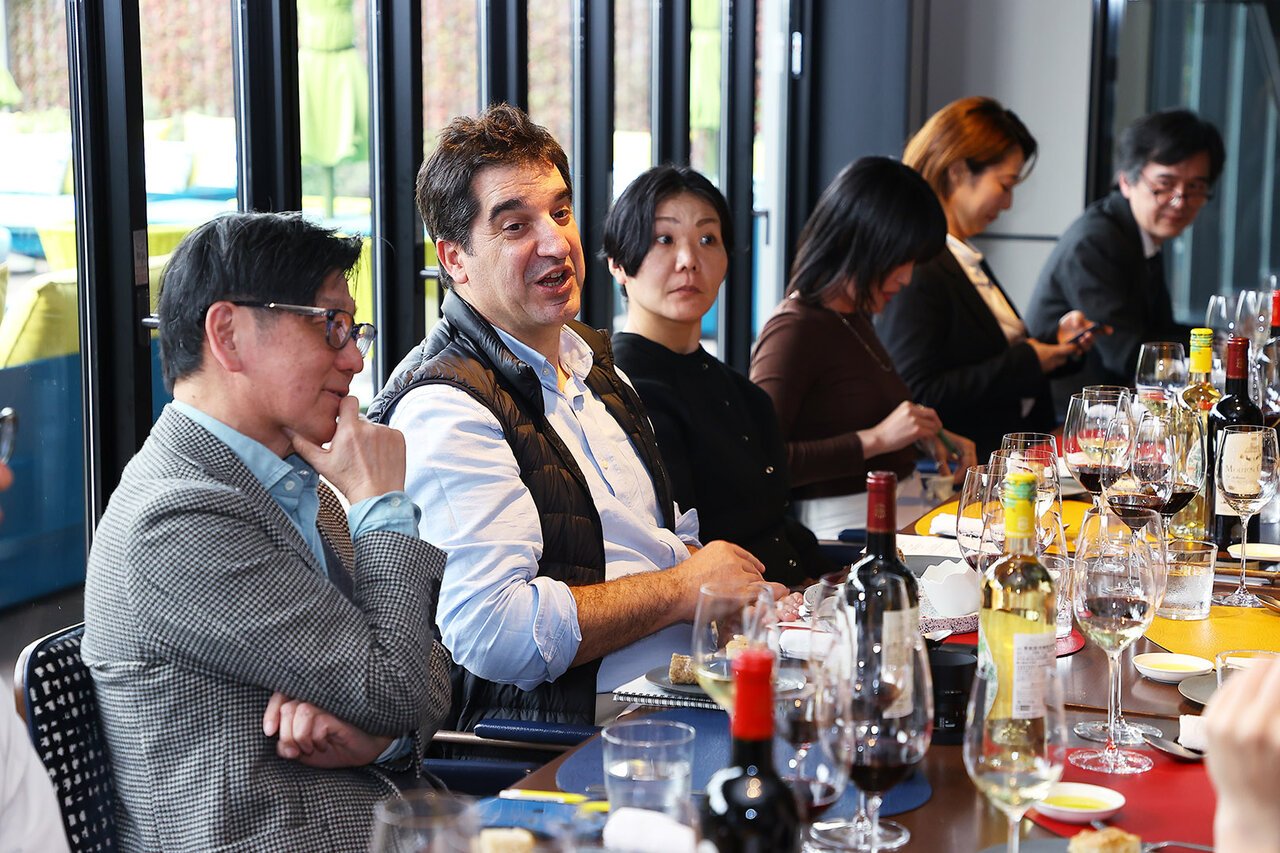
While many know Mouton Cadet as a "casual Bordeaux wine," its production method sets it apart from typical brand wines. "Other producers take an approach of buying bulk wine and doing their best with what they receive, but Mouton Cadet is different," says current Head Winemaker Jérôme Aguirre. The Mouton Cadet winemakers work closely with 150 contracted grape growers daily, focusing on three key points:
1. Respecting the unique character of each terroir.
2. Harmonizing grape characteristics with the overall wine style.
3. Respecting the individuality of each wine producer.
"We are a part of their lives, and they are a part of ours," Aguirre states. They build partnerships that extend beyond mere business relationships, walking together through the entire grape growing cycle.
Remarkably, Mouton Cadet pays its contracted grape growers more than the market price. In 2024, it also obtained the "Fair for Life" fair trade certification. This is not mere charity, but a strategic investment to secure the highest quality grapes.
Furthermore, the "Fair for Life" certification ensures that 1% of sales is always reinvested in environmental and social responsibility initiatives. They even provide expertise in financial management and auditing, supporting contracted growers to ensure their long-term survival and prosperity. Some growers have been trading with Mouton Cadet for over 30 years, building long-term relationships where they can "see the progression, like a grandfather, his son, and his grandson," as Aguirre puts it.
Winemaking at Baron Philippe de Rothschild SA
The winemaking philosophy of Mouton Cadet carries the spirit of the Rothschild family. The concept of "Manual Intelligence" is particularly emphasized.
For example, pruning the vines is described by Aguirre as an "intelligent act." It is not merely a mechanical task, but an artistic endeavor that requires understanding the individuality of each vine and assessing its capacity. "Just like people, each vine is different. Some are popular, some are not, even if they are the same size," he explains. This artisanal approach to cultivation allows for the production of high-quality grapes while reducing pesticide use.
With such meticulous cultivation, the winemaking process naturally follows suit. Each producer crafts the wine according to its specific terroir, and these carefully made wines are brought to the Mouton Cadet winery. After an appropriate aging period, they are blended (assemblage*), a process that Aguirre describes as deeply moving.
*A technique that dramatically improves wine quality by blending different wines. This method is particularly developed in Bordeaux and Champagne.
"There are moments that make me want to cry. The moment of assemblage is the most moving moment for me."
For Aguirre, assemblage is not just mixing wines. It is the pinnacle of winemaking, the moment when the diverse characters gathered from various regions are elevated to their highest potential. He describes it as a special moment when the efforts, time, and dedication of many people come together.
This is nothing less than the condensation of the diversity of the Bordeaux region, influenced by its maritime climate, into a single bottle. The moisture-retaining capacity and rich minerality from clay soils, the elegance and finesse from limestone soils, and the complexity and tannic structure from gravel soils all harmonize to create its exquisite taste.
Therefore, the ability to enjoy a wine crafted with such meticulous care, comparable to prestige cuvées, at a price point of ¥1,500-¥2,000 is an exceptionally rare value. Mouton Cadet, often opened "casually" at parties or dinners, is in fact, each bottle filled with nearly 100 years of history and the expertise of passionate professionals.
The next time you pick up a bottle of Mouton Cadet, please take a moment to reflect on the people who made it. You will surely feel that this wine is not industrially produced, but a "genuine article within reach," rooted in the tradition of winemaking.
Four Collections of Mouton Cadet
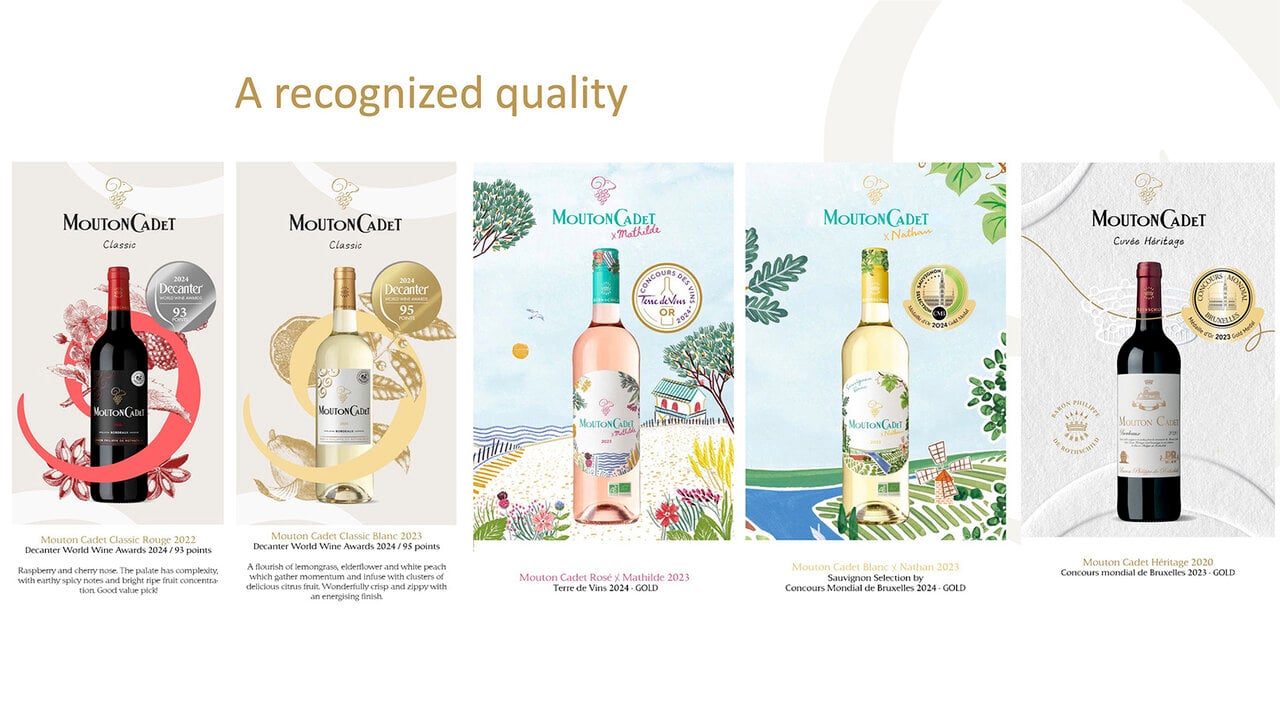
Mouton Cadet currently offers four collections, each with its own distinct character yet united by consistent quality and elegance. It has received high international acclaim, including scores of 90+ points from Decanter magazine. In Japan, Enotecca imports and sells Mouton Cadet, available at its various stores.
With cooperation from: Enotecca