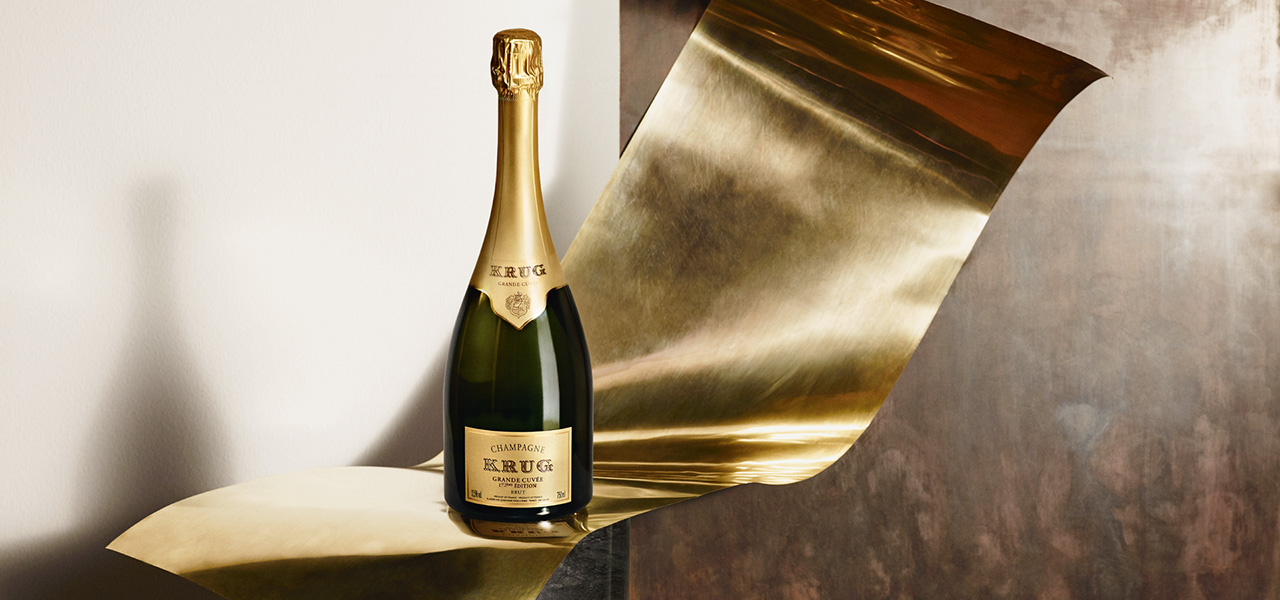
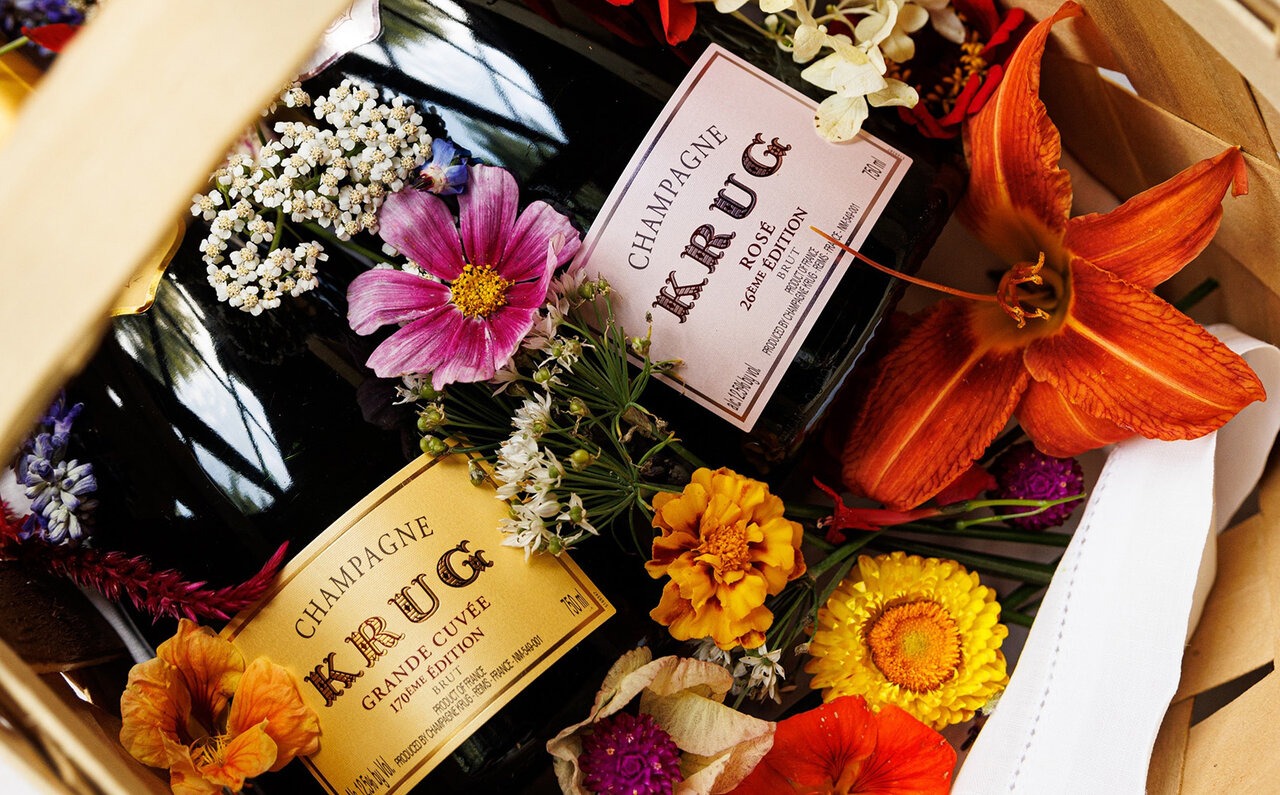
What is Krug's flagship Grande Cuvée 172ème Édition recreation?
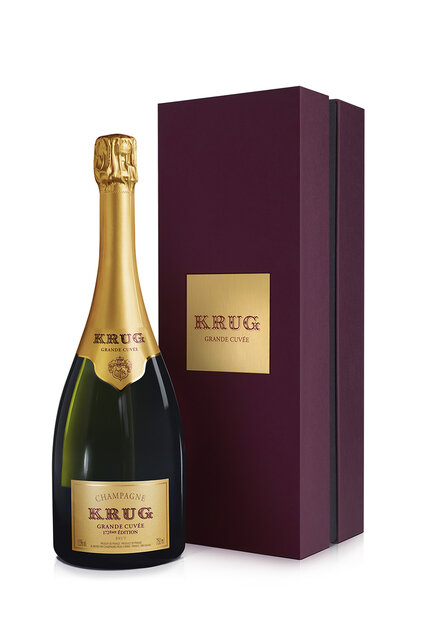
KRUG | Krug Grande Cuvée 172ème Édition
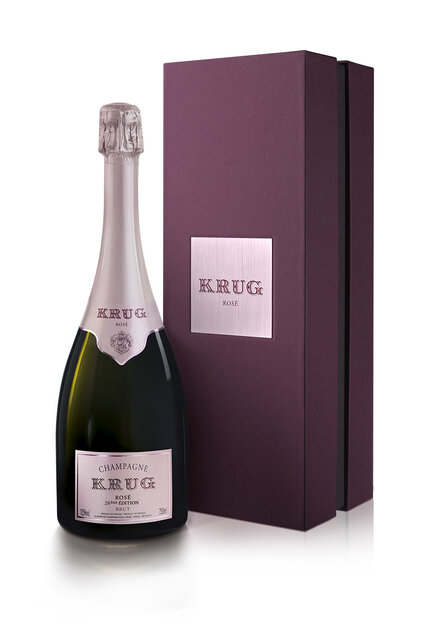
KRUG | Krug Rosé 28ème Édition
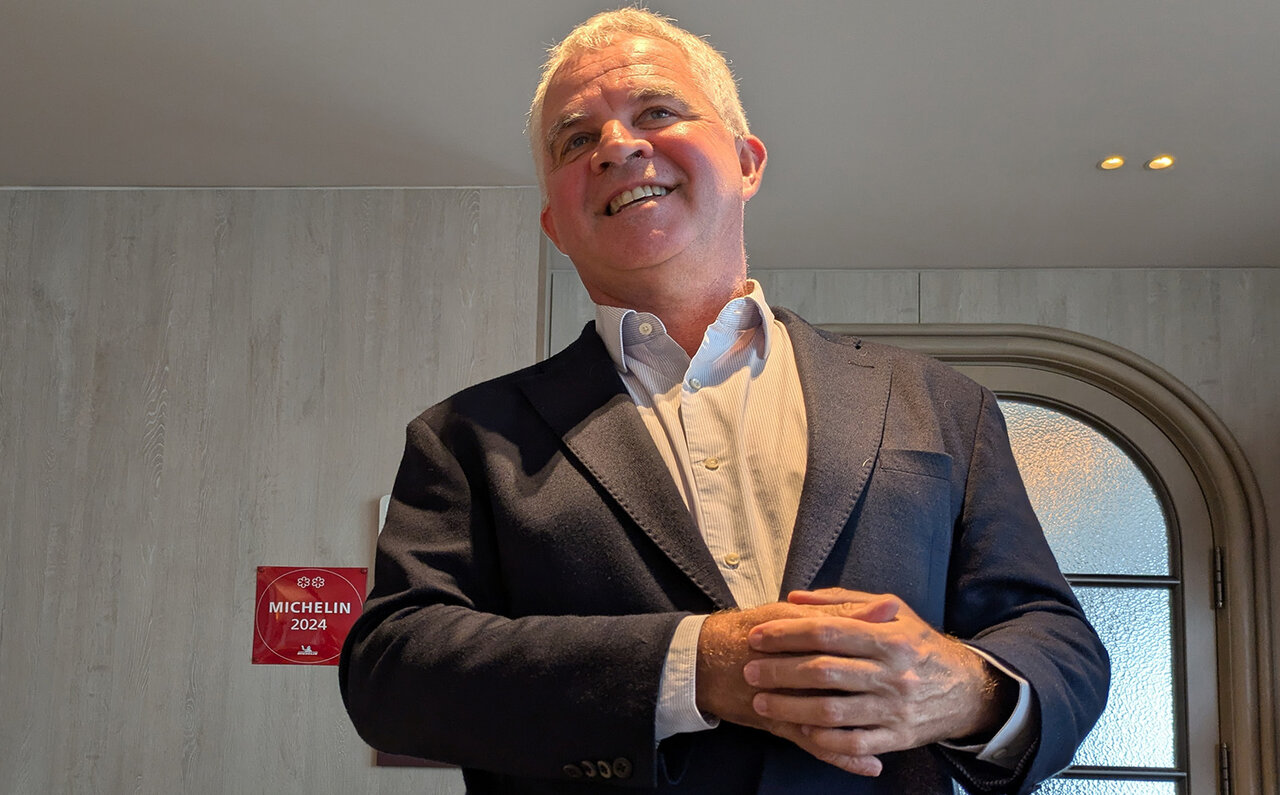
Olivier Krug, the sixth-generation head of Champagne house KRUG, visited Japan to unveil the Krug Grande Cuvée 172ème Édition and Krug Rosé 28ème Édition, both released in Japan in July.
180 Years Dedicated to One Path
Recently, Olivier Krug, the sixth-generation head of Champagne house KRUG, visited Japan.
This is no longer a rare occurrence; Olivier visits Japan several times a year. He first came to Japan around 1990, at the age of 23, and worked in the wine industry for just over two years. In Japan, where people were only just discovering wine as a beverage, Olivier was instrumental in popularizing KRUG and Champagne.
Since then, Olivier, who has a deep affection for Japan that goes beyond mere fondness, frequently visits to meet old and new friends. I was invited to the unveiling of the Krug Grande Cuvée 172ème Édition and Krug Rosé 28ème Édition by Olivier, and I arrived flustered at the venue, being shown to a front-row seat. Shortly after, Olivier's bright, round face appeared, our eyes met, and we exchanged a smile and a nod.
Wait, we're not friends! He is the head of the Champagne house that stands at the pinnacle of luxury and quality. I told myself to be respectful, but it's easy to forget, as Olivier is such a friendly person that you might think, 'Are we friends?'
And like Olivier himself, KRUG is a friendly Champagne, price aside. It is transparent and has nothing to hide. Furthermore, among the many Champagne houses, KRUG stands out for its exceptional quality and clarity.
Yet, if you look closely at OPENERS, KRUG isn't discussed that often! It's such a shame, given how excellent it is! Therefore, I'd like to take this opportunity to introduce the latest releases, Krug Grande Cuvée 172ème Édition and Krug Rosé 28ème Édition, while also discussing the fundamentals of KRUG.
First, let me explain why I say it's easy to understand. This is the most crucial point: KRUG has a clear vision of what it wants to achieve—its ideals and philosophy. For over 180 years since its founding, its principles have remained unwavering. That's why it's easy to grasp. And because of this, KRUG is respected. The incredible level of perfection, achieved through 180 years of dedicated refinement, captivates craftspeople across all genres worldwide.
While KRUG has an image of luxury, and indeed it is expensive, its essence lies in being a craftsman dedicated to this path, a rarity even on a global scale.
Vintage and Grande Cuvée
Consequently, KRUG's product lineup is remarkably simple. It is divided into two types of Champagne: those made from grapes of a single year, and those made by blending wines from multiple years.
The former is the style known as vintage, with three variations: those with a year following KRUG (e.g., KRUG 2011), and those with the vineyard name preceding the year (CLOS DU MESNIL and CLOS D’AMBONNAY). For example, KRUG 2006 refers to KRUG made solely from grapes harvested in 2006. KRUG CLOS D'AMBONNAY 2006 is made exclusively from grapes harvested from the CLOS D’AMBONNAY vineyard in 2006, and KRUG CLOS DU MESNIL 2006 is made solely from grapes harvested from the CLOS DU MESNIL vineyard in 2006.
The latter category includes the Grande Cuvée (KRUG GRANDE CUVÉE) and the KRUG ROSÉ, which Olivier introduced this time. It's important to note that within KRUG's Champagne portfolio, these are considered the flagship creations, not based on price, but on embodying the essence of KRUG.
This two-line lineup adheres to the philosophy of KRUG's founder, Joseph Krug, who believed in creating the best Champagne every year and also having an adaptable, superior Champagne. The former is realized in Grande Cuvée, and the latter in vintage. The current lineup includes these, with the addition of two single-vineyard creations and one rosé as variations. This structure was perfected by Olivier's father, Henri Krug.
Grande Cuvée is Always Grande Cuvée
Thus, we come to KRUG's flagship, Grande Cuvée. In terms of Champagne categories, this is currently the most common style. It is a Champagne made by blending the juice of grapes from the most recent harvest with wines made from grapes harvested in previous years and stored as reserve wines.
However, what makes KRUG exceptional is that it has been producing this style since its founding, and the blending process is incredibly meticulous.
Regarding the continuous production, the Grande Cuvée presented by Olivier this time is designated as the '172ème Édition.' For KRUG, this signifies the 172nd recreation of the original KRUG. The most recent grapes used in the 172ème Édition were harvested in 2016. Subtracting 172 from 2016 gives us 1844. 1844 was the first grape harvest year for KRUG, founded in 1843. The first edition, recreating the 1844 harvest, was produced in 1845. The following year, 1846, marked the second edition, and this is the 172nd.
'Indeed, the 172ème Édition and the first edition are not exactly the same Champagne. After all, they have honed the same craft 172 times, so their skills have undoubtedly improved. However, I believe Joseph Krug would recognize it and say, 'Ah, this is KRUG.''
-

Krug Rosé 28ème Édition
Suggested retail price: ¥64,240 without box, ¥67,100 with box
This is a rosé Champagne created with the same concept as Krug Grande Cuvée. It was developed by Olivier's father, Henri, and Olivier remarks, 'We've only done this 28 times, so after another 100 attempts, our skills should improve further.'
In fact, Grande Cuvée is remarkably consistent with each edition. If you were to taste the 171ème and 172ème Éditions side-by-side, the only significant difference, apart from the 171ème having an extra year of aging, would be minimal. Even compared to the 164ème Édition, the differences are not substantial. I'm not entirely sure which edition I started tasting Grande Cuvée from, but I've likely tried all editions from the mid-150s onwards. And they are all remarkably similar.
This is extraordinary, especially considering that the grapes differ every year. Some years have cool summers, while others have warm winters. While it might be possible to produce similar wines industrially each year with simpler wines, Grande Cuvée is an incredibly complex wine. To use a watchmaking analogy, it's like having ten grand complications that look and function identically, but each has different internal mechanical parts.
This is achieved by KRUG's winemaking team, who can only be described as obsessive connoisseurs of Champagne grapes.
To assemble the components for Grande Cuvée, they source grapes not only from their own vineyards but also from numerous growers. The sourcing isn't a casual 'we want your grapes'; it's specific, like 'we want the grapes harvested on this date from this plot of your vineyard.' They then create a wine from those grapes. Each year, they procure grapes from approximately 300 plots, producing 300 distinct wines. They then consider about 100 different past wines from KRUG's wine library as 'parts' and ponder, 'How can we create Grande Cuvée with these?' This is how they approach the process.
For the 172ème Édition, it is said that 146 wines from 11 different years were blended, with grapes harvested in 2016 forming the core.
'Cellar Master Julie Cavil is incredible! Even within three hectares, there can be about 20 plots. She can identify those 20 plots just by tasting the wine. Through extensive tasting, she meticulously assembles which wines to use to create Grande Cuvée,'
This was a statement Olivier made previously. The Champagne region has a cultivation area of approximately 34,300 hectares, divided into 280,000 plots, averaging about 8 plots per hectare. KRUG is highly popular in fine dining circles, and sometimes you hear that it's impossible to buy even when desired! The reason for this scarcity, it seems, is that due to this intricate production method, involving grape selection and tasting, the winemaking team operates at its scheduling limits.
However, expanding the team isn't straightforward. This team consists of individuals capable of discerning wines at the plot level. I heard last year that the youngest member, Isabelle, is a woman in her twenties who joined the team in just four years. She must be an extraordinary talent...
Of course, the world of wine isn't simply about the number of blends; it's not that simplistic. There are producers who achieve the world's finest wines by refining a single vineyard or grape to its utmost potential. And as mentioned earlier, in terms of category alone, Grande Cuvée belongs to the standard Champagne classification. The key is how high one can elevate their chosen method, and KRUG reaches the pinnacle by pursuing its own unique approach.
Vintage, on the other hand, is a Champagne created by this team under the condition of using only grapes from a single year and a single vineyard, removing the requirement of creating Grande Cuvée. Given that these exceptional individuals produce this only in years they deem perfect (roughly once every two to three years over the past two decades), it's not hard to imagine how fascinating it must be.
The Power to Keep Moving Forward
Thus, the meticulous craftsmanship of KRUG's Champagne production is its charm. Yet, what's interesting is that its creations are neither outdated nor overwhelmingly complex due to their technical mastery. Especially after tasting the Grande Cuvée 172ème Édition and Rosé 28ème Édition this time, I found them to possess a very contemporary balance that everyone can enjoy.
The Grande Cuvée 172ème Édition will likely develop considerable depth over time. Last year, I perceived a slightly stronger freshness, so I anticipate that in 10 or 20 years, these two will acquire slightly different nuances. As for the rosé, if circumstances permit, I urge you to try it immediately. The reason is that the contrast and integration between the red wine-like character—not actual red wine, but a similar flavor profile—blended into this rosé, and its other fresh components, are exquisitely delicious. This sensation will likely evolve into a more integrated and sublime experience with time. While this is highly desirable from a wine perspective, there's also a certain charm in its youthful expression. I feel this rosé particularly allows that to be appreciated.
However, I don't find it particularly constructive to dwell on the specifics of this edition versus the Grande Cuvée or Rosé. It's akin to discussing minor differences between the opening night and second night of a musical, such as slight variations in the cast or the performers' condition. More importantly, the fact that KRUG makes unceasing efforts to maintain this consistency is significant.
They have implemented more rational production systems that are considerate of the environment and workers, not only renovating the traditional winery in the heart of Reims but also constructing a new winery in Ambonnay, about 30 km south, which began operations this year. Furthermore, they don't simply have farmers grow grapes and then purchase them. The KRUG team includes viticulture specialists who consult with farmers to ensure optimal work, provide support for pest and disease management, and handle administrative procedures and risk compensation for those wishing to transition to organic farming. While KRUG doesn't readily discuss these efforts unless asked, they are diligently doing what they can today to ensure KRUG remains KRUG for the next 100 or 200 years.
'Tradition is the power to keep moving forward.'
Olivier, with his charmingly round face, stated this with a dignified expression towards the end of the unveiling event.