The source of Ruinart's creation. What is '4 Rue Crayères'?
Ruinart | 4 RUE DES CRAYÈRES
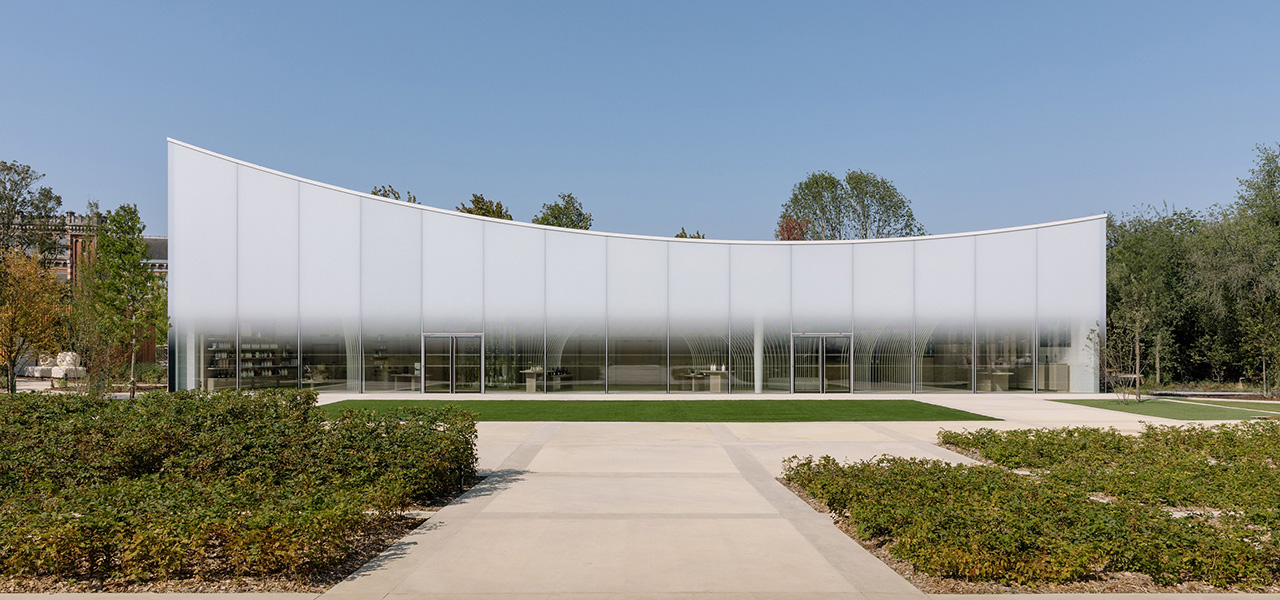
In anticipation of its 300th anniversary in 2029, the Champagne house Ruinart has constructed a new pavilion, '4 RUE DES CRAYÈRES,' at its historic headquarters at 4 Rue des Crayères in Reims, France. Following three years of construction, a symbolic space has been completed, embodying Ruinart's tradition and future.
Creating the Future in a Place Steeped in History
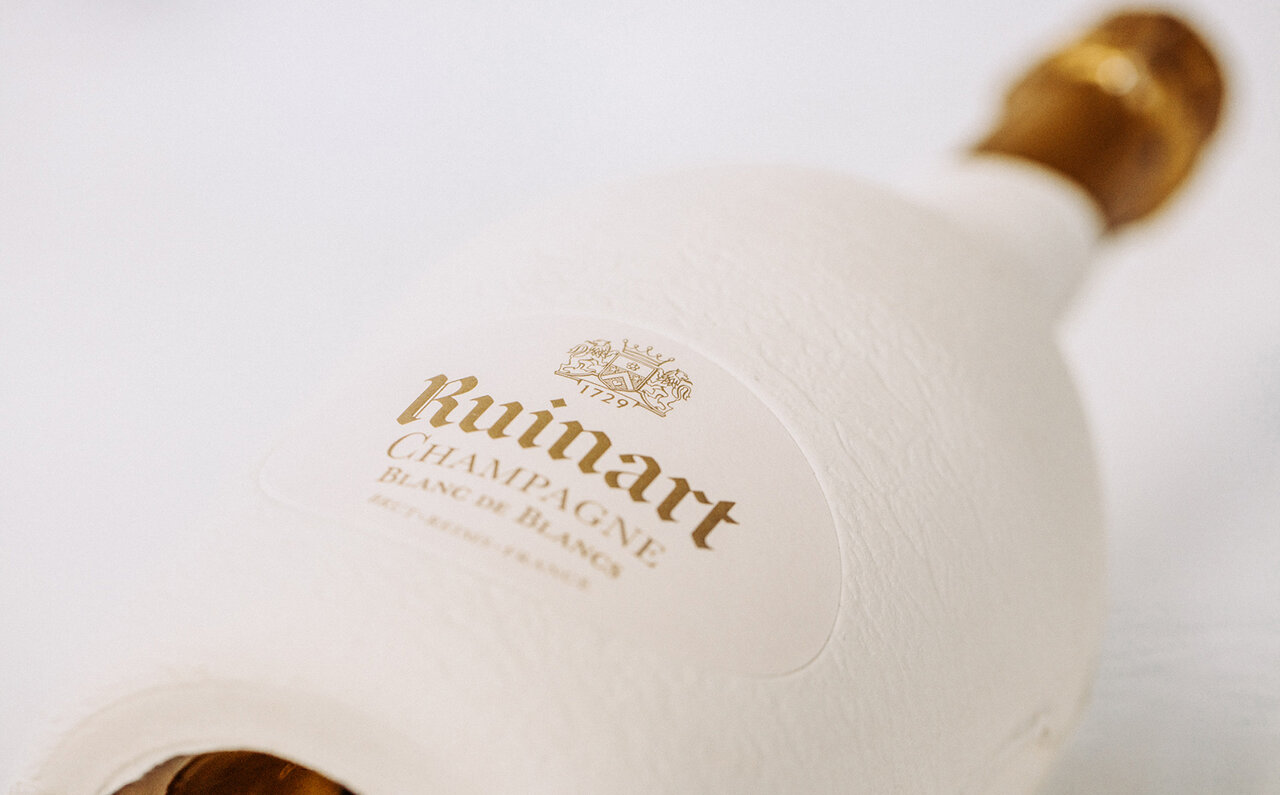
Founded in 1729 by Nicolas Ruinart, a textile merchant, Ruinart was the world's first registered Champagne house. Located at 4 Rue des Crayères in Reims, this address has played a pivotal role in Ruinart's history, and all bottles are still shipped worldwide from here today. This site has served as Ruinart's base for spreading Champagne culture globally and holds profound significance as a symbol of the "ideal age" of the French Enlightenment.
Here lie the 'Crayères,' chalk quarries from the Gallo-Roman period. Ruinart utilizes these 'Crayères' as its cellars, extending over 8 kilometers in total length. The environment, maintaining a constant temperature and adequate humidity ideal for aging, is the perfect setting for maturing Champagne. These 'Crayères' are the very source of the delicate, pure, and elegant taste of Ruinart's Champagne.
The new pavilion, '4 RUE DES CRAYÈRES,' was designed on this site as a space that tells the story of Ruinart's 300-year history and creativity. The project involved three individuals: architect Sou Fujimoto, interior designer Gwenaël Nicolas, and landscape artist Christophe Gautrand. These experts collaborated to reinterpret the vision of Nicolas Ruinart, the founder of Ruinart, for the modern era.
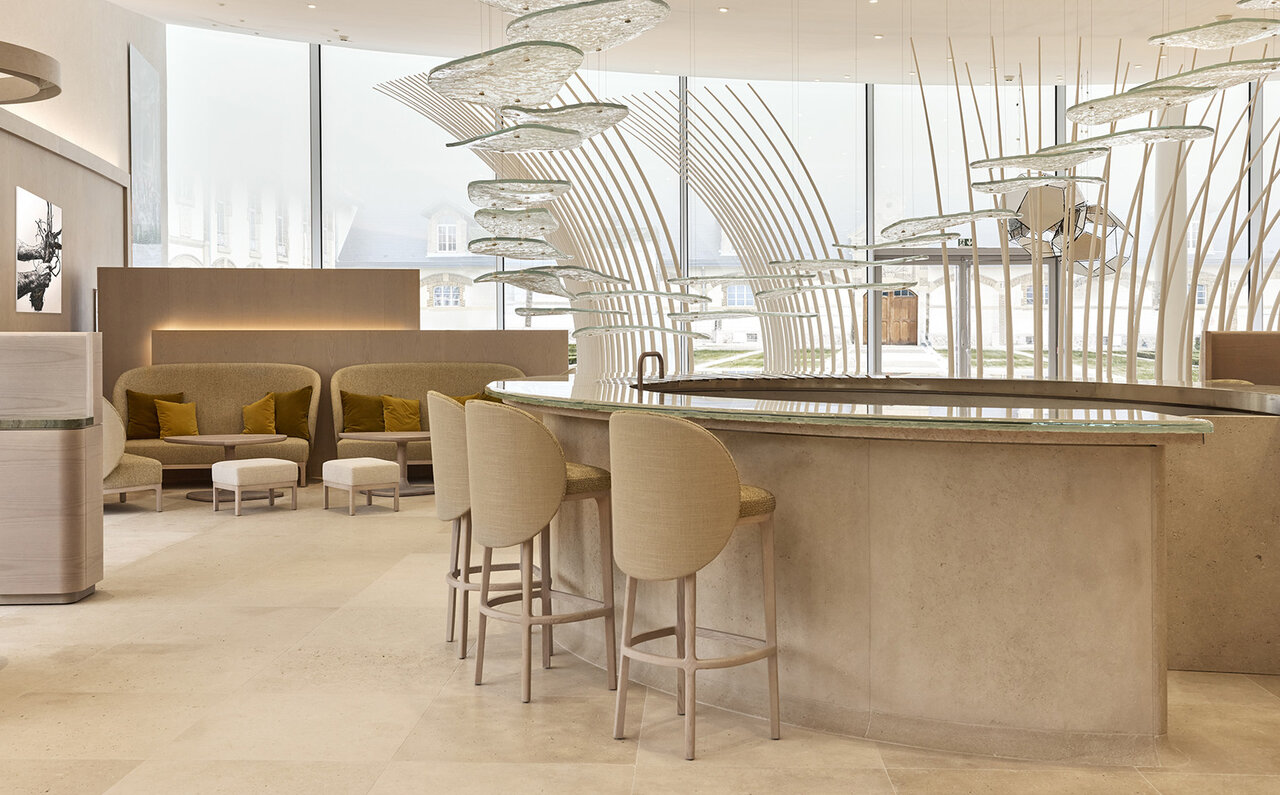
Sou Fujimoto aimed for harmony between the old and the new, the West and the East, expressing Ruinart's elegance and sophistication in a contemporary space. Fujimoto stated, "I wanted to create a space where visitors could freely explore at their own pace while still feeling the world of Ruinart." Interior designer Gwenaël Nicolas incorporated soft curves and natural materials, embodying Ruinart's history while crafting an environment that offers surprise and enchantment to visitors.
Local materials were used extensively in the pavilion's construction. Notably, Soissons stone, quarried near Reims, was employed. The building's exterior features an asymmetrical roof with curves reminiscent of Champagne bubbles, contrasting with the adjacent 19th-century rectilinear facade. This design expresses a fusion of classical and modern, tradition and innovation, leaving a strong impression on the viewer.
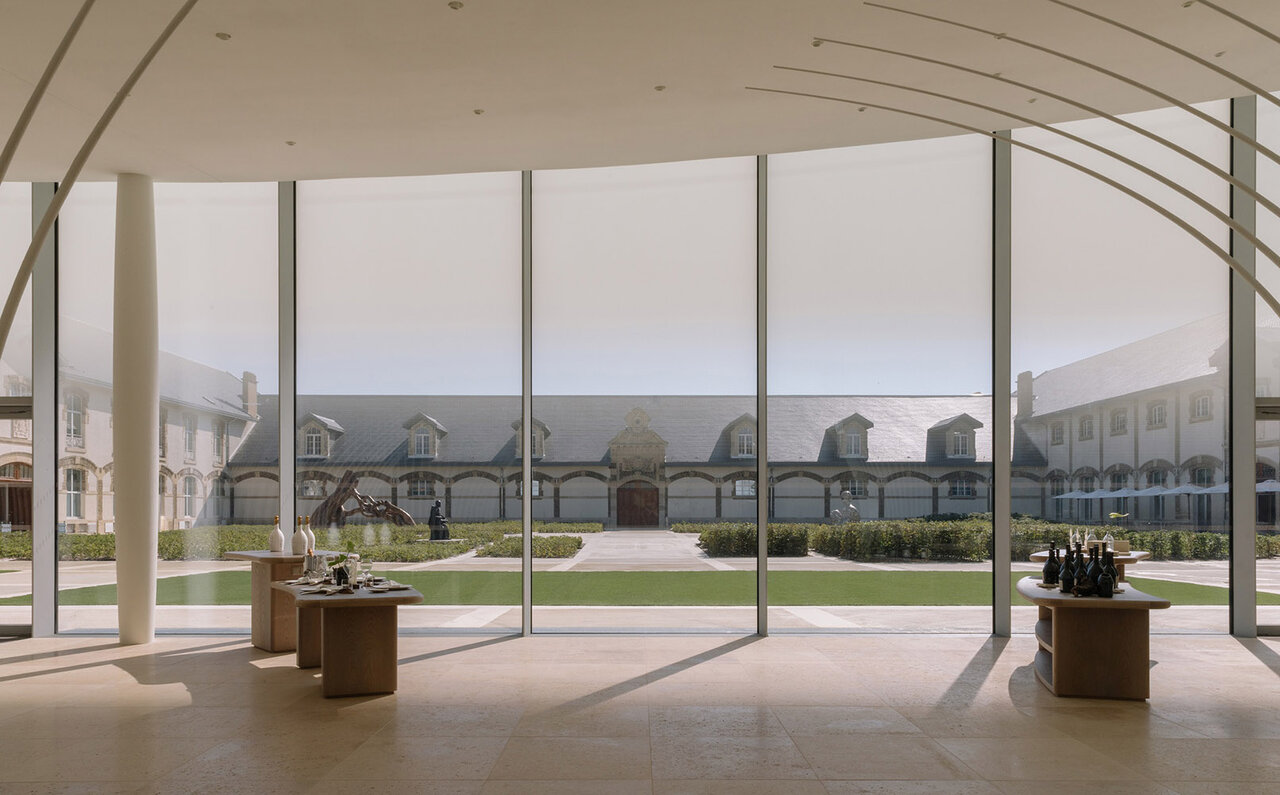
Furthermore, the pavilion's interior masterfully incorporates natural light, creating a beautiful space woven with light and shadow. The enormous glass windows facing the courtyard, in particular, possess a transparency that evokes Champagne bubbles, with their appearance changing with the time of day and weather.
Landscape artist Christophe Gautrand also deeply contemplated and realized the garden design surrounding the pavilion. The 7,000-square-meter site, including a 5,000-square-meter protected forest, is planted with flora that harmonizes with the natural landscape of the Champagne region, offering seasonal changes to enjoy. The gently curving hedges, recreating the rolling hills of Champagne, and the groves that change color with the seasons are particularly striking.
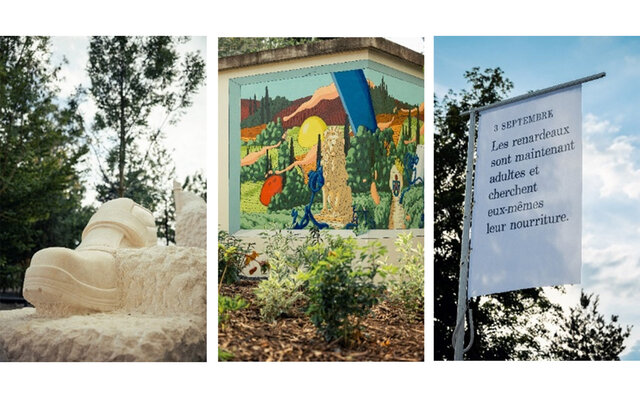
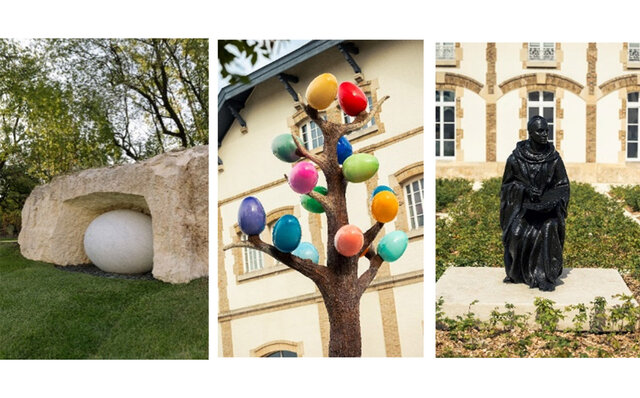
Contemporary artworks that evoke the maison's history are also interspersed throughout, offering visitors an artistic experience. Ruinart has maintained a deep connection with art for many years. Since its founding, the maison has actively supported arts and culture, notably commissioning Art Nouveau master Alphonse Mucha to create posters, a first for a Champagne brand. This spirit is reflected in the new pavilion, where a beautiful space harmonizing artworks with the natural environment unfolds. Materials such as vines, glass, wood, and metal are used to evoke the terroir of the Champagne region, creating a place that embodies the maison's appreciation for art and nature.
Naturally, the design also prioritizes sustainability, incorporating solar and geothermal energy systems, with 80 percent of the building's energy needs met through self-sufficiency. Additionally, the materials used for walls and framework are primarily locally sourced natural and bio-based materials, minimizing environmental impact. The building's roof is greened, and a rainwater harvesting system is installed, demonstrating a thorough ecological approach.
This pavilion, carrying forward the maison's 300-year history while embodying the strength to challenge the future and a delicate appreciation for nature and art, will surely be cherished as Ruinart's base for pioneering the future through sustainability.