LOUNGE /
EAT
August 5, 2019
Essay Series | #ijichiman's Musings: Kanda Edition
The 9th Installment: Kanda, A City Suited for Adults Who Have Gained Experience and Knowledge
“To insist solely on the safety of the body, without questioning the life or death of the soul or spirit, is wrong (Yukio Mishima)” — In this series by Yasutake Ijichi, a board member of Sunshine Juice, Japan's first cold-pressed juice specialty store, he delves into the diverse, human-centric content of the city, which stands in stark contrast to the ultimate healthfulness of Sunshine Juice, exploring its history, transitions, customs, and culture. The ninth installment takes us through Kanda, a city where culture and history breathe, lined with long-established shops dating back to the Edo period.
Photographs and Text by IJICHI Yasutake
A City Where Old, Good Culture Lingers from the Edo Period
The Yamanote Line game, where players take turns naming stations on the Yamanote Line, and the first to falter loses. If one were to play this game, Kanda would likely appear in the latter half. I myself have only started visiting Kanda in the last few years. I now frequent it because there's a bar in Kanda called 'moonshine' that serves cocktails using Sunshine Juice, but before that, I had only alighted there a handful of times.
Kanda is situated between Tokyo Station and Akihabara Station, yet it remains untouched by the character of either. While the area around the station might initially seem similar to Shimbashi, it possesses a more cultural, or perhaps more unpretentious, quality. I hear that recently, many creative individuals, drawn to Kanda's cultural ambiance, have chosen to reside here, but this distinct atmosphere seems to stem from its origins.
Kanda developed as a city during the Edo period. In the Edo period, Tokugawa established the Five Highways, with Nihonbashi, adjacent to Kanda, designated as their starting point. The Five Highways brought a variety of goods and services to Edo, fostering cultural exchange and economic development, thus forming Edo, the precursor to the vast metropolis of Tokyo. Edo attracted a large number of laborers, and Kanda served as the starting point for their food supply. Fish from Tokyo Bay (Edo Bay) were brought to the fish market in Uchikanda, and produce transported from northern Kanto was gathered at the Aomono Market in Kanda-ta-machi, from where it was supplied. Although the fish market later moved to Tsukiji and the produce market to Ooi, Kanda was the original hub. Thus, Kanda flourished alongside the flow of the Edo period.
During that era, one of the fast foods born to easily satisfy the appetites of impatient Edoites and busy laborers was sushi from street stalls. While we call it fast food, it was different from today's offerings, which use various processed ingredients from unknown sources, transported frozen. In an era without refrigerators, ingredients were served fresh as soon as they were caught, prepared simply. Wasabi, it is said, was first used during this time to prevent spoilage and add aroma. Sushi, with its generous portions of rice and thick slices of sashimi, was valued as an inexpensive and quick way to fill one's stomach.
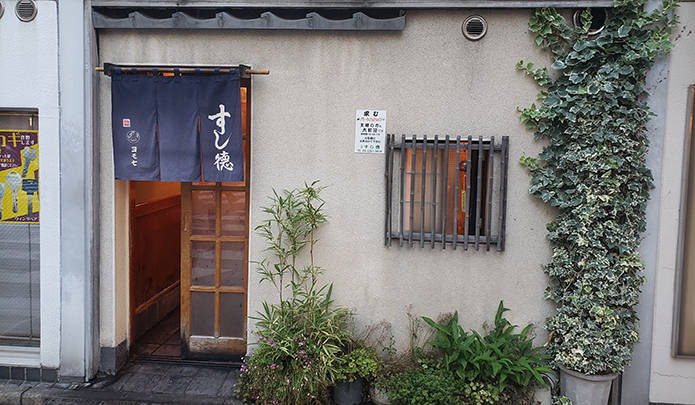
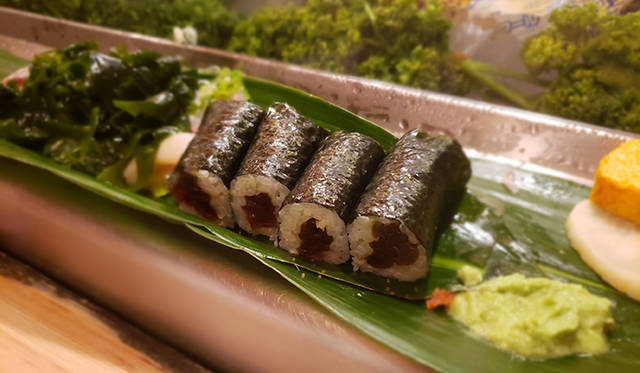
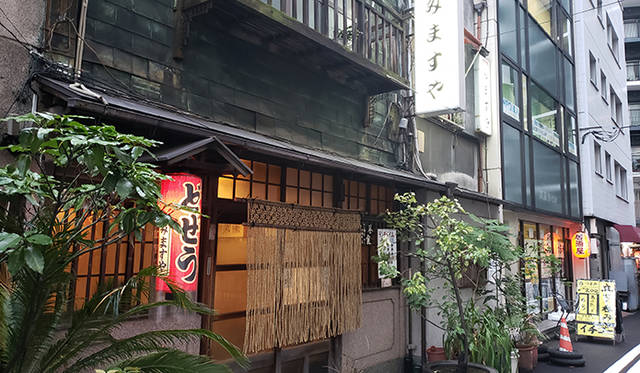
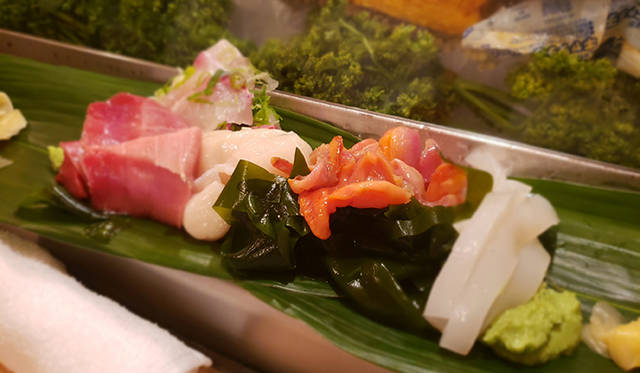
The interior, surrounded by a hearty, seasoned master and warm regulars, is full with just seven or eight people. Once seated, you'll be served thick slices of sashimi piled high on a bed of wakame seaweed. Wash it down with Takashimizu sake. Then, more sashimi will be served, one after another. All of it is delicious.
A straightforward approach, the antithesis of pretension. Whether one can even reach the nigiri is up to the individual, but the kanpyo maki at the end is exquisite. In this day and age, a sushi bar filled with cigarette smoke, where the bill is calculated roughly—such a place is now a rarity. It will undoubtedly satisfy both your stomach and your soul.
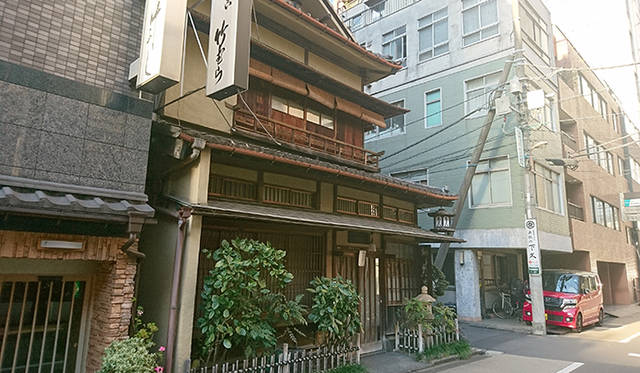
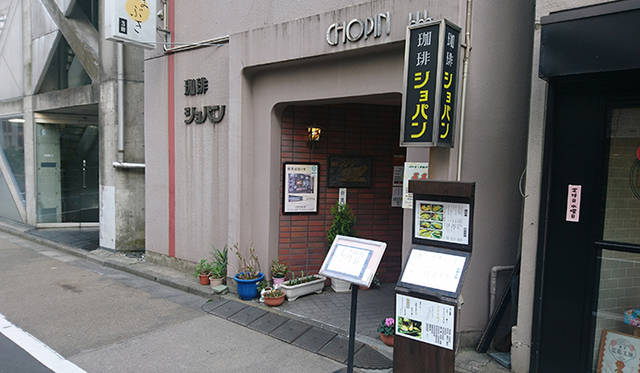
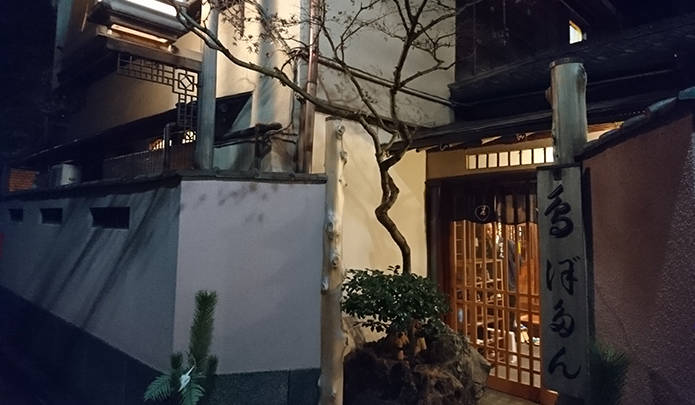
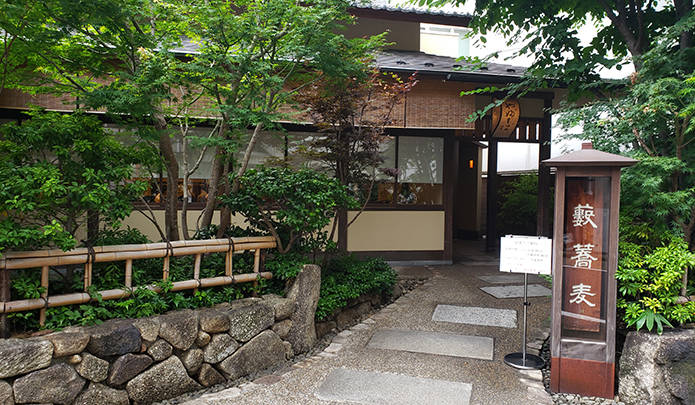
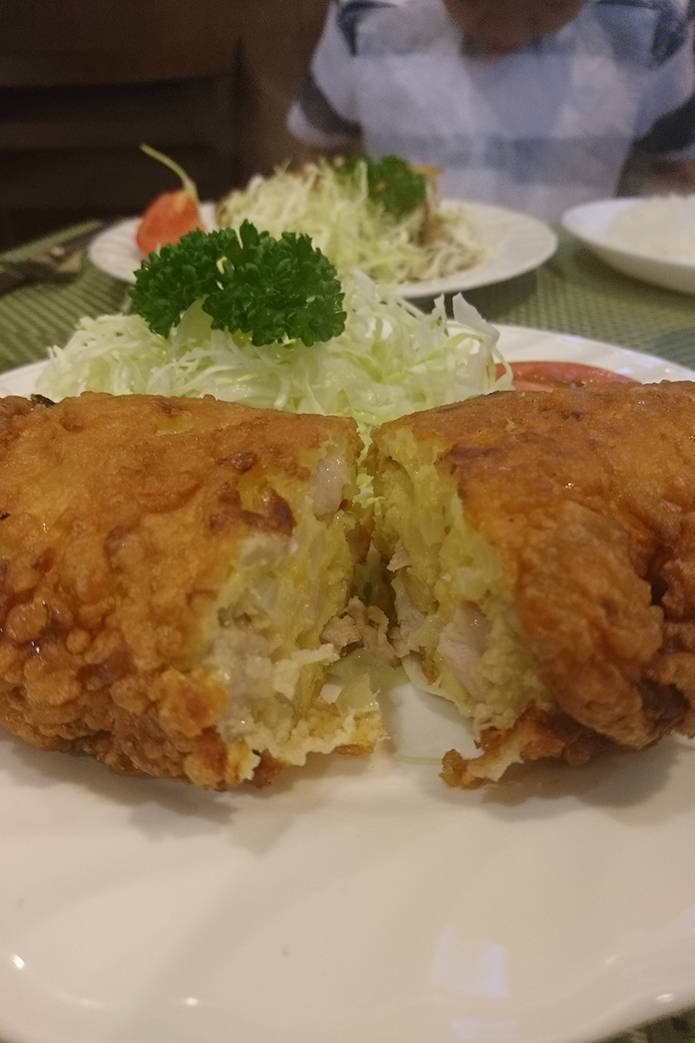
After the Meiji era, Kanda transformed into a city of artisans and students. Shortly after World War II, in 1947, Kanda Ward and Kojimachi Ward merged to form Chiyoda Ward. At that time, all the town names within Kanda Ward were retained with 'Kanda' as a prefix. Kanda-tsukasa-cho, Kanda-kaji-cho, Kanda-nishiki-cho... many of these town names that remain today are vestiges of that era. Perhaps because of this, Kanda still has many areas that evoke a sense of nostalgia. Among them, the Kanda-Suda-cho and Kanda-Awaji-cho neighborhoods are known as areas brimming with culinary charm.
This area, reminiscent of a historical timeline, has survived the Great Kanto Earthquake and the Tokyo air raids, continuing to pass down its culture into the Reiwa era.
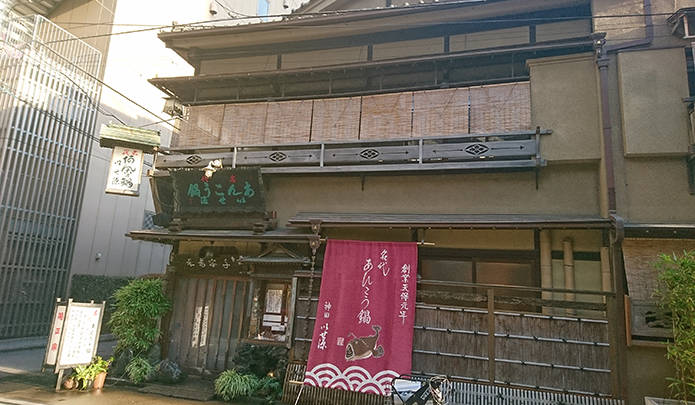
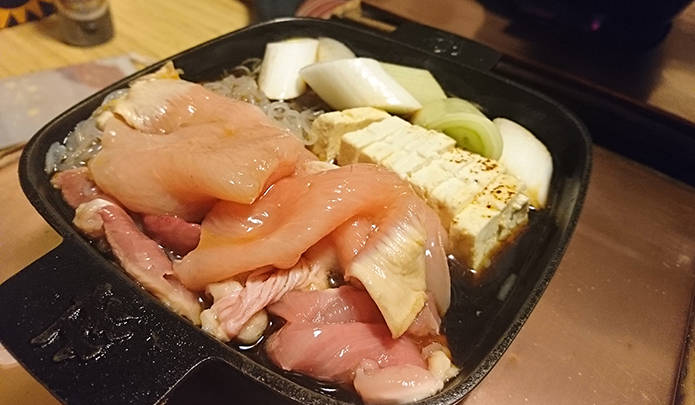
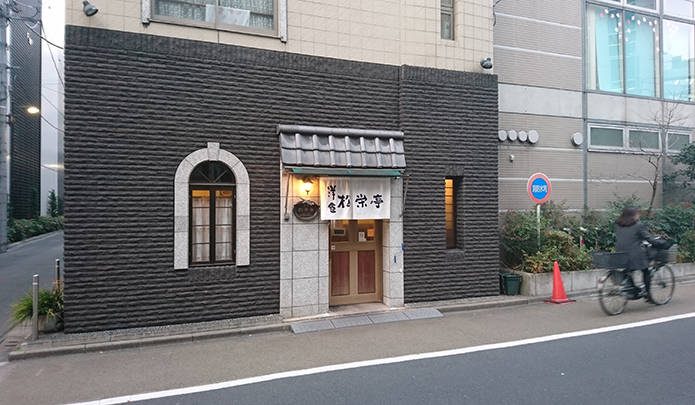
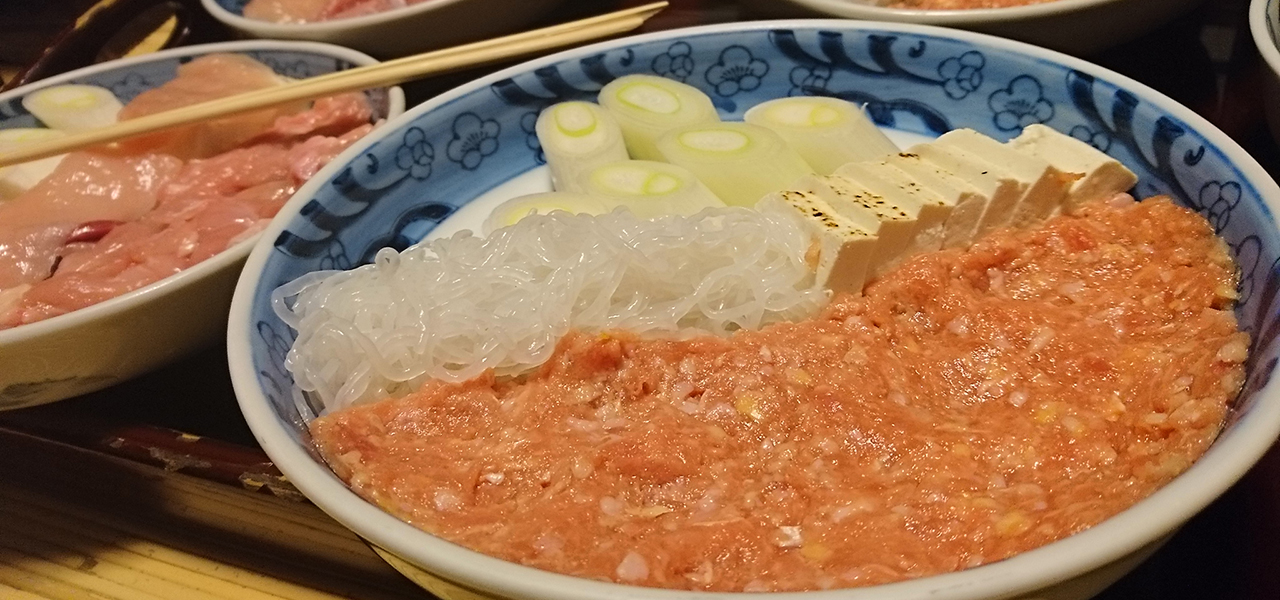
It is a long-established restaurant where one can savor the popular atmosphere and the flow of good old times, while feeling the pride of over 100 years as a specialty store.
The first literary work I encountered was Natsume Soseki's 'Kokoro' in my junior high school Japanese class. It is a masterpiece of Japanese literature that depicts the relationship between the protagonist, the Teacher, his best friend K, and the young lady, exploring various facets of the heart such as jealousy, betrayal, loneliness, anguish, and despair.
I believe the teacher's intention at the time was to provide insight into the fundamental aspects of human nature rooted in the depths of the psyche through this work. However, as a junior high school student who had never even properly experienced romance, let alone sex, the content was quite heavy. While I couldn't achieve deep insight at the time, the work itself remained in my memory. The line, 'He who has no ambition to improve himself is a fool,' which became a key element in the story, was inexplicably etched into my mind and comes to mind at significant junctures.
The phrase 'I wish I had studied more when I was younger' is something you often hear after turning 30. For some reason, as adults, we become interested in politics, history, and literature that didn't capture our attention in our youth. Kanda might be enjoyable for young people due to its down-to-earth nature, but that enjoyment is limited. Kanda becomes many times more enjoyable for adults who have gained some knowledge, even if superficial, with such interests. It's a realm unattainable in one's youth, when one is preoccupied with superficialities like caring about the order of nigiri at a sushi restaurant, ordering tea by saying 'agari,' or ordering myoga, which one doesn't particularly like, at a tempura restaurant, trying to appear knowledgeable. Kanda is a city that adults, who have gained a breadth of experience and found their own style, can enjoy at a leisurely pace.
SutokuAddress: 2-11-21 Kaji-cho, Chiyoda-ku, Tokyo
TEL: 03-3251-3414
Hours: 17:30 - 01:00
Closed: Saturdays, Sundays, and holidays. Open from evening only on the last Saturday of the month.
BotanAddress: 1-15 Kanda-Suda-cho, Chiyoda-ku, Tokyo
TEL: 03-3251-0577
Hours: 11:30 - 21:00 (Last entry 20:00)
Closed: Sundays and holidays
ShoeiteiAddress: 2-8 Kanda-Awaji-cho, Chiyoda-ku, Tokyo
TEL: 03-3251-5511
Hours: 11:00 - 14:00 (L.O.) / 17:00 - 19:30 (L.O.)
Closed: Sundays and holidays
IJICHI YasutakeVice President, Sunshine Juice Inc. Born in Tokyo in 1982. While attending Keio University, he was involved in planning and producing receptions and parties for major brands at an event company. He then transferred to a PR firm, where he engaged in planning and managing marketing communications and branding from a PR perspective. He resigned at the age of 30. With his representative, a friend since junior high school, he founded Sunshine Juice, Japan's first cold-pressed juice specialty store, and currently holds his position. His favorite foods are fugu and soft-shelled turtle. His favorite sports are baseball and horse racing. His favorite places are traditional coffee shops and casual taverns.
Instagram:
ijichiman