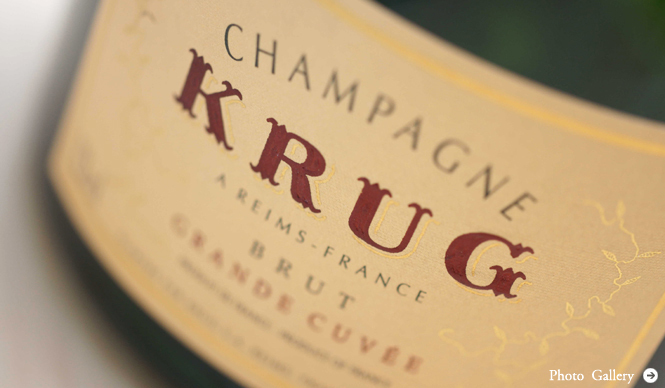
Chapter 6 Krug: Champagne Filled with Wonder
KRUG | Krug
Champagne Full of Surprises
Is this perfume? When Krug Grande Cuvée is poured into the glass placed on the table, one is first struck by the bouquet of aromas, like a floral arrangement, and then by the delicate, diamond-dust-like bubbles rising from the bottom of the glass. The scent that has just grazed the nose explodes when it touches the palate, bringing one surprise after another. Drinking Krug, one realizes that this is...Champagne...something that, while undeniably Champagne, possesses a distinct and special presence.
Photo & Cooperation by Kenichi SaitoEdit & Text by Yumiko Akita
A Style Woven from Family Memory
Johann-Joseph Krug, the founder of Krug, established the house in 1843 seeking a Champagne free from the variations caused by the quality of the vintage. This was when Reims had no cellars and this location was still vineyards. Since then, Krug's style has developed a unique character that transcends that of mere Champagne. One reason for preserving this uniqueness is the assemblage (blending) that has been continued, guided by the "Krug-ness" remembered by the Krug family. There is no recipe. Only the remembered "Krug-ness" exists. And it is in the non-vintage Grande Cuvée that this "Krug-ness" is most eloquently expressed.
Artistic Assemblage
Assemblage is a crucial process that takes place over a week in February. Currently, it is performed by three members of the Krug family who embody the house's quality – the fifth generation Henri and Rémy, and the sixth generation Olivier – along with the Chef de Caves and three oenologists, a total of seven people. The wines suitable for assemblage are selected from the end of October onwards, with each person blind-tasting around 1,000 wines over three months. Those scoring 10 points or less, deemed not to meet Krug's quality standards, are rejected. It is during this process that decisions are made about what will become Grande Cuvée and whether the year's vintage is promising.
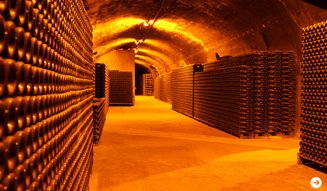
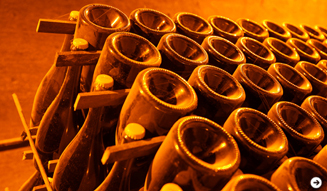
Once the assemblage, representing the pinnacle of "Krug-ness," is complete, it undergoes more than six years of aging in the bottle before being released as Grande Cuvée. Grande Cuvée comprises the base wine along with 35-50% of reserve wines from 50 or more different vintages, aged for 6 to 10 years. This is what gives it its complexity alongside its freshness. Wine journalist Mr. Saito notes, "Grande Cuvée has a depth akin to drinking an old Grand Cru white Burgundy. Its magnificent flavors are evident not only when first opened but also the next day, and the bubbles persist even after a week. This clearly shows it is no ordinary beverage."
Horizontal and Vertical Complexity
Krug's complexity is built upon two main axes: horizontal and vertical, representing parcels and reserve wines. Krug uses grapes from 250 small parcels; while 40 percent are from its own vineyards, the rest are purchased from growers. The crucial factor is not the classification of the vineyard, but rather the unique character and traits of each parcel. This is because the complexity of flavor is achieved by combining the distinct personalities of Pinot Noir, Pinot Meunier (used only in good years), and Chardonnay from each parcel, much like a mosaic. This constitutes the horizontal complexity.
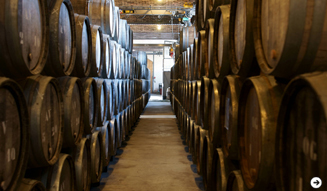
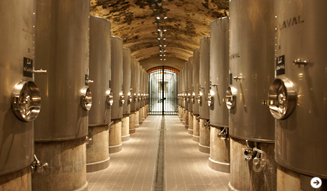
The other element contributing to its complexity is the stock of reserve wines from various vintages. Krug explains that all base wines undergo primary fermentation in oak barrels, followed by slow, reductive aging. This process, akin to vaccination, strengthens the base wine's inherent resistance, enabling it to withstand long-term aging. New barrels are not used for barrel fermentation, as the aim is not to impart oak flavors like in red or white wines. Subsequently, the wines are stored in stainless steel tanks to preserve their freshness and prevent the distinct characteristics of each parcel from being dulled. This represents the vertical complexity.
While the surprises of Grande Cuvée, born from the intricate weaving of vertical and horizontal elements, are captivating, one is equally struck by the distinctiveness of the vintage wines produced only in exceptional years, the single-vineyard Clos du Mesnil made from 100% Chardonnay from a single year, and the single-vineyard Clos d'Ambonnay made from 100% Pinot Noir from a single year. The blessings of the earth, the magic of time, the art of memory. Krug is a magnificent beverage that offers a glimpse into an ephemeral dream.
KRUG Grand Cuvée
Grape Varieties | Not specified
Price | ¥23,100
The fragrant aromas of flowers and fruits are indescribably complex. Upon tasting, the aromas explode, with notes of flowers, fruits, brioche, butter, and cream appearing in succession. Crisp acidity, a balance of freshness and maturity, and a palate that is both full-bodied and elegant. The finish is astonishingly long, with an exquisite, lingering sweetness.
With the cooperation of:
Krug
http://www.krug.com/
Salon de Vin Fleury
Tel. 03-5795-2553
Product Inquiries:
MHD Moët Hennessy Diageo (Krug)
Tel. 03-5217-9738