Tomoki Yuzuka & Editor Daimaou Talk | Vol. 9 Yoji Teraoka (8th Generation Master Brewer) & Tomoyuki Teraoka (9th Generation) (Isomann Shuzo)
Page. 1
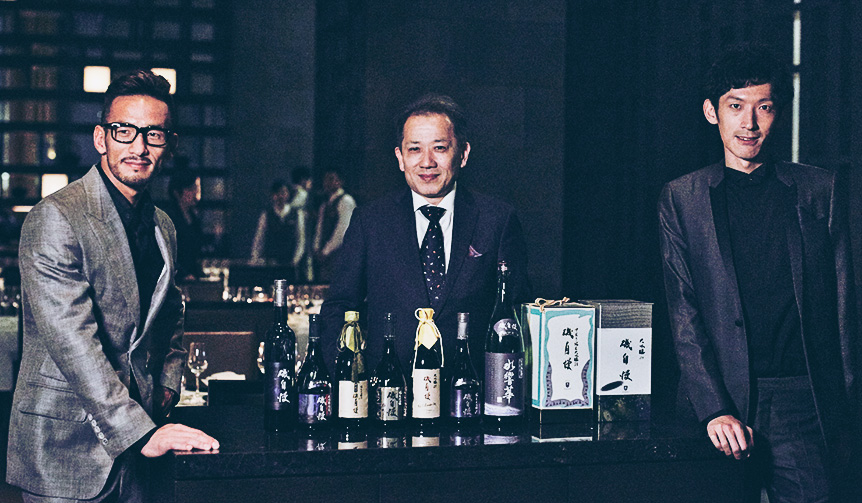
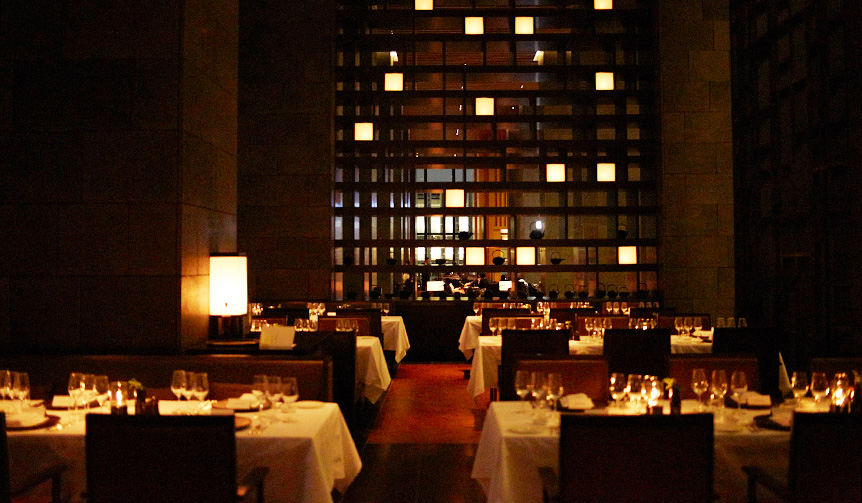
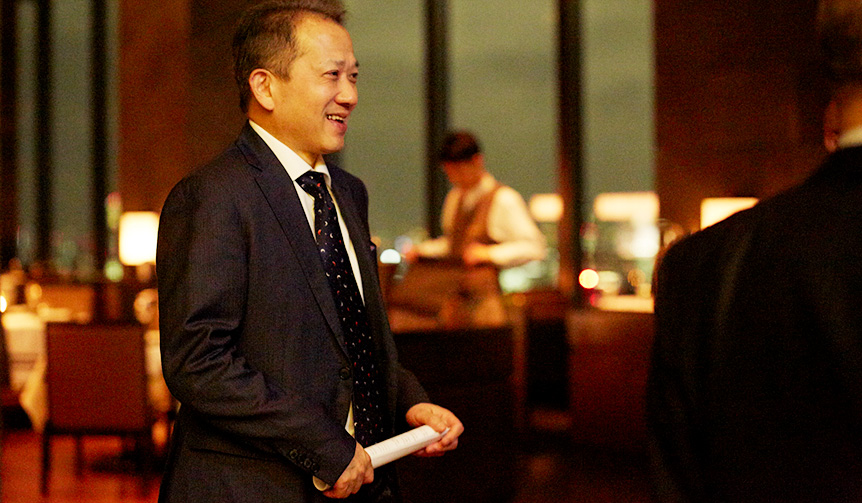
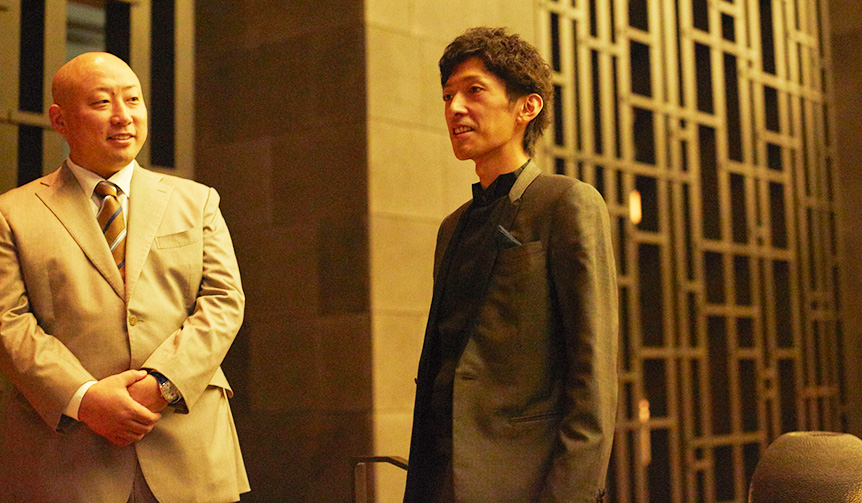
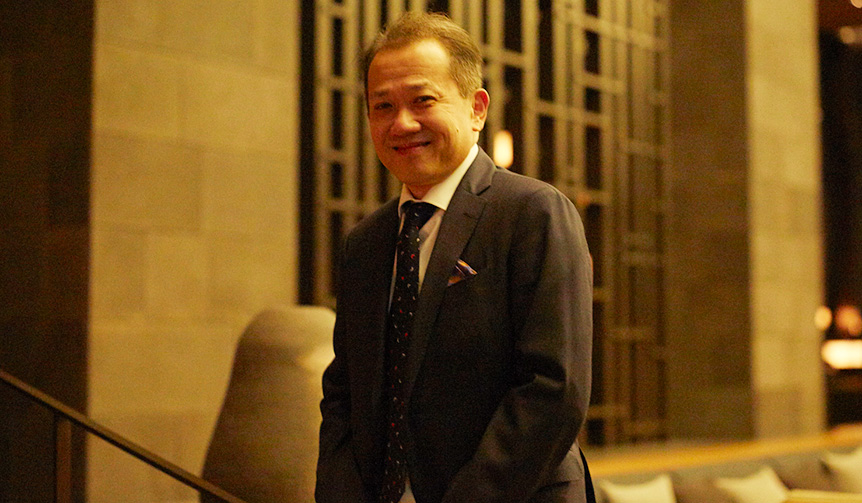
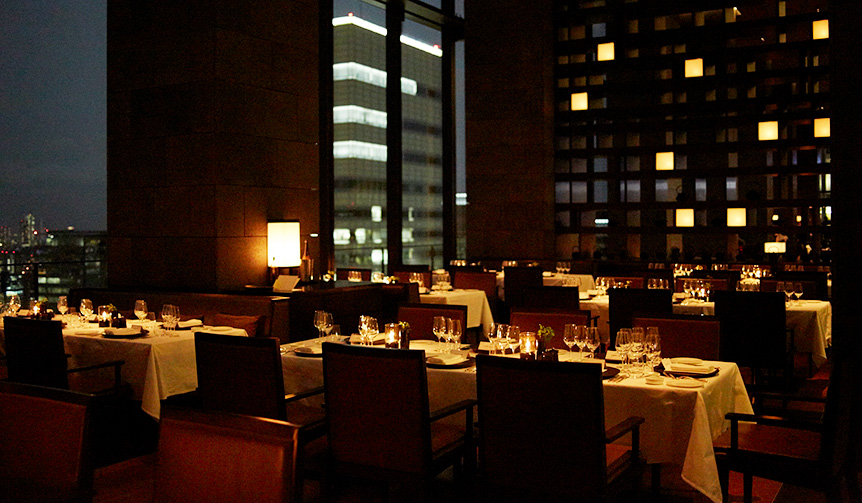
The "The Master of Craft Sake" series invites brewers from across Japan, each with a unique dedication to their craft, to a world-renowned hotel for an extraordinary evening of exquisite cuisine and ambiance. The third installment of this series was held on Wednesday, September 21st, at Aman Tokyo. This event, a pairing of Japan's celebrated "Isomaru" sake with the sublime Italian cuisine of The Restaurant by Aman, is a one-day-only dinner event organized by Japan Craft Sake Company, founded by Mr. Hidetoshi Nakata with the aim of promoting Japanese sake, a national treasure, to the world. At the venue, we spoke with Mr. Yoji Teraoka, the 8th generation master brewer and president of Isomaru, and his son, Tomoyuki.
Interview by SUKEZANE TomokiPhotographs by NAGATOMO YoshiyukiText by ANDO Sara (OPENERS)
Isomaru Shuzo: A Pioneer in Ginjo Brewing Across Japan
Isomaru Shuzo is based in Yaizu City, Shizuoka Prefecture, facing Suruga Bay and located near the Izu Peninsula and Mt. Fuji. Founded in 1830, it is one of the long-established breweries and a pioneer in Shizuoka Prefecture for its early adoption of ginjo brewing. For this "The Master of Craft Sake" event, seven types of its sake were prepared. The natural aroma, profound flavor, and smooth, clean finish make it an excellent match for Italian cuisine.
祐真朋樹・編集大魔王 (hereinafter referred to as Yuzuka)What kind of Isomaru sake is being served today?
8th Generation Master Brewer and President, Yoji Teraoka (hereinafter referred to as Teraoka)This is a sake called Daiginjo Nobilmente.※1Nobilmente is an Italian musical term, meaning "noble" in Italian. Over 30 years ago, when the term "ginjo"※2was not yet widely known, we commercialized daiginjo.※3Today, Junmai Daiginjo※4is mainstream, but historically, daiginjo came first. With that sentiment in mind, we deliberately made Nobilmente a daiginjo, not a junmai.
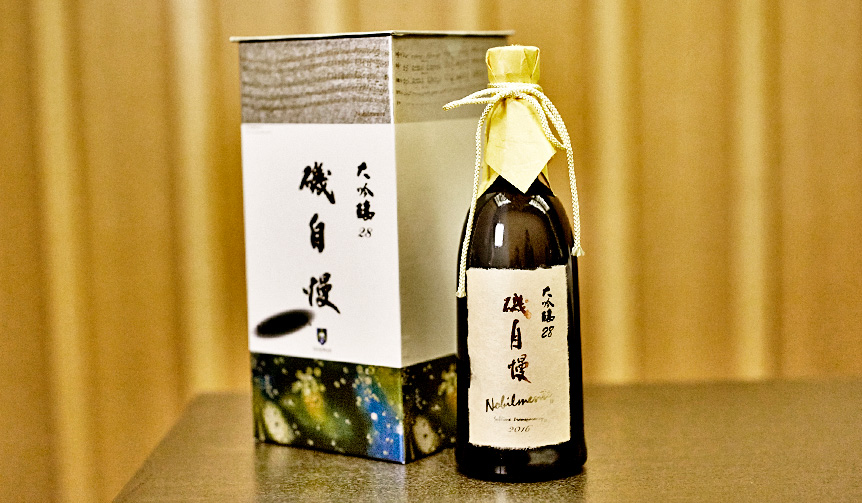
When we envisioned a premium sake following Nakadori Junmai Daiginjo 35 and Adagio Nakadori Junmai Daiginjo, we first increased the rice polishing ratio. Typically, Isomaru polishes to 45% for daiginjo, but for Nobilmente, we further refined it to 28%. We remove 72% as bran, using only the central 28% of the finest Tokujo-grade Yamada Nishiki rice from the special A district of Tojo Akitsu. We also use a very small amount of alcohol.
YuzukaWhat is alcohol addition?
TeraokaBrewing alcohol.※5This is added at the final stage (just before pressing the sake) in what is known as Honjozo, Ginjo, and Daiginjo. Not adding it results in Junmai, Junmai Ginjo, and Junmai Daiginjo. The amount of alcohol added also matters. If a large amount is added, it's what's called cheap sake. For Ginjo and Daiginjo, there are National Tax Agency regulations specifying how much can be added per ton of white rice. Daiginjo uses even less. Nobilmente uses an even smaller, trace amount.
YuzukaEven a trace amount of added alcohol means it cannot be called Junmai, correct?
TeraokaThat's right.
YuzukaIs it better to add as little brewing alcohol as possible?
TeraokaI don't think a trace amount of alcohol addition is bad. If the goal is to produce a lot of cheap sake by adding a lot of alcohol, it can be bad for the body. However, a small amount plays a significant role in balancing the aroma and flavor. More technically, during the fermentation of the moromi mash, the yeast consumes the glucose produced by the koji mold converting the starch in the rice. This process, where saccharification and alcohol production occur simultaneously in the liquid, is called "parallel multiple fermentation." Nature is fascinating, and also challenging. Adding a small amount of brewing alcohol just before pressing enhances the aroma and rounds out the flavor, resulting in a beautifully balanced sake.
YuzukaSo, that's where the brewer's unique sense and taste come into play.
TeraokaPerhaps so.
YuzukaFounded in 1830. Isomaru has a very long history. It has been passed down through generations within the same family, hasn't it?
TeraokaYes. Fortunately, I am the 8th generation, and my son is the 9th.
YuzukaIncluding today's event, I find myself having more opportunities to drink sake. What are your thoughts on the current sake boom?
TeraokaToday, ginjo sake is commonplace, but we have been selling and promoting daiginjo for over 30 years, when the term "ginjo" was not widely known. We began ginjo brewing in 1956, with a polishing ratio of 60%, then 50%. In those days, it was very difficult to produce and sell daiginjo. We started from the question, "What exactly is ginjo?" So, it feels like a dream come true now, though it might be an exaggeration. Furthermore, beyond just sake events, I believe we need to create more opportunities to study sake, especially for those in serving positions. It is essential that they possess at least semi-professional knowledge to explain sake, our national beverage. I believe this is what is needed going forward.
YuzukaWhere did the term "ginjo" come from?
TeraokaIt was originally a term within the sake brewing industry. If domestic rice was polished to 60%, it was called ginjo sake. It was typically sake that could only be drunk at the brewery. In the past, many breweries didn't produce it. So, what did breweries that made ginjo sake do with it? In some cases, they blended it. Do you remember that until 1989, there were Special, First, and Second Class designations? While the polishing ratio and rice used were factors, our brewery used to blend our 50% polished ginjo sake into regular sake to make it First Class. About 30 years ago, we decided to commercialize ginjo sake. That's why our company was one of the first in the country to commercialize daiginjo. We even included an explanation of "What is Ginjo Sake?" in the product's gift box. That's how much effort was involved.
YuzukaSo, people would wonder, "What is ginjo?" and "Is it better than Special Class?"
TeraokaAt the time, we didn't classify it as Special or First Class; we deliberately sold it as Second Class. This was due to tax implications. The sake tax for First Class was about 2.5 times that of Second Class, and for Special Class, it was over 5 times. Since it was a high-priced product, we decided it was best for the customer to sell ginjo sake as Second Class, with lower taxes. Some breweries even labeled it "Uninspected Second Class." Then, as pioneering breweries across the country began to sell ginjo, delicious ginjo sake started appearing from various regions. Due to reasons such as the quality of sake not necessarily correlating with class designations, tax rates changed, and the classification system was abolished in 1992. At the same time, the current system of "Tokutei Meisho-shu" (Sake with Specific Designations) was introduced (such as Junmai Daiginjo, Daiginjo, Junmai Ginjo, Junmai, Honjozo).
YuzukaWas that because the deliciousness of Second Class ginjo became widely known?
TeraokaExactly. It was a new discovery that there were surprisingly many delicious sake even in Second Class! With the abolition of the Special and First Class systems, the tax was then based on alcohol content. That system has also been abolished and replaced with another.
YuzukaYou started this movement over 30 years ago. How long did it take for the government to take notice?
TeraokaAround the time of the Heisei era. Generally, the history of Daiginjo and Junmai Ginjo dates back about 35 years for the earliest breweries, and about 25 years more broadly.
Page02.The Still-Young History of Ginjo Sake
Page. 2
The Still-Young History of Ginjo Sake
YuzukaHonestly, I hadn't heard much about ginjo, so I was wondering what it was.
TeraokaIts history is still quite short.
YuzukaJunmai Daiginjo is even more expensive, isn't it?
TeraokaNobilmente is ¥18,000. Nakadori Junmai Daiginjo 35, with a slightly lower polishing ratio of 35%, is around ¥16,000, and Adagio Junmai Daiginjo is ¥22,200.
YuzukaI looked it up, and some were priced at an astonishing ¥150,000.
TeraokaProbably online. It seems they are sometimes sold at exorbitant prices overseas or at auctions. This likely started with the spread of the internet. The convenience has also led to some negative consequences. It's truly regrettable when customers purchase them at inflated prices, and I feel sorry for those who buy them unknowingly. There are cases where prices are driven up by repeated resales, which also raises concerns about quality.
YuzukaIt seems the value of sake is increasing, or rather, being re-evaluated. Do you feel a sense that it's becoming like wine for foreigners? What are your thoughts?
TeraokaIt seems that famous restaurants in Tokyo are also seeing an increase in foreign customers. With the spread of smartphones, information is easily accessible. They might show us a picture of a sake and ask if we have it. It's a blessing, but also a bit daunting.
YuzukaWhy is it daunting?
TeraokaIn Japan, many people serve sake with a good understanding of it. However, overseas, it's often the case that there's not much knowledge about sake. It might be displayed on regular shelves without refrigeration, or people might be drawn to it solely by the name. For wine, Mr. Shinya Tasaki※6won the World Sommelier Competition, and he has communicated extensively through various media about how to serve it, drinking styles, serving temperatures, and food pairings. I believe Mr. Tasaki's achievements have been immensely significant for the world of Japanese wine. It would be wonderful if we could have similar professionals for sake emerge on the global stage.
YuzukaAre there individuals for sake who are like sommeliers for wine?
TeraokaThere are, but whether they can be called professionals is debatable... The standards aren't as strict as they are for wine. Master of Wine※7has been offering sake courses for about two years now. Last year, the first Japanese person obtained the Master of Wine title, a designation held by only about 350 people worldwide. It's extremely rigorous, requiring passing five stages of exams. The fact that they have started offering sake courses there is greatly appreciated. In the future, I hope that titles for sake, similar to IWC, can be established in Japan.
YuzukaThere must be foreigners who genuinely want to savor it. Like today's event, pairing food with sake. Mr. Hide (Hidetoshi Nakata) is working hard on this. How does it pair with food? Is it Japanese cuisine today?
TeraokaIn this era of increasing inbound tourism, more and more foreign visitors are frequenting high-end Japanese restaurants. However, ginjo sake pairs well not only with Japanese cuisine but also with a variety of other ingredients. Chefs from Michelin-starred restaurants visit our brewery to study during the brewing season. And tonight's dinner is Italian. It pairs exceptionally well.
YuzukaWhen you are brewing, do you consider food pairings, thinking about how it might go with Western cuisine?
9th Generation Master Brewer, Tomoyuki Teraoka (hereinafter referred to as Tomoyuki)We aim to create something with a natural, elegant character, but we don't specifically think about pairing it with French or Italian cuisine. However, the rice and yeast used can change daily, resulting in different characteristics for each batch. We always have a vision for the finished product, but we don't consciously adjust it to match a particular meal.
YuzukaThe tastes are all different, aren't they? What do you base the flavor adjustments on? Do you consider things like, "Should this be drier?"
TeraokaOur sake is generally dry. As you know, Yaizu is one of Japan's leading fishing ports, so when we started selling ginjo sake over 30 years ago, we focused on providing sake that pairs well with fish. At that time, most sake was sweet. The sweetness or dryness of sake is based on a scale where zero is neutral, and deviations are measured by specific gravity. Negative values indicate sweetness, and positive values indicate dryness. Increasing the acidity also makes it feel drier. Back then, the mainstream was very sweet sake, around -7 on the scale.
YuzukaSweet sake doesn't seem to pair well with raw fish.
TeraokaThat's right. Aiming to create sake that complements Yaizu's local products, we began brewing dry sake, and that has continued. However, as the polishing ratio increases, the sake becomes sweeter, cleaner, and more refined. So, even a +5 might be perceived as sweet. When you drink it, it shouldn't feel sharp or overly dry. Another characteristic is that our sake has low acidity. While the sake meter value indicates dryness, it also has a proper depth of flavor, and the balance between aroma and taste is well-maintained. Achieving this balance—transparency, deep flavor, and natural fruity aroma—with low acidity is challenging. We call this ISOJIMAN Sublime Transparency.
YuzukaI see.
TeraokaTherefore, we don't think about making sake that pairs with Italian food just because we want to sell it in Italy, or with French food for France. We believe it's best if the sake that is actually enjoyed in Japan is also appreciated overseas. We want people to experience it by saying, "This is Isomaru, authentic Japanese sake! This is this year's creation! Please enjoy it." That's how we feel.
YuzukaThat's wonderful. (laughs) Do you have any personal favorite pairings, like "this goes with raw fish," or "I love drinking this with that?"
TeraokaFish? Anything caught in Yaizu is fine. Tuna, bonito, horse mackerel, sardines, mackerel, cutlassfish, and so on. Suruga Bay is the deepest bay in Japan, so deep-sea fish like rockfish are also delicious. If you go to the other side of Izu, you can catch alfonsino.
YuzukaWould you drink that warm, or as is?
TeraokaChilled is fine, and I think all of them would work.
YuzukaWhat do you personally like?
TomoyukiMy father is a light drinker (laughs). I like bonito tataki, and I enjoy pairing it with the daiginjo called Suikyoka.※8It's refreshing, but the berry-like notes, compared to other sakes, match well with the umami of bonito, making it delicious.
YuzukaThat's nice. With champagne, larger bottles are said to be better. How about sake? Is it also about the barrel?
TomoyukiWell, there might not be a significant difference. The barrel is mostly for celebratory purposes (laughs). Normally, we have 1800ml (issho-bin) and 720ml (yon-go-bin) bottles. It depends on the seller's and buyer's intentions. For izakayas, a one-liter bottle might be easier to handle and sell. However, for general consumers, a one-liter bottle is heavy and might not fit in the refrigerator (laughs). Unless they have a dedicated sake refrigerator or cellar. Like Mr. Hidetoshi Nakata's sake cellar.※9And so on.
YuzukaThat's amazing. Is it large?
TomoyukiThe one announced recently is quite large. It's probably around 170cm tall.
TeraokaSake is more sensitive to temperature control than wine, especially high-quality sake. Therefore, refrigerated storage is crucial. That's why we developed a sake cellar that can maintain temperatures from -5 to 15 degrees Celsius.
YuzukaWhat temperature should it be kept at?
TeraokaIt depends on when you plan to drink it, but if you intend to drink it within a year, 5 to 0 degrees Celsius is good. For aging for two or three years, around -3 to -5 degrees Celsius. Unlike wine, it's better to avoid high humidity.
YuzukaDoes sake have vintages like wine?
TeraokaSome breweries intentionally produce aged sake, known as "koshu." We don't do that. We only sell new sake that is meant to be consumed within the year. However, some people age it in their refrigerators for ten years. We want people to enjoy it as they please. Sake is a living thing.
Page03.Breweries Full of Young Energy Connect and Compete
Page. 3
Breweries Full of Young Energy Connect and Compete
YuzukaI'm interested in things like the bottle design and font choices. How do you approach those aspects?
TomoyukiThe president designs all the current labels. We believe the bottle and label design are important because they are the first things a novice consumer notices. For someone who doesn't understand the difference between Honjozo and Daiginjo, it can be the initial trigger to choose a sake based on its cool label. We also want people to feel inclined to display the bottles.
TeraokaThe name "Isomaru" isn't very appealing, is it? (laughs) It sounds like a seaweed paste (laughs). When we were unknown over 30 years ago, people often said that. But back then, the idea of changing the name passed down from the previous generation wasn't there. It felt like we shouldn't change it. So, if we had started about 20 years ago, we might have changed it. In recent years, many breweries nationwide have changed their names.
YuzukaBut I think "Isomaru" is fine.
TeraokaThank you. That's why we felt we had to at least make the bottles and labels look good.
YuzukaThe sound of the name is unforgettable.
TeraokaI used to paint with oil colors when I was young, so I like art. It might be presumptuous, but I design everything myself. Nowadays, Tomoyuki also helps me.
YuzukaThe bottles look especially beautiful when lined up.
TeraokaThe colors are nice, aren't they? We incorporate the image of the sea somewhere. The blue of the sea is Isomaru's theme color.
YuzukaIs the yellow paper tag a classic style?
TeraokaFor sacred sake offered at shrines, there's a red and white style, but I believe the starting point was a white wrapping with red Mizuhiki cords. It's quite formal. It requires a lot of effort, as it's all done by hand. We use high-quality Gampi paper for the labels. My father learned from Mr. Abe of Shimane,※10who is a Living National Treasure. He's truly remarkable.
YuzukaDo you hold other events like this?
TeraokaThe first "The Master of Craft Sake" featured Juyondai※11, the second featured Toyo Bijin※12, the third is us, and the next will be Hakurakusei※13. In fact, we are all members of Frontier Tojo 21※14. There is an area in Hyogo Prefecture called the former Tojo Town, where the finest Yamada Nishiki※15is grown. We are a group of 12 breweries, and this is an initiative to coexist with the farmers in Tojo. We work hard, and the farmers also work hard to cultivate Yamada Nishiki. We value this mutual striving for improvement and aim to produce the finest sake alongside creating the best growing region. Furthermore, Frontier Tojo 21 hosts "A Gathering to Enjoy Delicious Food and FT21 Sake" twice a year, where guests can enjoy food pairings, select glasses, and converse with brewers.
YuzukaDo brewers connect with each other?
TeraokaIn the past, there was no connection at all, but now there is. I am 60 years old this year. Until I was 28, I worked for a trading company specializing in sake. When I returned to take over the family business, there was no interaction with other breweries. If I even offered to show them my brewery, I felt like I would be yelled at.
YuzukaWas it a closed-off industry?
TeraokaYes. It gradually opened up about 20 years ago. It started with the emergence of ginjo sake and sake events, primarily in Tokyo. During those times, pioneering brewers exchanged business cards and began talking, leading to invitations like "Come visit us" or "Let us see your brewery," fostering exchanges and expanding the community.
YuzukaAre there many young brewers?
TeraokaMy son is 30. Yes, there are many in their 20s, 30s, and 40s.
YuzukaDo you all communicate closely?
TomoyukiYes, although we can't meet directly very often, we stay connected. Nowadays, it's easier to communicate than in the past, so we exchange information, drawing inspiration from each other and seeking advice on things we don't understand.
YuzukaDo you have any dreams?
TomoyukiWell, it might not be a dream, but we are grateful for events like these. So, we feel we must constantly strive for higher goals. With information becoming more accessible, the pace of evolution among brewers nationwide has accelerated. We need to keep up. If we stagnate, we'll fall behind. We want to evolve, even just a little, so as not to be outdone by our peers and younger brewers. This applies to both the quality of our sake and our brewery itself.
YuzukaCould you have imagined the current situation 30 years ago?
TeraokaNot 30 years ago. But about 25 years ago, things started moving in a positive direction. This is thanks to Mr. Koichi Hasegawa of Hasegawa Saketen, who is my great benefactor.※16There isn't a brewer who doesn't know him. He is a president I deeply respect for continuously nurturing and promoting Japanese sake culture. His main store is in the Kotsu Kaikan building in Yurakucho, and he has seven branches in Tokyo. He is from Tokyo. He is the same age as me, 60, and we were like mischievous friends in our youth. His circle, and the many liquor stores he is connected with, have spread good sake through word-of-mouth. It was a slow start, but that's how it began. As my son mentioned earlier, I believe continuous improvement is necessary. There's no need to rush, but with vision and work, step by step. There's nothing more challenging than moving forward one step at a time, but it also makes things more robust. That's the most reliable approach. Our initial annual production was less than 300 koku. One koku is 100 one-liter bottles, so 300 koku is 30,000 bottles. We were producing only about 25,000 bottles. So, if 30,000 people drank one bottle a year, we'd be done. Over the past 30-plus years, we have made significant capital investments, including "wise spending." We were the first in the country to rebuild the entire brewery between 1991-1992, making the fermentation rooms, koji rooms, pressing rooms, and storage all stainless steel refrigerated. Fortunately, we are now at 2,000 koku, about a six-fold increase. We are still small, but we don't intend to get much larger or produce excessively. To ensure the brewery continues into the future, we set a vision and repeatedly work towards it. This is the most stable path.
YuzukaThat's wonderful.
TeraokaOur goal back then (about 30 years ago) was to become the brewery with the highest price per liter in the Tokai four prefectures (Shizuoka, Aichi, Gifu, Mie). Of course, the brewing process was a serious challenge. However, fortunately, we were blessed with good staff and achieved it. It was also thanks to the support of people like Mr. Hasegawa and Mr. Nakata. As a small brewery, we can't afford much advertising. We want to continue to value our relationships and proceed with humility.
YuzukaIs Mr. Hasegawa associated with a store?
TeraokaHe runs a liquor store. Mr. Nakata learned about sake from Mr. Hasegawa.
YuzukaIs Mr. Hasegawa a sommelier?
TeraokaHe doesn't hold a formal qualification. Rather, I would confidently say he is a professional among professionals. There are few people who can match him when it comes to sake, wine, whiskey, and hard liquor. He probably drinks more than three V12 Ferraris combined (laughs). He has an incredible whiskey collection. And for wine, including DRC※17, he must have tasted over 2,000 bottles. It's all about learning. Regarding sake, every winter during the brewing season, he visits 30 to 50 breweries nationwide to assess the situation for the year. He started this in his 20s and continues it even now at 60. It's something few people can do.
YuzukaHow does he drink it? With his tongue and nose? And his brain?
TeraokaPerhaps he sharpens all five senses when he drinks. His tongue and nose require training. Since I don't drink alcohol, I used to train myself by tasting everything, whether it was tea or juice, like in a tea tasting. I would take a small sip, swirl it on my tongue, and exhale through my nose to perceive the aroma. I trained myself that way. Therefore, I can easily distinguish different mineral waters by their hardness, or detect added artificial flavors. Of course, sake is my business.
YuzukaEven when drinking wine, the taste changes depending on the food, doesn't it? The flavor and impression.
TeraokaYes, the type of alcohol that pairs well changes depending on the occasion. However, I believe sake is definitely a better match than wine for Japanese cuisine, sushi, and especially fish and roe. Serving sake in a ginjo (wine) glass with that dish would be superb!
YuzukaIt does pair well with raw fish, doesn't it?
TeraokaIt pairs wonderfully with Italian food too. And it also goes well with fruits.
YuzukaThat's an unexpected combination.
TeraokaPlease try it. Serve it chilled. Take a slightly tart fruit, like strawberries. They'll be in season soon. Strawberries with their tartness and ginjo sake are a perfect match. If possible, cut them in half, insert a little mascarpone, and pair with ginjo sake. Isn't that elegant?
YuzukaIt is elegant. It completely changes my image of sake and is quite interesting. I'm 51, and I only knew Gekkeikan and Kikumasamune.
TeraokaThat was the era. The image was of middle-aged men drinking heavily under red lanterns, then heading home with a sushi box (laughs).
YuzukaI had the impression that everyone was getting excessively drunk and having terrible hangovers.
TeraokaThings have truly changed since then, which is a blessing. I hope this trend continues, not just as a boom, but as a genuine appreciation for the deliciousness of sake. To sustain this, we must also continue to strive. With confidence, yet with humility.
YuzukaGiven the current momentum, it seems it will continue. The pursuit of depth is likely to increase.
TeraokaIt is indeed delicious. I don't know if it will suit your palate, but please enjoy yourselves today.
Page04.Hidetoshi Nakata's Serious Commitment to Spreading the Excellence of Sake Abroad
Page. 4
Hidetoshi Nakata's Serious Commitment to Spreading the Excellence of Sake Abroad
For the third installment of "The Master of Craft Sake," Mr. Masakazu Hiraki, the chef at The Restaurant by Aman with 17 years of experience in Italy,※18created a special dinner course that fused Japanese seasonal ingredients with traditional Italian flavors, designed to complement Isomaru sake. While savoring the surprisingly harmonious pairing, Mr. Hidetoshi Nakata, who had moved from an adjacent table, began to speak with a cheerful demeanor.
Hidetoshi Nakata (hereinafter referred to as Nakata)This event, in simple terms, is a chain reaction where brewers nominate the next. The first was Juyondai, the second was Toyo Bijin, nominated by Juyondai, and this third one is Isomaru, nominated by Toyo Bijin. We plan to continue this by having Isomaru nominate the next brewery.
YuzukaHow are the menu items decided?
NakataThe hotel's chef visits the brewery, in this case, Isomaru, tastes the sake, and then devises dishes that would pair well with it.
YuzukaI see.
NakataCurrently, many foreign tourists visit Japan. Therefore, to help foreigners better understand sake, I believe it's crucial to promote it in places where foreigners are likely to visit within Japan, rather than focusing solely on overseas promotion first. This includes wonderful hotels like Aman or Michelin-starred restaurants. Furthermore, not just with Japanese cuisine, but also with French and Italian. However, regrettably, even in Japanese restaurants, there are still not many that are particular about sake.
YuzukaIs that because they don't know about it?
NakataThere are so many sake brands, and perhaps there's limited information available. So, when we propose it, saying, "How about this?" they often express genuine interest. Even overseas, chefs in restaurants other than French or Japanese cuisine are starting to offer sake; everyone is curious. To spread sake globally, I believe it's faster and more impactful to promote it in good venues within Japan. That's why we started events like this. Overseas, of course, distribution is necessary. We will continue our activities abroad, but domestically, we must improve the image of sake.
YuzukaSo, you're creating an image of sake events held in hotels and restaurants, similar to wine gatherings, rather than sake in izakayas.
NakataIn Japan, sake is still often associated with being inexpensive or something consumed in izakayas. However, it's important to establish a situation where sake is served in high-end restaurants and establishments, just like wine. By conveying this to the world, the culture of sake will surely expand further. Therefore, continuing events like these is, I believe, good marketing for sake. Overseas, of course, distribution is essential. We intend to continue our efforts abroad, but domestically, we must elevate the image. Additionally, bottles and labels need to be stylish. Perhaps there should even be a competition solely for labels. If we want to spread sake worldwide, and all the labels are in Japanese, no one will be able to read them. We need to create labels with overseas consumers in mind. After all, no one would order an unreadable bottle, no matter how delicious the wine is. We want to steadily propose these kinds of improvements, one by one.
YuzukaThe Isomaru label had Italian text on it, didn't it?
NakataMr. Teraoka likes Italy! When something that was previously confined to domestic culture goes global, we must teach them about various systems. While Japanese labels are fine, at least for products intended for export, we should create overseas-oriented labels. Even if the taste is excellent, we need to make these changes. Of course, we cannot force them, but by continuously making suggestions, we aim to broaden the culture of sake.
Notes
※1Nobilmente
"Isomaru Daiginjo 28 Nobilmente." Nobilmente is a musical term describing a "noble, elegant, graceful" manner. It is a premium product following "Isomaru Nakadori Junmai Daiginjo 35 Vintage" and "Isomaru Nakadori Junmai Daiginjo 35 Adagio."
※2Ginjo
Ingredients: rice, rice koji, water, brewing alcohol. Sake made using the ginjo brewing method, which involves fermenting at low temperatures over a long period, with a rice polishing ratio of 60% or less. It has a light mouthfeel and a fruity aroma known as ginjo-ka.
※3Daiginjo
With a rice polishing ratio of 50% or less, the rice is polished extensively. Like ginjo sake, it uses rice, rice koji, water, and brewing alcohol, and the ginjo brewing process is further refined. It offers an even more fragrant aroma and a smooth, clear texture.
※4Junmai Daiginjo
Sake with a rice polishing ratio of 50% or less, made only from rice, rice koji, and water. It is carefully brewed using the ginjo method. Compared to daiginjo sake made with brewing alcohol, its aroma is milder, and the gentle sweetness of the rice can be perceived.
※5Brewing alcohol
A distilled spirit made from ingredients like sugarcane, it is highly pure and odorless. It is added during the sake brewing process. Adding brewing alcohol has benefits such as creating a smoother texture and enhancing the aroma.
※6Mr. Shinya Tasaki
A sommelier born in Tokyo in 1958. In 1995, he became the first Japanese person to win the 8th World's Best Sommelier Competition. Since 1997, he has presided over the Shinya Tasaki Wine Salon. In 2010, he was appointed President of the International Sommelier Association. The following year, he received the Medal with Purple Ribbon.
※7Master of Wine
The most prestigious qualification in the wine industry, certified by the Institute of Masters of Wine, based in London, UK. Currently, there are 340 Masters of Wine worldwide.
※8Suikyoka
"Isomaru Daiginjo Suikyoka." Made with 50% polished Yamada Nishiki rice from Tojo, Hyogo Prefecture, and fermented at low temperatures. It possesses a transparency like ripples on water. Characterized by a refreshing ginjo aroma and a smooth flavor that spreads in the mouth.
※9Hidetoshi Nakata's sake cellar
The world's first sake cellar, developed as the third installment of the "Monozukuri Nippon e-shigoto × ReVALUE NIPPON" project, launched by Mr. Nakata and the manufacturing job site "e-shigoto." It features three compartments capable of maintaining temperatures from -5 to 15 degrees Celsius, allowing for the management of not only sake but also wine.
※10Mr. Abe of Shimane, a Living National Treasure
Eishiro Abe was born in Shimane Prefecture in 1902. He mastered papermaking, the family business, and created "Izumo Mingei-shi," a unique washi paper incorporating his individual touch into traditional techniques. He was a Living National Treasure washi craftsman.
※11Juyondai
A renowned sake produced by Takagi Shuzo, founded in 1615 in Yamagata Prefecture. Popular for its fruity, gentle ginjo aroma and mellow sweetness.
※12Toyo Bijin
A popular brand produced by Sumikawa Shuzo, founded in 1921 in Yamaguchi Prefecture. Characterized by its clear and refreshing taste.
※13Hakurakusei
A brand produced by Niizawa Jozo, founded in 1873 in Miyagi Prefecture. Known for its low sugar content, it is particularly popular as a food-pairing sake.
※14Frontier Tojo 21
An organization formed in 1994 by brewers aiming to produce the highest quality sake using Yamada Nishiki rice from the Tojo district of Kato City, located in the mountainous region of Hyogo Prefecture. They aspire to pass on Yamada Nishiki cultivation to the next generation in a better way.
※15Yamada Nishiki
A variety of sake rice, primarily used for brewing sake. It is often called the king of sake-suitable rice.
※16Mr. Koichi Hasegawa of Hasegawa Saketen
Born in Tokyo in 1956. He took over his family's business, Hasegawa Saketen, in Kameido, Koto Ward. He went beyond simply wholesaling sake and began initiatives focused specifically on sake. He has gained attention for developing new sake in collaboration with breweries and opening antenna shops in Omotesando Hills and Tokyo Station's Gransta, establishing himself as a trendsetter in the sake world.
※17DRC
An acronym for "Domaine de la Romanee-Conti," it refers to a winery located in the Vosne-Romanée village of the Burgundy region of France, producing red and white wines. Considered one of the world's finest wine producers, its wines are among the most expensive globally. The winery is named after its most famous vineyard, Romanee-Conti.
※18Mr. Masakazu Hiraki
Chef at "The Restaurant by Aman" on the 33rd floor of Aman Tokyo, offering authentic Italian cuisine, primarily Veneto-style dishes, with 17 years of experience in Italy. After serving as head chef at a five-star hotel in Venice, he returned to Japan. He presents a diverse menu that fuses Japanese seasonal ingredients with traditional Italian flavors.