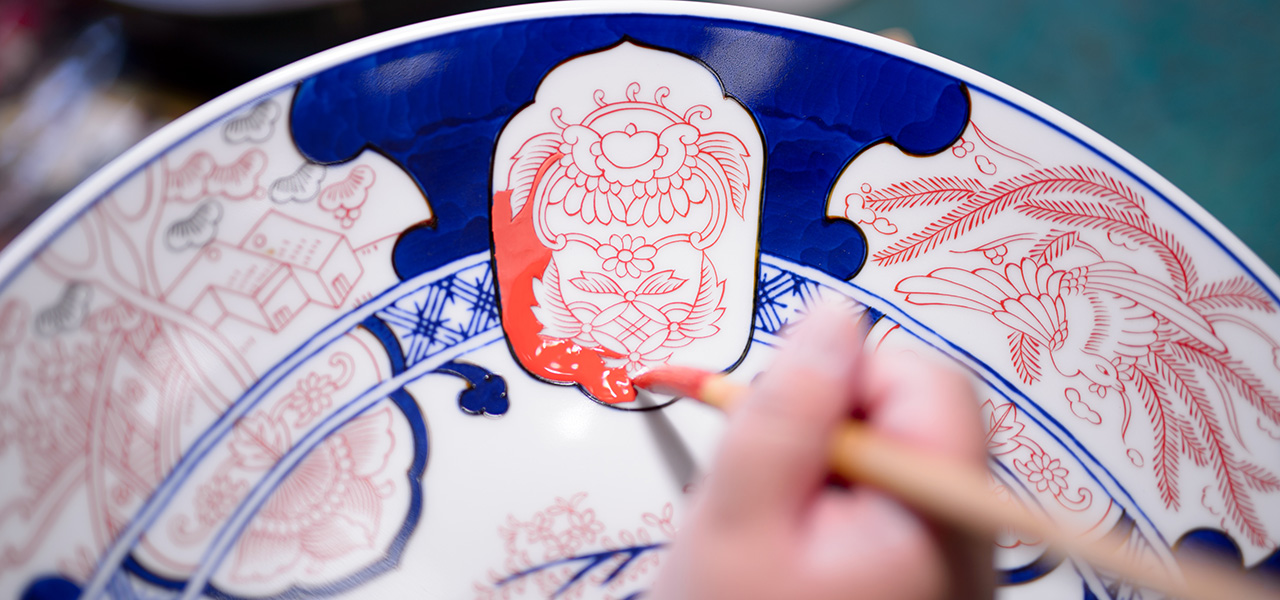
The disruptive power of traditional industry — Arita Porcelain Lab pioneers a new era for Arita ware.
A 220-year-old established business revives from crisis and achieves global market success. The "EC strategy" implemented by Tetsushi Matsumoto, President of Arita Porcelain Lab, offers universal insights for all businesses navigating an era of transformation. How can one overcome the turbulent waves of time and deliver unique value to the world?
Edit by Takashi Tsuchida
From Banker to Seventh-Generation Kiln Owner: A Transformer of Traditional Industry
Today, Arita Porcelain Lab enjoys popularity in premier department stores, including Isetan Shinjuku. Its President, Tetsushi Matsumoto, was originally a banker. After graduating from university, he joined a regional bank, taking over the family business at the age of 30.
"I returned to my hometown after working at the then-Resona Bank, only to find our company burdened with ¥2 billion in debt and facing corporate rehabilitation proceedings. When I became president, I keenly felt that surviving with traditional Arita ware was no longer feasible."
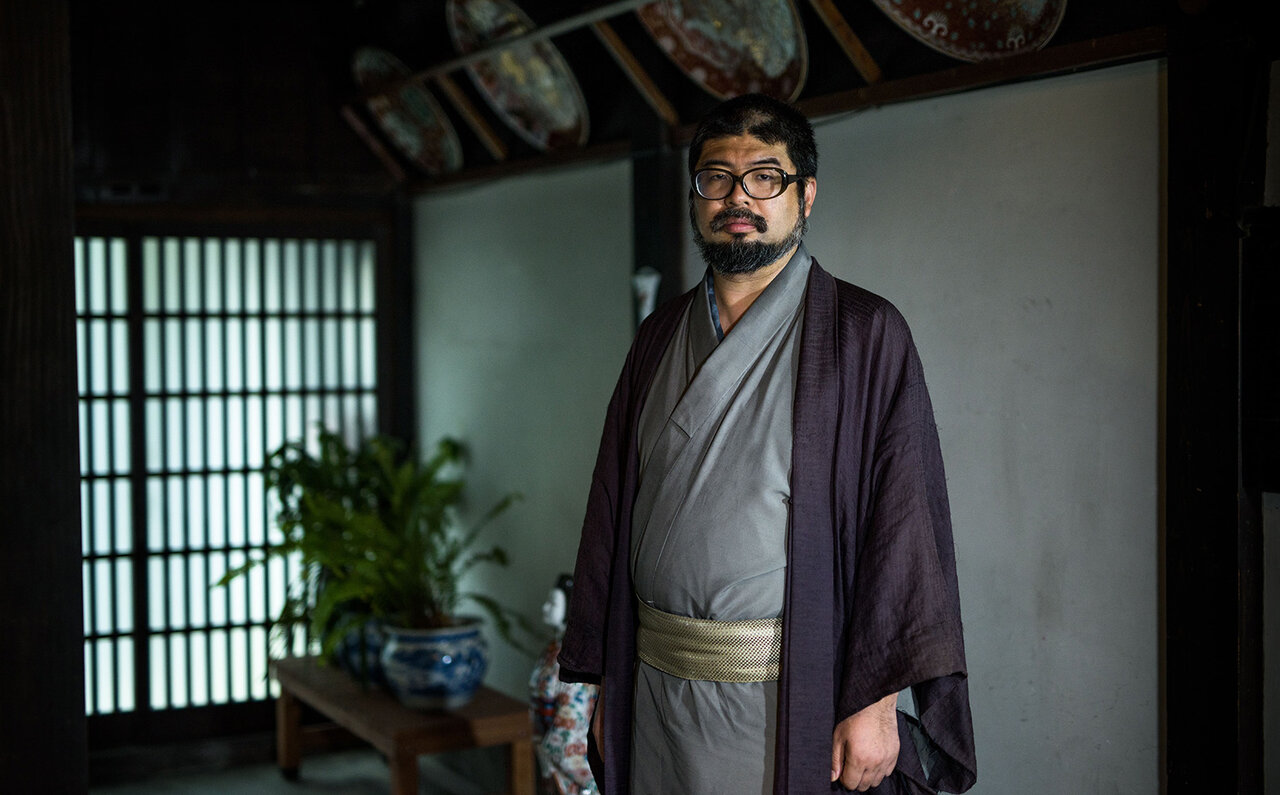
Tetsushi Matsumoto, President of Arita Porcelain Lab
As the seventh-generation owner of the kiln, Mr. Matsumoto inherited a family business with over 220 years of history, founded in 1804. However, the path was far from smooth. The company was facing a survival crisis, weighed down by substantial debt.
Mr. Matsumoto's first initiative was to reform the traditional distribution structure of Arita ware.
"The distribution of pottery was essentially subcontracting work, selling to local wholesalers at about 25-30% of the retail price. So, I established our own brand, Arita Porcelain Lab, and decided to deal directly with department stores and specialty shops."
Traditionally, Arita ware was typically sold through wholesalers, a structure that yielded little profit for the kilns and made brand building difficult. Mr. Matsumoto broke through this old custom, forging a new path where manufacturers could establish their own sales channels.
Innovation Through Color: Aiming for the World with Japan's Seasons as Inspiration
The new Arita ware proposed by Mr. Matsumoto dramatically overturned conventional perceptions.
"Arita ware often brings to mind flamboyant designs influenced by China, with reds and golds. While we preserve those traditional patterns, we've created a modern impression by limiting the colors to about two. That's our core concept."
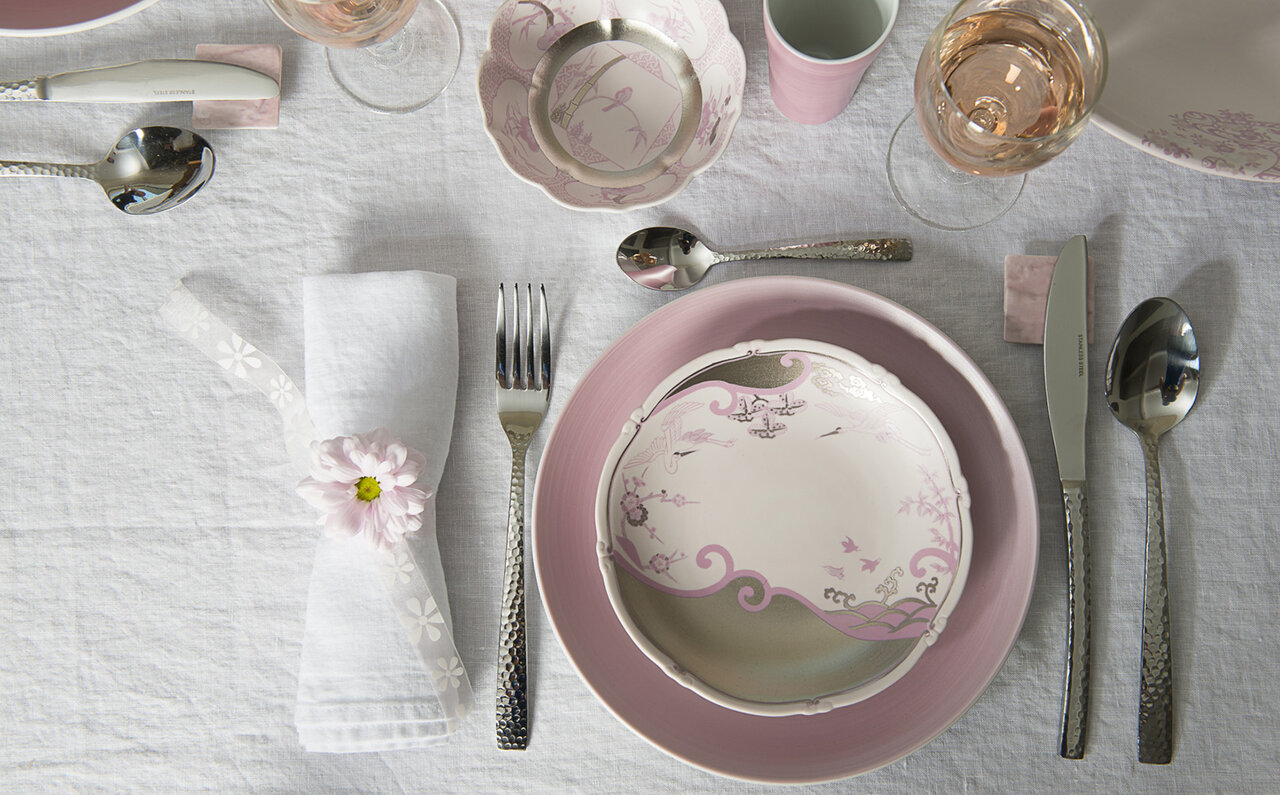
Japan Cherry Series
Furthermore, they developed colors inspired by the Japanese seasons. For winter, "Japan Snow" using platinum; for spring, "Japan Cherry" inspired by sakura; "Japan Blue" for summer; and "Japan Autumn" with autumn leaves as motifs. While inheriting the traditional techniques of Arita ware, they re-examined the colors to pursue designs that harmonize with contemporary dining tables.
However, this endeavor was not initially understood in his local community.
"When I first showed them to the wholesalers, they asked, 'Is this still being painted?' or 'What is this? I don't understand it at all.' But at an exhibition in New York, it received high praise."
The turning point came at an exhibition in New York. With an eye on overseas markets, Mr. Matsumoto exhibited the "Japan Snow" series, featuring platinum, at a New York trade show. It garnered an unexpectedly strong response, leading to a subsequent pop-up shop at Isetan Shinjuku.
Additionally, they received an order to produce perfume bottles for the French luxury brand Guerlain. They also collaborated with Ladurée, famous for its macarons, among other international luxury brands, significantly expanding the possibilities of Arita ware.
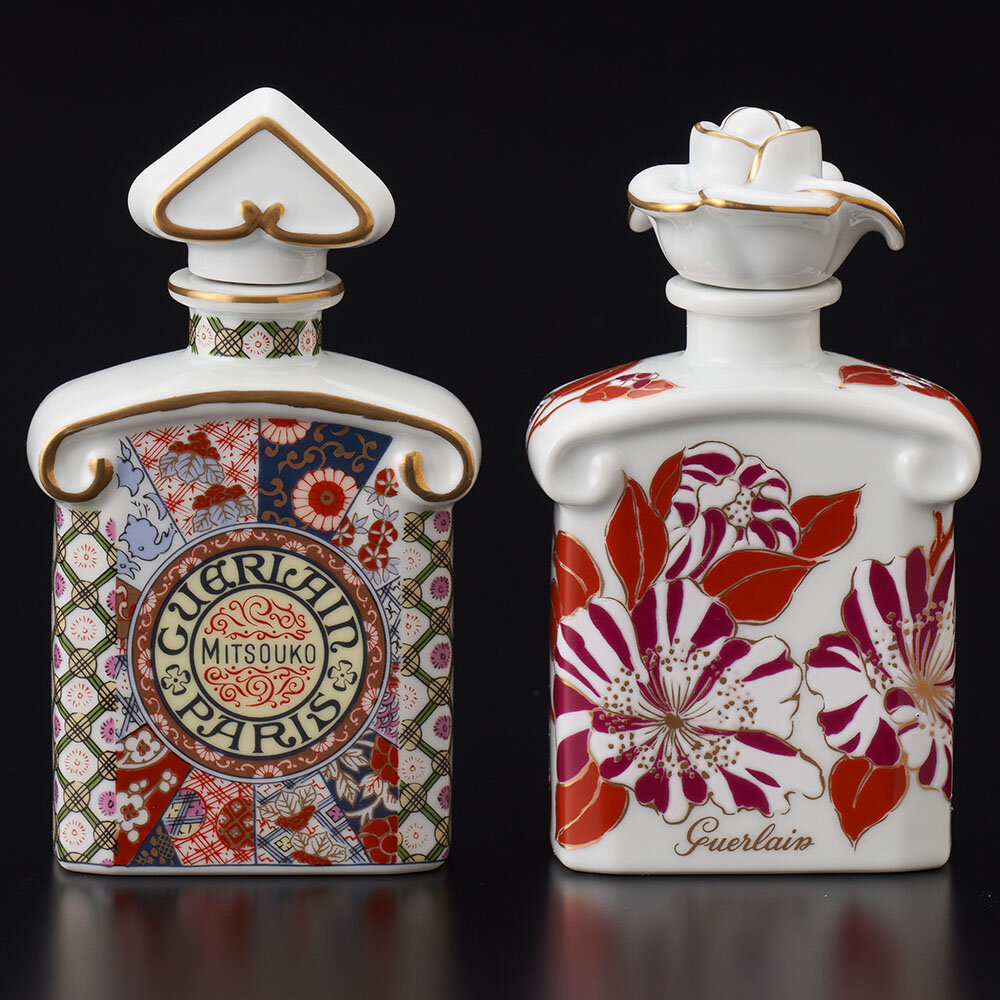
Guerlain's "MITSUKO" perfume bottle produced by Arita Porcelain Lab (sold out)
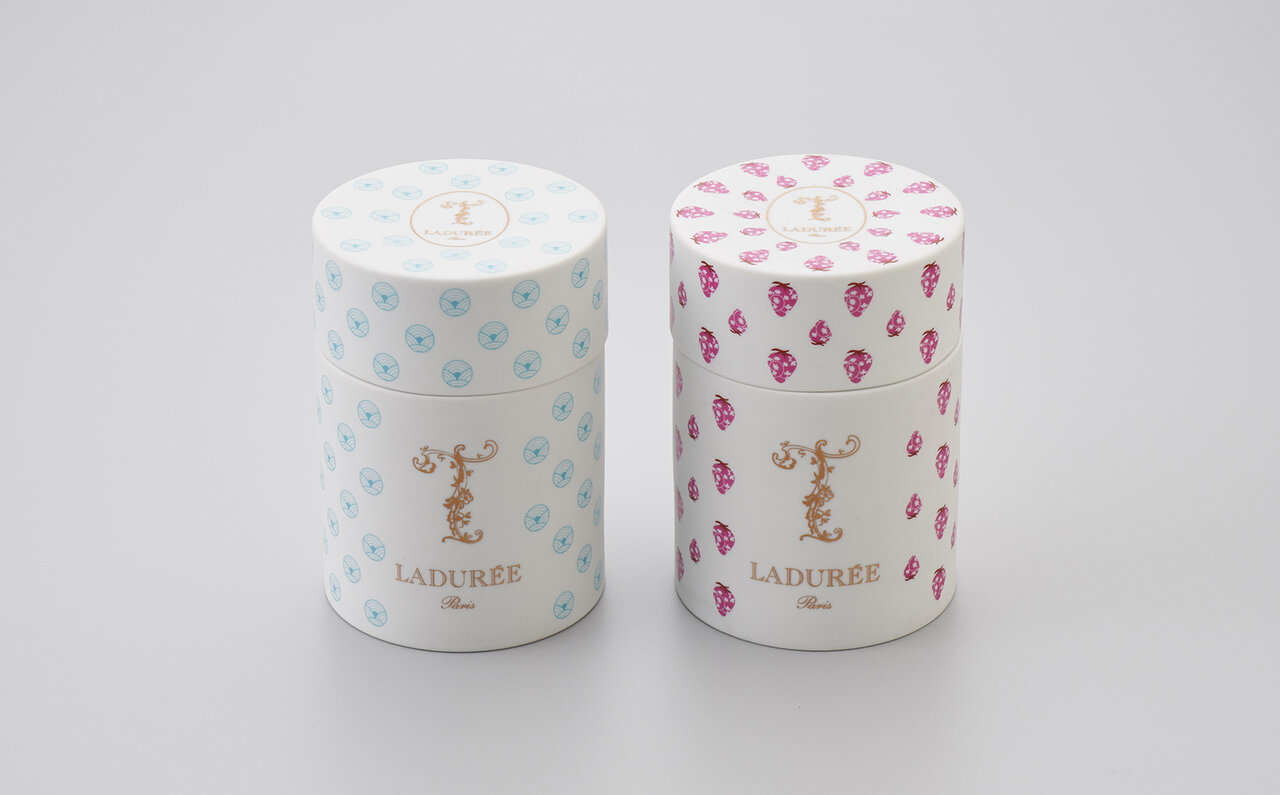
Tea canister in collaboration with Ladurée (sold out)
In-House Production Strength: Modern Application of Traditional Techniques
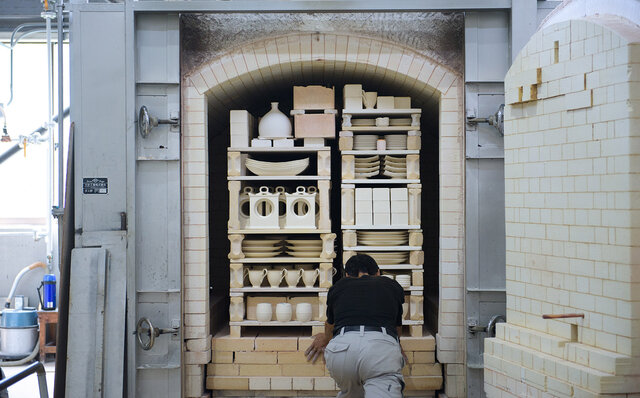
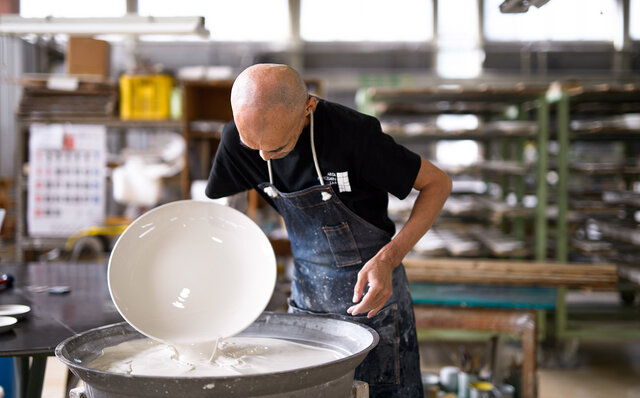
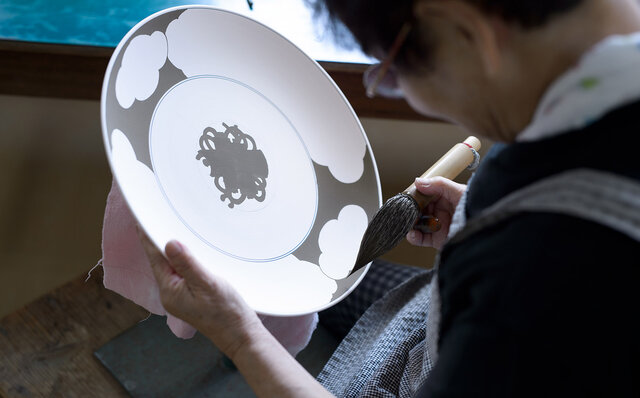
Arita Porcelain Lab's strength lies in its ability to handle the entire process in-house, from clay preparation to painting.
"In the Arita ware industry, specialization is the norm. It's common to outsource processes like clay making or overglaze painting to specialized manufacturers. However, we handle everything from creating the clay to the final overglaze painting ourselves."
This structure likely supported President Matsumoto's ambitious approach to product creation.
The company was once a major manufacturer with 700 employees and 5-6 factories. While the scale has significantly reduced to 20 artisans, their capability to manage the entire process remains intact. Although securing and training young artisans is a challenge, their ambitious endeavor to fuse traditional techniques with innovative design continues uninterrupted.


The "Sharpening" Strategy and EC Sales: A Breakthrough for Traditional Industries
Mr. Matsumoto's strategy is to deliberately avoid mass appeal and create products that strongly resonate with a specific audience.
"When several Arita ware manufacturers exhibit together, 60-70% of people don't prefer our products. But the remaining 30% become passionate fans. And that's fine. By not aiming for universal appeal, we create an edge and build a strong brand."
Mr. Matsumoto believes this "sharpening" strategy is the key to Arita Porcelain Lab's success. Instead of settling for 'good enough,' meticulous dedication creates unparalleled value.
Furthermore, Mr. Matsumoto strongly advocates for direct sales utilizing EC as a breakthrough for traditional industries.
"I am convinced that the breakthrough for traditional industries lies in EC. Selling unique products exclusively through our own channels online becomes a significant advantage in the EC market. While getting into department stores is a high hurdle, online sales allow us to achieve results through our own efforts."
Moreover, the strength of EC sales lies in the ease of selling across borders. Language barriers can be overcome with translation systems, and global payment systems are readily available. The inherent strengths of traditional industries—"history" and "unique techniques"—can be directly communicated to customers worldwide.
"Overseas customers also view and purchase online. Language differences are easily overcome with EC, and payments are global using systems like PayPal or Amazon Pay. Access to the global market is the greatest opportunity for traditional industries."
Challenging the Future: Creating New Value Through Food Collaborations
As the next step, Mr. Matsumoto is considering collaborations with the food industry.
"The tableware industry is actually in decline. Department stores are even phasing out their tableware sections. Therefore, I believe we should propose offerings that combine tableware with 'food' itself, which garners significant public interest."
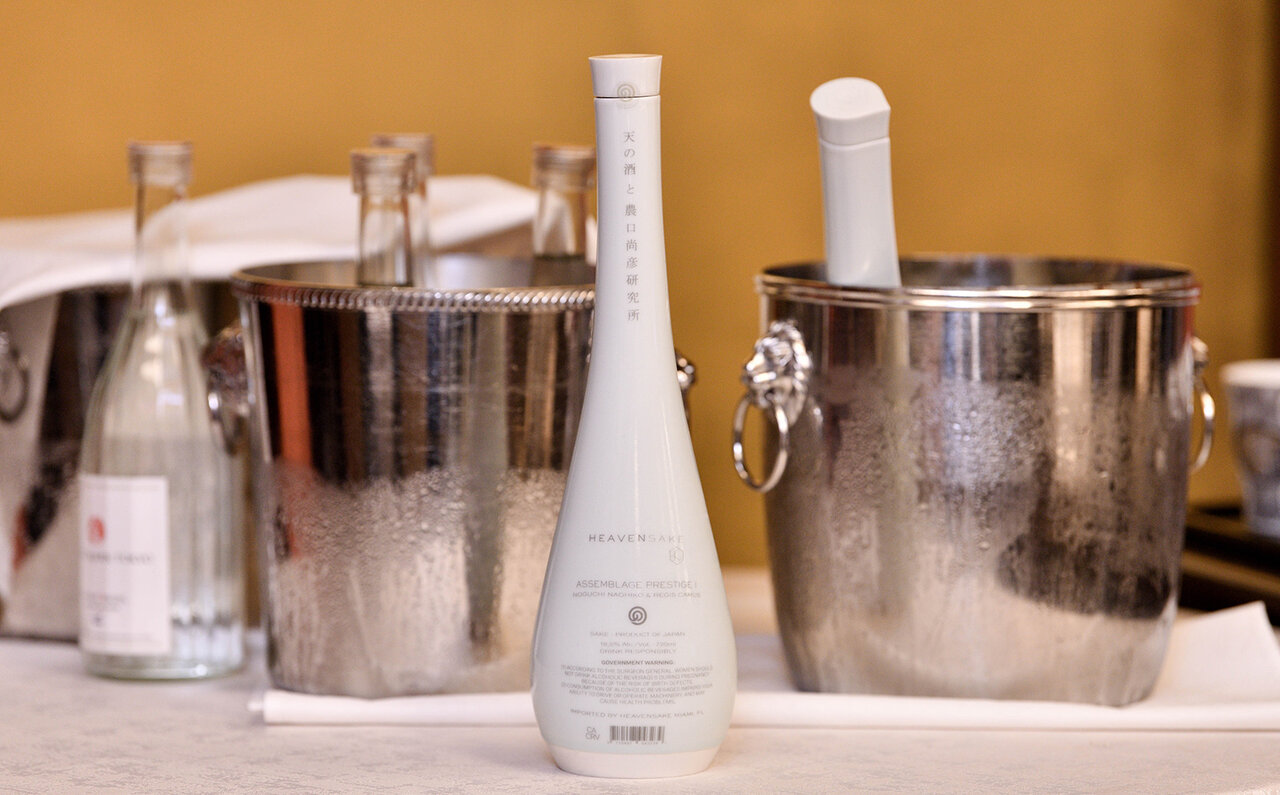
Sake "HEAVEN SAKE" using bottles produced by Arita Porcelain Lab
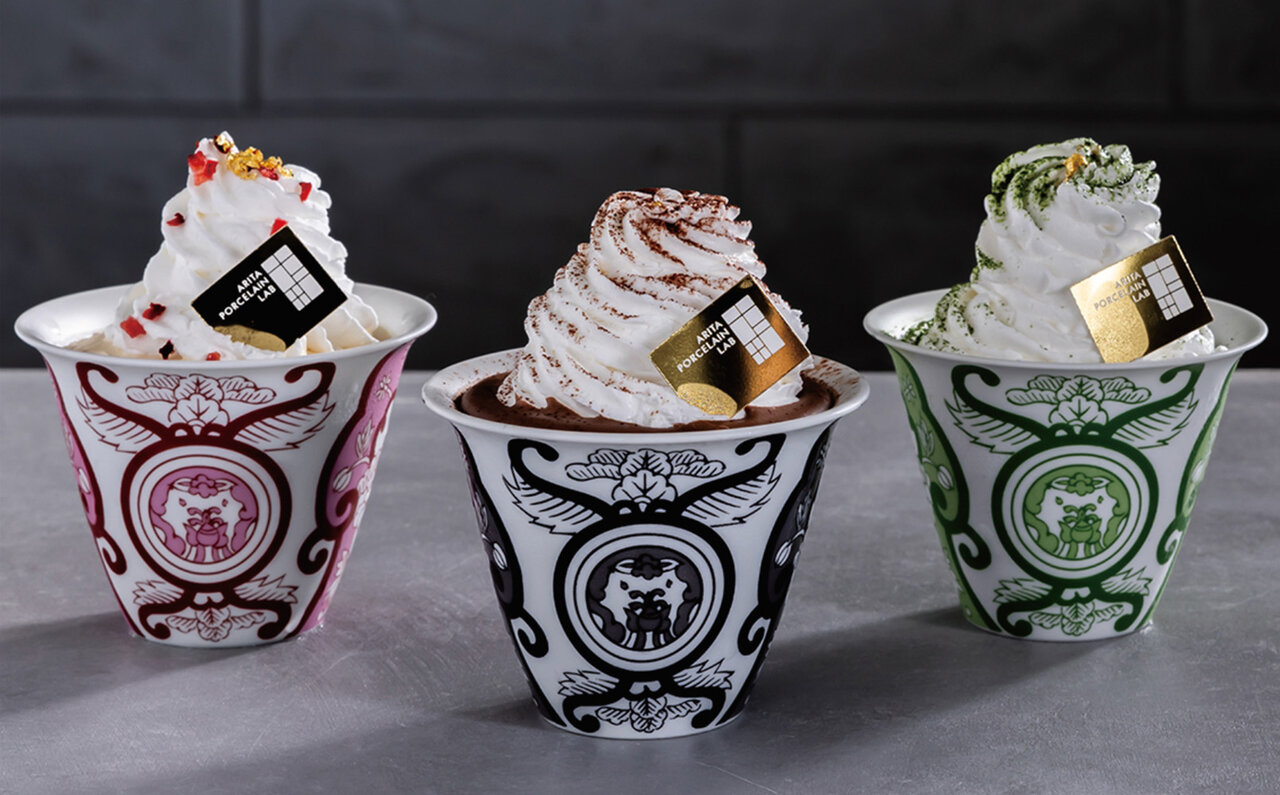
From left: "Ichigo-san" strawberry parfait from Saga Prefecture, Arita kumquat and rich chocolate parfait, Ureshino matcha parfait (¥3,300 each). All can be purchased online and are delivered frozen. The Arita ware containers used for the parfaits can later be used as teacups and are popular as gifts.
They have already launched collaborative products with food, such as sake using Arita ware bottles and parfaits served in Arita ware dishes. Furthermore, they announced the "Seventh-Generation Saemon Matsumoto" luxury art series to commemorate their 220th anniversary, challenging the creation of new value not just as tableware, but also as art pieces.
By "sharpening" a niche market to create products that strongly appeal to a specific customer base, and delivering them directly to the world via EC, this strategy offers significant insights not only for traditional industries across Japan but also for small businesses.
The breakthrough for traditional industries stems from a spirit of challenging the future with courage, unburdened by the past, much like Mr. Matsumoto.