
ART FILE 35 | A Visit to the Renovated Van Gogh Museum | Series: From Art Exhibitions Around the World
ART FILE 35 | Amsterdam, Netherlands | Van Gogh Museum
A Visit to the Reimagined Van Gogh Museum (Part 1)
Last year, the Van Gogh Museum in Amsterdam, Netherlands, underwent a major renovation. To explore its new entirety, OPENERS visited the museum in February of this year, rediscovering the masterpieces of Vincent van Gogh—a titan who profoundly influenced 20th-century art—and his life in a fresh way.
Text by Winsome Li (OPENERS)
The Stories Hidden Behind the Self-Portraits
Vincent van Gogh (hereinafter referred to as Van Gogh) is renowned not only for his artistic legacy but also for his tumultuous life. The Van Gogh Museum, housing the world's largest collection of his works, was established in 1973 and displays over 200 paintings and numerous letters in Van Gogh's own hand. The newly renovated museum features not only countless masterpieces but also, distinctively, discusses the various incidents, emotional struggles, and events of his life, right up to his final moments, as part of its exhibition.
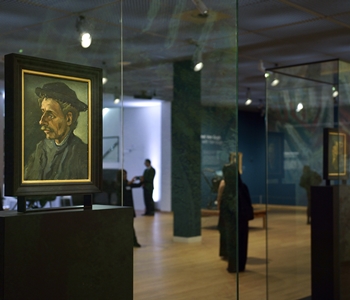
Upon entering the museum, visitors are greeted by a striking display of twelve self-portraits. Van Gogh created many self-portraits, using himself as a model to practice his depiction of color and facial expressions. Three self-portraits at the center of the space are each placed on a glass stand, allowing them to be viewed from both the front and back. Many visitors discover here that, in fact, each of these self-portraits has a different painting on its reverse side. In those days, Van Gogh, facing financial hardship, would reuse canvases of paintings he was unsatisfied with, rather than waste precious art supplies. Furthermore, painting self-portraits held a profound meaning for him. Van Gogh wrote, "When I am in front of my easel, painting my own portrait, I finally feel that I am alive."
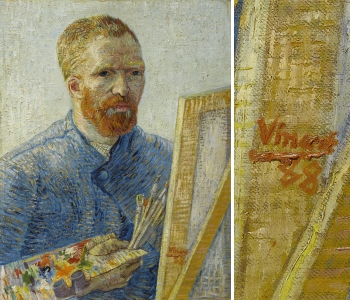
Among the works in this section, a particularly noteworthy piece is a self-portrait painted by Van Gogh in 1888. In the lower right corner, the painting bears the signature and year, "Vincent 88," inscribed by Van Gogh himself. It was rare for Van Gogh to sign his works, and this fact alone suggests how highly he regarded this particular self-portrait.
Van Gogh also had a keen interest in peasant life and nature. His early works (1883-1889) often feature subjects such as peasants, natural landscapes, and plants, including "The Potato Eaters" (1885), "Bedroom in Arles" (1888), and "Sunflowers" (1888).
ART FILE 34 | Amsterdam, Netherlands | Van Gogh Museum
A Visit to the Reimagined Van Gogh Museum (Part 2)
Van Gogh's Life Revealed Through His Letters
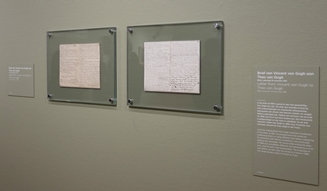
Van Gogh was also a gifted writer. Throughout his life, he penned approximately 820 letters, most of which were sent to his brother Theo, his confidant. On the second floor of the museum, visitors can find the actual letters alongside an audio guide that plays recordings of their contents. Van Gogh poured his innermost feelings—about his struggles, life and death, love—into his words. These extensive letters serve as a precious source for deeply understanding his state of mind as an artist and as an individual. In addition, about half of Van Gogh's approximately 1,100 designs and sketches are displayed at the museum.
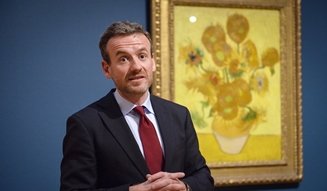
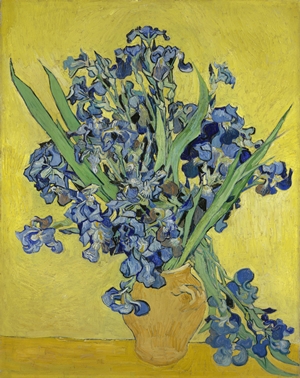
The top floor showcases works primarily from Van Gogh's later years (1889-1890). In 1888, Van Gogh was admitted to a psychiatric hospital in Saint-Rémy-de-Provence. Despite his struggles with mental illness, Van Gogh immersed himself in painting during his stay, leading to the evolution of his unique style. This floor features many of his representative works from that period, such as "Irises" (1889) and "Almond Blossom" (1890).
Van Gogh's work has had a profound influence on subsequent artists. One such artist is the British painter Francis Bacon. His monumental work, "Study after Van Gogh," has been on display at the Van Gogh Museum since last November. Francis Bacon created this piece as a reinterpretation of Van Gogh's "The Painter on the Road to Tarascon," a work lost during World War II. Furthermore, the museum's interior walls, previously uniformly white, have been repainted in different colors on each floor following the renovation, reflecting the themes of the artworks exhibited there.
Axel Rüger, the museum's director, commented on the renovated museum: "We've looked back at his past, considered how to connect his work to the future, and pondered why he continues to inspire us 125 years later. We want to convey his inner world by interpreting Van Gogh's art and life with a new approach."
This year marks 125 years since Van Gogh's passing. Why not take this opportunity to reflect on his life at the reborn Van Gogh Museum?
Van Gogh Museum
Opening Hours | 9:00–18:00 (Saturday–Thursday), until 22:00 (Friday) *Hours may vary by season.
Closed | None
Admission | €17, free for under 18s
Address | Paulus Potterstraat 7 1071 CX Amsterdam
http://www.vangoghmuseum.nl/en