Yasuhiro Mihara | Part 2: Filmmaker Hitomi Kamanaka x Yasuhiro Mihara (3) Dialogue
Part 2: Film Director Hitomi Kamanaka x Yasuhito Mihara (3)
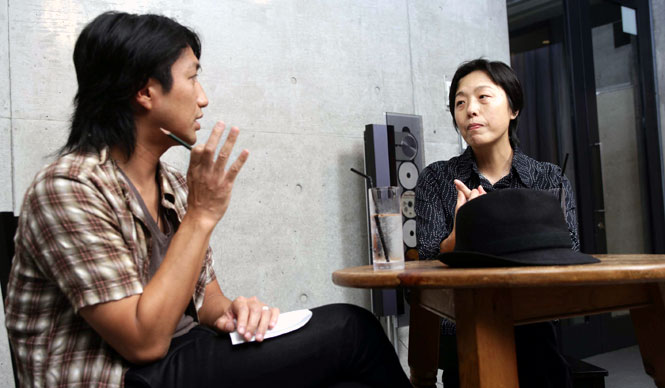
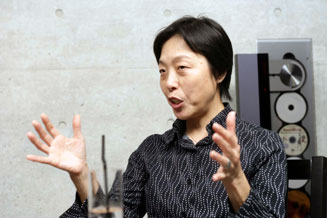
A conversation with Hitomi Kamanaka, a filmmaker who continues to focus on social issues with documentaries such as "HIBAKUSHA: The End of the World" and "Rokkasho Rhapsody." Mihara sincerely listens as Director Kamanaka proposes new ideas to oppose nuclear power generation and discusses the reality of Japan, an undeniable nuclear power nation.
Photo: Kaoru KitaharaSummary: Yasuhiro Takeishi (City Lights)
The Need for New Proposals Beyond Mere Opposition
MiharaIn practical terms, is nuclear power really that necessary?
KamanakaNo. To begin with, we are currently only operating about 30% of our hydroelectric and thermal power facilities. Nuclear power plants, once started, are designed so that their output cannot be adjusted without running them 24 hours a day. This means power companies intend to run all 55 nuclear reactors at full capacity and adjust the balance with hydro and thermal power. Electricity consumption surges only in the summer and is not particularly high otherwise. In other words, they plan for the peak summer demand and discard any excess power generated throughout the year. The reason power companies have been promoting all-electric lifestyles in recent years is because they don't want to waste this excess electricity.
MiharaThen, is there really no need to build new nuclear power plants in Yamaguchi Prefecture?
KamanakaI believe we already have sufficient electricity. The argument for nuclear power was that we lack resources, yet oil consumption continues to increase, which is quite ironic. However, power companies say, 'Our lives will become more electrified in the future, so we will use more.' (laughs)
MiharaWhat do you make of that argument? (laughs) But if you explained what you've told me so far to the public, I think everyone would oppose the construction of nuclear power plants.
KamanakaThe government certainly doesn't explain it, and neither does the media. This is because power companies are the largest sponsors for media outlets. I've even been told by media when appearing on their programs, 'Please don't say anything bad about power companies.' I replied, 'I won't say anything bad about power companies, but I will say things about nuclear power.' (laughs)
Recently, I heard that a photograph taken in front of the Rokkasho Reprocessing Plant by religious scholar Shinichi Nakazawa and Ryuichi Sakamoto, who were protesting reprocessing, was also stopped from being published in a magazine. There was also an incident where young people in a shopping street in Kyushu planned a candlelit event and to screen my film, but Kyushu Electric Power suddenly became a sponsor for the event, leading to the cancellation of the screening.
Despite these circumstances, there are places that have historically opposed nuclear power and successfully blocked its construction. However, rather than just raising voices in opposition, I believe it's better to make new proposals going forward. While stories like this cannot be explained in a single sentence, saying 'nuclear power doesn't emit carbon dioxide' can sometimes have the effect of a 'Mito Komon's talisman' in today's climate. Nevertheless, radioactive waste is still produced, so what do we do about that? My proposal is that sustainable natural energies like hydro and wind power, which don't produce waste, are preferable.
MiharaHow many countries rely on hydroelectric and wind power instead of nuclear energy?
KamanakaActually, globally, far fewer countries have nuclear power. For example, Germany used to have nuclear power plants but has already decided to phase them out. The Chernobyl accident raised environmental awareness, which was reflected in politics. Recently, statistics showed for the first time in the world that childhood leukemia occurs 1.2 to 1.5 times more frequently around nuclear power plants. Germany is currently working towards generating 25% of its electricity solely from wind power, which would allow it to replace the energy from nuclear plants. Sweden has also decided to phase out nuclear power and is currently working towards that goal (In February 2009, the Swedish government announced a review of its nuclear phase-out policy).
Denmark has no nuclear power plants, yet its electricity self-sufficiency rate from wind power alone is 160%. Fundamentally, I believe we need to shift away from the idea that everything must be powered by electricity. For instance, heating can be achieved through methods other than electricity, and even McDonald's is trying to utilize the heat generated from frying french fries without wasting it. We need a system that allows us to utilize all energy without waste. Furthermore, there are 'passive solar houses,' the ultimate eco-homes, which provide heating solely from solar energy without relying on any other power source.
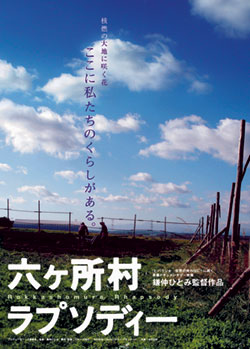
The Rokkasho Reprocessing Plant, which extracts plutonium from spent nuclear fuel, was completed in Rokkasho Village in 2004. "Rokkasho Rhapsody" is a feature-length documentary that captures the lives of residents surrounding this national project. The film depicts the intersecting thoughts of diverse individuals, confronting viewers with the current reality. Available on DVD.
MiharaHearing about these ideas and the latest developments, nuclear power itself feels very outdated.
KamanakaI agree. Once a nuclear power plant is shut down, the facility itself becomes a massive radioactive waste. And the land where the plant stood will never be clean again. It's incredibly anachronistic.
MiharaBesides the United States and Japan, which you have covered, which other countries are heavily invested in nuclear power?
KamanakaFrance and Russia. China is also planning to build many more nuclear power plants in the future.
MiharaWith just five countries—the United States, Russia, Japan, France, and China—it seems possible that the entire world could fall into a dire situation.
KamanakaYes. This is because most countries with nuclear power plants also possess nuclear weapons. Originally, nuclear power plants also served as factories for producing nuclear weapons. Hanford in the United States had nine reactors, all of which were for producing plutonium for nuclear weapons.
Japan's Reality as a Global "Nuclear Power Nation"
MiharaWere the depleted uranium munitions used in the Gulf War also made there?
KamanakaThey were made from the radioactive waste generated by such facilities.
MiharaIs that so? Is the waste from Japan's nuclear power plants also turned into depleted uranium munitions?
KamanakaYes, it is. This is because the enriched uranium used as fuel for Japan's nuclear power plants is produced in the United States, where depleted uranium accumulates. Regarding depleted uranium specifically, waste generated during the production of enriched uranium for Japan is also used, so it must be mixed in.
MiharaSo, Japan is not unrelated to the issue of depleted uranium munitions.
KamanakaThat's right. That's why the woman who was delivering medicine to Iraq said that they had to do it themselves. These connections will not disappear unless depleted uranium munitions are abolished or nuclear power is stopped.
MiharaThe electricity we use daily for our lives is connected to the deaths of children in places like Iraq.
KamanakaYes. Countries where depleted uranium munitions have been used include Iraq, Afghanistan, Bosnia, and Kosovo. But frighteningly, yellow sand from China blows into Japan, doesn't it...
MiharaThat sounds like something I'd rather not hear about. (laughs)
KamanakaYes (laughs). But such contamination is the same as global warming; borders are completely irrelevant. Therefore, we need to think on a global scale. In Sweden, there's a saying: 'If you're polluting upstream, you can't solve the problems downstream without stopping the source.' It's common sense, but Japan is currently only dealing with the downstream issues.
MiharaIt seems like something even a child could understand, but why don't the Japanese people try to solve the upstream problem?
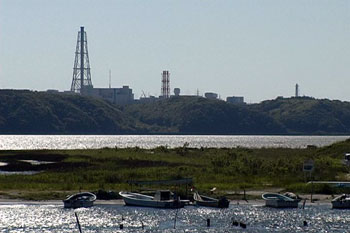
The Rokkasho Reprocessing Plant viewed from Osamunuma. Located at the base of the Shimokita Peninsula, Rokkasho Village in Kamikita District is a village of 11,000 people, with rich fishing grounds on the Pacific coast and rolling hills suitable for livestock farming inland.
KamanakaWe can't magically make the 55 nuclear power plants disappear. What I believe is important is whether we continue to build nuclear power plants and live dependent on them, or whether we reduce the current number of plants and transition to alternative energy sources.
I think the future will change considerably depending on which path we choose. For example, suppose we shut down one old nuclear power plant, and we have the problem of how to replace the 1 million kilowatts of lost capacity. If we were to halve the number of vending machines nationwide, which total 1.4 million, we could actually reduce the electricity equivalent of two nuclear power plants. It's also said that replacing all the light bulbs in Japan with energy-saving types would eliminate the need for four more plants.
MiharaBy the way, how many nuclear power plants are there in the United States currently?
Kamanaka111.
MiharaWith 111 plants in the US, which has an area 25 times larger than Japan, 55 plants in Japan seems excessive.
KamanakaPer capita electricity consumption is the highest in the world for Americans. And Japanese people are second. That amount of electricity is 8 times that of South Koreans and 5 times that of French people.
Profile
Hitomi Kamanaka
Born in Himi City, Toyama Prefecture, in 1958. After graduating from Waseda University, she signed as an assistant director with Group Gendai, a video production company specializing in documentaries, in 1984. In 1987, she signed as an assistant director with Iwanami Films and others. From 1990, she received a grant from the Agency for Cultural Affairs for overseas training of artists and trained for three years at the National Film Board of Canada. She then moved to New York and worked as a media activist. Returning to Japan in 1995, she became a freelance filmmaker, producing numerous works including TV programs, video works, and films. Her representative works include "HIBAKUSHA: The End of the World" (2003) and "Rokkasho Rhapsody" (2006). Her new feature-length documentary film, "The Sound of the Honeybee and the Rotation of the Earth" (tentative title), is scheduled for completion in the fall of 2009.
The Sound of the Honeybee and the Rotation of the Earth
http://888earth.net/