MIKIMOTO | 120th Anniversary of Pearl Invention: The Second "Pearl School"
MIKIMOTO
The Second "Pearl School" Held in Misaki, Miura Peninsula
Experiential Observation Session: "Let's Learn About the Sea That Nurtures Pearls"
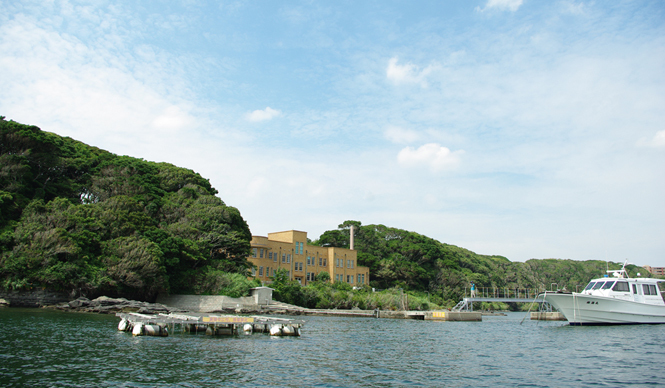
The "Let's Learn About the Sea That Nurtures Pearls" experiential observation session has been co-hosted by MIKIMOTO and the University of Tokyo's Misaki Marine Biological Station since 2010. On July 20th (Saturday), elementary school students selected through public recruitment participated in experiential learning about pearl cultivation in Misaki, Miura Peninsula, an area known for its rare and rich marine life.
Text by OPENERS
MIKIMOTO and the University of Tokyo's Misaki Marine Biological Station
Established in 1886 (Meiji 19), the Misaki Marine Biological Station was the first of its kind in Japan and is one of the world's oldest research stations, alongside Woods Hole in the United States, Naples in Italy, and Plymouth in the United Kingdom. For over 125 years, it has served as a hub for zoological research and education in modern Japan. Numerous research findings and achievements discovered here have been applied not only to academia but also to industrial technology.
In 1890 (Meiji 23), a collaborative research project on pearl cultivation, initiated by MIKIMOTO founder Kokichi Mikimoto, who began serious pearl research, was sparked by his encounter with Dr. Kakichi Mitsukuri, the station's first director. This collaboration laid the foundation for the world's first successful pearl cultivation.
One manifestation of the strong bond between the two entities, which continues today through various initiatives, is the "Let's Learn About the Sea That Nurtures Pearls" experiential observation session, now in its fourth year. Under the guidance of Dr. Koji Akasaka, Director of the Marine Biological Station, Mr. Kiyohito Nagai, Director of the MIKIMOTO Pearl Research Laboratory, and staff from each research institute, the program aims to help children feel more connected to marine life and pearl cultivation through hands-on experiences.
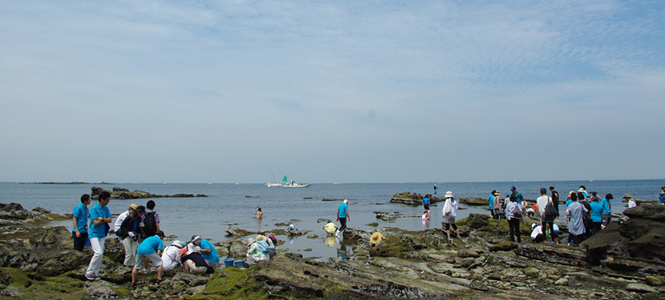
The children first went to the shore to collect marine life. They were thrilled by the variety of creatures they discovered, including sea urchins and purple sea snails. By chance, they even found a rare, wild Akoya pearl oyster, the very creature that produces pearls.

Akoya oysters are found in abundance south of the Boso Peninsula on the Pacific coast and south of the Noto Peninsula on the Sea of Japan coast, inhabiting rocky areas in shallow, warmer waters. Natural pearls are formed when the mantle tissue of a wild Akoya oyster is injured, causing the oyster to encapsulate the foreign object within its body. Pearl cultivation artificially replicates this process, carefully nurturing the oysters for approximately two years in an environment that prioritizes their health.
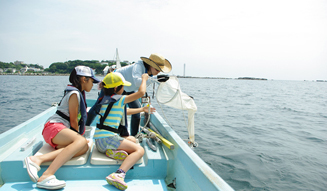
"Plankton Collection." Collecting seawater offshore. Observing microorganisms such as marine plankton and mitochondria under a microscope.
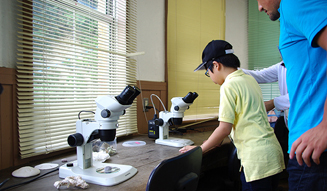
"Plankton Observation." Observing the microorganisms they collected themselves under a microscope. Gazing intently at a world invisible to the naked eye,
gazing intently
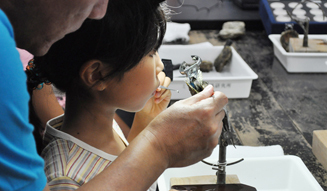
"Nucleation" for pearl cultivation, the crucial step. Using scalpels and tweezers to insert a nucleus into the oyster's body along with a piece of mantle tissue.
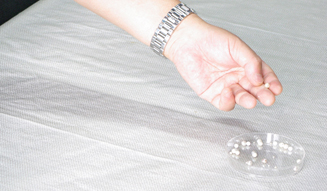
The "nucleation" performed by last year's participants was successful,
resulting in cultivated pearls. "Many were beautifully shaped and sized," said Director Nagai.
beautifully shaped and sized," said Director Nagai
Pearls: A Gift from the Sea
Following the collection and observation at sea and the Akoya oyster nucleation experience, the children learned about "pearls." The session included a quiz-style explanation covering the history and culture of pearls, treasured since the time of Cleopatra, the distinct characteristics of pearls from different regions, and their uses beyond jewelry. It emphasized the importance of preserving these wonderful gifts from the sea for future generations, not just for their aesthetic beauty.
The research, passed down from previous generations, not only advanced pearl cultivation techniques but also taught the children the mission of protecting marine life, including the Akoya oyster, a species unique to Japan, from environmental changes.
MIKIMOTO Customer Service Center
Tel. 03-5550-5678
http://www.mikimoto.com/jp/