
LOOPWHEELER x Sumibiyaki Yuji: A Collaboration T-Shirt from Shibuya, Tokyo
LOOPWHEELER
Collaboration with "Sumibi Yakiniku Yuji" in Shibuya, Tokyo
"THE YAKINIKU" of Japan to the World (1)
Located in the same spot for 20 years in Shibuya, Tokyo, "Sumibi Yakiniku Yuji" is an ultra-popular yakiniku restaurant with a regular clientele of celebrities from various fields. LOOPWHEELER has now released a collaboration T-shirt with Yuji. You might be wondering, "Why?" To answer that question, Lumore's director Hiroyuki Matsumoto interviewed Yuji's representative, Hiroshi Higuchi, and Loopwheeler's representative, Satoshi Suzuki.
Interview Photographs by JAMANDFIXText by MORITO IWANAGA (OPENERS)

The History of a Yakiniku Restaurant Striving for the Top in Japan
MatsumotoWhen did you first meet Mr. Suzuki?
HiguchiAbout five or six years ago. During that time, he introduced me to many genuine people. His staff also visit the restaurant, and I'm always grateful for their patronage.
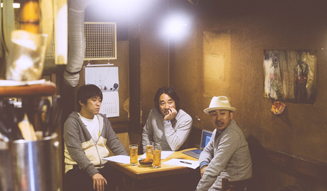
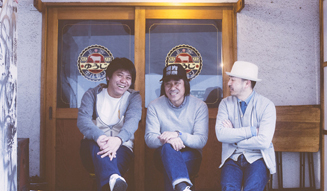
From left, Yuji's representative Hiroshi Higuchi, Loopwheeler's representative Satoshi Suzuki, and Lumore's director Hiroyuki Matsumoto
SuzukiYuji always possesses things that we tend to forget. Sometimes he scolds us (laughs).
In our work, even when everyone is putting in their full effort and we feel we've reached the best possible outcome at this stage, if I find myself thinking, "Is this all there is?" or muttering that something is still lacking, he reminds me, "We don't do 'just enough' here!" It's that kind of place.
That's why I rarely think, "Is this enough?" when I'm at Yuji's. Our work often involves deadlines and commitments, so sometimes we have to cut corners, but it's always better not to. If we're pursuing what it means to be a professional, such situations should be avoided. I strongly feel this when I observe Yuji's attitude.
MatsumotoWhen did you open the restaurant?
HiguchiIn 1990.
MatsumotoWas it in this exact location from the very beginning?
HiguchiYes. My father had a Japanese restaurant here. One day, my father passed away suddenly, and we couldn't make ends meet. We discussed with my mother what business we could start immediately, and decided on yakiniku. It's embarrassing to admit, but it was for a rather desperate reason. We thought, "With yakiniku, you just cut and serve, and people will grill and eat it themselves, so it must be easy."


Of course, it wasn't that simple. Initially, regular customers came out of sympathy, but after about three months, no one came anymore. It took about two years, and my father's savings were running out, before I truly felt the need to do something about it.
MatsumotoHow old were you then, Mr. Higuchi?
HiguchiI was 23. Even though I couldn't even afford to buy ingredients, there were customers who felt sorry for me and others who scolded me.
People with no prior connection would say, "Hang in there, kid. Whatever it takes, become number one in Japan!" There was one person who would always offer words of encouragement at the counter when the restaurant was empty.
Eventually, several such people appeared. I realized how much I had been helped and how much I had taken that kindness for granted. I began to wonder where I should start to make them happy, to make them say it was delicious.
From then on, I visited every highly-rated yakiniku restaurant across the country on my days off, eating everywhere. I pondered, "What is the essence of what people find delicious?" It wasn't just the taste; it was the atmosphere, the overall experience. It wasn't a single element.
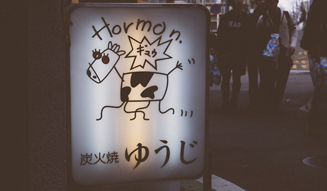
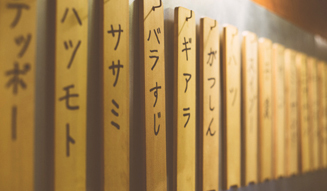
What I arrived at was the simple desire to create a restaurant where people would say, "That was delicious." That's what led to the restaurant as it is today.
Common Ground Between Food Culture and Fashion Culture
SuzukiWhen you go abroad, the word "yakiniku" doesn't really exist, does it? It's "BBQ." There's a strong perception that the culture of grilling and eating meat is of continental origin, so talking about yakiniku to foreigners often doesn't resonate. That's why, with this collaboration, I want to convey the concept of "THE YAKINIKU," not just "BBQ." I want people from various countries to know about Japanese yakiniku, and at the very least, I want Loopwheeler fans to understand it properly.
It's similar to what we do. Sweatshirts originated in America, gained citizenship there, and were used as casual wear, sportswear, and military clothing before coming to Japan. Then, over many years, we've interpreted and refined them in a Japanese way, and now we're doing our part. So, while it might sound a bit presumptuous, I feel there's a commonality, and I learn a great deal from Yuji's work.
LOOPWHEELER
Collaboration with "Sumibi Yakiniku Yuji" in Shibuya, Tokyo
"THE YAKINIKU" of Japan to the World (2)
Starting from Scratch to Learn in Order to Change the Status Quo
MatsumotoLearning is incredibly important, isn't it? Work encompasses various fields, and we engage with them through our initial approach. Whether we deepen or broaden that approach is up to us. However, as we continue, we can lose sight of it, and even with customers present, our experience might lead us to think, "I know how to handle this," and we start to coast.
SuzukiThat's dangerous.
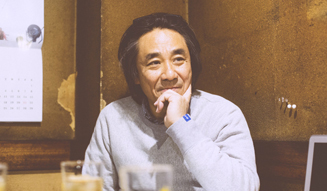

MatsumotoIt's about experiencing things in a different genre or category that makes you forget those things.—For example, reflecting the culinary experiences gained through taste stimulation into another genre. That's also part of learning, isn't it?
HiguchiI started learning from the point of "Your meat is too bland, why is it so bland?" by imitation.
First, I would go to delicious restaurants and try to replicate their dishes. Replication involves a process of figuring out the right balance of seasonings and the way the meat is cut. This allows you to understand the fundamentals. By understanding that balance and experimenting, I began to see various intentions behind the dishes. Only then could I start to consider the overall composition from my own perspective and create different flavor profiles.
I also select dishes to offer something new to my regular customers each time. The direction of these offerings also varies for each customer.
Otherwise, the job of a yakiniku chef becomes extremely monotonous. To add the restaurant's intent beyond simply serving what's ordered, I'm always thinking about finding new approaches to yakiniku.
At the moment of change, customers are present, and I receive their reactions, feedback, and criticisms directly, responding to them. It's through this back-and-forth that a rhythm is created, and the restaurant begins to breathe. By eating hundreds of times more than others and internalizing that vast amount of information, I've discovered all sorts of patterns. By incorporating situations and customer compositions, I've finally been able to refine the details.
Then, I started to focus on those minute details. Once you reach that level, it becomes tedious, and people might not want to go along with it. The next step is to figure out how to achieve a deliciousness that appeals to a broader audience, surpassing that level.
The Difficulty of Creating "Classics"
MatsumotoThat's right. You need "classics."
HiguchiWhat's amazing about Mr. Suzuki is that his classics have become the standard. That's the foundation upon which everything else is built. From the creation of the fabric to the sewing, management, and subsequent product support, he creates something that can encompass it all.
In my case, I started from a point of having no foundation and have been constantly seeking that foundation. When the idea of expanding yakiniku overseas came up, I thought about what form it should take when brought to other countries.
It's possible to create yakiniku that is accepted in a country by adapting to their local meat-eating customs. However, that's not enough. I felt that for me, who is trying to establish "Japanese yakiniku," it was essential to create something original that I could confidently say, "This is yakiniku!" before taking it abroad. In fact, I thought it would be meaningless otherwise.
MatsumotoLike fashion, continuously adapting to overseas markets is difficult.
HiguchiIn the past, I couldn't please anyone, but as customers began to say my food was delicious, I started to pay attention to their lives beyond the restaurant. I know it's incredibly challenging, but I feel immense joy in being in a situation where I can start anew, much like when I first opened this restaurant (laughs).
LOOPWHEELER
Collaboration with "Sumibi Yakiniku Yuji" in Shibuya, Tokyo
"THE YAKINIKU" of Japan to the World (3)
The Grilling Station that Supports the Taste of Sumibi Yakiniku Yuji
MatsumotoThis grilling station has also been commercialized.I'd like to hear about its features directly from you, Mr. Yuji.
HiguchiYes. One day, I realized that while offal is tastier grilled on a net, meat is better on a griddle.
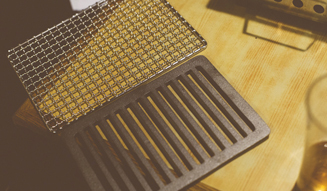
When grilling on a net, the food cooks from the direct heat of the charcoal. On the other hand, with a griddle, the charcoal's heat is used to warm the griddle itself. The meat is then cooked by that heat.
Therefore, when grilling meat on a net, the charcoal's heat is too intense, drawing out the moisture from the meat, making it dry and tough. But when grilled on a griddle, the surface cooks first, leaving the inside slightly rare. This creates a contrast between the surface and the interior. For meat, this method is definitely superior.
I consulted Kamaasa Shoten in Kappabashi about combining a net and a griddle on a single grilling station. The president, with his spirit, said, "Shall we make it?" After numerous tests, it was completed.
Of course, smoke is produced. My restaurant is a bit messy, and it gets smoky. Some people worry about that, but what I'm seeking is different from what they're looking for. For instance, using a smokeless roaster disrupts the heat flow. The taste of meat slowly grilling while enveloped in natural smoke is entirely different. The grilling station reveals what the restaurant values.
What is Uncompromising Monozukuri (Craftsmanship)?
MatsumotoI feel that Mr. Higuchi and Mr. Suzuki share a fundamental similarity. Mr. Suzuki, by creating yarn himself, can then discuss with the circular knitting machine how he wants the fabric to be knitted based on his experience and understanding. At the core of this is exploration, research, and effort. I strongly sense this from both Mr. Higuchi and Mr. Suzuki.
SuzukiRegardless of our skill level, we face challenges daily, and without overcoming them, we cannot become true professionals. It's important to have self-imposed rules and to adhere to them. However, if I only talk about myself, it can end in self-satisfaction. At Loopwheeler, we have customers who wear our products, and we create sweatshirts while listening to their feedback. When I feel stuck, troubled, or distressed, coming here reminds me of these things again.
MatsumotoMr. Higuchi, how do you feel about wearing Loopwheeler products?
HiguchiIt's hard to describe, but it feels natural. Honestly, I didn't have much of a passion for clothing originally. I wasn't looking for anything flashy; I just wanted something that allowed my body to move freely and my mind to relax. For that reason, I always wore sweatshirts. But when I first wore a Loopwheeler sweatshirt, I was genuinely surprised by the comfort, which was on a different level from anything I'd worn before. I wondered, "Who is this Mr. Suzuki?"

Then, when I heard that he uses a machine that can only produce one meter of fabric per hour, I thought, "What is he thinking?" (laughs). I was deeply moved by his attitude of uncompromisingly pursuing the creation of something he envisioned as good, without even considering the business aspect. I aspire to be like that too.
SuzukiI'm humbled to hear you say that.
HiguchiIn yakiniku, once you have the ingredients, adding flavor is incredibly difficult. If you don't thoroughly understand the base, you won't know where to position it or in which direction to develop it. For example, if you apply a flavor that's too strong to something good, you'll ruin it.
After experimenting in various ways, it led to relationships with the market. Ultimately, it comes down to trust between people – the assurance that "he will never betray me." It's not just about thinking of oneself; it's about accepting and considering the supplier's perspective as well. Continuous dialogue is essential for maintaining relationships; otherwise, they cannot endure. Maintaining stability and quality over time, encompassing all of this, is extremely challenging.
Mr. Suzuki effortlessly incorporates this into his products and, using that as a base, presents something new each season. He squeezes out everything he can, and just when you think there's nothing left, something new emerges. I am truly impressed.
LOOPWHEELER
Collaboration with "Sumibi Yakiniku Yuji" in Shibuya, Tokyo
"THE YAKINIKU" of Japan to the World (4)
Loopwheeler Representative Satoshi Suzuki Discusses the True Meaning of the Collaboration
MatsumotoFor this 15th-anniversary project, when we decided to collaborate, the first words spoken were, "You know Yuji, the yakiniku place in Shibuya? I'm thinking of doing something with them." Honestly, I was surprised and wondered, "Why?"
SuzukiLoopwheeler will also reach 20 years in another five years. At that point, it will become "used clothing." However, it will still take about another 20 years to become "vintage." In the meantime, we need a store that can handle customers reselling items, or items being passed down to sons, or patches being added to holes. The next step for Loopwheeler is to create such a place. I want to create something like a Loopwheeler second-hand store.
MatsumotoSo that's why you chose Yuji for this collaboration? When items are displayed in a second-hand store, you can glimpse the brand's history and background. You can see that they were doing interesting things during this era.
SuzukiExactly. It's also about taking a step forward for myself. Yuji's logo has immense power; when you face it directly, it has a presence that makes you unable to move. It's a level of perfection where you feel nothing more can be done. Ideally, I wanted something from Loopwheeler with Yuji's graphics on it, myself (laughs). So, with it being our 15th anniversary, I decided to ask him.

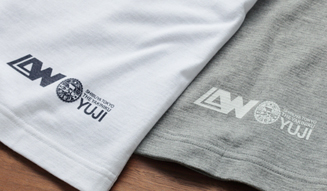
MatsumotoWho designed this logo?
HiguchiIt was designed by pinstriper (※) sugi-sack. I love cars and went through a phase of being deeply into American hot rod culture, and I'm a huge fan of sugi-sack.
So, I asked him to create a mark that would remain unchanged for the next 100 years. sugi-sack said, "This is something that will last a lifetime. It's not a mark; it's a label. A label is something that people attach to you. I created such a thing for Yuji."
SuzukiTherefore, I felt it would be a bit disrespectful to use the logo as is. I had to express Yuji in the Loopwheeler design. However, he said it would be good to include a little bit, so I humbly used it (laughs).
※Pinstriper: An artisan who adds pinstripes to the body of motorcycles and cars. In "hot rod," a genre of custom cars born in America, a wide variety of graphics are developed.
There's No Goal; We'll Do It Until We Die
SuzukiWhat Yuji does is akin to being an artist. He's constantly aiming for the pinnacle, but he doesn't know where it is. Yet, he must walk towards it. There's no defined goal; it's something we'll do until we die. That message is embedded in "TRY TO~."
MatsumotoLoopwheeler products are simple, yet they are undeniably evolving. You work diligently, performing meticulous tasks. Listening to your stories, I understand that to ensure quality, even for your standard items, you go to see the cotton each time, assess its condition, and adjust the yarn blend. I don't think many people can do that.

HiguchiOnly those who start from scratch can achieve that level of fine-tuning. They can envision the outcome based on the current state, thinking, "Because it's like this, let's do that," and have a clear image of the final result.
SuzukiEven so, I've made plenty of mistakes. In fact, I've discarded a mountain of fabric along the way. Our current achievements are the result of those bitter experiences. The accumulation of those experiences creates a significant difference, I feel, when I look at Yuji and reflect on what we've done.
Also, as Yuji mentioned, in our world too, it's not right for just the apparel side to benefit. We need to ensure that everyone involved in their respective roles feels that being part of Loopwheeler was worthwhile. To achieve that, continuous effort is essential. We must keep trying.
Loopwheeler
http://www.loopwheeler.jp/
Sumibi Yakiniku Yuji
1F Matsunaga Bldg., 11-1 Udagawa-cho, Shibuya-ku, Tokyo
Tel. 03-3464-6448
Business Hours | 7:00 PM - 12:00 AM (Last Order 11:30 PM) *Saturdays open from 6:30 PM
Closed | Sundays and National Holidays
http://yakiniku-yuji.com