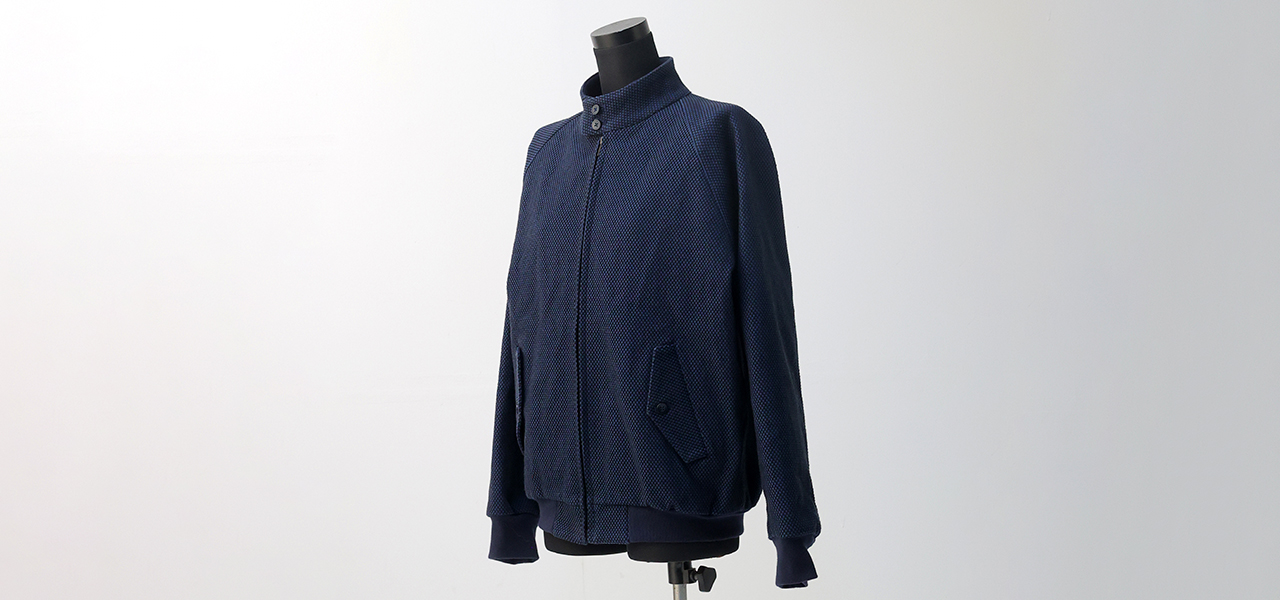
The spirit of Edo firefighters lives on in the world's first "stretch sashiko" revolution.
Kame Kōya | chess Stretch Sashiko Swing Top
Sashiko happi coats, worn by Edo-period firefighters at the risk of their lives. To revive their exceptional durability and the pride of the artisans who made them, a long-established indigo dyeing house in Niigata has undertaken an innovation for the first time in its 277-year history. This swing top, crafted from the world's first stretch sashiko fabric, embodies a "new tradition" that preserves the essence of heritage while embracing modern functionality.
Text by Takashi Tsuchida
Ultimate Durability That Protected Firefighters' Lives
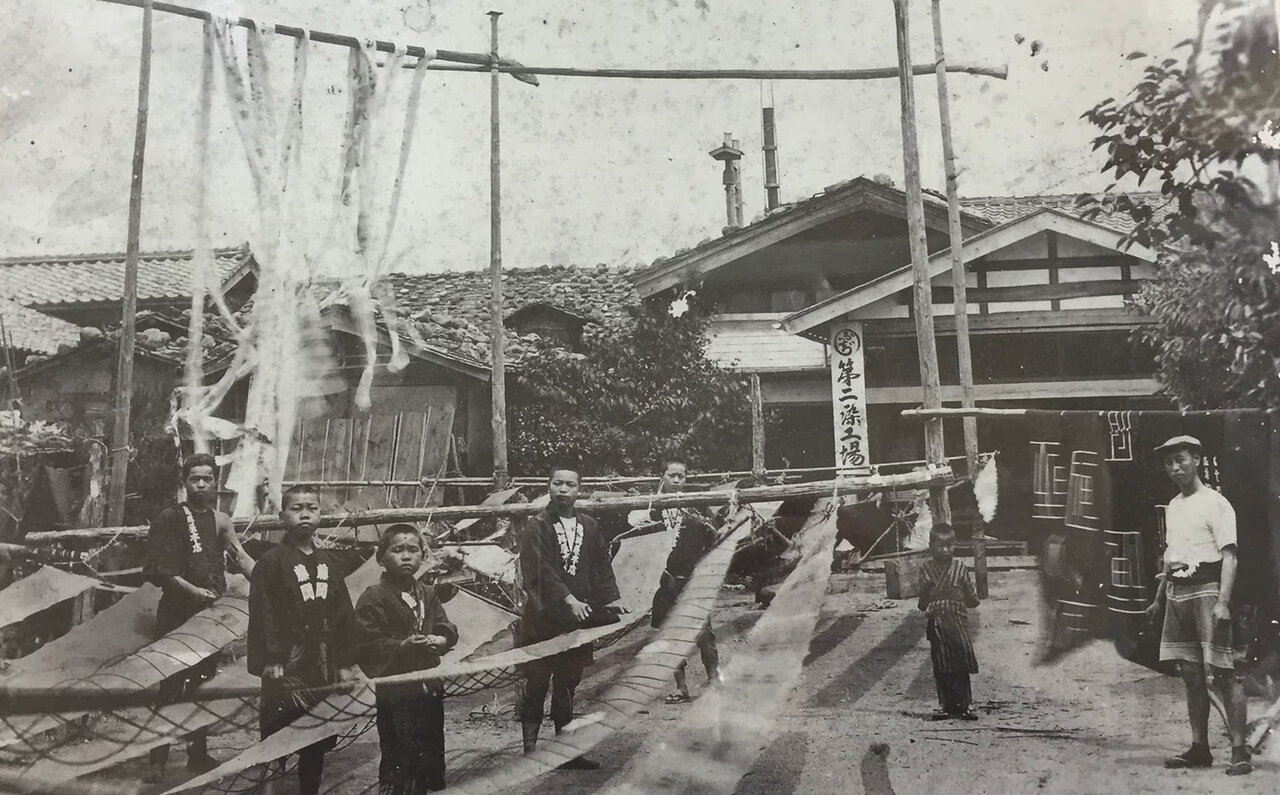
Sashiko weaving, as its name suggests, involves layering threads and fabrics and stitching them together one by one. The resulting thickness and strength of the fabric made it valuable as undergarments for armor and served as protective clothing for Edo-period firefighters, saving their lives. The dense sashiko weave is impermeable to air and becomes difficult to burn when wet.
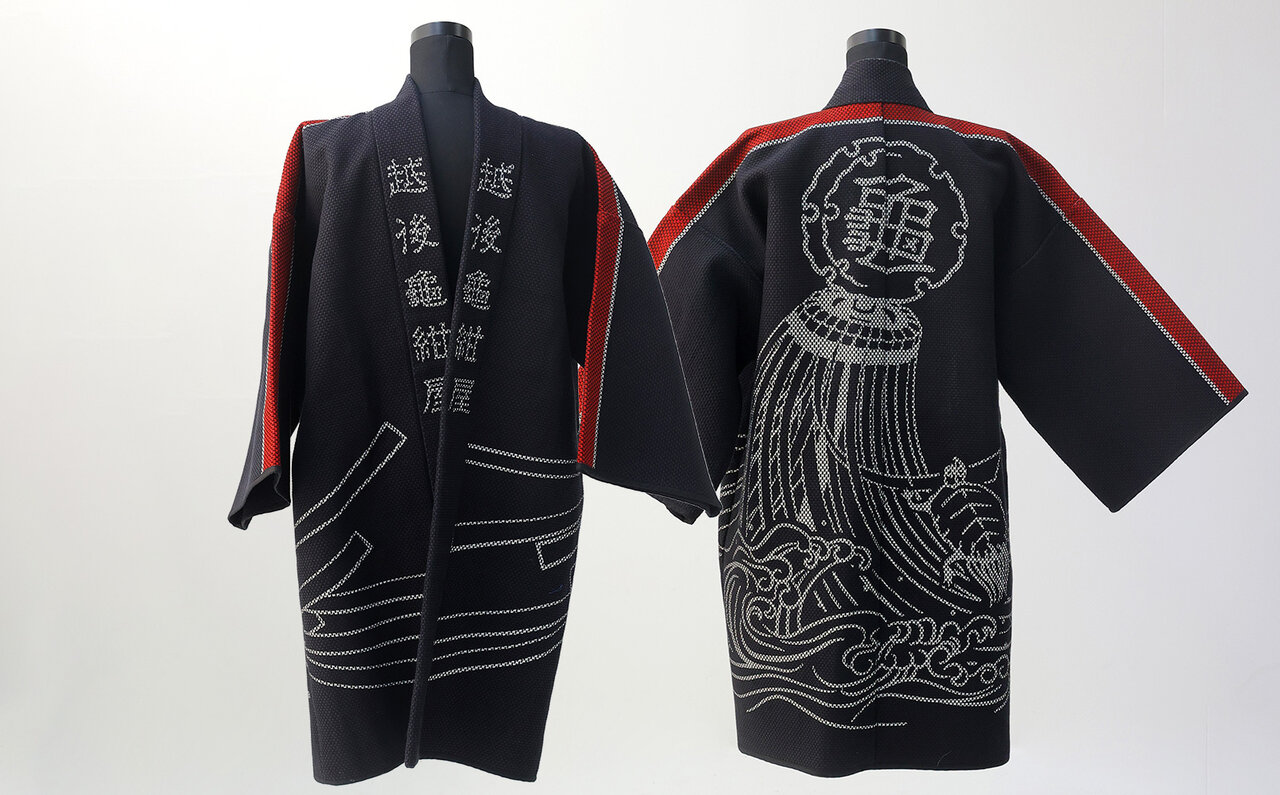
Reference Item
"The outer side is black, but when they climbed onto roofs and waved their banners, they would turn it inside out to reveal a stylish pattern," says Toshiaki Fujioka, president of Niigata's Kame Kōya. Wearing sashiko happi coats to fires and then turning them inside out to show off their stylish linings afterward—the spirit of Edo's townspeople and the pride of artisans are etched into this durable fabric.
Founded in 1748, Kame Kōya boasts a 277-year history. The family has passed down the indigo dyeing business through generations, with the head of the household always bearing the character "Kame" (turtle) in their name, leading to the local nickname "Kame Kōya." In 2022, the ninth-generation owner, Mr. Fujioka, launched "chess," a private brand utilizing sashiko weaving to convey traditional techniques to the modern era. Previously, they collaborated with the American brand Lee to produce a limited run of 20 coveralls, which, despite their high price of 170,000 yen, sold out instantly at major United Arrows stores.
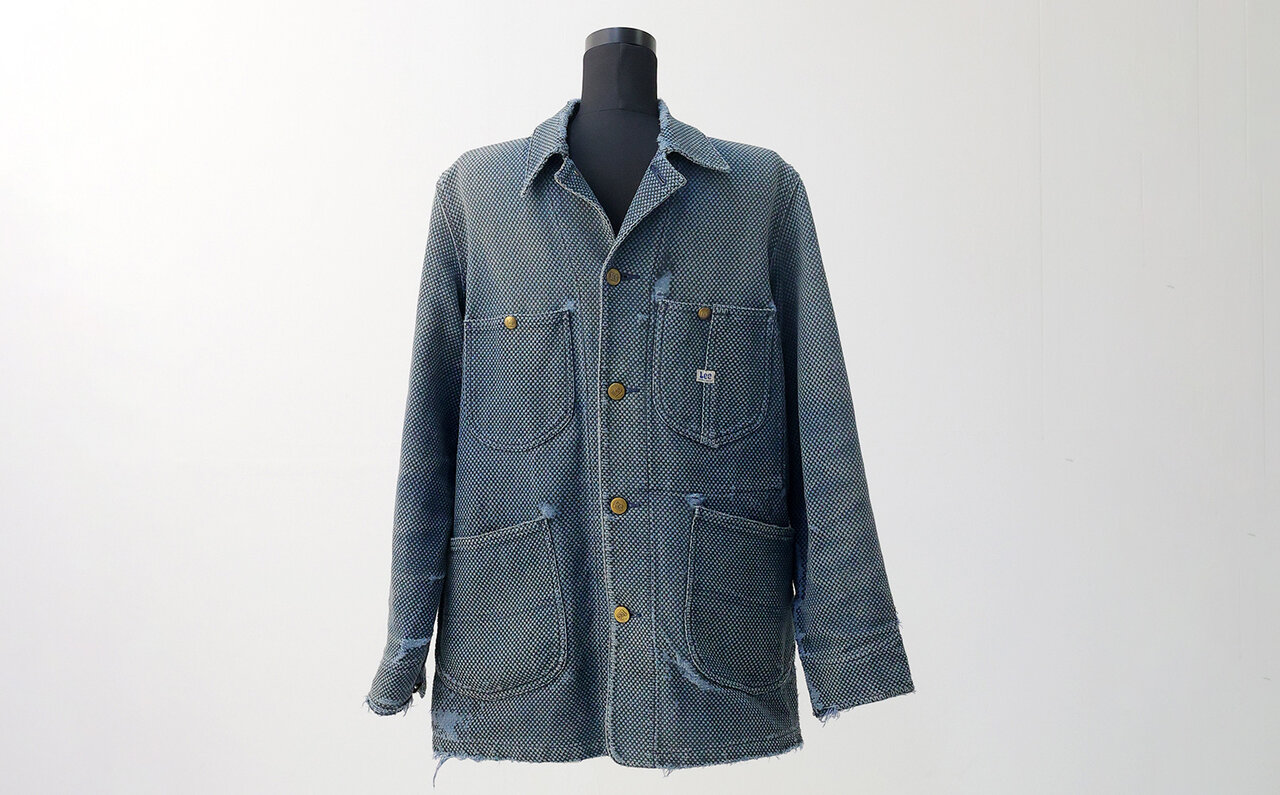
Coveralls in collaboration with Lee
The World's First Challenge: The Birth of Stretch Sashiko
chess's latest endeavor was the development of a new type of sashiko fabric with stretch properties, something that had never existed before. The impetus came from customer feedback. "Customers who bought our existing coverall jackets told us that while the product was durable and well-made, the fabric was stiff," Fujioka explains the development process.
The technical development was handled by Hiroyuki Ota of "Takumi no Yume," a textile factory in Mitsuke City. By weaving polyurethane threads into cotton, he created a new texture. "This is the first time polyurethane has been used in sashiko, and it's difficult to achieve stretch properties in a firm, durable fabric. The fact that we were able to complete it is a testament to the accumulation of our techniques over the years," Ota reflects.
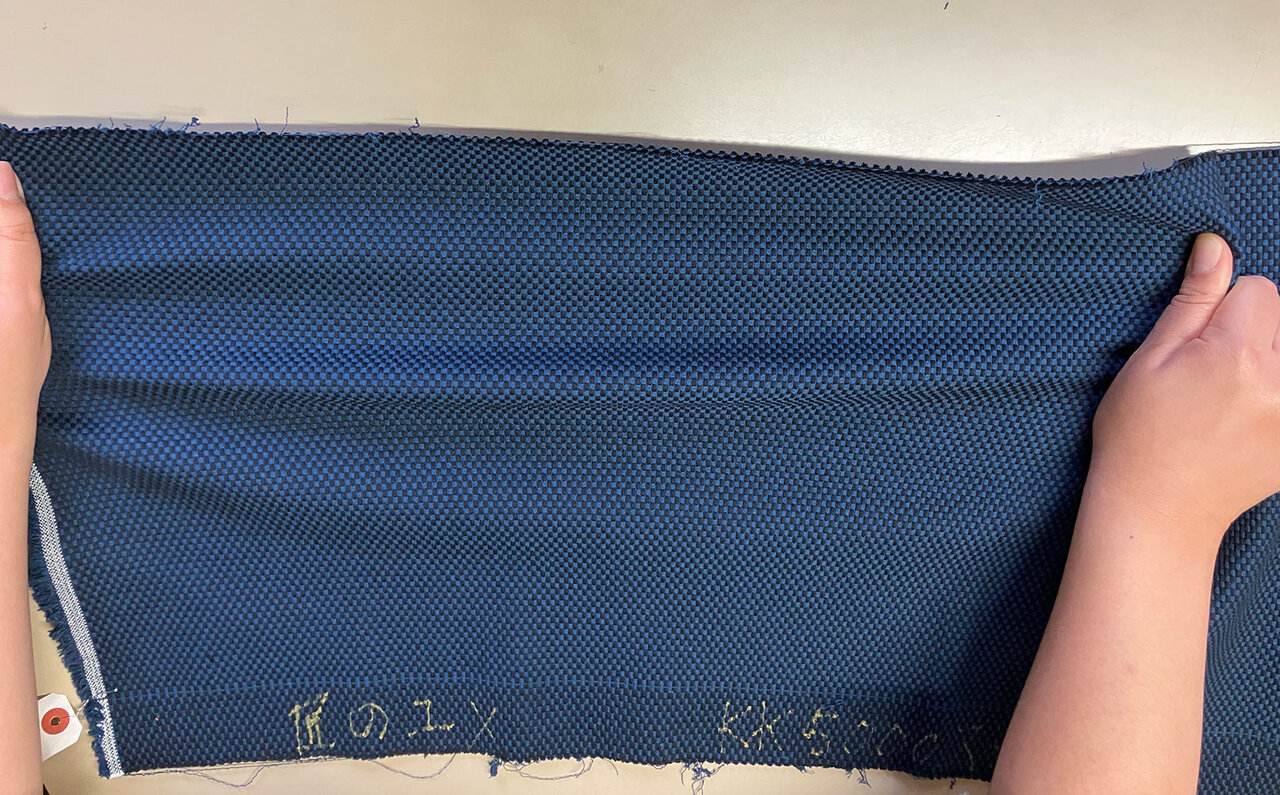
The fabric stretches horizontally, allowing it to move with the body when worn as clothing. This added flexibility makes it significantly easier to wear, with a remarkably smooth feel against the skin.
The resulting fabric, "SSF (Stretch Sashiko Fabric)," achieves five times the elasticity of traditional sashiko by incorporating just 1% polyurethane in the weft. "It doesn't stretch vertically. If we tried to stretch it vertically, the loom wouldn't function, and it wouldn't weave properly." The ability to skillfully overcome these technical limitations is truly remarkable.
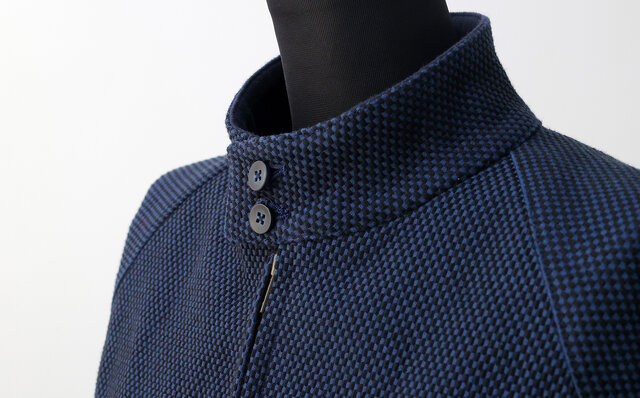

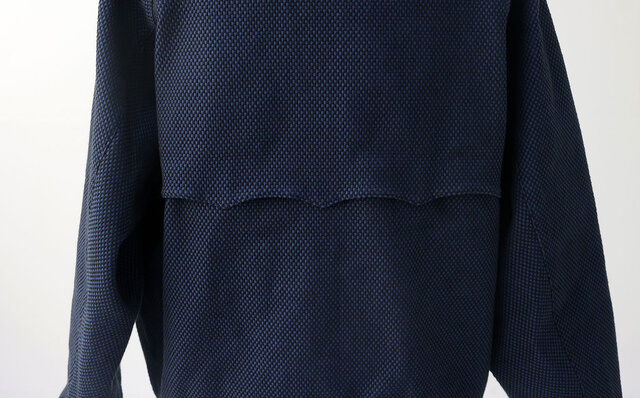

The stretch sashiko swing top is the result of using this innovative fabric. The design involved a 76-year-old staff member who has worked on patterns for high-end men's outerwear from top domestic brands. "The person involved has actual experience creating swing top patterns. Based on his expertise, we determined details like the firmness of the ribbing and the optimal texture for the collar lining to prevent pilling. He understood every aspect, allowing us to make minor adjustments throughout," says Fujioka. Years of accumulated know-how are evident in every detail.
Furthermore, a red check pattern was chosen for the lining. "We spent days making this decision. We felt everything would be ruined if this choice was wrong," Fujioka recalls. The color combination is exquisitely balanced, contrasting with the navy-black of the outer fabric.
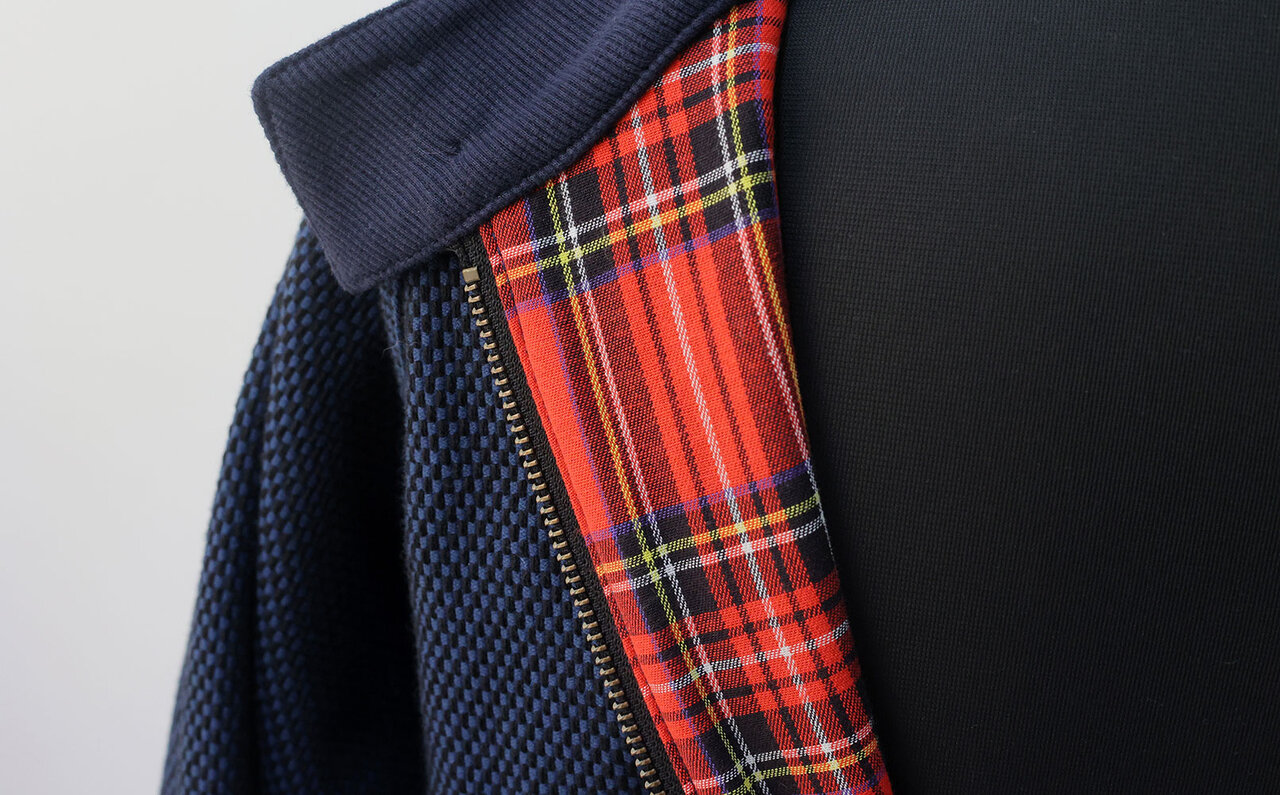
The lining reveals a red tartan check, adding an accent to any coordination.
The Aesthetics of the Swing Top Loved by Ken Takakura
In creating the swing top, Mr. Fujioka visited individuals connected to the late Ken Takakura. There, he heard a memorable anecdote.
"I heard that Mr. Takakura never wore his Baracuta until it was completely worn out. He treated it not as a casual jacket, but as a formal piece, like a suit jacket. He wore it crisply and maintained it meticulously... I was told these valuable stories."
These words significantly influenced the concept behind chess's swing top. As Fujioka puts it, "We want people to wear it elegantly, rather than ruggedly." The moderate crispness of the sashiko fabric lends it a unique sense of refinement.
The newly released stretch sashiko swing top is priced at 187,000 yen (tax included). While certainly a significant investment, it becomes understandable when considering the 277 years of history, the world-first technology, and the spirit of the artisans poured into each piece.
Sashiko weaving, which began with firefighters' happi coats, now shines anew in the contemporary fashion scene. This is not merely a revival, but the birth of a "new tradition"—one that understands the essence of heritage and reconstructs it with modern technology and sensibility.
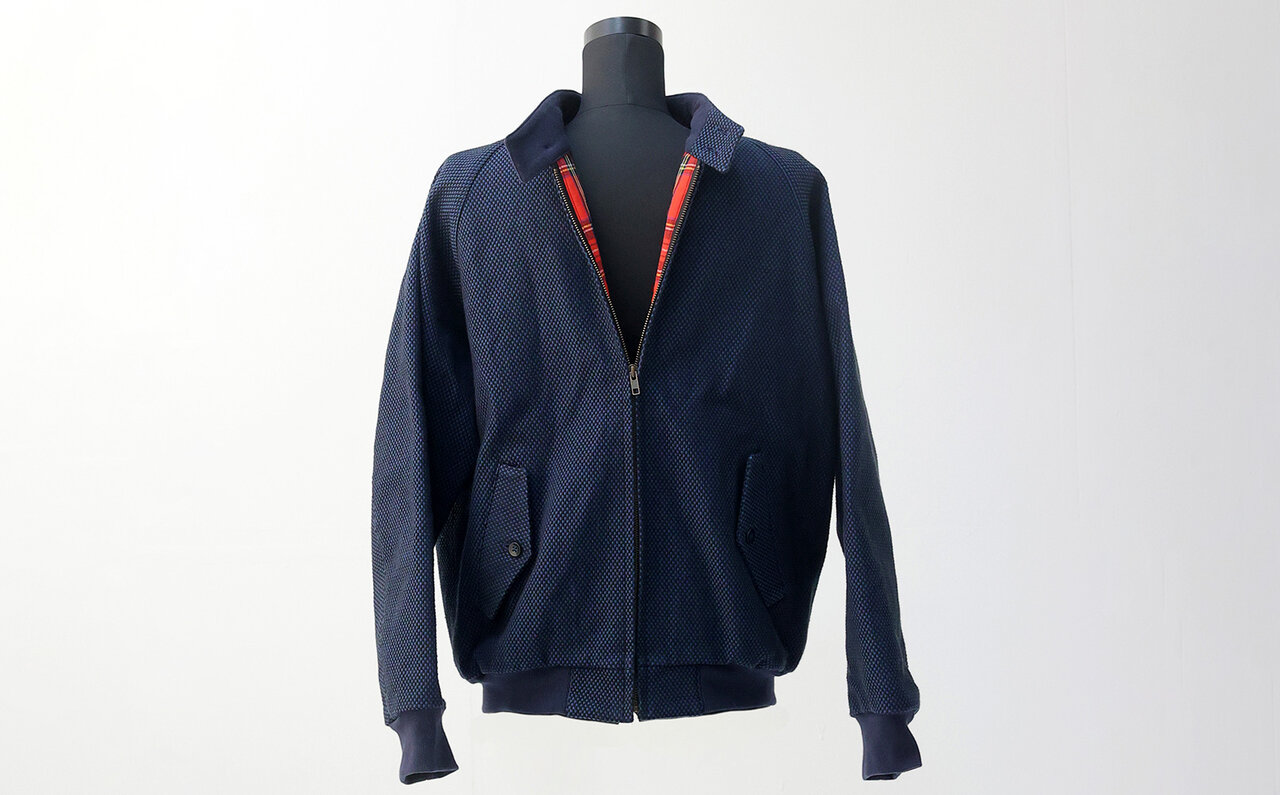
chess Stretch Sashiko Swing Top
Price: ¥187,000 (tax included)
Sales: Official website and major department stores
Price: ¥187,000 (tax included)
Sales: Official website and major department stores
Inquiries
Kame Kōya
Tel. 090-4052-6281
https://1748.jp