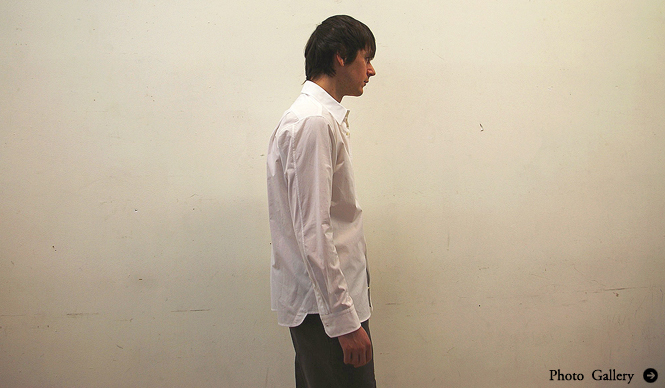
LITR | A New Project Born from ANSNAM!
LYTHA
A New Project Born from ANSNAM!
LYTHA, Based on Altruism, Officially Launches!
ANSNAM, a Japanese brand renowned for its clothing crafted with the exceptional skills and craftsmanship of Japanese factories, has garnered high praise. However, representative and designer Yasushi Nakano laments the current state of these skills, which are declining and facing a crisis of extinction. The artisans are aging, and few are there to inherit their techniques. If nothing is done, some techniques will disappear. Thus, Nakano conceived of LYTHA, a brand and a project. This autumn, LYTHA officially launches. What is LYTHA, aiming for creations that bring altruism and shake the very foundations of Japanese garment manufacturing?
Text by Kotaro HosomuraPhotos by Yasushi Nakano

Garments Crafted with the Artisan Skills of Japan's World-Class Textile Industry, for the World!
LYTHA, introduced here, is a new brand and project born from ANSNAM. Before discussing LYTHA, it is necessary to touch upon the brand ANSNAM.
It began in 2005 when designer Yasushi Nakano presented a collection consisting of only four types of garments: jackets, pants, shirts, and coats. Nakano established ANSNAM and, through various experiences, built connections with factories across Japan. Anyone who handles ANSNAM clothing will be astonished by its meticulous construction. The unseen intricacies, the stoicism, the sheer dedication that makes you wonder, 'They really went that far?' It is no exaggeration to say that such clothing has never been seen before. To embody his vision, Nakano traveled throughout Japan in search of Japan's outstanding technical expertise.
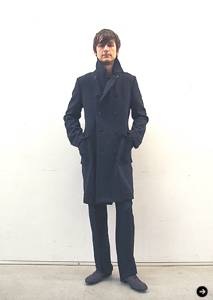
"Japanese artisans are truly remarkable. We have built ANSNAM by fostering trust through our time working together. Sometimes, we even drank together to strengthen our relationships," says Nakano.
The trust with artisans is the greatest harvest and an indispensable strength of ANSNAM. However, he also understands that to advance traditional Japanese techniques, further development is necessary, and to drive development, tradition must be respected. In other words, it is a balance between traditional techniques and modernism. This is reflected in ANSNAM's policy for creating clothing: "Creation built upon quality." Artisans with high-quality skills in materials, patterns, tailoring techniques, and sewing are involved, and Nakano's sensibility is added to create ANSNAM products. They deliberately do not set seasonal themes, as themes can impose constraints on garment creation and lead to making clothes for the sake of the theme. The act of making clothes itself is the theme, a sincere approach. Yet, Nakano was plagued by a sense of crisis. The declining state of Japan's textile industry, despite possessing rare, world-class techniques... Ultimately, this is also a crisis for ANSNAM and for Nakano himself.
Don't Let Japan's Technical Flame Die Out! The LYTHA Garment Manufacturing Platform Project
Five years have passed since the launch of ANSNAM. And within that context, LYTHA is born.
"I felt we had to do something serious for the factories. LYTHA was launched with the idea of finding a way to deliver these precious techniques to customers," says Nakano. To forge even stronger relationships with artisans and to create new prospects for the industry, establishing a new project with a positioning distinct from a "second line" was essential. The true meaning of LYTHA lies in the Buddhist concept of "altruism" and the Greek word "rytha," meaning "to flow."
The system works like this: Direct transactions with trusted factories, bypassing trading companies. Detailed information about the manufacturing side, including spinning, sewing, processing, and accessories, is fully disclosed on the brand tag, revealing the core of the garment manufacturing process. Consequently, products will have multiple tags. In return, factories provide samples to LYTHA free of charge. This reduces the risk of upfront investment, which is then reflected in the pricing. In essence, bringing altruism to all levels of creation, from production to consumption, forms the bedrock of this endeavor. It began in 2009. After much trial and error, the first full-scale collection of items was finally presented in the autumn of 2010-11 A/W.

If ANSNAM is a formal dinner, LYTHA is positioned as an accessible introduction, like lunch. With sets priced around 100,000 yen, it offers excellent value for money. Of course, it retains the quality and contemporary sensibility inherited from ANSNAM. It is available at select shops known for their discerning curation, such as Edition (Omotesando, Osaka) and Minority Rev (Fukuoka, Hirao Main Store, Tokyo), and is expanding its reach through select shops nationwide.
"We are looking for factories that can support this concept. We want to preserve Japan's wonderful techniques. Please contact me directly," says Nakano.
Indeed, what Nakano and LYTHA are doing is more than just making clothes. With a passion to preserve Japan's world-class techniques, they are actively creating an altruistic environment. This is why LYTHA calls itself a project, not merely a brand.
Passion changes the world. We hope you will embrace these cool garments imbued with a noble spirit.
Yasushi Nakano
Designer, ANSNAM / LYTHA
Graduated from Esmod Japon's menswear course in 2000. Subsequently, he traveled to over 30 countries to experience diverse cultures and traditional attire. Upon returning to Japan, he worked as an assistant and in production at an apparel manufacturer. In 2005, he went independent and launched ANSNAM. The following year, he began presenting collections in Milan and Paris. In 2009, he launched the new brand LYTHA. He has also personally packed his own creations into a trolley and pitched them to famous shops worldwide.
ANSNAM / LYTHA
Tel. 03-3843-1517
http://www.ansnam.com/
http://twitter.com/ansnam
*Inquiries regarding this feature: Press Contact: Kanako Morohiro
email: press@ansnam.com
http://minorityrev.com/

