SLOWEAR | Pioneers of Trousers and Knitwear, an Interview with the Owner on His Visit to Japan
SLOWEAR
Pioneers in Trousers and Knitwear
In Commemoration of the New Showroom Opening, An Interview with the Group Owner During His Visit to Japan (1)
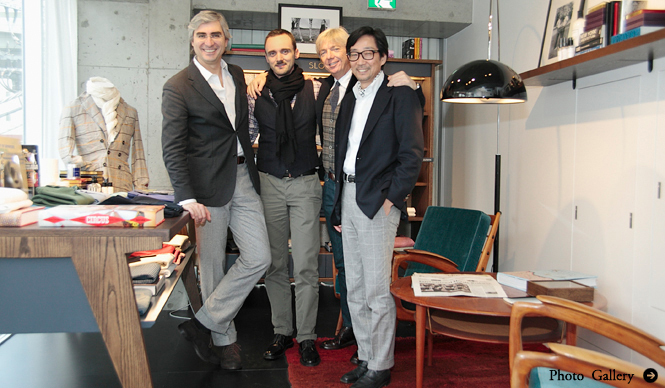
SLOWEAR, a pioneer group in trousers and knitwear, encompasses four brands: INCOTEX, ZANONE, GRANSHIRT, and MONTEDORO. Their designs, crafted from high-quality materials and built to last, transcend trends and are cherished worldwide, particularly in Europe, with sales now spanning over 30 countries. The group's success is underpinned by its three showrooms located in Milan, New York, and Japan. New items are first introduced here before reaching retail stores and the media. SLOWEAR Japan has recently relocated and reopened its showroom. To celebrate, Roberto Compagno, the group's owner, visited Japan from Italy. OPENERS seized this opportunity for an interview, discussing the showroom's design, which embodies the group's worldview, and their future prospects.
Text by OPENERSPhoto by TAKADA Midzuho

Tokyo's Charm Lies in Its Eclectic Mix
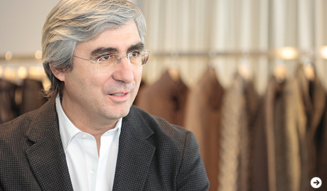
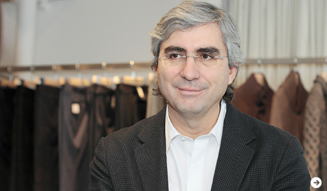
Roberto Compagno, SLOWEAR Group Owner
──Was there a particular reason for establishing a new showroom?
Our customers and partners in Japan are already well-acquainted with us, and we are very satisfied with and optimistic about the Japanese market. That's precisely why we decided to make this investment here. Our previous showroom, built seven years ago, was only about 100 square meters. The new one is twice that size. That's what made us decide.
──What was the design concept?
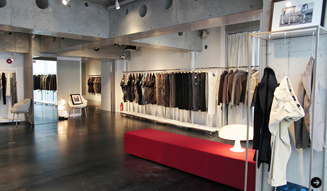
The showroom is also a retail project.Officina SlowerWe entrusted the design to Carlo Donati, an Italian architect and designer. He creates various designs and concepts under a unified flow and philosophy, but the crucial point is subtle adjustments.
While the core 70-80% remains consistent, the remaining 20-30% allowance incorporates the image of Tokyo as a city.──Not the image of Japan as a country, but adjustments are made based on the surrounding environment. That's why each showroom has a similar feel yet subtle differences.
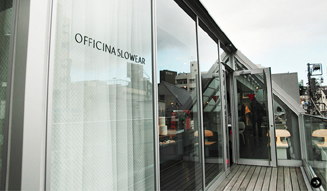
Tokyo's mystique, its intriguing aspects... a distinct individuality unlike other countries.──The building housing this showroom is relatively new, with a modern concrete structure. Yet, looking across the street, you see traditional small houses lined up with laundry drying on the eaves. A little further on, skyscrapers like Roppongi Hills soar, and two expressways run overhead. Power lines crisscross everywhere. This blend of elements is what I find so Tokyo-like, its charm. I particularly like the situation of a modern showroom existing within this eclectic mix.
──You mentioned "under a unified flow and philosophy." What is that?
The SLOWEAR project is built on a concept diametrically opposed to fast fashion. You've likely heard of terms like "Slow Food" and "Slow Life." The name "SLOWEAR" was inspired by these concepts. Our philosophy is to continuously create excellent products. We don't create fleeting fashion trends each season. We aim to make items that remain stylish even after two or three years of wear. The core concept is that pieces bought two years ago can be perfectly matched with those bought this year.
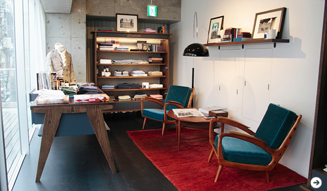
As you can see from our retail projects,Officina Slowerwe incorporate vintage tables and chairs. These elements are all interconnected; tables and chairs made in the 50s or 70s are never truly "old" if they are well-made. The same applies to the items we create. The concept is that vintage furniture and apparel should complement each other.
SLOWEAR
Pioneers in Trousers and Knitwear
In Commemoration of the New Showroom Opening, An Interview with the Group Owner During His Visit to Japan (2)
The Era of Mainstream Dominance Is Over
──In Japan, fast fashion has recently dominated the scene, and new values regarding fashion are taking root, such as purchasing online rather than visiting stores. In this context, what kind of future developments does SLOWEAR envision?
For menswear, the style we propose in Europe and America is well-received in the Japanese market. Therefore, we don't need to make special proposals. Japanese fans share many similarities with European fans, particularly those in Italy, so we haven't faced significant challenges. We are very satisfied with this.
However, for womenswear, the European and Japanese markets do differ somewhat. That said, we are not considering developing entirely new products specifically for the Japanese market.
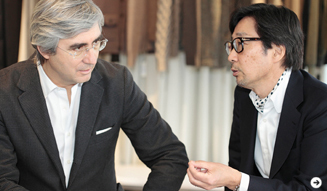
(Right) Daishi Fujieda, Representative Director of SLOWEAR Japan
However, we do make some adjustments to the styles we offer in Europe. Our core customers in Japan are in their 20s and 30s. We believe it's important to adjust aspects like fitting, color palettes, and price points to meet their preferences. The primary difference between menswear and womenswear here is likely the perception of price. Menswear customers are accustomed to purchasing items like ROLEX watches, ALDEN shoes, MACKINTOSH coats, and INCOTEX trousers, regardless of whether they cost 100,000 yen or several hundred thousand yen, and using them for a long time. However, even within the same age group, the price range for womenswear is much broader. The volume sold for 30,000 yen in menswear differs significantly from that in womenswear.
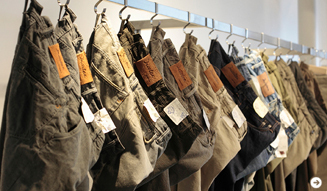
Regarding fast fashion and online shopping, the situation is similar in Italy. Europe is flooded with various fast fashion brands, including ZARA, H&M, and GAP. This trend is unstoppable. The online business is also significant, with the UK and US markets being particularly large. It's an undeniable wave. We're seeing a growing number of customers who research online before visiting our stores.
While we aren't immediately launching an online business, it's a fact that people who cannot visit our stores are researching our products online and showing interest.
──Considering this situation, how do you think the fashion scene will change in the future?
One thing is certain: the flow of trends and the fashion business will no longer be driven solely by the mainstream. Instead of a single large current with smaller elements attached, I believe it will become more segmented. People will gravitate towards what they like, whether it's style A or style B...
This segmentation could be based on taste, price, or various other factors. Our loyal customers might fall into segment "A." We believe it's crucial to continue creating products that satisfy this segment "A." It's unrealistic to expect to satisfy everyone in segments A, B, and C simultaneously in the future fashion landscape. Therefore, I think it's essential to steadfastly protect our unique identity, strengths, and customer base within our specific segment.
──Thank you very much.
