The North Face: Forging a New Relationship with the Earth. By PLEASE | THE NORTH FACE
THE NORTH FACE
First Encounter: Feeling Love for Birds Through Recycled Down with Kawada Feather!
Text & Photo by KITAHARA Toru
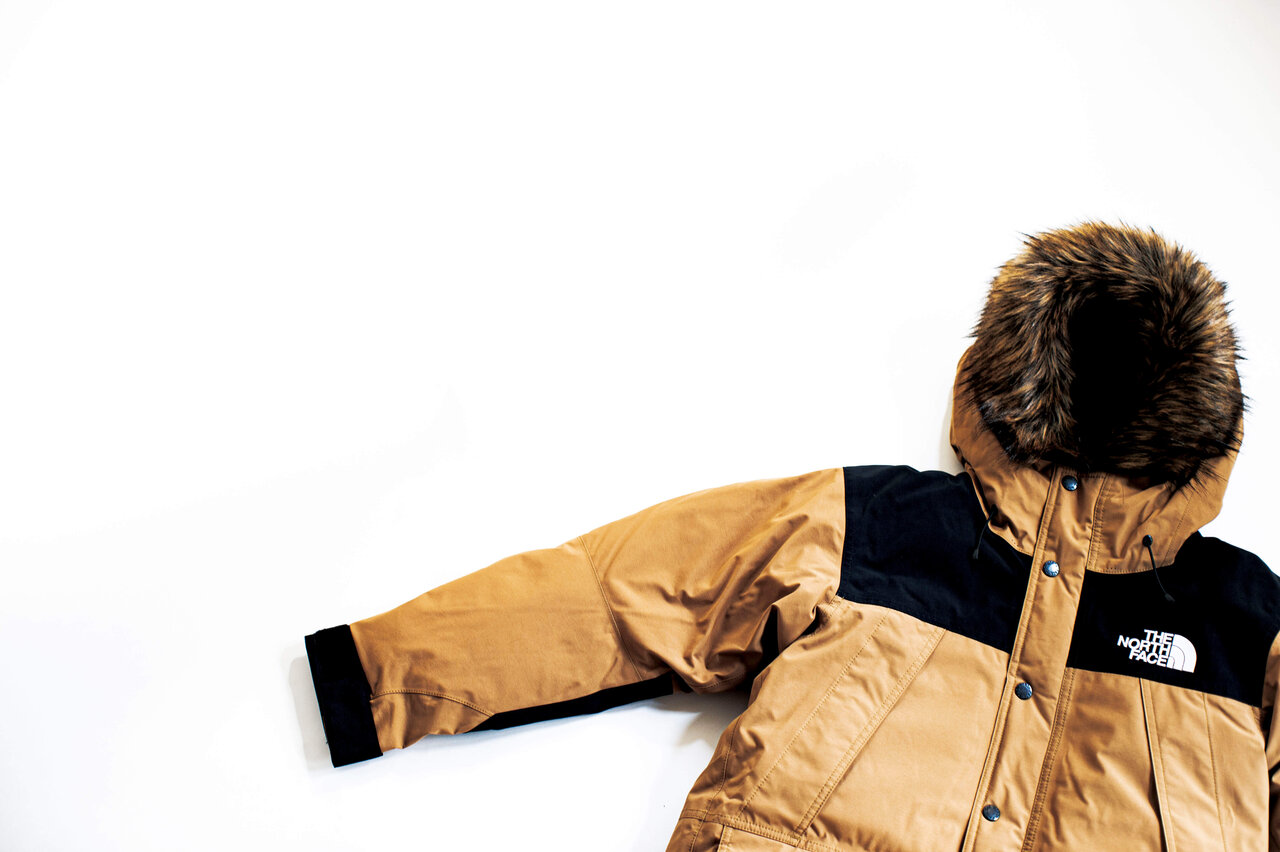
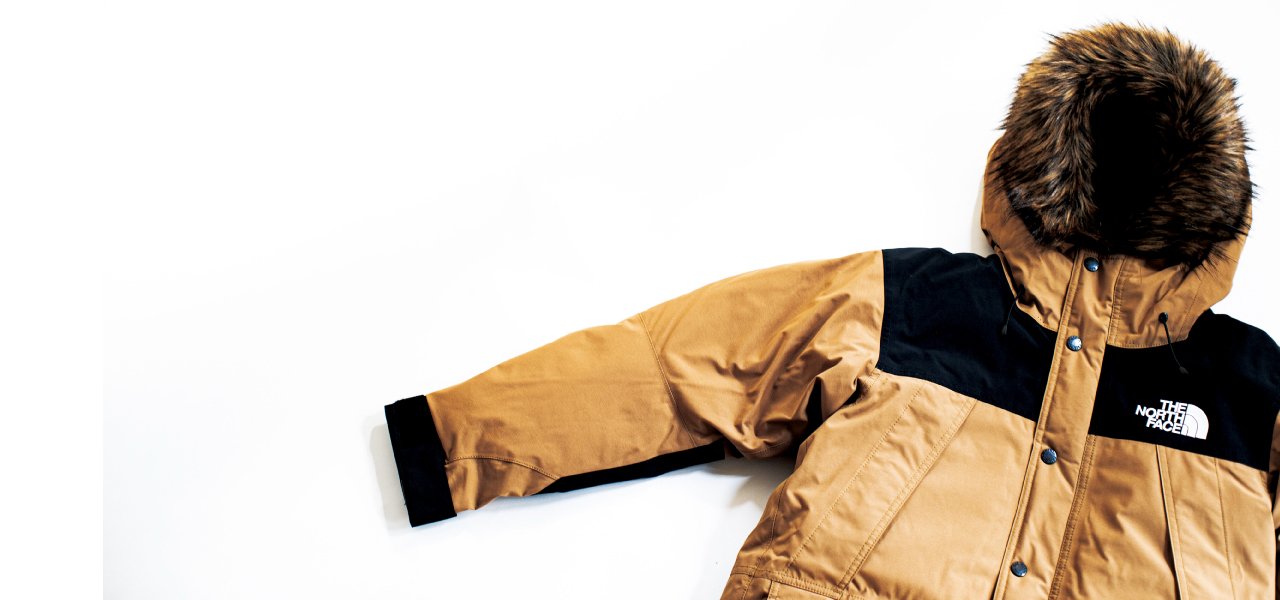
<THE NORTH FACE> is taking a significant leap forward, unlike the superficial sustainability efforts of schoolchildren doing homework. You can feel a philosophy of kindness towards the Earth and animals (which ultimately benefits humans). One manifestation of this is their recycled down initiative.
Despite the highly restrictive circumstances of the pandemic, I was determined to see the site and requested an interview. Although strict conditions were imposed—ensuring hygiene with disinfection, no entry into the company building, and interviews only at the factory and outdoors (including in the car)—I was granted a factory tour of Kawada Feather.
We enjoyed the town's second specialty, eel, and then took a taxi further towards Kawada Feather, closer to the sea (and also closer to Ise Grand Shrine). As is basic practice for interviews, I struck up a conversation with the taxi driver.
"There are many rice paddies around here, aren't there?"
"The rice in Meiwa, where you're headed, is said to be tastier than around here (closer to the station)."
"Is it because the water is good?"
"The sea is closer, but I've heard the water is good around Meiwa."
As we chatted about how businesses in Matsusaka were forced to close due to the pandemic, the driver's favorite bar had to relocate and downsize, and how he works for that one drink after a day of driving, we arrived at Kawada Feather.
It was a factory, which is to be expected since we came for a factory tour.
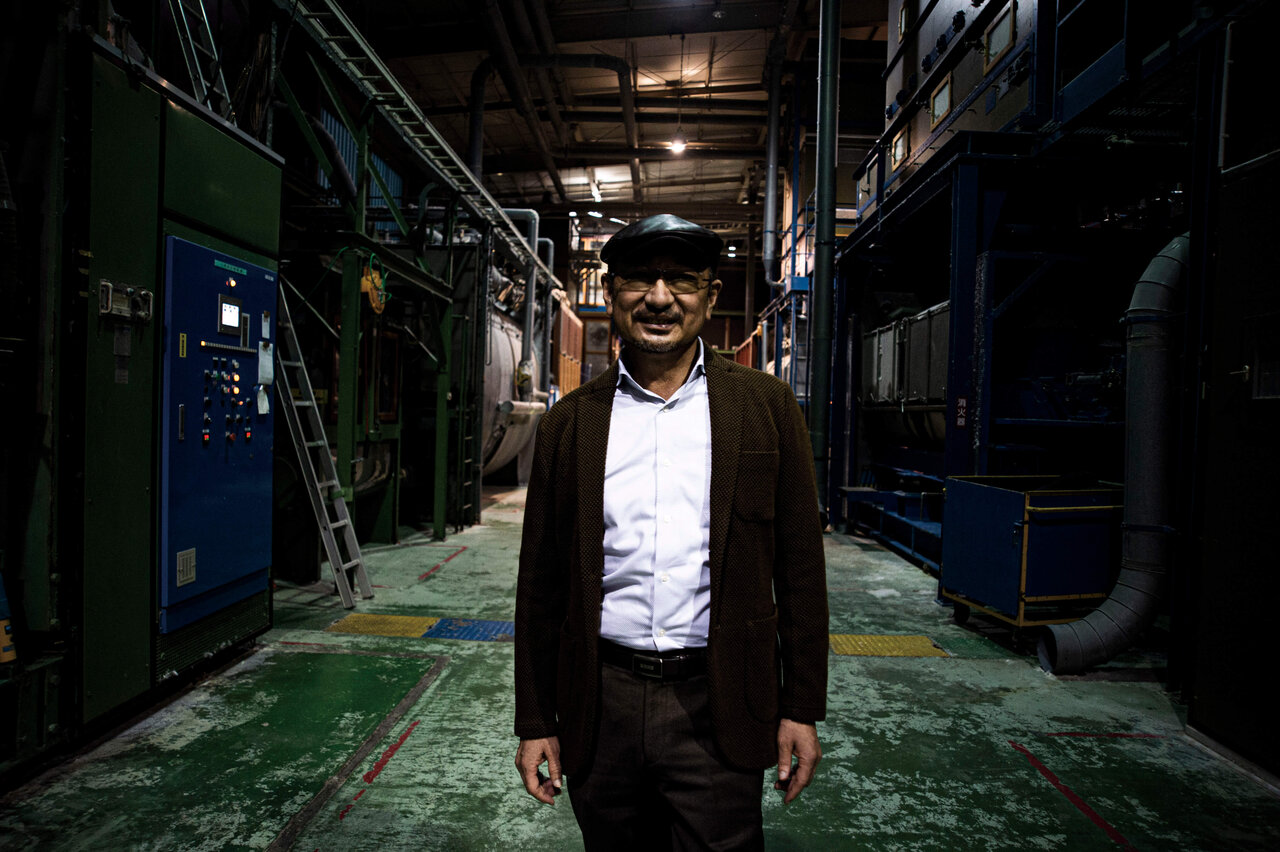
Without much preamble, the president began to speak.
"Perhaps we're talking about birds? First, the history of birds dates back to the Jurassic period; the ancestors of birds were dinosaurs. So, they didn't have reptilian bodies; dinosaurs had feathers."
I thought, "From down jackets to the Jurassic period!" but it felt like attending a university lecture. I'll omit this part for now (laughs). What I did gather is that President Kawada is incredibly passionate about birds; he simply loves them. Another point is that he is a diligent student, having earned a doctorate in medicine after becoming president. Therefore, his explanations are always academic and structured like a lecture.
It took a little over an hour (laughs) to get from the Jurassic period to the current topic of down. He spoke about the history of birds, but I had to take photos and couldn't interrupt, putting me in a difficult position, and the information didn't quite sink in. My apologies.
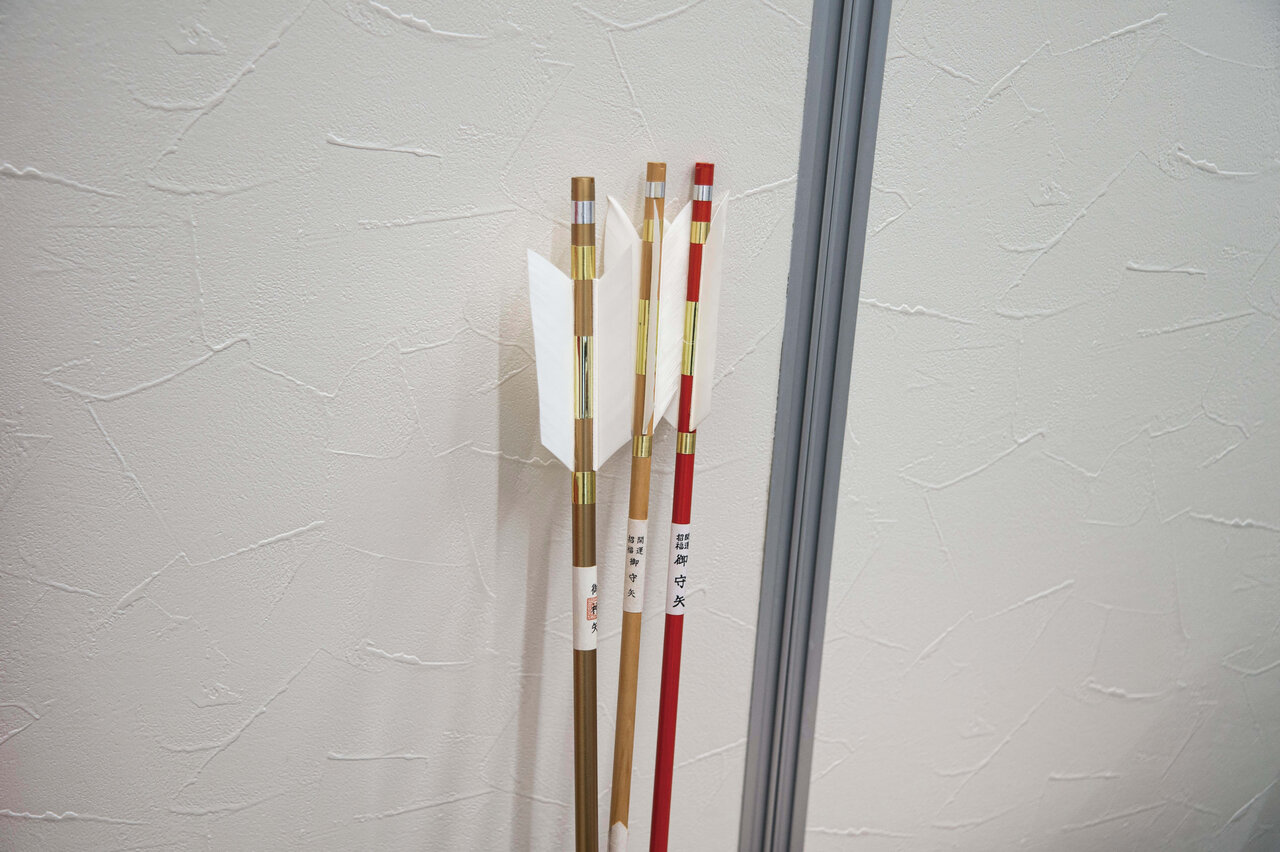
President Kawada began by saying, "We are feather artisans." This story was fascinating, and he taught me several things about feathers. Particularly interesting was the story that his father, the previous president, conceived the idea for "Hamaya" (exorcism arrows), a traditional New Year's good luck charm. I had always assumed Hamaya were ancient, but it turns out to be an innovative product with a history of only about 50 years. A side note, of course.
"Ducks and geese are not raised specifically for their down. Down is merely a byproduct of waterfowl raised for the food industry. While plucking feathers from live birds is a concern, a bird's feathers undergo apotosis (a type of cell metabolism, like hair falling out and regrowing). Specifically, European geese have a trait of growing feathers all at once. This stems from poultry farming techniques established over 1000 years ago for meat production. Feathers from the chest and abdomen, which are submerged underwater, are plucked with gentle force. This stimulates the geese, enhancing their immunity and reducing deaths from illness, while also stimulating the appetite of less-eater geese, helping them grow to a uniform size. These farming techniques were established 1000 years ago, and the feathers collected were long discarded but began to be used gradually 100 to 200 years ago. Currently, the rearing period for European geese has been halved, and opportunities to collect feathers have diminished. Of course, today, feathers are no longer plucked from any live waterfowl."
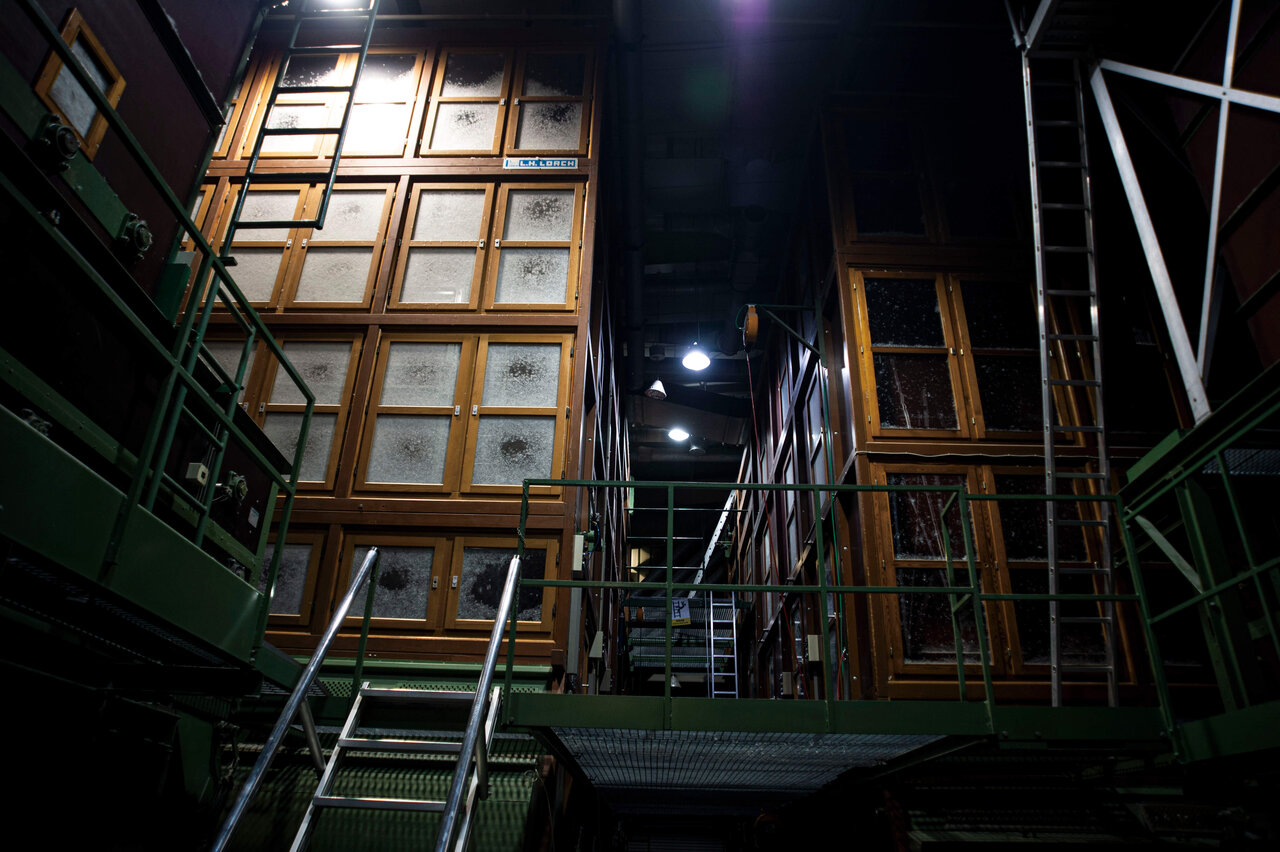
"The down from delicious duck meat is high quality. As I mentioned earlier, it's a byproduct of the food industry. However, in recent years, except in some gourmet countries like Japan and France, ducks and geese have been bred for faster growth, which makes them less tasty. In the past, ducks were raised for over 120 days and geese for over 200 days for consumption. Now, inexpensive ducks are shipped after about 28 days, and geese around 60 days, as the demand for meat has shifted towards prioritizing price."
During this explanation, there was a medical lecture on breeding and genetic modification, which I've largely omitted here. Just remember that good down comes from waterfowl that produce tasty meat!
"Meat from birds raised for 28 days is immature. The down covering that meat is also immature. Therefore, down from the past was warmer and of better quality than current down."
I see! So, there's a difference in the development of not only the meat but also the feathers between birds that haven't fully matured and those that have. The feathers of immature birds are indeed immature.
"Of course, with environmental issues, down recycling is important, but from the perspective of the down itself, recycling is superior."
This makes perfect sense. According to President Kawada, down can be revived with proper washing and restoration. Furthermore, down is inherently durable and can be recycled for about 200 years. Being able to wear something for a long time is kind to the planet. Down is, therefore, a very environmentally friendly material.
"However, it was difficult when we first started recycling. With the trend of short-term bird rearing, the quality of the down itself declined, which could be observed by looking at and eating the birds. Moreover, due to abnormal weather patterns, the quality of down began to be significantly affected from the early 2000s."
"Down recycling has been practiced in Europe for over 100 years, but Japan lagged behind. Even in 2011, selling recycled down in Japan was considered unconventional."
Furthermore, waste management is a complex issue involving national, prefectural, and municipal governments. Collecting discarded items presented significant challenges. However, President Kawada, through self-study, research, obtaining necessary licenses, and negotiating with authorities, succeeded in enabling down recycling!
"Currently, we supply recycled down to about 20 apparel companies. We launched this business in 2014. In 2013, THE NORTH FACE was the first in Japan to attach a recycled down label to a down jacket. In 2017, THE NORTH FACE began using recycled down, and now we are implementing initiatives using almost 100% recycled down (referred to as Green Down)."
A brief digression. Kawada Feather was also the manufacturer of "Liberty Bell," an American skiwear brand that debuted in 1976 and became explosively popular in Japan in the 1980s. It was a fashionable item that everyone seemed to wear back then. I vaguely recall many female university students wearing white patent leather "Liberty Bell" down jackets with beige suede knee-length wrap skirts and navy high socks.
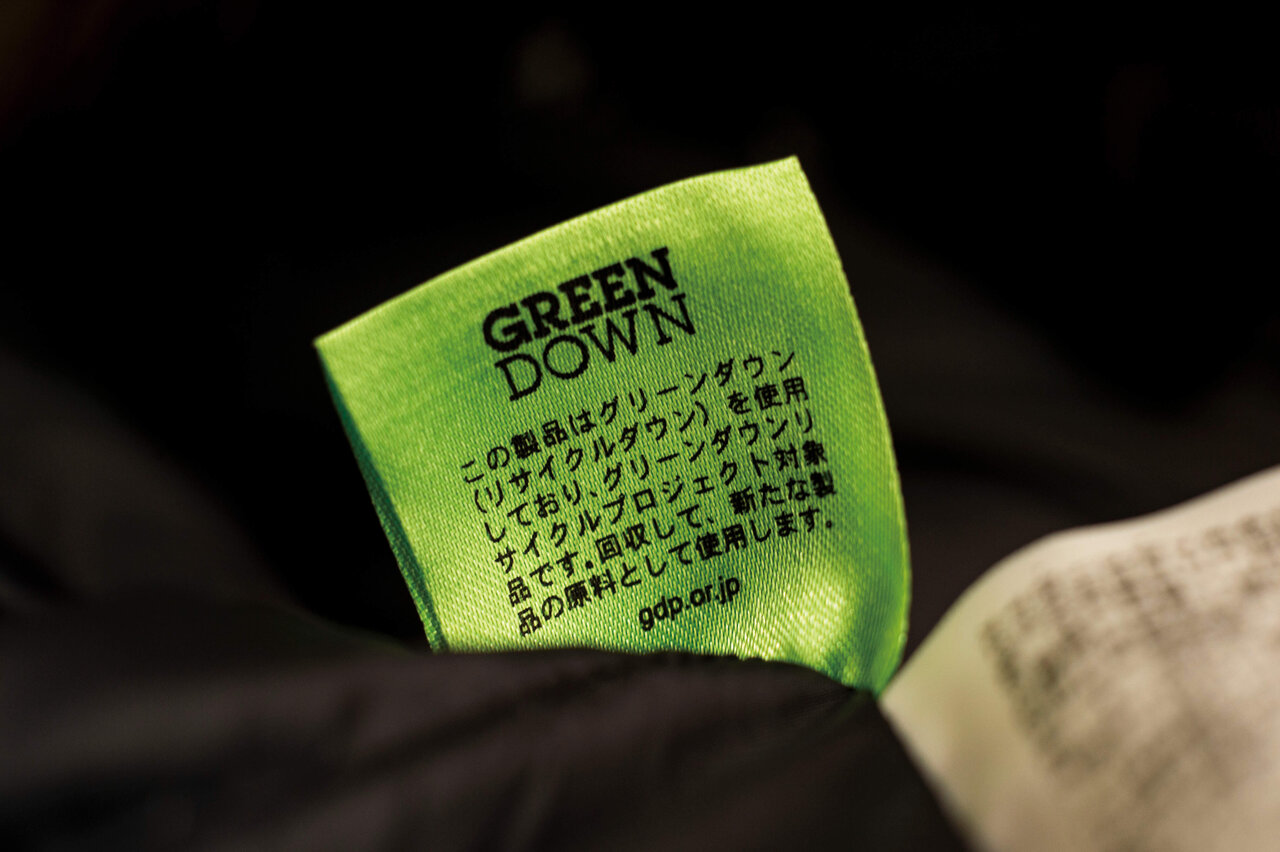
President Kawada has also studied geology on his own. This was to find what was needed for down recycling: "clean water." To restore down without damaging it, water with reducing power, electrolytically decomposed, was necessary. Minerals, which are the source of water's flavor, damage feathers, so seeking mineral-free activated hydrogen water, President Kawada explored various terrains and discovered that water from Yakushima and Odaigahara in the Kii Peninsula, with their dramatic differences in elevation and high rainfall, was ideal. Due to granite pressure, the water collected at Kawada Feather's location has a hardness of 3! (Though I don't fully grasp the significance...) It's also 10 times the expected level as activated hydrogen water! (I don't fully grasp the significance either...) This water seems beneficial for humans too, as President Kawada drinks it daily. I also tried it; it was a smooth, neutral-tasting water rather than delicious. Kawada Feather makes it available for local residents to drink.
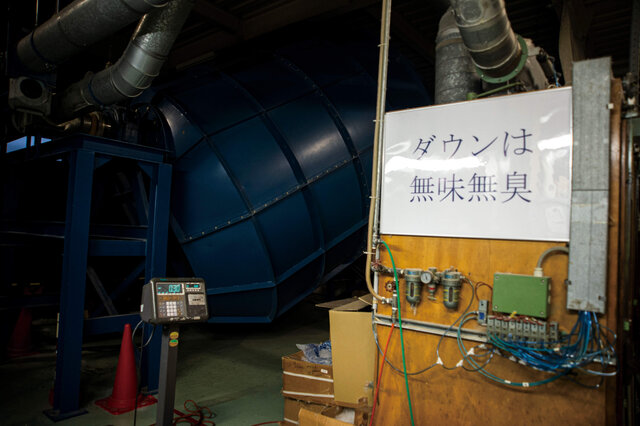
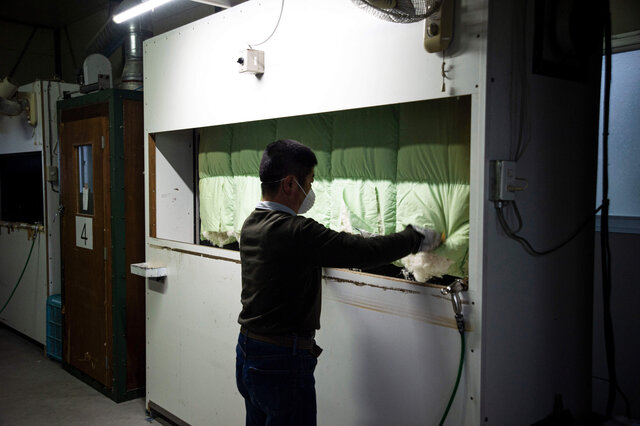
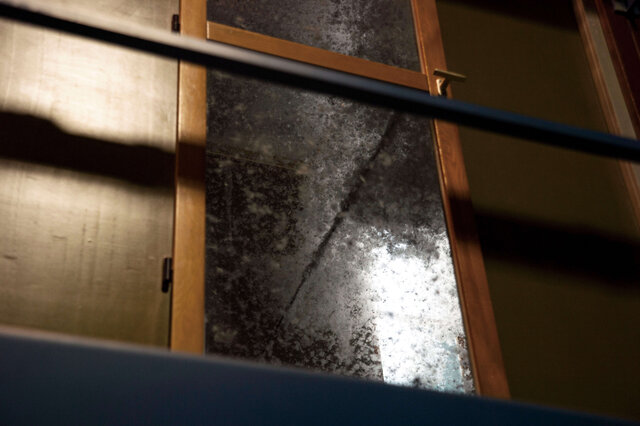
To get straight to the point, it's more accurate to think of Kawada Feather as a large washing machine and dryer rather than a factory. The new down warehouse, which serves as the entrance, has an animal scent, but after washing, the odor is almost entirely gone. As the sign inside the factory states, "Down is tasteless and odorless," the washed down is indeed odorless.
"If the washing is poor, the down is ruined and smells. Our water, in particular, has strong reducing power and is ideal for washing down. It removes sebum, dirt, and grime from the down while the water penetrates, allowing the down itself to recover. Even bent down returns to its original crisp state. Inexpensive down is generally poorly washed and contains impurities."
As he spoke, President Kawada guided me through the factory. I learned that most of the machinery inside was custom-made by President Kawada and his team. They are continuously evolving and developing new capabilities.
"Inside this machine, we wash the feathers with ultra-soft water, like polishing them. Then, we rinse them thoroughly three times with plenty of water. Finally, we dry them sufficiently."
This drying process also utilizes the lightness of down; the airflow causes the light feathers to dance in the air. Heavy impurities are removed through this meticulous system.
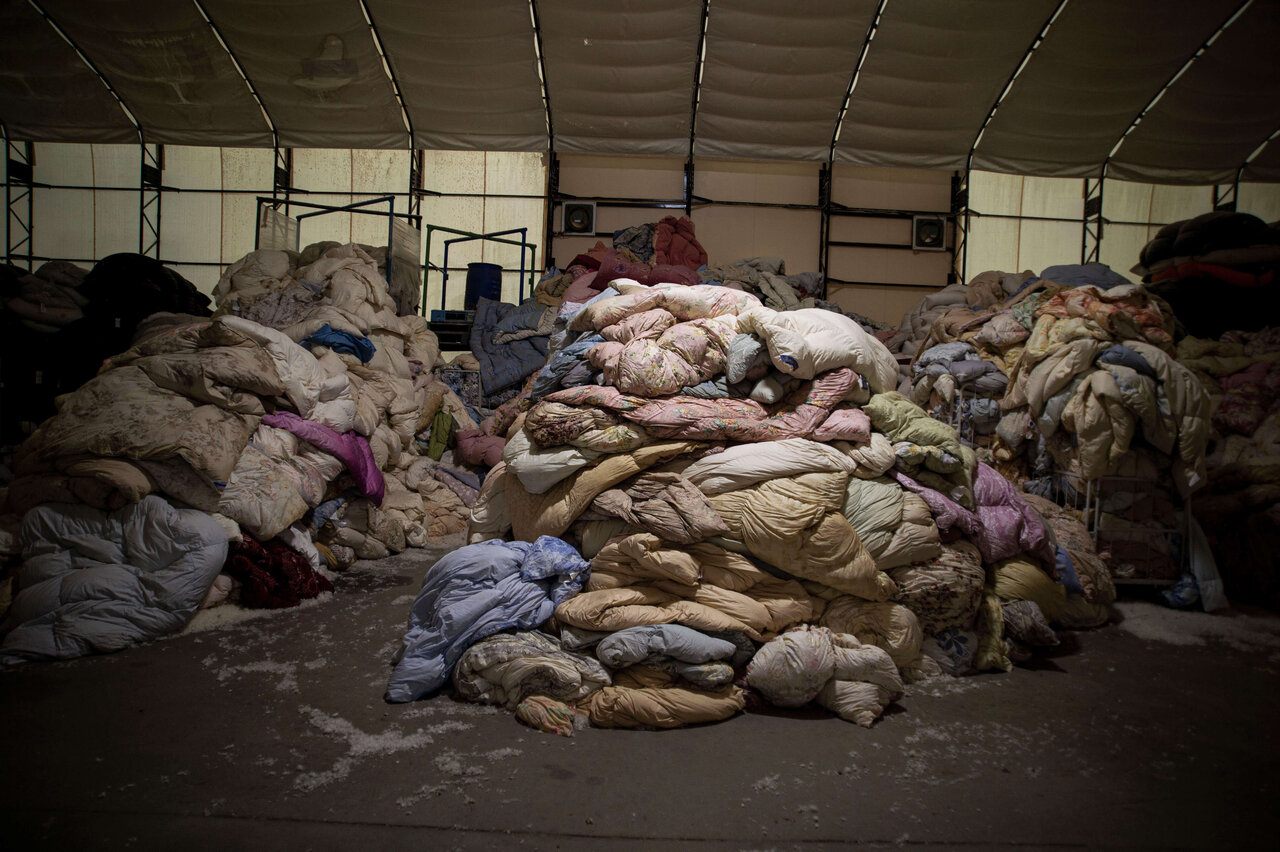
It felt like a genuine commitment to environmental issues as a personal matter. A sense that what is good for us is also good for the planet.
As a side note, after I shared a piece of trivia – "The body temperature of a flying bird is said to be more than one degree higher than that of a non-flying bird" – President Kawada's eyes lit up. He stopped talking, which he had been doing so enthusiastically, and became lost in thought. I can't forget that moment.
How much does this person think about birds!
*The terms "feather" and "down" are used interchangeably in this text, differentiated by nuance. We appreciate your understanding.