LYTHA | Collaboration and Partnership: The Key to Saving Apparel
Tokyo MAP Post-Great East Japan Earthquake - Fashion (1)
What Matters Are Human Skills and Traditional Machines
Collaboration and Cooperation Are Key to Saving the Apparel Industry!
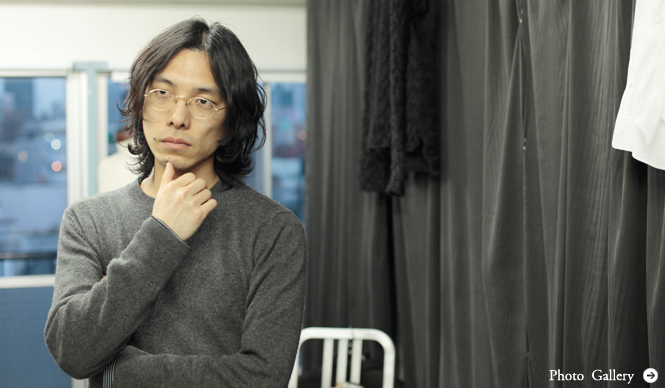
Great East Japan EarthquakeEven before the Great East Japan Earthquake, designer Yasushi Nakano was working through his brand LYTHA (Note 1) to preserve disappearing Japanese techniques and craftsmanship. Factories he works with were affected by the recent earthquake. What will become of Japan's garment-making "skills"? To understand the reality, I interviewed Mr. Nakano at his new atelier in Sendagaya. What are the thoughts of this designer who sincerely considers Japanese garment production and possesses a passionate drive for its sustainability?
Text by OPENERSPhoto by JAMANDFIX

LYTHA Designer Yasushi Nakano's Passionate Message to Japan's Future Factories
──Were any of the factories actually affected?
There was no damage from the tsunami. The factory we work with is in Iwaki; the building was damaged by the earthquake, but fortunately, there were no casualties.
──Are the damaged factories not operational?
They are not operational. There are no people there now. It's a small coat factory run by a father, mother, and a part-time helper. They were once capable of handling large-scale coat production, but with the increasing outflow of production bases overseas after the Lehman Shock, they were already in a difficult environment, so this is truly heartbreaking.
──Are those people evacuated?
They are currently in Saitama. Since their building collapsed, they moved their machinery, like sewing machines, and relocated. The factory was quite close to the sea, but it seems it wasn't flooded. The apparel industry today doesn't start with taking materials born from nature. Even if it was that way in the past, for a textile manufacturer, the job fundamentally relies on having looms. It's a world where, just like someone working on a computer, you can work anywhere as long as you have the tools. So, as long as there are sewing machines, work can be done anywhere. That's a relief.
──What is the impact on the next collection?
Honestly, it's true that there are other factories available if you don't have specific preferences. For raw materials, for example, silk can be produced in Aomori or Niigata, so there are alternatives. Therefore, there's no issue with production locations. The problem is the "software," so to speak – the people. The quality of the work changes significantly depending on the person. We ourselves have changed factories five times to make jackets. In that sense, while it's unfortunate they were affected and had to move to Saitama, the fact that reliable craftspeople and their sewing machines are there means a great deal to me.
──Will you continue to support the craftspeople?
Of course, as we are continuing the brand LYTHA, we intend to. The production location isn't particularly an issue; what's important is having people and the machines they use to create. Currently, the system is focused on competition and profit for each company, but I wonder if we could revitalize the entire apparel industry as a cohesive Japanese team, where if one part weakens, another covers for it and they cooperate. However, it's difficult to achieve that. I've been thinking strongly, especially since this earthquake, about how to resolve this contradiction.
──What are your goals moving forward?
For example, the factory in Hamamatsu that we work with only has five looms. If the order volume exceeds that, they apparently borrow looms from acquaintances in the neighborhood. Then they work together. I believe in a method where we don't compete destructively, but rather everyone moderates their demands slightly, and someone takes the lead. This is the same principle behind LYTHA's system and philosophy. By offering a helping hand initially, it leads to "Okay, let's all do this together," and everyone can support each other. Creating that moment is what I believe is LYTHA's mission right now.
Earthquakes, disasters, nuclear accidents... We are certainly facing difficult times. The apparel industry has undoubtedly been hit hard. However, Mr. Nakano is only looking forward. This is because he is utterly devoted to clothing. We, too, must not be outdone in our love for fashion. We sincerely hope that enjoying style with a positive attitude will invigorate the economy and be a step towards "reconstruction."
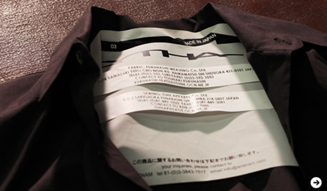
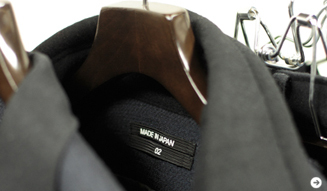
Note 1:Direct transactions with factories with whom there is a trusting relationship, bypassing trading companies. Detailed information about factories on the manufacturing side, such as spinning, sewing, processing, and accessories, is fully disclosed on the brand tag. Although the product will have many tags, the factories are involved as producers from the sample stage. This reduces the risk of upfront investment and lowers prices. In other words, it brings altruism to all levels from production to consumption. LYTHA originates from the concept of "giving benefit to others."
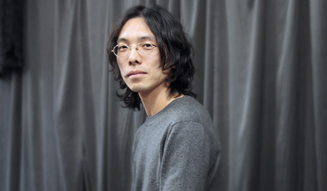
Yasushi Nakano
Designer, ANSNAM / LYTHA
Graduated from ESMOD Japon, Men's Course, in 2000. Afterward, traveled to over 30 countries to experience various cultures and traditional clothing. Upon returning to Japan, he worked as an assistant and in production at an apparel manufacturer. In 2005, he became independent and launched ANSNAM. The following year, he presented collections in Milan and Paris. In 2009, he launched the new brand LYTHA. He has a background of personally packing his own creations into a trolley and pitching them to famous shops worldwide.

