March 20, 2015
beautiful people | An Interview with the beautiful people Design Team (Part 1)
beautiful people | Interview with the beautiful people Design Team (Part 1)
It was fun when we added a playful twist to tradition.
Interview with the beautiful people Design Team (Part 1)
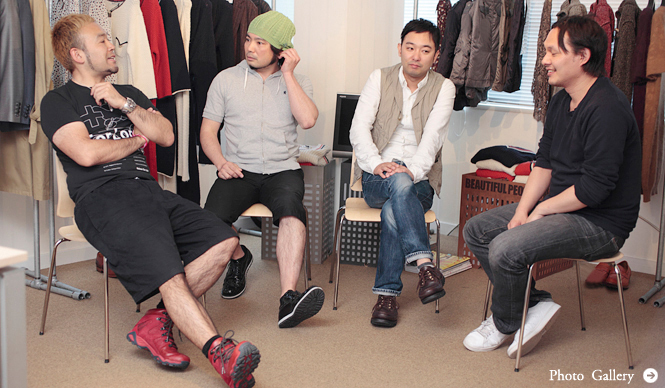
If asked, "Which Tokyo brand is drawing the most attention right now?" many people would likely name "beautiful people" first. Despite the intense focus, the four members of the design team—Hidenori Kumakiri, Tamio Yone, Masayoshi Toda, and Yusuke Wakabayashi—remain remarkably grounded. We asked them about the inspiration behind their captivating children's-sized outerwear.
Interview and text by Chika TsushimaPhotos by Mizuho Takada
If you were to compare the four of you to band members?
—First, could you tell us about your respective roles?
KumakiriI'm in charge of design. But fundamentally, everything is based on discussion with everyone, and some ideas get rejected.
Tamio Yone
YoneMy title is planning and production. I often work closely with Kumakiri, but Toda handles patterns, and Wakabayashi in sales deals with pricing. I guess I'm the team coordinator.
WakabayashiI handle things like proposing custom orders to retail stores.
—And Toda-san, you're the pattern maker?
TodaYes. That's right. Oh, you're not recording this, are you?
—You're so modest (laughs). This is a still shoot, so please feel free to be more confident (laughs). Is there a leader among you?
KumakiriSince I'm the one doing most of the talking, if we're comparing it to a band... I guess I'm the vocalist.
WakabayashiI'm the drummer.
KumakiriYone is on guitar, and Toda is on bass, perhaps.
Masayoshi Toda
Simply recreating traditional clothing as per the original isn't interesting.
—"beautiful people" is known for its wear that can be enjoyed by both adults and children. What was the inspiration behind this concept?
KumakiriIt started with the idea, "Wouldn't it be interesting to make a trench coat, an item furthest from childishness, in a kids' size and have adults wear it?" However, it seems to be a bit difficult for people to grasp at first... So, most of the inquiries we get for sales are about the sizing (laughs).
WakabayashiIt's like, "Is size 130 a size 9? Or a size 7?" It's quite difficult to explain because the clothing can be interpreted in various ways.
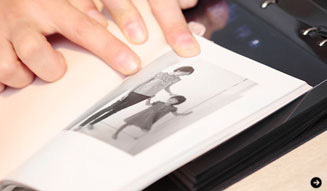
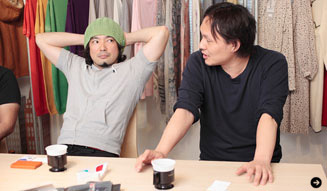
—But it's not exclusively for children, is it?
TodaThe patterns are for adults. But children can wear them too.
YoneMy child wears sizes around 120 or 130, so I have them wear the actual size. It fits my child perfectly.
TodaIn fact, we sometimes do fittings with parents and children alternating to wear the garments. The effort we put in results in good quality.
Yusuke Wakabayashi
—Personally, "beautiful people" strongly evokes images of outerwear like mods coats, trench coats, and rider's jackets. Was this a strategic focus for sales?
WakabayashiWe didn't consciously focus on it that much. At the first exhibition, only a few buyers purchased anything, so it didn't sell well at all. However, buyers and stylists started purchasing through select shops. Word-of-mouth played a significant role. It wasn't our strategy; it was fashion leaders who bought our products.
—If you had to pick some epoch-making items, what would they be?
KumakiriDefinitely the children's-sized items. Initially, we released trench coats and swing tops in kids' sizes, but they barely sold. Many brands would give up at this point, but we thought, "This has to be interesting," so we persisted, and I'm glad we did. Around the third season, we did a collection entirely in kids' sizes. That's when it suddenly took off, with stylists and celebrities featuring them on their blogs. Perhaps that could be considered a strategy, but I believe the significance lies in fashionable people actually buying them, rather than paid advertising.
—What do you think were the reasons for their acceptance?
Hidenori Kumakiri
KumakiriPerhaps it's the element of playfulness, combined with a deeper meaning. If you just create basic, traditional clothing, isn't it rather dull?
—From a sales perspective, have you seen a difference since the kids' line was introduced?
WakabayashiBefore that, being featured on blogs and riding the wave of the rider's jacket trend were significant. But from the Spring/Summer 2009 season onwards, it was incredible. While kids' wear is currently a core focus, we've also launched a new unisex boys' line, which has now become a central pillar as well.
beautiful people
http://www.beautiful-people.jp/