March 13, 2015
Rintaro Tanaka: "My Freedamn! Vol.8" and the Sixties (3/Final)
Rintaro Okamoto Releases Highly Anticipated New Work & Exclusive Interview!
My Freedamn! Vol. 8 and the Sixties (Part 3, Final)
This is the final installment of our three-part interview series with Rintaro Okamoto.
Recent American trends suggest the end of American pop culture, born from the baby boomer generation starting in the 1960s. In response, Okamoto senses a major turning point for vintage clothing and American subculture. The conversation flowed from his current state of mind to his future outlook.
Photos and Narration by Rintaro OkamotoInterview and Text by Toranosuke Takeuchi (City Lights)
The End of the Baby Boomer Era, Which Began in the Sixties
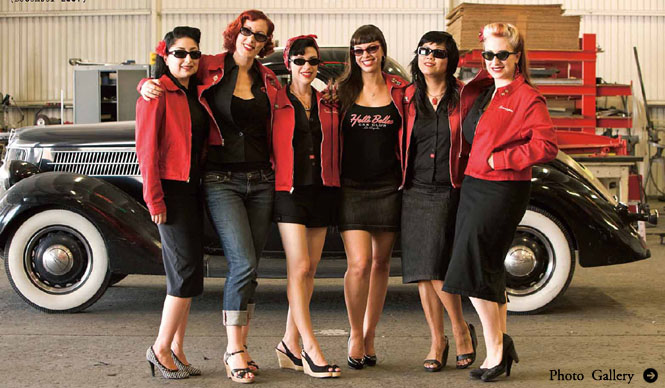
—Besides Pearl Harbor, quite a few women appear in this issue, don't they? Like these ladies from the car club. Was there a deliberate intention to feature women?
OkamotoNo, no, it was just a coincidence (laughs). 98% of my subjects have been men! Of course, I have a desire to photograph women beautifully, but it's technically quite difficult. The way you approach them, the considerations you make—it's all completely different. But this time, we just happened to click, and I felt I captured them well, so I included them.
—Car clubs like these, with a Fifties vibe, were popular in Japan in the 80s, but have they always been popular in America?
No, it feels like it's only recently started to gain momentum again.
—Do you think it will become a boom like it was in the past?
I don't think it will become a movement like in the 80s. That's because the booms of that era, whether it was hippies or disco, were all part of baby boomer culture. I don't think such massive booms will happen again.
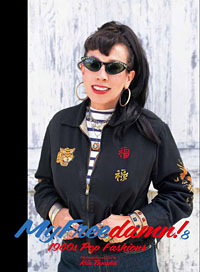
My Freedamn! Vol. 8
—The end of the baby boomer era?
Yes, with that recent GM (General Motors) situation, it felt like it truly ended.
The American bubble that continued for the past few years was their final fireworks display. Of course, it's not absolute, but it's undeniable that there was an aspect of baby boomers investing with their retirement and future in mind.
In that sense, I do feel that a certain era of American culture, which began in the sixties and is the theme of this book, has come to an end.
—So, American culture, symbolized by the vintage clothing we love, including your work, is also reaching an end?
Yes, there's a sense of sadness that the culture we loved has ended. But conversely, I also feel positive aspects in present-day America, like the emergence of President Obama. Finally, with the older generation completely gone, it feels like our time has come! The vintage clothing industry included, it's now our turn to think about the future.
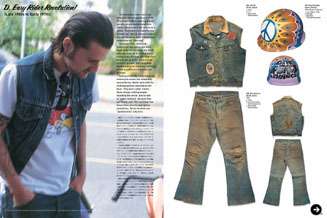
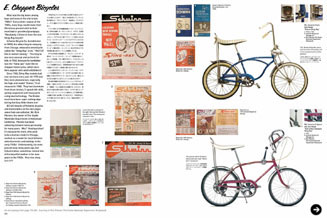
It's Finally Our Turn to Think About the Future
—In that sense, it seems we'll need to keep a close eye on your activities from now on. What are your plans for the future?
I intend to continue making books as before, but regarding the "My Freedamn!" series, I'm thinking of bringing it to a conclusion with Vol. 10. As a sort of replacement, I'm considering activities beyond books, like events, starting next year.
We're completely in the internet age now, but that's precisely why face-to-face interaction might be even more important. Fortunately, in the process of creating "My Freedamn!," I've been able to connect well with many people. I believe it's important for me to leverage these connections and think about how to foster communication.
—Are there already concrete plans in motion?
It's still in the planning stages, but as a first step, around February next year, I'm considering a culture and recycling event called 'Inspiration'.InspirationVintage clothing is no longer easily worn as everyday attire, and items that are still good are incredibly expensive. Yet, I personally still love vintage clothing and make books about it, so I've always felt the need to find some kind of landing point. That's why a recycling event seemed like a good idea.
Vintage clothing doesn't need to be like a Picasso, but it's also no longer just trash. So, this is a call to action: 'Let's all take it one step further.'
I was treated very well by the baby boomers who created vintage clothing culture. But as I mentioned earlier, now it's my turn to think for the next generation. While these are certainly not easy times, it is undoubtedly a period of change. And for me, this represents a significant opportunity to do something.
—That sounds exciting. Even when you start these activities, will your basic stance be to work independently?
Of course, cooperation from various people will be necessary, but fundamentally, I intend to work alone. Life is shorter than you imagine. Therefore, if I want to do something I truly find interesting, I have no choice but to do it myself. I know I won't make money while I'm pursuing this, but that's how it is. I can only do things that I find interesting (laughs).
—I'm relieved to hear that (laughs). I look forward to your future endeavors. Thank you very much for your time today.
Thank you as well.
(The End)
My Freedamn! Vol. 8
Price | ¥8,925
Text: English/Japanese
Cycleman Books 2009
