March 13, 2015
Rintaro Tanaka: "My Freedamn! Vol.8" and the Sixties (2)
Rintaro Tanaka Releases Highly Anticipated New Work & Exclusive Interview!
My Freedamn! Vol. 8 and the Sixties (Part 2)
My Freedamn! Vol. 8 introduces vintage Sixties fashion, reimagined with a new generation's sensibility.
The cover features Pearl Harbor, a former singer whom Rintaro Tanaka deeply respects.
In this latest interview, the second installment, Tanaka shares his passionate thoughts on their encounter, and on her, who possesses profound knowledge not only of music but also of vintage clothing.
Photos and Narration by Rintaro TanakaInterview and Text by Toranosuke Takeuchi (City Lights)

We Want to Showcase Only the Best, Carefully
—When creating this issue, themed around the Sixties, were there any specific approaches you took to the presentation?
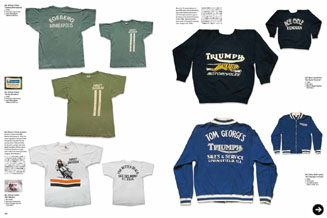
Up until Vol. 6, which focused on the Fifties, we pursued quantity. However, this time, my personal feeling has shifted; I found myself wanting to see only the truly exceptional pieces.
—Does this mean there are fewer high-quality items from this era?
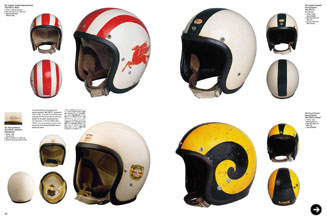
No, not at all. I felt that both myself and vintage clothing enthusiasts are no longer interested in mere volume. Instead, I wanted to present genuinely good items in a larger format, allowing them to be properly appreciated. It's true that some items were scarce. Helmets, for instance, are a prime example; I'm showcasing pieces I've collected over time, but after six years, the number remaining was surprisingly small.
—Helmets are also quite striking, aren't they?
Alongside surfboards, they are prime examples of items whose forms dramatically changed with new materials. This construction, using foam and fiberglass coating, was a military technology adapted for general use due to its lightness and strength. It allowed for unprecedented design freedom, resulting in highly curved shapes.
—It was an era when hard goods transitioned from metal and wood to petroleum-based products.
Precisely. While petroleum-based products still dominate industrial manufacturing today, this major shift began around the late 1950s. Essentially, this was driven by the need for mass production. To support the consumption of the Baby Boomer generation, the slow, meticulous craftsmanship of the past was no longer feasible.
The Original Connoisseur of Music, Pearl Harbor, Appears!
—Among the people you met while creating this book, is there anyone who left a particularly strong impression?
The most gratifying experience was undoubtedly having Pearl Harbor appear on the cover. She is the ex-wife of Paul Simonon, the bassist of The Clash. Originally American, she now lives in Hollywood. She has also been involved in music herself, and for me, she was an idol I admired since seeing her on television at the age of 13.
—How did you meet her?
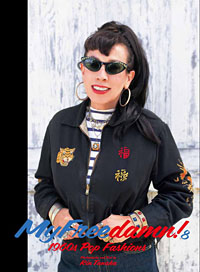
My Freedamn! Vol. 8
Our actual meeting occurred in 2000, during the photo shoot for the book 'A Life Wearing a Motorcycle Jacket,' published by East Lights.
One day, while visiting a friend's vintage clothing store for an interview, I found her working as a sales assistant. At that time, she had already paused her music career and seemed to be living a relaxed life in Hollywood. Of course, I didn't realize it was her. After a long conversation with her, who had extensive knowledge of vintage clothing, we hit it off. As I was leaving, I asked for her name, and she said, 'Pearl.' Jokingly, I replied, 'Pearl Harbor, perhaps?' To my surprise, she confirmed it was. I was truly astonished.
From then on, we developed a relationship where I would occasionally visit. She mentioned that she had always loved vintage clothing and had even sourced all of The Clash's stage outfits.
—I see! So that's why The Clash, despite being a British band, had that distinct American Fifties style!
Yes, that style was her creation. Moreover, in a sense, Pearl is a foundational figure who shaped the culture surrounding us vintage clothing enthusiasts. Through her aunt's volunteer work at a thrift store, she discovered the existence of affordable, quality items in the Sixties.
I believe she was one of the first people in America to realize this. When I spoke with her, her knowledge of music and her insight into musicians were exceptional, but her taste in vintage clothing was also impeccable.
—Really? So she was like an original connoisseur.
Exactly. As you might recall, during the initial vintage clothing craze in the 80s, Fifties fashion was what came to mind. In reality, she was buying the most vintage clothing in the 70s. What was available in thrift stores in the 70s were clothes from about 20 years prior – meaning, Fifties items.
—Will her collection feature prominently in this issue?
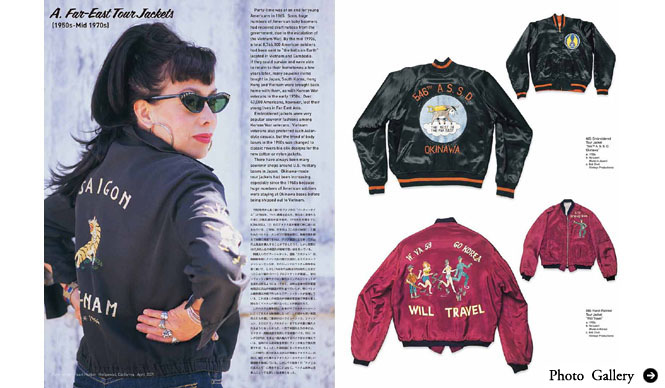
Since her personal collection consists mostly of women's items, the quantity featured isn't vast. However, regarding items like the Sukajan jackets I mentioned earlier, she still possesses excellent pieces, including those she wears herself.
My Freedamn! Vol. 8 and the Sixties (Part 3, Final)To be continued
My Freedamn! Vol. 8
Price: ¥8,925
Text: English / Japanese
Cycleman Books 2009
