March 13, 2015
Rintaro Tanaka: "My Freedamn! Vol.8" and the Sixties (1)
Rintaro Rintaro Releases Long-Awaited Latest Work & Exclusive Interview!
My Freedamn! Vol.8 and the Sixties (Part 1)
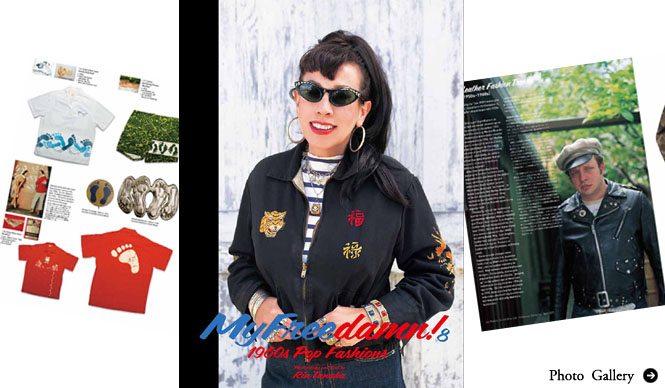
About a year has passed since the simultaneous release of Vol.7, which featured Hawaiian shirts, and the Harley-Davidson commemorative book. Now, the long-awaited latest work,My Freedamn! Vol.8was completed on June 15.
OPENERS conducted an exclusive interview with Rintaro Rintaro, who was in Japan in early June ahead of the new release.
Starting now, we will deliver Rintaro's own words over three installments, covering highlights of the new work, episodes from its creation, and his thoughts on the future.
Photos & Narration: Rintaro RintaroInterview & Text: Toranosuke Takeuchi (City Lights)

The theme of Vol.8 is the era of pop culture: The Sixties
—First, I’d like to ask about the overview of the newly completed My Freedamn! Vol.8. What is the theme this time?
RintaroVol.5 was the 1940s, Vol.6 and the previous installment, Vol.7, which was entirely Hawaiian shirts, were the 50s. And this time, the theme is the 60s. The items featured are mostly from the late 50s to the end of the 60s.
—What would you say is the biggest characteristic of the 60s?
A major characteristic of this era is the widespread adoption of color photography and color television. As a result, the number of colorful clothes and items surged. At the same time, Andy Warhol emerged in the art world, and a California dreaming boom occurred in music with bands like The Ventures and The Beach Boys. Then, The Beatles dramatically changed the times.
In a word, it was the beginning of pop culture.
—Color photography, pop art, pop music. The entire era became more lighthearted, didn't it?
Yes. At the same time, the so-called baby boomers, born after the war, became teenagers. It was also a period that entered an era of full-scale mass production, where a huge population engaged in huge consumption. Consequently, in the vintage clothing market, the quantity of items increased, while the quality, conversely, began to decline.
The Appeal Lies in the New Generation American "Sense of Humor"
—So, what is the charm of vintage clothing from this era?
While the quality decreased compared to before the 1950s, the "sense of humor" of the new generation of Americans emerged. That’s the most interesting aspect of this era.
Both the colors and the content, the graphics themselves are brighter. It can be said that clothes became more about fashion than function. Moreover, the technique of incorporating this new sense of humor into fashion was unique to America at the time. In that sense, I believe the prototype of American casual fashion that continues to this day lies here.
—In other words, it was the era when America was at its most brilliant?
That's right. It was literally a peaceful era until the Vietnam War began after the Korean War ended. Even after the Vietnam War started, the economy was very good for a while. Therefore, much of the vintage clothing from this period has a peaceful humor within a clean image.
—Are there any particular items that could be called highlights of this issue?
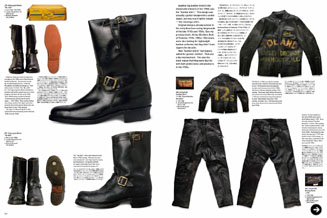
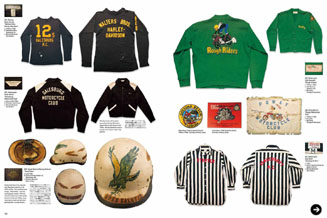
Categorically, there haven't been many changes. Surfing, motorcycles, hot rods, and military. These are the quintessential American classics.
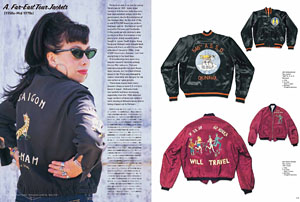
If I had to pick one, it would be the "Vietnam Jacket." I have introduced Sukajan jackets from the Korean War era before, but this is the first time for the Betojyan.
—Setting aside the motifs, what is the biggest difference between a Betojyan and a Sukajan as an item?
The materials are overwhelmingly different. While Sukajan used satin or velvet, these are mostly made of nylon or cotton. As I mentioned earlier, these are materials suitable for mass production and easier to reduce costs. They simply couldn't afford to make satin or velvet ones at the same cost. Still, what makes the Betojyan interesting as an item is its expression. There's a sense of humor here too, and overall, it has a cheap, pop, "barely cool" aesthetic.
—Indeed, this kind of cheap and pop is also a good aspect of American products, isn't it?
The truly great items were from the 1930s and 1940s. I think the clothing from that era represented the best balance between European influences and American industrialization. In that sense, the Sixties in America were entirely in the world of "American Graffiti." Everything reflected the values of a new generation that was pop and bright.
My Freedamn! Vol.8 and the Sixties (Part 2)to be continued
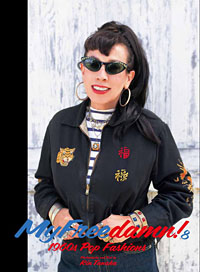
My Freedamn! Vol.8
Price: ¥8,925
Text: English/Japanese
Cycleman Books 2009
