February 23, 2015
list | FPM's Tomoyuki Tanaka Remixes Fashion? Introducing "list," a New Fashion Platform
list | Tomoyuki Tanaka of FPM Remixes Fashion?
A New Fashion Platform, "list," is Born (1)
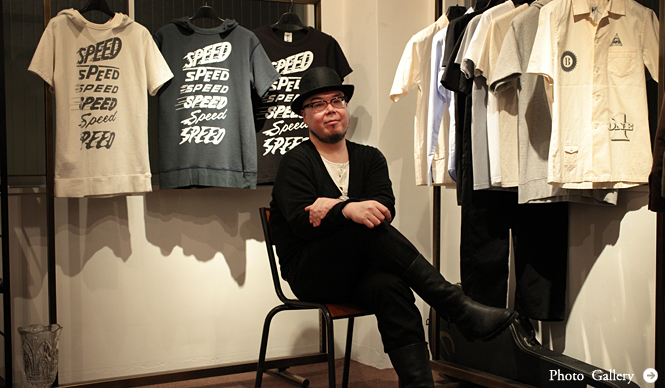
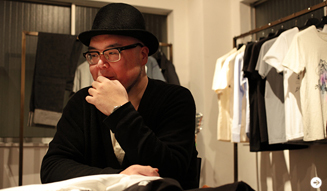
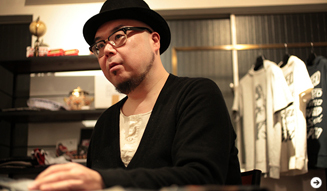
The fashion brand "list" has launched this spring/summer season, founded by three individuals: Tomoyuki Tanaka (FPM), a globally active artist; Motoharu Tsujita, designer of the denim brand "FULLCOUNT"; and Junya Demura, one of Japan's foremost vintage dealers. With vastly different backgrounds, these three reinterpret vintage wear, a form of cultural heritage, to propose an unprecedented "fashion with a story." We spoke with Tomoyuki Tanaka, representing the founders, about their meticulous approach to creation.
Text by FUJITA Mayu (OPENERS)Photographs by TAKADA Midzuho

Craftsmanship That Recontextualizes Past Values for the Present, Much Like a DJ
—What kind of brand is "list"?
Among the many fashion brands, what makes "list" unique is its approach of selecting design sources from an extensive vintage archive and reinterpreting them for the modern era. Simply reproducing vintage designs has been done many times before, but we focus on rebuilding designs for contemporary relevance and also conveying the historical context and meaning behind the original vintage items – a meticulous creation process. It's not just about looking cool as fashion; the story behind the design and motif is itself part of the design.
—Why these three individuals?
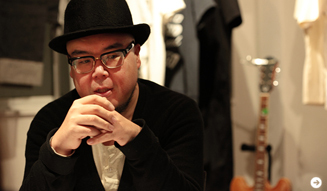
I've known Motoharu Tsujita of the denim brand "Full Count" for a long time. Around last summer, I was asked to help with the production of a special line for "Full Count." During the planning phase, our shared passion for vintage grew, and the conversation expanded beyond the scope of a separate "Full Count" line, leading to the establishment of an entirely new brand, "List." Junya Demura is a dealer of high-end vintage wear at "Hayabusa Cat Clother" in Toyama.Rintaro TanakaI met him at a vintage clothing event in Los Angeles hosted by Mr. Tanaka. Come to find out, we're from the same hometown, Kyoto, and he's even my junior (laughs).
While both Tsujita and I have a certain knowledge of vintage, having Demura, with his deeper expertise, join us would broaden our design possibilities and add more depth. I thought an interesting chemical reaction would occur with the three of us. However, I thought he, having dedicated himself to vintage, might not be interested in new creative endeavors. Surprisingly, he revealed he had always been interested and readily agreed. That's how the three of us started.
MILOS
Price | ¥7,245
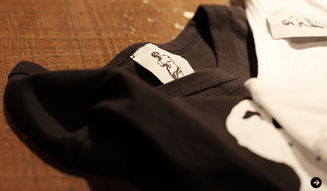
The Venus de Milo, a sculpture renowned as an icon of beauty, is crafted with proportions based on the golden ratio, considered the most beautiful numerical balance in the universe. Despite being discovered in an incomplete state, missing both arms, people are captivated by its beauty. Throughout history, artists and scholars have attempted to restore the Venus's missing arms, but none have succeeded in finding the definitive answer. The act of searching for, or imagining, the missing fragments of Venus, or the unknown, resonates with the creative process of "list," which is why we've chosen the Venus de Milo as our brand icon. For our debut season, we've produced numerous items featuring this brand icon.
—Why do you refer to yourselves as "founders" rather than "designers"?
"Founder" typically means the establisher of a company. But I also thought of "found" as in "to find things." For example, finding the source material for sampling is a form of finding, as is discovering interesting collaborators. I believe creation begins with finding. In my case, my DJing activities are exactly that: finding tracks that fit my current mood from past recordings, or reinterpreting past recordings into contemporary music through sampling. For instance, I might take a 1920s track and a 70s track and blend them into 2012 techno or house, allowing listeners to enjoy them as fresh, "current" music. The creation process of "list," which recontextualizes designs and values from the past for the present, is fundamentally the same as the creative thinking and methods I employ in music.
—Just as DJs need to know music from all eras, the more knowledge one has in design, the broader the possibilities become, right?
Demura has seen far more than we have in terms of where to find sampling sources and how to acquire them, so he's definitely stronger in those aspects. Tsujita, with his 20 years in the American casual brand business, has cultivated techniques and production backgrounds. Within the single platform of "list," we each contribute our ideas to create products as a brand. That is "List."
list | Tomoyuki Tanaka of FPM Remixes Fashion?
A New Fashion Platform, "list," is Born (2)
The Theme is "SPEED"! Featuring American Counterculture
—What is the theme for the first season?
This season, with "SPEED" as the theme, we're drawing inspiration from American countercultures that emerged around the 1930s and 40s, such as hot rods and MCs (Motorcycles). Hot rods, in essence, are old-fashioned cars with massive engines built for speed races, while MCs represent outlaw bikers. Both are male fantasies. "list" is committed to proposing these aspirations not merely as fashion styles, but as a culture.
—Could you give some examples?
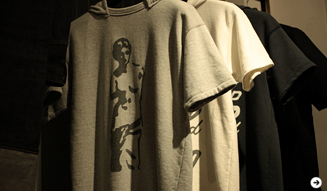
For instance, the T-shirt with "0.1%er" printed on it. In the late 1960s, outlaw bikers became a social issue in America. At the time, a representative of a motorcycle association commented, "99 percent of riders are good. Truly bad bikers are one percent." In response, outlaw bikers of that era turned this around and declared, "We are that one percent, the '1%er'!" They then wore diamond-shaped patches with "1%er" embroidered on them on the chests of their rider jackets. Using this "1%er" motif as a source, we've designed this with a playful twist, making it "0.1%er" – even more rebellious (laughs). This is how we incorporate our ideas.
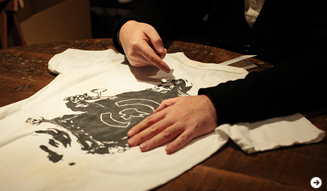
"GHOST"
Price | ¥7,245
The T-shirt with "0.1%er" on the front features a print of a ghost rider's back on the reverse. Each patch on the MC jackets worn by the "1%er" back then had its own meaning. These patches were akin to yakuza crests in Japan. When joining a motorcycle club, one would receive patches in stages – top rocker, bottom rocker, and logo – after years of apprenticeship. However, there was a rule that these patches had to be returned to the club upon leaving or if the rider passed away. The ghost rider's jacket depicted here shows only the traces where all the patches were removed, signifying his passing.
—What are the standout items for this season?
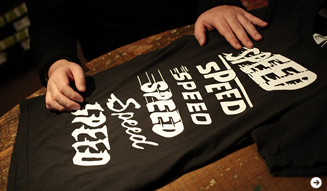
First are the items featuring the word "SPEED," which is the season's theme. All the lettering used is carefully selected and collaged from the word "SPEED" as it appeared in "Hot Rod Magazine," a specialized publication from the 1940s to the 70s. Back then, before computers, each letter was handwritten, giving them a unique character. We also created a Sukajan jacket using a special vintage motif.
Skull motifs were rare at the time, and we've used a skull motif from an extremely valuable Sukajan jacket that Demura sold for 1.59 million yen. We borrowed the actual jacket from the collector who purchased it and had the pattern recreated with exactly the same embroidery as the original. It's a piece that requires 80,000 stitches and 24 hours to complete.
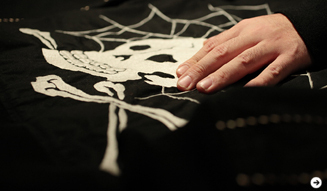
"Japanese Skull"
Price | ¥82,950
Sukajan jackets began to be made as souvenirs for American soldiers stationed in Yokosuka during the Korean War. Skull motifs were particularly popular, and due to their rarity, they consistently fetch high prices in the vintage market. The motif chosen for this piece is exceptionally rare among skull designs, considered a masterpiece among collectors and known as the "Japanese Skull." The origin of the name "Japanese Skull" comes from the unique expression of the skull, which seems to be inspired by the skulls depicted in ukiyo-e prints, as early Japanese people, unfamiliar with Western skull motifs, likely interpreted them in this way.
The silhouette has been streamlined for a modern fit. By making it reversible with a simple black satin fabric, we've created an item that can be worn daily. When you take it off, the skull is revealed on the lining. While incorporating a Sukajan into one's wardrobe can be challenging, this design caters to the desire to own such a precious graphic. It's crafted to appeal to clothing enthusiasts.
Furthermore, we've addressed the drawbacks of vintage Sukajan jackets—such as being difficult to wash, having fragile zippers, moth damage on the ribs, and silk threads unraveling due to aging—by carefully selecting materials. We've also focused on fundamentally updating the functionality for modern use, which is a key aspect of "list." This item, born from the desire to create the ultimate Sukajan that we truly find cool, holds significant meaning for us.
list | Tomoyuki Tanaka of FPM Remixes Fashion?
A New Fashion Platform, "list," is Born (3)
Denim with a Playful Touch, Distinct from "Full Count"
—As expected, there are many denim items.
As you know, Tsujita is a top manufacturer who has spent 20 years challenging himself to reproduce denim from the 1930s and 40s, impressing denim enthusiasts worldwide. The key to recreating not only the fine details but also the exact fading of denim from that era lies in the material. Denim from that time used hand-picked organic cotton. He searched the world and found an ideal cotton farm in Zimbabwe. Since then, he has been committed to using Zimbabwean organic cotton to pursue the creation of products that closely resemble denim from that period.
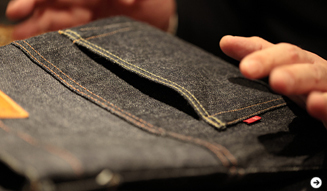
The level of perfection was such that even Demura, a connoisseur of vintage, was astonished and admitted, "I'm impressed." Using the denim fabric he created, I wondered what kind of proposals "list" could offer. I realized it would be designs with a playful spirit, something that "Full Count" couldn't do. So, the first thing we tried was denim designed with perfect symmetry in every detail, from the parts to everything else, as if reflected in a mirror. You might not notice it at first glance, but upon closer inspection, you see the clever playfulness – a truly "list"-like item.
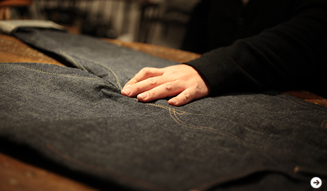
"Clown Pants"
Price | ¥30,345
Rodeo, a popular sport in America. Clowns were always present at dangerous rodeo competitions. Wearing exaggerated, baggy, and unique bottoms, they entertained the audience between events and played a crucial role in ensuring the safety of the riders. These denim pants, inspired by the bottoms worn by those clowns, are, of course, made from 100% Zimbabwean cotton. As they are worn, they will fade and develop character, much like the denim fabric itself. Even the stitching thread is intentionally made with low-fastness cotton thread to fade along with the denim. This cotton thread, made from Egyptian cotton (extra-long staple cotton), ensures durability.
Also, denim with a deep inseam, commonly known as "sarouel pants," is colloquially called "clown pants." These are denim pants that play with a unique silhouette. In the 1950s, when rodeos were popular in America, there were always clowns called "rodeo clowns" at the event venues. Rodeo is a cowboy culture, and denim is what cowboys wear, right? Naturally, denim brands were involved as sponsors in these events. The clowns wore baggy bottoms printed with advertisements from their sponsoring brands, standing before the audience. While the silhouette is unique, it's not just for amusement; it has a historical basis.
—Learning through the items further sparks interest in vintage!
I don't mean to sound like I'm lecturing (laughs). But if shopping is considered entertainment, I believe we should also deliver the side stories and behind-the-scenes narratives of each item. "list" is a brand that the three of us started, but it's a place where we can create products with the help of friends active in various fields, and even unknown creators.—We hope to become a platform called "list," where individually "List up" ideas can be brought to life.
—Thank you very much.