February 26, 2015
MARGARET HOWELL | Asako Hidaka, Editor-in-Chief of Shueisha's 'UOMO,' Speaks About MARGARET HOWELL
MARGARET HOWELL
Shueisha 'UOMO' Editor-in-Chief Asako Hidaka: A Special Interview
A New Edition and Fashion for a New Generation of Adults
Have you noticed the recent redesign of Shueisha's men's fashion magazine 'UOMO'? Its format, logo, and graphic design were revamped and released on February 24th. Editor-in-Chief Asako Hidaka has been with the editorial department since 'MEN'S NON-NO' was first published in 1986, and became editor-in-chief in July 2006. She is a leading, capable editor in the industry, having propelled the magazine to the top of men's fashion publications, and has been at the helm of 'UOMO' since its February issue.
Text by KAJII Makoto (OPENERS)
A Classic Fashion Magazine for the Generation Above MEN'S NON-NO Readers
—The cover of the newly redesigned 'UOMO' February issue features Takuya Kimura of SMAP, doesn't it?
Mr. Kimura has graced the cover of 'MEN'S NON-NO' many times. He will be turning 40 this November. He is a professional in his work, yet he also has a family, is a father and husband, and values his private life – in a sense, he is a very natural man. Also featured in the magazine are Yusuke Iseya and Hidetoshi Nakata, who are beginning to think about and practice what they can do for society. The revamped 'UOMO' aims to be a classic fashion magazine for this 'new generation of adults,' the generation above MEN'S NON-NO readers.
—What does 'classic' mean to you, Ms. Hidaka?
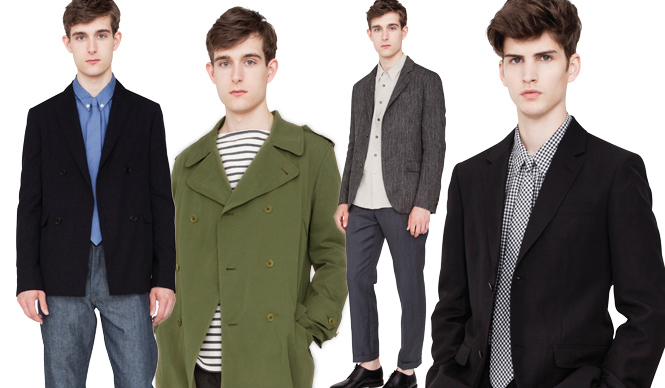
Much like 'MEN'S NON-NO' was, perhaps it's about 'continuously changing in a more ordinary, simple way.' Fashion has eras where aggressive, rapid change is sought, and eras like now where gradual change is accepted. Right now is precisely a time when...MARGARET HOWELL...clothes, which seem unremarkable at first glance, are valued for their ability to enhance the wearer's charm. We want 'UOMO' to be like Margaret Howell, a magazine that refines the individual, a magazine that features people whom everyone considers 'cool adults.'
—You have a long career with MEN'S NON-NO; have you always been involved with men's magazines?
I studied clothing at university and was interested in men's fashion even then. The different rules compared to women's clothing were fascinating, and my thesis was on Ivy League style. When I joined Shueisha, there were no men's fashion magazines. After working in the editorial departments of 'MORE' and 'LEE,' I became involved with 'MEN'S NON-NO' from its inception. I enjoyed working on 'MEN'S NON-NO' for 25 years without getting bored, but the world has changed significantly in recent years, including how people shop for clothes, so it felt like a good time for a transition.
—Are you conscious of 'UOMO' being a magazine for 'graduates' of MEN'S NON-NO?
'MEN'S NON-NO' was born during the bubble economy. Amidst the DC (Designer & Character) boom, it was a magazine that encouraged self-expression by saying, 'You don't have to be bound by rules; you can be more free.' The current 40s demographic targeted by 'UOMO' includes people who didn't experience the bubble economy. They are deeply connected to society, yet they haven't lost their sense of style and have cultivated an eye for quality that transcends price. We aim to be a fashion and lifestyle magazine for these adults.
For the Adult Man Moving Forward, Understanding His Own Value
—What are the characteristics of Japanese men from your perspective?
Japanese men are stylish, possess a unique sensibility, and have a high capacity for learning. This translates into the curiosity about products and the discerning eye for quality necessary to become stylish. I believe Japanese men, with their high capabilities, possess wonderful qualities that the world recognizes.
—So, they are your target audience.
Men and women alike change their feelings through encounters with new and exciting things. However, women are very intuitive and can move on quickly (laughs), while men, especially as they get older, carry more burdens and can be quite sensitive. In their 20s, they work hard; in their 30s, they start questioning if they've secured their careers, what's next, what to spend money on, and if they are truly enjoying themselves – this is the 'UOMO' generation. We want adult men who understand and measure their own value, seeking and finding their personal standards, to read this magazine.
—How do you perceive the current era through fashion, Ms. Hidaka?
'Adult' is the keyword right now. Fashion that the era demands is not about proposing clothes that change every season, but rather items that remain constant yet desirable each season. It's about objects and forms that embody this zeitgeist, possess the power to inspire us, and respond to our affection. At 'UOMO,' we want to convey this atmosphere of the times, and adults striving to move forward seek and want to know about this 'atmosphere – current fashion.'
—And Margaret Howell in this era?
In an era focused on constant consumption and change, she might not stand out, but now she looks wonderful. The excellent materials and her unique sense shine through; it's truly admirable.
The Charm of Margaret Howell's Clothes: Bringing Out the Purity in Men
—Do you have a favorite Margaret Howell style?
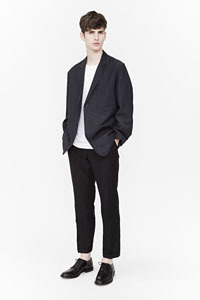
I've liked Margaret Howell for a long time. I resonate with her starting with menswear, and her sense for creating clothes that are practical in daily life. The style of pairing washed cotton shirts and boxy jackets with British leather shoes is something that can be loved for a lifetime and is very accessible to Japanese people.
—The looks you've selected this time are exactly that.
It's a boxy silhouette jacket and pants style, simple and clean. The styling is unpretentious yet warm. It conveys the gentle and strong aspects of a man, his cuteness, his intelligence, and his masculinity. Margaret Howell's great appeal lies in its ability to highlight the wearer's individuality, bringing out the pure aspects in everyone from young boys to older men.
—You also like the book 'Margaret Howell's House' published by Shueisha, don't you?
'Margaret Howell's House,' published in 2006, was edited by a colleague of mine. It compiles articles published in 'LEE' over 17 years, starting from 1989. The worldview presented here and Margaret's personality are wonderful. The clothes, furniture, and household goods created by such a person in such a place are truly exemplary. Furthermore, her choices, like the tea served at Jinnan Cafe and the collaborations with Kenneth Grange and Sam Hecht for the 'MARGARET HOWELL PLUS' label, are very characteristic of Margaret and highly commendable.
—Thank you very much.
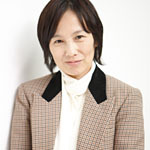
Asako HIDAKA
Born July 26th in Kagoshima Prefecture. Leo, Blood Type A.
Graduated from Ochanomizu University, Faculty of Home Economics, Department of Clothing.
Joined Shueisha in 1980. After working in the editorial departments of 'MORE' and 'LEE',
she joined the 'MEN'S NON-NO' editorial department in 1986.
Transferred to the 'UOMO' editorial department in October last year and remains there to this day.
UOMO
http://www.s-woman.net/uomo/
AGL GLOBAL
Tel. 03-5467-7874
http://www.margarethowell.jp