More Than Just Kimono: Taro Ueoka of ROBE JAPONICA on Style and Craftsmanship | MEDICOM TOY
MEDICOM TOY
A Harajuku-Based Collaboration with a Kimono and Yukata Brand
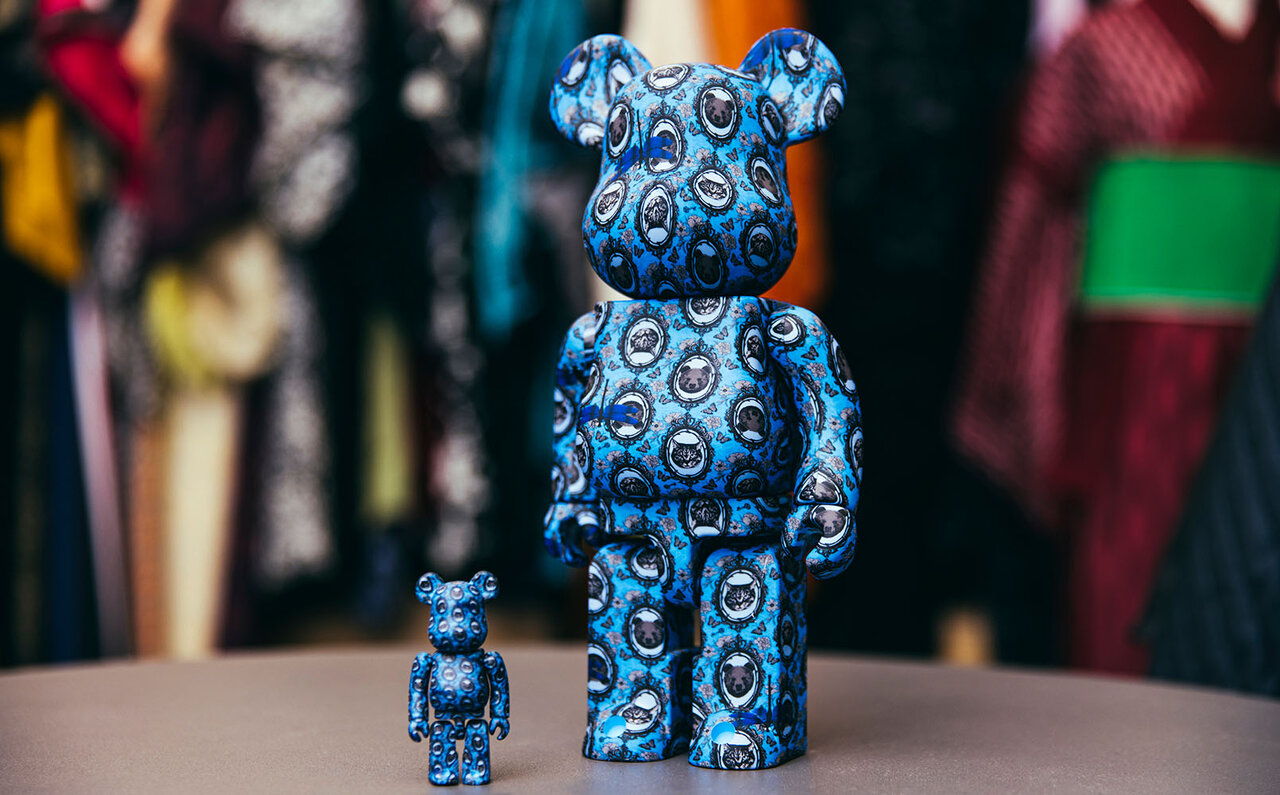
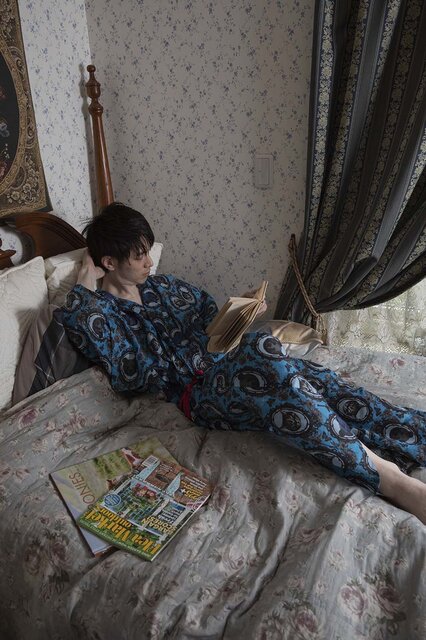
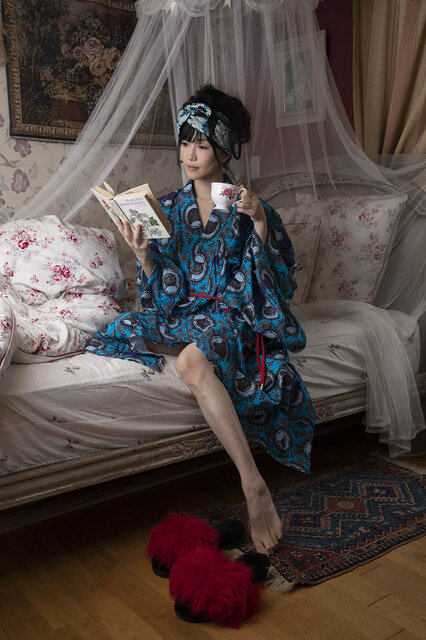
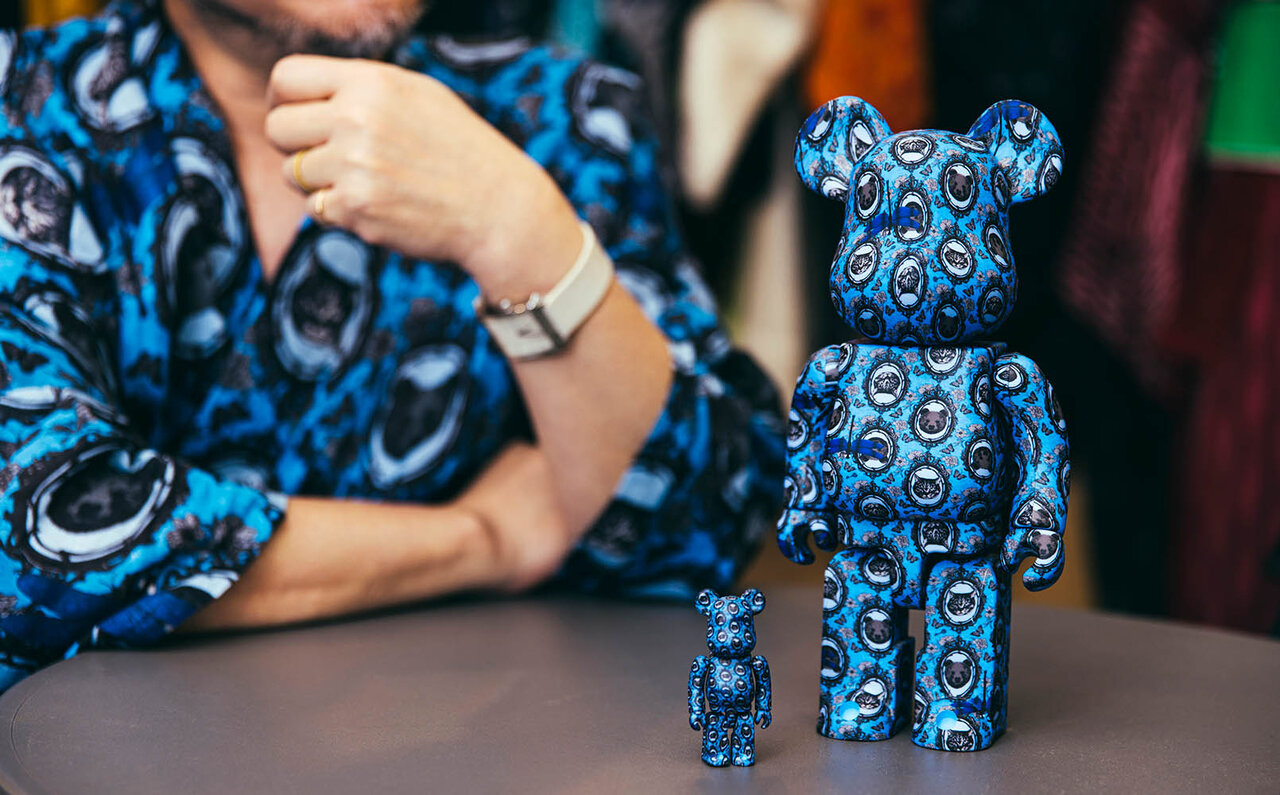
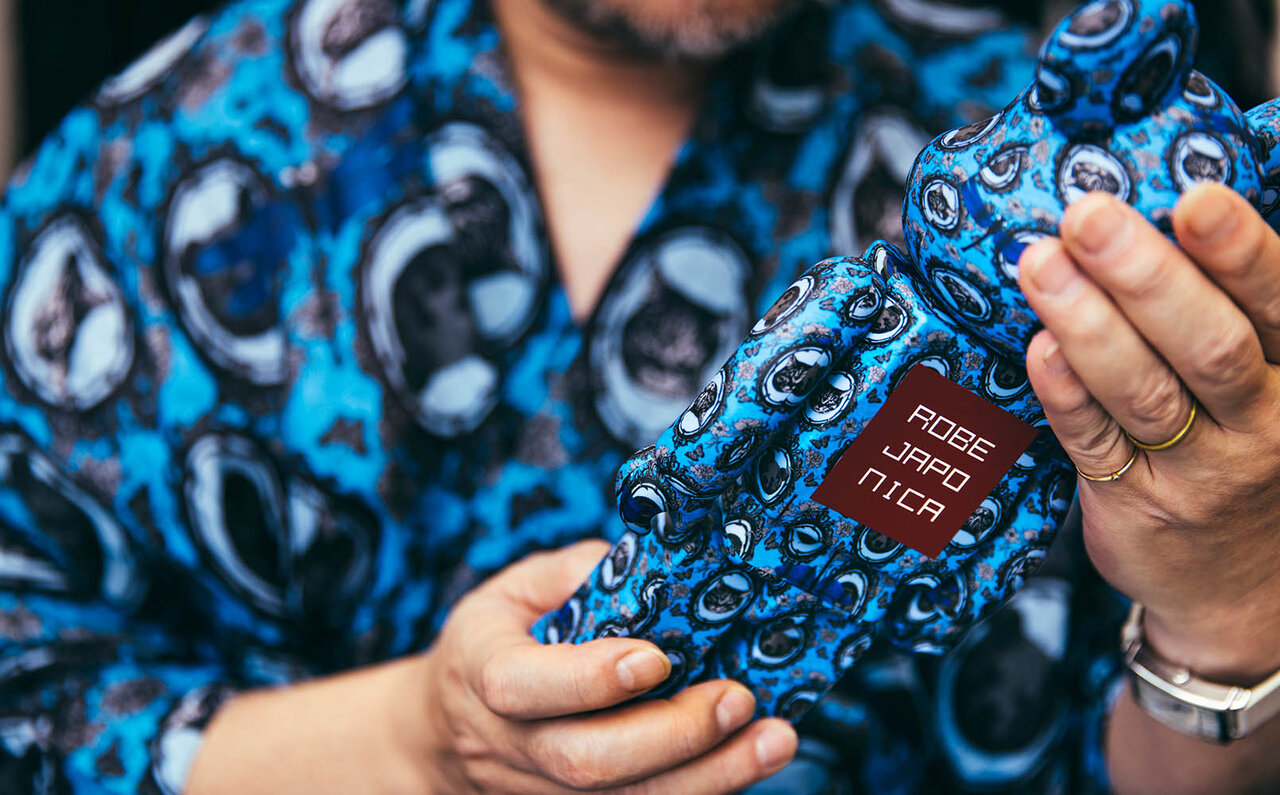
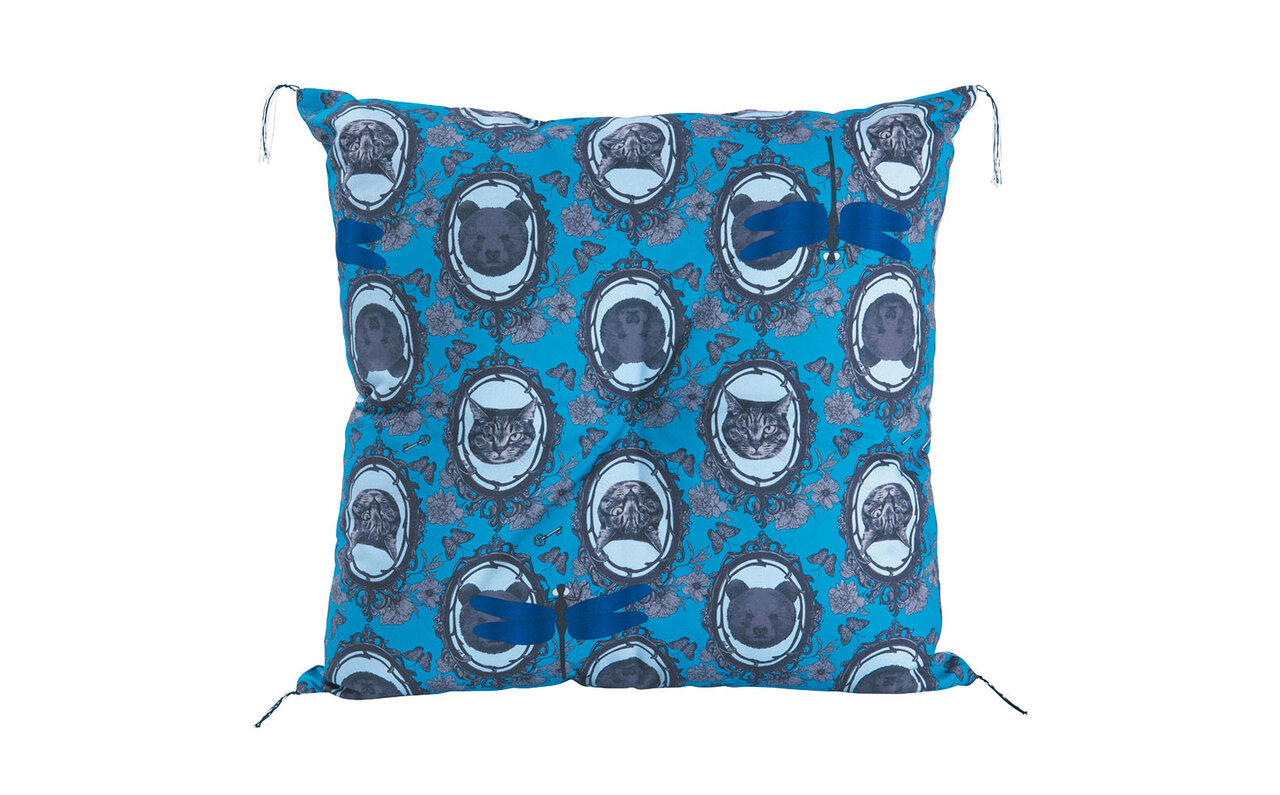
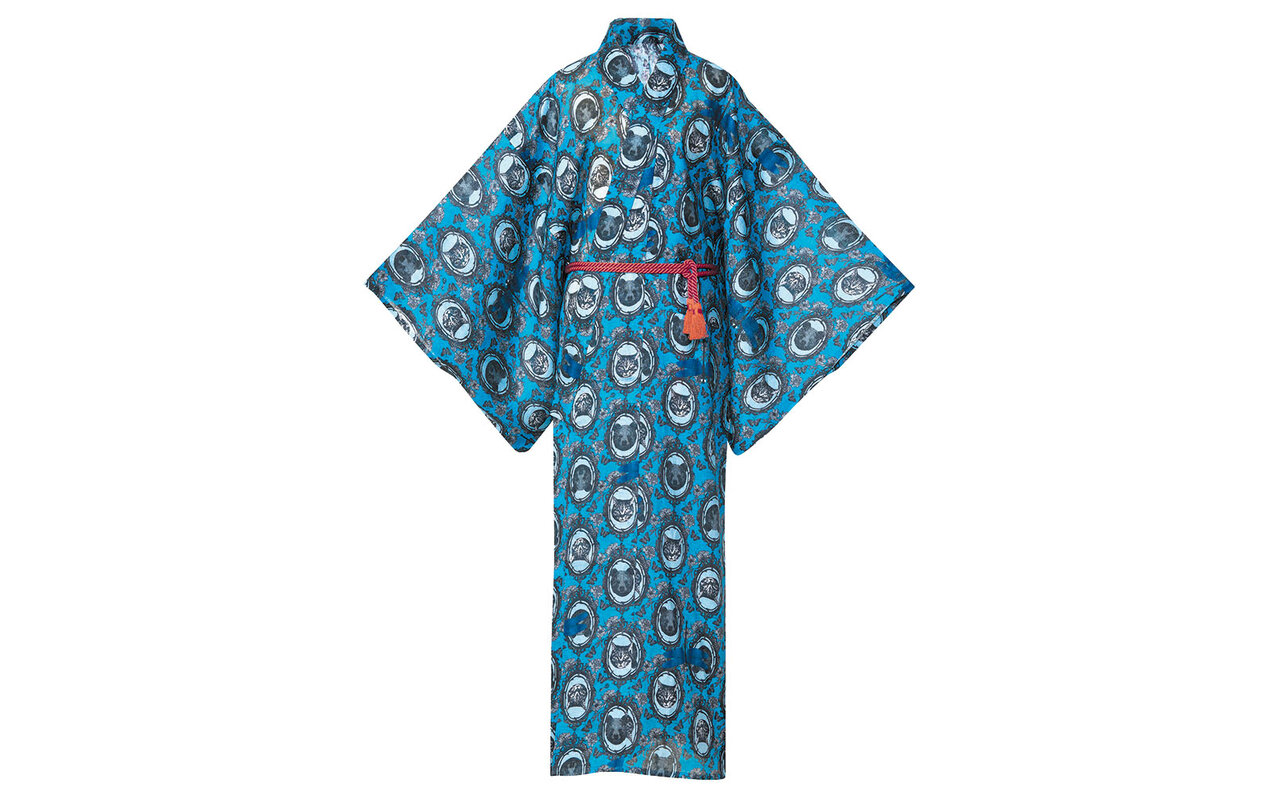
ROBE JAPONICA, a kimono and yukata brand based in Harajuku, Tokyo, has been transformed into a BE@RBRICK through a collaboration with Medicom Toy. Furthermore, the MLE (MEDICOM TOY LIFE ENTERTAINMENT) project, which develops products for everyday enjoyment centered around original textiles, will release drawstring bags, zabuton cushions, and other fabric items in the same pattern, as well as kimono gowns.
Text by SHINNO Kunihiko | Photographs by NAGAO Masashi | Edit by TOMIYAMA Eizaburo
The Aesthetics of "Wearing Modern Japan"
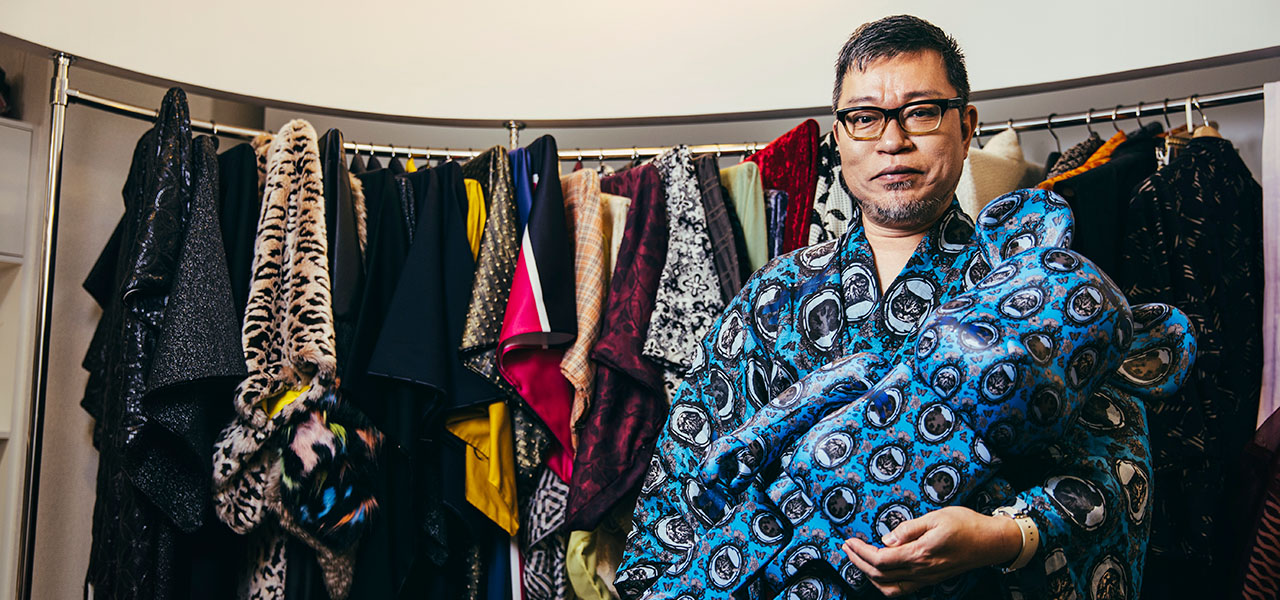
ROBE JAPONICA was founded with the theme, "I like fashion more than kimonos," stemming from the desire to incorporate Japanese clothing into everyday fashion as real clothes. While respecting the merits of traditional kimonos, the brand infuses them with modern essences in materials, colors, and patterns to convey "fashion for today." We spoke with Taro Ueoka, the representative and designer of the globally popular ROBE JAPONICA, about his journey from brand launch to this collaboration and his future outlook.
— When did "ROBE JAPONICA" start?
We announced the brand at Design Festa Gallery Harajuku in July 2015 and opened our current store (1F, San Beauty Harajuku, 3-25-6 Jingumae, Shibuya-ku, Tokyo) in December. It's our seventh year. The brand name "ROBE JAPONICA" was deliberately chosen as a foreign word to resonate with international audiences, meaning "kimono is Japan's robe."
— Was Harajuku the initial location you had in mind?
Yes, it was. It's a mecca for fashion. Harajuku is also an interesting district; Takeshita Street, Omotesando, Meiji Street, and this Ura-Harajuku area all have distinct fashion concepts. I've always had the image of Harajuku as a place that embraces all kinds of fashion. So, I thought, why not include kimonos? That's why I intended to open the first store in Harajuku. While kimono shops are often found in Ginza or Nihonbashi in Tokyo, I felt Harajuku was the only place to appeal to people as everyday fashion. Rent is high in Harajuku, which makes it challenging, but...
I knew we could reach people online, but I personally have reservations about buying clothes online. Without trying them on, you can't really know about the comfort, texture, or pattern size, can you? Especially with kimonos, many people who aren't familiar with them might think, "I'd have to learn how to wear it first, wouldn't I?" So, I wanted a physical store where I could explain in person, "No, they're easy to wear, and kimonos are cool." Although rent is high in Harajuku, making it difficult. We also do wholesale and hold pop-up events so people outside of Tokyo can experience our products. Last year, we held them in Hakata, Osaka, and Yurakucho.
— You also offer many unique kimono designs, such as quilted and rider's jacket styles.
What you see here is the 2021 A/W OUTERWEAR collection.
Our main products are original kimonos, haoris, yukatas, coats, and obi sashes. Recently, we've also focused on original footwear like zori and geta sandals. While we primarily cater to men, our summer yukatas are unisex. For autumn and winter collections, we accept custom orders for women as well. We avoid materials that are expensive or difficult to handle, focusing on casual cotton, linen, and wool. We also actively incorporate materials not typically used in kimonos, such as velvet, georgette, vinyl, and leather.
— Have you been designing kimonos for a long time?
No, I used to work at a newspaper company. I worked as a reporter for 20 years and even became a desk editor.
— Why did you decide to enter the fashion world?
Newspapers are about accurately reporting what happened, right? While that's certainly important, in a way, it lacks creativity. I took pride in my work as a media professional, but I always wanted to create something new with my own hands and add color to the world.
Then, kimonos came to mind. My family runs a temple, and my grandmother was a seamstress, so I grew up surrounded by Japanese clothing. However, men's kimonos were limited to navy, gray, brown, beige, and dark green. I felt a sense of dissatisfaction with the lack of variety in colors and patterns.
When I was growing up, the DC brand boom was in full swing, and we saw men's skirts and masculine women's jackets. With the Equal Employment Opportunity Act for Men and Women and the move towards genderless fashion in the Western clothing world, I expected someone to eventually release fashionable men's kimonos. But the items I wanted never appeared. Kimonos seemed bound by a fixed notion of what they should be.
I wanted to break that mold. I had worked for 20 years, which felt like a natural point to transition, so I decided to become a designer.
— So, you started from scratch?
Yes. After leaving the newspaper company, I studied textiles at a university of the arts while attending Adobe classes at night. Nowadays, you need to know Illustrator and Photoshop to create designs, right? Since I had no connections, I went to NTT and looked through the national phone directory, calling everywhere from Hokkaido to Okinawa to find dyeing and sewing factories. Many were home-based businesses without websites, so the phone book was my only resource.
I wasn't aiming to create traditional kimonos, so I first needed them to understand my vision. I also wanted to keep prices down, as I believe cost is a major reason why kimonos haven't become more widespread. It took me two to three years to find manufacturers who understood my approach.
— What kind of customers do you typically have?
The age range is wide, from teenagers to people in their 60s and 70s. Surprisingly, there aren't many "kimono men" in the traditional sense, but generally, our customers have a high sense of fashion. They tend to see kimonos as another item to wear because they like fashion, rather than being solely interested in kimonos themselves.
When First Summer Uika wore our product on Akashiya Sanma's show the year before last, the response was tremendous. I truly understood what it means to "go viral." We also received many inquiries when we designed the costumes for the comedy duo Suehirogari's first solo live performance.
Also, given Harajuku's location, we get many international visitors. Among them, Adam Clayton, a member of the world-renowned band U2, is a regular customer. Katy Perry also visited us.
We've also had collaboration offers from J.League and professional baseball teams, for whom we've developed official yukatas. Perhaps it's because we do things that the traditional kimono industry might not.
We don't actively promote ourselves on social media, but I'm grateful that we've been able to continue for seven years in Harajuku.
— This time, in collaboration with Medicom Toy, you're releasing BE@RBRICKs and MLE items featuring your "MIRROR" pattern.
It came about through a fortunate connection. BE@RBRICK has collaborated with prestigious institutions like the Louvre Museum and the British Museum, hasn't it? So, when I received the offer, I thought, "Are they sure they want to work with us?"
The "MIRROR" pattern was originally for a yukata two years ago. During discussions with Medicom Toy, this pattern was suggested first.
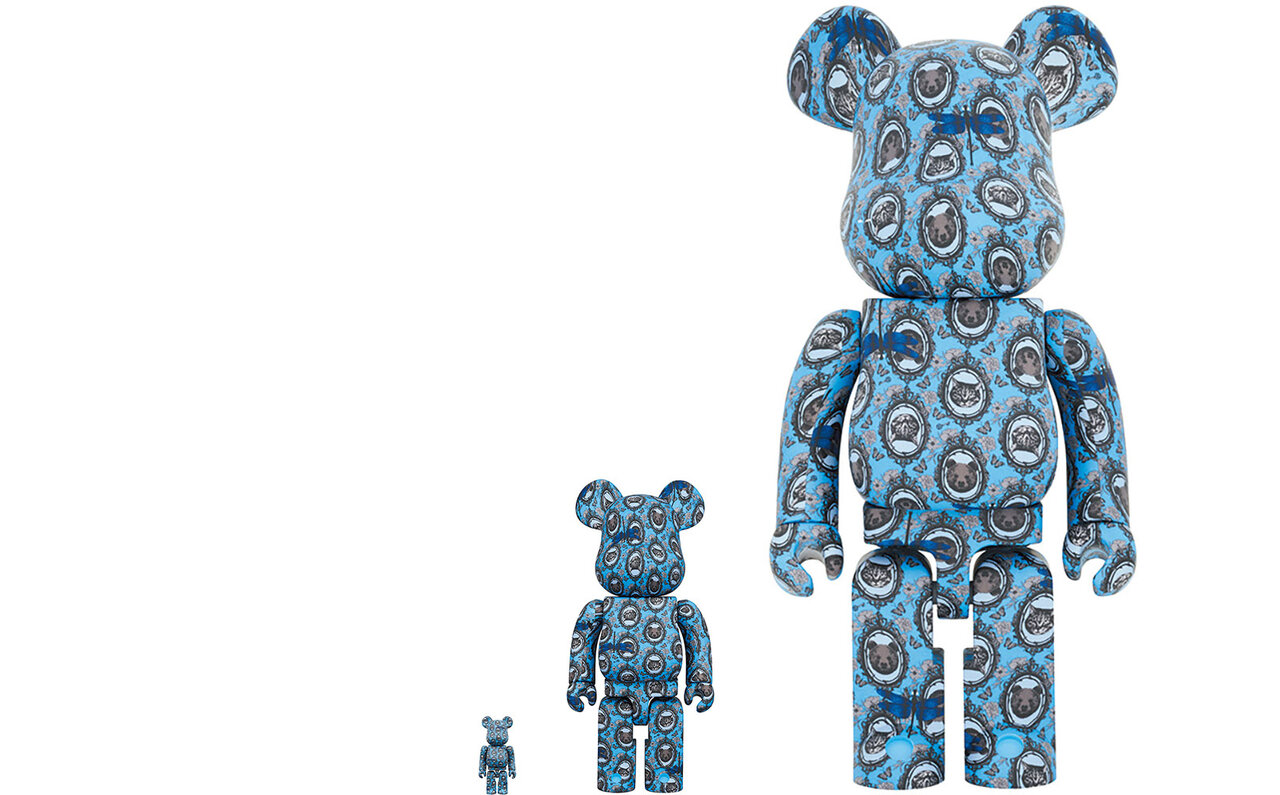
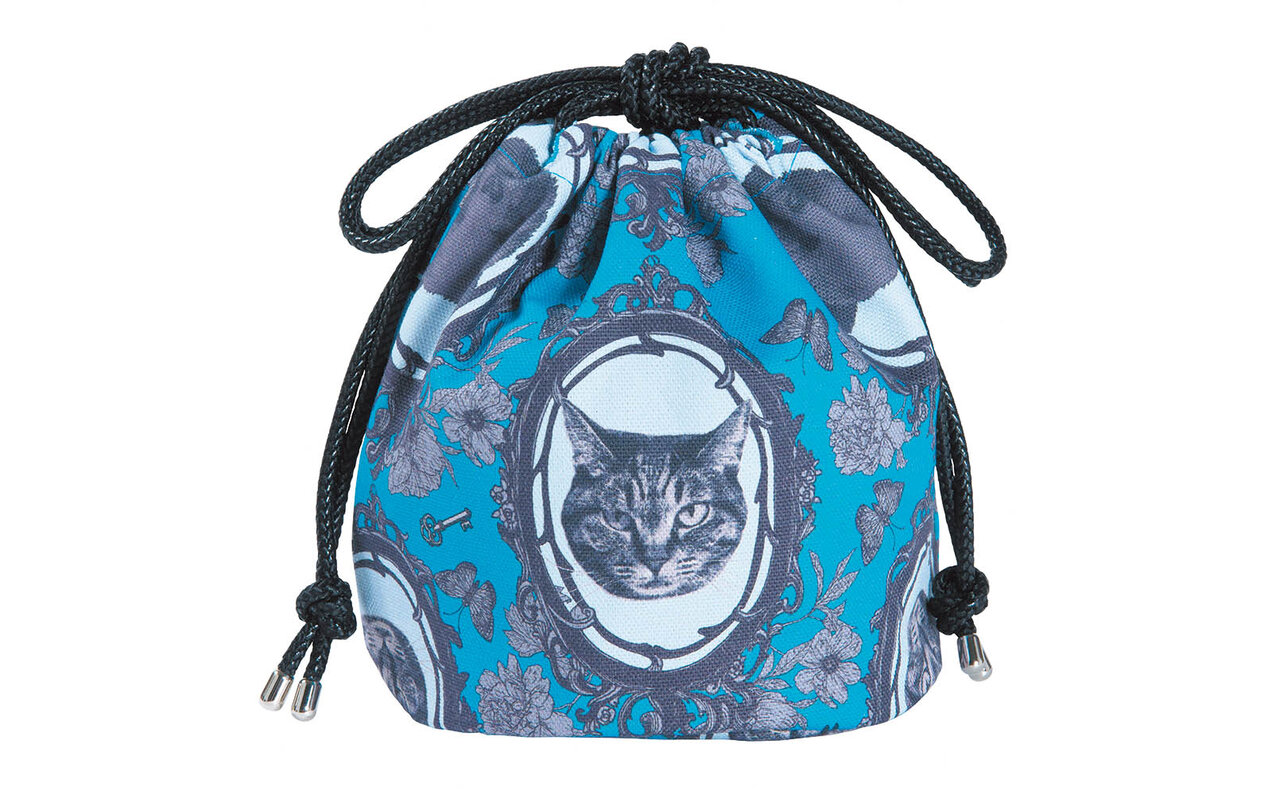
— Inside the mirror, there are a "bear" and a "cat," with "butterflies" and "dragonflies" flying around them.
Bears are popular with children and often seen as cute animals, but they are actually ferocious and can kill people, aren't they? Cats, while loved by many, can also be capricious and selfish. These animals have contrasting images.
Butterflies can't fly in a straight line, while dragonflies can only fly straight. By placing these contrasting elements together, I wanted to express the duality of front and back, the two sides of a mirror.
Is what's reflected in the mirror reality or an illusion? Today's world, with fake news as a prime example, is a confusing place where it's hard to distinguish truth from falsehood. The "MIRROR" design was created with that sentiment in mind.
Our brand isn't bound by tradition or formality just because it's kimonos; we aim to "translate" them into fashion. Therefore, there's no need for it to be a traditional Japanese pattern, nor is silk a requirement. That's why we're located in Harajuku.
— Although it's still a sample, what are your impressions of the BE@RBRICK?
I sent them an actual kimono. I was impressed that the color I was most particular about was reproduced so faithfully. The blue part, in particular, has a gray pattern when you look closely, and that detail is quite well-rendered. For the drawstring bag and zabuton cushion in the same pattern, you'll appreciate the pleasant texture as they are made of linen.
Since I specialize in textiles, I'm grateful that they are promoting both figures and fabric items together. BE@RBRICK has fans all over the world, so I hope this opportunity will allow many people to discover the enjoyment of Japanese clothing.
— It seems likely that more people will be paying attention to kimonos as real clothes this summer.
Kimonos are truly profound. You can even store your smartphone or wallet in the inner sleeve. And even if your body shape changes, you can adjust the fit by simply overlapping the front panels, so they won't become unwearable like Western clothes can.
ROBE JAPONICA plans to release about 50 yukata patterns this summer as well, so please look forward to them.
BE@RBRICK ROBE JAPONICA "MIRROR" 100% & 400% / 1000%Size | Approx. 70mm / 280mm / 700mm in height for each
Price | [100% & 400%] ¥16,500 (incl. tax) / [1000%] ¥63,800 (incl. tax)
Sales Method | Orders will be accepted from January 24, 2022 (Mon) 00:00 to February 10, 2022 (Thu) 23:59 at MCT TOKYO (
http://mct.tokyo) and ROBE JAPONICA stores. They will subsequently be available at Medicom Toy's directly managed stores, online stores, and other select retailers.
Release Date | Scheduled for release and shipping in June 2022
*As this is a limited edition product, sales will end once stock is depleted.
©️ 2022, ROBE JAPONICA
BE@RBRICK TM & ©️ 2001-2022 MEDICOM TOY CORPORATION. All rights reserved.
KINCHAKU BAGSize | W480mm × H765mm
Price | ¥9,350 (incl. tax)
Main Material | Linen
Sales Method | Orders will be accepted from January 24, 2022 (Mon) 00:00 to February 10, 2022 (Thu) 23:59 at MCT TOKYO (
http://mct.tokyo) and ROBE JAPONICA stores. They will subsequently be available at Medicom Toy's directly managed stores, online stores, and other select retailers.
Release Date | Scheduled for release and shipping in June 2022
*As this is a limited edition product, sales will end once stock is depleted.
ZABUTONSize | W490mm × H490mm
Price | ¥13,200 (incl. tax)
Main Material | Linen
Sales Method | Orders will be accepted from January 24, 2022 (Mon) 00:00 to February 10, 2022 (Thu) 23:59 at MCT TOKYO (
http://mct.tokyo) and ROBE JAPONICA stores. They will subsequently be available at Medicom Toy's directly managed stores, online stores, and other select retailers.
Release Date | Scheduled for release and shipping in June 2022
*As this is a limited edition product, sales will end once stock is depleted.
KIMONO GOWNSize | MENS (XS, S, M, L, XL), WOMEN (S, M, L) *Includes tie belt *Full length tailoring.
Price | ¥55,000 (incl. tax)
Main Material | Linen
Sales Method | Orders will be accepted from January 24, 2022 (Mon) 00:00 to February 10, 2022 (Thu) 23:59 at MCT TOKYO (
http://mct.tokyo) and ROBE JAPONICA stores. They will subsequently be available at Medicom Toy's directly managed stores, online stores, and other select retailers.
Release Date | Scheduled for release and shipping in June 2022
*As this is a limited edition product, sales will end once stock is depleted.
Inquiries
Medicom Toy User Support
Tel. 03-3460-7555