Beyond Smartphones: The HUAWEI P20 Pro Camera Experience, Only with docomo|HUAWEI
Presented by HUAWEIHUAWEI Sponsored by HUAWEI Japan
Tomoyuki Tanaka (FPM) (1)
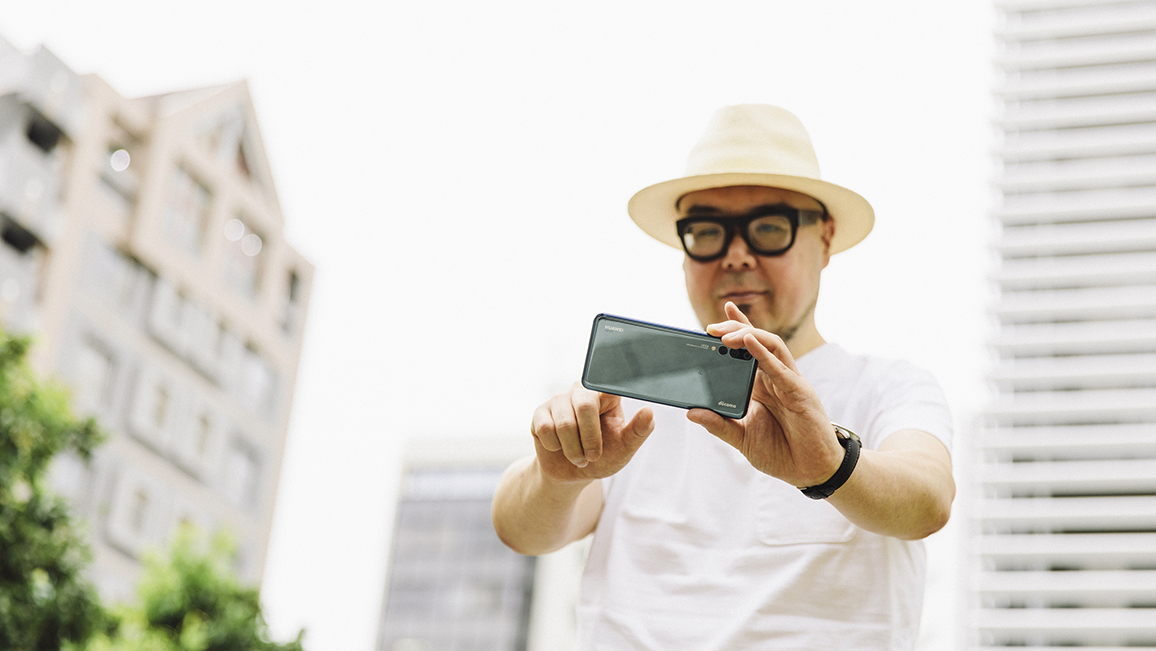
HUAWEI's high-end model, the "HUAWEI P20 Pro," which goes beyond the capabilities of conventional smartphone cameras, was released by docomo on June 15, 2018. Its key features include a Leica triple camera and AI assistance. The specifications are particularly noteworthy. The back of the device is equipped with three lenses: a 40-megapixel RGB lens, a 20-megapixel monochrome lens, and an 8-megapixel 3x telephoto lens. With an ISO sensitivity of 102400, it rivals digital SLRs in all aspects, allowing for bright photos even in low light conditions.
Seeing is believing. We asked Tomoyuki Tanaka, a DJ/producer, Leica owner, and connoisseur of Leica lenses, to use the device and share his impressions.
Photographs by NAGAO MasashiText by MOROOKA YusukeSponsored by HUAWEI Japan
Craftsmanship Inherited from Leica
"As expected from a camera supervised by Leica, the photo quality is outstanding. Plus, it's fast and easy to use because it's a smartphone. With an M-series Leica, there's a process to achieve a beautiful shot, making it difficult to capture such polished photos so quickly. The Q is also a full-frame compact with a fixed wide-angle lens, offering good mobility and beautiful shots, but the difference in field of view with and without zoom is significant, so I think the HUAWEI P20 Pro has a major advantage."
Tanaka, a Leica enthusiast, explained by drawing parallels between his usual Leica cameras and the advantages of the HUAWEI P20 Pro. While professional-grade photography is naturally achieved with Leica cameras, achieving such quality requires settings and skills, sacrificing spontaneity. However, Tanaka particularly favored photos taken casually, such as "a woman under a street tree" and "light piercing the night cityscape." He shared that these images possessed a Leica-like essence.
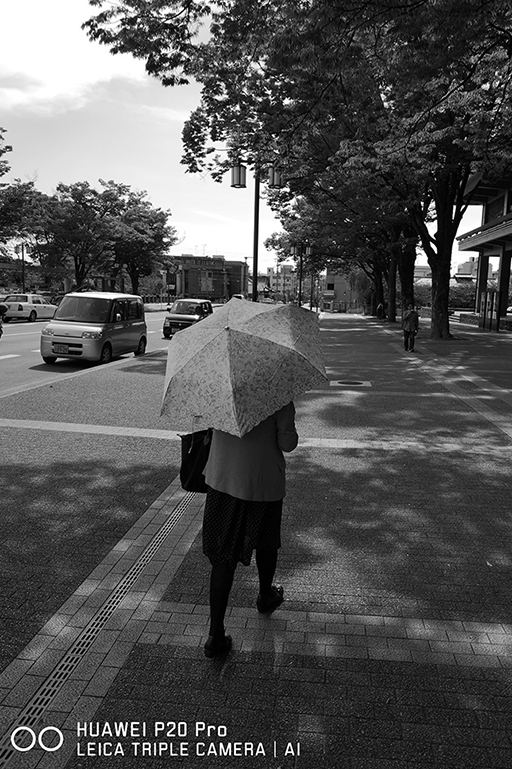
<Example 1>
ISO: 50
Shutter Speed: 1/2985s
Aperture: 1.6
EV: 0
Focal Length: 27mm (equivalent to 35mm film)
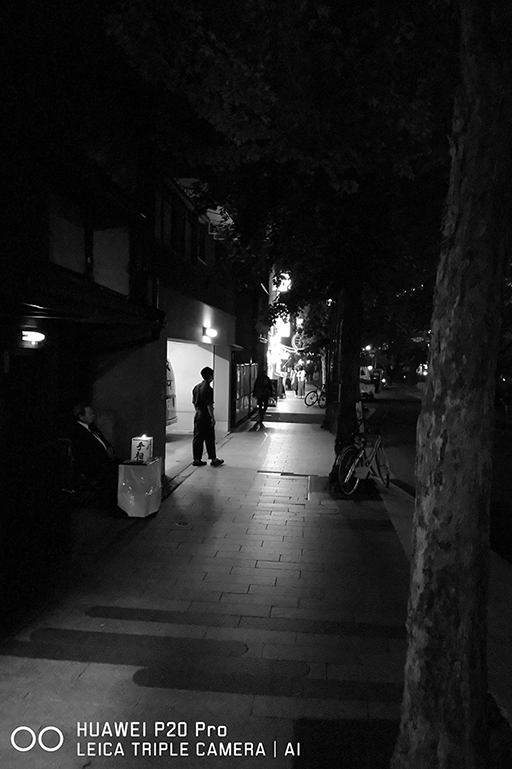
<Example 2>
ISO: 6400
Shutter Speed: 1/437s
Aperture: 1.6
EV: 0
Focal Length: 27mm (equivalent to 35mm film)
"What I found particularly Leica-like was the delicate rendering of light and shadow. Even casual shots had beautifully graded tones."
The exquisite detail rendered by the monochrome lens is one of the reasons the "HUAWEI P20 Pro" camera is globally acclaimed. He also felt Leica's dedication in the bokeh effect.
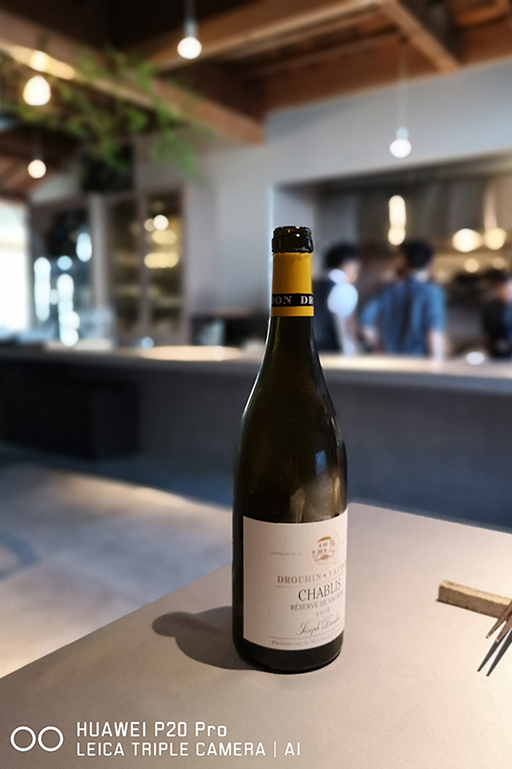
<Example 3>
ISO: 320
Shutter Speed: 1/25s
Aperture: 4
EV: 0
Focal Length: 27mm (equivalent to 35mm film)
<Example 3>
ISO: 320
Shutter Speed: 1/25s
Aperture: 4
EV: 0
Focal Length: 27mm (equivalent to 35mm film)
"When shooting with a Summilux on an M-series Leica, the subject appears almost cut out, and similarly, the wine bottle in <Example 3> is captured as if in a two-part composition. It's just a wine bottle, yet it commands such presence – that's the power of the lens. The sharp rendering also feels distinctly Leica."
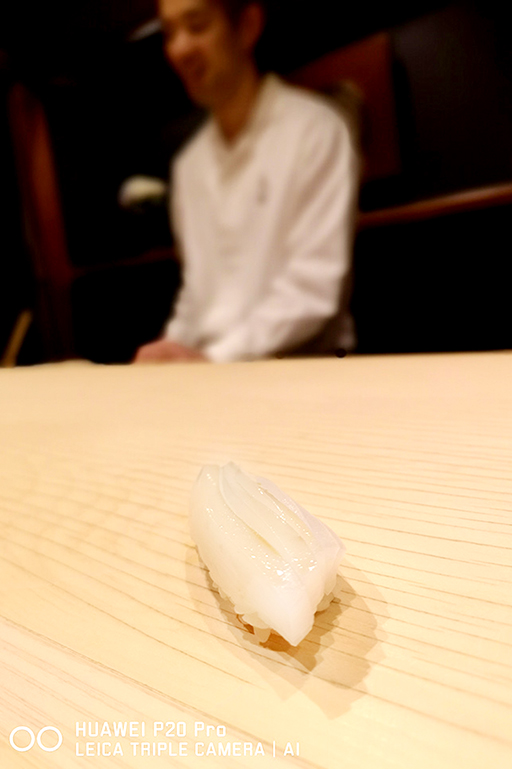
The squid nigiri, photographed at a sushi restaurant on another day, had a tantalizing appeal with a beautifully blurred background. Tanaka was particularly impressed by the bokeh effect in a portrait shot taken in a bright, open location.
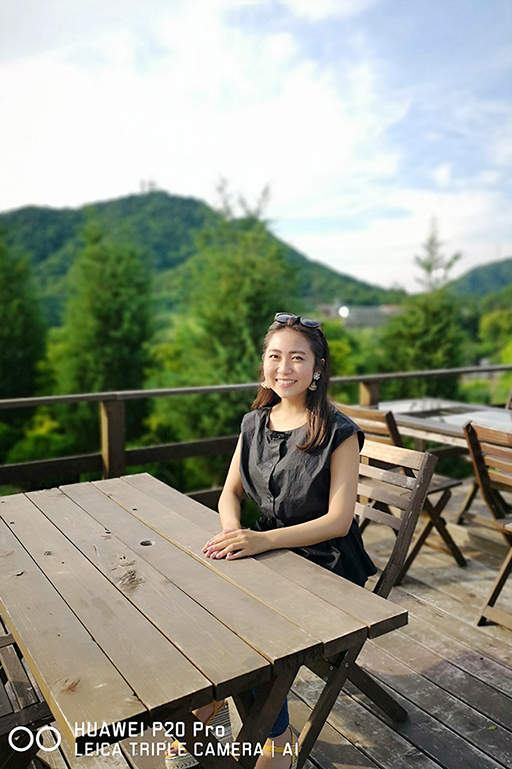
<Example 5>
ISO: 50
Shutter Speed: 1/591s
Aperture: 1.8
EV: 0
Focal Length: 27mm (equivalent to 35mm film)
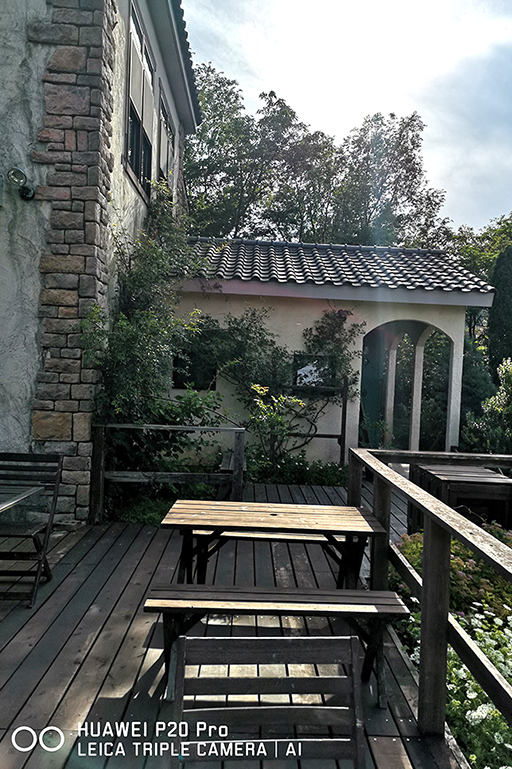
<Example 6>
ISO: 50
Shutter Speed: 1/303s
Aperture: 1.8
EV: 0
Focal Length: 44mm (equivalent to 35mm film)
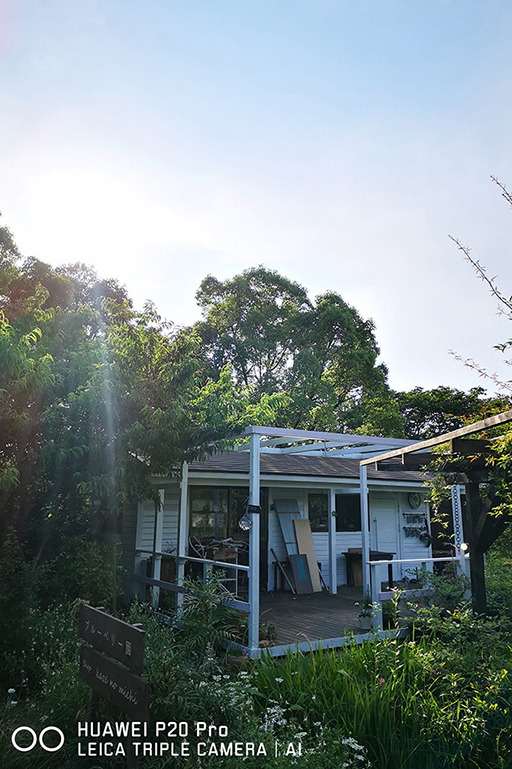
<Example 6>
ISO: 50
Shutter Speed: 1/303s
Aperture: 1.8
EV: 0
Focal Length: 44mm (equivalent to 35mm film)
"The portrait in <Example 5> has such incredible bokeh that words fail me. It looks like a studio portrait. When photographing people, the device's AI function automatically switches to 'Portrait' mode, applying optimal settings for capturing people, resulting in professional-quality photos like this example. He was also surprised by photos taken intentionally against the light."
"In <Example 7>, I tested the camera in a situation so bright from the sun that I couldn't open my eyes, yet while there was some halation, the shadows were still captured. Normally, this scene would be completely overexposed. At that moment, I realized this camera had completely surpassed the limits of smartphone cameras."
Page02. Zoom Power Beyond Smartphone Capabilities
HUAWEI Sponsored by HUAWEI Japan
Tomoyuki Tanaka (FPM) (2)
Zoom Power Beyond Smartphone Capabilities
The performance of the newly added 8-megapixel telephoto lens also exceeds the capabilities of a smartphone. Thanks to this new high-quality telephoto lens, you can get closer to the subject while maintaining exceptional detail, even with 3x zoom. Furthermore, by combining it with the 20-megapixel monochrome sensor, photos can be taken with significantly reduced image degradation up to 5x zoom. Digital zoom allows for shooting up to 10x. Let's look at some examples that showcase its rendering power, as captured by Tanaka.
"I wanted to see how far the zoom would go. The landscape in <Example 8> is close to what I saw with the naked eye. I took it from a vantage point overlooking Kobe city from a mountain. My honest impression was, 'Can a smartphone lens capture this?' Looking at the zoomed-in <Example 9>, you can see the fine details of the buildings."
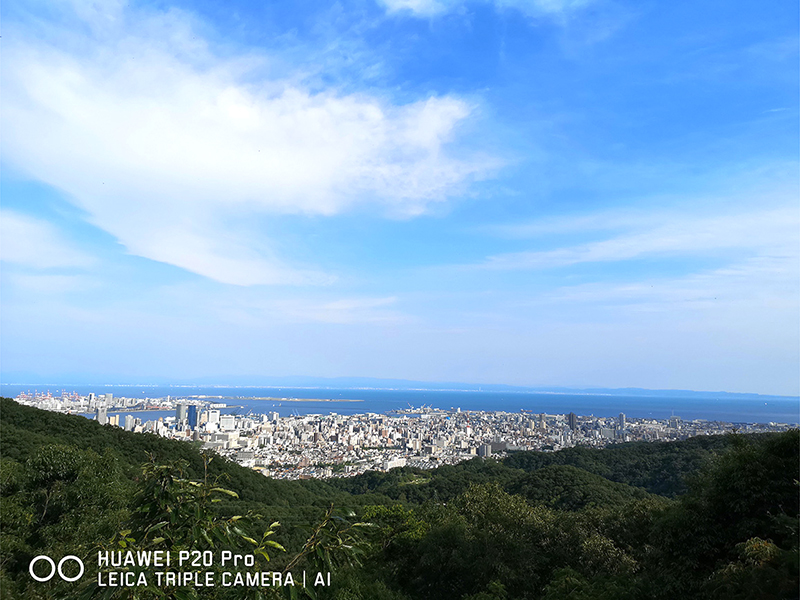
<Example 8>
ISO: 50
Shutter Speed: 1/3559s
Aperture: 4
EV: 0
Focal Length: 27mm (equivalent to 35mm film)

<Example 9>
ISO: 50
Shutter Speed: 1/1325s
Aperture: 1.8
EV: 0
Focal Length: 270mm (equivalent to 35mm film)
A lens that captures details invisible to the naked eye. Image stabilization works effectively, preventing blur. Furthermore, it sharply captures the intricate details of buildings. As Tanaka mentioned, zoom capabilities expand the range of possible shots and broaden expressive possibilities.
In landscape shots like <Example 8>, where the sky takes up a large portion, the AI recognizes "blue sky" and enhances its saturation, creating a vibrant blue. Next, let's introduce the "AI" function, which has been mentioned several times.
Ambitious Compositions Made Possible by AI Assistance
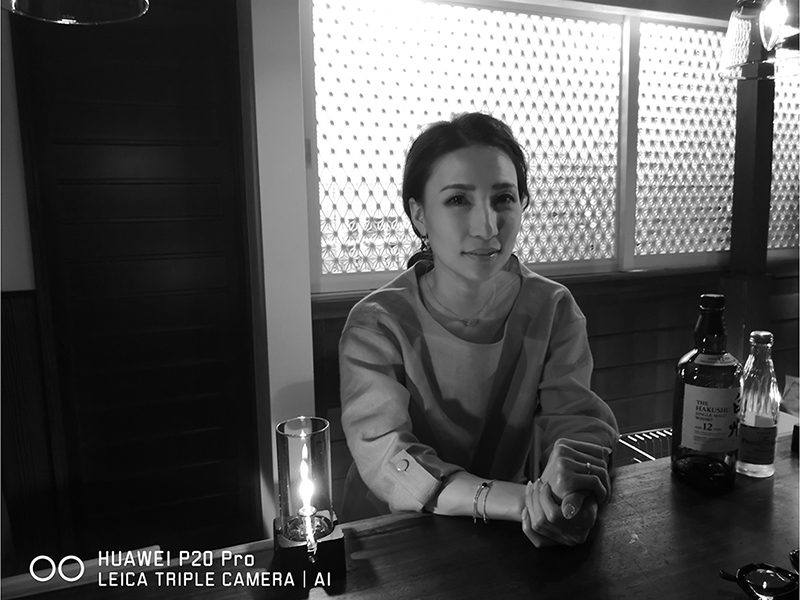
<Example 10>
ISO: 640
Shutter Speed: 1/17s
Aperture: 1.6
EV: 0
Focal Length: 27mm (equivalent to 35mm film)
The high-quality photos produced by the HUAWEI P20 Pro are not solely due to the lens performance. The AI functions built into the device play a significant role. For example, the AI recognizes subjects and automatically sets one of 19 shooting scenes, selecting the optimal shooting method. Additionally, the "AI Image Stabilization (HUAWEI AIS)" uses AI to predict shake and reduce it in conjunction with optical image stabilization, enhancing photo quality in all scenarios.
"The camera's performance didn't falter even in night scenes. For instance, in <Example 10>, there's a window with lights behind it. With conventional cameras, you'd need to calculate aperture and shutter speed to avoid underexposing the subject's face. When I casually pressed the shutter on the HUAWEI P20 Pro and it captured the facial details so clearly, I truly felt it was an intelligent camera."
Looking at photos of nightscapes, Tanaka continued.
"I usually adjust settings manually based on the situation, but AI assistance is ultimately convenient. While I felt the limitations of a smartphone regarding perspective in buildings, the depth within a single photo, and the clarity of colors and outlines of each subject were truly impressive."
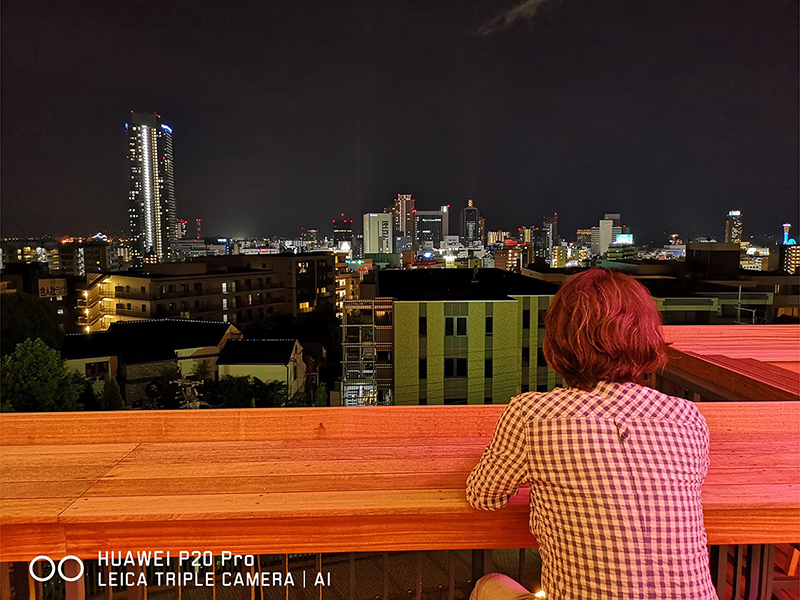
<Example 11>
ISO: 800
Shutter Speed: 4s
Aperture: 1.8
EV: 0
Focal Length: 27mm (equivalent to 35mm film)
<Example 11> clearly demonstrates the cohesive rendering Tanaka mentioned. Typically, if the exposure is set for the foreground subject, the background becomes crushed. However, in this example, the night view is also depicted clearly. The AI assist function reproduces scenes closer to what the human eye perceives. Here, the "Night Scene" mode, automatically recognized by AI, contributes to the high-quality photograph. The secret lies in the AI's processing power, which synthesizes multiple images captured by the three lenses into one in a matter of seconds. Tanaka's examples showcase the full potential of the HUAWEI P20 Pro's AI assistance.
However, we're not done yet. We will delve further into the potential of the HUAWEI P20 Pro. On the next page, we will introduce the artistic rendering capabilities of the 40-megapixel RGB lens through the works of photographer Sayo Nagase.

Tomoyuki Tanaka (FPM)
DJ / Producer
In addition to his own work, he has provided music for numerous artists. As a remixer, he has worked on over 100 tracks for artists such as Tokyo Ska Paradise Orchestra, Sakanaction, and Quruli. As a DJ, he has visited all prefectures in Japan and played in approximately 60 cities worldwide. Beyond his music career, he possesses deep knowledge of vintage clothing and watches. He is also a Leica enthusiast.
http://www.fpmnet.com/
Page03.Artistic Photography Captured with the HUAWEI P20 Pro by a Photographer
HUAWEI Sponsored by HUAWEI Japan
Artistic Photography Captured with the HUAWEI P20 Pro by a Photographer (3)
The HUAWEI P20 Pro utilizes its three lenses (color, monochrome, and telephoto) selectively based on the subject and scene. Because each lens captures information—such as color and detail—that a single lens cannot fully process, the device boasts high-definition rendering capabilities. We will continue to convey the power of these high specifications through photographs. This time, we asked Sayo Nagase, a photographer active both domestically and internationally, to capture everyday life from an artist's perspective using the HUAWEI P20 Pro.
Photographs by NAGAO MasashiText by MOROOKA YusukeSponsored by HUAWEI Japan
Photographic Emotion Revealed Through the Contrast of Light and Shadow
The true value of the Leica triple camera cannot be understood through numbers alone. Real-life photographs and the words of the photographer are essential. We asked Nagase about her impressions of the images produced by the HUAWEI P20 Pro.
"What I like about this camera is the beauty revealed by the contrast of light and shadow. For example, a photo focused on a red berry illustrates this well. The red berry is emphasized by sunlight, contrasting with the shadow of the leaves. The beautiful rendering of the dark shadow areas adds emotion to the photograph. It felt closer to film contrast than digital."
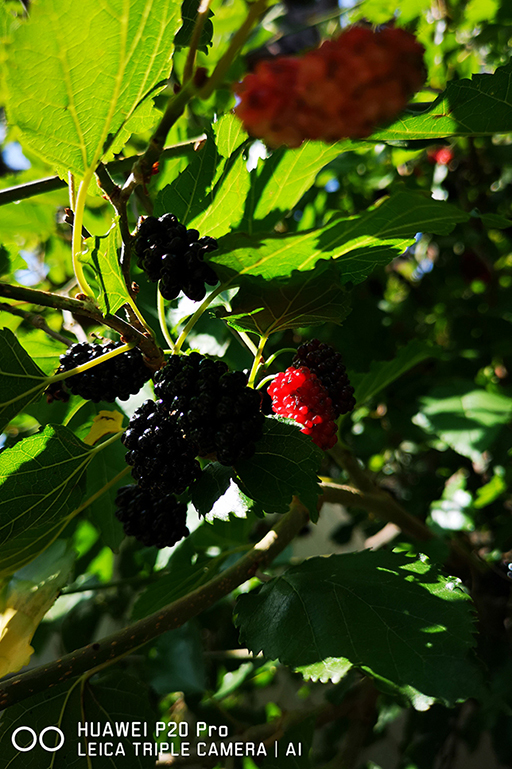
ISO: 50
Shutter Speed: 1/745s
Aperture: 1.8
EV: 0
Focal Length: 27mm (equivalent to 35mm film)
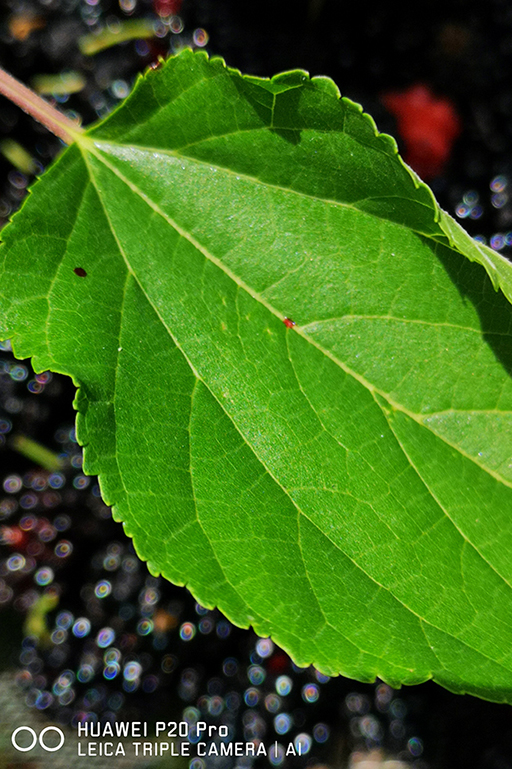
ISO: 50
Shutter Speed: 1/1642s
Aperture: 1.8
EV: 0
Focal Length: 57mm (equivalent to 35mm film)
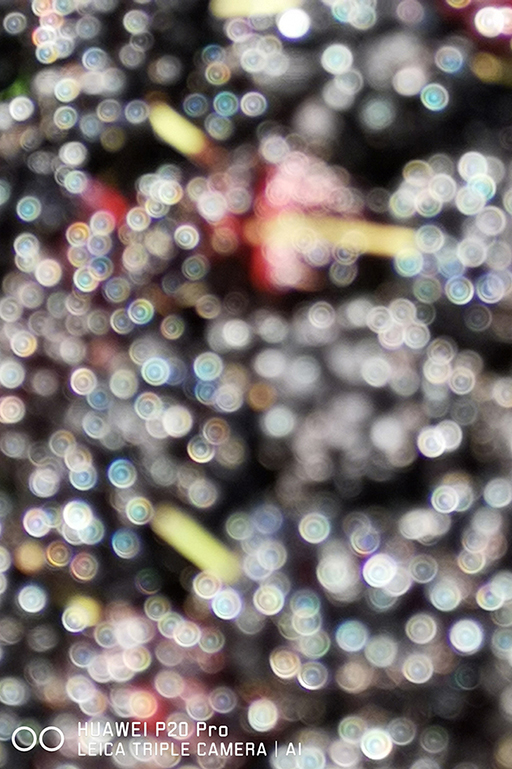
ISO: 50
Shutter Speed: 1/316s
Aperture: 1.8
EV: 0
Focal Length: 109mm (equivalent to 35mm film)
The AI also functions when photographing plants. It recognizes "grass and trees" and beautifully emphasizes the colors of the fruit and the shadows of the leaves. Nagase further utilized "bokeh" to capture the details of her subjects. She found a Leica-like quality when experimenting with this bokeh effect.
"In the photo focused on a leaf, the edges around the leaf are sharply defined, and the veins are reproduced clearly. Furthermore, in the out-of-focus background, the light reflected on the fruit appears as distinct rings. I found the shape of this bokeh beautiful, so I focused on the leaf in the foreground and zoomed in to fill the frame, utilizing the bokeh. The result was a photo where the beautiful ring-shaped bokeh was emphasized, looking like sparkling stars. Isn't this exquisite bokeh something that can be called Leica-like?"
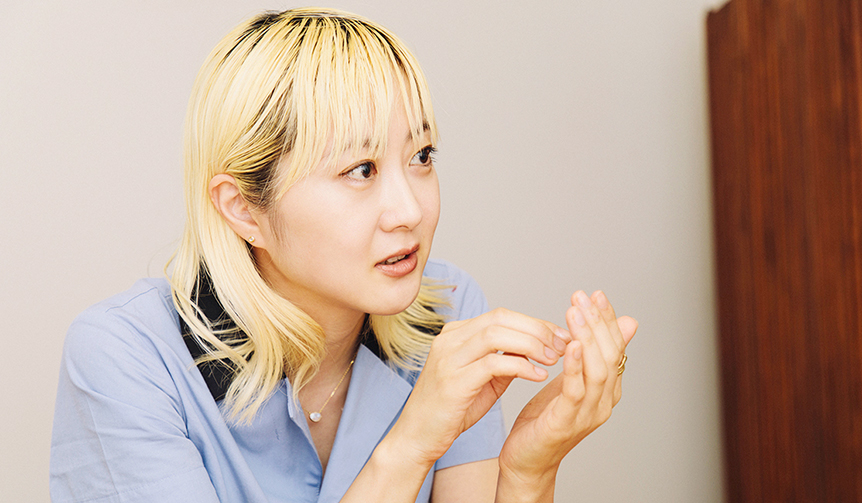
Sayo Nagase
The strong commitment to the Leica triple camera is evident in the stars that fill the frame without losing coherence. We've seen the camera's potential through its contrast of light and shadow, high-definition rendering, and bokeh. But what about the color reproduction of the 40-megapixel RGB lens? How does a photographer perceive and capture the colors scattered throughout daily life? Let's explore through her work.
Renderings with a Sense of Allure
Nagase found it more interesting to use the 40-megapixel RGB lens to capture subjects with rich colors and textures in close-up. Her work clearly shows the texture of the subjects. In Nagase's words, it's a rendering that has "sheen" and evokes a sense of "allure."
"The rendering power obtained from high resolution. This level of glossy texture is comparable to a digital SLR. I appreciate that it captures the viscous texture of paint. If taken with a smartphone, it would appear more matte, but this camera has a rendering capability that conveys the allure of the subject. The camera's spotlight, used to achieve this sheen, also does a great job."
By focusing on a part of the subject and getting so close that its entirety is not discernible, the viewer can perceive the allure and beauty of the "subject" without preconceptions. The HUAWEI P20 Pro also excels at close-up shots, automatically switching to macro mode. When shooting up close, it's important to be mindful of your own shadow. This device features optical zoom that allows you to get up to 3x closer while maintaining high image quality, and a high-resolution image sensor that minimizes image degradation. As seen in this series of works, when shooting up close, the key is to leverage this advantage by maintaining a slight distance.
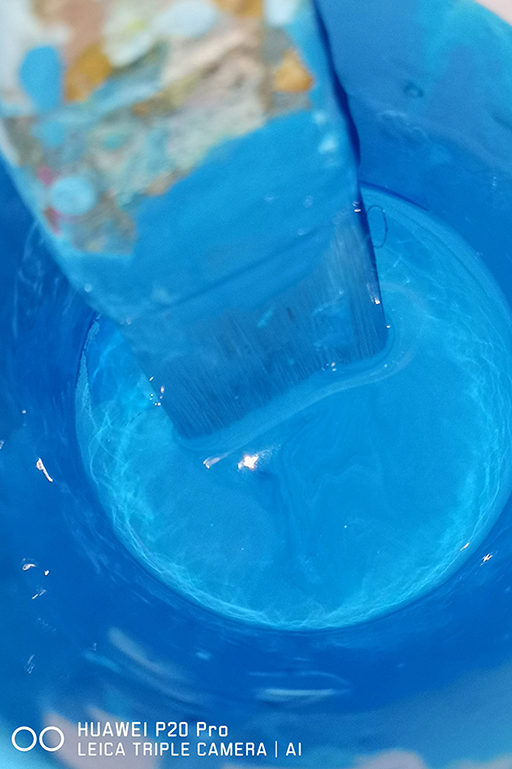
ISO: 125
Shutter Speed: 1/50s
Aperture: 1.8
EV: 0
Focal Length: 61mm (equivalent to 35mm film)
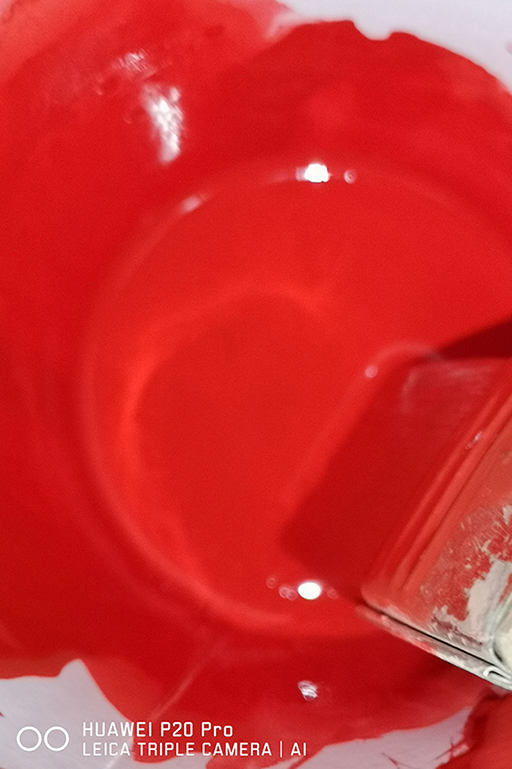
ISO: 160
Shutter Speed: 1/50s
Aperture: 1.8
EV: 0
Focal Length: 61mm (equivalent to 35mm film)
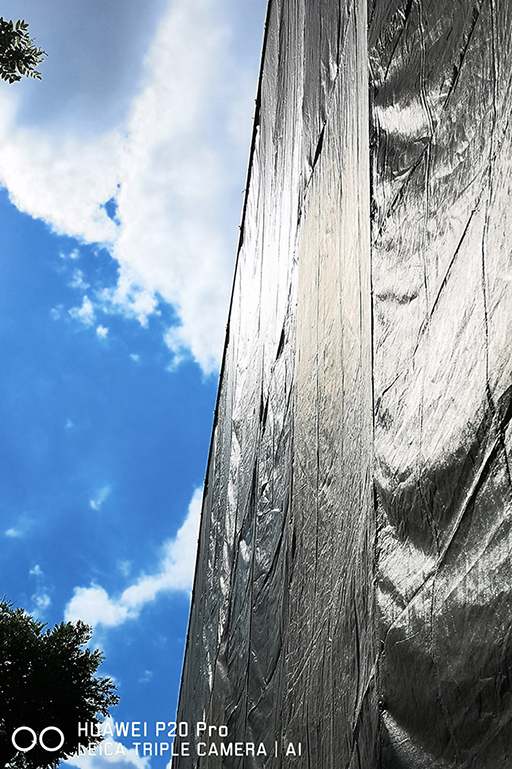
ISO: 50
Shutter Speed: 1/13158s
Aperture: 1.8
EV: 0
Focal Length: 52mm (equivalent to 35mm film)
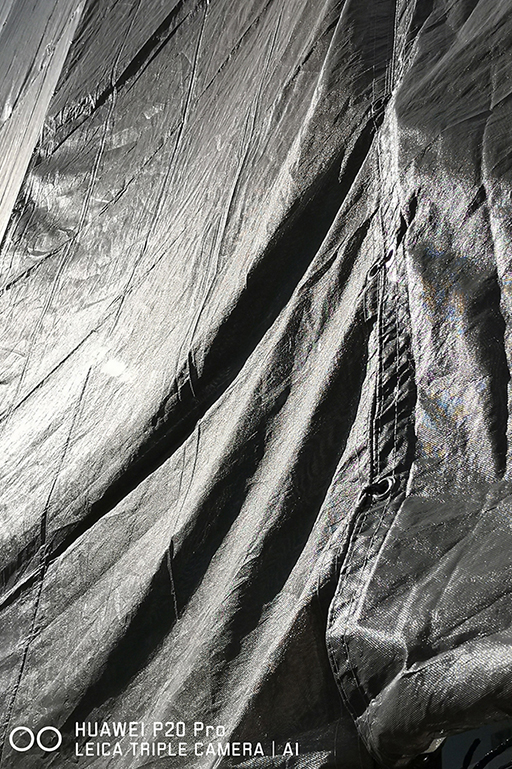
ISO: 50
Shutter Speed: 1/5650s
Aperture: 1.8
EV: 0
Focal Length: 52mm (equivalent to 35mm film)
The silver sheet at the construction site, reminiscent of a spaceship. Even when zoomed in, the texture is not lost, and the image, with its clear sky, looks like a collage of silver foil applied over a photograph. Here too, the AI recognizes "blue sky," enhancing its saturation to serve as an accent.
"With this camera, I was able to capture clear images with strong contrast. It handles light well, so the texture of the subject is beautifully rendered without being overpowered by the sunlight reflecting off the silver sheet. This applies to all the photos I took this time: the sharpness of the Leica lens is evident. The rendering has a painterly quality, so I think shooting graphically would yield even more interesting results."
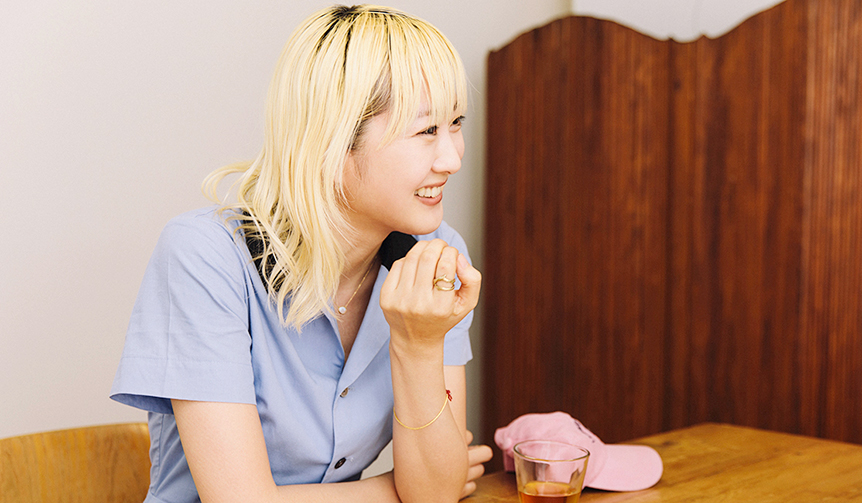
We also had Nagase use the AI assist function to take photos. What were her impressions of AI assistance as a photographer?
"While I was able to take many beautiful photos using the AI assist's corrections, it took time to achieve the exact image I intended. It felt like having two perspectives coexisting in one camera. It was a completely new experience, so I struggled to get used to AI assistance at first. However, when I started to think that perhaps there's charm in images that differ from my intention, I began to find AI interesting. It's like a newly acquainted couple taking time to understand each other and respect their individuality. We haven't spent much time together yet, so it feels more like friends who've just become close rather than partners, but perhaps by continuing to use it, I'll discover more of its charms."
Through Nagase's artistic works, we've explored the performance of the HUAWEI P20 Pro's Leica triple camera. With its overwhelming rendering power comparable to a digital SLR camera, boasting 40 megapixels, and its strength in both close-up and distant shots, it can be considered a new standard for cameras in this era. Simply point the lens at something you find appealing and press the shutter. Afterward, you're left with a professional photograph that captures the subject in fine detail. It seems that the HUAWEI P20 Pro truly allows for the capture of rich moments.

Sayo Nagase
Photographer
An artist and photographer based in Tokyo, and the founder of Yomogi Books. She has produced nine photo books to date. "Asphalt & Chalk" (2011) and "PINK LEMONADE" (2013) were published by the Stockholm-based "LIBRARYMAN" in Paris. In 2016, she held solo exhibitions and published photo books: "SPRITE" at AL (Ebisu, Tokyo) and "CUT-OUT" at GALLERY 360° (Omotesando, Tokyo). In November 2017, she held the "THE VOID" exhibition at GALLERY 360°, accompanied by a simultaneous photo book release.
http://www.nagasesayo.com/
Page04.What are the Specs of the docomo HUAWEI P20 Pro?
HUAWEI Sponsored by HUAWEI Japan
docomo HUAWEI P20 Pro (4)
Now Available from docomo
<Spec>
Manufacturer: HUAWEI
Display: Approx. 6.1-inch OLED (18.7:9)
Screen Resolution: 2240 x 1080 pixels
Dimensions: Approx. 74 x 155 x 7.9 mm
Weight: Approx. 180g
CPU: HUAWEI Kirin 970 4x2.4GHz + 4x1.8GHz (Octa-core)
Memory: 6GB
Storage: 128GB
OS: Android 8.1
Maximum Communication Speed: Downlink up to 988Mbps
Wireless LAN: IEEE802.11a/b/g/n/ac (2.4/5GHz compatible)
Camera Resolution: Rear: Approx. 40MP (RGB, F1.8), + Approx. 20MP (Monochrome, F1.6), + Approx. 8MP (3x Zoom, F2.4) / Front: Approx. 24MP (F2.0)
Battery Capacity: Approx. 3900mAh
Other Features: (FeliCa, Waterproof/Dustproof (IPX7/IP6X), Biometric Authentication (Fingerprint, Face))
USB Port: Type-C
Continuous Standby Time: LTE/3G (Approx. 330 hours / Approx. 360 hours)
Continuous Talk Time: LTE/3G (Approx. 920 minutes / Approx. 920 minutes)
Color Variations: Midnight Blue, Black
HUAWEI P20 Pro Purchase Campaign
・Campaign Overview|
Customers who purchase the HUAWEI P20 Pro at a store or the docomo Online Shop during the campaign period and apply for the campaign will receive 5,000 d points on a first-come, first-served basis for the first 10,000 applicants.
Customers who purchase the HUAWEI P20 Pro at a store or the docomo Online Shop during the campaign period and apply for the campaign will receive 5,000 d points on a first-come, first-served basis for the first 10,000 applicants.
*For details on application methods, please check the campaign website below.
・Campaign Site URL|
http://huawei-cpn.jp/
・Purchase Period|June 15, 2018 - August 31, 2018 (Friday)
・Application Period|June 15, 2018 - September 10, 2018 (Monday)
*This campaign is provided by HUAWEI Japan.
Finally Arriving from docomo! Commemorating the Launch of the "HUAWEI P20 Pro"!
Retweet Present Campaign!
・Campaign Overview|
From those who post on Twitter following the application flow, 5 winners will be selected by lottery to receive an "Amazon Gift Certificate up to ¥6,000" depending on the number of retweets.
・Prize Details|
If 2,000 retweets are achieved: "Amazon Gift Certificate worth ¥2,000"
If 4,000 retweets are achieved: "Amazon Gift Certificate worth ¥4,000"
If 7,000 retweets are achieved: "Amazon Gift Certificate worth ¥6,000"
One of the above prizes will be awarded to 5 winners.
*The prize amount increases depending on the number of retweets achieved.
・Campaign Application Period|June 15, 2018 (Friday) - June 30, 2018 (Saturday)
Please carefully review the details and terms and conditions for campaign participation at the URL below.
http://club-huawei.jp/profit/p20pro_tweetupcp0615/